

Key Takeaways
Treat anxiety as an alarm to investigate, not a verdict to obey
An alarm, not proof. Fear responds to a threat in the present; anxiety anticipates a possible future threat. Both activate the body’s fight-or-flight system, preparing it for action. The system can also react to imagined danger, such as a feared presentation, even when no immediate physical threat exists. Anxiety may also show that something matters, like a hoped-for job or relationship.
Look at the impact. The book cites a large US survey in which nearly one-third of respondents had experienced an anxiety disorder during their lives. Anxiety becomes a disorder when it is excessive for the situation and interferes with relationships, work, school, or other important parts of life. Track situations, body sensations, thoughts, urges, and actions to see how anxiety operates for you.
The alarm metaphor is useful because it separates the signal from the conclusion: a racing heart is evidence of arousal, not evidence of catastrophe. That distinction resembles signal detection in engineering, where a sensitive detector catches real threats but also produces false alarms. The task is not to disable the detector, but to interpret its output in context. A symptom diary can help reveal patterns, though it should not become another ritual of checking every sensation. Personal tracking is most useful when it informs choices, not when it fuels surveillance.
Accept the feeling, then change the behavior that cages you
Acceptance permits movement. DBT is built around balancing acceptance of present experience with efforts to change what is changeable. Acceptance does not mean liking a situation, surrendering, or deciding it will never improve. It means recognizing what is happening now without spending all available energy fighting the fact of it.
Jane’s bus ride. Jane feared taking public transportation to therapy, worrying she would get lost, arrive late, or be judged. Repeated attempts to eliminate her anxiety kept the commute at the center of therapy. She began allowing the fear to accompany her instead. The bus did not become pleasant immediately, but she could make the trip, and feared outcomes often did not occur. Acceptance made action possible; action gave her new experience.
This balance avoids two common traps: treating distress as proof that something must be fixed immediately, and treating acceptance as passive resignation. In psychological flexibility research, people often function better when they can make room for discomfort while continuing toward chosen goals. The distinction between accepting a current feeling and accepting a prediction about the future is especially important. Still, acceptance language can feel dismissive when imposed by others. It works best as a voluntary stance that validates the difficulty while preserving room for practical change.
Notice anxious thoughts without treating them as facts
Thoughts are mental events. Mindfulness means attending to what is happening now, with less judgment and less automatic reaction. When a worry appears, try naming it as a thought rather than a forecast. A person who thinks, “I will fail,” can recognize, “I am having the thought that I will fail.” The concern remains, but it is no longer automatically treated as a fact.
Return without a fight. The workbook suggests watching thoughts pass, much like items moving along a conveyor belt, and returning attention to the present whenever the mind wanders. Suppressing thoughts can make them more persistent because monitoring whether they have disappeared keeps attention fixed on them. Mindfulness is not an attempt to empty the mind; noticing distraction and returning is the practice.
This approach changes a person’s relationship to thought rather than demanding that every thought be disproved. That is a valuable distinction from simple reassurance, which can briefly soothe while leaving the underlying demand for certainty intact. Cognitive defusion, the broader idea of seeing thoughts as thoughts, can create enough distance for a deliberate response. It is not a test of whether a thought is true or false, however. Some worries point to real problems, so the useful next question is whether there is a concrete step to take now.
Approach safe feared situations in small steps instead of rehearsing escape
Avoidance teaches danger. Leaving a feared situation, avoiding bodily sensations, or performing a ritual may bring quick relief. That relief can reinforce avoidance, while preventing new learning about what actually happens. The book applies opposite action, a DBT skill of acting contrary to an emotion’s urge, to situations where fear is not justified by a real threat.
Make the steps gradual. A person with panic might slowly resume activities that raise their heart rate. Someone with social anxiety might practice speaking up in manageable situations. A person with OCD might resist a checking ritual. The goal is not to prove that nothing uncomfortable can happen, but to learn that anxiety can be endured and that feared outcomes are not inevitable. Real danger calls for protection, not exposure. Trauma-related work may require professional support.
The behavioral logic is strong: avoidance removes opportunities to update threat expectations, while carefully chosen approach behavior provides new evidence. Modern exposure-based treatments similarly emphasize learning that feared cues can be tolerated and do not always predict the feared outcome. The book’s safety distinction matters, particularly for trauma, where some reminders may overlap with genuine current risks. Progress should be collaborative and proportionate, not a dare to endure anything. For severe symptoms, structured work with a qualified clinician can help make exposure safe and targeted.
Ride out the emotional spike before choosing a response
Survive without escalating. Distress tolerance skills help a person get through an intense moment without making the situation worse. Some are temporary: a absorbing activity can distract from an emotional storm, while a comforting sensation can soothe the body. These tools are not meant to avoid life indefinitely. Once the intensity falls, return to the problem and decide what action is needed.
Watch the urge crest. Urge surfing means noticing an impulse as it rises and falls, rather than obeying it immediately. The book describes using this approach when stress brings an urge to act impulsively. For post-traumatic flashbacks, grounding in present sights, sounds, and touch can help distinguish memory from current surroundings. One client practiced naming a flashback and checking a calendar to orient to the present. Severe trauma symptoms warrant clinical care.
A pause between impulse and action is a small but consequential form of self-regulation. It resembles the broader principle of distress inoculation: repeated, manageable practice can make intense states feel less mysterious and more survivable. The useful distinction is between short-term distraction and chronic escape. A temporary diversion can lower arousal enough to restore choice; using it to avoid every difficult conversation or memory can maintain the problem. Grounding also needs tailoring, since focusing inward can overwhelm some people during trauma reactions.
Read emotions as signals, not commands
Map the whole emotion. The workbook treats emotions as linked processes involving bodily sensations, thoughts, and action urges. Anxiety may bring muscle tension, a prediction of danger, and an urge to leave. Identifying each part creates a chance to choose a response rather than automatically following the urge. Emotions can offer useful information, but their suggested action may not fit the current situation.
Change behavior deliberately. Emotion regulation includes identifying feelings, reducing vulnerability to intense reactions, and changing behavior when an emotion is pulling life off course. If anger urges someone to lash out, pausing to notice the urge and its likely consequences can prevent damage. If fear urges avoidance of a safe situation, a planned opposite action may be more effective. The book stresses that emotions cannot reliably be changed by willpower alone.
Breaking an emotion into components is a practical form of metacognition: the person observes the experience rather than being fully absorbed by it. It also counters the false choice between suppressing emotion and obeying it. The same bodily arousal can carry different meanings depending on context, so sensation alone rarely dictates the best response. At the same time, emotions should not be dismissed as noise. Fear can accurately register danger, and anger can register a violated boundary. The task is interpretation, not blanket distrust.
Protect sleep, food, movement, and recovery before stress drains coping capacity
Stress spends resources. The book describes stress as the body’s response when demands use up mental or physical resources. As demands accumulate, concentration, sleep, and emotional control may suffer. Pleasant changes, such as a promotion or a new baby, can also be stressful, so it helps to notice both positive and negative pressures.
Replenish deliberately. The authors recommend regular meals, adequate sleep, physical activity, medical care, and limiting alcohol and drugs. They suggest moderate activity for about thirty minutes on five days each week, while emphasizing that ordinary movement can count. Sleep hygiene includes keeping a regular schedule and reserving bed for sleep rather than work or television. Self-soothing through the senses can provide brief comfort; mindfulness can help return attention to one task at a time.
This section connects emotional coping to basic physiology, a useful corrective to the idea that self-control is purely mental. Sleep loss, illness, and chronic demands can make regulation harder, so prevention is not merely a wellness add-on. Yet the resource metaphor should not imply that distress is always caused by poor self-care or can be solved by optimizing routines. Social conditions, trauma, and illness can exceed an individual’s control. These habits support coping; they are not a substitute for treatment or for addressing the stressors themselves.
Turn worry into solvable action, or let it pass as thought
Worry imitates problem-solving. Worry is repetitive, future-focused thinking about possible problems. It can help when it leads to a practical step, such as preparing for a known deadline. But many worries concern uncertain events with no solution available now. In those cases, thinking through more scenarios may create the feeling of effort without producing an answer.
Separate action from uncertainty. Ask whether the concern has a specific step that can be taken in the present. If so, define the step. If not, notice the worry, label it as thought, and redirect attention to what is happening now. The book describes worry as a possible way to avoid more painful emotions, which can make those emotions return unresolved. The aim is not to ban planning or eliminate worry, but to stop letting it consume the present.
The distinction between actionable concern and abstract rumination is useful across decision-making: planning has a defined object and endpoint, whereas rumination often circles without changing the available options. A written next step can expose when thinking has become repetitive rather than productive. Still, uncertainty cannot always be cleanly sorted into solvable and unsolvable categories. Some real problems require ongoing monitoring. The key is to set a proportionate plan, then resist treating repeated mental rehearsal as additional protection.
Make direct, respectful requests to protect needs and relationships
Name the goal first. Interpersonal effectiveness means communicating needs, setting limits, and preserving relationships and self-respect. Before a difficult conversation, clarify what outcome is wanted, how the relationship should be affected, and how to act in a way that feels self-respecting. Then describe the situation plainly, state feelings and needs, make a specific request, and consider a reasonable compromise.
Practice beats avoidance. William, a carpenter recovering from depression and trauma, accepted work he could not complete because he struggled to say no. That led to more shame and anxiety. Practicing interpersonal skills helped him set limits and reconnect with his community. Social anxiety can also make people minimize themselves to avoid evaluation, but silence may leave needs unmet. Positive attention can feel threatening too, when it raises expectations a person fears they cannot meet.
Assertiveness is not simply a technique for getting one’s way. It is a coordination problem: communicating clearly while taking account of the other person and maintaining personal integrity. This makes the book’s three-part focus on outcomes, relationships, and self-respect more realistic than advice that prizes bluntness alone. The compromise step is useful, provided it does not pressure someone to bargain away a safety boundary. Direct communication cannot control another person’s response, but it can reduce the misunderstandings created by hints and avoidance.
Analysis
The book’s central contribution is not a single trick for suppressing anxiety. It reframes recovery as learning to respond differently to internal distress while rebuilding the activities anxiety has pushed out of reach. Its structure moves from recognizing anxiety, to learning general DBT capacities, to applying them to stress, worry, trauma symptoms, panic, compulsions, and social fear. That progression gives readers a usable map: notice the pattern, identify the urge, decide whether the situation calls for acceptance or change, and practice a more effective response.
The strongest thread is the explanation of avoidance. Avoidance is understandable because it reduces discomfort immediately, yet that immediate relief can teach the person that the situation was dangerous and must be escaped again. The same short-term logic appears in worry, compulsions, substance use, and social withdrawal. DBT’s particular strength here is its insistence that change need not begin with self-criticism. Acceptance can reduce the secondary struggle against having anxiety, while approach behavior creates new opportunities for learning.
The book also places individual symptoms in a wider life context. Sleep, physical illness, social support, boundaries, meaningful activity, and self-soothing all affect a person’s capacity to cope. This makes the advice broader than a collection of calming exercises. Its stories illustrate that returning to ordinary life may mean riding a bus, brushing teeth despite an intrusive image, or telling a client or partner what is needed.
Important limits remain. The authors describe CBT as having strong evidence for anxiety disorders and present DBT skills as useful additions, not as a guaranteed cure or replacement for tailored treatment. A workbook cannot assess whether a feared situation is truly unsafe, and trauma-related exposure can be difficult to navigate alone. The skills are best understood as tools for building choice, not as obligations to endure distress. Progress may be measured not only by fewer symptoms, but by increased ability to act in ways that matter while symptoms are present.
Review Summary
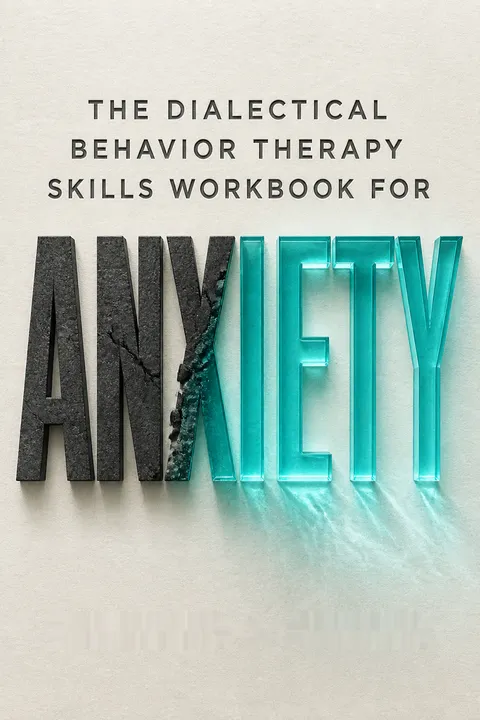
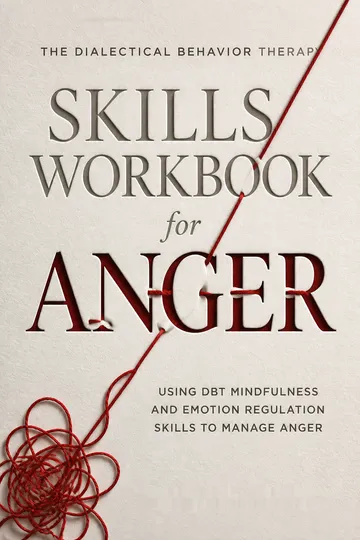
The Dialectical Behavior Therapy Skills Workbook for Anxiety receives mixed reviews. Many find it useful for learning DBT and mindfulness skills, with practical exercises and informative content on anxiety. Some praise its clarity and effectiveness in therapy settings. However, critics note its repetitiveness, lack of motivation, and superficiality. Several reviewers suggest it's best used alongside professional therapy. While some find it too basic or similar to other approaches, others appreciate its accessibility for beginners and its comprehensive coverage of anxiety-related issues. Overall, it's seen as a helpful resource, particularly for those new to DBT.
People Also Read






Glossary
Dialectical behavior therapy (DBT)
Acceptance and change skillsA cognitive behavioral treatment that combines strategies for changing behavior with skills for accepting and tolerating difficult experiences. The workbook emphasizes four broad skill areas: mindfulness, distress tolerance, emotion regulation, and interpersonal effectiveness. DBT was originally developed to treat suicidal women and became strongly associated with treatment for borderline personality disorder; this book applies its skills to anxiety-related problems.
Dialectical theory
Balancing opposing needsThe perspective in DBT that effective responses often require holding two seemingly opposing ideas together. In this book, the central tension is acceptance and change: a person can acknowledge an emotion or present circumstance without approving of it, while also taking practical steps to change what can be changed.
Mindfulness
Present-focused attentionPaying attention to present experience, including thoughts, emotions, bodily sensations, and surroundings. In DBT, mindfulness includes noticing, describing experience in concrete terms, and fully engaging in an activity. The aim is not to prevent thoughts or feelings, but to observe them with less judgment and return attention when it wanders.
Distress tolerance skills
Coping without escalationSkills for enduring intense emotions, thoughts, or circumstances without making the situation worse. Some skills provide temporary relief during a crisis, through activities such as distraction or self-soothing. Others support acceptance of present reality. These skills do not necessarily solve the underlying problem; they help preserve the ability to respond effectively.
Opposite action
Acting against an unhelpful urgeA DBT emotion regulation skill that involves choosing an action contrary to an emotion’s usual urge when that urge does not fit the facts or is interfering with important goals. For fear, it can mean gradually approaching a situation that is reasonably safe rather than avoiding it. It is not intended for situations involving genuine danger.
Urge surfing
Watching an urge passA mindfulness practice for noticing an urge as it rises, changes, and falls without immediately acting on it. The person observes the urge as a temporary experience, much like a wave, and makes space to choose a response. The workbook presents it as a way to manage impulses during intense stress.
Thought-action fusion
Equating thought with actionA pattern in which a person treats having a thought as morally or practically equivalent to carrying out the action described by that thought. For example, someone may feel guilty for imagining harm despite having no intention of causing it. The distinction matters because thoughts can be distressing without being intentions or deeds.
Negative reinforcement
Relief strengthens a behaviorA learning process in which a behavior becomes more likely because it removes or reduces an unpleasant experience. Avoiding a feared social event may briefly lower anxiety, making avoidance more likely the next time. The immediate relief can therefore strengthen a pattern that limits life over the longer term.
Sleep hygiene
Habits that support sleepPractices intended to improve sleep, including keeping a regular sleep schedule, creating a suitable sleep environment, and reducing habits that interfere with rest. The workbook also recommends reserving the bed primarily for sleep, so the bed becomes associated with sleeping rather than work, television, or other wakeful activities.
About the Author
Download PDF
Download EPUB
.epub digital book format is ideal for reading ebooks on phones, tablets, and e-readers.








