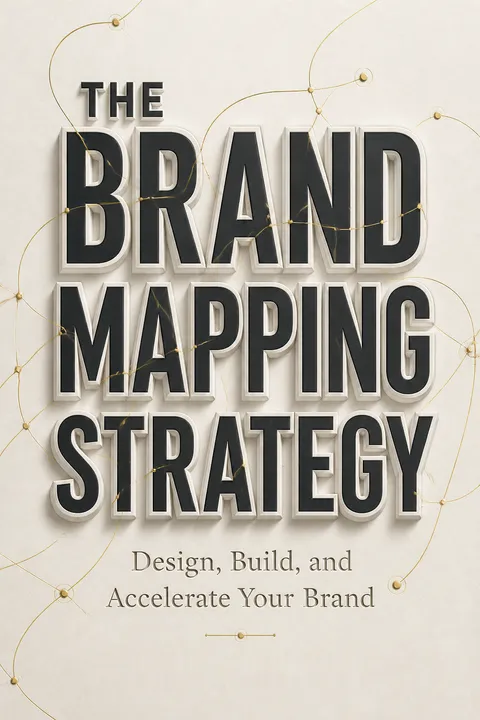


Key Takeaways
Design your brand deliberately, or the market will define it by default.
Brand is more than appearance. A brand is the story people encounter across your words, actions, services, and online presence. Leland argues that a polished logo cannot compensate for an unclear promise or an experience that contradicts it. The point is not to manufacture a persona, but to make your real strengths easier to recognize and trust.
Change can clarify identity. Leland connects this work to a period of personal upheaval: separation, moves, and the deaths of both her father and her mother’s husband forced her to reconsider who she was. That private reorientation also changed her business brand. Her example frames branding as an ongoing act of self-understanding, not just a marketing exercise.
The useful distinction is between a brand as a signal and a brand as a costume. In organizational psychology, credibility grows when stated values match repeated behavior; a mismatch creates distrust faster than a weak slogan does. This makes the book’s emphasis on authenticity practical, not sentimental. Still, deliberate branding cannot fully control public interpretation. Customers, employees, and journalists bring their own expectations, so the goal is not total command over reputation. It is to make the intended meaning clear and then behave consistently enough to earn it.
Trade the one big media hit for years of targeted, consistent visibility.
Attention compounds through repetition. The book contrasts the hope of a breakthrough appearance on a major show with sustained promotion in smaller, relevant places. Leland recalls clients who pursued Oprah as if one booking could solve every marketing problem. One author’s appearance helped, but sales fell well short of the publisher’s expectations. The lesson is to treat large coverage as a bonus, not a whole strategy.
Relevance beats raw reach. A woman who wrote regularly about severe soy allergies was found by a New York Times reporter after her name appeared repeatedly in relevant online spaces. Likewise, Camibands received 3,500 website visits after a Today appearance, then a much larger burst of traffic when Pinterest users shared the product with its likely buyers. Consistent visibility lets the right people find you.
This is a useful correction to the glamour bias that makes broad exposure feel inherently valuable. In network theory, repeated, relevant contact can build stronger ties than a single large broadcast, particularly when audiences are fragmented. The examples also show that distribution depends on fit: Pinterest’s audience suited a visual product, while allergy forums suited an expert’s lived experience. The caveat is that persistent publishing can become noise if it lacks substance. Visibility earns attention, but useful information and a credible offer are what convert attention into trust.
Build the platform before buying attention: message, website, then social consistency.
Sequence prevents wasted promotion. The Marketing Mastery Pyramid describes three broad stages: establish a clear brand platform, expand reach through promotion, and build recognized authority. Leland warns that businesses often rush to public relations or social media before clarifying what they offer. They then send visitors to confusing websites or profiles that weaken the impression their campaign created.
Make the destination credible. Begin by explaining the brand and its messages. Next, ensure the website is current, readable, easy to navigate, and designed to invite a useful next step, such as signing up or making contact. Then align social profiles with the same language and visual identity. The book cites a survey in which a one-second page delay was associated with a 7 percent drop in conversions, illustrating how small frictions can lose interested visitors.
The sequence resembles product development: establish the value proposition, build a usable delivery system, then scale acquisition. That order matters because promotion amplifies whatever is already there, including confusion. The website example also makes credibility a systems issue, not merely a design preference. A polished site can help a capable provider be considered, but it cannot prove competence by itself. The strongest platform combines clear presentation with evidence of results, then checks whether the experience actually helps a visitor decide what to do.
Make your answer to “What do you do?” clear, layered, and useful.
Start with an Anchor Statement. This is a concise description of who you are and what you do, designed to begin a conversation rather than recite a full biography. Leland distinguishes clarity from both rambling and vagueness. Her example of a scientist who explains fruit-fly research in dense technical detail loses a casual listener; a coach who offers only broad promises of happiness gives the listener nothing concrete to grasp.
Explain the value in three layers. The book’s Be, Do, Have model asks what work you perform, what results people receive, and what broader quality or experience your work creates. A business broker, for example, can describe selling companies, the higher sale prices clients may obtain, and the financial freedom that can follow. The short answer opens the door; relevant details can be added as the listener shows interest.
The framework is an application of cognitive fluency: people understand and remember an idea more readily when it fits a clear mental category. The three layers also prevent a common communication failure: describing activities without explaining outcomes, or promising outcomes without making the method intelligible. A short pitch should not become a rigid script, though. Different listeners need different evidence, and a technical audience may welcome detail that would overwhelm a casual contact. Clarity means choosing the right level of explanation for the context, not making every message simplistic.
Differentiate through evidence of fit, not claims of being the best.
Show why you are a match. The Unique Branding Proposition, or UBP, answers why a particular audience should choose you. It can rest on specialized experience, a distinctive process, a focused niche, or a combination of strengths that competitors cannot easily reproduce. It need not claim superiority. The book’s example of a consultant who worked both in management consulting and in a successful jewelry business shows how experience across two fields can create a credible point of difference.
Build a fuller brand map. Leland’s Brand Mapping Process asks people to examine seven facets: their concise description, distinction, characteristic tone, dependable contribution, defining story, specific services, and factors strengthening or weakening the brand. Together, these facets make a brand more than a tagline. The map is meant to reveal qualities supported by actual work, then guide how those qualities are communicated.
Positioning is strongest when it reduces uncertainty for a particular buyer. A long list of accomplishments may impress broadly but still leave a prospective client unsure whether the provider understands their problem. The book’s emphasis on fit encourages a more disciplined question: which audience values this difference, and what proof would persuade them? That question also guards against novelty for novelty’s sake. A distinctive claim has little strategic value if it is irrelevant to customers, difficult to substantiate, or disconnected from the service they will actually experience.
Choose a few promotion channels you can sustain and measure.
Strategy means selecting, not collecting. Leland surveys options including public relations, articles, books, newsletters, speaking, networking, social media, and awards. Most small businesses and busy executives cannot pursue every channel well. The book suggests choosing a manageable handful, often three to five core tactics, and warns against adopting a platform simply because everyone else uses it.
Match tactics to capacity and audience. Someone who dislikes writing might speak, record conversations for an editor, or hire a writer. A visual product may benefit from image-sharing platforms, while a professional services firm may prioritize business networks and industry events. Measure results against goals such as new prospects, stronger credibility, customer conversions, or a fuller pipeline. Leland groups outcomes into customers, credibility, and cash, and recommends adjusting the plan as evidence accumulates.
The emphasis on fit recognizes a basic implementation problem: a theoretically powerful tactic is useless if the organization cannot execute it consistently. This is where marketing strategy connects to behavioral design and resource allocation. Limiting channels protects attention and makes learning possible because teams can observe which efforts produce results. Yet measurement needs care. A surge in views or followers may not improve revenue or reputation. Good evaluation distinguishes leading indicators, such as qualified inquiries, from vanity metrics, and allows enough time for long sales cycles.
Treat your online presence as the visible, verbal, and emotional brand.
A personal brand has three expressions. The visual expression includes clothing, photographs, colors, and profile design. The intellectual expression includes biographies, concise talking points, social profiles, and content such as articles or podcasts. The emotional expression is the feeling people associate with you, such as confidence, warmth, or reliability. Leland argues that these signals should reinforce one another rather than send conflicting messages.
Prepare for public inspection. The book recommends current, professional photos and consistent profiles across platforms. It also notes that employers commonly examine candidates online: a cited 2015 CareerBuilder poll found that 52 percent of employers used social networking sites to research candidates, and 48 percent had rejected someone based on social content. The practical task is not to erase personality, but to choose deliberately what is public and ensure it supports the impression you intend.
This section treats personal presentation as a form of signaling: observers make quick judgments from limited evidence, especially online, where context is scarce. Consistency can lower the effort required to understand who someone is and what they offer. But presentation is not a substitute for substance, and the pressure to curate every visible detail can encourage conformity or self-censorship. The more useful standard is professional coherence: make relevant qualities easy to see, protect private boundaries, and avoid implying a polished image is proof of actual ability.
Let a CEO’s public identity reinforce, not compete with, the company.
Build a parallel brand. Leland defines this as a CEO’s personal identity working alongside the company brand while remaining distinct from it. The leader’s public presence should fit the organization, be sustainable and authentic, and strengthen both reputations. A CEO can contribute through media interviews, conference talks, useful content, community involvement, and visible participation on professional networks.
Manage the reputation in public. Claiming a personal domain, checking search results, setting alerts, and maintaining a credible LinkedIn profile are practical safeguards. The book cites a 2015 survey in which executives attributed 45 percent of company reputation and 44 percent of company market value to CEO reputation. These are survey respondents’ assessments, not proof that a CEO alone causes either outcome. Still, the figures underline why a leader’s visibility and conduct can affect how outsiders judge the organization.
A CEO functions as both an individual and a symbol of the institution, so personal communication can humanize a company and make its priorities legible. This resembles a principal-agent problem: audiences use the leader as a visible proxy for an organization whose internal workings they cannot observe. The arrangement also carries risk. A highly visible CEO can overshadow the team or make the brand overly dependent on one personality. A sound parallel brand therefore communicates shared organizational values and credible expertise, rather than turning corporate trust into a personal fan base.
Make the brand promise a property of operations, not advertising.
Alignment happens in daily work. A brand-centric company expresses its promise through customer experience, management behavior, employee engagement, internal processes, and organizational structure. The book separates customer experience into interpersonal treatment, the quality of the product or service, and the ease of the process. A friendly interaction cannot erase a broken product or a three-hour delay; all three dimensions shape the customer’s judgment.
Employees experience the brand too. Leland extends the idea of customer to people inside the organization: staff rely on other teams for service, information, and support. If employees are expected to represent the brand, they need to understand the promise and have systems that let them deliver it. A company that advertises exceptional service but fails to resource or reward it creates a credibility gap between its message and its behavior.
This is the book’s most important organizational insight: brand is partly an operating model. Service design, incentives, workflow, and management conduct determine whether a promise is repeatable or merely aspirational. That connects branding to systems thinking, where local decisions accumulate into the customer’s experience of the whole organization. The challenge is prioritization. A company cannot repair every mismatch at once, and a promise that exceeds its capacity can deepen disappointment. Leaders need to identify which parts of the experience matter most, then align resources and authority accordingly.
Turn brand change into owned work, then keep improving the system.
Change requires visible commitment. Leland contrasts failed initiatives, where plans are made and then neglected, with commitment-based change led by senior executives. Her sequence is to engage leadership, build awareness of the gap between promise and reality, educate and train employees, improve processes continuously, and recognize people who deliver the brand. When commitments slip, communicating early and renegotiating responsibility matters more than preserving appearances.
Solve problems with the people closest to them. The Continuous Brand Improvement Process gives cross-functional groups a structured way to identify a mismatch, investigate causes, recommend a solution, and support implementation. In Leland’s example, groups of six to ten people work for roughly six to eight weeks. The book also applies branding to intact teams: teams clarify how they want to contribute, agree on working principles, and translate those agreements into goals and behavior.
The change model usefully shifts branding from an executive announcement to a learning process. Small, bounded projects can build confidence and reveal whether the organization’s systems support the desired behavior. In change management, participation often improves both diagnosis and ownership because frontline staff see problems that leadership misses. Still, participation without authority can become theater. Improvement groups need access to decision-makers, time, and resources, or their recommendations join the pile of good intentions. Recognition also works best when it rewards meaningful outcomes rather than public performance of brand language.
Analysis
The book’s central argument is that branding is not a cosmetic campaign but a coordinated practice of defining meaning, making it visible, and delivering it consistently. Its three-part progression, from platform to reach to authority, gives readers a useful order of operations. The practical strength is breadth: the framework applies to individuals, executives, teams, and companies, while the exercises translate abstract identity into messages, services, and decisions.
Its strongest contribution is the insistence that communication and operations belong in the same conversation. A website can create an expectation, but employees, processes, and customer interactions determine whether that expectation survives contact with reality. This makes brand strategy relevant to leadership and service design, not just marketing. The book’s examples also make a persuasive case that small, well-targeted acts of visibility can accumulate into relationships and opportunities that no single campaign guarantees.
The approach has limits. Several statistics and platform descriptions date from 2014 to 2015, so they should not be treated as current market guidance. The larger principle, audience fit over indiscriminate reach, is more durable than any named platform or channel. The models also put considerable responsibility on individuals to manage their public identity, a task that can privilege those with time, money, and access to professional support. Finally, a coherent brand cannot ensure a good product or fair organization. It can clarify expectations and make behavior more legible, but delivery remains the real test. Read as a practical system rather than a guarantee of growth, the book offers a useful discipline: define what is true and valuable, communicate it in forms people can understand, choose tactics that can be sustained, and repair the organizational conditions that prevent the promise from being kept. Its lasting lesson is that reputation is shaped both by what an organization says and by what it repeatedly makes possible.
Review Summary
The Brand Mapping Strategy receives positive reviews for its practical advice on personal and business branding. Readers appreciate its actionable guidance, exercises, and focus on building a strong personal brand. The book is praised for its simplicity, thoroughness, and relevance in the social media era. Reviewers find it helpful for structuring and positioning brands, with some noting its value for students and professionals in marketing. Overall, it's considered a worthwhile read for those looking to develop or strengthen their brand strategy.
People Also Read






Glossary
Marketing Mastery Pyramid
Brand growth stagesA three-stage model for developing a brand: first establish a clear platform and strategy, then expand awareness through promotion and content, and finally earn thought or industry authority. The model emphasizes sequence. Promotion is more effective when a clear message, credible website, and consistent online presence are already in place.
Brand Mapping Process©
Seven-part brand inquiryA guided process for describing a personal, team, or business brand through seven lenses: a concise description, a distinctive advantage, characteristic tone, dependable contribution, defining story, specific services, and factors that strengthen or weaken the brand. The aim is to uncover authentic material that can guide communication and strategy.
Anchor Statement
Concise brand descriptionA brief, conversational explanation of who a person or organization is and what it does. It is meant to start a dialogue, not deliver every detail at once. Leland recommends developing it around the work performed, the results people receive, and the qualities or broader value the work contributes.
Unique Branding Proposition
Audience-relevant distinctionThe reason a particular audience might choose a person, team, or business over another suitable option. It can draw on specialized experience, a distinctive process, a focused area of expertise, or a combination of strengths. It need not claim superiority; its purpose is to make the brand’s specific fit clear and credible.
Brand Energy
Dependable contribution styleThe contribution a person, team, or business can be relied on to make across different situations. Leland describes recurring patterns such as creating, connecting, motivating, implementing, interpreting, and mentoring. Identifying a dominant pattern helps people align their strategy with their strengths and seek complementary help where their abilities are limited.
Signature Story
Brand-shaping narrativeA truthful account of the experiences, people, and turning points that help explain why a person or organization does its work. It connects history to present capabilities and values. The story is more than a list of achievements: it gives audiences concrete examples of how the brand’s strengths developed.
parallel brand
Complementary leader identityA CEO’s or executive’s personal brand, developed to work alongside the company brand without becoming identical to it. A strong parallel brand is authentic, sustainable, and consistent with the organization’s identity. It can help build trust and visibility for both leader and company, while requiring care not to make the institution dependent on one personality.
Continuous Brand Improvement Process
Structured brand problem-solvingA repeatable method for resolving gaps between a company’s brand promise and how it operates. Employees identify issues, select a specific problem, work in a facilitated group to find causes and propose a practical solution, and support implementation. The process is designed to make brand alignment an ongoing organizational task rather than a one-time campaign.
FAQ
What's "The Brand Mapping Strategy" about?
- Purpose and Focus: "The Brand Mapping Strategy" by Karen Leland is about designing, building, and accelerating your brand intentionally rather than by default. It provides insights and strategies for creating a brand that stands out in your industry.
- Target Audience: The book is aimed at entrepreneurs, business owners, and CEOs who want to gain greater influence and become thought leaders in their fields.
- Comprehensive Approach: It covers both personal and corporate branding, offering techniques applicable to large organizations and small businesses alike.
- Practical Guidance: The book includes actionable techniques and best practices for establishing a brand synonymous with leadership, intelligence, and integrity.
Why should I read "The Brand Mapping Strategy"?
- Strategic Insights: The book offers proven strategies and best practices for creating a brand by design, which can help you gain influence and become a thought leader.
- Actionable Techniques: It provides specific, actionable techniques for designing, building, and accelerating your brand, making it a practical guide for business professionals.
- Comprehensive Coverage: Whether you're an entrepreneur, business owner, or CEO, the book covers a wide range of branding aspects, from personal to corporate.
- Expert Endorsements: The book is endorsed by industry experts and thought leaders, adding credibility to its content and recommendations.
What are the key takeaways of "The Brand Mapping Strategy"?
- Brand Definition: If you don't define your brand, someone else will do it for you. The book emphasizes the importance of consciously creating your brand identity.
- Brand Mapping Process©: The book introduces a seven-step process to articulate your brand, including anchor statements, unique branding propositions, and signature stories.
- Marketing Mastery Pyramid: It outlines a three-phase journey from platform development to thought leadership, providing a roadmap for brand growth.
- Social Media Strategy: The book highlights the importance of aligning your social media presence with your brand to enhance recognition and trust.
What is the Brand Mapping Process© in "The Brand Mapping Strategy"?
- Seven Core Elements: The Brand Mapping Process© involves seven core elements: Anchor Statement, Unique Branding Proposition, Brand Tone and Temperament, Brand Energy, Signature Story, Signature Services, and Brand Enhancers and Reducers.
- Anchor Statement: This is a concise description of who you are and what you do, often referred to as an elevator pitch.
- Unique Branding Proposition: It defines what makes you unique and sets you apart from competitors, focusing on specialized skills, experiences, or solutions.
- Signature Story: This element involves crafting a narrative that explains how you got to where you are, highlighting your journey and contributions.
How does the Marketing Mastery Pyramid work in "The Brand Mapping Strategy"?
- Three Phases: The Marketing Mastery Pyramid consists of three phases: Platform Development, Brand and Buzz Building, and Thought/Industry Leadership.
- Platform Development: This phase involves articulating your brand and creating a modern, marketing-oriented website with brand consistency on social media.
- Brand and Buzz Building: In this phase, you expand and accelerate your brand through tactics like PR, content marketing, and social media engagement.
- Thought Leadership: The final phase focuses on establishing yourself as a thought leader by consistently generating high-quality content and being a trusted source of information.
What are the best quotes from "The Brand Mapping Strategy" and what do they mean?
- "If you don’t define your brand, someone else will do it for you." This quote emphasizes the importance of taking control of your brand identity to ensure it aligns with your values and goals.
- "Building a personal brand is one of the essential skills for survival now and in the future." It highlights the necessity of personal branding in today's competitive business environment.
- "The goal is to become the haystack high up in the field, not the needle buried deep down in the pile." This metaphor suggests that your brand should be highly visible and easily recognizable in your industry.
- "No matter what business you are in, you don’t just read The Brand Mapping Strategy; study it and use it as your personal tool to set yourself, your company, and product apart from the pack." This quote encourages readers to actively apply the book's strategies to differentiate themselves and their businesses.
How can I make my brand synonymous with leadership, intelligence, and integrity according to "The Brand Mapping Strategy"?
- Define Your Brand: Clearly articulate your brand's core elements, including your Anchor Statement and Unique Branding Proposition, to establish a strong foundation.
- Consistent Messaging: Ensure that your brand's tone, temperament, and energy are consistently communicated across all platforms and interactions.
- Thought Leadership: Position yourself as a thought leader by sharing insights, trends, and high-quality content that demonstrate your expertise and values.
- Authenticity and Integrity: Build trust by being authentic and transparent in your branding efforts, aligning your actions with your brand's promises and values.
What role does social media play in "The Brand Mapping Strategy"?
- Brand Recognition: Social media enhances brand recognition by increasing exposure and making your brand more recognizable to a wider audience.
- Trust and Credibility: It helps build trust through leveraged credibility, as endorsements and interactions on social media can validate your brand's expertise.
- Competitive Advantage: A strong social media presence can give you a competitive edge by converting cold visitors into engaged members of your audience.
- Content Distribution: Social media serves as a platform for distributing high-quality content, reinforcing your brand's authority and thought leadership.
How does "The Brand Mapping Strategy" suggest measuring the success of your branding efforts?
- Define Success Criteria: Determine what you want to achieve with your branding efforts, such as increased awareness, credibility, or customer engagement.
- Track Progress: Regularly monitor the tangible outcomes of your branding strategy in terms of customers, credibility, and cash flow.
- Adjust as Needed: Be prepared to pivot and adjust your strategy based on the results you observe, ensuring that your brand remains relevant and effective.
- Long-Term Perspective: Remember that branding is a marathon, not a sprint, and focus on the long-term impact of your efforts rather than immediate results.
What is the importance of a parallel CEO brand in "The Brand Mapping Strategy"?
- Complementary Branding: A parallel CEO brand should complement the business brand, enhancing both the CEO's and the company's reputation.
- Internal and External Impact: It should be visible both internally within the company and externally to the public, contributing to the company's market value and employee motivation.
- Reputation Management: A strong CEO brand can attract investors, generate positive media attention, and provide crisis protection.
- Thought Leadership: Establishing a parallel CEO brand positions the CEO as a thought leader, further elevating the company's standing in the industry.
What are the misconceptions about personal branding addressed in "The Brand Mapping Strategy"?
- Not a New Phenomenon: Personal branding is not a new concept; it has been around for centuries, with historical figures effectively managing their personal brands.
- Beyond Reputation: Your personal brand is more than just your reputation; it encompasses your online presence and how you are perceived in various contexts.
- Not Just About You: A personal brand is not solely about self-promotion; it also involves contributing positively to your organization and industry.
- Essential, Not Optional: Personal branding is not a luxury but a necessity in today's digital age, where your brand is what people say about you when you're not in the room.
How can "The Brand Mapping Strategy" help in career management?
- Interview Readiness: The book emphasizes the importance of having a well-polished personal brand to be competitive in job interviews and career advancement.
- Social Media Presence: It highlights the role of social media in career management, as employers increasingly use it to research candidates and assess their fit.
- Digital Footprint Quality: The book advises on maintaining a high-quality digital footprint, as the content on social media can influence hiring decisions.
- Proactive Management: By following the book's strategies, individuals can proactively manage their careers, ensuring their personal brand aligns with their professional goals.
Download PDF
Download EPUB
.epub digital book format is ideal for reading ebooks on phones, tablets, and e-readers.








