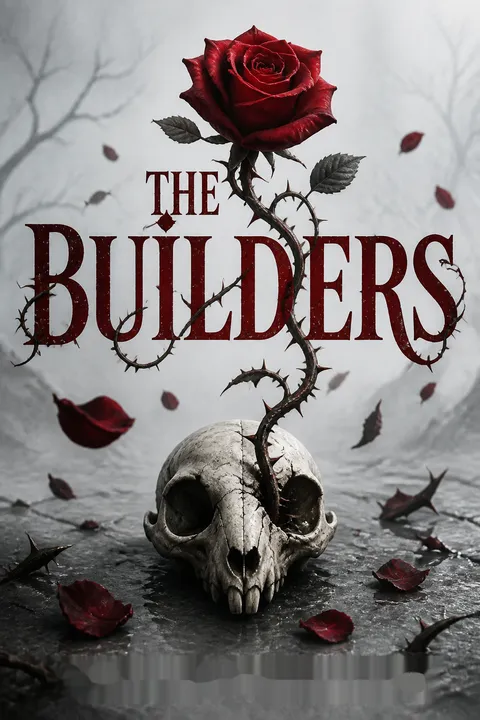


Plot Summary
The Captain Comes Calling
Five years after a coup scattered his crew, the scarred mouse known as the Captain returns to a shabby border town. The Gardens, the country he once fought to control, have fallen into disorder under High Chancellor Mephetic. The Captain begins gathering the killers who survived the last war. His first stop is Bonsoir, a stoat who has made himself comfortable winning cards and frightening locals.
When the Captain dismisses him as softened by easy living, Bonsoir answers with a knife at his throat, then accepts the invitation to return to the old crew. His grand claims about being French and his taste for theatrics conceal a very real talent for stealth and killing. The Captain leaves him with a rendezvous and a promise of action.
The reunion begins as a negotiation between two forms of self-protection. Bonsoir has turned swagger into a private kingdom, while the Captain uses insult to test whether old loyalties still carry force. Their exchange makes the recruitment personal rather than sentimental: the Captain will not flatter his friend, and Bonsoir refuses to be treated as a retired ornament. The scene also establishes the story's comic register without softening its danger. A knife at a throat is both Bonsoir's answer and his proof of continued usefulness. Beneath the boastfulness, the crew's return begins with a question of identity: whether a creature can leave violence behind, or only wait for someone to call it back.
The Crew Comes Back
The Captain finds Boudica, an opossum sniper, resting in a dry creek bed far from town. She prefers quiet, but rises when he offers work. He then tracks down Cinnabar, a salamander living peacefully as a busboy at a roadside inn.
To test whether Cinnabar still has his legendary speed, the Captain throws a stone at his head; Cinnabar catches it without seeming to move, then agrees to come. Barley, a badger who now runs a general store, refuses. He has spent five years avoiding murder and intends to keep doing so.
The Captain summons two hired rats to kill him. Barley smashes through his own counter, kills both attackers, and confronts the Captain for forcing him back into violence. He nevertheless joins the crew, bringing the heavy weapon he once operated.
These recruitments expose the cost hidden inside the Captain's practical language. Boudica accepts because she trusts the work more than she values comfort; Cinnabar accepts without explaining what the old crew means to him. Barley's refusal is different. His store represents an attempt to create a life in which his strength no longer has to become lethal. By arranging an attack, the Captain makes that alternative impossible and then calls the result a recruitment. Barley's fury is not evidence that he has returned willingly. It shows that the Captain can still command loyalty, but increasingly through coercion. The scene asks whether shared history creates an obligation, or merely gives an old commander better tools for exploiting it.
Old Debts, New Company
In the Capital, the Captain visits Gertrude, a blind mole who secretly rules the city's criminal underworld. He needs her help reaching the Elder, the claimant he once served, and bringing down Mephetic. Gertrude agrees, partly because she wants to know which former comrade betrayed the crew five years earlier.
At the meeting place, the flightless owl Elf arrives despite the others' suspicion. Her damaged wing and strange fixation on the absent Quaker make the Captain insist that she will matter later.
He gathers the crew around a plan to seize the Elder and strike at Mephetic's government. Across the country, Mephetic learns that the Captain is alive. He readies his three dangerous commanders: the vain cat Puss, the armed fox Brontë, and the rattlesnake called the Quaker.
The gathering is less a restoration of a family than a collision of unfinished accounts. Gertrude brings political intelligence and private ambition; Elf brings a wound whose meaning the others do not yet understand. The Captain recruits both without offering reassurance, treating each as a necessary part of an operation. His plan gives the scattered crew a common direction, but it cannot give them a common motive. Meanwhile, Mephetic's commanders mirror the crew's own divisions: vanity, appetite for violence, and an old intimate grievance. The scene quietly shifts the question from whether the Captain can assemble a force to whether anyone in that force can still tell loyalty from revenge.
Zapata's Last Information
The Captain and Cinnabar ride south to the ruined hacienda of Zapata, an armadillo whose political connections may reveal where the Elder is held. Zapata explains that the Elder has been kept aboard a train circling the border, then signals a guard to shoot the Captain. The Captain dodges, and the guard's shotgun kills Zapata instead.
Outside, Cinnabar shoots two of the Weasel sisters while Boudica kills a third from a distant position. At a nearby barn, Barley assembles his old organ gun and cuts down the armed rats waiting inside. The crew has found its target, but the raid has already become a bloody warning: every old connection may be compromised, and every approach to the Elder is guarded by someone who expects violence.
Zapata's death turns information into a poisoned gift. He gives the Captain what he needs, but his attempt to trade the old friendship for survival costs him his life. The subsequent skirmishes show the crew functioning with ruthless precision: Cinnabar handles close danger, Boudica covers distance, and Barley restores a weapon designed for holding ground. Their effectiveness is impressive, yet it also narrows the space for any future beyond killing. Barley's earlier attempt at retirement now seems especially fragile. The sequence converts the abstract political mission into bodily cost before the main assault begins, while showing that the crew's old skills remain intact even when their trust in one another does not.
The Elder's Train
The crew boards the Antelope Limited and forces its way into the steel-guarded front carriage, where the Elder has been confined. They take him from the train and begin the long return journey. Mephetic has anticipated their route and surrounds the Partisan's bar with a huge force of rat guards, along with Puss and Brontë.
The Captain leads his crew into a brutal breakout. Cinnabar and Boudica shoot through the advancing rats while Barley absorbs a bullet and keeps fighting. Then Gertrude acts from behind the Captain, dropping him unconscious.
The others escape under fire, leaving Mephetic to seize the Captain. His trap appears successful, though he has mistaken Gertrude's apparent betrayal for a dependable alliance and does not understand the deeper purpose of her move.
The train raid and the ambush reveal two kinds of captivity. The Elder has been hidden behind steel and bureaucracy; the Captain's crew is trapped by Mephetic's overwhelming numbers and by the possibility that one of their own has changed sides. Gertrude's action makes the apparent victory especially destabilizing. The Captain's authority has always depended on reading his companions, yet here he is rendered helpless by someone he believed he could place. The others' retreat is not simple cowardice. Facing an army to recover one captured leader would likely destroy them all. Their escape preserves the possibility of resistance, but it leaves loyalty, strategy, and the Captain's survival uncertain at once.
The Bar's Last Betrayal
While Mephetic takes the Captain, Reconquista shuts the bar and prepares to spend the money he received for betraying the crew. Alone with his whiskey, he insists to himself that the choice was practical, not shameful, and mourns the violence he believes he will never feel again. The sound of Elf's claws draws him onto the porch, where she kills him.
In Mephetic's dungeon, the Captain shares a story of the civil war with a deranged squirrel prisoner, tracing how hired fighters were betrayed after helping the Elder nearly win. Barley and Cinnabar then break into the prison, bend the bars apart, and free him. The rescue reunites the crew and sends them toward the Capital, where Gertrude will make the next move.
Reconquista's betrayal is driven less by ideology than by a calculation about who deserves the profits of violence. He has mistaken survival for freedom, and his final regret is not moral remorse but the loss of danger and sensation. Elf's attack answers that calculation with a blunt consequence. In prison, the Captain retells the conflict that made the crew, turning history into a tool for orientation rather than absolution. Barley and Cinnabar's rescue demonstrates that the old bond still operates, although it has been strained by coercion and suspicion. The group returns to action not because its members have healed, but because Mephetic's rule has left them no safer place to stand.
Gertrude Opens the Keep
Gertrude enters Mephetic's heavily guarded keep under escort, presenting herself as a collaborator who has helped capture the Captain. The lieutenant overseeing her grows distracted by her praise, while she has already poisoned guards along the route. Once alone with Mephetic, she reveals that her cooperation was a way to give the crew access to the fortress.
She disables his gun and kills the remaining guards with concealed needles. Mephetic draws on his own weapon of last resort, filling the room with a lethal stench. Gertrude fights toward the door but dies before she can escape. Bonsoir, who has followed the poisoned trail through the keep, reaches the inner corridors and clears the remaining guards, opening a path for the others.
Gertrude's double-cross is an act of strategic authorship. She makes Mephetic believe he controls the situation, then uses his confidence to carry the crew through defenses that might otherwise have stopped them. Her intelligence is not an abstract quality; it is embodied in poisons, timing, and the ability to manipulate a guard's hopes for promotion. Yet the operation cannot protect her from Mephetic's most intimate form of violence. Her death exposes the limit of planning in a world where power can make the air itself unlivable. Bonsoir's arrival carries her plan forward, but the cost is a comrade lost inside the very fortress she helped them enter.
Three Corridors of Blood
The assault divides the surviving crew. Bonsoir searches the keep's treasure vault, where Puss surprises him and shoots him in the torso. Barley stays behind with his organ gun to hold off the rat guards, drawing wave after wave away from the Captain and Cinnabar. Cinnabar encounters Brontë, who hopes to win fame by killing the legendary gunslinger.
He shoots her repeatedly, but she charges through the wounds; her blunderbuss tears open his side before he kills her at close range. Near the vault, Bonsoir uses his last dynamite charge against Puss, turning the cat's mockery into a fatal mistake. Barley's final fate remains unseen beneath the keep's wreckage, while Cinnabar dies pinned beneath Brontë's body, his hat just within reach.
Each confrontation tests a different version of professional pride. Puss treats violence as entertainment and underestimates a wounded opponent; Brontë mistakes a reputation for a prize she can claim; Barley accepts the role of shield with the same focus he once used to kill. Cinnabar's duel is the sharpest contradiction: his skill remains extraordinary, but mastery cannot cancel injury or size. Bonsoir's final trick makes theatrical identity useful at last, converting the persona others mocked into a lethal distraction. These deaths and disappearances do not feel like a clean heroic sacrifice. The crew's talents accomplish the mission by consuming the bodies that made those talents possible.
The Owl and Snake
As the Captain advances alone toward the throne room, the Quaker blocks his path. The rattlesnake recalls the crew's dead and speaks of the former companions he has lost, but the Captain refuses the performance. Elf emerges from the darkness and attacks.
The two former lovers fight across the ramparts, neither able to overpower the other until the Quaker lunges for the Captain. Elf intercepts him, and they tumble together over the wall. The Captain continues to Mephetic, who has wired the keep with dynamite and claims he can destroy them both.
He offers the Captain a final drink. The Captain accepts, then raises his hand toward the window. From her distant perch, Boudica takes the signal and shoots Mephetic before he can trigger the explosives.
Elf's confrontation with the Quaker turns an old private injury into the decisive protection of the Captain. Their intimacy is neither redeemed nor explained away; it gives the fight its particular force, because the violence comes from knowledge of the other's habits as much as from hatred. The Captain does not intervene, and Elf chooses the risk herself. In the throne room, Mephetic's dynamite makes destruction his last claim to control. The Captain answers not with a sudden feat of strength but with trust in Boudica's patience and aim. Her shot completes a chain of cooperation begun at recruitment, though the cost of getting there has emptied the crew around them.
No One Builds
With Mephetic dead, the Captain enters the room where the Younger, the nominal Lord of the Gardens, has spent years sunk in indulgence. The Younger recognizes the Captain and assumes the Elder has returned to claim his place. Instead, the Captain opens a satchel and reveals the Elder's bones. The Elder survived his flight south but died there, leaving the entire war without the restoration its fighters had imagined.
The Captain then kills the Younger. In the ruined keep, an old servant asks who will rule and rebuild a country devastated by years of conflict. The Captain offers no replacement ruler or plan for reconstruction. He lights a cigar and makes clear that rebuilding is not the work he intends to do.
The final revelation strips the conflict of its promised political reward. The crew did not bring the Elder back to power; they carried his remains into the last room, and the kingdom's succession has become an empty ceremony. The Captain's killing of the Younger closes the immediate cycle of rulers but does not repair the world their rivalry and Mephetic's administration damaged. His refusal to rebuild is both a limit and a confession. He knows how to destroy a regime, not how to make a livable one. The title's builders are absent because the Captain's gifts have always been destructive. His victory therefore contains no claim that violence has made the Gardens whole.
Analysis
The Builders treats political power as a machine operated by creatures who are better at breaking things than making them. Its animal cast is not merely a comic disguise for human politics. Species, body, and reputation shape the available roles: the mouse survives by vigilance, the badger can hold a line, the owl has been forced to live on the ground, and the snake moves through intimacy as readily as threat. Yet the characters repeatedly exceed the traits others assign them. Cinnabar can be tender, Barley can refuse his old function, and Gertrude can make apparent surrender serve a larger design.
The story's central bond is also its central danger. The Captain's authority rests on a crew whose members share memories, skills, and injuries, but he often treats their loyalty as a resource he can spend. His coercion of Barley makes the ethical problem explicit: a commander can still be loved or obeyed while doing harm to those who trust him. The crew's return does not repair that imbalance. It intensifies it, asking old companions to turn back into instruments of violence for a political goal whose original promise has already decayed.
That decay becomes literal when the Elder's bones replace the living ruler the crew expected to recover. The war has outlasted its purpose, while the Younger and Mephetic have left the country ruined. The Captain can defeat the men who hold power, but he has no language for reconstruction and no appetite for inheriting the wreckage. His final refusal is not presented as a solution. It is an honest boundary, and a bleak judgment on the difference between winning a conflict and creating a future. The title points to that absence: the survivors can clear a throne, but none of them is equipped to build what comes after.
Review Summary
The Builders is a darkly humorous novella blending Redwall-style animal characters with a gritty Western revenge plot. Readers praised Polansky's sharp prose, memorable characters, and fast-paced action, though some found the anthropomorphic animals jarring. The story follows a mouse Captain assembling his old crew for one last violent mission. While some felt the short format limited character development, most enjoyed the unique blend of cute creatures and brutal violence. Overall, it's a quick, entertaining read that subverts expectations.
People Also Read




Characters
The Captain
Scarred mouse commanderA small white mouse with a ruined eye and a reputation large enough to eclipse his body, the Captain once led a force in the Gardens' civil war. He is terse, watchful, and difficult to intimidate, relying on discipline and an instinct for danger rather than physical size. His leadership is built on a contradiction: he expects fierce loyalty but often treats other creatures as instruments, even when he has known them for years. He returns to gather survivors and challenge the regime that displaced him, driven by an old grievance and an unusually durable capacity for hatred. What makes him compelling is not warmth but consistency. He keeps his word, reads weakness quickly, and seldom pretends that violence will become something nobler than violence.
Bonsoir
Boastful stealth killerA black-furred stoat who insists on presenting himself as French, Bonsoir wraps a lethal professional in an extravagant comic persona. He delights in cards, cigarettes, fine hats, and long accounts of his own prowess, using performance to dominate a room before he has to use a knife. His self-regard can make him seem shallow, but it also protects a genuine need to matter. He has survived by turning stealth into an art and danger into a stage. His bond with Barley shows a more affectionate side: he can tease an old friend without mistaking affection for softness. Beneath the accent and invented grandeur is a creature who understands exactly what he is good at, even when he dislikes the assignment.
Boudica
Patient sniperBoudica is an opossum marksman whose preferred life is quiet, hot, and undisturbed. She seems languid, often taking her time before answering or moving, but her stillness is the discipline behind her accuracy. She knows how to wait until a target and a moment align, then act without hesitation. The contrast between her relaxed habits and her capacity for precise violence gives her a distinctive authority among the crew. She does not need to boast or demand recognition. Her presence is steadier than the Captain's intensity and less theatrical than Bonsoir's performance. Boudica's loyalty appears in her willingness to take a position and hold it, trusting the crew's plan while keeping her own judgment intact.
Cinnabar
Legendary gunslingerCinnabar is a salamander known across the Gardens as the Dragon, a gunslinger whose speed makes other creatures seem to move in pieces. In private, he is restrained and courteous, working quietly at an inn rather than advertising his reputation. He speaks little, but his attention is acute, and he understands that legends can become burdens when every stranger expects him to perform them. His long history with the Captain gives their silences weight; he can challenge the Captain's urgency without turning their friendship into a contest. Cinnabar is also capable of tenderness that contradicts the cold-blooded stereotype others place on him. He takes violence seriously, even when it is familiar, and his calm is a chosen discipline rather than an absence of feeling.
Barley
Reluctant heavy gunnerBarley is a massive badger who has left the life of a soldier behind to run a quiet general store. He is friendly with customers and values the ordinary routine he has built, but he cannot erase the violence he committed before retiring. His strength makes him useful to the Captain, which is precisely why Barley fears being pulled back into the crew's work. He carries guilt more openly than the others and believes that changing one's life should be possible, even after terrible deeds. His affection for Bonsoir gives the old crew a rare note of easy companionship. Barley is not gentle because he lacks the capacity for violence. He is gentle because he knows, from experience, what that capacity can do.
Gertrude
Underworld strategistGertrude is a blind mole whose genial manner conceals an exceptional political and criminal intelligence. In the Capital, she has built a powerful underworld network and surrounded herself with knowledge, books, and carefully placed influence. She does not mistake cleverness for moral purity; she calculates what is useful and understands that power often depends on controlling what others believe. Her connection to the Captain is old and pragmatic, shaped by shared history rather than easy affection. She is curious about the crew's past and attentive to the consequences of betrayal, but she keeps her own motives close. Gertrude's wit and self-possession make her difficult to categorize as either ally or adversary, and she prefers to arrange the board rather than announce what game she is playing.
Elf
Wounded owl avengerElf is an owl with a shattered wing, forced to travel on foot despite having been made for the air. Her damaged body has altered how she moves through the world, but not her patience or capacity for sudden violence. She can remain still and nearly invisible, then strike with terrible speed. The crew finds her unsettling because she is difficult to read and speaks in a detached, almost formal manner. Her history with the Quaker gives her presence an emotional charge that she seldom explains directly. Elf is shaped by the gap between what her body once allowed and what it allows now. She continues to act, scout, and choose her own risks rather than accept the diminished role others assign her.
Mephetic
Skunk behind the throneMephetic is the High Chancellor who holds the Gardens' real power while the nominal ruler drifts through indulgence. He is intelligent, politically capable, and increasingly bored by the administrative burden of ruling. He enjoys a challenge, especially when it comes from the Captain, whose history makes their contest personal as well as strategic. Mephetic understands that authority rests on force and information, and he uses both without sentiment. His confidence can become complacency: he expects to manage people by anticipating their motives, even when they are concealing several layers of intent.
Reconquista
Damaged bar ownerReconquista is a rat with a wooden leg and a mechanical replacement for much of his missing body. He runs the Partisan's bar, where the Captain assembles the old crew. His long association with the Captain makes him familiar to the group, but familiarity does not mean trust. Reconquista is pragmatic and self-interested, measuring loyalty against the likely share of the reward. His physical injuries are reminders of the crew's violent past, while his tavern offers the appearance of a settled life.
Zapata
Desert political survivorZapata is an armadillo who has outlasted successive political factions by changing sides when the balance of power changes. He is sociable, expansive, and fond of turning danger into a joke, but his humor does not hide his hard instinct for survival. His history with the Captain gives their meeting warmth and mistrust in equal measure. Zapata believes that adapting to the wind is wiser than standing against it, a philosophy that sharply contrasts with the Captain's defiance.
The Elder
Exiled royal claimantThe Elder is one of two royal brothers whose rivalry helped ignite the Gardens' civil war. The Captain served his cause, and supporters treated him as a possible alternative to the Younger. Though he remains distant from much of the action, his claim gives the crew's return a political purpose. His position also exposes how easily powerful animals can make soldiers fight over a throne they themselves do not occupy.
The Younger
Neglected nominal rulerThe Younger is the Elder's twin brother and the nominal Lord of the Gardens. His title suggests authority, but his dependence on Mephetic leaves the practical work of government elsewhere. Years of indulgence have detached him from the damage unfolding around his kingdom. He remains important because the war's competing factions organize themselves around his claim, even when he contributes little to the struggle.
The Quaker
Rattlesnake commanderThe Quaker is a pale rattlesnake in Mephetic's inner circle, dangerous enough that even his allies treat him cautiously. He is patient, possessive, and difficult to command, operating by instincts that do not fit the social rules other animals expect. His former intimacy with Elf remains a charged part of his history. The Quaker's presence makes the crew's past feel less like a closed chapter and more like a set of debts still moving beneath the present conflict.
Puss
Sadistic court catPuss is a wealthy, carefully dressed cat whose manners are polished and whose cruelty is not. He enjoys violence as both entertainment and proof of superiority, and he treats other creatures' reputations as invitations to mock them. His vanity is matched by genuine skill, making him more than a comic pose. He and Brontë share a volatile friendship built around danger and mutual amusement.
Brontë
Armed fox commanderBrontë is a sleek fox who carries an oversized, double-barreled weapon and is eager to use it. She is confident, aggressive, and quick to turn a political crisis into a personal contest. Her friendship with Puss is affectionate only by the standards of two creatures who enjoy cruelty and may someday turn it on each other. Brontë wants the danger around her to confirm her own stature.
Angie, Bessie, and Celia Weasel
Desert gun-for-hire sistersThe Weasel sisters work for Zapata in the southern desert. They are slow to offer hospitality, quick to challenge strangers, and confident that their family's reputation will protect them. Their taunting of Cinnabar tests whether his legendary speed is real.
The Conductor
Railway rule keeperThe shrew conductor is devoted to procedures, schedules, and the railway's orderly machinery. He regards his assignment on the Antelope Limited as proof of his professional standing, but avoids asking why the front carriage has armed guards. When the crew boards, the disruption he fears becomes impossible to file away as a routine problem.
The Squirrel Prisoner
Captain's dungeon listenerThe squirrel has been imprisoned so long that he has lost his name, memories, and sense of the world beyond his cell. He swings between threats and childish pleas for a story. His need to listen gives the Captain a reason to turn the crew's history into a narrative, even while danger approaches outside.
Plot Devices
The Organ Gun
Badger-sized firepowerBarley's bulky weapon carries eight rotating barrels fed by a cartridge belt. It is too heavy and awkward for most battlefield use, but Barley knows how to assemble and operate it. The gun converts his individual strength into a defensive wall of fire, allowing him to hold a position while the Captain and the others move through the keep. Its impressive force also carries a cost: it makes Barley an obvious target and ties his old identity as a killer to the life he tried to leave.
The Antelope Limited
Moving royal prisonThe train's reinforced front carriage hides the Elder from public view while armed guards keep him inside. Railway rules and the conductor's faith in procedure help conceal the political purpose of the carriage. The train gives the Captain a route to the exiled claimant, but seizing him brings the crew directly into Mephetic's prepared ambush. The railway therefore serves both as a practical prison and as a symbol of how routine systems can carry hidden coercion.
Gertrude's Poison
Silent passage through guardsGertrude carries concealed poisons and needles that let her pass through the keep's checkpoints while guards mistake her for a controlled prisoner. Her friendly manner helps lower suspicion, and her knowledge of the fortress turns each poisoned guard into a step toward Mephetic. The method is effective but not invulnerable. Once she reaches Mephetic, his own lethal defense defeats her before she can leave the room. Her tools make the invasion possible, but cannot guarantee her survival.
Boudica's Waiting Shot
Distant decisive aimBoudica's patience and marksmanship allow the crew to act beyond the range of ordinary sight. She waits at a concealed distance while the Captain moves through the keep, then uses his signal to take a crucial shot at Mephetic. The long wait is not inactivity. It is a deliberate role in the plan, dependent on trust between the shooter and the person exposed inside. Her precision gives the crew a way to strike at power without forcing the Captain into a direct duel.
The Traitor's Double Game
False allegiance as accessGertrude appears to help Mephetic capture the Captain, then uses that apparent cooperation to get inside his fortress. Mephetic believes he has recruited a valuable informant, while Gertrude is using his belief to clear a route for the crew. The double game makes the capture look like a defeat before its strategic purpose becomes visible. It also reflects the story's wider uncertainty about loyalty: characters judge one another by past behavior, but old histories do not always reveal what an ally is doing now.
Download PDF
Download EPUB
.epub digital book format is ideal for reading ebooks on phones, tablets, and e-readers.








