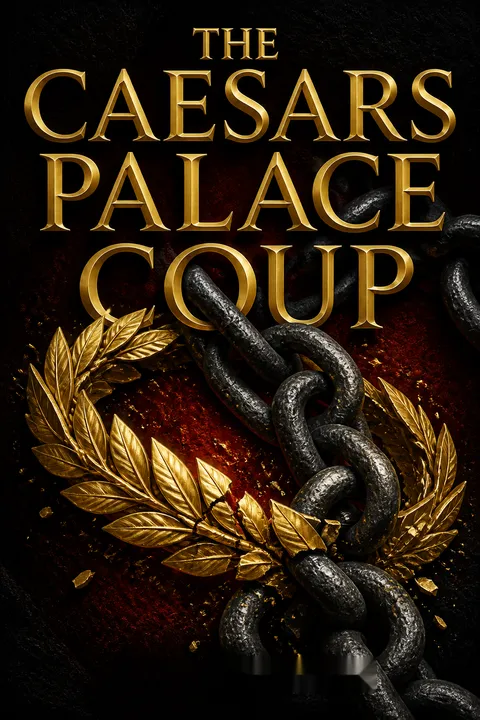


Key Takeaways
A $28 billion casino buyout became a fight over who could move the assets.
The deal behind the drama. In 2008, Apollo Global Management and TPG completed a roughly $28 billion leveraged buyout of Harrah’s, soon renamed Caesars Entertainment. A leveraged buyout uses borrowed money to purchase a company, leaving the acquired business responsible for much of the debt. The sponsors expected a growing casino business to carry the burden and increase the value of their investment. Instead, the financial crisis and a slow recovery put Caesars under severe pressure.
A restructuring turned into combat. Apollo and TPG shifted properties and financial obligations among related companies while trying to keep Caesars alive and protect their investment. Creditors argued that these transactions moved valuable assets beyond their reach. The ensuing bankruptcy became a contest over control, contract rights, and whether the sponsors should face liability. The book’s central tension is that financial engineering meant to buy time also intensified the fight over who would absorb the losses.
What's striking is how the same transaction can look like rescue to its architects and asset stripping to its creditors. That is not merely a matter of competing personalities. Corporate groups divide assets, debt, and guarantees among legally separate entities, so control over the organizational chart can matter as much as control over the casinos themselves. The story also cautions against treating a large buyout as a simple bet on business performance. It is a wager on financing conditions, legal documents, and future bargaining power. The sponsors' survival strategy may have preserved options, but it also made trust harder to restore.
Total Rewards made Harrah's smarter, but debt made it fragile.
Data drove the growth. Gary Loveman, an economist who became Harrah’s CEO, believed casinos could use customer data more intelligently. The Total Rewards program tracked how guests spent across gambling, hotels, restaurants, and other activities, then tailored offers to their behavior. The approach helped Harrah’s revenues nearly double, from $2 billion in 1998 to almost $4 billion in 2002. Its stock rose about 200 percent over that period. Harrah’s acquired the famous Caesars Palace group in 2004, strengthening its position in Las Vegas.
A strong business met a weak cycle. Apollo and TPG bought Harrah’s for $27.8 billion, financing the deal with roughly $24 billion of debt. The sponsors expected casinos to withstand economic downturns. But gambling revenue fell nearly 20 percent from 2007 to 2009, while visitors fell less than 7 percent. Guests spent less, convention traffic weakened, and interest payments left little cash for repairs or staffing. A clever operating model could not compensate for an overleveraged purchase during a severe downturn.
The contrast between Total Rewards and the buyout is a useful distinction between operating value and financial resilience. Better customer targeting can improve revenue, but it does not guarantee that a company can service debt when demand falls. In management theory, optimization often works within a system; it cannot repeal the system's constraints. The casino business also had exposure to changing travel, conventions, and regional competition, not just consumer loyalty. The lesson is not that data-driven growth was illusory. It is that strong operations and sound financing are separate capabilities, and one cannot reliably substitute for the other.
Covenants, guarantees, and lien priority determined who controlled the wreckage.
The contract was the battlefield. A debt covenant is a contractual limit on what a borrower can do, such as taking on more debt, selling assets, or paying owners. In the mid-2000s, lenders eager to finance buyouts accepted covenant-lite loans with few such restrictions. Caesars’ creditors also held claims at different levels of priority: senior lenders stood ahead of junior bondholders when company value was divided. A parent guarantee offered another possible source of repayment if the operating company failed.
Small clauses had huge consequences. The original Harrah’s deal pushed existing unsecured bonds lower in the repayment order so the buyout could support new borrowing. Later transactions tested how easily guarantees could be weakened or assets shifted among affiliates. Creditors who had not negotiated protections into the documents found themselves exposed. The case repeatedly demonstrates that “we lent to the company” is not enough: what the contract says about collateral, ranking, guarantees, and transfers can determine who has leverage when the company is distressed.
This is a vivid example of incomplete contracts, the economic idea that no agreement can anticipate every future event. When markets are calm, borrowers may secure looser terms, and lenders may accept them to win business. Under stress, those omissions become valuable options for whichever party controls the company. The point is not that creditors are helpless or that every borrower maneuver is improper. It is that pricing a loan requires assessing both repayment capacity and the rights available if repayment fails. A high yield can be compensation for risk, but it cannot replace protections a lender never secured.
Apollo's asset transfers turned a refinancing strategy into alleged creditor stripping.
The properties moved outward. In 2013 and 2014, Caesars created or used related companies to hold assets apart from the heavily indebted operating company, or OpCo. The Growth transaction shifted Planet Hollywood and other assets. A separate refinancing moved the Linq and Octavius Tower into a new property company, with the OpCo receiving debt relief and claimed savings rather than a straightforward cash payment. A later sale transferred four more casinos. In the B-7 financing, changes to ownership and loan documents weakened the parent guarantee on many bonds.
The purpose became disputed. Apollo and TPG said the maneuvers raised cash, refinanced looming debt, and kept the company functioning. Creditors said the strongest properties were being moved beyond their reach. Examiner Richard Davis later concluded that assets had been removed to creditors’ detriment and estimated $3.6 billion to $5.1 billion in potentially reasonable or strong claims. That report was not a court judgment, but it gave force to the creditors’ argument that the transactions were also preparation for a future fight.
The distinction between a transaction's stated purpose and its strategic effect is central here. A refinancing can keep a business operating while also changing which creditors can reach which assets. Those outcomes are not mutually exclusive. This is why solvency analysis and independent oversight matter: once a company has little realistic prospect of repaying its debts, decisions that favor equity owners can impose costs on creditors. At the same time, valuation and insolvency are difficult to determine during a downturn. The examiner’s findings are powerful evidence in the story, but they remain findings from an investigation, not a final judicial verdict.
Creditors needed a coalition, but Apollo kept finding prices for defections.
The creditors had different agendas. Senior bank lenders generally wanted repayment in cash. First-lien bondholders could accept a mix of cash, new debt, and equity. Junior bondholders had lower-priority claims and stood to lose most if the company failed. Apollo negotiated with these groups separately, offering some creditors fees or better terms that could make them less willing to join a broader challenge. In the B-7 loan, GSO and BlackRock helped anchor financing and received large fees; other creditors later objected to selective treatment in additional transactions.
Some investors fought for different reasons. Elliott’s Dave Miller accumulated senior debt and bought short-dated credit default swaps, contracts that pay out when a borrower defaults. Oaktree and Appaloosa held junior debt and focused on the value of challenging asset transfers. Not every investor was a principled crusader: some held multiple Caesars securities and wanted a quick exit. The creditors were a shifting coalition, not a single team, and their divergent incentives repeatedly shaped negotiations.
This is a classic collective-action problem. Each creditor may benefit from a united front, yet an individual firm can gain more by accepting a private concession before others do. That temptation makes coordination fragile, especially when claims differ in seniority and investors have different time horizons. The book also usefully resists casting creditors as heroes by default. Their strategies could be aggressive, self-interested, and profitable. Their legal opposition nevertheless constrained the sponsors. In a fragmented system, accountability may emerge not from shared moral purpose, but from actors whose separate financial interests happen to challenge the same conduct.
A minor bondholder's legal theory can unlock leverage for the whole case.
A narrow question threatened a broad deal. The Trust Indenture Act of 1939 protects bondholders and generally requires unanimous consent to change core payment terms outside bankruptcy. Lawyer Jim Millar argued that Caesars had used a selective bond buyback and guarantee release to deprive excluded holders of meaningful rights. Separately, the Marblegate dispute over a troubled education company produced lower-court rulings that seemed to support challenges to coercive out-of-court restructurings. These cases raised uncertainty about whether a majority could effectively squeeze out dissenting bondholders.
Even an unresolved claim can change bargaining power. Caesars filed for bankruptcy in Chicago in January 2015, after junior creditors had filed an involuntary petition in Delaware. The competing filings created a fight over venue and control of the proceedings. Guarantee lawsuits and the legal uncertainty around the Trust Indenture Act increased pressure on the company and its sponsors. The Second Circuit ultimately reversed the key Marblegate ruling in January 2017, just before Caesars’ plan was confirmed. The legal theory mattered as a source of leverage, even though it did not settle the case as final precedent.
A small claimant can matter when a legal rule protects individual consent rather than majority preference. That is a counterweight to the usual economics of bargaining power, where size and coordination dominate. Litigation can also create option value: the possibility of a disruptive ruling may improve a party's settlement position before any final judgment. But this leverage is uncertain and can impose costs on businesses, employees, and other creditors. The later reversal of the Marblegate decision underscores the difference between a persuasive interim ruling and durable law. Legal risk can reshape negotiations without resolving the underlying dispute.
Independent directors arrived after the crucial transfers had already occurred.
The governance gap widened with the debt. In his 2016 report, examiner Richard Davis concluded that Caesars’ OpCo had been insolvent since 2008 and should have had governance independent from the parent as its finances deteriorated. Yet the OpCo did not receive independent directors until 2014, after major asset transfers and financing changes. Davis also criticized the overlap between the interests of the parent, the OpCo, Apollo, and TPG. The late-arriving directors had to assess transactions shaped by years of decisions made without a separate creditor-focused board.
Legal advice raised another conflict. Paul, Weiss represented both the Caesars parent and OpCo while their interests diverged. Davis concluded that the firm had a conflict by 2012 or, more clearly, 2013, and that the clients had not given informed consent to the dual representation. He described potential claims, not a court finding of malpractice. The episode shows how formal corporate separation means little if boards and advisers do not act independently when financial distress changes who needs protection.
Independence is not a title; it is a capacity to question management, obtain information, and negotiate without relying on the party whose actions are under review. Governance research often treats oversight as a system of checks, but timing matters: a control installed after pivotal decisions can document the past without changing it. There is also a genuine complexity here. Insolvency is not always obvious in real time, especially when a company may recover. That uncertainty strengthens the case for clear triggers and conflict disclosure, rather than assuming that experienced directors or prestigious counsel will notice every divergence on their own.
Fairness opinions can certify process without independently testing their most important assumptions.
The opinions relied heavily on supplied numbers. Independent directors hired investment banks to assess transactions between Caesars companies. Yet Davis criticized the banks’ work as dependent on forecasts supplied by Caesars management, with limited independent testing. For the Growth transaction, Evercore’s final opinion relied on projections nearly a year old and did not include the expected revenue from Britney Spears’ Planet Hollywood residency. Caesars’ later forecast for Planet Hollywood was substantially higher than the figure in the analysis.
A signed opinion is not a guarantee of fairness. In the CERP transaction, Perella Weinberg had to assess an unusual exchange of casinos for largely noncash benefits. In the Four Properties sale, Centerview used reduced projections. Davis also pointed to deal fees that could increase when transactions closed and to disclaimers limiting bankers’ responsibility. These opinions supported board decisions, but the examiner argued that the process did not reliably test whether the prices protected the OpCo and its creditors.
A fairness opinion is best understood as one input into governance, not an independent truth machine. Advisers often work with management forecasts because insiders know the business, but that dependence creates a classic principal-agent tension: the party supplying the assumptions may benefit from the conclusion. Success fees can reinforce pressure to finish a deal. Yet stale projections or omitted revenue do not by themselves prove intentional misconduct. The deeper design question is whether advisers have enough time, access, and incentive to challenge assumptions, and whether decision-makers treat their analysis as evidence to examine rather than a stamp to display.
Caesars' asset-shuffling tactics resurfaced as the J.Crew playbook.
The settlement came after the leverage shifted. In September 2016, Apollo and TPG agreed to give up their roughly $2 billion stake in the original Caesars investment as part of a settlement worth about $5.6 billion. The second-lien creditors received 65.5 cents on the dollar in the deal; as Caesars recovered and its shares gained value, their eventual recovery approached par. The settlement followed years of litigation, a sweeping examiner’s report, and a judge’s decision to let guarantee lawsuits proceed. It did not produce a trial verdict on every allegation.
The tactics did not disappear. The epilogue describes private equity owners shifting valuable assets, including intellectual property, away from creditors in later cases. TPG and Leonard Green used such a maneuver at J.Crew, which became known as “pulling a J.Crew.” Creditors also devised aggressive strategies, including default-related bets. Caesars ended with a negotiated settlement, but the wider market kept adapting the same basic tools: documents and corporate structures could be used by either side to improve its position.
The ending is less a morality play than a market feedback loop. A creditor victory can deter some behavior, but it can also teach participants how to draft around legal constraints or create new bargaining tactics. The book’s account of later copycat transactions supports the idea that precedent travels through practice, not only through court opinions. Still, the Caesars result did impose a meaningful cost on the sponsors and demonstrated that prolonged resistance could change recoveries. Its legacy is therefore mixed: the system proved capable of checking powerful owners, but not of preventing the next contest over contractual loopholes.
Analysis
The book’s sharpest insight is that corporate control in a crisis is not simply about who owns the shares. It is about who controls the assets, the contracts, the timing of a bankruptcy, and the story told to a judge. Caesars began as a bet that a successful casino operator could carry extraordinary debt. Once that bet faltered, Apollo and TPG used the company’s layered structure to preserve options. Creditors answered with their own financial and legal engineering. Neither side operated outside self-interest, but the disparity in control made it possible for the owners to shape the initial battlefield.
The narrative also complicates the familiar distinction between business rescue and financial extraction. Some transactions produced liquidity or extended maturities, which mattered to a company facing imminent defaults. Yet the examiner found that the same transactions harmed creditors and prepared the sponsors for an eventual restructuring. This dual effect is the book’s central analytical tension. The question is not whether every restructuring maneuver is abusive, but when preserving a company’s going-concern value becomes a pretext for transferring value away from the people financing it.
The case demonstrates the limits of paper safeguards. Covenants, guarantees, independent directors, fairness opinions, and bankruptcy rules all mattered, but none worked automatically. Their force depended on drafting, timing, institutional independence, and a willingness to enforce them. A relatively small bondholder’s legal claim could affect a multibillion-dollar deal because the claim altered the risks of settlement. A determined judge and an independent examiner mattered because they made the parties answer questions that private negotiations could sidestep.
The conclusions require care. Davis’s report was an investigation, not a judgment, and the parties settled before a trial tested its allegations. The Second Circuit’s reversal of Marblegate also shows that significant leverage can rest on legal theories that do not endure. The book’s lasting value is therefore not a verdict that private equity is inherently predatory. It is a detailed account of how concentrated control, weak contractual protections, and conflicted oversight can turn a rescue effort into a prolonged contest over who bears the losses.
People Also Read








Glossary
Leveraged buyout
Debt-financed company acquisitionAn acquisition financed substantially with borrowed money, often using the purchased company’s assets and cash flow to support the debt. In the Caesars deal, Apollo and TPG bought Harrah’s for about $28 billion and left the business with roughly $24 billion in debt, making future performance and financing conditions critical to the investment.
Covenant-lite
Loans with fewer restrictionsA loan agreement with fewer protective restrictions on the borrower than lenders traditionally sought. Covenants can limit new borrowing, asset sales, or payments to owners. In the credit boom before the Harrah’s buyout, lenders accepted unusually flexible terms, leaving Caesars room to maneuver but giving creditors fewer contractual tools when the business weakened.
OpCo/PropCo
Operating and property companiesA corporate structure that separates a business’s operations from ownership of its real estate. The operating company uses or leases the properties, while the property company owns them and borrows against them. Caesars used this arrangement to raise financing, but the separation also made asset location and creditor access central questions during restructuring.
Parent guarantee
Parent backs subsidiary debtA promise by a parent company to repay debt borrowed by a subsidiary if the subsidiary fails to do so. Caesars’ parent guarantee gave creditors another potential source of repayment beyond the OpCo’s assets. Transactions that weakened or ended this guarantee became a major point of dispute because the parent held value outside the operating company.
Distressed debt investing
Buying troubled-company debtInvesting in loans or bonds issued by financially troubled companies, often at a discount to their face value. Investors assess the business, the debt’s priority, and the legal documents to estimate repayment or potential control after restructuring. Caesars’ creditors used their positions not only to seek repayment, but also to influence negotiations and pursue claims.
Credit default swap
Default-risk protection contractA derivative contract that transfers the risk of a borrower’s default from one party to another. The buyer pays for protection, and the seller may owe a payment if a defined credit event occurs. Elliott bought short-dated protection tied to Caesars, while other investors sold it, creating a consequential side bet on when the company would default.
Trust Indenture Act of 1939
Federal bondholder protection lawA federal law governing certain public debt securities and the agreements that represent bondholders’ rights. In the Caesars conflict, creditors argued that selective transactions and guarantee releases violated protections against changing core bond rights without the required consent. Lower-court rulings involving Caesars and Education Management raised the issue, but the key Marblegate ruling was later reversed on appeal.
Examiner
Court-appointed fact investigatorA court-appointed professional authorized to investigate specified matters in a bankruptcy case and report findings. Richard Davis reviewed millions of pages and interviewed participants about Caesars’ pre-bankruptcy transactions. His report estimated billions of dollars in potential claims and criticized governance, but it was not a binding judgment that established liability.
Fraudulent transfer
Improper transfer away from creditorsA transfer of assets or value that creditors may challenge under law, including when a financially troubled company transfers property for inadequate value or with intent to hinder, delay, or defraud creditors. Caesars’ creditors alleged that valuable casinos and other assets were moved away from the OpCo. The examiner identified potential claims, but the allegations were not all adjudicated at trial.
Restructuring Support Agreement
Creditor-backed reorganization agreementAn agreement in which a company and participating creditors commit to support specified terms for reorganizing debt, usually subject to milestones and other conditions. Caesars reached agreements with different creditor groups at different times. These agreements shaped expected recoveries and gave signatories influence, while leaving holdout creditors able to challenge the plan or negotiate separately.
Download PDF
Download EPUB
.epub digital book format is ideal for reading ebooks on phones, tablets, and e-readers.








