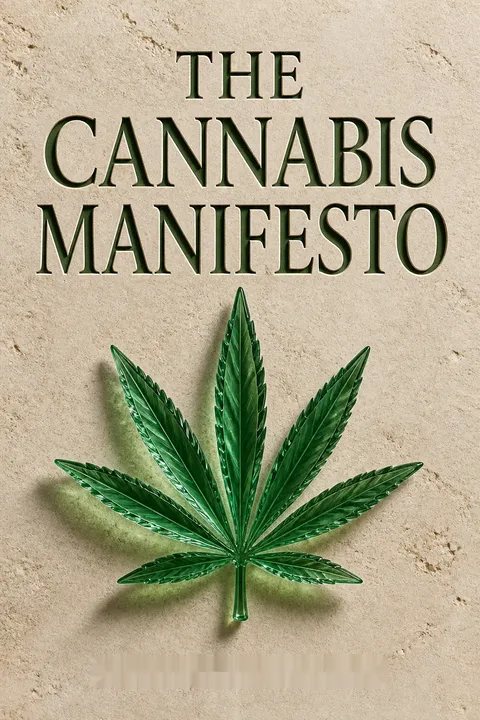


Key Takeaways
Judge cannabis policy by the harms it causes, not its moral symbolism
Follow the consequences. DeAngelo’s central argument is that prohibition has inflicted greater harm than cannabis itself. He points to arrests, incarceration, family separation, racial disparities, and a profitable illegal market, while arguing that enforcement has not stopped use. In 2012, he reports, U.S. authorities made roughly 750,000 cannabis arrests, most for possession. These are figures from the book’s period, not current statistics.
A costly collision. DeAngelo opens with the 2012 federal raid on Oakland’s Oaksterdam University. As agents dismantled a peaceful school, a mass shooting occurred elsewhere in the city; the author reports that the raid slowed local police response. The story makes his larger point: enforcement priorities have consequences beyond the people directly arrested.
What's striking is the book’s insistence that policy be assessed by its total effects, including harms created by enforcement, rather than by the substance’s symbolic status. That approach resembles public-health analysis, which asks whether an intervention reduces injury overall, not whether it communicates moral disapproval. The argument is strongest when it identifies measurable costs such as arrests and unequal enforcement. Its causal claims about broader outcomes, including crime and violence, require more careful comparison than an advocacy narrative can provide. A useful test for any drug policy is whether it reduces harm relative to realistic alternatives, not relative to an imaginary drug-free society.
Trace prohibition to racialized fear before treating it as neutral law
A history of targeting. The book argues that early cannabis bans focused less on the plant’s effects than on the people associated with it. In the early twentieth century, officials and newspapers linked cannabis to Mexican immigrants, Punjabi migrants, Black musicians, and other marginalized groups. Sensational stories portrayed users as violent or corrupting, often without reliable evidence. California enacted an early ban in 1913; by 1937, Congress had passed a federal law that effectively prohibited cannabis through taxation.
Evidence sidelined. DeAngelo contrasts this rhetoric with studies available at the time, including the Indian Hemp Drugs Commission and the later Shafer Commission. Both challenged claims that cannabis inevitably caused violence or social collapse. The Shafer Commission recommended decriminalization, but federal policy did not follow its conclusions.
The history matters because laws can outlive the arguments that produced them. Research on racialized institutions more broadly shows how formally neutral rules can preserve unequal outcomes even after explicit prejudice becomes less acceptable. The book’s account encourages readers to examine both origin and implementation: who was framed as dangerous, whose testimony counted, and who bore enforcement. Historical explanation is not, by itself, proof that every current policy has the same motive. The stronger lesson is methodological: scrutinize a law’s evidence, design, and distribution of costs, especially when its burdens repeatedly fall on the same communities.
Treat cannabis medicine as promising, but match confidence to evidence
A striking case. DeAngelo recounts the experience of Jayden, a child with severe epilepsy whose father brought him to Harborside after conventional treatments had not controlled his seizures. The father reported major improvement after using a CBD-rich tincture. It is a moving account of why families seek options, but one patient’s experience cannot establish that a treatment works for everyone.
A complex plant. The book describes cannabinoids such as THC and CBD, and the body’s endocannabinoid system, which helps regulate physiological processes. It also discusses the entourage effect, the possibility that combinations of plant compounds produce different effects. Historical use and laboratory findings support further investigation, but claims about treating cancer or preventing Alzheimer’s require especially careful distinction between early research and proven clinical benefit.
The book’s strongest medical contribution is its case for research access and better product characterization, not its most sweeping therapeutic claims. A complex mixture can contain useful compounds, yet complexity also makes dose, consistency, interactions, and risk harder to predict. Evidence must be matched to the claim: a laboratory result, an animal study, a patient report, and a controlled clinical trial answer different questions. Jayden’s story illustrates the urgency families feel when existing care fails, while also showing why compassionate experimentation needs safeguards. Curiosity and skepticism are compatible; both protect patients from neglect and from premature certainty.
Assess cannabis by intention and consequences, not by the label recreational
Wellness Theory. DeAngelo uses this term for a way of judging cannabis use by the value a person seeks, rather than dividing use into only medical treatment or getting high. The intended benefit might be relief from pain, better sleep, easier social connection, or heightened enjoyment. He also distinguishes wellness use from misuse, such as consuming to the point of incapacitation or repeatedly avoiding important responsibilities.
Ask before using. The book’s practical test has three questions:
1. What effect is being sought now?
2. What value would that effect add?
3. Could this use harm the user or anyone else?
The framework makes room for personal choice while asking people to take responsibility for dose, setting, and impact on others.
This framework shifts attention from a contested label to observable purpose and consequences. That resembles motivational interviewing, a counseling approach that helps people examine their own reasons for a behavior without beginning with accusation. The questions can make consumption more deliberate, especially for someone unsure whether a habit is serving them. Still, self-assessment has limits: people may underestimate impairment, dependence, or effects on family and work. Intention is informative, not a guarantee of safety. The framework works best when paired with honest feedback from others and clear boundaries around driving, caregiving, and responsibilities.
Replace the illegal market with tested products and accountable local rules
Prohibition creates a vacuum. DeAngelo describes contaminants, unknown growing conditions, and products with unreliable strength as risks of an unregulated market. He recounts how federal authorities once sprayed Paraquat on cannabis fields in Mexico, with some contaminated crop reaching consumers. His response was to help establish Steep Hill, a laboratory that tested cannabis when other local labs refused.
Make safety ordinary. Harborside combined lab testing and product labels with identity checks, staff training, careful handling, and child-resistant packaging. Oakland’s licensing system required applicants to submit security, training, business, and neighborhood plans. DeAngelo contrasts this with Los Angeles, where delayed regulation allowed poorly run shops to proliferate. His example suggests that legalization needs enforceable standards, not merely a change in criminal penalties.
The broader lesson is that regulation can convert hidden risk into inspectable risk. Food and medicine systems rely on testing, labeling, traceability, and recall procedures for the same reason: consumers cannot independently verify every production step. Local rules also create a way to respond when practices fail. But regulation is not automatically fair or effective. If compliance costs are excessive, they can exclude small operators and leave illicit suppliers with a price advantage. The design challenge is to make safety requirements rigorous, transparent, and realistically attainable, with enforcement directed at concrete risks rather than stigma.
Do not let taxes and restrictions turn legalization into prohibition by paperwork
Rules shape the market. DeAngelo warns that legalization can be undermined by high taxes, too few licenses, bans on home growing, narrow medical eligibility, and restrictions that make legal businesses impractical. He describes Washington’s tax structure at the time as charging 25 percent at several stages of the supply chain, pushing legal prices far above some illicit alternatives. The book’s basic economic point is that consumers may return to the underground market when the legal option becomes too costly or inaccessible.
Avoid bottlenecks. DeAngelo favors allowing home cultivation, a sufficient number of providers, and separate licenses for growing, processing, and retail. He also opposes mandatory indoor production, which he argues uses more energy and raises costs. In his view, rules should reduce diversion and protect the public without preserving the illegal market.
This is a political-economy argument: formal legality matters less if the legal channel is too expensive, scarce, or cumbersome to use. Similar patterns appear in taxation and licensing debates across other regulated industries, where burdens can protect incumbents or push activity into informal markets. Yet lower prices and broad access are not the only public goals; child protection, product safety, and environmental safeguards also matter. The useful question is not whether regulation should be strict or permissive, but whether each rule solves a defined problem at proportionate cost. Measure outcomes, then revise rules that fail.
Make reform repair prohibition’s unequal damage, not just legalize sales
Unequal consequences. The book reports that Black Americans used cannabis at rates similar to white Americans but faced much higher arrest rates. DeAngelo recalls his friend Eddie Weems, who faced repeated arrests while DeAngelo, a white teenager using cannabis too, was comparatively protected. The story personalizes a disparity that statistics alone can make easy to ignore. A conviction, the author notes, could block access to education, employment, housing, and other opportunities.
A wider justice claim. DeAngelo connects reform to civil liberties, family stability, public health, and environmental protection. His hemp company, Ecolution, demonstrated ways to make textiles and other goods from hemp, which he presents as a possible alternative to more damaging materials. The book’s vision is that legal change should benefit communities and people previously harmed, not simply create a new industry.
The distinction between ending a prohibition and repairing its legacy is essential. A market can become legal while people punished under the old system remain excluded from jobs, licenses, and investment. This is a familiar problem in institutional reform: changing the rule does not automatically redistribute opportunity. The book’s stories make unequal enforcement concrete, while its broader environmental argument links cannabis policy to land use and resource choices. Those aims should not be treated as automatic consequences of legalization. Equity, ecological standards, and fair access require deliberate policy, public measurement, and participation by affected communities.
Build durable reform through local proof, public evidence, and persistent coalitions
A fight in public. The book follows Harborside through a federal effort to seize the properties where it operated, despite the dispensary’s compliance with California rules. Oakland supported the business, and legal challenges delayed closure. The conflict illustrates how local governments, patients, lawyers, businesses, and elected officials can contest federal policy through different institutions.
Change moves unevenly. DeAngelo points to state experiments, growing public support, new advocacy organizations, and faster communication as forces behind reform. He also describes the setbacks: federal raids, political reversals, and jurisdictions that resisted regulation. His confidence in eventual legalization rests on the accumulation of local examples and shifting public opinion. The book’s closing demand is not passive optimism, but continued organizing until people imprisoned for cannabis offenses are released.
The account shows how policy change often emerges through institutional friction rather than a single decisive victory. Local experiments generate information, advocacy groups translate it for voters, and litigation can protect space for political decisions to catch up. This resembles a feedback system: visible implementation changes public expectations, which can alter electoral incentives. The process remains reversible, however, and a trend is not a guarantee. Durable reform depends on institutions that preserve rights, monitor outcomes, and correct mistakes. DeAngelo’s confidence is best read as a call to maintain coalitions, not as evidence that progress follows an automatic path.
Analysis
The Cannabis Manifesto is an advocacy book built around eight linked claims: prohibition is more damaging than cannabis, the ban emerged through prejudice and misinformation, the plant has medical and wellness value, and legal access should be regulated with social justice in view. Its narrative engine is Steve DeAngelo’s movement from teenage cannabis user to activist and dispensary operator. Personal stories, especially Jayden’s seizures, his friend Eddie’s unequal treatment, and the federal campaign against Harborside, give institutional arguments a human scale.
The book is most persuasive when it connects policy choices to visible mechanisms: criminal records restrict opportunity, unregulated markets weaken product safety, and rules that make legal supply costly can protect illicit competitors. Its practical regulatory examples are unusually concrete for a manifesto. Oakland’s licensing process, Harborside’s laboratory testing, and the comparison with less regulated settings make the abstract case for replacing prohibition with oversight easier to grasp.
Its limitations arise from the same urgency that gives it force. DeAngelo often presents medical findings with confidence that exceeds the evidence described in the text. Historical use, patient testimony, and laboratory results are not interchangeable with proof of clinical effectiveness. Claims about cancer, Alzheimer’s, and broad health benefits need condition-specific evidence, and cannabis carries risks that vary with age, dose, product, and context. The book also tends to treat regulation’s benefits as more predictable than its tradeoffs.
Because the work was published in 2015, its statistics and descriptions of laws are a snapshot, not a current policy guide. Its enduring contribution is a framework for asking better questions: What harms does a policy actually reduce? Who bears its costs? Are legal alternatives accessible and safe? Does reform repair past injury, or merely open a market? Those questions remain valuable even when individual claims require updated evidence.
Review Summary
The Cannabis Manifesto receives generally positive reviews, with readers appreciating its informative content on cannabis history, prohibition, and medical benefits. Many found it well-researched and compelling, though some criticized the writing style and organization. Reviewers praised DeAngelo's personal experiences and activism but noted the book can be repetitive and self-promoting at times. While most found it educational, opinions varied on its effectiveness in changing perspectives. Overall, it's considered a valuable resource for those interested in cannabis reform and wellness.
People Also Read




Glossary
Wellness Theory
Intentional use for valueDeAngelo’s framework for evaluating cannabis use by the effect a person intends, the value they believe it adds, and its consequences for themselves and others. It rejects a simple division between medical use and recreational use. The theory distinguishes purposeful use that supports a person’s well-being from patterns such as incapacitation or avoiding responsibilities.
Entourage effect
Combined cannabinoid effectsThe proposed idea that cannabinoids and other cannabis compounds can produce different effects when used together than when considered individually. DeAngelo uses the concept to explain why varieties and formulations with different chemical profiles may affect people differently. The book presents this as a reason for testing and research, not as a guarantee that a particular combination will help a particular patient.
Endocannabinoid system
Body’s cannabinoid signaling networkA network of receptors, signaling molecules, and related processes in the body that responds to cannabinoids. The book describes it as involved in maintaining internal stability across systems such as the nervous, immune, and digestive systems. The discovery of this system helped researchers investigate how plant cannabinoids affect human physiology and why the body produces its own related compounds.
ABYM theory
Assumption patients are fakingDeAngelo’s label for the claim that an apparently healthy, able-bodied young man visiting a medical cannabis dispensary is probably exploiting medical rules to obtain cannabis. He challenges this assumption with a case in which a young customer seeking many lozenges was actually receiving cancer treatment. The example argues for verification and inquiry rather than diagnosis by appearance.
Clean Green
Cannabis growing certificationA certification program DeAngelo describes as applying standards similar to organic cultivation practices to cannabis gardens. Because federal rules prevented cannabis from receiving official organic certification, Harborside and its partners used this alternative designation. The program aimed to assess cultivation methods and reassure consumers about product quality without using a federally restricted label.
Indian Hemp Drugs Commission
Colonial cannabis inquiryA British parliamentary commission whose extensive 1894 report examined cannabis use in India through testimony from officials, medical practitioners, cultivators, and others familiar with the plant. DeAngelo cites it as an example of systematic investigation that distinguished moderate use from excessive use and found little evidence for the sweeping claims of social harm common in prohibitionist rhetoric.
Shafer Commission
U.S. cannabis policy commissionThe National Commission on Marihuana and Drug Abuse, established after cannabis was temporarily placed in Schedule I under the Controlled Substances Act. Chaired by former Pennsylvania governor Raymond Shafer, it reviewed evidence about cannabis and recommended decriminalizing personal possession and nonprofit transfer. President Nixon rejected its recommendation, and federal cannabis policy remained largely unchanged.
Download PDF
Download EPUB
.epub digital book format is ideal for reading ebooks on phones, tablets, and e-readers.








