

Key Takeaways
Recognize depression as a whole-person illness, not ordinary sadness
More than a mood. Depression can alter concentration, sleep, appetite, energy, movement, pleasure, and a person’s sense of the future. It is not simply everyday sadness turned up louder. Abraham Lincoln described how depressive thinking could grind even a pleasant idea into torment, illustrating why outsiders may mistake illness for weakness or pessimism. The book recounts a patient who had survived near-fatal cancer but feared another depressive episode more, a measure of suffering that ordinary language often fails to convey.
Take suffering seriously. Symptoms can disrupt ordinary tasks and relationships, and may include thoughts of death. Persistent or severe changes deserve professional assessment. The book is educational, not a substitute for diagnosis or treatment.
The distinction between sadness and depression protects people from a familiar error: treating visible difficulty as a failure of effort. The cognitive and physical symptoms matter because they can make even basic tasks costly, while remaining invisible to other people. That gap often breeds shame and conflict. The cancer comparison is an individual patient’s testimony, not a universal ranking of suffering, but it does useful work: it warns healthy observers not to assume that a familiar word describes a familiar experience.
Look for interacting causes, and get the diagnosis checked carefully
Many roads converge. The book uses the stress-diathesis model to explain how an inherited or acquired vulnerability can interact with life pressures. Loss, trauma, isolation, sleep disruption, illness, or substance use may contribute, but no single trigger explains every case. Depression can also appear without an obvious external cause. The author rejects a simple split between “biological” depression and “situational” depression, since both may involve overlapping causes and benefit from overlapping treatments.
Rule out lookalikes. Some medical conditions, including thyroid problems and anemia, can resemble depression. Bipolar disorder also needs careful consideration: its depressive periods can look like major depression, while episodes of unusually elevated or irritable energy change the diagnosis and treatment. A clinician can assess the broader picture and consider co-occurring anxiety or substance problems.
This approach resembles a systems model: a person’s symptoms emerge from interacting biology, experience, relationships, and context, rather than from a single switch. That model discourages both fatalism and blame. It also makes assessment more than a label-finding exercise, since medical mimics and bipolar disorder can materially change care. The book’s specific diagnostic language and prevalence figures date from 2012, so its clinical descriptions should orient questions for a current professional, not replace current diagnostic standards.
Do not turn depression into proof of weak faith or character
Illness is not a verdict. Depression can make prayer difficult, drain energy, distort self-judgment, and produce guilt that bears little relation to actual wrongdoing. The author distinguishes this illness from acedia, a spiritual and moral turning away from God that involves some consent of the will. Acedia may bring restlessness or avoidance of spiritual duties; depression tends to impair functioning more broadly, including bodily energy and concentration. The two can overlap, so no checklist should substitute for assessment.
Do not mislabel spiritual darkness. The “dark night” described by St. John of the Cross concerns spiritual purification, not a medical diagnosis. Depression may involve broad functional impairment, hopelessness, disrupted sleep, or appetite changes. A spiritual director and a mental-health professional can help discern what is happening without assuming that illness is sin.
The book’s distinction is morally important because shame can discourage treatment and isolate the sufferer. It also resists the opposite mistake of treating every spiritual struggle as pathology. Still, the categories are not cleanly separable in lived experience, and apparent patterns should not be used by family or clergy to diagnose someone. The most humane use of these distinctions is as a reason to consult appropriate helpers, not as a test the suffering person must pass.
Let clinical care and Catholic spiritual support work side by side
No false choice. The book argues that medicine and faith address different, connected dimensions of human life. Psychiatry can assess illness and offer treatment; prayer, worship, and spiritual guidance can address a person’s relationship with God, meaning, and community. Neither should pretend to replace the other. The author cites a review in which 72 percent of studies found a positive association between religious commitment and mental health. That finding suggests potential value, not proof that religious practice prevents depression or cures it.
Find a respectful team. A clinician need not share a patient’s religion, but should be competent and willing to respect the patient’s convictions. A spiritual director should know when medical referral is needed. If possible, with the patient’s permission, the helpers can coordinate rather than offer conflicting advice.
The model is strongest when it treats faith as part of the patient’s actual life, rather than as either a symptom to remove or a cure to prescribe. Religious communities can offer belonging, practices, and a language for suffering, while professional care brings clinical expertise. The cited research is observational, so healthier people may also be more able to participate in religious life, and community support may account for some benefits. Respectful integration requires curiosity, consent, and role clarity.
Treat medication as one tool, with careful diagnosis and follow-up
Relief without reductionism. Antidepressants can reduce serious suffering, but depression is not simply a chemical imbalance, and medication is not the whole treatment plan. In the book’s account, benefits may take several weeks to emerge, and a clinician may need to review dose, response, side effects, and other options. The author describes a general pattern in which some patients remit, some improve partly, and some do not respond to a given medication. Persistent symptoms call for review, not self-directed changes.
Monitor the whole picture. Bipolar disorder matters because antidepressant treatment can worsen manic or mixed symptoms in some people. Early treatment also calls for attention to suicidal thinking and changes in energy or mood. Medication decisions, including stopping or switching, belong with a qualified clinician. For severe depression that resists other treatment, the book discusses ECT and other specialist procedures.
The key contribution is a middle position: medication is neither a moral failure nor a complete account of the person. The book correctly emphasizes diagnosis and monitoring, especially when bipolar symptoms may be subtle. Its treatment descriptions reflect the evidence and terminology available in 2012, and medical guidance changes. Patients should use them to frame questions for a current prescriber, not to select a drug or interpret side effects alone. A good treatment relationship makes uncertainty discussable.
Use psychotherapy to test thoughts, change patterns, and heal relationships
Different routes to change. Cognitive therapy helps a person notice automatic negative thoughts and test them against evidence. The book calls the pattern of negative views about oneself, the world, and the future the cognitive triad. Behavioral approaches target actions and avoidance; interpersonal therapy focuses on current relationships, loss, and conflict. Depth-oriented therapy may explore earlier wounds and recurring emotional patterns. The best approach depends on the person, the problem, and the therapist’s skill.
Forgiveness is not forced. The author describes a process that begins by recognizing harm and anger, then considers whether and how to forgive. Forgiveness does not deny wrongdoing or eliminate a person’s right to seek justice. It is a voluntary moral choice, not an instruction to reconcile with an unsafe person. Therapy also depends heavily on trust and a competent, ethical clinician.
These methods illuminate different levers: thought, behavior, relationship, and personal history. The book’s insistence on therapist competence and fit is especially useful because therapeutic technique does not operate in a vacuum; trust affects what a person can safely examine. Forgiveness can loosen the grip of resentment for some people, but it should never be treated as a universal treatment or a duty imposed on someone who has been harmed. The distinction between forgiving and excusing is essential.
Take suicidal thinking seriously; create distance from danger and involve help
Treat risk as urgent. Depression can narrow a person’s thinking until death seems like the only escape. The book stresses that suicidal statements should be taken seriously, even when expressed casually, and that a person’s risk cannot be reliably predicted from appearance alone. Asking whether someone has a plan or access to lethal means can help determine what immediate support is needed.
Do not manage danger alone. A safety plan should be developed with a clinician experienced in suicide risk. During an acute crisis, reduce access to dangerous means, involve trusted people, and seek urgent professional evaluation. If someone may act soon, contact emergency services or go to an emergency department. The book also explains that severe psychological disturbance can diminish a person’s moral responsibility, and that the Catholic Church does not teach despair about the salvation of those who die by suicide.
The emphasis on practical protection is more useful than trying to solve the mystery of why a person is suicidal in the middle of a crisis. Access, isolation, intoxication, and acute distress can make a dangerous moment more actionable, so support should be immediate and concrete. The theological discussion may comfort bereaved families, but it should never soften the urgency of prevention. Nor should survivors be burdened with the belief that they could have predicted or controlled another person’s death.
Build recovery around sleep, movement, routine, and real human contact
Make daily life supportive. The book connects depression with disrupted sleep, isolation, and loss of ordinary structure. Regular sleep and waking times, manageable daily routines, social contact, and aerobic exercise may support recovery, particularly in milder cases. Exercise can be difficult when energy and motivation are low, so companionship or a routine may help make it more attainable. These measures are supports, not substitutes for care when symptoms are severe.
Notice the social setting. The author also points to loneliness, relationship strain, and a culture of constant stimulation and material pressure as possible contributors. Robert Burton’s old advice against idleness and isolation is reframed as a practical warning: withdrawal can deepen the very condition that makes contact feel difficult. Small, consistent contact with safe people can matter even when it does not immediately feel rewarding.
Routine is a form of scaffolding: it lowers the number of decisions a person must make when concentration and motivation are impaired. Social contact adds accountability and belonging, while exercise and sleep influence both body and mood. These practices are valuable partly because they reconnect the person with a world larger than private rumination. Their limits matter, though. Telling someone with severe depression to exercise or socialize can become another accusation unless practical support helps make those actions possible.
Keep spiritual practices small, concrete, and merciful during depression
Adapt the practice. Depression may make sustained concentration or elaborate prayer impossible. The book recommends simple options: familiar vocal prayers, a short passage from a Gospel or Psalm, silence, or a brief conversation with God about what is actually happening. Its ARRR method offers four prompts: acknowledge what is present, relate it to God, receive what is offered, and respond in love. The method is a guide, not a test of spiritual performance.
Let ordinary life count. Catholic practices such as Mass, Communion, Confession, and spiritual direction can offer worship, community, forgiveness, and guidance. Confession addresses personal sin, not clinical depression. The author also presents ordinary work and small acts of care as possible offerings, while recognizing that illness may limit capacity. The point is not to demand productivity, but to meet a person where they are.
Scaling spiritual practice to available capacity is a form of pastoral realism. A familiar prayer can provide structure when original words will not come, and shared worship can reduce the burden of having to generate meaning alone. The distinction between sacramental forgiveness and medical treatment is particularly important: spiritual care can be profound without claiming to cure a disorder. Likewise, presenting work as meaningful should never romanticize exhaustion or discourage rest when illness requires it.
Practice hope as a future-facing commitment, not forced cheerfulness
Hope is not a mood. The book presents hope as trust in a future good, grounded in Catholic belief in God’s care and eternal life. It draws on psychiatrist Aaron Beck’s study of suicidal patients, in which hopelessness was a powerful warning sign. That does not mean a person can simply choose to feel hopeful; depression can make the future seem closed. The author instead treats hope as something supported through care, relationship, prayer, and patient perseverance.
Begin with what remains. Divine filiation is the Christian belief that, through baptism and union with Christ, a person is a child of God. It is presented as an objective religious truth, not a feeling that must be constantly experienced. The book points to small sources of connection, such as a child’s presence or another person’s kindness, while insisting that suffering need not be disguised as happiness.
This account avoids equating hope with optimism. A person may feel bleak while still accepting help, remaining connected, or taking one protective step; those actions can preserve possibilities that depression obscures. The theological account offers a durable framework for believers, but it should not be imposed on people who do not share it. Clinically, hope is more credible when embodied in available treatment, trustworthy relationships, and realistic next steps, rather than offered as a slogan.
Analysis
The book’s central achievement is its refusal to force depression into a single explanatory system. It treats brain, body, thought, relationships, culture, and faith as dimensions of one human life, then asks different forms of care to contribute without pretending to be interchangeable. That is a useful corrective both to reductionism, where medication is imagined to explain the whole person, and to spiritual moralism, where symptoms are treated as evidence of sin or insufficient devotion.
Its Catholic framework is not merely decorative. It changes how the book interprets innocent suffering, guilt, hope, suicide, and the value of ordinary life. The claim that a person’s identity as God’s child remains true even when that person cannot feel divine comfort can function as a counterweight to depression’s harsh self-judgments. For readers outside that theology, the broader lesson is that care should take a patient’s own account of meaning seriously rather than dismissing it as irrelevant.
The clinical material needs historical perspective. Published in 2012, the book uses diagnostic conventions and treatment summaries from its period; its statistics and descriptions should not be treated as current clinical guidance. Some claims about religion and mental health are correlations, not proof of cause, and the author’s theological explanation of suffering is a faith commitment rather than a medical finding. Those limits do not erase the book’s core practical message: seek qualified assessment, consider medical and psychological treatment, involve respectful spiritual support when wanted, and take suicidal risk seriously.
The most responsible reading holds both compassion and caution together. Meaning can help someone endure suffering, but it should never be used to tell a person that suffering is necessary, deserved, or a substitute for treatment. Faith may accompany recovery; it is not a test the ill must pass.
Review Summary
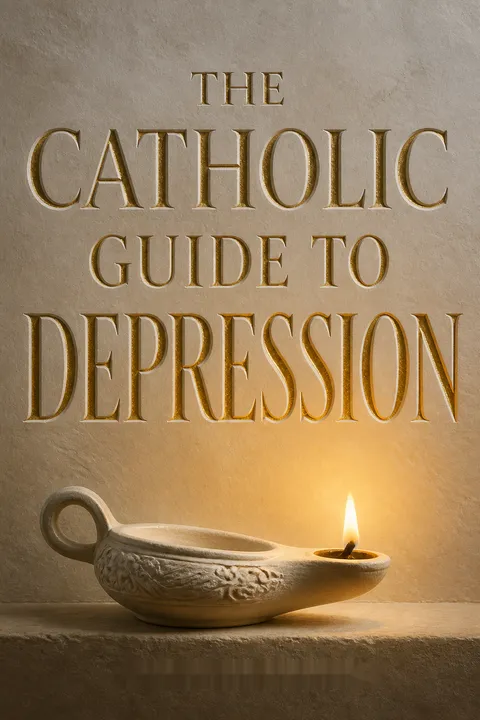
The Catholic Guide to Depression receives mostly positive reviews, with readers praising its blend of psychological and spiritual perspectives on depression. Many find it informative, compassionate, and helpful for understanding mental health from a Catholic viewpoint. Reviewers appreciate the author's emphasis on Jesus' suffering and the book's discussion of various treatment options. Some criticize its dense writing style and heavy focus on theology. Overall, readers recommend it for those dealing with depression, their loved ones, and spiritual advisors.
People Also Read





Glossary
Stress-diathesis model
Vulnerability interacting with stressA model in which an underlying vulnerability, such as genetic predisposition, interacts with stressors and circumstances to contribute to depression. The vulnerability may be strong enough for symptoms to emerge with little obvious stress, or symptoms may develop when several pressures combine. It rejects a simple choice between biological and environmental explanations.
Anhedonia
Reduced capacity for pleasureA common feature of depression in which activities that once brought pleasure or interest no longer feel rewarding. It can affect hobbies, relationships, work, food, and spiritual or artistic activities. Anhedonia may lead a person to withdraw, but it is a symptom of illness, not proof that the person no longer values others or life.
Acedia
Sorrow toward spiritual goodA term in Christian spiritual writing for a moral and spiritual disorder involving sorrow or aversion toward God and the good of spiritual life. The book distinguishes it from clinical depression, which commonly impairs energy, concentration, and functioning across many areas. The conditions can overlap, so spiritual interpretation alone cannot establish a diagnosis.
Dark night
Spiritual purification through drynessIn St. John of the Cross’s account, a period of spiritual purification in which a person experiences dryness or pain while being drawn toward deeper union with God. The book distinguishes this spiritual process from clinical depression, which may involve widespread impairment, bodily symptoms, and hopelessness. A person can experience spiritual difficulty and depression at the same time.
Consolation and desolation
Movements toward or from GodTerms in Ignatian spiritual discernment for interior movements that influence a person’s spiritual direction. Consolation generally strengthens movement toward God, while desolation discourages or unsettles it. The book emphasizes that some emotional states, including depression, may have non-spiritual causes, even when they affect spiritual life. Discernment benefits from a capable spiritual director and clinical care when indicated.
Cognitive triad
Three recurring negative viewpointsAaron Beck’s description of a depressive pattern of negative thinking about oneself, one’s circumstances or the world, and the future. These connected judgments can reinforce low mood and hopelessness. Cognitive therapy helps a person notice such automatic thoughts and examine them against evidence, aiming for more accurate rather than merely more positive thinking.
ARRR
Four prompts for prayerA simple prayer method described in the book: acknowledge what is happening inwardly, relate it honestly to God, receive what God offers, and respond in love. It is intended as a flexible guide for prayer, including during distress, not as a required formula or a clinical treatment. The steps can help turn private rumination into a relational act.
Divine filiation
Identity as God’s adopted childIn Catholic theology, the belief that through baptism and union with Christ, a person becomes an adopted child of God by grace. The book presents this as an objective spiritual reality that does not depend on whether someone feels loved or spiritually consoled at a given moment. It is offered as a foundation for identity and hope, not as a medical explanation of depression.
About the Author
Other books by Aaron Kheriaty
Download PDF
Download EPUB
.epub digital book format is ideal for reading ebooks on phones, tablets, and e-readers.








