

Key Takeaways
Treat consent as a hard boundary, especially when authorities invoke collective health.
Consent was a hard-won safeguard. The book begins with eugenics, not Covid. In the United States, state laws led to about 65,000 involuntary sterilizations, disproportionately affecting poor people, minorities, and those labeled unfit. Nazi doctors extended this logic from controlling reproduction to killing disabled patients, claiming that individual rights could yield to the health of society. After the war, the Nuremberg Code made voluntary, informed consent a foundational rule for human research.
Kheriaty sees a warning. He argues that pandemic mandates revived a utilitarian logic in which individuals could be compelled for an undefined collective good. His comparison is a warning about ethical reasoning, not a claim that pandemic policy was equivalent to Nazi crimes. The practical test is whether people receive understandable information and retain a meaningful right to refuse.
What's striking is how consent functions as more than a signature: it is a check on the power imbalance between institutions and individuals. Research ethics developed precisely because good intentions and scientific value did not prevent abuses. At the same time, consent is not an absolute answer to every collective-risk problem. Public health sometimes involves duties that cannot be reduced to individual choice. The hard question is how to justify limits transparently, narrowly, and with review, rather than treating emergency rhetoric as permission to bypass the ethical process.
Make emergency powers expire unless elected bodies renew them against clear criteria.
Temporary powers need endpoints. Kheriaty argues that pandemic measures gained authority through declared emergencies, while the legal threshold for declaring one and the conditions for ending it remained unclear. In the United States, a national emergency can unlock 136 statutory powers. The book contrasts this with the Roman Republic's temporary dictators, whose authority was constrained by a six-month limit and oversight of public spending. It also recalls how emergency rule under the Weimar Constitution became a route to authoritarian government.
The danger is institutional drift. Emergency powers can help officials respond quickly to genuine disasters, but indefinite renewal makes temporary exceptions ordinary governance. Kheriaty proposes measurable legal thresholds, strict time limits, and legislative or judicial review. He also discusses pandemic planning exercises, including Event 201, as evidence of how centralized responses were rehearsed, while treating them as part of a broader policy history.
The design problem is not whether emergencies exist, but who defines them, who reviews the definition, and who can end them. Sunset clauses and independent review are familiar tools in constitutional design because they force a decision-maker to justify continued authority rather than rely on inertia. Pandemic simulations can reveal blind spots and prepare institutions, but their existence alone does not prove a coordinated plan for real events. That distinction matters: scrutiny is strongest when it separates documented policy choices from inferences about intent.
Treat QR passes and campus tracking as prototypes, not temporary paperwork.
Small systems can normalize surveillance. At the University of California, Irvine, Kheriaty describes ZotPass, a QR-code system that combined frequent testing, symptom checks, vaccination records, and monitoring of campus access. Other universities reportedly restricted gatherings and encouraged students to report rule-breaking. The book also cites government use of mobile-phone location data to study movement during lockdowns. It notes research suggesting that a few location and time points can identify people in supposedly anonymous mobility datasets.
Workplaces offer another example. Amazon's warehouse tracking systems record workers' pace and time away from scanning devices, including bathroom breaks. Kheriaty connects these cases to the panopticon, a model of surveillance in which people regulate themselves because they may be watched at any moment. The concern is not merely data collection, but the migration of detailed monitoring into ordinary life.
The important shift is from collecting information to making participation conditional on continuously proving compliance. That is a question of system design: what is gathered, who can access it, how long it persists, and whether a person can appeal an automated decision. Digital tools can also support coordination and safety, so the technology itself does not settle the ethical question. The book is most persuasive when it asks for limits on function and reuse. Its warning is less useful when surveillance is treated as a single, uniform threat regardless of context.
Protect scientific dissent because consensus can reflect evidence or institutional pressure.
Science is not a single voice. Kheriaty distinguishes science, which tests claims and revises conclusions, from scientism, the belief that science is the only valid form of knowledge. He argues that officials sometimes presented contested judgments as unquestionable facts and that professional bodies threatened discipline for doctors whose statements conflicted with public messaging. In his account, such pressure narrows debate and discourages researchers from challenging prevailing interpretations.
The stakes are practical. During the pandemic, he says, physicians and scientists who questioned policies could be labeled anti-science or misinformation spreaders, even when raising questions about evidence or individual risk. The book calls for open debate, public data, and a distinction between scientific findings and political decisions made in their name. It does not imply that every dissenting claim is correct; rather, it argues that claims should be evaluated by evidence instead of status or conformity.
A healthy research culture needs both expert knowledge and mechanisms for contesting it. Peer review, replication, disclosure, and open criticism help expose error, but none guarantees truth; they are procedures for making mistakes more visible and correctable. The distinction between evidence and policy is especially valuable because policy also weighs values, resources, and unequal effects. A further safeguard is symmetrical skepticism: official claims and dissident claims should face comparable standards of evidence. Otherwise, dissent becomes either automatically suspect or automatically virtuous, and neither posture is scientific.
Count the harms of lockdowns alongside the disease they aim to contain.
Isolation carried measurable costs. Kheriaty draws on a June 2020 CDC survey in which one quarter of adults aged 18 to 24 reported seriously considering suicide in the previous month. The survey also found sharp increases in reported anxiety and depression compared with 2019. The book describes patients avoiding hospitals, older people losing social stimulation, and families being kept from dying relatives. These are examples of harms caused or intensified by the response, not by infection alone.
The effectiveness claim is contested. Kheriaty cites a Johns Hopkins review that concluded lockdowns reduced Covid mortality by an average of 0.2 percent in the studies it examined, with substantial economic and social costs. He argues that lockdowns failed to meet their stated goals. The wider lesson is to assess benefits, collateral harms, and distributional effects together, rather than treating one disease metric as the whole of public health.
This is a valuable corrective to single-outcome thinking. An intervention can reduce one risk while increasing others, and the burden may fall hardest on people with less money, less secure work, or greater isolation. But causal assessment is difficult: comparing places with different policies also means comparing different populations, timing, health systems, and measurement choices. A review's conclusion depends on what studies it includes and how it defines success. Good policy analysis should therefore publish uncertainty and competing outcomes, not replace one confident story with another.
Do not turn vaccination status into a passport for ordinary civic life.
Passports changed the meaning of access. Vaccine passes were required in many places to enter restaurants, attend events, travel, or work. Kheriaty argues that they were unreliable measures of infection risk and functioned more like temporary permissions to participate in public life. He points to outbreaks at highly vaccinated events and institutions as evidence that passes did not guarantee containment. He also argues that people with prior infection were often excluded from policy decisions, despite research on infection-acquired immunity.
His own case makes the principle personal. Kheriaty sued the University of California over its mandate and was fired after refusing vaccination, even though he says he had recovered from Covid. He frames this as a conflict between institutional rules and individualized medical judgment. The book's scientific claims about comparative immunity and vaccine effectiveness are contested; its ethical question remains distinct: what evidence and limits should be required before medical status governs access to work or public spaces?
A credential becomes politically powerful when it is linked to necessities rather than optional services. That makes accuracy, proportionality, and an appeal process essential, especially when the underlying measure changes over time. The book's strongest point is the distinction between recommending an intervention and coercing it through employment or exclusion. Its weaker point is the tendency to treat selected outbreak data as a complete verdict on policy effectiveness. A rigorous assessment needs risk by age and health status, changing variants, and explicit criteria for ending restrictions.
Follow the money when public agencies claim to speak for science.
Funding shapes institutional incentives. The book describes pharmaceutical user fees that, by 2017, supplied a large share of the FDA's scientific review budget. It also cites industry funding of research, drug advertising in media, and movement of officials between regulators and companies. Kheriaty argues that these relationships can influence priorities and weaken public trust, especially when agencies withhold data to avoid encouraging vaccine hesitancy.
Transparency became a battleground. After the Pfizer vaccine received approval, Kheriaty and other researchers sought clinical-trial documents from the FDA. The agency initially proposed a release schedule that would have taken decades; a judge ordered a much faster timetable. The book presents this episode as evidence that public access to research data should not depend on litigation. It calls for independent trials, public data, and stronger barriers between regulators and industry.
Conflicts of interest do not prove that a finding is false, but they change what safeguards are needed. Public trust depends not on officials being presumed pure, but on making incentives visible and decisions auditable. Independent analysis is especially important when the same institutions fund research, review products, and communicate policy. Still, eliminating every industry connection may be impractical in specialized fields where expertise is scarce. Disclosure, independent replication, recusal rules, and public access to underlying data can address conflicts without pretending that expertise can be separated from all institutional relationships.
Reject systems that fuse identity, health data, and programmable money.
Convenience can build a control system. Kheriaty links vaccine certificates to digital identity systems that may combine biometrics, medical records, travel, and financial information. He describes India's Aadhaar system, which ties biometric identification to access to public services, and warns that missing or failed identification can exclude people from benefits. He also discusses central bank digital currencies, which could allow issuers to place conditions on how funds are spent.
The future scenario is deliberately unsettling. In his imagined Seattle of 2030, social-responsibility scores shape access to jobs, venues, and purchases. This is a projection, not a report of an existing system. Its purpose is to show how separate tools might combine into a means of reward and exclusion. Kheriaty argues that digital IDs and centrally controlled currencies should be rejected; the broader question is whether rights, privacy, and redress can be protected as these tools expand.
The core issue is linkability. A health record, identity credential, and payment system may each have a legitimate use, yet linking them can make it possible to infer sensitive behavior and impose penalties across domains. A useful test is whether the system has data minimization, independent oversight, meaningful opt-out, and an offline alternative. The book's alarm is strongest as a warning about cumulative infrastructure, but its forecast assumes that technical capacity will become centralized control. Law, architecture, and public choice can either reinforce or resist that outcome.
Keep medicine oriented toward healing people, not redesigning human nature.
The body is more than machinery. Kheriaty contrasts a Hippocratic approach, where medicine assists the body's healing, with a technocratic view that treats the body as programmable material. He uses debates about mRNA technology and transhumanism to illustrate this philosophical divide. Transhumanism, in his account, seeks to use technology to enhance or remake human capacities, potentially moving beyond ordinary biological limits. He warns that this ambition can turn patients into projects and make technical power seem like an unquestioned good.
A literary image clarifies the concern. In C. S. Lewis's That Hideous Strength, a scientist proposes replacing living trees with artificial ones because natural life is messy and unpredictable. Kheriaty uses the scene to question a dream of perfect control. This is not an argument that technological medicine is inherently wrong. It is a call to ask whether an intervention heals, what risks it creates, and whether the person affected has meaningful consent.
The contrast between healing and redesign is philosophically vivid, but it can become too stark. Medicine has always used tools to alter bodily processes, and some interventions restore capacities that disease has disrupted. The better distinction is not natural versus technological, but care versus instrumentalization. Purpose, evidence, risk, consent, and fair access help determine whether an innovation serves a person or treats that person as raw material. This framework can support scientific progress while resisting the assumption that technical possibility alone supplies moral permission.
Build local ties and legal checks before the next emergency arrives.
Resistance needs institutions and relationships. Kheriaty describes the Canadian trucker convoy as a peaceful, grassroots protest that helped pressure several provinces to lift mandates. He also tells how he challenged his university's rules, lost his job, and pursued legal action. These stories illustrate the personal cost of dissent, but also the possibility of organized civic resistance. The book urges readers to rebuild face-to-face relationships and communities rather than retreat into isolation.
Reform must be concrete. Kheriaty proposes limits on emergency declarations, stronger legislative review, public access to clinical-trial data, reduced conflicts of interest, and more open scientific criticism. He supports nonviolent protest and civil disobedience when mandates are unjust. His larger claim is that freedom depends on citizens who can deliberate, organize, and hold leaders responsible, not merely on written rights. Local relationships matter because they make collective action possible when official institutions fail.
The book's ending turns a critique of centralized systems into a practical theory of civic capacity. Trust, mutual aid, and local association create alternatives to both isolation and dependence on distant authorities. This connects political resilience to everyday institutions: neighborhoods, professional networks, families, and voluntary groups. Protest alone cannot guarantee sound policy, and decentralized movements can also spread errors or exclude outsiders. Durable resistance therefore needs peaceful discipline, clear goals, internal accountability, and respect for pluralism, alongside the courage to challenge concentrated power.
Analysis
The book is a polemic, memoir, political theory, and institutional critique woven around one central warning: emergency public health can become a durable system of governance when it joins state powers, digital monitoring, and corporate or scientific authority. Its narrative begins with eugenics and informed consent, moves through pandemic policy and the author's dismissal, then projects a digitally managed future before proposing legal and civic resistance. The structure gives abstract claims human weight through episodes such as the author's firing, campus QR systems, and the Canadian convoy.
Its most durable contribution is the insistence that public health decisions are also ethical and constitutional decisions. Measures must be judged not only by intended benefit, but by consent, uncertainty, proportionality, transparency, and distribution of harm. The distinction between science as a revisable method and scientism as a claim to exclusive authority is especially useful for understanding why dissent and policy debate matter.
The book is also markedly partisan in its selection and interpretation of evidence. It treats some disputed clinical findings, causal claims about lockdown harms, and forecasts of institutional intent with more certainty than the evidence presented can support. Historical analogies can illuminate mechanisms, but they do not establish equivalence or prove that present actors share earlier regimes' aims. Pandemic simulations show that institutions rehearsed scenarios; they do not, by themselves, demonstrate that real events were orchestrated. Likewise, conflicts of interest warrant scrutiny, but do not automatically invalidate research.
A careful reader can retain the book's strongest questions without accepting every conclusion: Who has authority during emergencies? What ends that authority? Can affected people refuse or appeal? Are the data and incentives visible? The answer requires neither blind trust nor blanket suspicion, but institutions designed to make power contestable and mistakes correctable.
Review Summary
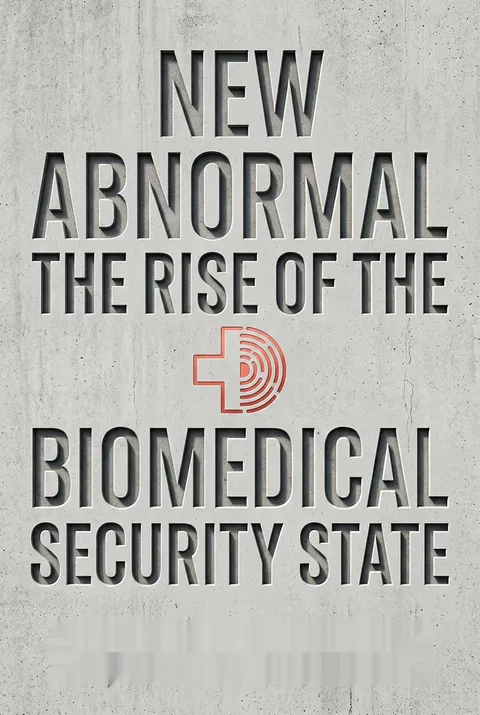
The New Abnormal receives mostly positive reviews, with readers praising its insightful analysis of pandemic policies and the rise of biomedical surveillance. Many found it thought-provoking and well-researched, highlighting issues of government overreach and loss of personal freedoms. Critics argue it misrepresents facts and promotes dangerous misinformation. The book's epilogue, depicting a dystopian future, was particularly impactful for many readers. Overall, it's seen as a controversial but important work on the societal impacts of COVID-19 responses.
People Also Read






Glossary
The New Abnormal
Emergency governance as normalKheriaty's term for a social and political condition in which emergency measures become routine and reshape everyday life. He connects it to public health authority, digital monitoring, restrictions on movement, and the treatment of health security as a reason to suspend ordinary liberties. It names the future he argues should be resisted.
Biomedical Security State
Health, surveillance, and state powerKheriaty's name for an alliance among public health institutions, digital technologies of surveillance and control, and state police powers. In his account, this arrangement enables authorities to monitor populations and impose rules during declared emergencies, while weakening consent, privacy, and ordinary democratic checks.
state of exception
Emergency suspension of normal limitsA political and legal condition in which authorities claim extraordinary powers because of an emergency. Kheriaty uses the term to describe how ordinary safeguards can be suspended or bypassed, especially when the emergency has no clear threshold or end date. The central risk is that exceptional authority becomes a durable feature of government.
scientism
Science claimed as sole knowledgeKheriaty's term for the philosophical claim that science is the only valid form of knowledge. He distinguishes it from scientific practice, which relies on testing, debate, and revision. In his argument, scientism turns provisional findings into political authority and can exclude ethical, religious, or dissenting claims from public discussion.
megamachine
A system built from peopleBorrowed from Lewis Mumford, the megamachine is a social system that organizes human beings as components in a larger mechanism of order, efficiency, and control. Kheriaty applies the idea to digitally monitored workplaces and institutions, where algorithms direct behavior and individual needs can be subordinated to organizational goals.
digital panopticon
Networked, persistent social surveillanceKheriaty's extension of the panopticon, Jeremy Bentham's model of a space designed for continuous observation. In a digital panopticon, phones, cameras, location data, and online audiences can make people visible to institutions and one another. The possibility of being watched can lead individuals to monitor and restrict their own behavior.
Event 201
A pandemic response simulationA 2019 tabletop exercise organized by the Johns Hopkins Center for Health Security, the World Economic Forum, and the Bill & Melinda Gates Foundation. Participants discussed a fictional coronavirus pandemic and possible responses involving government, business, health agencies, and media. Kheriaty cites it as an example of pandemic planning, not as proof that the later pandemic was planned.
Hippocratic paradigm
Medicine assisting bodily healingKheriaty's description of a medical outlook in which the body is an integrated organism with capacities for healing, and medicine supports those capacities. He contrasts this with a technocratic view that treats the body as programmable material. The distinction is used to raise ethical questions about purpose, risk, consent, and human flourishing.
About the Author

Download PDF
Download EPUB
.epub digital book format is ideal for reading ebooks on phones, tablets, and e-readers.








