

Key Takeaways
Follow a trusted ICU doctor's transformation, but separate testimony from proof.
A changing physician. Kory begins as a conventional academic doctor who trusts major medical journals, public health agencies, and hospital practice. His daughter's serious illness and his experience with intravenous vitamin C in sepsis unsettle that confidence. When COVID arrives, he believes he sees treatments dismissed before they can help patients, and the memoir becomes an account of his growing distrust of medicine's institutions as well as his campaign for ivermectin.
A personal lens. These experiences explain the urgency and emotional force of the book. They also shape its limits: Kory tells the story from inside his own conflicts, and his account often moves from witnessing a problem to interpreting its cause.
What's compelling is the account of a clinician revising beliefs through experience rather than presenting himself as a lifelong dissident. That makes the narrative useful for understanding how institutional trust can break. Yet close observation is not the same as a controlled comparison. Personal cases can reveal questions that research should test, but they cannot establish that a treatment caused a recovery or that an institution acted with a particular motive. The most reliable reading holds both points at once: the experiences deserve attention, and the conclusions require independent evidence.
Treat timing as part of the intervention, not a footnote.
The clinical clock. Kory argues that critical-care treatments can lose value when started too late. He describes a vitamin C, corticosteroid, and thiamine combination called HAT, which he and colleague Paul Marik used for sepsis. Marik's early observational comparison reported far lower mortality among treated patients, and Kory recounts a severely ill transplant patient who improved quickly after receiving the protocol. Kory says his later analysis found benefit depended on giving intravenous vitamin C early.
A stronger example. Kory's early public support for corticosteroids in hospitalized COVID patients was later supported by the RECOVERY trial, which found benefit for patients requiring oxygen or ventilation. That success is a reason to examine a dissenting claim, not to assume every other claim is equally sound.
Timing is a genuine design issue in acute medicine: a therapy tested after a disease process has advanced may answer a different question from one given early. Kory's steroid advocacy shows that clinical reasoning can identify a promising direction before large trials settle it. But a striking before-and-after result, such as the HAT experience, is vulnerable to changes in patient selection, co-treatment, and care over time. The useful principle is to make timing explicit in both clinical practice and trial design, while treating early observations as signals to investigate rather than final proof.
Build a capable coalition before institutions settle on one answer.
A working alliance. In spring 2020, Kory, Marik, and other physicians, researchers, and communications specialists formed the Front Line COVID-19 Critical Care Alliance, or FLCCC. They shared emerging studies and clinical observations, then developed MATH+, a hospital protocol combining several proposed treatments. Their collaboration joined bedside experience with expertise in critical care, pharmacology, research, and public communication.
More than a website. The group grew through volunteer work, small donations, and later larger contributions. It published protocols, held webinars, and sought attention from hospitals and media outlets. Kory credits the alliance with reaching clinicians and patients who felt standard guidance offered little beyond supportive care. The book also describes how the group struggled to win acceptance from academic centers and major news organizations.
The FLCCC story illustrates how a network can move faster than a hierarchy during a fast-changing emergency. Diverse skills matter: clinicians may recognize a pattern, statisticians can test it, and communicators can make the result understandable. The risk is that a close-knit group can become an echo chamber, especially when members share a strong initial hypothesis and face hostile critics. Good collaboration therefore needs both trust and friction: independent replication, explicit uncertainty, and a willingness to change protocols when findings fail to hold up.
Kory frames ivermectin's rejection as a test of whom medicine serves.
The central dispute. Ivermectin is an antiparasitic drug whose discovery earned Satoshi Omura and William Campbell the 2015 Nobel Prize in Medicine. Kory argues that cell studies, clinical reports, and early research suggested it could help prevent or treat COVID. He cites a Florida hospital study, data from Peru, and a tally of dozens of studies as reasons the FLCCC adopted it in its protocols. He interprets the resistance to ivermectin as evidence that commercial and institutional interests displaced patient welfare.
A contested conclusion. The book itself describes major randomized trials that did not find the hoped-for benefit, but Kory disputes their design and interpretation. Large trials, including TOGETHER and ACTIV-6, did not establish clinically meaningful benefit at the regimens tested. The narrative documents a fierce argument about evidence; it does not prove ivermectin was a suppressed cure.
The book's strongest question is whether financial incentives can distort what gets studied, published, and promoted. That question deserves scrutiny across medicine, not just in this dispute. But suspicion about incentives cannot substitute for evidence that a drug works, and a plausible biological mechanism or a set of recoveries cannot establish causation. Large randomized trials have an important role precisely because uncontrolled observations can mislead. Their limitations should be examined, but disagreement with their result is not itself proof of corruption.
Learn who funded and framed a study before trusting its headline.
A playbook for influence. Kory describes a framework he encountered through scientist Bill Grant: five disinformation tactics called the fake, the fix, the blitz, the diversion, and the screen. In his account, the fake includes studies designed to produce negative findings, positive results left unpublished, and critical articles planted in journals. The blitz means attacking the credibility of researchers; diversion means manufacturing doubt about evidence that is inconvenient to powerful interests.
Apply it carefully. Kory uses this framework to interpret the ivermectin dispute, including the handling of Andrew Hill's early review and the WHO's recommendation. He alleges that conflicts of interest and outside pressure shaped the conclusions. His account makes funding and authorship worth checking, but it does not establish that every disputed study or editorial was deliberately manipulated.
The framework is useful because it shifts attention from a study's conclusion to the process that produced it: funding, authorship, methods, and editorial decisions. Research on conflicts of interest supports transparency as a basic safeguard. Still, a framework can become too powerful if it explains every unwelcome result as a tactic. A sound investigation needs evidence for each claim of interference, not just a pattern that seems suspicious. The same standard should apply to industry-funded work, independent advocacy, and critics of both.
Scrutinize trial flaws without treating every flaw as proof of fraud.
The Big Six. Kory groups six large ivermectin trials under this label and argues that their design or conduct weakened the chance of finding a benefit. He points to low doses, delayed treatment, enrollment of lower-risk patients, possible ivermectin use among control participants, and changes to trial plans. He also questions investigators' financial ties and says that some authors did not release individual patient data.
What a flaw means. These concerns can matter: an underpowered trial or an inappropriate endpoint may miss a real effect. But the presence of a limitation does not show it was intentional, and a nonsignificant result is not automatically proof of no effect. The book's accusations of deliberate fraud are stronger than its presentation of design concerns alone can demonstrate.
Trial literacy means inspecting the protocol, recruitment, dose, outcomes, missing data, and analysis rather than stopping at the abstract. Preregistration and public access to anonymized data make that audit more credible. Yet research is rarely flawless, and design weaknesses can affect results in either direction. Claims of fraud require evidence of intent, such as documentation or an independent audit, not simply a disappointing result or a conflict of interest. This distinction protects legitimate criticism from becoming a mirror image of the overconfidence it opposes.
A mocking label can erase the difference between a drug and its misuse.
The horse-dewormer label. In August 2021, the FDA posted a warning against using veterinary ivermectin products for COVID. Kory argues that the ensuing media campaign blurred the distinction between animal formulations and human prescriptions. He cites an investigation reporting that Mississippi's widely discussed poison-control warning involved six calls, four concerning veterinary products. The phrase horse dewormer then became a shorthand for dismissing ivermectin as a COVID treatment.
A real safety distinction. Products intended for animals should not be substituted for human medication, and taking the wrong formulation or dose can be dangerous. Kory's criticism is that public messaging often turned a legitimate warning about misuse into a dismissal of all human use. That rhetorical shift, he argues, made it harder to discuss the evidence without ridicule.
The episode shows how a memorable phrase can dominate a technical debate. Risk communication must distinguish a drug's approved human use, an unapproved use prescribed by a clinician, and a product formulated for animals. Collapsing those categories may discourage unsafe self-medication, but it can also obscure the actual clinical question. The reverse risk matters too: mockery of a warning can minimize genuine toxicity. Good public messaging names the hazard precisely, then explains what is known and unknown about other uses.
Measure the whole public-health response before crediting one treatment.
Uttar Pradesh's example. Kory presents India's Uttar Pradesh, with a population of roughly 231 million, as the strongest example of ivermectin's public-health effect. He describes a state program that combined testing, contact tracing, household visits, treatment kits containing ivermectin, and monitoring by local teams. Reported cases fell sharply after a major Delta surge, and the author attributes much of the improvement to the drug. He says public accounts emphasized testing and tracing while leaving ivermectin out.
Attribution is the hard part. The program was a bundle of interventions, not a controlled trial of ivermectin. Changes in immunity, timing, reporting, and other measures could also contribute to falling cases. The book's account makes the program worth examining, but the before-and-after pattern cannot isolate which component produced the change.
Large-scale public-health programs can generate valuable evidence, particularly when randomized trials are difficult or slow. But ecological data describe populations, not the individual effect of a medicine. When many measures begin together, assigning the result to one intervention is especially difficult. A stronger analysis would compare similar regions, track changes in treatment and testing, and account for immunity and epidemic timing. The lesson is not to dismiss Uttar Pradesh's experience, but to resist turning a complex success story into a single-cause explanation.
Ask for absolute risk alongside every impressive relative percentage.
A statistical distinction. Kory challenges the public description of the initial Pfizer COVID vaccine trial as showing 95 percent efficacy. He contrasts relative risk reduction, the proportional difference between groups, with absolute risk reduction, the actual difference in their observed infection rates. From the trial counts he cites, the absolute difference was about 0.84 percentage points, or roughly one fewer case per 119 people vaccinated during that study's follow-up.
Context changes the number. The book uses this calculation to argue that public communication overstated the practical benefit. But absolute risk reduction depends on the population's baseline risk, the time period, and the outcome measured. A small absolute difference in one trial does not by itself settle the value of vaccination for every person or setting.
Relative and absolute measures answer different questions, and both belong in honest risk communication. Relative effects help compare proportional changes; absolute effects help people understand how often an outcome occurred in a particular population and period. The number needed to treat is also tied to that context, not a permanent property of a product. The book is right to demand clearer denominators, but an absolute figure can mislead when stripped of follow-up duration, baseline risk, and the severity of the outcome being prevented.
When hospitals block treatment, patients may end up seeking answers in court.
A legal route to care. Attorney Ralph Lorigo sued hospitals on behalf of families seeking ivermectin for critically ill relatives. Kory reports that Lorigo took more than 200 cases, with 80 reaching court. In the 40 cases he says the team won, two patients died; among 40 losses, 39 died. The cases dramatize families' sense that institutional protocols left them no meaningful say in treatment.
A limited comparison. These outcomes are emotionally powerful, but they are not a randomized comparison. Patients, hospitals, disease severity, and timing differed, and court cases are selected rather than representative. The stories illuminate the conflict over access and consent; they cannot establish that ivermectin caused the different outcomes.
Courtroom access disputes expose a basic tension between patient autonomy and professional standards. Families understandably want options when a loved one is deteriorating, while hospitals have duties to avoid interventions they judge unsupported or unsafe. Legal orders are a poor substitute for transparent evidence review and meaningful communication at the bedside. The stark figures in the memoir warrant attention, but selection effects make them unsuitable for estimating treatment benefit. Their clearest lesson is that trust collapses when families feel excluded from decisions.
Let institutional failures lower trust, not erase the burden of proof.
The personal cost. Kory says he lost three jobs during the pandemic and ultimately left ICU medicine. He describes professional complaints, restrictions on speaking, and the strain his advocacy placed on his health and family. The FLCCC became both a platform for his work and a source of support after his academic career ended. He closes by drawing courage from his grandmother, a Holocaust survivor who endured persecution and rebuilt her life in the United States.
A hard-won resolve. Kory says he would speak out again, while acknowledging that his experience has left him deeply distrustful of medicine, media, and government. That ending captures the memoir's power and danger: the same experience that can expose institutional failure can also encourage sweeping suspicion.
The career losses make the stakes of professional dissent concrete, and personal courage can be essential when consensus is wrong. Yet being punished does not prove a claim correct, just as being institutionally respected does not prove it sound. The book's final distrust is understandable as a response to perceived betrayal, but generalized suspicion can make careful evaluation harder. A durable form of dissent preserves the right to question authority while applying the same evidentiary demands to allies, institutions, and one's own conclusions.
Analysis
The book is a pandemic memoir, medical polemic, and institutional critique organized around Kory's changing beliefs. Its narrative strength comes from the collision between bedside urgency and the slower machinery of academic medicine: a physician who once trusted journals and agencies describes becoming a public advocate, building the FLCCC, and paying for dissent with employment and professional standing. The strongest portions show how clinical timing, institutional hierarchy, media framing, and conflicts of interest can affect medical practice. The steroid episode is especially instructive because Kory's early advocacy was later supported by a major trial, demonstrating that consensus can lag behind useful clinical insight.
The central ivermectin argument requires more caution than the book gives it. Kory assembles mechanistic studies, anecdotes, observational data, and disputed trials, then interprets resistance as coordinated suppression. These forms of evidence do not carry equal weight. Population-level changes cannot isolate a drug's effect, and a flawed study does not establish intentional fraud. Large randomized trials discussed in the book did not demonstrate reliable clinical benefit at the tested regimens. That result does not make questions about funding, access, or publication bias illegitimate, but those questions need independent documentation rather than inference from motive.
The book's broader value lies in making readers notice how evidence is made and communicated. Readers should ask who funded a study, whether its protocol was public, what outcomes it measured, and whether media summaries preserve uncertainty. They should also ask whether the same skepticism is applied to a favored treatment and to an official recommendation. The most defensible lesson is neither automatic trust nor automatic distrust. It is transparent methods, open data, proportional claims, and the humility to revise conclusions when better evidence arrives.
Review Summary
War on Ivermectin receives overwhelming praise from readers, with an average rating of 4.70 out of 5. Reviewers commend Dr. Kory's courage in exposing the suppression of ivermectin as a COVID-19 treatment. Many describe the book as eye-opening, revealing corruption in the pharmaceutical industry and government agencies. Readers appreciate the detailed scientific information and personal experiences shared. Critics are rare, with one dismissing the book as misinformation. Overall, supporters view the book as essential reading for understanding the pandemic response and early treatment controversies.
People Also Read




Glossary
FLCCC
Critical-care physician allianceThe Front Line COVID-19 Critical Care Alliance is a group of physicians and other contributors formed during the pandemic to share clinical information and develop treatment protocols. In Kory's account, its members combined bedside experience, research, and communications work to advocate for early and hospital care approaches that they believed were being neglected.
MATH+
Hospital COVID protocolA treatment protocol developed by the FLCCC for hospitalized COVID patients. Its name refers to methylprednisolone, ascorbic acid, thiamine, and heparin, with the plus sign representing additional proposed components. The book presents MATH+ as a multi-treatment approach based on the group's reading of disease mechanisms and emerging clinical evidence, not as a treatment proven effective by the memoir itself.
HAT protocol
Sepsis treatment combinationA combination of hydrocortisone, ascorbic acid, meaning vitamin C, and thiamine that Paul Marik used for patients with sepsis. Kory describes adopting it in his own ICU and reports observing rapid improvements in some patients. The book also discusses observational results and the importance Kory assigns to early treatment; those experiences do not by themselves establish efficacy.
I-MASK+
Early COVID protocolThe FLCCC's early-treatment and prevention protocol for COVID that included ivermectin and other proposed measures. Kory says the protocol was created as the group assessed emerging research and clinical experience, and that it was later renamed I-CARE. The name identifies the alliance's guidance, not an independently validated standard of care.
The Big Six
Six disputed ivermectin trialsKory's label for six large ivermectin trials in COVID: Lopez-Medina, I-Tech, TOGETHER, COVID-OUT, and two ACTIV-6 trials. He argues that design and conduct problems reduced their ability to detect benefit. The label reflects his critical grouping of the studies; it does not establish that the trials were fraudulent.
The fake, the fix, the blitz, the diversion, and the screen
Disinformation tactics frameworkA set of five tactics described in a framework Kory encountered through scientist Bill Grant. Kory focuses particularly on the fake, such as studies designed to produce negative findings; the blitz, attacks on researchers' credibility; and the diversion, efforts to manufacture doubt. He applies the framework to the ivermectin debate, while acknowledging no independent proof for every alleged instance.
evidence-based mania
Excessive trial dependenceKory's critical phrase for what he sees as an overdependence on formal randomized controlled trials at the expense of clinical observation, pathophysiology, and physician judgment. He argues that this posture can delay action during emergencies. The phrase is polemical shorthand, not a formal medical research term, and it does not mean that randomized trials lack value.
clinical equipoise
Genuine treatment uncertaintyA state in which researchers have honest uncertainty about which of two or more treatments is better. It is important to the ethics of clinical trials because investigators should not knowingly withhold a superior treatment from participants. Kory argues that successful bedside experience can make placebo-controlled trials ethically difficult, though determining when evidence is strong enough to end equipoise is itself contested.
happy hypoxia
Low oxygen, limited breathlessnessA description used for COVID patients who had markedly low blood oxygen levels but did not appear as breathless or distressed as clinicians might expect. Kory connects this pattern to lung injury and discusses organizing pneumonia as a possible explanation. The term describes a clinical presentation; it does not by itself identify the underlying cause or dictate treatment.
FAQ
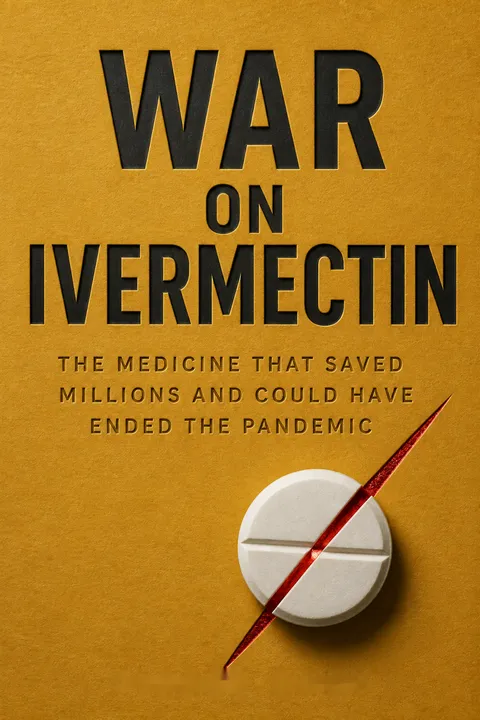
1. What is War on Ivermectin: The Medicine that Saved Millions and Could Have Ended the Pandemic by Pierre Kory about?
- Firsthand account of suppression: The book is a detailed narrative by Dr. Pierre Kory about the discovery, use, and systematic suppression of ivermectin as a COVID-19 treatment.
- Corruption and censorship: It exposes the roles of Big Pharma, regulatory agencies, and media in manipulating science and public health policy during the pandemic.
- Personal journey: Dr. Kory shares his experiences as a frontline physician, including his advocacy, Senate testimonies, and the professional and personal consequences he faced.
- Broader critique: The book critiques the medical establishment’s handling of the pandemic, focusing on the suppression of repurposed drugs and the prioritization of profit over patient welfare.
2. Why should I read War on Ivermectin by Pierre Kory?
- Insider’s perspective: The book offers a rare look into the inner workings of the medical-industrial complex and how it can manipulate science and public health.
- Critical thinking encouragement: It challenges mainstream narratives, urging readers to question medical authority and regulatory capture.
- Inspiration and advocacy: Dr. Kory’s story is one of resilience and courage, motivating readers to value medical freedom and evidence-based medicine.
- Comprehensive documentation: The book provides extensive references, case studies, and firsthand testimonials, equipping readers with a deep understanding of the pandemic’s medical and societal battles.
3. What are the key takeaways from War on Ivermectin by Pierre Kory?
- Suppression of effective treatment: Despite strong evidence, ivermectin’s efficacy was systematically suppressed by global health agencies and pharmaceutical interests.
- Scientific manipulation: Major trials were designed to fail, and positive studies were retracted or ignored, distorting the scientific record.
- Censorship and disinformation: Media and social platforms coordinated to censor positive ivermectin data and stigmatize its proponents.
- Personal costs: Physicians advocating for ivermectin faced job losses, legal battles, and defamation, highlighting the risks of challenging entrenched interests.
4. What is ivermectin, and why does Pierre Kory argue it could have ended the COVID-19 pandemic?
- Safe, inexpensive drug: Ivermectin is a well-established, generic medication with a long history of safe use in humans.
- Extensive evidence base: Over 95 studies and meta-analyses show significant reductions in COVID-19 viral load, hospitalizations, and deaths.
- Global success stories: Large-scale programs, such as in Uttar Pradesh, India, demonstrated dramatic reductions in cases and deaths when ivermectin was widely used.
- Suppression consequences: Kory argues that if ivermectin had been adopted early, millions of lives could have been saved and the pandemic’s trajectory altered.
5. How does War on Ivermectin by Pierre Kory describe the scientific evidence supporting ivermectin for COVID-19?
- Numerous clinical trials: The book cites 95 controlled trials from 27 countries involving over 130,000 patients, showing consistent benefits.
- Meta-analyses and real-world data: Statistically significant reductions in viral clearance time, hospitalizations, and mortality are documented, along with epidemiological evidence from mass distribution programs.
- Mechanistic studies: Ivermectin’s broad antiviral properties and achievable tissue concentrations are discussed as supporting evidence.
- Suppression of positive studies: Many favorable studies were retracted or ignored, while negative or flawed studies were promoted to discredit ivermectin.
6. What is the Front Line COVID-19 Critical Care Alliance (FLCCC), and what role does it play in War on Ivermectin?
- Founding and mission: The FLCCC was founded by Dr. Kory, Dr. Paul Marik, and others to develop and promote effective COVID-19 treatment protocols.
- Advocacy for repurposed drugs: The group identified ivermectin’s potential and advocated for its use, creating protocols like MATH+ and I-MASK+.
- Facing opposition: The FLCCC faced censorship, media blackouts, and institutional pushback, with members experiencing professional and personal attacks.
- Symbol of resistance: Their collective expertise and persistence are portrayed as a testament to scientific integrity and the power of collaboration.
7. What were the “Big Six” ivermectin trials, and why are they significant according to Pierre Kory?
- Definition and impact: The “Big Six” refers to six major randomized controlled trials published in top journals that concluded ivermectin was ineffective.
- Methodological flaws: These trials had significant pharmaceutical conflicts of interest, enrolled patients late, allowed control groups to take ivermectin, and used subtherapeutic dosing.
- Manipulation and bias: Protocols were changed mid-trial to bias results, and these studies were used to justify global bans on ivermectin.
- False legitimacy: Kory argues these trials were deliberately designed to fail and their publication lent false credibility to the anti-ivermectin narrative.
8. How does War on Ivermectin by Pierre Kory explain the role of censorship and media campaigns in the suppression of ivermectin?
- Social media bans: Platforms like YouTube, Facebook, and Twitter banned content promoting ivermectin for COVID-19, removing posts and accounts.
- Coordinated disinformation: Government agencies, PR firms, and media conglomerates labeled ivermectin proponents as “misinformationists” and spread the “horse dewormer” meme.
- Journal retractions: Positive studies were retracted or blocked from publication, while negative studies were promoted.
- Professional harassment: Physicians faced defamation, license suspensions, and job losses, reinforcing the dominant narrative and silencing dissent.
9. What was the “horse dewormer” campaign, and how did it affect public perception of ivermectin according to War on Ivermectin?
- Strategic misinformation: The FDA and CDC launched the “You’re not a horse” campaign to associate ivermectin with veterinary use, despite its long-standing human applications.
- Media amplification: Mainstream media and public figures echoed the campaign, falsely claiming ivermectin was toxic and ineffective.
- Impact on access: Prescriptions plummeted, hospitals removed it from formularies, and pharmacies refused to fill prescriptions.
- Irony highlighted: The book notes that competing COVID-19 drugs are also used in animals, exposing the campaign as a deliberate smear.
10. How did conflicts of interest influence the WHO and other health agencies’ recommendations on ivermectin in War on Ivermectin?
- Undisclosed financial ties: Key WHO guideline authors had financial relationships with companies producing competing COVID-19 treatments.
- Selective evidence exclusion: WHO excluded positive ivermectin trials and graded beneficial studies as “low quality,” promoting a narrative of “very low certainty.”
- Pharma-driven decisions: The book argues that recommendations against ivermectin were politically and financially motivated, not scientifically justified.
- Global consequences: The lack of endorsement led to millions of preventable deaths and reliance on less effective interventions.
11. What personal and professional challenges did Dr. Pierre Kory and other physicians face as described in War on Ivermectin?
- Career repercussions: Dr. Kory lost multiple jobs, faced institutional censorship, and was harassed for his advocacy.
- Defamation and ostracism: Physicians were labeled as “quacks” or “fringe,” subjected to media hit pieces, and targeted by professional boards.
- Legal battles: Some doctors and attorneys fought court cases to obtain ivermectin for patients, often facing resistance from hospitals.
- Resilience and support: Despite persecution, many continued to treat patients and formed networks like the FLCCC for mutual support.
12. What are the best quotes from War on Ivermectin by Pierre Kory, and what do they mean?
- On challenging the status quo: “Here’s to the crazy ones... Because the people who are crazy enough to think they can change the world are the ones who do.” —Symbolizes the FLCCC’s role as rebels in medicine.
- On the ethical crisis: “The war on ivermectin is a war on humanity.” —Emphasizes the profound ethical implications of suppressing a life-saving drug.
- On courage and integrity: “They say courage is grace under pressure. Paul Marik is a brave and powerful force...” —Highlights the bravery required to fight systemic corruption.
- On regulatory capture: “If the CDC and FDA are being run by Pfizer and Monsanto executives... what confidence can we have...?” —Underscores the conflict of interest in regulatory agencies.
- On the emotional toll: “When science and reason fail... there is no better way to navigate life than with our hearts.” —Reflects the emotional and ethical dimension of the fight for truth in medicine.
Download PDF
Download EPUB
.epub digital book format is ideal for reading ebooks on phones, tablets, and e-readers.








