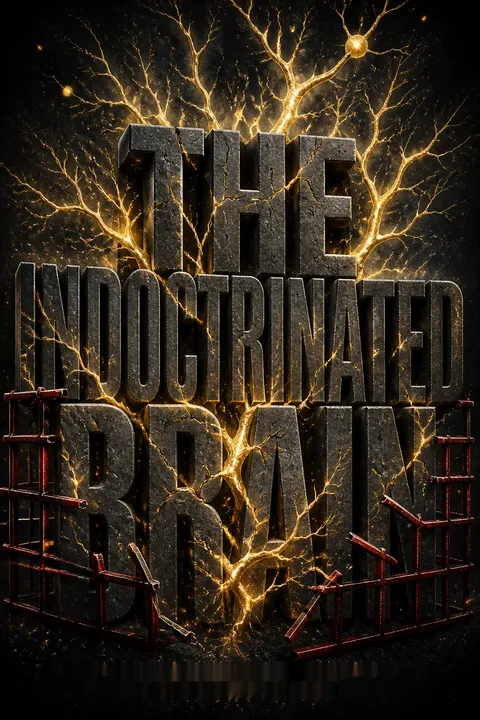


Key Takeaways
Treat Nehls's global brainwashing thesis as a hypothesis, not a diagnosis
A sweeping thesis. Nehls begins with conversations on a Corsican farm and asks whether recent crises were merely mishandled or deliberately used to reshape society. His central argument is that fear campaigns, isolation, and COVID-19 measures, including what he calls "spiking," may have weakened the hippocampus and made people more receptive to a technocratic worldview. He links this alleged mental reset to public plans for digital surveillance and a transformed economy.
Evidence versus inference. Nehls presents neuroscientific findings alongside political statements and institutional documents, then proposes a coordinated plan. He acknowledges that intent is partly speculative. That distinction matters: the book's account of a deliberate global brainwashing campaign is its interpretation of events, not a demonstrated scientific finding.
The book's urgency comes from connecting questions of political power to the biology of memory, a connection worth examining. But evidence that officials discussed social change, or that policies had harmful effects, does not establish a coordinated plan to damage brains. Motive, opportunity, and troubling outcomes can justify scrutiny without proving conspiracy. The strongest way to use this thesis is as a prompt for questions about transparency, conflicts of interest, and accountability, while keeping the distinction between documented facts and inferred intent visible.
Your hippocampus helps connect remembered experience to a continuing sense of self
Memory's address book. Nehls describes autobiographical memory as the record of personally meaningful experiences and thoughts, including where and when they occurred and how they felt. He calls the hippocampal cells that help retrieve those memories "index neurons," comparing them to an address system for memory fragments stored across the brain.
A cautionary case. Henry Molaison, known in research as H.M., lost the ability to form lasting new memories after surgeons removed much of both hippocampi to treat epilepsy. His case helped reveal how crucial this structure is to memory. Nehls extends the lesson to individuality: without a usable personal past, it becomes harder to interpret the present or imagine a future. His four-part model is a useful map, not a complete account of memory.
The link between memory and identity is powerful because the self is partly a story assembled from remembered episodes, not a fixed inner object. Molaison's case makes that dependence concrete. Still, memory is reconstructive, distributed, and vulnerable to distortion; it is not simply a collection of files indexed in one place. Nehls's metaphor helps readers grasp the hippocampus's role, but the metaphor should not be mistaken for a full neurological explanation or proof that a political narrative can rewrite a person in a precise, uniform way.
Chronic stress can narrow judgment toward familiar reactions
Two ways of responding. Drawing on the System 1 and System 2 distinction, Nehls contrasts fast, familiar reactions with slower, effortful reflection. He argues that the hippocampus helps support the latter by storing experiences that can inform new judgments. In his account, depleted mental energy and impaired memory make people more likely to repeat familiar behavior rather than consider alternatives.
Stress changes the conditions. Nehls explains that short-lived stress can help a person meet a challenge, while prolonged stress may impair memory and emotional regulation. He connects chronic anxiety to reduced psychological resilience and increased reliance on routine. This offers a plausible reason to take sustained fear seriously, although it does not show that every stressed person loses the capacity for independent thought.
This is a useful bridge between cognitive psychology and everyday decision-making: people often rely on habits when attention and working memory are taxed. Chronic stress can also affect sleep, concentration, and emotional regulation, all of which shape judgment. The limitation is that the book treats hippocampal decline as an unusually central explanation for social conformity. Conformity also arises from incentives, identity, trust, and institutional pressure. Biological vulnerability may contribute, but it should not be used to dismiss people's agency or reduce disagreement to brain dysfunction.
Support memory with purpose, movement, sleep, nourishment, time, and relationships
A lifestyle framework. Nehls's Hippocampal Anti-Indoctrination Formula brings together six conditions he believes support hippocampal health: purpose in life, exercise, nutrition, social connection, sleep, and enough time to balance them. He argues that learning, movement, meaningful tasks, and social experience help sustain memory and resilience. He also discusses nutrient deficiencies, especially vitamin D, iodine, and omega-3 fatty acids, as potential obstacles to healthy brain function.
Make it practical. The framework's value is its breadth: a person cannot compensate for chronic isolation or poor sleep simply by trying harder to think. The book also discusses fasting and supplements, but individual nutritional needs vary. Its broad lifestyle principles are not a substitute for personalized medical advice or evidence-based treatment.
The framework is most compelling as a reminder that cognition depends on ordinary conditions, not just willpower. Exercise, sleep, social contact, and meaningful activity have plausible links to cognitive and emotional health, and treating them as interconnected can make lifestyle change more realistic. The nutrition claims require more care. Evidence for a nutrient's role in the body does not automatically prove that supplementation prevents a particular illness or improves memory for everyone. A sound application emphasizes balanced habits and clinical assessment rather than self-prescription.
Demand proportionate communication before fear becomes a lasting public condition
Fear can spread socially. Nehls argues that repeated warnings about possible catastrophe can create persistent anxiety even when a person has not experienced the feared event. He uses the term "pretraumatic stress" for distress about anticipated trauma, and points to research on soldiers who reported intrusive worries before deployment. He also describes Solomon Asch's line-judgment experiments, in which many participants followed a group's plainly incorrect answer, illustrating the pull of conformity.
A policy lesson. Nehls reads pandemic messaging and other recurring crises as a deliberate way to keep people anxious and compliant. The more limited conclusion is that intense, repetitive threat communication can affect well-being and public judgment. Clear explanations of uncertainty, changing evidence, and tradeoffs help people assess risk without turning every warning into an all-consuming emergency.
Fear is not inherently irrational: it can direct attention toward real danger and motivate protective action. The problem is chronic alarm without credible context, which can erode trust and make people either overreact or tune out. Asch's experiments show that social pressure can influence judgment, but they do not establish that a population is being intentionally manipulated through a coordinated campaign. Public communication should be judged by its accuracy, proportionality, and openness to correction, not solely by whether it generates compliance.
Study coercion as a pattern of isolation, exhaustion, pressure, and reward
A historical model. Nehls draws on Albert Biderman's analysis of methods used to pressure American prisoners of war during the Korean War. The methods included isolation and monotony, control over information, threats, induced exhaustion, small rewards, repeated minor demands, displays of authority, and humiliation. Biderman's account described how dependency, weakness, and fear could make prisoners more compliant.
An analogy, not equivalence. Nehls maps this coercion framework onto pandemic measures and messaging, arguing that restrictions and repeated demands prepared people to accept a new political narrative. The comparison invites scrutiny of how power works, but the circumstances of imprisoned soldiers and citizens facing public-health rules are not interchangeable. Each policy and communication choice still needs to be judged on its evidence, purpose, and actual effects.
The framework is useful because it directs attention from a single persuasive message to the surrounding conditions: isolation, constrained information, dependence, and escalating demands. Those dynamics matter in prisons, abusive relationships, and other settings where people have limited choices. The analogy becomes less reliable when it treats a complex society as if it were a captive population under a unified captor. Differences in law, public debate, and individual experience matter. Applying the model responsibly means testing each proposed parallel instead of assuming the whole pattern proves intent.
Separate neglected health questions from claims that they prove a hidden plot
Prevention in dispute. Nehls argues that public-health responses placed too little emphasis on vitamin D and other ways to support immune health. He presents vitamin D deficiency as a preventable risk and treats the limited public attention it received as evidence that protecting health was not the real priority. He also criticizes restrictions, school closures, isolation, and vaccination policies for their social and psychological costs.
Keep the claims distinct. The book moves from arguing that prevention deserved more attention to claiming that its neglect was deliberate and served a brain-directed agenda. Those are separate propositions. A neglected option, a harmful policy, or a conflict of interest can warrant investigation without establishing a coordinated plan. Readers should distinguish the book's policy critique from its more speculative explanation of motive.
Questioning whether public-health decisions considered low-cost prevention, mental health, and social harms is legitimate and important. So is asking how uncertainty and conflicts of interest were handled. But a plausible biological mechanism or an association between nutrient levels and illness does not, by itself, establish that supplementation prevents severe disease at population scale. Clinical findings can differ by dose, timing, baseline health, and study design. The book is most useful here when it encourages scrutiny; it is least reliable when it turns contested medical evidence into proof of malicious intent.
Preserve human agency before convenience becomes a rationale for surveillance
A warning about control. Nehls connects the Great Reset and smart-city proposals to a possible future of digital identity, social scoring, reduced privacy, and decisions delegated to artificial intelligence. He worries that automated systems could make people easier to monitor and less able to shape their own lives. His concern is that convenience, safety, and efficiency can be used to make extensive oversight seem normal.
A scenario, not a forecast. The book reads public proposals and projections as evidence of a coming technocratic order. Its most useful question is not whether that future is inevitable, but who sets the rules, who benefits, and whether people can refuse. Technology can improve services, yet its design and governance determine whether it expands choice or narrows it.
The distinction between helpful coordination and pervasive surveillance is a central democratic question. Digital systems can make services faster, but they can also concentrate information and decision-making in institutions that are difficult to challenge. The relevant safeguards include transparency, limits on data collection, independent oversight, and meaningful options for opting out. Nehls's dystopian comparisons make the stakes vivid, but public plans are not proof of a settled future. Specific proposals deserve scrutiny on their design and legal protections rather than being treated as one inevitable master plan.
Use rational compassion to build communities that preserve local agency
From empathy to judgment. Nehls distinguishes empathy, which can focus attention on one nearby person or group, from rational compassion, which weighs wider consequences. He argues that good intentions can still cause harm when concern for familiar people blinds decision-makers to distant effects. His closing case is that humans are fundamentally cooperative, not inherently destructive, and that this capacity is undermined by narratives that portray people as needing constant control.
Cooperation close to home. Nehls points to commons, ecovillages, and multigenerational families as examples of people organizing around shared needs. He invokes Elinor Ostrom's work on collective resource management to support local, participatory solutions. These examples do not answer every large-scale problem, but they show how communities can coordinate without placing every decision in the hands of a distant authority.
The distinction between emotional identification and considered concern is valuable in a world where policies have consequences far beyond the people most visible in public debate. Ostrom's research on commons also shows that cooperation need not depend entirely on markets or central government; local groups can create rules and monitor shared resources. Yet local solutions are not automatically fair or effective. They need accountability, inclusion, and ways to coordinate across communities. The strongest version of Nehls's argument combines local initiative with evidence, rights protections, and attention to people outside one's immediate circle.
Analysis
The book is built around a bold causal chain: chronic stress and unhealthy conditions impair hippocampal function; weakened memory and resilience make people more susceptible to propaganda; political actors can exploit that vulnerability to impose a technocratic order. Its most durable contribution is the question it raises about the biological costs of isolation, fear, sleep disruption, and loss of social connection. Its most important weakness is the leap from plausible mechanisms to a claim of deliberate, coordinated brain reprogramming.
The hippocampus has a well-established role in episodic memory, and stress can affect cognition and emotional regulation. But those findings do not demonstrate that pandemic policies were designed to suppress hippocampal activity. The book's account of adult human neurogenesis is more certain than the field warrants, and its interpretation of vaccine risks, vitamin D, excess deaths, and public policy relies on disputed or incomplete evidence. Reports in adverse-event databases can identify signals for investigation, but they cannot by themselves establish causation or calculate population risk. Likewise, evidence that a policy caused harm would not establish that the harm was intended.
That distinction matters because the book often bundles legitimate questions with extraordinary conclusions. It is reasonable to scrutinize emergency powers, censorship, conflicts of interest, data collection, and the social costs of restrictions. It is a different matter to infer from these concerns a unified plot involving politicians, health agencies, technology firms, and deliberate neurological injury. The book's evidence does not establish that overarching claim.
Its practical closing ideas are stronger when detached from the conspiracy frame: protect sleep, movement, meaningful activity, relationships, and open inquiry; communicate risk proportionately; and design technology with public accountability. These habits and institutions support agency without requiring readers to accept Nehls's speculative account of intent. The book is best read as a forceful warning about how fear and concentrated power can damage democratic judgment, not as a reliable medical guide or proof of a global brainwashing plan.
Review Summary
The Indoctrinated Brain receives high praise from readers for its insightful analysis of how the COVID-19 pandemic measures may have impacted brain function, particularly the hippocampus. Readers find the book eye-opening, describing its exploration of neurobiological effects of stress, isolation, and "spiking" on critical thinking and memory. Many reviewers see it as a must-read for understanding current events and preserving individual freedom. While some find the content dense or frightening, most appreciate the author's scientific approach and hopeful suggestions for maintaining brain health and resisting indoctrination.
People Also Read






Glossary
Autobiographical memory
Memory of personal experienceNehls uses this term for memories of personally meaningful experiences and thoughts, including their context and emotional significance. He treats autobiographical memory as a foundation of individual identity because it helps people connect the past to present decisions and imagined futures. In the book's model, the hippocampus helps encode and retrieve these memories.
Index neurons
Memory retrieval markersNehls's term for hippocampal neurons that, in his model, retain the spatial and temporal information needed to retrieve memory fragments stored across the neocortex. He compares them to entries in an index or address book. This terminology is part of the book's explanatory framework and should not be confused with a universally established category of neuron.
Hippocampal Anti-Indoctrination Formula
Lifestyle supports for memoryNehls's name for a set of life conditions he argues support hippocampal function, autobiographical memory, and resilience. Its six domains are purpose in life, exercise, nutrition, social life, sleep, and time. The formula is presented as a practical framework for protecting independent thought, though its claims about preventing indoctrination are the author's interpretation.
System 1 and System 2
Fast response, reflective thoughtA named distinction between quick, habitual, largely automatic responses and slower, effortful reasoning. Nehls applies the distinction to the roles of routine behavior and reflective decision-making, arguing that memory and mental energy support the latter. The framework is associated with Daniel Kahneman's work and is a simplified model, not a complete map of cognition.
Diagram of Coercion
Eight methods of complianceAlbert Biderman's framework, as discussed by Nehls, organizes methods used to pressure prisoners into compliance. It includes isolation and monotony, control of perception, induced exhaustion, threats, occasional rewards, trivial demands, displays of authority, and humiliation. Nehls uses it to interpret pandemic-era policies, an analogy that requires careful assessment rather than automatic acceptance.
Pretraumatic stress disorder
Distress about anticipated traumaNehls uses this term for persistent anxiety and stress reactions focused on a feared future event, rather than a traumatic event already experienced. He connects repeated threat messaging to this form of distress and to possible effects on memory and resilience. The book discusses research on pretraumatic stress reactions, but the term is not presented as a settled, formal diagnosis.
Spiking
Nehls's term for mRNA injectionsNehls uses this nonstandard, critical term for COVID-19 mRNA injections, emphasizing that they instruct cells to produce the coronavirus spike protein. He argues that this process can harm the brain and hippocampus. Those claims are contested and are not established by the terminology itself; the word reflects the author's framing rather than a standard medical name.
FAQ
What's The Indoctrinated Brain about?
- Focus on Mental Freedom: The book examines how global forces, especially during the COVID-19 pandemic, threaten mental freedom.
- Neuroscience and Indoctrination: It explores how indoctrination affects critical thinking and individuality through a neuroscience lens.
- Cultural and Psychological Analysis: Michael Nehls combines cultural and psychological insights to discuss the loss of personal autonomy in society.
Why should I read The Indoctrinated Brain?
- Understanding Current Events: It offers a framework to understand the psychological impacts of global events like the pandemic.
- Critical Thinking: Encourages readers to critically evaluate the information and narratives they encounter.
- Practical Insights: Provides advice on maintaining mental freedom and individuality against indoctrination.
What are the key takeaways of The Indoctrinated Brain?
- Indoctrination Mechanisms: Discusses how fear and misinformation, especially during the pandemic, facilitate indoctrination.
- Hippocampal Function: Highlights the role of the hippocampus in memory and individuality, and how it's affected by stress.
- Cultural Reset: Argues that societal changes aim to create a more compliant society by resetting cultural norms.
What are the best quotes from The Indoctrinated Brain and what do they mean?
- “Fear Eats the Soul”: Emphasizes how chronic fear can erode individuality and self-awareness.
- “Indoctrination is a vicious attack on our humanity”: Highlights the suppression of critical thinking and individuality.
- “We are threatened by a true zombie apocalypse”: Metaphorically describes a society losing critical thought and individuality.
What is the main argument of The Indoctrinated Brain?
- Technocratic Control: Suggests a small group of technocrats uses fear and misinformation to control society.
- Psychological Manipulation: Posits that manipulation leads to a loss of individuality and critical thought.
- Cultural Transformation: Claims this manipulation is part of a broader agenda to reshape cultural norms.
How does Michael Nehls define indoctrination in The Indoctrinated Brain?
- Ideological Implantation: Describes indoctrination as implanting a narrative that allows no contradiction.
- Obedient Conformity: Aims to achieve unthinking conformity among people.
- Psychological Manipulation: Utilizes controlled information and fear as tools for indoctrination.
What role does the hippocampus play in individuality according to The Indoctrinated Brain?
- Memory Formation: Essential for forming autobiographical memories, crucial for individuality.
- Neurogenesis: Supports lifelong learning and creativity through new neuron production.
- Impact of Stress: Chronic stress impairs hippocampal function, affecting memory and individuality.
What are the effects of COVID-19 measures on mental health as discussed in The Indoctrinated Brain?
- Increased Anxiety: Lockdowns and social distancing have heightened anxiety and mental health issues.
- Hippocampal Damage: These measures have contributed to damage affecting memory and cognitive function.
- Long-term Consequences: Warns of lasting impacts on society, leading to less critical thinking.
What practical advice does The Indoctrinated Brain offer for resisting indoctrination?
- Strengthening Autobiographical Memory: Engage in practices that enhance memory and critical thinking.
- Nutritional Support: Emphasizes proper nutrition, like vitamin D, for cognitive resilience.
- Social Connections: Encourages maintaining social ties and meaningful conversations for mental health.
How does The Indoctrinated Brain relate to current societal issues?
- Crisis Exploitation: Argues that crises are used to push a technocratic agenda undermining freedoms.
- Cultural Division: Discusses how societal divisions are exacerbated by indoctrination tactics.
- Future Implications: Warns of a future where individuality and critical thought are compromised.
What is the Hippocampal Anti-Indoctrination Formula mentioned in The Indoctrinated Brain?
- Neurogenesis Focus: Promotes practices like exercise and nutrition to support hippocampal health.
- Social Interaction: Highlights the importance of community and cooperation for mental resilience.
- Mindfulness and Reflection: Encourages mindfulness to enhance self-awareness and resist indoctrination.
What evidence does The Indoctrinated Brain provide regarding vitamin D and COVID-19 outcomes?
- Research Studies: Cites studies showing a link between vitamin D levels and COVID-19 severity.
- Preventive Measures: Argues for vitamin D supplementation as a preventive measure during the pandemic.
- Public Health Implications: Calls for policies prioritizing vitamin D to improve health outcomes.
Download PDF
Download EPUB
.epub digital book format is ideal for reading ebooks on phones, tablets, and e-readers.








