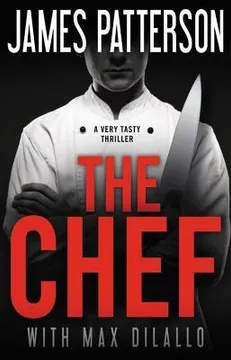


Plot Summary
Killer Chef Under Watch
Caleb Rooney cooks New Orleans favorites from Killer Chef, the food truck he runs with his former wife, Marlene DiPietra. The work gives him a public life beyond his fourteen years as a police detective, but four Franklin Avenue Soldiers are watching from a black SUV. Caleb recognizes their yellow gang colors and understands they have come because he shot Larry Grant, a gang member, during a pursuit.
His badge and gun are already in police custody, and an official review of the shooting awaits him at headquarters. When the gang members disappear before he can confront them, Caleb knows the threat has only been postponed. He leaves the stove and walks toward the hearing, carrying his fear into the building.
The food truck establishes Caleb’s double identity through action: he serves the city by feeding it, while his police career has made him a target. Cooking is not a hobby pasted onto the detective plot; it is his means of belonging to New Orleans and a discipline that will later help him investigate. The gang’s quiet surveillance makes danger feel personal before the larger crisis becomes visible.
The Badge Goes Back
At the use-of-force hearing, Caleb explains that Larry Grant ran from a drug operation, drew a gun, and was carrying the distinctive gold-plated weapon Caleb had heard about beforehand. The board challenges his pursuit and questions whether he planted the gun, while reporters frame the case as a scandal about a cop who also cooks.
Caleb addresses Grant’s grieving family with respect, but the grilling convinces him that the department values public relations over his record. After the board ends its questioning, Caleb visits his chief, Brian Cunningham, and hands back his detective identification.
He resigns before the department can decide his future for him, then returns to the truck, where Marlene welcomes his help but refuses to let him mistake the kitchen for an easy retirement.
Caleb’s resignation is both protest and self-protection. He refuses to let an institution define him as a symbol, yet gives up the authority and equipment that once made his work possible. His respectful words about Larry also complicate the easy division between cop and criminal: Caleb can defend his actions without denying the dead man’s humanity. Marlene’s practical humor steadies him, but cannot erase the danger attached to his former job.
The Apron Takes a Beating
Caleb’s retirement lasts only until he sees a robber attack a woman in the French Quarter. He chases the man through crowded streets and over balconies, catches him in a parking garage, and discovers that the robber is working with Ty Grant, Larry’s younger brother. Ty and two gang members beat Caleb with a baseball bat, leaving him with broken ribs, a damaged hand, and a concussion.
Marlene stays beside him in the hospital, then scolds him for risking his life without a badge. The attack does not cure Caleb’s impulse to intervene. Back on the street, he sees armed police patrolling for an unexplained threat, while the Franklin Avenue Soldiers keep reminding him that his old case has not let him go.
The chase makes Caleb’s central conflict physical: his instinct to protect people survives the job, but his authority and backup do not. His apron and meat thermometer are poor substitutes for a badge, and the beating exposes the cost of acting on duty without institutional support. Marlene’s anger is not simply fear of losing him; she is also defending the fragile business and partnership they have rebuilt together.
A Dinner With Dodd
Lucas Dodd, a wealthy restaurateur, invites Caleb and Marlene to his fine-dining restaurant after hearing about the beating. He proposes financing a brick-and-mortar version of Killer Chef, but his demand for a controlling share and his cruelty toward a server make the offer unappealing.
Caleb notices Dodd’s poised wife, Vanessa McKeon, who handles the restaurant’s books and operations. Their brief connection stirs his interest, though he learns she is married and retreats to work.
The city’s unease intrudes on the meal: Caleb has already seen SWAT officers and undercover police around Carnival crowds, and now military helicopters cross the Garden District. He cannot yet identify the threat, but New Orleans is visibly preparing for something its ordinary revelers cannot see.
The restaurant scene puts two forms of power beside each other. Dodd offers comfort and capital in exchange for control, while Caleb and Marlene’s truck represents ownership earned through shared labor. Vanessa’s presence draws Caleb toward private desire at the moment public danger is gathering. The armed patrols and helicopters make the city itself a warning system, though Caleb has not yet been given enough information to interpret its signals.
Cunningham Calls Him Back
Cunningham visits Caleb at home and reveals that the FBI has warned of a credible, imminent attack during Mardi Gras. The federal team is withholding its intelligence and has ordered the New Orleans Police Department to stand aside.
Cunningham asks Caleb to investigate unofficially because he knows the city’s neighborhoods and their people. Caleb agrees, then studies a family parade for ways an attacker could exploit the crowds, barricades, costumes, and rooftops.
He also tries to question Ibrahim Farzat, a Syrian refugee who once drew police attention for online religious posts, at the restaurant where he worked. The kitchen staff drive Caleb out before he learns anything. His first lead appears to be a dead end, but the impending parade gives him a reason to keep searching.
The case begins as a conflict over who is entitled to protect a place. Federal secrecy leaves local knowledge unused, and Cunningham turns to Caleb precisely because official channels have closed. Caleb’s parade reconnaissance is imaginative but initially broad, revealing both his experience and his anxiety: he sees possible weapons everywhere because he has no confirmed evidence. His failed attempt at the restaurant shows that community trust cannot be claimed merely because he once wore a badge.
Farzat’s Night Meeting
Using a landlord’s information, Caleb locates Farzat’s new home and watches him leave with a duffel bag. He follows Farzat to a junkyard near the Industrial Canal, where several other vehicles arrive. Before Caleb can learn who is inside, three men smash his car window and attack him. He fights them off with his camera, but the camera and recorder are destroyed, costing him the evidence he collected.
FBI agent Marcus Morgan then visits Caleb and accuses him of disrupting a surveillance operation that had been running for months. Morgan orders him away from the case. Caleb understands the FBI is watching Farzat, but the violence at the junkyard suggests that someone else is guarding the meeting too.
Caleb’s solitary surveillance mirrors the institutional isolation that has driven him from the force. He is skilled enough to survive the ambush, but survival is not the same as progress: his tools and evidence are lost, and the FBI treats him as interference. The mystery deepens because the attackers may be hired guards or participants, while Morgan’s anger confirms that the federal investigation has a scale Caleb cannot see.
The Needham Money Trail
Cunningham shares police reports that include an unexplained vehicle outside Neptune Premium Seafood, a plant partly owned by the powerful Needham family. Caleb questions restaurateur Billy Needham, who describes bitter family disputes, financial secrecy, and threats of violence.
Billy also reveals that his sister Emily and cousin David invested in Bea’s Café, where Farzat once worked. Before Caleb can untangle the connections, private investigator Gordon Andrews reports that Farzat has been found dead.
At the Lower Ninth Ward house, Caleb sees that Farzat was bound to a chair and tortured with a drill, his tongue mutilated. The murder suggests he knew something important, but Caleb still cannot tell whether the Needhams’ family war or the FBI’s terror warning explains the killing.
The investigation shifts from a single suspect to a network of money, workplaces, and family relationships. Caleb’s knowledge of food suppliers gives him a credible route into the Needham business structure, but culinary expertise cannot by itself distinguish ordinary investment from criminal finance. Farzat’s torture supplies a brutal measure of what is at stake while withholding motive. The mystery’s competing explanations encourage Caleb to see a pattern before he has enough pieces to prove one.
A City Sends Warnings
Caleb corners David Needham, a wealthy and guarded restaurateur, but an Israeli bodyguard forces him away before he can question David properly. He also approaches Farzat’s widow, Rima, who rejects his questions and sprays him with pepper spray.
That night, men break into Killer Chef, assault Marlene, and wreck the truck. Caleb arrives to find her injured but alive, and she blames his secret investigation for bringing danger to their business. Vanessa visits afterward, offers comfort, and admits her marriage to Dodd is troubled.
Caleb agrees to a date, though he still suspects Dodd may have ordered the attack. The violence has moved beyond Caleb’s own body: it has entered the kitchen he shares with Marlene and begun to threaten the people he loves.
The attacks collapse Caleb’s professional and private lives into the same vulnerable space. His secrecy is meant to protect Marlene, yet it leaves her exposed without the context to judge the danger. Rima’s refusal also warns him that trauma can make a witness wary rather than cooperative. Vanessa’s tenderness offers relief, but Caleb’s suspicion of her husband means romance arrives entangled with the case instead of outside it.
Emily Opens the Books
Caleb visits Emily Beaudette, a Needham family investor, at her horse farm. During an awkward ride, she describes David’s opaque shell companies and the family’s greed, then sends Caleb her holding company’s financial records. He finds donations to Crescent Care, a Muslim support organization, and begins to suspect it is a channel for extremist financing.
Meanwhile, his relationship with Vanessa grows more intimate. On a Carnival date, she admits she is not drinking; later, at her home, Caleb sees the scar left by her liver disease and learns that Dodd’s money has helped bind her to an unhappy marriage. Caleb now has a possible financial lead and a personal reason to help Vanessa escape, but he still lacks proof against anyone.
Emily’s records turn abstract suspicion into something Caleb can examine, while the horse ride exposes how wealth insulates its owners from ordinary consequences. Yet the spreadsheet does not identify guilt on its own; it gives Caleb a trail, not a verdict. His intimacy with Vanessa similarly changes his stakes. Her illness and dependence make her marriage more than an emotional trap, and Caleb must recognize that rescue cannot mean deciding her life for her.
The Photograph in Crescent Care
Caleb enters Crescent Care posing as a reporter and presses its manager, Saleel el-Sharif, for records about Farzat and the Needhams. Saleel denies knowing the names, then reaches for a shotgun. Caleb returns fire and escapes through a rear exit as police arrive. On the way out, he spots a community photograph showing Farzat beside David Needham.
The image proves that the two men knew each other, although it does not prove David’s guilt. Caleb confronts David again at one of his restaurants, but David denies knowing Crescent Care’s work and has him expelled. The photograph strengthens Caleb’s case while sharpening its central uncertainty: David may be involved, or someone may be using his public connections to conceal another culprit.
The photograph is powerful because it is concrete and incomplete. It confirms a relationship but cannot explain whether that relationship was charitable, criminal, or manipulated. Caleb’s armed confrontation with Saleel also shows how easily suspicion turns him coercive; he is becoming more like the institution he distrusts. The evidence advances the plot while withholding the moral certainty Caleb wants, forcing the reader to question how quickly visible association becomes a verdict.
The Tractor Tracks
Caleb searches St. Roch after Cunningham mentions unexplained federal raids. A neighborhood woman recalls a crowded crack house raided by police and describes a blond man marked with a cross inside a circle.
At the abandoned property, Caleb finds industrial chemicals, a makeshift workshop, and tire tracks consistent with a tractor used to pull parade floats. Before he can act on the discovery, Vanessa calls from a gas station bathroom after armed men ram her car. Caleb spills diesel fuel and uses a burning paper bundle to frighten them away, then catches one attacker, Angus.
Angus’s tattoos match the witness’s description. He admits that white supremacists, extremists, and other recruits have been assembled for a Mardi Gras operation, but knows only that their next meeting is in Holy Cross.
The tire tracks give Caleb his first specific model of the attack, connecting an apparently ordinary parade vehicle to the hidden workshop. Angus’s account confirms a coalition that makes ideological sense only as tactical opportunism: hatred, not shared doctrine, binds the recruits. Caleb’s rescue of Vanessa shows the personal cost of his investigation, while the diesel bluff reveals his characteristic improvisation. He can disrupt an immediate threat, but still lacks the command structure and location needed to stop the larger plot.
The Safe House Is Empty
Angus identifies a meeting place in Holy Cross, but FBI agents arrive before Caleb can pursue it and arrest him for obstructing their investigation. Caleb escapes in his car and reaches the house alone.
Inside, he finds only a violet camping light and a radio playing Spanish voices; the cell has already moved. Later, he warns Billy Needham that the plot may involve David, and Billy pretends to be shocked. Caleb then goes to Vanessa’s home and confronts Lucas after recognizing the financial coercion behind their marriage.
Lucas had offered to pay for Vanessa’s liver treatment and education, then tied her to a punishing prenuptial agreement. Vanessa leaves with Caleb. The raid’s failure costs time, but the personal crisis finally breaks her confinement.
The empty house makes institutional delay tangible: Caleb reaches the right kind of place after the people who mattered have gone. His escape from federal custody is a reckless rejection of procedure, but also a consequence of being denied a chance to test Angus’s information. The revelation about Lucas reframes Vanessa’s apparent indecision as constrained choice. Her departure is an act of agency, not simply a romantic reward for Caleb.
The Wrong Needham
On Mardi Gras morning, Cunningham brings Caleb into an emergency security briefing. Caleb challenges Morgan with the Farzat photograph, the Crescent Care trail, and Angus’s account, but Superintendent Fontaine dismisses his claims as unverified.
Rima approaches afterward and explains that Farzat had been an FBI informant, not a terrorist; Saleel had attacked Caleb because he feared for her safety. Her account clears the charity of Caleb’s worst assumptions but confirms that Farzat’s information led to his murder. During the parade, Gordon locates David in the crowd.
Caleb confronts him and learns David was ashamed of funding Crescent Care, believing it legitimate, and had been misled by Billy. Caleb realizes the helpful, candid cousin may have been directing suspicion away from himself just as explosions begin nearby.
The reversal exposes how Caleb’s certainty was shaped by incomplete evidence and by his own need to make a sprawling threat legible. Farzat’s allegiance changes the meaning of his earlier disappearance and his widow’s hostility; he was not a danger to be contained but a source who needed protection. Billy’s apparent helpfulness now becomes suspect. The book makes investigative accuracy a moral question: a plausible pattern can still harm innocent people when treated as proof.
Mardi Gras Turns Hostile
Three concussion grenades send parade spectators into a panic. A modified tractor breaks free of its float and drives into the fleeing crowd, while armed attackers emerge from a second float. NOPD officers, including Cunningham, have been hiding inside the procession and strike back.
Caleb kills the first tractor driver, then stops a costumed gunman and discovers that the attackers wear red-and-green lenses and fluorescent markings to identify one another. He uses the lenses to spot another shooter and gets the warning to law enforcement through a public camera and a makeshift sign.
Billy phones Caleb, claims the violence is not finished, and threatens the people closest to him. Caleb rushes to Killer Chef, where Marlene and Vanessa have barricaded themselves; Marlene’s hidden shotgun nearly hits him before all three recognize one another.
The attack turns Carnival’s permission to disguise oneself into a tactical advantage, while the two-colored glasses convert festive visual noise into an identification system. Caleb’s improvised warning matters because official communications have failed. His reunion with Marlene and Vanessa narrows the crisis to human scale after spectacle and mass panic. Billy’s call also clarifies that the first assault is not the full plan, so survival cannot yet be mistaken for victory.
The Sky Gives It Away
After the first attack, fewer than twenty people are dead and dozens are wounded, but Billy remains missing. In custody, tractor driver Reginald Broussard admits Billy recruited a diverse group by exploiting resentment and grievance; he gives police the location of a hunting camp near Shreveport.
Cunningham also learns that federal leaders delayed Morgan while waiting for promised Russian intelligence that never arrived. Rima confirms Farzat had approached the FBI with evidence against Billy. As Caleb rests with Vanessa, a weather report describes the coming memorial service as ideal flying weather.
He recognizes the aviation phrase as a clue: Billy’s promise that the sky was the limit points to another attack. Caleb realizes Emily’s distant horse farm has flat fields, hangars, and an airstrip, and races there alone.
The second plot is found through a convergence of neglected details rather than a sudden revelation. Reggie supplies motive and organization, Rima restores Farzat’s true role, and the weather phrase activates Caleb’s knowledge of Billy’s aviation hobby. The failed Russian intelligence arrangement enlarges the failure beyond individual incompetence: political ambition has displaced operational judgment. Caleb’s insight arrives too late for the first assault, but early enough to make the final warning actionable.
Cessnas Over the Pasture
At Emily’s farm, Caleb finds her dead and Billy preparing to launch four unmanned Cessna aircraft loaded with explosives and shrapnel. Billy shoots Caleb in the chest, but a concealed Kevlar vest absorbs the bullet. Caleb reaches an ATV and races beside the aircraft as they begin their takeoff.
He jumps clear at the last moment; the unmanned vehicles collide with the overturned ATV and one another, and the final plane explodes before reaching the sky. Billy tries to escape in his Audi. Caleb fires through the windows and wounds him in the shoulder, then keeps him alive rather than executing him. The attack on the memorial is stopped, and the man who orchestrated the violence is left for law enforcement to arrest.
The climax pays off the novel’s ordinary objects: a farm becomes an airfield, parade tractors become attack vehicles, and Caleb’s practical knowledge lets him recognize how violence has been engineered. His survival depends on preparation as much as nerve, but his restraint after catching Billy matters just as much as the shot that stops the car. Caleb refuses to let vengeance make him the mirror image of the man he has pursued.
Back to Killer Chef
Two weeks later, Caleb is back at the stove with Marlene, while Vanessa works beside them. New Orleans has begun to recover, and the Franklin Avenue Soldiers now line up for food instead of threatening Caleb. The use-of-force board has cleared him, but he does not return to the police. Gordon offers him an application to become a licensed private investigator and promises to sponsor him.
Caleb leaves the choice open, then takes a walk with Vanessa, who thanks him for helping her escape Lucas and build a life of her own. They return to the truck together. Its bullet and shotgun damage remains visible, a deliberate reminder of the violence they survived. Caleb chooses work, love, and the possibility of a new kind of service.
The ending restores the opening image of Caleb cooking, but the truck is no longer simply a refuge from police politics. It has become a shared site of survival, memory, and community repair. Leaving the damage visible resists a falsely clean recovery, while serving former enemies suggests that civic life can resume without pretending conflict never existed. The private-investigator offer gives Caleb a future that preserves his vocation without restoring the institution he rejected.
Analysis
The novel’s central tension is not simply between law and crime, but between formal authority and local knowledge. Caleb loses his badge after a public review turns his shooting of Larry Grant into a political test, then discovers that the FBI’s secrecy and the NOPD’s deference leave the city exposed. His unofficial investigation is effective because he knows New Orleans as a working place: its food suppliers, neighborhoods, parade customs, and social habits. Yet that knowledge does not make him infallible. He misreads Farzat, Saleel, David, and Emily because he turns partial evidence into a coherent story too early. The book’s strongest investigative lesson is therefore ethical as well as procedural: pattern recognition is useful, but certainty can injure the people one means to protect.
Food provides the novel’s counterweight to violence. Caleb’s cooking is repetitive, embodied labor, dependent on timing, attention, and cooperation. Those same habits support his detective work, while the truck gives the story a community center where customers, former enemies, and loved ones can meet without surrendering their differences. The damaged truck, left unrepaired as a reminder, refuses the fantasy that survival means returning untouched to normal.
The plot’s political critique focuses on systems that trade public safety for institutional advantage. Federal leaders wait for Russian intelligence that never arrives; local officials hesitate to challenge the FBI; Billy exploits local resentment by presenting mass murder as cultural defense. His rhetoric borrows the language of belonging while making the city less safe for everyone who actually inhabits it. Against that coercive version of community, Caleb’s final choices matter: he stops Billy without executing him, accepts help from women who choose to remain, and returns to shared work rather than claiming sole credit. The conclusion offers repair, not absolution. New Orleans survives because imperfect people cooperate, but the visible scars remain part of its memory.
Review Summary
The Chef received mixed reviews, with an average rating of 3.65 out of 5. Some readers enjoyed the New Orleans setting, food descriptions, and fast-paced plot. However, many criticized the unrealistic storyline, weak character development, and poorly executed writing. Complaints focused on the protagonist's improbable abilities, questionable behavior, and the book's emphasis on food over plot. Some longtime Patterson fans expressed disappointment, while others found it entertaining. The book's portrayal of New Orleans and its cuisine was a highlight for many readers.
Characters
Caleb Rooney
The cooking detectiveCaleb is a New Orleans major-crimes detective who runs the Killer Chef food truck with his ex-wife, Marlene. He is observant, physically brave, and stubbornly local, with a detective’s habit of turning fragments into theories and a chef’s respect for work done by hand. His resignation after a contentious shooting review leaves him without the authority or backup he once relied on, but it does not weaken his impulse to protect people. Caleb’s confidence can become recklessness, especially when he believes institutions are failing. His deepest attachment is to the city itself, expressed through both police work and food. Relationships with Marlene and Vanessa press him to see protection as shared responsibility rather than a license to act alone.
Marlene DiPietra
Caleb’s sharp-tongued partnerMarlene is Caleb’s former wife and current business partner. She is practical, quick-witted, and capable of running the truck under pressure, often puncturing Caleb’s grand ideas with the realities of work, money, and safety. Their divorce has not erased affection or trust; it has changed their bond into something more candid and less possessive. Marlene’s humor protects her from fear, but it does not make her passive. She takes responsibility for the business and for her own safety, even when Caleb’s choices expose both to danger. Her fierce independence is matched by loyalty, though she insists that loyalty must not be confused with obedience.
Vanessa McKeon
The trapped restaurateurVanessa manages operations and finances for her husband’s restaurant while carrying an academic background in Renaissance art history and a life shaped by chronic illness. She is poised and intelligent, but her composure can conceal how little freedom she has within her marriage. Her reluctance to confide in Caleb reflects more than secrecy: dependence on expensive treatment has made intimate choices materially dangerous. Vanessa is drawn to Caleb’s warmth and directness, yet she retains her own judgment and does not simply follow his lead. Her story concerns the gradual recovery of agency, the difference between receiving help and being controlled, and the difficult work of imagining a life not organized around someone else’s power.
Brian Cunningham
Caleb’s compromised chiefCunningham leads the New Orleans Police Department’s Major Crimes Unit and has supervised Caleb for years. He shares Caleb’s commitment to the city, but his position forces him to negotiate with political superiors and federal officials who control resources and information. His initial caution comes from institutional pressure, not indifference. As the threat grows, he seeks Caleb’s help because he trusts the detective’s local knowledge and judgment. Cunningham’s fatigue and occasional self-doubt reveal the cost of trying to protect a city through a hierarchy that can mistake compliance for competence. He is both mentor and friend, though the case repeatedly tests whether loyalty can survive bureaucratic limits.
Billy Needham
The genial family insiderBilly is a celebrated New Orleans restaurateur and member of the powerful Needham family. He appears generous, charming, and candid about the family’s internal disputes, which makes him a persuasive source for Caleb’s early questions. His culinary reputation and public affection for the city give him credibility across social circles. Billy’s connection to food is not merely professional; it is bound up with inheritance, business power, and his idea of who belongs in New Orleans. He is skilled at making assistance look like sincerity and at presenting resentment as civic concern. His easy manner contrasts with the harder convictions that emerge as the crisis escalates.
David Needham
The guarded restaurateurDavid is a wealthy, eccentric restaurant owner whose elaborate security and tangled family finances make him an obvious focus of suspicion. He is proud of his cooking but guarded about business, with a volatile temper and a habit of treating disagreement as disloyalty. His public persona mixes philanthropy, perfectionism, and conspicuous control. David’s family connections place him near several of Caleb’s leads, though proximity does not automatically explain what he knows or intends. His relationship with his relatives is strained by years of financial entanglement, making him difficult to read even when he appears to be speaking plainly.
Emily Beaudette
The family’s financial stewardEmily is a Columbia-educated investor who manages complex Needham holdings and operates a horse sanctuary. She is disciplined, guarded, and accustomed to making decisions from behind financial records rather than in kitchens. Family greed troubles her, but she is not naïve about the legal and personal risks of exposing private information. Her horse farm reflects a more compassionate use of wealth, though the business empire around her remains difficult to disentangle. Emily’s relationship with Caleb begins as a negotiation between his urgency and her caution, shaped by her need to protect both her family and the truth.
Ibrahim Farzat
The refugee under suspicionIbrahim is a Syrian refugee who resettles in New Orleans with his wife, Rima, and works as a dishwasher. Earlier police attention to his online religious activity makes him an easy suspect in an atmosphere of fear, but that record does not capture the full complexity of his life. He is a devout man trying to build a future in a country where he and his wife have endured years of scrutiny. His marriage is troubled, and his sense of responsibility extends beyond his private life. Ibrahim’s story exposes the danger of treating unfamiliarity as evidence.
Rima Farzat
A wary grieving widowRima is Ibrahim’s wife, a practicing Muslim who has endured displacement, suspicion, and a difficult marriage. She is protective of her husband’s memory but distrustful of authorities who claim national security as justification for intrusion. Her anger is rooted in experience, not simple hostility, and she reacts sharply when Caleb approaches her without understanding what she has already suffered. Rima’s guardedness forces Caleb to confront how his urgency can resemble the coercive institutions he criticizes. She values loyalty deeply, while struggling to decide what that loyalty requires when others may be at risk.
Marcus Morgan
The federal gatekeeperMorgan is the FBI Counterterrorism agent overseeing the investigation in New Orleans. He is disciplined, exhausted, and protective of intelligence that he believes must remain inside the federal operation. His refusal to share information frustrates Caleb and the local police, but Morgan is not simply careless; he is working under pressure from superiors and with resources stretched across a complex threat. His abrasive manner makes cooperation harder, even when he recognizes the stakes. Morgan embodies the limits of expertise when secrecy and hierarchy prevent useful local knowledge from entering the plan.
Lucas Dodd
Vanessa’s controlling husbandLucas is a successful restaurateur who cultivates a polished public image and expects others to accommodate his ambitions. His business instincts can be sharp, but his treatment of staff and his possessive behavior toward Vanessa expose a need for control. He uses money as a language of generosity while expecting personal loyalty in return. Lucas is not the central public threat Caleb investigates, yet his private power over Vanessa shows how coercion can be exercised without weapons or uniforms. His relationship with her forces Caleb to distinguish between offering help and taking over another person’s choices.
Gordon Andrews
The resourceful private eyeGordon is a well-connected New Orleans private investigator with a sharp mind, an academic background, and a dry sense of humor. He uses a wheelchair after being shot during an earlier case, but his mobility does not limit his ability to gather information or support Caleb. Gordon’s investigative work provides leads that Caleb cannot access alone, while his friendship offers a model of professional service outside the police department. He is patient where Caleb is impulsive, and his practical advice helps keep the investigation connected to evidence rather than instinct.
Reginald Broussard
The local tractor driverReginald is a middle-aged New Orleans man who has worked in local kitchens and has strong ties to his family. His resentment toward outsiders makes him susceptible to Billy’s rhetoric, while his care for his niece reveals a competing attachment to ordinary life and its future. Reginald is not a polished ideologue; he is a man whose economic grievances and local loyalties have been exploited. His background allows Caleb to reach him through shared food culture and local identity rather than formal interrogation tactics.
Angus
The discarded extremistAngus is a former soldier and security worker whose anger, racism, and limited competence make him useful to more organized conspirators. He has been pushed away from the group’s central work but remains willing to carry out violent errands. His tattoos and burned hands offer clues about his affiliations and failed attempts to handle explosives. Angus is both dangerous and unimpressive, a reminder that large conspiracies may depend on people who understand only a fraction of the plan.
Saleel el-Sharif
The Crescent Care managerSaleel manages Crescent Care, an organization serving Muslim immigrants and refugees. He is wary of outsiders and defensive when Caleb arrives demanding information. His distrust reflects the vulnerability of a community that can be treated as suspicious simply for its identity. Saleel’s connection to Rima gives him a personal reason to protect her, even when his methods escalate a tense encounter.
Larry Grant
The dead gang enforcerLarry is a Franklin Avenue Soldier killed by Caleb during a police pursuit. He dealt drugs and carried a gun, but he was also devoted to family and involved in coaching a younger relative’s basketball team. His death drives the review hearing and the gang’s anger, while his complicated reputation challenges Caleb and the public to hold accountability and grief at the same time.
Ty Grant
Larry’s vengeful brotherTy is Larry’s younger brother and a member of the Franklin Avenue Soldiers. He carries grief as a public threat, using gang colors and intimidation to make Caleb feel watched. His anger is personal, but it also serves the group’s larger need to defend its reputation. Ty turns the unresolved consequences of Caleb’s shooting into a danger that follows the detective beyond the review board.
Plot Devices
The Killer Chef Truck
A mobile home baseKiller Chef gives Caleb a practical identity after he leaves the police force and provides a recurring setting where his professional and private lives meet. Its menu, customer lines, suppliers, and kitchen routines offer access to the city that a former detective might otherwise lose. The truck also makes the stakes intimate: when it is attacked, the violence reaches Marlene and the livelihood they built together. Its visible damage later serves as a memory of survival rather than a mark to erase.
Needham Financial Records
A paper trail of suspicionEmily’s company records let Caleb trace donations to Crescent Care and connect the Needham family’s business network to people around Farzat. The records are extensive and largely opaque, which forces Caleb to interpret them through his knowledge of restaurant supply chains and charitable accounting. They provide a convincing but incomplete route toward David, illustrating how money can create real links without establishing who understands or directs its use.
Red-Green Lenses
A hidden-shooter identifierThe attackers wear specialized red-and-green lenses and fluorescent markings that allow them to recognize one another among costumed parade crowds. Caleb discovers the visual system after stopping a gunman and uses the glasses to distinguish disguised attackers from frightened civilians. Once he communicates the clue, police sharpshooters can identify targets more effectively. The device turns Mardi Gras’s masks and costumes from atmosphere into operational camouflage, then makes the same visual trick usable against the attackers.
Parade Machinery
Ordinary vehicles become weaponsThe tractor tracks at the safe house lead Caleb to suspect that parade equipment has been altered. During the attack, modified tractors drive into the crowd, while gunmen emerge from a float. Later, aviation clues reveal a second plan involving remote-controlled Cessnas. The devices exploit familiar, lightly scrutinized machinery and the dense spectacle of Carnival. Their transformation underlines the plot’s central danger: the city’s ordinary systems of celebration can be repurposed before anyone realizes what they are seeing.
Caleb’s Food Knowledge
Local expertise becomes evidenceCaleb’s cooking career is an investigative instrument. He knows which restaurants hire Farzat, which companies supply seafood, how kitchens work, and how food businesses track costs. This knowledge opens conversations and points him toward the Needham family’s investments. It also shapes how he approaches witnesses, using recipes and shared local food culture to build trust. Food does not magically solve the case; it gives Caleb a grounded way to notice connections that a purely procedural investigation might miss.
About the Author
Other books by James Patterson





Download PDF
Download EPUB
.epub digital book format is ideal for reading ebooks on phones, tablets, and e-readers.








