

Key Takeaways
A taboo can hide history, but evidence must carry the accusation.
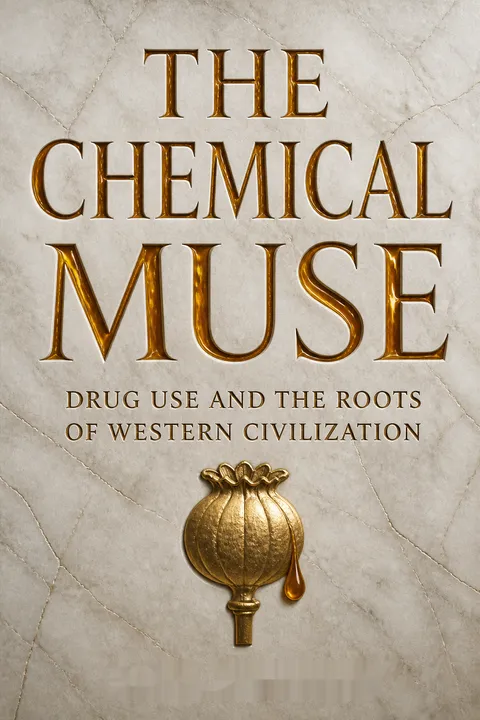
A tense defense. Hillman opens with his doctoral examination. He says his committee demanded that he remove his discussion of recreational drugs in antiquity, and recalls one professor dismissing the idea on the grounds that Romans simply would not behave that way. He complied to earn his degree, then wrote this book to put his evidence before readers. The episode frames the book as a challenge to modern assumptions about the past.
A warning about certainty. Hillman argues that academic discomfort helped erase ancient drug use from the story of Western civilization. That concern is worth examining, but the story of a hostile committee cannot itself establish how prevalent drug use was. The book's claims need to stand on the texts, artifacts, and interpretations it presents.
The opening makes a useful distinction between a question scholars avoid and a claim the evidence proves. Institutional norms can shape what researchers ask, especially when a subject carries moral stigma. But resistance to a thesis is not evidence of a coordinated cover-up, any more than a compelling personal story validates every conclusion built on it. The strongest approach is to treat the author's grievance as context, then assess each ancient source on its own terms. That keeps the challenge alive without turning skepticism into a substitute for proof.
Ancient drug use belonged to ordinary life, not just temples or clinics.
Evidence across genres. Hillman points to medical manuals, agricultural advice, histories, plays, and poems that discuss potent plants and their effects. Theophrastus writes about herbs that alter the mind; Pliny describes opium cultivation and collection; and Roman writers mention poppies as familiar crops. The book also discusses cannabis, wormwood, and nightshade plants. Together, these sources show that ancient writers knew about psychoactive substances and that some were accessible outside specialist rituals.
A claim about scale. Hillman argues that recreational use was broadly accepted across social classes, unlike in the modern West. The texts support familiarity and availability more securely than they establish how often people used particular drugs, or how common use was among every group. That distinction matters: evidence of a practice is not a census of it.
The book's strongest intervention is to widen the archive. It asks readers to notice pharmacological references in genres usually read for politics, literary style, or myth. This is a valuable corrective to histories that treat drug use as an exclusively modern problem. Yet ancient evidence is uneven: elite texts can reveal what educated authors knew while saying little about routine behavior among people who left no writings. A careful history can affirm that psychoactive plants were part of the cultural landscape without assuming uniform consumption or identical attitudes throughout the Mediterranean.
In a world of plague and wounds, plants were survival technology.
A brutal setting. Hillman describes lives threatened by epidemics, famine, unsafe buildings, venomous animals, and close-range warfare. He recounts the plague at Athens, which killed the statesman Pericles, and the Roman disaster at Cannae, where tens of thousands of soldiers died. These examples help explain why relief from pain and illness mattered so much. Ancient people faced dangers that modern sanitation, vaccines, and emergency care have greatly reduced.
A practical pharmacy. Doctors drew on plants, animal products, and minerals to treat symptoms and wounds. Pine resin could help protect injuries from infection, while honey was used in remedies and could inhibit microbial growth. Many treatments were ineffective or dangerous, but the search for useful substances was a response to pressing needs, not merely superstition.
Context changes the moral story. A society with high exposure to injury and disease may value pain relief and sedation differently from one with reliable hospitals and safer work. That does not make every ancient remedy sound, or every use harmless. It does make the demand for pharmaceuticals intelligible. The book's account also invites a broader history of medicine, where accumulated observation can produce useful treatment before anyone understands the mechanism. The danger is reading apparent success too generously: survival, placebo effects, and natural recovery can all make a remedy seem more effective than it was.
Ancient pharmacology blurred medicine, poison, pleasure, and danger.
One word, many uses. The Greek term pharmakon could refer to a medicine, poison, perfume, or other substance applied to the body. The word did not sort drugs into the modern moral categories of acceptable medicine and illicit intoxication. A substance might help in one dose and harm in another. Roman Latin made a distinction between medicamenta, healing drugs, and venena, poisonous drugs, but medical practice still revolved around administering substances.
Power with a price. Hellebore was used as a strong purgative, while plants such as hemlock and nightshade could be toxic. Ancient writers recognized that dose and preparation mattered, and Theophrastus observed that familiar drugs could lose their effect with repeated use. Their knowledge was practical rather than molecular: a remedy could work without anyone knowing its chemistry.
This vocabulary unsettles the modern assumption that a drug has one stable identity, either therapeutic or recreational. Pharmacology depends on dose, route, individual physiology, and purpose, so a single plant can occupy several categories at once. That insight remains relevant to debates about regulation, where legal status can appear to define a substance's nature. Still, the ancient absence of today's categories should not be mistaken for safety or social indifference. Toxicity, dependence, and unequal access do not disappear just because a culture uses different words for them.
Read drug-laced myths as cultural evidence, not pharmacological proof.
Stories shaped by plants. Hillman calls myths with drug-related elements narco-mythology. He reads Prometheus's gift to humanity as an explanation of the opium poppy, and interprets the drug that makes the Lotus-Eaters forget home as a picture of narcotic escape. Circe's transformations also depend on potions in the Odyssey. These stories make drug effects part of the imaginative world of gods, heroes, and ordinary people.
Interpretation has limits. The author argues that the poppy's role in the Prometheus story points to opium, and that several other myths preserve specific drug knowledge. Such readings can illuminate ancient associations between plants, altered states, and transformation. But a symbolic resemblance does not prove that a myth records a real drug practice, or that a particular plant was the one intended.
Myth can preserve social knowledge without functioning as a technical manual. A story about forgetting, frenzy, or transformation may reflect familiar experiences, but it can also use those effects as metaphor or plot machinery. The book is most persuasive when it shows how drug imagery makes a narrative intelligible to an audience that knew such substances existed. It is less secure when it treats a myth's resemblance to a drug experience as identification of a specific compound. Reading both levels together protects the literary richness while keeping historical inference disciplined.
Ancient magic often meant manipulating minds with potent substances.
The drug-working sorcerer. Hillman focuses on the Greek pharmakeus, a term connecting the roles of drug user, drug seller, and sorcerer. In his account, magic was not always a supernatural trick separate from medicine. Practitioners could use plants, potions, and fumigation to alter perception or influence another person's behavior. In a poem by Theocritus, Simaitha performs a ritual intended to bring back an estranged lover, using herbs and what she calls powerful drugs.
Medea's practical power. In the story of Jason and the Golden Fleece, Medea's knowledge of substances helps Jason face dangerous tasks and put a guardian serpent to sleep. Hillman argues that later translators often turn this drug expertise into generic witchcraft. The distinction helps recover the practical role drugs play in the stories, even if the effects remain exaggerated by myth.
This section shows how modern categories can flatten older forms of expertise. A healer, ritual specialist, and seller of potent plants might not have been distinct professions, especially where explanations of illness and divine influence overlapped. That does not mean ancient practitioners reliably controlled others, as a spell's promise suggests. Their authority could rest on pharmacology, ritual, reputation, or deception in varying proportions. The useful question is not whether the magic was literally supernatural, but what techniques and beliefs made it persuasive to the people who sought it.
Poets used intoxication as literary imagery their audiences already understood.
A Chemical Muse. Hillman uses this phrase for the idea that psychoactive substances could inspire creativity or resemble divine inspiration. In Homer, Helen gives guests a drug that quiets grief before they hear stories. Virgil uses the sleep-inducing poppy as an image of oblivion, and Ovid compares the relief of writing poetry with the forgetfulness associated with opium. Such passages make intoxication part of literature's emotional vocabulary.
Familiarity is not confession. Hillman treats writers' detailed descriptions as evidence that some authors had firsthand experience. The texts certainly show literary awareness of drug effects and an audience expected to recognize the references. They do not, by themselves, prove that Homer, Virgil, or Ovid personally used the substances they describe. A writer can know a subject through observation, inherited stories, or literary convention.
The comparison between artistic inspiration and intoxication opens a productive question about creativity: both can involve altered attention, emotional intensity, and a feeling that ideas arrive from beyond deliberate control. The book captures how ancient writers could make that resemblance meaningful to their readers. But biography requires more than vivid description. Literary voice is crafted, and first-person language can be fictional or conventional. The best conclusion is modest and still significant: drug imagery was culturally legible, and writers used it to think about memory, grief, inspiration, and self-command.
Greek philosophy grew from porous borders between reason, ritual, and healing.
Before the academy. Hillman traces early Greek thought through figures such as Epimenides, Pythagoras, and Empedocles, whose reputations mixed philosophy with medicine, religious practice, prophecy, and botanical knowledge. Ancient biographical sources describe Pythagoras traveling to learn from Egyptian priests and Persian Magi. Empedocles developed a theory of four elements that shaped later Greek explanations of nature and medicine, while also presenting himself as a healer with extraordinary powers.
A complicated inheritance. These stories complicate the clean image of philosophy emerging fully formed as detached rational inquiry. Plato also describes certain forms of mania, or inspired madness, as gifts associated with the Muses. Hillman connects such language to drug-induced states. The evidence supports cultural overlap among inquiry, ritual, and healing more clearly than it establishes that drugs caused specific philosophical discoveries.
The section's broader contribution is to resist a simple march from superstition to reason. Intellectual history often looks tidier in retrospect than it was in practice. Early thinkers could investigate nature, participate in religious rites, and claim healing powers without experiencing those activities as contradictory. That mixed setting helps explain how questions about the body, the cosmos, and the divine could share a vocabulary. The author's drug-centered explanation is more speculative: philosophical innovation cannot be attributed to intoxication merely because some philosophers encountered drug traditions.
Athens protected private drug use while criminalizing harmful use.
Liberty in public life. Hillman presents Athenian democracy as a system that valued direct participation and personal autonomy. Citizens could debate policy in the assembly, and playwrights such as Aristophanes openly mocked public figures. The book reads passages in Aristophanes and Plato as evidence that drugs were accepted when used privately, while using them to injure or kill someone could be punished. The Eleusinian Mysteries, state-supported initiations at Eleusis, are also central to Hillman's account of public tolerance for altered states.
Liberty had boundaries. Athenian political participation belonged to adult male citizens, excluding women, enslaved people, and foreigners. Hillman's proposal that the Eleusinian ritual drink contained a psychoactive drug draws on a controversial theory associated with The Road to Eleusis. The evidence for drug use and the scope of legal protection should be distinguished from claims that drug tolerance produced democracy.
The contrast between Athens and highly controlled Sparta gives the book a vivid way to connect bodily freedom with political order. It also highlights a persistent tension: communities may protect personal choices while drawing firm lines around harm to others. Yet Athens was democratic only for a restricted citizen body, so its liberties cannot stand as a universal model. The Eleusis argument is intriguing but contested, and the presence of a ritual beverage does not establish its ingredients. The section is strongest as a question about political values, not as proof that drug access created democratic institutions.
Ancient precedent challenges drug stigma, but cannot settle modern policy.
A different moral frame. Hillman contrasts ancient practices with modern prohibition. Greeks and Romans, he argues, generally treated drugs as natural substances with possible benefits and harms, rather than as inherently immoral objects. The book's examples include physicians using potent plants, farmers cultivating poppies, and writers discussing intoxication without the language of modern criminality. This history challenges the idea that drug condemnation is timeless or inevitable.
History is not a policy verdict. The author connects ancient drug use to the intellectual and political achievements later associated with Western civilization. But coexistence does not show that drugs caused those achievements, just as a tolerant ancient society cannot answer every modern question about public health or regulation. The more durable lesson is that drug laws reflect particular cultural judgments, not universal truths handed down unchanged from antiquity.
Historical comparison can loosen the grip of moral inevitability. If one society treats a substance as ordinary and another criminalizes it, the difference invites scrutiny of law, power, and social harm. But antiquity cannot serve as a simple endorsement of unrestricted access: ancient remedies could be lethal, and surviving accounts rarely measure population-wide outcomes. Nor does the presence of drugs alongside philosophy or democracy demonstrate that drug use produced either. The book is most useful as a challenge to assumptions, prompting policy debates to distinguish evidence about harms from inherited stigma.
Analysis
The book's central achievement is to make drug history visible inside subjects that are usually kept separate: ancient medicine, myth, literature, philosophy, magic, and democratic life. Its recurring insight is that a modern distinction between therapeutic drugs and morally suspect intoxicants cannot simply be projected backward. The Greek term pharmakon itself captures a world in which a substance might heal, poison, or alter perception according to its use and dose. That linguistic and cultural shift gives the reader a strong tool for questioning present-day assumptions.
The argument is uneven because the evidence comes in different strengths. Medical recipes and botanical descriptions provide solid evidence that ancient writers knew potent substances and used them in treatment. Literary references establish that drug effects were intelligible cultural material. They do not necessarily establish an author's personal consumption, the precise plant behind a myth, or how widespread recreational use was. The book sometimes moves quickly from textual familiarity to firsthand experience, and from coexistence between drugs and achievement to causal influence. These steps require more evidence than vivid parallels alone.
Its account of Athenian liberty also needs qualification. Participation and public speech applied to a limited class of male citizens, not everyone living in the city. The proposed psychoactive ingredient in the Eleusinian drink is an influential but disputed interpretation, not a settled fact. These qualifications do not erase the book's contribution. They help separate its strongest historical claims from its more provocative hypotheses.
The most valuable reading is neither a defense of ancient society nor an indictment of modern policy. It is a reminder that law and morality are historical choices, while pharmacological risks are material realities that require evidence. The book succeeds when it asks readers to examine both rather than confusing cultural stigma with scientific judgment.
Review Summary
The Chemical Muse receives mixed reviews, with an average rating of 3.88 out of 5. Readers appreciate Hillman's exploration of drug use in ancient Greek and Roman societies, finding it eye-opening and well-researched. Some praise the book's engaging writing and valuable insights into classical civilization. However, critics note repetitiveness, lack of hard evidence, and occasional overreaching in arguments. The book challenges traditional academic views on drug use in antiquity, sparking both interest and skepticism among readers with varying backgrounds in classics and ethnobotany.
People Also Read




Glossary
pharmakon
Medicine, poison, or drugAn ancient Greek term for a substance used on or in the body. Depending on context, it could mean medicine, poison, perfume, or another preparation. The word does not separate therapeutic substances from intoxicants in the same way many modern categories do, and it carries the possibility of benefit and harm.
pharmakeus
Drug-using magical practitionerA Greek term associated with a person who works with drugs and magic, including a drug seller, poison user, or sorcerer. Hillman emphasizes that these roles could overlap in antiquity. The term reflects a cultural world in which administering substances and performing magical acts were not always treated as separate practices.
narco-mythology
Myths shaped by drug loreHillman's label for myths whose plots or meanings include references to drugs, plant effects, or altered states. He applies it to stories such as Prometheus's gift, the Lotus-Eaters, and Circe's potions. The term identifies a way to read myth, but a drug-related interpretation does not by itself prove that a story records actual drug use.
Chemical Muse
Intoxication as creative inspirationHillman's phrase for the proposed relationship between psychoactive substances and artistic inspiration in the ancient world. He argues that writers could treat intoxication as analogous to the Muses' divine influence, connecting altered consciousness with creativity, memory, and relief from suffering. References to this connection show literary familiarity, but do not necessarily prove an author's personal drug use.
Eleutheria
Athenian civic libertyAn ancient Greek concept of freedom that Hillman associates with Athenian democracy and the ability of citizens to participate in public affairs and direct their private lives. Its protections did not extend equally to the whole population: women, enslaved people, and foreigners were excluded from political citizenship.
Eleusinian Mysteries
Initiatory rites at EleusisSecret religious ceremonies held at Eleusis, associated with the goddesses Demeter and Persephone and attended by initiates seeking religious insight. Hillman discusses the theory that a psychoactive ingredient in the ceremonial drink contributed to the initiates' experiences. The proposed ingredient is controversial and should not be treated as established fact.
The Road to Eleusis
Study proposing a drugged ritual drinkA book by Gordon Wasson, Albert Hofmann, and Carl A. P. Ruck that argues the Eleusinian ceremonial drink may have contained a psychoactive substance derived from ergot, a fungus associated with grain. Hillman draws on this interpretation to connect Greek religious experience with drugs. The proposal remains disputed rather than settled historical consensus.
FAQ
What's The Chemical Muse about?
- Exploration of Drug Use: The Chemical Muse by D.C.A. Hillman explores the historical use of drugs in Western civilization, focusing on ancient Greece and Rome. It argues that drug use was integral to cultural, philosophical, and democratic development.
- Cultural and Historical Impact: Hillman posits that drugs were used by philosophers and statesmen for inspiration and relief, challenging modern negative perceptions of drug use.
- Interconnection with Magic and Medicine: The book highlights how drugs were intertwined with magic and medicine, serving as tools for both sorcerers and physicians.
Why should I read The Chemical Muse?
- Unique Historical Perspective: Hillman offers a fresh viewpoint on drug use, encouraging readers to reconsider their views on drugs and their historical context.
- Rich Historical Detail: The book is well-researched, drawing on ancient texts and archaeological findings, providing valuable insights for those interested in history and philosophy.
- Relevance to Modern Issues: Hillman’s analysis is relevant to contemporary drug policy debates, provoking thought about personal autonomy and societal attitudes towards substances.
What are the key takeaways of The Chemical Muse?
- Drugs and Civilization: Recreational drug use was celebrated in ancient cultures, contributing to advancements in art, literature, and philosophy.
- Historical Figures and Drug Use: Many prominent historical figures used drugs, challenging the notion of a sober past and suggesting drug use as a constant in human experience.
- Cultural Myths and Drugs: Drugs were woven into cultural narratives, enriching our understanding of ancient literature and its themes.
What are the best quotes from The Chemical Muse and what do they mean?
- Antidrug Campaigns: “The modern antidrug campaign is not a democratic movement at all.” This suggests that contemporary drug policies are moralistic rather than democratic.
- Health Concerns: “The ancient world didn’t worry about heart attacks, strokes, or diabetes.” This highlights different health concerns in antiquity, driving drug use for relief.
- Author's Motivation: “If that’s what The Chemical Muse achieves, I will have managed to regain a bit of my idealism and courage.” Reflects Hillman’s aim to challenge the status quo and reveal historical truths about drug use.
How does Hillman connect drugs to the development of Western philosophy?
- Philosophical Influence: Hillman discusses how psychotropic substances influenced ancient philosophers' thoughts and writings.
- Mind-Altering Effects: Drugs allowed philosophers to explore concepts of existence and morality, emphasizing altered states in intellectual development.
- Historical Context: The pursuit of knowledge was often intertwined with drug use, challenging the perception of philosophy as purely rational.
What role did recreational drugs play in ancient Greek and Roman society?
- Cultural Acceptance: Drugs were widely accepted and integrated into social and cultural practices, not stigmatized.
- Enhancement of Experiences: Used to enhance social gatherings, religious ceremonies, and artistic expressions, contributing to cultural richness.
- Medicinal Use: Drugs provided relief from pain and suffering, serving both practical and pleasurable functions.
How does The Chemical Muse address the stigma surrounding drug use?
- Challenging Modern Views: Hillman argues that stigma is a modern phenomenon, contrasting with ancient acceptance.
- Historical Evidence: Presents evidence from ancient texts and archaeological findings to show normalized drug use.
- Cultural Reflection: Suggests stigma reflects societal fears and misconceptions, advocating for a nuanced understanding.
What types of drugs were commonly used in ancient times?
- Opium and Poppy: Opium was significant for medicinal and recreational purposes, highlighting its societal importance.
- Anticholinergics: Plants like henbane and belladonna were used for mind-altering effects, integral to magical practices.
- Psychoactive Fungi: Hallucinogenic mushrooms were used in rituals and personal exploration, contributing to spiritual practices.
How does Hillman link drug use to the concept of happiness in Western civilization?
- Historical Pursuit of Happiness: Drugs were tied to happiness and well-being, providing relief from harsh realities.
- Cultural Narratives: Ancient myths and literature depict drugs as means to achieve happiness, woven into cultural expressions.
- Modern Implications: Understanding this historical relationship can inform contemporary discussions on drug use and benefits.
What evidence does Hillman provide to support his claims about drug use in antiquity?
- Ancient Texts: Draws on works by Pliny, Theophrastus, and Homer to illustrate drug use and significance.
- Archaeological Findings: References discoveries supporting drug cultivation and use in ancient societies.
- Cultural Practices: Examines rituals and social norms, providing a comprehensive view of drug perception and utilization.
How did ancient societies view the relationship between drugs and personal freedom?
- Acceptance of Drug Use: Ancient societies embraced drug use as personal freedom, rooted in autonomy over one's body.
- Contrast with Modern Views: Contrasts ancient acceptance with modern stigmas, suggesting a loss of historical context.
- Democratic Ideals: Links drug use to democratic ideals of ancient Athens, where personal liberties were celebrated.
What insights does The Chemical Muse offer about the intersection of drugs and magic?
- Unified Concept: Drugs and magic were often viewed as a single entity, enhancing magical practices.
- Cultural Practices: Rituals involving drugs were integral to magic, altering consciousness for divine communication.
- Philosophical Implications: The intertwining of drugs and magic reflects a broader quest for knowledge and understanding.
Download PDF
Download EPUB
.epub digital book format is ideal for reading ebooks on phones, tablets, and e-readers.








