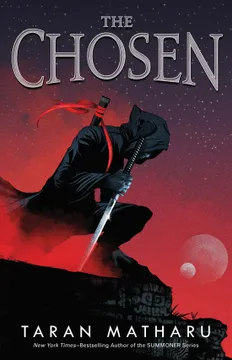


Plot Summary
Prologue
An unseen intelligence studies possible candidates and settles on Cade Carter, a teenager it considers unusually suited to an approaching contest. Cade is still at a locked school for troubled youths when the choice is made.
He has no warning that his ordinary life is about to vanish, or that his knowledge of history will become useful in a place where lost people, artifacts, and creatures from Earth appear together.
The opening frames selection as power exercised without consent. Cade is chosen not because he has volunteered or proven himself, but because an observer has judged his mind useful to a game whose rules remain hidden. That decision makes the reader share the imbalance Cade will face: the organizers know what is coming, while the chosen person must improvise with scraps of information. His historical interests are positioned as more than characterization. They are a resource the unseen intelligence has noticed, turning a private bond with his father into a possible tool for survival.
The Laptops Under His Bed
Cade Carter, a scholarship student whose roommate hid stolen laptops beneath his bed, is convicted after the school and police accept the evidence against him. A year at a harsh alternative school keeps him out of juvenile detention, but his parents' uncertainty wounds him more than the sentence.
There, Finch and Gobbler target Cade with racist taunts and food theft, while Jim drifts toward their approval. Cade finds a brief ally in Spex, another isolated boy, yet freezes when Finch and Jim beat Spex and break his glasses.
The failure leaves Cade ashamed of choosing safety over help. By the time six months of his sentence have passed, he has learned the institution's routines but still feels trapped by a punishment built on someone else's crime.
Cade's first conflict is not simply being bullied. It is the collapse of trust in the adults and institutions that should distinguish evidence from assumption. The conviction teaches him that innocence does not automatically produce recognition, while his father's doubt makes the injustice intimate. At school, the same logic repeats at a smaller scale: Finch controls the group by making everyone calculate the cost of resistance. Cade's silence during Spex's beating is therefore a learned survival response, not a lack of conscience. Its aftermath matters because guilt exposes a moral capacity that the school's punitive routines cannot cultivate. The novel begins building a protagonist whose central challenge is to act before safety becomes another name for complicity.
A Viper in the Canyon
One night, Cade vanishes from his dormitory and wakes on a narrow shelf above a muddy canyon floor. A hairless, apelike predator with a fishlike jaw circles beneath him, waiting for him to fall. Cade pries a sharp black stone from the wall and showers red dust into the creature's eyes, then jumps despite the drop and twists his ankle on landing.
His first swing barely hurts the beast, but he drives the stone into its foot and runs while it tends the wound. The canyon offers no rescue and no explanation. When Cade reaches a glowing barrier, it disappears at his touch, leaving him to limp onward with the crude axe as his only protection.
Cade's first survival test converts the habits of his institutional life into a more literal problem: he has to assess danger without anyone trustworthy to interpret it for him. He does not defeat the predator through strength or expert planning. He notices dust, improvises a distraction, accepts injury, and escapes. That small sequence establishes the book's practical ethic: knowledge matters when it changes what a body can do. The vanished barrier adds a different pressure. The environment behaves as if designed, but refuses to explain itself, so Cade must keep acting before certainty arrives. His choice to run rather than freeze is an early, incomplete break from the passivity that has troubled him at school.
The Moon Has Two Faces
Cade finds Eric, the silent, powerfully built boy from school, fighting another canyon predator with a torn uniform. Cade charges in, and Eric uses his belt to choke the creature while Cade keeps it occupied. They set off together, cautious of one another but safer as a pair. At a spring opening onto white salt flats, they meet Scott, a joking car enthusiast, and Yoshi, a guarded newcomer.
A scream from a neighboring passage suggests other students have not survived. The group sees matching canyon routes, a barrier that comes and goes, and finally two moons in the unfamiliar sky. Cade's guess that they are being watched now feels less like paranoia than the only explanation that fits.
The new alliance starts with mutual usefulness rather than instant friendship. Cade risks himself for Eric, and Eric's response turns a first encounter into a working partnership, though neither boy knows the other's full history. Scott's humor keeps fear from hardening into panic, while Yoshi's watchfulness gives the group a more skeptical voice. The two moons force them to abandon the comforting possibility of a familiar location or ordinary experiment. Their different reactions show how people manage the same uncertainty: joke, hypothesize, observe, or act. Cade's ability to notice repeated layouts and infer an unseen observer gives him a tentative role, but the group's safety still depends on shared labor rather than his intelligence alone.
Romans Beneath the Salt
The four boys cross the glaring flats toward a glint and find a dead soldier wearing a Roman token. Finch, Jim, and Gobbler catch up, having survived their own route through the canyon. Cade reads the inscription as identifying a soldier of the Ninth Legion, the Roman force famous for vanishing from historical records.
Nearby lie more bodies, some marked with blue tattoos, and water-filled ancient vessels that keep the group moving. Cade recognizes the dead men's wounds as signs of battle, not the predators they have already faced. The token makes the past physically present, yet the bodies seem too recent to be Roman. Finch takes charge of the water and presses ahead, while Cade carries a mystery no one can yet resolve.
The Roman evidence changes the group's problem from escape to interpretation. Cade's historical knowledge gives him an advantage, but it also makes him suspect to the others, who cannot tell whether his expertise is coincidence or part of the trap. The bodies complicate any simple time-travel explanation: their apparent age and the historical inscription do not align. Finch responds to uncertainty by claiming resources and asserting authority, a behavior that feels familiar from school but now has survival consequences. Cade's instinct is to treat every detail as evidence, a method inherited from his father's teaching. Yet the scene also limits that method: facts can be accurate and still fail to explain the system that has brought them together.
The Keep Counts Down
Cade climbs a crumbling outer wall and unbars the gate from inside, opening a ruined Roman-style keep to the others. Spex arrives after crossing the desert, restoring Cade's only fragile friendship and sharpening his memory of failing to help him at school. The keep contains a well, sleeping quarters, a cavern with running water, and scraps of weapons.
In an upper chamber, the group finds an old projector showing Roman soldiers battling tentacled monsters outside these same walls. A weightless device then scans and identifies every boy, including the names Finch and Gobbler usually hide behind, before starting a six-day countdown to a qualifying round. Its announcement turns the keep from shelter into a scheduled arena.
The keep offers material safety while making the threat more specific. Water, beds, and walls answer immediate bodily needs, but the film and countdown show that the building is part of an engineered trial. The device's ability to identify each boy removes the last hope that they are anonymous captives who might simply be overlooked. Spex's return carries a quieter consequence: Cade is again near the person he failed, and the new danger gives that guilt a chance to become action rather than private regret. The projector supplies evidence without explanation, a pattern repeated throughout the story. The boys can see what happened to earlier occupants, but they still have to decide what the warning means.
An Oasis With an Engine
Rather than wait for the countdown, the boys explore the mountain and find an overgrown orchard, wheat fields, and a vast forest inside a volcanic crater. Cade and Spex recognize the fertile landscape as a possible source of food, but the group chooses to keep moving through a smooth tunnel toward the jungle. At a waterfall they discover the Witchcraft, a cabin cruiser that vanished from Earth decades earlier.
Its motor will not start, so Finch and Yoshi argue over the fuel while Cade pushes the group to use the river current and makes clear he will not let Finch claim the boat as private property. They launch with Finch at the helm, carrying food and water, but the apparent escape only carries them deeper into danger.
The oasis complicates the idea that survival means finding a single safe place. The orchard could sustain them, yet the countdown makes staying feel like surrender to an unknown test. The boat offers movement and the illusion of agency, but it is another displaced object whose presence signals that this world gathers pieces from many histories. Finch's claim of ownership reproduces the social hierarchy of school under conditions where food and transport are now literal power. Cade's decision to challenge him is modest but significant: he is beginning to oppose control even when he cannot guarantee that others will follow. The river's promise of escape is real enough to motivate them, but not reliable enough to protect them.
The River Eats the Boat
The Codex, the floating machine, follows the Witchcraft and identifies an ancient stone head on the riverbank. The boat then passes a living dinosaur and opens onto a plain crowded with prehistoric animals. When rapids appear, Cade orders the group toward shore, but the cruiser strikes a submerged rock and throws him into the water.
The current batters him downstream until he claws onto the bank alone, without his hand axe or any sign of the others. The Codex explains that the boat disappeared on Earth in 1967 and provides a map to other recorded objects. Cade follows a marker for a lost American soldier, climbs a tree to reach the body and its bag of Japanese swords, then becomes trapped above a hungry predator.
The river makes wonder and danger inseparable. The dinosaurs are not distant fossils but living bodies that can overturn a boat, and Cade's curiosity about them cannot protect him from the rapids. His separation from the group removes the social structure that has begun to steady him, leaving him dependent on the Codex, a guide that answers facts but not questions of care. The map tempts him with a possible human connection, yet the soldier is dead. Finding swords instead of a modern weapon is a pointed reversal: history offers tools, but not the kind Cade expected. His willingness to climb after the body shows a new appetite for risk, though isolation makes every brave choice potentially fatal.
Quintus Knows the Stakes
Cade escapes the tree predator by throwing the soldier's remains as a decoy, then evades a hunting pack of feathered raptors with fire and a stolen sword. He reaches the lost Mayan city of Hueitapalan, where a young Roman named Quintus rescues him, treats his bitten legs with honey and ant-head stitches, and shares food.
Quintus is deaf and speaks Latin, so Cade uses the Codex to translate. The legionary explains that people from different Roman eras were brought to this world and that his fellows left a mountain keep to fight a larger battle. The Codex confirms the rule that makes the danger urgent: losing the qualifying round, or refusing it, means Earth will be destroyed.
Quintus gives Cade something the Codex cannot: a witness who has lived within the system and carries its history in his body. Their communication depends on translation and gesture, making trust an active process rather than a product of fluent speech. Quintus's practical care contrasts with the indifferent machinery that tracks Cade's location. The revelation about Earth's destruction converts survival from an individual problem into an ethical burden, but it does not make the demand fair. Cade is being asked to risk others' lives on an authority that has already withheld crucial rules. His choice to believe Quintus is partly rational, based on everything he has seen, and partly emotional, because the Roman treats him as a person rather than a contender.
The Girls From 1985
After searching Hueitapalan for Quintus, Cade sees four schoolgirls and follows them into the jungle, where armored men knock him unconscious and cage him beside the girls. Amber, their sharp-minded hockey captain, explains that their school minivan was thrown into the jungle and that the team was attacked by feathered creatures.
Cade learns they believe it is 1985, decades before his own time, but they doubt his account of another planet. When a young guard brings Amber water, she and Grace seize him, while Bea and Trix help cut the cage free. Cade strikes the guard when he breaks loose, then chains the gates long enough for the group to escape. In the dark, they encounter Quintus, who leads them back toward the city.
Amber and the other girls arrive with their own history and their own survival skills, not as passive additions to Cade's group. Amber reads the guard's vulnerability and creates an opening; Grace supplies force, and the twins help with the practical escape. Cade's disclosure that he comes from the future cannot persuade them by itself, so credibility has to be earned through shared danger. His choice to hit the guard and delay the pursuers marks a change from the boy who watched Finch hurt Spex without intervening. The scene also exposes the game as a system that recruits people without consent across decades. The girls' skepticism is reasonable: in a world built from impossible events, trusting a stranger is another risk.
A Vote for the Keep
Quintus guides Cade and the girls to Hueitapalan, where they find Finch, Scott, and Spex trapped amid migrating dinosaurs. Cade rushes into the plaza to warn them as pack hunters attack a young sauropod herd. He survives by sheltering among the adults, and Quintus kills a charging predator before it can reach him.
Back in Quintus's temple, Cade reunites the separated students and explains the countdown, the qualifying round, and the threat to Earth. Finch rejects the danger and wants to remain in the jungle, but Cade argues that the hunters, predators, and dwindling food make that no safer.
The girls volunteer to become contenders, and Jim also sides with Cade. The group takes the Witchcraft upriver toward the keep, with the decision now shared rather than imposed by Cade alone.
The rescue scene gives Cade a chance to behave differently from his earlier self: he risks himself to warn the others instead of waiting for someone else to act. His case for returning to the keep is practical as well as moral. The jungle has no stable refuge, and the captors establish that human threats are as consequential as dinosaurs. The vote matters because Cade cannot simply recruit people as pieces in his own plan; the girls must volunteer, and the others must decide whether the danger is credible enough to face. Finch's refusal reveals how fear can turn into self-protection at any cost. Cade's leadership becomes legitimate only when he makes room for disagreement and collective consent.
Finch Steals Their Exit
After the group reaches the keep, Finch attacks Yoshi during the night, binds him, and escapes in the Witchcraft with Gobbler. The theft eliminates their quick route away and leaves the remaining contenders with no choice but to prepare for the approaching trial.
Yoshi reveals that he learned kendo while trying to sell forged Japanese antiques, then teaches the others how to hold and swing their swords. Eric, who has avoided friendship at school, tells Cade that he drove drunk after a celebration and caused his best friend's death.
His confession helps Cade understand the guilt behind Eric's silence and gives the group a reason to fight as more than frightened strangers. The stolen boat has made escape harder, but their practical skills and personal trust are beginning to grow.
Finch's betrayal is an extension of the same coercive logic he used at school: seize the resource, leave others with fewer choices, and call domination strength. The consequences are immediate, since the boat was their only powered transport. Against that, Yoshi's history of fraud becomes unexpectedly useful; a skill born from deception can now support collective survival. Eric's confession shifts his reputation from a frightening rumor to a painful human fact. Cade listens without treating the confession as a reason to withdraw trust. The group's preparation therefore develops on two levels at once: they learn how to wield swords, and they begin to see one another beyond the worst act or label attached to each person.
Quicklime at the Ramparts
The defenders return to the keep and find a force field holding roughly a hundred vipers outside the wall. With less than two days before the round, Cade surveys the crumbling defenses and assigns watches, while Yoshi teaches basic sword strikes and Quintus trains the group to use slings.
Cade then studies the refuse near the keep and burns discarded shells into quicklime, a powder that can injure eyes, skin, and lungs when it meets moisture. He has the group wet a trench at the wall's base, sharpen wooden stakes, and carry heavy stones to the parapets.
Amber helps prepare the stakes, while the others divide the labor. The plan cannot make the wall sound or the fighters experienced, but it gives them several ways to slow an attack before it reaches the ramparts.
Cade's plan is a synthesis of observation, historical knowledge, and shared effort. He does not invent a powerful modern weapon; he recognizes that shells, fire, water, and the enemy's vulnerable eyes can be combined into a crude defense. The limited materials are important. They prevent knowledge from becoming magical competence and keep the preparation grounded in labor, uncertainty, and bodily risk. The group also begins to distribute expertise: Quintus teaches slinging, Yoshi teaches sword handling, and Amber contributes to the physical work. Cade's leadership is no longer just his ability to interpret clues. It becomes the capacity to coordinate skills that no single person possesses.
The Keep Is Overrun
When the countdown ends, the barrier vanishes and the vipers charge. Sling stones, sharpened stakes, and falling boulders kill or slow many, but the creatures climb the damaged wall. Cade's quicklime blinds and burns those below; others still reach the defenders.
The group retreats into the keep, where Eric turns back to draw the attackers away and is overwhelmed. Jim then helps Spex inside but dies from his wounds. The survivors barricade the doors and windows, yet the vipers break through the roof and upper rooms.
Gobbler is killed, and Spex sacrifices himself to draw the creatures away from Cade and the others. Forced into the underground stairwell, the remaining defenders fight through the last wave, drive the vipers back, and receive the Codex's confirmation that they have won.
The battle makes the cost of Cade's decision impossible to abstract. Each defensive device works partially, buying seconds rather than safety, and the wall's failure exposes the limits of preparation. The deaths are not interchangeable victories: Eric chooses to protect others, Jim's act repairs some of the harm attached to his earlier compliance, and Spex turns a life shaped by isolation into a final act of solidarity. Cade cannot save them all, and the Codex's announcement of success arrives beside fresh grief. The novel refuses a clean equation between winning and being right. Cade's leadership has helped preserve the larger group, but it has also brought his friends into a lethal contest whose rules remain controlled by someone else.
A God Behind the Girl
After the survivors bury their friends, Cade asks the Codex why they were brought to the keep. It first refuses to answer, then projects a little girl who identifies herself as Abaddon.
The apparent child explains that her species is billions of years old and that its members created life on selected planets to relieve their own boredom. Earth is her second experiment, after Mars, and the caldera is a constructed arena stocked with people, artifacts, and animals taken from Earth's history.
The Romans were earlier contenders; Cade and his companions were selected to replace them. Their victory only completes the qualifying round. Earth still sits near the bottom of a planetary contest, where losing can mean annihilation, and the game is just beginning.
The final revelation enlarges the story's moral problem rather than resolving it. Abaddon describes creation as entertainment and competition, a rationale that makes human suffering negligible from the maker's scale but not less real to those who endure it. The childlike projection sharpens that asymmetry: a harmless appearance masks immense power and a casual willingness to destroy worlds. Cade has won a round, yet the promised explanation exposes how little control victory grants him. The scene also reframes the historical objects and displaced people as curated pieces in someone else's collection. By ending at the threshold of a larger game, the book denies the comfort of a completed rescue and leaves Cade's new knowledge as both leverage and burden.
Analysis
The novel makes institutional judgment and cosmic judgment mirror one another. Cade is first punished by people who decide that a poor scholarship student is a more plausible thief than his wealthy roommate. Later, an alien intelligence selects teenagers as contestants without their consent, withholds rules, and treats their deaths as entertainment. In both systems, power disguises itself as legitimate procedure. The difference is scale, not moral structure.
Cade's development is therefore not a simple transformation from timid boy to heroic leader. His history knowledge helps him interpret the world, but it cannot protect him from the consequences of acting on incomplete information. His more important change is social: after failing Spex, he gradually learns to intervene, persuade, and distribute responsibility. The group becomes capable not because Cade possesses every skill, but because he recognizes expertise in Quintus, Yoshi, Amber, and others. Leadership is shown as coordination under uncertainty, not command by certainty.
The story also complicates the idea that survival justifies any choice. Finch repeatedly treats resources and people as possessions, reproducing the hierarchy that made school dangerous. Cade's effort to build a coalition offers a counterpractice, but it is not morally cost-free. He convinces friends to fight in a contest whose stakes he cannot independently verify, and they die. The Codex confirms their victory but cannot comfort the bereaved or answer the questions that matter most. The displaced artifacts give history an unsettling material presence. They are not museum objects but pieces of lives interrupted and repurposed by a collector. Cade's knowledge connects him to his father and equips him to survive, yet the revelation that an ancient being arranged the game turns that inheritance into part of someone else's design. The ending refuses triumph as closure: the group has won one round, but the deeper conflict concerns whether beings who can create life have any right to treat it as a pastime.
Review Summary
The Chosen received mostly positive reviews, with readers praising its fast-paced action, intriguing world-building, and diverse characters. Many enjoyed the blend of history, science fiction, and fantasy elements, particularly the inclusion of dinosaurs. Cade, the protagonist, was well-received for his intelligence and character development. Some criticisms included underdeveloped secondary characters and a slow-building plot. Overall, reviewers found the book engaging and looked forward to the next installment in the series, despite a few noting that it felt like setup for future books.
People Also Read


Characters
Cade Carter
The reluctant strategistCade is a history-minded scholarship student who has been punished for a crime he did not commit. His instinct is to observe, infer, and keep his head down, habits that once helped him survive bullying but also leave him ashamed when he fails to protect Spex. In the strange world, knowledge of Roman history and practical problem-solving become tools the group needs. Cade is not naturally fearless; he is often frightened, injured, and unsure whether his decisions are sound. What distinguishes him is his growing willingness to act while uncertain and to take responsibility for the people who choose to follow him.
Eric Larsen
The guarded protectorEric is a broad, physically imposing student who keeps to himself and is surrounded by rumors about his past. His silence reads as menace to classmates, but it also reflects a deep reluctance to form new attachments. He is quick to protect others when danger becomes immediate, and his physical confidence contrasts with the guilt and grief he carries privately. Cade's willingness to trust him gives Eric room to be more than the frightening reputation attached to his name. He is dependable in a crisis, though his instinct to bear danger alone can put both himself and the group at risk.
Quintus
The stranded legionaryQuintus is a deaf young Roman soldier from the Ninth Legion, living far from the world and century he knew. He communicates through Latin, gesture, and close attention to faces, and his skill with a sling makes him an experienced survivor rather than merely a historical curiosity. Years of isolation and scarcity have left him gaunt, but he remains generous with food and attentive to the wounded. Cade's historical knowledge gives them a point of connection, while the Codex bridges their language gap. Quintus is cautious about returning to the keep, which makes his eventual cooperation a meaningful act of trust.
Amber Lin
The decisive captainAmber is the captain of a school field-hockey team displaced from 1985. Alert, forceful, and skilled at reading people, she sees the guard's weakness and helps turn captivity into an escape opportunity. Her leadership is practical rather than ornamental: she expects others to contribute and refuses to let Cade assume authority without challenge. Amber is skeptical of claims that sound impossible, but she can revise her judgment when events provide evidence. Her confidence sometimes comes across as sharpness, especially when fear makes patience difficult. Beneath it is a strong sense of responsibility for her teammates and a willingness to choose danger with them.
Yoshi Endo
The wary sword teacherYoshi is an observant, reserved student whose experience forging and selling fake Japanese antiques has brought him into conflict with his mother. His interest in swords becomes unexpectedly useful when he teaches the group basic handling and strikes. He is wary of Finch's attempts to dominate the others and direct about the risks of fighting. Yoshi's caution is not cowardice; he understands that skill with a blade cannot make a novice invulnerable. His guarded humor and practical expertise help the group replace bravado with a little discipline.
Spex, Carlos Silva
The overlooked fact-finderKnown to the students as Spex, Carlos is a trivia-loving reader with thick glasses and a sharp memory. His parents sent him to the school after he ran away, and he recognizes how quickly adults can turn discipline into humiliation. He is among the first students to treat Cade's account of the laptop accusation with sympathy. Spex contributes practical observations about the landscape and its volcanic geology, balancing Cade's historical focus with broad curiosity. His reserve comes from being repeatedly targeted, but he is not without courage or judgment.
Finch Hill
The calculating bullyFinch is a charismatic, aggressive student who maintains control by identifying other people's fears and turning them into leverage. He singles out Cade with racist mockery, recruits Jim's compliance, and expects weaker students to yield food, space, or authority. In the strange world, his talent for seizing resources becomes more dangerous because there are no counselors to restrain him. Finch is not reckless in the simple sense: he prefers advantages that keep risk away from himself. His insistence that power belongs to whoever can take it makes him a direct challenge to Cade's effort to build cooperation.
Jim Webster
The anxious followerJim is an awkward newcomer who admits he was sent away after a destructive party. He is easily intimidated by Finch and repeatedly weighs compassion against the fear of becoming a target himself. His treatment of Spex shows how a frightened person can help harm someone else rather than risk standing apart. Jim's unease is visible, even when he tries to hide it behind compliance. He is important to the story's portrait of peer pressure because he is neither a natural bully nor automatically brave; he is a boy deciding, under pressure, what kind of harm he can live with.
Scott Moore
The joking car enthusiastScott is a ginger student fascinated by cars, sent to the school after joyriding. He uses jokes to puncture fear and keep the group talking, even when the humor is ill-timed. Beneath the levity, he is attentive to practical problems and willing to follow a plan when he believes it has a chance. Scott helps keep the group's conversations human while they confront a world that makes ordinary assumptions absurd. His humor does not erase his fear; it gives him a way to function alongside it.
Grace Jelani
The team's steady defenderGrace is a tall, strong member of Amber's hockey team, with a direct manner and a protective streak. She helps overpower the young guard during the escape and tends to test Cade's claims rather than accepting them on trust. Her skepticism reflects sensible caution, especially after the team has already been captured once. Grace acts decisively when someone is in danger and is willing to learn the skills the group needs. She brings physical confidence and a grounded resistance to plans built only on optimism.
Bea Prescott
The quiet first-aiderBea is one of the Prescott twins and a quieter member of Amber's team. She is soft-spoken, but she helps the girls escape their cage and later uses first-aid training to care for injured fighters. Her gentleness does not prevent her from taking part when a task must be done. Bea often watches before acting, a temperament that can be mistaken for passivity until the group needs patience and careful hands. She steadies the team by attending to concrete needs others overlook.
Trix Prescott
The outspoken twinTrix is Bea's twin and a quick-witted member of the hockey team. She helps with the cage escape and uses jokes and sharp observations to manage fear, often speaking when the others are still assessing a situation. Trix is closely connected to Bea, but she is not merely an echo of her sister; her humor and impatience give her a distinct presence. She is wary of the strange world and reluctant to pretend that fear can be reasoned away.
Tom Andrews, called Gobbler
Finch's hungry enforcerTom, whom the students call Gobbler, is a heavyset boy who helps Finch intimidate other students and steal their food. He often follows the strongest personality in the room rather than forming his own position. His appetite and physical bulk become part of the nickname Finch uses to diminish him. Tom shows how a bully's circle can be made up of people who exercise power in groups while remaining vulnerable to abandonment when that power shifts.
Abaddon
The remote game-makerAbaddon communicates through a projected childlike figure, using playfulness and theatrical manners to make a conversation about life and death seem trivial. The persona is disarming by design, but its patience is shallow and its power immense. Abaddon treats human questions as interruptions and expects obedience from beings it regards as lesser. The contrast between the harmless image and the cruelty of its choices makes it difficult to read its warmth as genuine kindness.
Plot Devices
The Codex
A narrow window onto EarthThe Codex is a floating, camera-like machine that follows the contenders and identifies people, creatures, artifacts, and places connected to Earth. It can project maps, translate Latin, track a countdown, and supply historical information, but it refuses questions the game authority has prohibited. That uneven access to knowledge makes it both an indispensable tool and a source of frustration. Cade learns to phrase questions precisely, while also discovering that the Codex cannot tell him everything he needs to know about the forces controlling the contest.
The Qualifying Round
A deadline with hidden rulesThe countdown turns the keep into a destination and forces the students to choose between waiting, fleeing, or preparing for an unknown attack. The group later learns that they must defend the fort, and that refusing or losing carries a threat to Earth. The timer gives the story a clear deadline without giving the characters a fair account of the rules. Every delay, detour, and betrayal therefore has a concrete cost, while each victory reveals only part of the larger competition.
The Lost Remnants
Earth's history made physicalRoman soldiers from separate eras, an Olmec head, a Mayan city, a missing yacht, and Japanese swords appear together in the caldera. The Codex recognizes many of these objects as things that vanished from Earth, giving Cade clues about the place while inviting false assumptions about time travel. These artifacts also give the group usable resources, from a boat to weapons and historical evidence. Their eventual explanation as collected specimens and objects reveals that the world is curated by an intelligence with control over what the contenders encounter.
The Keep
Shelter turned into a battlefieldThe Roman-built fort appears to offer water, beds, sanitation, and defensible walls, making it the obvious refuge after the desert. Its projector and countdown reveal that it is also the center of the qualifying round. The group uses the architecture as a defensive system, first holding the wall and then retreating into the inner chambers when it falls. Because the building is already crumbling, safety depends on adaptation rather than simply occupying it. The keep's apparent promise and its actual purpose remain in tension throughout the story.
Improvised Defenses
Knowledge made into survival toolsThe contenders have swords, slings, stones, shells, wood, water, and little time. Quintus teaches them to use slings; Yoshi teaches basic sword handling; Cade converts burned shells into quicklime and coordinates stakes, a wet trench, and falling boulders. Each measure slows the vipers but fails to make the defenders safe, so the group must retreat and fight again inside the keep. These defenses make historical and practical knowledge consequential while preserving the cost of the battle: ingenuity improves the odds but cannot erase vulnerability.
Download PDF
Download EPUB
.epub digital book format is ideal for reading ebooks on phones, tablets, and e-readers.








