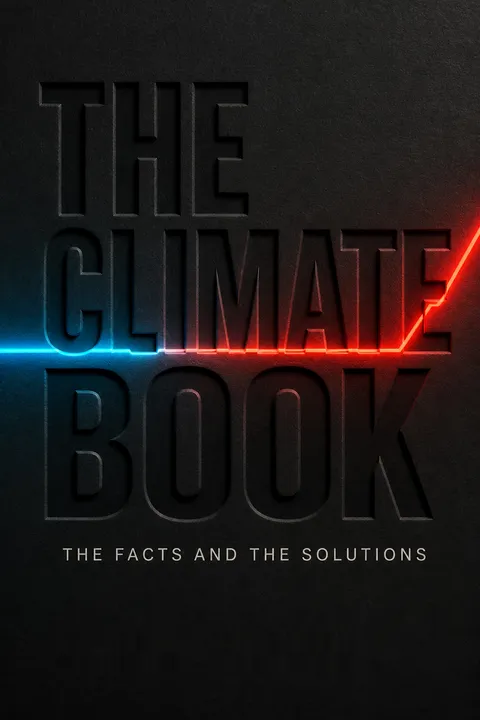


Key Takeaways
Treat 1.2°C of human warming as a whole-system emergency
Carbon connects the crisis. Human activity has warmed the planet by about 1.2°C since pre-industrial times. The book argues that climate change is not a stand-alone pollution problem: it is part of a wider crisis involving ecosystems, food, water, health, and the economic systems that drive extraction and consumption. Carbon dioxide is central to this story because it moves through air, oceans, living things, and rocks, influencing both the conditions for life and the planet’s temperature.
Earth history is a warning. About 252 million years ago, massive volcanic emissions disrupted the carbon cycle, drove temperatures sharply upward, and contributed to the greatest mass extinction in the fossil record. That ancient event is not a direct forecast of today, but it shows that the planet’s life-support systems can be pushed beyond their capacity to recover.
The strength of this framing is its refusal to separate climate from the systems that sustain human life. It encourages readers to ask not only how much carbon is emitted, but what arrangements of food, energy, land, and power produce those emissions. Earth’s deep past offers a useful warning about scale and consequence, though it cannot provide a precise map of modern outcomes. The value of the analogy lies in the shared mechanism, a disrupted carbon cycle, not in pretending that ancient volcanic events and industrial society are identical.
Protect the remaining carbon budget before feedbacks make damage self-reinforcing
Budgets impose a deadline. A carbon budget is the amount of carbon dioxide humanity can still emit while retaining a stated chance of limiting warming. At the start of 2020, the estimated remaining budget for a 67 percent chance of staying below 1.5°C was 400 gigatonnes. At then-current emission rates, it would be used up before 2030. The exact budget depends on assumptions, but the central point is that cumulative emissions consume a finite allowance.
Thresholds change the rules. A tipping point is a threshold beyond which a system can shift into a different state through self-reinforcing processes. Melting ice exposes darker surfaces that absorb more heat; thawing permafrost can release greenhouse gases. Such changes may unfold over centuries, so their full effects can outlast the decisions that trigger them.
The budget metaphor makes an abstract physical constraint legible to public decision-making: each year of delay narrows the available choices. Complex-systems thinking adds an important distinction between gradual pressure and abrupt state change. A forest or ice sheet can appear intact until reinforcing feedbacks accelerate its decline. Tipping-point estimates carry uncertainty, and that uncertainty should not be mistaken for a countdown to a known date. It instead strengthens the case for precaution, especially where consequences could be persistent and difficult to reverse.
Read heat, floods, drought, and disease as connected climate signals
A warmer atmosphere reshapes risk. The book links rising heat to more intense heatwaves, wildfire conditions, crop stress, and health harms. Warmer air can hold more moisture, increasing the potential for heavy rainfall, while higher evaporation can dry soils and worsen drought. These outcomes are not contradictory: a hotter water cycle can mean both drier land and heavier downpours.
Attribution makes the link measurable. Extreme event attribution compares the likelihood or severity of an event in the actual climate with a modelled world without human-caused warming. For Hurricane Harvey in 2017, researchers estimated that climate change increased rainfall by 15 percent, contributing an estimated $67 billion of the storm’s $90 billion in rainfall-related costs. Attribution does not mean climate change single-handedly caused every disaster; it identifies how warming shifts the odds and impacts.
This approach turns climate change from a distant average into a question about familiar events and their consequences. It also avoids a common reasoning error: treating a weather disaster as either wholly natural or wholly caused by warming. Attribution offers a more useful middle ground, describing changed probabilities and added intensity. Its limits matter too. Evidence is stronger for heat and heavy rainfall than for some storms and circulation patterns, and the quality of analysis varies by region. Those gaps should prompt investment in research, not silence about risk.
Put historical responsibility and present vulnerability at the center of climate policy
Emissions are radically unequal. The book cites estimates that the richest 10 percent of people produce about half of global emissions, while the poorest half produce a small fraction. Responsibility also differs across countries because industrialization, colonial extraction, and high-consumption lifestyles created unequal benefits and unequal emissions. The remaining carbon budget is therefore not just a technical allocation problem; it raises questions about who used it and who still needs energy, infrastructure, and basic services.
Impacts follow inequality. Poorer communities often have fewer resources to protect themselves from heat, flooding, crop loss, and water scarcity. In Bangladesh, communities have reduced deaths during extreme weather through evacuation practice and neighbours helping those at greater risk. The lesson is not that adaptation removes the danger, but that social support can determine whether a hazard becomes a catastrophe.
Equity is not an optional moral appendix to climate policy. It affects whether policies are legitimate, who can afford to comply, and whether lower-income societies can develop without repeating a high-carbon path. The book is especially persuasive when it connects historical responsibility to present capacity. Yet broad labels such as Global North and Global South can conceal major inequalities within countries. A fair policy must therefore track both national histories and the highly unequal footprints of people within each nation, while protecting access to essentials.
Count consumption emissions and loopholes, not just tidy national totals
Accounting can hide the footprint. Territorial accounting assigns emissions to the country where goods are made. Consumption-based accounting also counts the emissions embodied in imports and subtracts those embodied in exports, connecting pollution to the demand that drives production. This distinction matters when wealthy countries move factories abroad and report lower domestic emissions while continuing to consume the goods those factories produce.
The gaps can be large. An investigation described in the book estimated that Sweden’s roughly 50 million tonnes of reported annual emissions rose to around 150 million when consumption and biomass emissions were included. International shipping and aviation, military emissions, and biomass burning can also fall outside or be treated inconsistently in official totals. The result is a climate plan that may appear stronger than the real-world cuts it delivers.
Measurement is a form of governance: what a system counts becomes easier to regulate, while what it excludes becomes politically convenient to ignore. Publishing territorial and consumption-based emissions side by side would clarify rather than replace national responsibility. No single accounting method captures every consequence, and estimates can be revised as data improve. But uncertainty is not a reason to report only the most flattering figure. Credible targets need transparent boundaries, consistent methods, and clear disclosure of what remains outside the ledger.
Make immediate fossil cuts the test of every technology promise
Energy is changing, but too slowly. Solar and wind power have become much cheaper, and the book describes them as practical tools for replacing fossil energy. Yet rising energy demand has limited their effect: non-fossil sources remained around 22 percent of the global energy system for decades, despite rapid deployment in recent years. New infrastructure also has long lifetimes, so building fossil-fuel facilities today can lock in emissions for years.
Future removal is not a substitute for prevention. Carbon capture and removal technologies may help in difficult sectors, but their current scale is small compared with global emissions. The book notes that a direct-air-capture plant in Iceland was, at the time discussed, expected to capture only a few seconds of annual global emissions. Meanwhile, fossil fuels received an estimated $5.9 trillion in subsidies in 2020. The contrast exposes where policy priorities were going.
Technology is essential to decarbonization, but its value depends on demonstrated performance, deployment speed, and the emissions it actually avoids. Treating speculative removal as permission to keep expanding fossil infrastructure reverses the logic of innovation. At the same time, technological skepticism should not become technological dismissal: heavy industry and other difficult sectors need workable options. A sound test is whether a technology complements rapid emissions cuts, fits within ecological limits, and has credible evidence behind its promised scale.
Reduce high-consumption demand across food, transport, and throwaway goods
Demand shapes the production system. Food systems account for about 30 percent of global greenhouse-gas emissions, use around 40 percent of land, and consume at least 70 percent of freshwater, according to the book. Animal products generally require more resources per calorie than plant foods, with beef and lamb among the most resource-intensive. A global shift toward more plant-based diets could reduce food-related emissions substantially, while lower-income communities may need more nutritious food, not less.
Mobility and shopping follow the same pattern. Transport remains overwhelmingly dependent on oil, and replacing every car with a new electric vehicle would not solve congestion, land use, or resource demands. Buying less, repairing goods, sharing vehicles, improving public transport, and locating homes and services closer together reduce pressure on the system rather than merely changing its fuel.
The emphasis on demand broadens climate action beyond swapping technologies while keeping consumption on an ever-rising track. It also connects personal habits to infrastructure: people cannot easily choose low-carbon travel when public transport is poor or daily needs are far apart. Dietary shifts require similar attention to affordability, culture, and nutrition. The strongest interpretation is not that individual restraint can replace public policy, but that policy can make lower-impact choices normal, accessible, and appealing while reducing the commercial incentives for wasteful production.
Restore ecosystems by protecting Indigenous stewardship, not just planting trees
Living systems do more than store carbon. Forests, wetlands, mangroves, soils, and ocean habitats support biodiversity, water, food, and protection from extreme weather. Rewilding means allowing natural processes to recover, sometimes by restoring missing species or removing barriers, while giving ecosystems room to develop. It complements protecting old-growth forests and intact habitats; a new plantation cannot quickly replace the ecological complexity of an ancient forest.
Stewardship and rights matter. The book highlights Indigenous communities whose land practices sustain biodiversity and whose knowledge can guide restoration. It also warns that treating forests as fuel or carbon credits can damage ecosystems while appearing climate-friendly on paper. Restoration should therefore be shaped with the people who live with and care for the land, not imposed as a new form of displacement.
This account challenges the idea that nature is simply a warehouse of interchangeable carbon sinks. Ecosystems are relationships among species, soils, water, and human communities, so protection cannot be reduced to counting planted trees. Indigenous knowledge is presented not as decorative heritage but as practical expertise developed through close observation and long-term stewardship. The key safeguard is consent and land rights. Without them, even a project labelled green can repeat extractive patterns and undermine the very resilience it claims to restore.
Turn personal choices into collective pressure, not private guilt
Behaviour travels through relationships. The book rejects the choice between individual and systemic action. What people do can change what friends, colleagues, and neighbours see as normal. Research cited in the collection found that when two nearby households installed solar panels, peer influence was associated with one additional household doing the same. In Sweden, domestic air-passenger numbers fell by 9 percent between 2018 and 2019 as public concern about flying grew.
Use influence politically. Personal choices matter most when they help shift expectations, support collective campaigns, and press decision-makers. Nonviolent strikes, boycotts, demonstrations, and organizing can create sustained pressure. The 3.5 percent rule is sometimes used as a guide to movement scale, but it comes from studies of campaigns against governments and is not a proven universal threshold for climate action.
The social pathway gives individual action a more realistic role than either consumer guilt or the claim that personal behaviour is irrelevant. Visible choices can communicate seriousness, make new practices easier to imagine, and encourage institutions to respond. Still, imitation is not automatic, and a campaign’s reach depends on trust, resources, and political conditions. The book’s most important distinction is between acting only as a shopper and acting as a citizen: collective influence can change the rules that shape everyone’s options.
Make hope credible through democratic organizing and a fair transition
Hope requires visible action. The book argues that climate information has often been softened by leaders and media that describe targets without confronting inadequate policies. The Covid-19 pandemic showed that governments and communities can change behaviour rapidly when they recognize an emergency, yet much recovery spending did not prioritize green investment. A genuine response would communicate the danger plainly, fund the transition, and use binding measures where voluntary promises fail.
Make the transition fair. A just transition means cutting emissions while protecting workers and communities that might otherwise bear the costs. The book highlights community-owned energy, good jobs, retraining, leadership for front-line communities, and requiring major polluters to help pay. Hope, in this account, is not reassurance that everything will be fine. It is the confidence built by people learning, organizing, and changing what politics can deliver.
Emergency language can focus attention, but durable action also needs democratic consent, credible institutions, and protection for people facing economic disruption. The book’s just-transition framework addresses that tension by pairing rapid decarbonization with jobs, community power, and redistribution. Its media critique is strongest when it asks whether public promises match material choices. The challenge is to avoid treating urgency as a reason to bypass accountability: climate policy gains legitimacy when its costs, benefits, and decision-making processes are visible and fairly shared.
Analysis
The book’s architecture moves from physical mechanism to lived consequence, then to political failure and possible response. That sequence is more than an organizational convenience. It asks readers to connect atmospheric carbon with forests, food, health, migration, and inequality, resisting the tendency to file each harm under a separate ministry or news section. Its most distinctive contribution is the insistence that climate science cannot be separated from questions of responsibility: the same systems that accumulated wealth for some groups have transferred pollution and risk to others.
The anthology form strengthens that case. Scientists explain mechanisms, journalists expose accounting practices, Indigenous contributors describe lived adaptation and dispossession, and activists frame collective action. Their differences make the material feel like a public inquiry rather than a single expert’s universal recipe. That breadth also creates tensions. Contributors disagree in emphasis about economic growth, technological fixes, and the scope of lifestyle change. The compilation gains credibility by keeping these disagreements visible, but readers must distinguish shared physical findings from contested prescriptions.
The book’s urgency is persuasive because the climate system is cumulative and some ecological changes can be difficult to reverse. Still, emergency rhetoric needs democratic safeguards. Rapid action that ignores livelihoods, local consent, or unequal capacity can reproduce the injustices the book criticizes. The strongest path implied by its arguments is therefore neither technological optimism nor individual purity, but accountable institutions that cut emissions quickly while distributing costs and power fairly.
Its final invitation is practical: learn enough to recognize false progress, connect the crises that public debate separates, and use individual influence to build collective pressure. Hope is treated as an outcome of agency, not a mood. The book does not offer a neat technical escape hatch. It offers a demanding civic task: make the scale of policy, public understanding, and social solidarity match the scale of the physical problem.
Review Summary
The Climate Book received mostly positive reviews, praised for its comprehensive coverage of climate issues and expert contributions. Readers found it informative, sobering, and a call to action. Some criticized its repetitiveness and overwhelming amount of information. Many recommended it as essential reading for understanding the climate crisis. The book's design and accessibility were appreciated. Some reviewers noted the book's alarmist tone but acknowledged its importance in raising awareness and promoting urgent action on climate change.
People Also Read


Glossary
carbon budget
remaining emissions allowanceThe estimated total amount of carbon dioxide humanity can still emit while retaining a specified probability of limiting global warming to a chosen temperature. The budget shrinks as cumulative emissions rise. It is an estimate with uncertainty, not a yearly allowance, and it depends on the temperature limit and probability being considered.
Anthropocene
human-driven planetary changeA term used in the book for an era in which human activity has become a major force reshaping Earth systems. Fossil-fuel use, land conversion, pollution, and resource extraction alter climate and ecosystems at planetary scale. The book distinguishes this human-driven trajectory from the relatively stable Holocene conditions in which civilization developed.
Great Acceleration
rapid postwar growth in pressuresThe sharp rise, especially after the Second World War, in human pressures on Earth systems. Population, consumption, energy use, fertilizer use, water extraction, fishing, and greenhouse-gas emissions all accelerated. The term emphasizes that the ecological transformation came not only from new activities, but from performing familiar activities at vastly greater scale.
tipping point
threshold for major system changeA threshold at which a relatively small additional pressure can trigger a large, persistent shift in an Earth system, such as an ice sheet, forest, or ocean circulation pattern. After crossing it, reinforcing processes may keep the system moving toward a different state even if the original pressure stops increasing.
positive feedback
change that amplifies itselfA process in which an initial change produces effects that intensify that same change. For example, melting ice exposes darker surfaces that absorb more solar heat, encouraging further melting. In climate discussions, positive means reinforcing, not beneficial. Such feedbacks can accelerate warming or ecosystem change.
shifting baseline syndrome
forgetting earlier environmental conditionsThe gradual adjustment of people’s expectations to environmental decline. Each generation may treat the altered landscape it inherits as normal, even if it is less biodiverse or less stable than the one experienced by earlier generations. This can make gradual ecological loss difficult to notice or politically urgent to address.
extreme event attribution
measuring climate’s role in an eventA field of research that compares the likelihood or severity of a weather event in the observed climate with estimates for a world without human-caused climate change. It can identify whether warming made an event more likely or intense. It does not usually claim that climate change was the event’s sole cause.
mitigation denial
accepting science, evading cutsA form of climate delay in which people or institutions acknowledge that climate change is real but avoid the immediate emissions reductions required. It often relies on promises of future technologies, offsets, or carbon removal to justify continued high emissions in the present.
Five Ds
barriers to climate engagementA communication framework describing five psychological defences that can inhibit climate action: Distancing, Doom, Dissonance, Denial, and iDentity. People may see the crisis as remote, feel overwhelmed by catastrophic framing, rationalize inconsistency between knowledge and behaviour, suppress awareness, or resist policies that seem to threaten their values or freedom.
just transition
fair shift to a low-carbon economyAn approach to decarbonization that combines rapid emissions cuts with fairness for workers and communities affected by economic change. The book associates it with decent employment, retraining and income protection, community participation, leadership by front-line groups, and requiring major polluters and wealthy beneficiaries to contribute to the costs.
degrowth
planned reduction of excess resource useA proposal to reduce unnecessary energy and material use in high-income economies while organizing production around human well-being rather than perpetual GDP growth. It involves scaling down environmentally destructive sectors, expanding essential services, sharing necessary work, and reducing inequality. The goal is not indiscriminate contraction or worsening living standards.
folkbildning
voluntary public educationA Swedish term for broad, free, voluntary public education. In the book it describes learning and sharing knowledge beyond formal institutions, including community-based efforts to help people understand the climate and ecological crisis. The concept links public understanding to democratic participation and collective capacity for change.
rewilding
restoring natural processesThe restoration of ecosystems by allowing natural processes to resume as much as possible. Depending on local conditions and community agreement, this may involve restoring missing species, removing barriers, or allowing forests, rivers, and marine habitats to recover. Rewilding supplements, rather than replaces, protection of existing intact ecosystems.
FAQ
What's The Climate Book by Greta Thunberg about?
- Comprehensive Overview: The Climate Book provides a holistic view of the climate crisis, emphasizing its interconnectedness with sustainability and social justice issues.
- Human Impact: It highlights the significant role of human activities in climate change, particularly the historical responsibility of the Global North in greenhouse gas emissions.
- Call to Action: Thunberg stresses the urgency of addressing the climate crisis through collective action and awareness, offering facts and solutions to combat climate change effectively.
Why should I read The Climate Book by Greta Thunberg?
- Informed Perspective: The book equips readers with essential knowledge about the climate crisis, its causes, and its effects on ecosystems and human health.
- Diverse Voices: Featuring contributions from various experts, it provides multiple perspectives, enriching the reader's understanding of the complex issues.
- Empowerment: Thunberg aims to inspire readers to take action, engage in discussions, and advocate for systemic change.
What are the key takeaways of The Climate Book by Greta Thunberg?
- Urgency of Action: Immediate and large-scale reductions in emissions are necessary to avoid catastrophic impacts, emphasizing a moral imperative to act.
- Interconnected Crises: The climate crisis is linked to broader sustainability issues, driven by inequality and exploitation, requiring comprehensive solutions.
- Hope and Responsibility: The book conveys hope, urging individuals to take responsibility and advocate for systemic change to avert the worst consequences.
What are the best quotes from The Climate Book by Greta Thunberg and what do they mean?
- "The world has a fever.": This metaphor highlights the urgency of the climate crisis, likening it to a medical emergency requiring immediate attention.
- "We are all in the same storm, but we are definitely not all in the same boat.": It emphasizes disparities in climate impact, calling for equity in climate action.
- "Hope is something you have to earn.": Reflects the belief that hope arises from action and accountability, not complacency.
What are the main causes of climate change discussed in The Climate Book by Greta Thunberg?
- Greenhouse Gas Emissions: Human activities, especially fossil fuel burning, have led to unprecedented greenhouse gas levels.
- Deforestation and Land Use: Deforestation releases stored carbon and reduces the planet's capacity to absorb CO2.
- Industrial Practices: Unsustainable industrial practices prioritize profit over environmental sustainability, contributing to pollution and resource depletion.
How does The Climate Book by Greta Thunberg address the impact of climate change on health?
- Health Risks: Climate change increases heat-related illnesses and respiratory diseases due to air pollution.
- Vulnerable Populations: Marginalized communities are disproportionately affected by climate-related health issues.
- Need for Action: Urgent action is needed to mitigate health risks, linking climate action to public health improvements.
What solutions does The Climate Book by Greta Thunberg propose for combating climate change?
- Systemic Change: Advocates for changes in energy production, transportation, and consumption patterns to reduce emissions.
- Collective Action: Encourages action at all levels, from individuals to governments, to address the climate crisis.
- Education and Awareness: Stresses the importance of education in driving climate action and empowering communities.
How does The Climate Book by Greta Thunberg discuss the role of equity in climate action?
- Historical Responsibility: Highlights the responsibility of wealthy nations in contributing to climate change.
- Disparities in Impact: Emphasizes that marginalized communities suffer the most from climate impacts.
- Call for Justice: Advocates for policies that address disparities and support vulnerable populations.
What are the potential consequences of inaction on climate change as outlined in The Climate Book by Greta Thunberg?
- Severe Weather Events: Inaction will lead to more frequent and severe weather events like heatwaves and floods.
- Ecosystem Collapse: Risk of ecosystem collapse with many species facing extinction.
- Human Displacement: Potential for mass displacement of people, particularly in vulnerable regions.
How does The Climate Book by Greta Thunberg suggest individuals can contribute to climate action?
- Personal Responsibility: Encourages individuals to take responsibility for their carbon footprints and make sustainable choices.
- Advocacy and Activism: Emphasizes the importance of advocacy in driving climate action and influencing leaders.
- Education and Awareness: Stresses the need for education to empower individuals to understand and address the climate crisis.
What role do youth play in the climate movement according to The Climate Book by Greta Thunberg?
- Driving Change: Youth play a significant role in raising awareness and advocating for climate action.
- Grassroots Activism: Highlights the power of youth-led grassroots movements in mobilizing communities.
- Intergenerational Responsibility: Emphasizes the moral obligation of young people to fight for a sustainable future.
How does The Climate Book by Greta Thunberg propose to overcome climate apathy?
- Understanding Psychological Barriers: Discusses barriers like denial and dissonance that contribute to apathy.
- Creating a Sense of Urgency: Advocates for effectively communicating the urgency of the climate crisis.
- Empowering Communities: Suggests empowering communities through education and activism to combat apathy.
Download PDF
Download EPUB
.epub digital book format is ideal for reading ebooks on phones, tablets, and e-readers.








