

Key Takeaways
Treat opponents as partners in becoming more capable
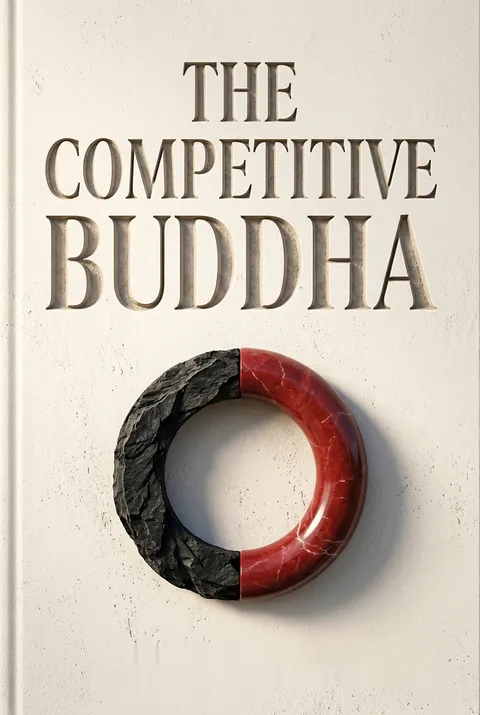
Competition can connect. Lynch’s Competitive Buddha is an athlete who pursues excellence without needing an opponent to fail. The book reframes competition as striving alongside others, with cooperation, compassion, connection, and collaboration making the contest more meaningful. Winning may follow, but it is not the only measure of success.
Rivals reveal capacity. Lynch recalls being passed on a hill during a championship race. Instead of treating the runner as an enemy, he used the challenge to surge and discover energy he had not realized he possessed. The other athlete raised his level. The lesson applies beyond sports: a demanding colleague, competitor, or critic can become a source of information and growth rather than a threat to identity.
This view preserves competition’s useful friction while removing the assumption that respect requires low ambition. In learning theory, feedback is most valuable when a person can interpret it as information rather than as a verdict on personal worth. A worthy rival can provide that feedback in real time. Still, mutual goodwill does not erase genuine conflicts of interest: a race has one winner. The practical distinction is between trying hard to outperform someone and needing that person to be diminished. The first can sharpen performance; the second can corrode judgment and relationships.
Measure your day by controllable effort, not the scoreboard
Control the next action. Lynch calls his process focus DANCE, a reminder to concentrate on behaviors the team can choose rather than obsess over standings, media predictions, or the final score. His examples include defending intensely, attacking, encouraging teammates, and refusing to give up. The point is not to care less about winning, but to spend attention where it can make a difference.
The Quakes changed their focus. San Jose finished last in Major League Soccer in 2018. After Lynch worked with the club on connection, selflessness, and process, the team recorded more than three times as many wins in 2019. Lynch presents this as an illustration of the approach, not proof that one philosophy alone caused the change. The players focused on winning each day’s work, not controlling the final outcome.
This approach resembles a useful distinction in performance psychology: outcome goals define what is wanted, while process goals specify what to do. Process goals can protect attention when uncertainty rises, since players cannot directly command the scoreboard. The Quakes story is compelling as a team-culture example, but a season’s turnaround has many possible causes, including personnel, tactics, and luck. The sound lesson is narrower and stronger: controllable behaviors are a more reliable focus than predictions, and a shared behavioral focus gives a team something concrete to coordinate around.
Build mastery through patient, deliberate repetitions
Small gains accumulate. Lynch uses kaizen, a Japanese concept of gradual, continuing improvement, to describe progress built through repeated small steps in a supportive environment. Mastery is not a destination reached by a shortcut. It develops through consistent practice that is attentive, intentional, and sustained. Lynch argues that love, joy, and commitment help make that work durable.
Urgency can slow learning. In one story, an aspiring triathlete asks how quickly she can become world-class. Her coach says four to five years with sound training, but estimates ten to twelve if she tries to force faster progress. The numbers make a point about impatience, not a universal training formula. Lynch also describes a sprinter’s approach of working below maximum strain, since tension can interfere with efficient movement. Practice hard, but do not confuse strain with progress.
The kaizen idea is valuable because it turns improvement from a dramatic promise into a repeatable unit of work. That fits how skill acquisition generally depends on feedback, adaptation, and time, rather than simply accumulating hours. The warning against forcing progress is especially relevant in sport, where extra load can become injury or burnout. Yet patience should not become an excuse for vague training. Sustainable practice still needs clear goals, useful feedback, and appropriate challenge. Slow progress is not automatically good progress; it needs direction.
Make compassion a source of courage, not a soft extra
Care supports risk-taking. Lynch describes compassion as wanting others, including oneself, to feel secure enough to grow. In a team, that means responding to mistakes with useful guidance rather than humiliation. Athletes who are not preoccupied with being shamed can take risks, learn from setbacks, and keep contributing after an error. Compassion here is active support, not lowered standards.
A role can still matter. When Steve Kerr coached Golden State, he asked Andre Iguodala, an established starter, to accept a bench role because it could help the team. Iguodala agreed, later started in the 2015 Finals, and was named Finals MVP. The story shows selflessness working alongside ambition: he did not abandon excellence, but chose a role that served the group. Lynch also urges athletes to practice self-compassion instead of treating every mistake as evidence of personal failure.
Compassion and accountability are often presented as opposites, but this example makes a more useful distinction. A person can be held to demanding standards while being treated as more than a poor performance. That combination supports learning because it separates correction from contempt. The Iguodala story also shows that team-first behavior depends on trust: a sacrifice feels different when leaders explain its purpose and recognize the contribution. Compassion is not a guarantee of winning, and it cannot replace skill or strategy. It can make the conditions for sustained effort more humane and productive.
Practice attention until the present becomes playable
Return attention to now. Lynch defines mindfulness as awareness of the present moment, including thoughts and actions. In competition, that means noticing a past mistake or future worry without letting it take over the next play. His basic meditation practice is simple: sit comfortably, attend to natural breathing, notice when the mind wanders, and gently return attention to the breath.
Train the skill off the field. Phil Jackson invited Bulls and Lakers players to meditate together for about ten minutes in a space he called the warrior room. The practice was voluntary and aimed at quieting mental chatter and building a sense of team connection. Lynch also describes a pianist who mentally rehearsed music while imprisoned without an instrument. These examples illustrate mental practice, though they do not establish that meditation alone produces elite performance.
Mindfulness is most useful here as attentional training, not as a promise to eliminate nerves or empty the mind. The key repetition is noticing distraction and returning to the task, a skill directly relevant to sport, leadership, and ordinary work. Shared quiet practice may also create a ritual of belonging, although individuals differ in what helps them focus. A sensible test is practical: does the exercise make attention more flexible and recovery from distraction faster? It need not be treated as a religious commitment or a universal performance enhancer.
Lead by serving people, not by tightening control
Leadership makes room. Lynch adapts servant leadership as a practice of using authority to help other people grow. A servant leader still sets standards and makes decisions, but listens, shares responsibility, and avoids treating people as instruments. The goal is for followers to develop their own judgment and confidence, not merely comply.
Make contribution visible. Kerr’s example is to ensure that even the last player on the bench feels important to the team. Lynch recommends inviting honest feedback, applying consistent rules, allowing room for individual expression, and making criticism specific and timely. He also presents love as a coaching behavior: respect people, recognize their effort, and show care consistently. The relationship is not a substitute for tactical expertise. It is the human setting in which instruction can be heard and effort sustained.
The strongest version of servant leadership is neither permissive nor self-effacing. It uses authority to clarify purpose, remove needless barriers, and develop other people’s capacity. That aligns with research-informed ideas of autonomy and relatedness: people tend to engage more deeply when they have meaningful agency and feel connected to a group. The tension is that service can become a slogan if leaders do not share real power or accept disagreement. Listening matters most when it can change a decision, even if the leader retains final responsibility.
Use words that make teammates feel seen and capable
Speech shapes team climate. Lynch adapts Right Speech, a Buddhist practice of speaking truthfully, kindly, and at a useful time, to coaching. His RIVER effect is a reminder to communicate in ways that help people feel valued, respected, and able to contribute. Rather than offering vague praise, a coach can name a specific behavior and explain why it helps the group.
Correct without humiliating. Lynch’s PCP method arranges feedback as a positive opening, direct criticism, and positive close. For instance, a coach might recognize an athlete’s readiness, identify one concrete adjustment in communication, then reaffirm the athlete’s role. The aim is not to disguise criticism with flattery. It is to make the correction clear while preserving dignity and a path forward. The same principle applies to self-talk: an honest mistake can be acknowledged without turning it into a sweeping judgment about ability.
Specific feedback is more actionable than praise about fixed traits because it tells a person what to repeat or change. The sequence described here also protects the relationship needed for feedback to land. Its limit is that a formula can sound manipulative if the positive words are perfunctory or the criticism is concealed. Respectful speech is not always pleasant speech; difficult facts still need to be said. The test is whether the language is truthful, proportionate, timely, and oriented toward helping the listener act.
Detach your self-worth from results while keeping your effort
Care without clinging. Lynch distinguishes detachment from indifference. Athletes should work hard and pursue goals, but avoid making a result the measure of their worth. A win, loss, selection, or statistic is information about an event, not a complete judgment of a person. Clinging to outcomes, he argues, increases tension and can make athletes fearful of taking risks.
A miss is not a whole career. Italian soccer star Roberto Baggio is remembered in part for missing the decisive penalty in the 1994 World Cup final. Lynch emphasizes that Baggio’s wider career and Buddhist practice cannot be reduced to that kick. The lesson is not that failure feels painless, but that recovery depends on refusing to make one painful moment the entire story. Effort remains; the demand to control every consequence can be released.
This distinction is psychologically important: commitment to a task can coexist with uncertainty about its outcome. It also offers protection against identity foreclosure, where one role or achievement becomes the whole self. Still, outcome detachment should not be used to dismiss disappointment or avoid reviewing performance. A miss can reveal something that needs practice, while remaining insufficient evidence about a person’s value. The practical balance is to feel the result, learn from it, and return attention to the next meaningful action.
Protect a balanced life so sport remains a teacher
The Middle Way avoids extremes. Lynch applies this Buddhist idea to training and life: pursuing excellence does not require neglecting every other source of health and meaning. He criticizes youth sports cultures that push children toward year-round specialization before they can explore different activities. He cites David Epstein’s book Range in support of the idea that broad experience can contribute to later performance.
A narrow victory can cost too much. Lynch recalls an Olympic swimmer who, after an intense campaign, wanted to stay away from pools for two years. He also describes a simple personal routine that makes room for exercise, reading, meditation, writing, and acts of kindness. These are examples, not a universal schedule. The useful question is whether training is expanding a life or consuming it so completely that success feels like relief from the sport itself.
Balance is not a mathematical equal division of time. It is a way to notice when one pursuit is crowding out recovery, relationships, or the curiosity that keeps practice alive. Diversification may help young athletes develop broadly, but some sports and individual circumstances require periods of focused specialization. The relevant question is not whether specialization is always wrong, but whether the athlete has enough choice, rest, and support to sustain it. A healthy system measures development by more than trophies or early selection.
Practice gratitude to see resources, not only deficits
Attention changes the picture. Lynch presents gratitude as a deliberate practice for noticing what is already available, rather than fixating on what is missing. In sport, that could mean recognizing health, teammates, coaching, or the chance to compete instead of dwelling only on playing time or statistics. He suggests taking five minutes to name at least five things one appreciates, then breathing slowly while attending to the feeling.
Gratitude can become reciprocal. The practice is not meant to end with private contentment. Lynch encourages people to let appreciation shape how they act and to give back to others. The book connects gratitude with reduced fear and stronger connection, and describes it as a foundation for joy. The exercise is small by design: it does not require a victory, a new opportunity, or ideal circumstances before a person can notice something worth valuing.
Gratitude is a useful attentional counterweight to scarcity thinking, especially in environments where recognition and selection are unevenly distributed. It can broaden perception without requiring someone to pretend that an injury, exclusion, or unfair condition is acceptable. That distinction matters: gratitude should not become a tool for silencing legitimate complaints. At its best, it helps people see both what is difficult and what support remains available, then turn appreciation into concrete care for others.
Analysis
The book’s central move is to redefine competition as a relationship rather than a war. Its athlete still trains intensely, wants to improve, and cares about winning. What changes is the meaning assigned to an opponent: not an obstacle to erase, but a person whose presence can draw out greater skill. This is a powerful alternative to win-at-all-costs culture because it does not require choosing between excellence and decency.
The strongest practical contribution is the link between inner discipline and team design. Attention, patience, detachment, gratitude, and compassion are not presented only as private virtues. They influence how athletes respond to mistakes, how coaches give feedback, whether people take risks, and whether a team can cooperate under pressure. In this respect, the argument overlaps with self-determination theory, which emphasizes autonomy, competence, and relatedness as conditions that support motivation. The book’s examples make those abstractions tangible: a veteran accepts a changed role, a coach values the reserve player, and a team focuses on behaviors it can control.
There is also an important evidentiary limit. Championship stories and season turnarounds illustrate the philosophy, but they cannot isolate its effects from talent, tactics, resources, or chance. The author occasionally speaks as if compassion and mindfulness naturally lead to better results. A more defensible claim is that they can improve the quality of effort and relationships, which may help performance without guaranteeing victory.
The book’s Buddhist language is intentionally practical and selectively Westernized. That makes the ideas accessible, but risks reducing a diverse religious tradition to a toolkit for performance. Readers can use the practices without assuming they represent all Buddhist thought. The most durable synthesis is modest: compete fully, treat people well, attend to what can be controlled, and accept that outcomes do not obey desire. In sport, as in life, excellence is not just a result. It is also the way people pursue it together.
Review Summary
The Competitive Buddha receives mixed reviews, with an average rating of 3.79 out of 5. Readers appreciate its blend of Buddhist principles and competitive sports, finding value in its teachings on impermanence and personal growth. Some praise the author's insights and experience with championship teams. However, critics note repetitiveness, excessive focus on the author's success, and limited engagement with Buddhism beyond motivational aspects. The book's approach to combining Eastern philosophy with sports is seen as unique, though it may challenge those new to Buddhist concepts.
People Also Read









Glossary
Buddha Sports
Buddhist wisdom applied to sportJerry Lynch’s term for applying selected Buddhist principles to athletic training, competition, coaching, and team culture. It treats sport as a place to practice awareness, compassion, selflessness, patience, and cooperation, while using those qualities to support performance. The book presents it as a practical approach rather than a religious conversion.
Competitive Buddha
Compassionate, process-focused competitorLynch’s model of an athlete who pursues mastery with intensity while treating opponents as partners in growth. This competitor does not define success solely by winning, and tries to avoid harming or resenting others for their results. Skill development, presence, respect, and contribution matter alongside competitive achievement.
DANCE
Reminder to focus on controllablesA coaching reminder Lynch used with the San Jose Earthquakes to orient players toward actions they could control, rather than standings, predictions, or the final result. The approach emphasizes energetic play, persistence, defense, attack, and encouragement. It recasts a match as a set of present, chosen behaviors.
RIVER effect
Speech that affirms team membersLynch’s communication reminder for helping people feel valued, respected, important, and capable of contributing. It encourages leaders to use timely, truthful, concrete words that recognize effort and reinforce belonging. The idea is that feeling seen can strengthen trust and willingness to work for a team.
PCP method
Three-part feedback approachLynch’s feedback technique for correcting performance while maintaining respect. A coach begins with a genuine positive observation, gives a direct and specific criticism or adjustment, then closes with an affirmation of the athlete’s value or potential. The sequence is intended to make feedback easier to hear without disguising the correction.
Effort without Effort
Focused effort without excess strainLynch’s phrase for applying commitment and diligence without becoming tense, rigid, or consumed by results. The athlete still prepares and works hard, but avoids forcing every movement or trying to control what cannot be controlled. The aim is effective action with less mental and physical interference.
Monkey Mind
Scattered, agitated attentionA Buddhist expression Lynch uses for a mind that jumps among worries, memories, distractions, and imagined outcomes. In sport, it can pull attention away from the play at hand. Mindfulness practice is offered as a way to notice this mental movement and bring attention back to the present task.
Noble Eightfold Path
Eight linked ethical practicesA central Buddhist teaching described in the book through eight interdependent areas of practice: view, thought, speech, action, livelihood, effort, mindfulness, and concentration. Lynch adapts these principles to coaching and competition, presenting them as practical guides to clear judgment, ethical conduct, focused effort, and reduced suffering.
Vipassana meditation
Breath-based insight practiceA form of Buddhist meditation Lynch introduces as a way to develop awareness and concentration. The basic exercise involves sitting quietly, attending to natural breathing, noticing when attention wanders, and returning to the breath without harsh self-judgment. The book applies the practice to mental calm, performance, and leadership.
Kaizen
Gradual, continuing improvementA Japanese term Lynch uses for steady improvement through small, repeated gains in a cooperative environment. In his sports examples, kaizen means giving people time to learn, contribute, and improve rather than demanding instant transformation. The concept supports patience, persistence, and attention to the process of development.
FAQ
What's "The Competitive Buddha" about?
- Integration of Buddhism and Sports: "The Competitive Buddha" by Jerry Lynch explores how Buddhist principles can be applied to sports, leadership, and life to enhance performance and personal growth.
- Buddha as a Competitive Athlete: The book presents the idea that the Buddha himself was a competitive athlete, using sports as a means to learn spiritual lessons.
- Holistic Approach: It combines Eastern philosophy with Western psychology to create a holistic approach to mastering one's craft and achieving personal excellence.
- Practical Application: The book provides practical strategies and insights for athletes, coaches, and leaders to incorporate Buddhist values into their daily practices.
Why should I read "The Competitive Buddha"?
- Unique Perspective: It offers a unique perspective by blending ancient Buddhist wisdom with modern sports psychology, making it relevant for athletes and leaders.
- Personal Growth: The book emphasizes personal growth, self-awareness, and the development of a mindful approach to competition and leadership.
- Practical Tools: Readers gain practical tools and strategies to improve their mental and emotional resilience, which are applicable in various aspects of life.
- Inspiration and Motivation: Through stories and examples, the book inspires readers to strive for mastery and become the best version of themselves.
What are the key takeaways of "The Competitive Buddha"?
- Mindfulness and Presence: Emphasizes the importance of being present and mindful in both sports and life to achieve peak performance.
- Compassion and Connection: Highlights the role of compassion, connection, and cooperation in building successful teams and relationships.
- Detachment from Outcomes: Encourages detachment from outcomes and focusing on the process to reduce stress and enhance performance.
- Balance and Moderation: Advocates for a balanced approach to life, avoiding extremes, and finding the middle path for sustainable success.
How does Jerry Lynch apply Buddhist principles to sports in "The Competitive Buddha"?
- Mindful Meditation: Lynch introduces mindfulness meditation as a tool for athletes to enhance focus, calmness, and clarity.
- Servant Leadership: The book promotes the concept of servant leadership, where leaders serve their teams with compassion and humility.
- Egolessness and Selflessness: Encourages athletes to let go of ego and embrace selflessness to foster teamwork and collective success.
- Karma and Cause and Effect: Discusses the concept of karma, emphasizing that positive actions lead to positive outcomes in sports and life.
What is the "Mamba Mentality" mentioned in "The Competitive Buddha"?
- Kobe Bryant's Influence: The "Mamba Mentality" is inspired by Kobe Bryant's approach to sports, emphasizing a constant quest to be the best version of oneself.
- Process Over Results: It focuses on the journey and process rather than the end results, aligning with Buddhist teachings on detachment.
- Daily Practice: Encourages daily practice and intentional effort to improve skills and achieve mastery.
- Mindset of Excellence: The mentality embodies a mindset of excellence, resilience, and continuous learning.
What are some practical strategies from "The Competitive Buddha" for athletes?
- Visualization Techniques: Athletes are encouraged to use visualization to mentally rehearse and prepare for competitions.
- Breathing Exercises: The book suggests breathing exercises to calm the mind and enhance concentration during high-pressure situations.
- Gratitude Practices: Incorporating gratitude practices to foster a positive mindset and improve overall well-being.
- Setting Intentions: Athletes are advised to set clear intentions for their practice and competitions to stay focused and motivated.
How does "The Competitive Buddha" address leadership?
- Noble Mindful Leadership: The book outlines the traits of mindful leaders, such as right speech, right action, and right mindfulness.
- Relationship Building: Emphasizes the importance of building strong, compassionate relationships with team members.
- Empowerment and Inspiration: Leaders are encouraged to empower and inspire their teams through love, respect, and understanding.
- Servant Leadership Model: Advocates for a leadership model where leaders serve their teams and prioritize their growth and development.
What are the best quotes from "The Competitive Buddha" and what do they mean?
- "There is no path to mastery; mastery is the path." This quote emphasizes that mastery is a continuous journey of learning and growth, not a final destination.
- "Letting go gives us freedom, and freedom is the only condition for happiness." Highlights the importance of detachment and letting go of attachments to achieve true happiness.
- "Our prime purpose in this life is to give to and help others." Reflects the Buddhist value of selflessness and serving others as a path to fulfillment.
- "The secret of health for both mind and body is not to mourn for the past, worry about the future, or anticipate troubles, but to live in the present moment wisely and earnestly." Encourages living in the present moment to maintain mental and physical well-being.
How does "The Competitive Buddha" redefine competition?
- Collaboration Over Rivalry: Redefines competition as a collaborative effort where opponents help each other reach their highest potential.
- Joy in Competition: Encourages finding joy and fulfillment in the act of competing, rather than focusing solely on winning.
- Interconnectedness: Emphasizes the interconnectedness of all participants in a competition, fostering a sense of community and mutual respect.
- Healthy Competition: Promotes a healthy approach to competition that prioritizes personal growth and development over defeating others.
What role does mindfulness play in "The Competitive Buddha"?
- Foundation of Practice: Mindfulness is presented as the foundation for all practices in the book, enhancing focus, clarity, and presence.
- Reducing Stress: Mindfulness techniques are used to reduce stress and anxiety, allowing athletes to perform at their best.
- Enhancing Awareness: Encourages athletes and leaders to develop greater awareness of their thoughts, emotions, and actions.
- Cultivating Inner Peace: Mindfulness is a tool for cultivating inner peace and resilience, essential for navigating the challenges of sports and life.
How does "The Competitive Buddha" address the concept of impermanence?
- Acceptance of Change: Emphasizes the acceptance of change as a natural part of life and sports, reducing resistance and suffering.
- Embracing the Present: Encourages embracing the present moment and appreciating the transient nature of experiences.
- Learning from Loss: Teaches that losses and setbacks are opportunities for growth and learning, not permanent failures.
- Letting Go of Control: Advocates for letting go of the need to control outcomes and trusting the natural flow of life.
What is the significance of the Enso circle in "The Competitive Buddha"?
- Symbol of Oneness: The Enso circle symbolizes oneness, harmony, and the infinite journey of life and mastery.
- Emptiness and Potential: Represents the concept of emptiness, reminding readers to keep their minds open to new wisdom and possibilities.
- Balance and Unity: Emphasizes balance, unity, and the interconnectedness of all things, aligning with the book's themes.
- Visual Reminder: Serves as a visual reminder of the book's teachings, encouraging readers to embrace the journey of self-discovery and growth.
About the Author

Download PDF
Download EPUB
.epub digital book format is ideal for reading ebooks on phones, tablets, and e-readers.








