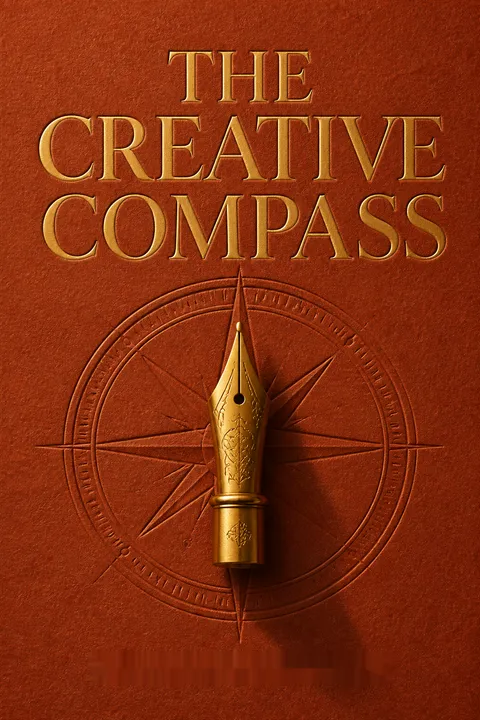


Key Takeaways
Build a book through five kinds of work, not one flash of inspiration.
Five jobs, one cycle. The authors describe writing as five connected tasks: Dream develops an idea, Draft gets the story onto the page, Develop reshapes it, Refine sharpens the language, and Share brings it to readers. The sequence is a compass, not a conveyor belt. Writers revisit earlier tasks when the project needs it, and each completed cycle builds skill for the next one.
Beginnings are rarely smooth. Dan Millman earned $100 for an early article, then went seven years without another writing payment. Sierra Prasada describes leaving an exam in tears, then growing more comfortable through writing regularly. Their different paths make the same point: a writing life is made by returning to the work, not by waiting for an ideal beginning.
The value of the cycle is diagnostic: a stuck writer can ask whether the problem is an unformed idea, an unfinished draft, a structural flaw, or sentences that need attention. That is more useful than treating every difficulty as a failure of talent. The model also resists a common weakness of stage systems. Real projects overlap, and insisting on a tidy sequence can turn planning into avoidance. Its strongest use is as a flexible map, not a rulebook.
Follow the idea that keeps returning, then discover the story inside it.
Stickiness means staying power. The authors call an idea sticky when it keeps engaging the writer over time, even as other interests fade. It usually grows from what the writer finds personally compelling, not from guessing what the market wants. An image, question, or memory can be enough to start, but the writer must explore what it might mean and what could happen around it.
Let persistence earn its place. Ha Jin began a book in 1988 and took twelve years to finish it. He later explained that he could not get the story out of his mind. That endurance does not prove the idea was easy or guaranteed to succeed. It shows how a deep attachment can supply a reason to continue when initial excitement has worn off.
This account distinguishes a durable creative motive from a passing rush of novelty. In that sense, the idea acts as a source of attention: it keeps the writer returning to the same material long enough to see new possibilities. Still, persistence is not proof of quality. An idea can remain emotionally important while failing to become a compelling work. The practical test is whether sustained curiosity leads to discoveries, not whether the writer has suffered long enough.
Before drafting, compress the story's dramatic engine into one What If.
A question exposes the engine. A What If question is a short statement of the story's central possibility. The authors recommend keeping it to roughly twenty-five words, with enough information to suggest the main character, opposing force, conflict, and setting or genre. It is not a full synopsis. It is a compact test of whether the idea contains a story that can move forward.
Learn from a failed start. Suspense novelist John Saul received a returned manuscript with a blunt assessment that his agent could not see a book in it. Saul responded by requiring himself to articulate a story in one compelling sentence before beginning another. If the question cannot be made clear, the story may still be missing essential choices. The question can also change when drafting reveals a better version.
Compression is useful because it forces a writer to distinguish a premise from atmosphere or subject matter. A short question can reveal whether desire, obstruction, and consequence are present. It also serves as a coordination tool when revisions threaten to sprawl. The limit is that some works, especially essays and formally experimental narratives, may not have one dramatic engine. In those cases, the exercise should clarify the work's promise without forcing it into a conventional plot.
Design a writing process that fits your real life, not a borrowed myth.
Method is personal. The book distinguishes process, the conditions and habits that help someone work, from craft, the choices that make a story effective. Writers should observe when and where ideas arrive, experiment with routines, and keep what produces useful work. Dan found that a regular writing time and a specific session goal helped him begin. Sierra learned that comfort and a laptop suited her better than copying admired writers who worked in cafés or by hand.
Question your own ideas. Dreaming in dialogue is a technique in which the writer holds a written conversation with a curious inner partner. The questions expose assumptions without requiring a rigid outline. Deadlines can also help: they constrain choices and make finishing more likely, provided that planning serves the work rather than postponing it.
This is a practical rebuttal to creative mythology, which often treats discomfort as evidence of seriousness. The better measure is whether a method makes meaningful work more repeatable. Self-observation turns vague preferences into experiments: try a time, setting, or tool, then judge by what it enables. Yet flexibility should not become endless tinkering with one’s setup. Process matters because it supports the work, not because optimizing the process is a substitute for doing it.
Finish a rough first version before demanding sentences worthy of print.
Drafting is discovery. The first version is a working layer, not a verdict on the writer's ability. Its job is to carry the story from beginning to end so the writer can see what is actually there. Early pages may be clumsy because the writer is still discovering the structure and meaning. Dan describes moving forward one manageable writing goal at a time rather than trying to solve an entire book in a sitting.
Keep momentum by postponing some answers. Begin with what you know, and use placeholders for facts or details that need research. Curtis Sittenfeld describes using this approach for a scene involving ice hockey: write the scene around the unknown material, then consult someone knowledgeable. This keeps research attached to a specific need instead of letting it displace the draft.
A rough draft reduces the burden of deciding and judging at the same moment. That separation makes it easier to discover structure through material rather than trying to imagine every consequence in advance. The placeholder method is especially useful when research becomes a respectable form of avoidance. Some projects, such as histories or biographies, require substantial early research, so the principle is not to minimize research at all costs. It is to make research answer the work's actual questions.
Give the story a reader, then choose who earns the right to tell it.
Writing creates a relationship. The authors advise imagining a specific ideal reader rather than addressing an abstract public. That reader can help the writer decide what to explain, what to emphasize, and what experience the work should offer. The choice of narrator also shapes what readers can know. In The Great Gatsby, Nick Carraway tells the story from near Gatsby but cannot fully reveal Gatsby's inner life, preserving uncertainty around the central character.
Make the world tangible. Sensory details, meaningful obstacles, and a believable setting help readers inhabit a story. A real location must be represented accurately; an invented one must feel coherent. The writer knows far more than the page conveys, so each scene must supply the context readers need rather than relying on private knowledge in the author's head.
A chosen reader works as a useful constraint, while a narrator controls access to information and emotion. Together they shape not only what gets told but what remains uncertain. This is a way to design attention, much as a camera angle guides a viewer through a scene. The caution is that one imagined reader can become too narrow a proxy for an audience. A writer can use that person to focus the work, then test whether its meanings travel beyond that imagined relationship.
Develop the story beneath the draft, not merely the draft's wording.
Revision may mean rebuilding. The authors call the golden thread the story's essential path, the connection between what happens and why it matters. To find it, compare the story the writer intends to tell with the events actually present in the draft. A synopsis captures the intended story; a plot outline records what the manuscript currently makes happen. Differences between the two reveal where the draft has drifted or where the original plan needs reconsideration.
Change can be radical. Jennifer Egan once abandoned a complete early novel without saving a sentence, while retaining the central impulses that eventually informed The Invisible Circus. Development can require new scenes, reordered events, altered characters, or substantial cuts. Sentence-level polish cannot repair a structure that does not yet deliver the intended story.
The distinction between a draft and the story it is trying to express is one of the book's most useful ideas. It helps writers avoid polishing a weak structure simply because the prose already exists. Comparing intention with the reader's likely experience brings the problem into view. At the same time, the golden thread is not an objective formula. A writer's sense of what belongs must be tested against whether the work's parts create a coherent and moving experience.
Use hard-won past progress as evidence that new skill is possible.
Talent can be developed. The authors use talent to mean qualities that help someone improve and reach higher levels, not a mysterious gift that determines success at birth. Practice, patience, reading, and persistence can build those qualities. Dan's Master Metaphor is an experience that becomes personal evidence of potential. In his case, learning to ride a unicycle took repeated falls; after three weeks of practice, he could ride figure eights.
Remember the difficult middle. Dan noticed that apparent setbacks in learning often came before a jump in ability. Sierra's long effort to learn Arabic became her own evidence that a seemingly impossible pursuit could become part of ordinary life. These memories can encourage continued effort, though they cannot promise a specific result. Progress depends on more than determination alone.
A remembered accomplishment can function as a personal counterexample to the belief that present difficulty proves permanent inability. This resembles a growth-oriented view of skill: ability changes through effort, feedback, and accumulated experience. The book is strongest when it presents effort as improving the odds, not guaranteeing success. Practice can also become repetitive without producing learning. The useful question is whether each attempt adds information, technique, or tolerance for difficulty.
Ask readers what they felt before asking how they would fix it.
Request usable feedback. Readers can reveal whether the story on the page matches the story in the writer's mind. Ask specific questions about what they remember, where they became confused, what they felt, and which events they believed. The authors recommend choosing readers who can be candid and who understand the intended audience. Feedback should serve the manuscript, not replace the writer's judgment.
Separate response from prescription. A reader may accurately report an experience but offer a solution that does not fit the work. Sierra recounts classmates urging her to add picturesque details to a story about Morocco. Following that advice risked reinforcing stereotypes rather than representing her experience honestly. The writer's task is to understand what prompted a reaction, then decide whether and how to respond.
Reader feedback is most valuable as evidence about reception, not as a vote on what the book must become. Asking for emotional and cognitive responses first helps separate diagnosis from a reader's preferred cure. The example also makes clear that feedback carries assumptions about genre, culture, and audience. That does not make critique useless. It makes the critic's standpoint part of the information the writer must evaluate.
Polish only after the structure works, then cut what earns no place.
Refinement has its timing. Once the story's structure, characters, and ideas are working, attention can shift to sentences, rhythm, clarity, and correctness. Polishing too early can make weak material look smoother without making it stronger. The authors suggest testing each passage: could it be more apt, shorter, or removed entirely? Cutting is not automatically an admission of failure. It can make the intended story easier to see.
Large cuts can serve the book. Robert Caro's editor asked him to remove 300,000 words from The Power Broker, then requested another 50,000. A writer may feel attached to every passage, but the reader experiences only what remains. Still, brevity is not the sole aim. A cut is useful when it improves the story, not merely because fewer words look more disciplined.
The distinction between development and refinement guards against polishing the wrong object. Once the architecture is sound, sentence-level choices can intensify meaning and remove friction. The cutting principle is powerful because writers often confuse effort spent with value delivered. But economy is not a universal aesthetic law. A slow, digressive, or dense passage may be essential to a particular work, and clarity should not become an excuse to erase complexity.
A book passes nine sales, with readers supplying its lasting momentum.
Publication is a chain. The authors describe nine traditional publishing sales: to oneself, early readers, an agent, an acquiring editor, the publisher's decision-makers, sales representatives, booksellers, readers, and finally the readers who recommend the book to others. Each handoff can add momentum or stop it. The last sale matters especially because personal recommendations can keep a book moving after a publisher's short promotional window closes.
Choose the work behind the route. Traditional publishing offers institutional support but requires gatekeepers and negotiation. Self-publishing offers more control, while making the author responsible for editing, design, distribution, and promotion. Rejection is part of either path and is not, by itself, a reliable judgment of a book's worth. A writing career may also need income from work beyond book royalties.
The nine-sale model makes visible the difference between making a manuscript and helping a book find readers. It is a useful reminder that publishing involves many decisions beyond the author's desk. Its account reflects the publishing landscape described in the 2013 book, so particular routes and tools can change. The durable lesson is that distribution and discovery require deliberate choices, while no marketing plan can substitute for a book readers genuinely want to pass along.
Analysis
The book's central achievement is to make writing legible as a series of different kinds of attention. A writer must notice what matters, turn it into an initial version, judge the structure from outside, refine language, and then consider how the work meets readers. This vocabulary is valuable because it replaces the vague instruction to write better with more precise questions: Is the idea durable? Does the draft contain the story intended? Is this a structural problem or a sentence problem? What did the reader actually experience?
The framework also shifts the image of authorship away from solitary inspiration. Dan's athletic training and Sierra's work in journalism and Arabic study show how habits, experimentation, and lived experience feed writing. Their contrasting accounts matter: a process is not a single ideal routine, but a practice a writer learns by observing what helps and revising accordingly. The book's most demanding idea is that revision may require loyalty to the story over loyalty to its existing words. This is a practical account of creative humility, not merely a call to polish.
There are tensions worth keeping in view. The five-part cycle gives a helpful map, but actual creative work can be recursive and uneven. The language of an ideal story or a single golden thread may imply that every project has one discoverable form. Some works gain their force from ambiguity, fragmentation, or unresolved questions. Likewise, the emphasis on audience and market can support communication, but should not make writers mistake anticipated approval for artistic purpose.
The book is strongest when its concepts are treated as tools rather than commandments. Its lasting contribution is not a guaranteed route to publication. It is a way to diagnose the work in front of the writer, keep moving through uncertainty, and recognize that a finished book is built through decisions that are often invisible to its readers.
Review Summary
The Creative Compass received largely positive reviews, with readers praising its practical advice and inspiration for writers. Many found the five-stage approach helpful, from dreaming to sharing. Some appreciated the father-daughter perspective and insights into the writing process. Several reviewers noted its usefulness for both fiction and non-fiction writers. While a few found parts of the book shallow or difficult to relate to, most considered it a valuable resource for writers at various experience levels.
People Also Read



Glossary
Dream, Draft, Develop, Refine, Share
Five stages of writingThe authors' five-part model for moving a creative project from idea to readers. Dream cultivates and defines the idea; Draft tells the story in an initial version; Develop reshapes its structure and meaning; Refine improves its language; and Share brings the finished work to an audience. The stages form a cycle rather than a strictly linear sequence.
sticky idea
An idea with staying powerAn idea that continues to hold a writer's attention over time and can sustain the effort of completing a project. It may begin as an image, question, event, or subject that feels personally significant. Its stickiness gives the writer a reason to continue, but the idea still needs to be explored and shaped into a story.
What If question
A compact story premiseA brief question that states the dramatic possibility at the heart of a story. The authors recommend a concise version, ideally no more than about twenty-five words, that suggests the central character, opposing force, conflict, and setting or genre. It helps a writer test whether the idea has a clear narrative engine and can be revised as the story changes.
process
How the writer worksThe writer's methods and conditions for doing creative work, including when and where to work, how to begin, and what routines support progress. The book distinguishes process from craft: process makes sustained work possible, while craft concerns choices about how a story is told. A useful process is discovered through observation and experimentation, not copied mechanically.
craft
Choices that shape the storyThe decisions involved in making a story effective, including choices about plot, character, setting, point of view, theme, and language. The authors contrast craft with process, which describes how the writer works. Craft develops through practice and revision, while a workable process helps the writer spend enough time making and testing those decisions.
dreaming in dialogue
A written inner conversationA planning technique in which a writer conducts a written conversation with an imagined partner, alter ego, or other voice. One side presents an idea or problem, and the other asks questions that reveal assumptions and possible directions. Unlike a formal outline, the dialogue can follow the natural movement of thought while recording discoveries.
golden thread
The story's essential trajectoryThe underlying connection between what happens in a story and why those events matter. During development, the writer uses this idea to assess whether scenes, characters, and subplots belong in the work and contribute to its overall effect. It is more than a bare plotline: it includes the relationships among events, character, theme, and reader understanding.
Master Metaphor
Personal evidence of potentialA memorable experience of doing something that once seemed beyond one's ability, valued for what it reveals about personal capacity. It need not be a public achievement or an artistic one. Recalling it can help a writer face uncertainty during difficult work by connecting a current challenge with past evidence of persistence and growth.
About the Author
Other books by Dan Millman


Download PDF
Download EPUB
.epub digital book format is ideal for reading ebooks on phones, tablets, and e-readers.








