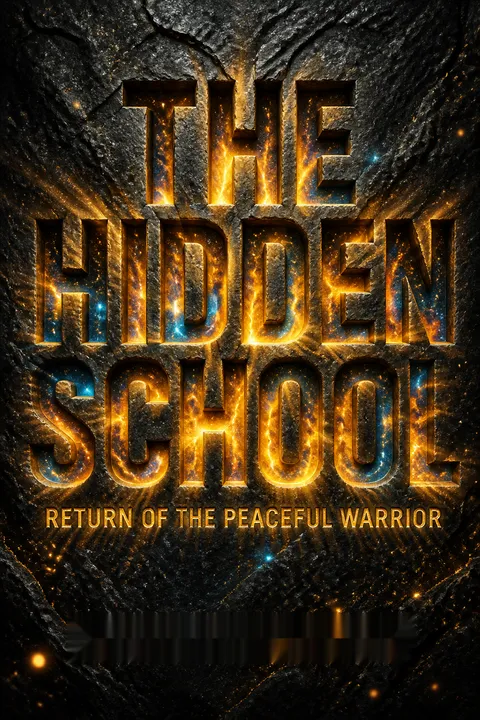


Plot Summary
Prologue
Years after Socrates,2 the mechanic who became his mentor,2 sent him out to learn through experience, Dan Millman1 has built a respectable life as a husband, father, coach, and professor. Yet a separation and a persistent sense of incompleteness leave him restless.
A travel grant gives him nine months to study martial arts abroad, and memories of Socrates2’s stories about a lost journal and a hidden school return. Dan1 plans to travel to Japan after a summer in Hawaii, unaware that a message concealed in his backpack will turn his research trip into a search across deserts and continents.
The prologue makes dissatisfaction, rather than adventure, the story’s true starting condition. Dan has achieved the milestones that once defined success, but they no longer answer the question of what a life is for. His travel grant offers a socially acceptable reason to pursue a private hunger, while Socrates’s unfinished stories give that hunger a direction. By placing the book between earlier stages of Dan’s life, the frame also emphasizes that learning does not arrive as a completed lesson. It returns later, when experience has made the student capable of hearing it.
A Letter Behind the Lining
On Oahu, Dan1 prepares to leave for Japan with a samurai figure, travel clothes, and a postcard for his young daughter.15 When he struggles to pull his journal from his backpack, the lining tears and reveals a letter from Socrates,2 delivered by Mama Chia.17 Socrates2 explains that decades earlier a fever left him wandering in the Southwest, where he lost a journal containing his spiritual reflections.
He believes Dan1 should find it before traveling east in search of instruction. Dan1 is irritated by the vague directions and the scale of the task, but the letter changes his plans. He cancels Japan, flies to Albuquerque, and begins asking strangers about a schoolteacher3 and a clinic Socrates2 once encountered.
The torn lining turns a routine act of packing into an interruption that exposes Dan’s neglected past. His first response is resistance, not mystical certainty, which keeps the quest psychologically credible: he has a paid grant, a ticket, and responsibilities to his daughter, not a heroic appetite for wandering. Socrates’s insistence that Dan must bring something to the East also reframes spiritual seeking as reciprocal. Dan cannot simply collect wisdom from a teacher; he must first risk acting on what he has already been given.
The Riddle Says Nothing
In Albuquerque, Dan1’s inquiries produce little until he meets Papa Joe,8 a blind, elderly souvenir seller who answers questions with riddles. Papa Joe8 sends him toward the Acoma Pueblo school, where Dan1 finds Ama Chávez,3 now a teacher. Ama3 remembers Socrates2 as the feverish stranger brought to a clinic by her father, a doctor.
Dan1 guides her through a trance exercise, and her memories reveal that a gardener once searched for Socrates’s journal after the stranger offered him a ride. The gardener had a terminal illness and a young son, and believed the journal might save him. Ama3’s account gives Dan1 a new lead: the son may still remember his father’s obsession. It also suggests someone else could be hunting the book.
Papa Joe’s riddles delay information while testing Dan’s attention and patience. The answer of nothing is not merely a clever trick: Dan has to admit the limits of what he knows before he can receive a useful clue. Ama’s recollection then converts a hazy spiritual anecdote into a chain of human consequences. The search is no longer only about Socrates’s lost ideas; it is entangled with a child who witnessed a parent’s fear of dying. That history gives the journal emotional stakes before Dan knows who might come after it.
A Guide in the Heat
Dan1 drives west through Arizona, searching for the desert location Socrates2 could not remember. He meets Pájaro,9 a neatly dressed hitchhiker who claims to know the terrain and offers to guide him. Their partnership lasts until Dan1 finds Papa Joe8 at a roadside café; afterward Pájaro9 disappears, leaving Dan1 to continue alone.
Papa Joe8 hints that the journal lies high above the ground and warns Dan1 to judge carefully whom he trusts. In Las Vegas, Dan1 rests, gambles, and has a dream that pushes him away from the city. A prickling sensation on a map draws him to Mountain Springs Summit. He climbs toward the plateau, where heat, exhaustion, and fleeting images of Socrates2 leave him unsure whether to trust analysis or instinct.
The desert makes Dan’s intellectual habits physically costly. Each mile without reliable directions tempts him to convert uncertainty into a theory, while Papa Joe’s warning about trust complicates the apparently helpful guide. The story keeps both possibilities alive: Dan may be reading meaningful signs, or projecting meaning onto heat and fatigue. His decision to continue is therefore less a triumph of intuition than an experiment in acting without proof. The landscape strips away the comforts of professional status and makes practical dependence, water, shelter, and judgment, impossible to ignore.
The Cave’s Hidden Book
A scorpion sting brings Dan1 into a feverish dream of a book hidden in a mountain. He spots a cave beneath the plateau, drops into it, and finds Socrates’s journal on a stone shelf. The way out proves nearly fatal: a blocked tunnel forces him back toward the cliff, and he climbs using a folding pick as a makeshift hook.
On the plateau, Pájaro9 appears with a pistol and takes Dan1’s personal notebook, believing it is the prize. After Pájaro9 knocks him unconscious and leaves, Dan1 discovers Socrates’s journal is safe behind the backpack lining. He abandons his slashed truck, reaches Los Angeles by hitchhiking, and boards a flight to Japan. In the air, the kachina doll Papa Joe8 gave him yields the key that unlocks the journal.
The cave makes the quest’s central contradiction literal: Dan finds the knowledge he sought, then discovers that possession of it does not guarantee survival. His escape depends on physical skill, patience, and attention to an overlooked handhold, not on a supernatural shortcut. Pájaro’s mistaken theft further separates the original manuscript from Dan’s own developing record. The hidden key, concealed in a gift meant for Dan’s daughter, links the practical and the symbolic without making either sufficient on its own. The journal can open only after Dan has endured the cost of finding it.
Hua Chi’s Hidden Door
A delayed flight leaves Dan1 in Hong Kong, where an early-morning search for martial arts teachers brings him to Hua Chi,4 an unusually skilled t’ai chi practitioner. She recognizes that Dan1 has experience of his own and arranges a meeting with her brother, Ch’an,6 who runs a remote farm and school in northeast China.
Hua Chi4 writes letters of introduction and sends Dan1 ahead by fishing boats, telling him to travel quietly. He crosses the sea through Korean ports, reaches the Russian coast, then hikes through woodland and crosses the border by riverboat.
After days with little food and no common language, Dan1 meets a welcoming rural couple. He continues into the unmappable Taishan Forest, where a fall into a gorge and a frightening bear encounter leave him exhausted, but he eventually finds the farm.
Hua Chi’s invitation answers Dan’s search for a hidden school while immediately complicating it: the path requires trust in a stranger and entry into a politically dangerous country. The journey also shifts the story from a scavenger hunt into an apprenticeship. Dan cannot rely on maps, language, or institutional protections, so hospitality and bodily adaptability become forms of knowledge. His fall and encounter with the bear make the forest feel less like a picturesque spiritual refuge than a place where every assumption about control can fail. Arrival is earned through persistence, not guaranteed by destiny.
The Acrobat Becomes Teacher
At the farm, Dan1 meets Mei Bao,5 a scarred woman who speaks English, and Master Ch’an,6 who accepts him as a guest and asks him to teach acrobatics. Dan1 first proves his determination by striking a pin against a table, bending it rather than driving it through the wood. He then joins the daily labor, learns the beginnings of t’ai chi, and wins the students’ trust with a handstand and tumbling demonstration.
Chun Han,7 a strong, cheerful student, becomes his friend and helps others learn the new skills. Mei Bao5 explains that the students are mostly orphans, given food, work, and training in a secluded community. Dan1 begins to see that his contribution is not merely carrying Hua Chi4’s letter.
The farm replaces the lone seeker’s model of learning with a community built through reciprocal labor. Dan’s athletic identity first functions as a bridge: a handstand communicates where words cannot. But the pin test marks a subtler shift, asking whether he can commit without being paralyzed by the obstacle. The students are not passive recipients of his expertise; they become collaborators who teach one another and give Dan a reason to remain. His usefulness begins to matter more than his status as a visitor or professor.
Pages Become a Philosophy
As winter closes around the farm, Dan1 studies Socrates’s scattered notes and starts turning them into a coherent account of change, humor, paradox, identity, choice, and death. The work is slow, and his progress in t’ai chi is equally uneven; partners repeatedly push him off balance during practice.
Teaching gives him a way to test ideas in ordinary terms. He explains effort, flexibility, and lightness through a children’s rowing song, while Chun Han7 and the other students respond with their own examples.
Dan1 gradually writes that everyday reality and transcendent awareness can both be useful, even when their claims conflict. The farm’s chores, training, and companionship give him material for the manuscript, but he still worries that he understands the ideas only intellectually.
Writing becomes a second form of training. Dan cannot make Socrates’s notes meaningful by copying them; he has to translate them into language that can survive contact with work, fatigue, and other people. The students’ practice exposes the danger of treating insight as a possession. A theory about balance means little if Dan cannot relax under pressure, and a lesson about nonattachment does not eliminate frustration. The section’s force lies in this gap between articulation and realization. Dan can explain a path before he has learned to walk it consistently.
The Son Reads the Journal
After Dan1 completes the manuscript, both journals disappear from his room. Hua Chi4 soon returns and admits she has them, explaining that she arranged a meeting with the man who had pursued the journal.9 Pájaro9 arrives carrying the books and apologizes.
He reveals that he is Joe Stalking Wolf,10 Ama3’s trusted friend and a reservation police officer, and that he is the gardener’s son from Ama3’s story. His father’s illness and death had driven him to seek physical immortality through Socrates’s notes.
Dan1’s written interpretation finally gives the son a meaning his father could not have found in the fragments alone. Pájaro9 leaves to reconsider a life organized around his father’s fear. Hua Chi4 later tells Dan1 that Mei Bao,5 not Ch’an,6 is the true martial arts master of the forest school.
The reveal turns the antagonist into an inheritor of grief rather than a simple villain. Pájaro’s pursuit has been shaped by a child’s helpless witness of his father’s decline, then hardened into a mission that substitutes inherited purpose for a life of his own. Dan’s manuscript does not cure illness or reverse death; it changes what the search means to the son. Hua Chi’s disclosure about Mei Bao similarly rearranges Dan’s assumptions about authority. The school’s wisdom resides less in its title than in the person whose practice sustains it.
A School Under Threat
Armed officials arrive at the farm, accusing the community of hiding spies and demanding to take its leaders away. Chang Li,13 a student who had left after Mei Bao5 rejected him, has guided them through the forest. Mei Bao,5 Hua Chi,4 and Master Ch’an6 disable the soldiers, while Joe Stalking Wolf10 helps stop another attacker.
In the confusion, a gunshot strikes Chun Han7 as he shields the others. He dies before Dan1 can reach him. The students mourn together and contain the officials while the community decides what to do. Dan1 blames himself for bringing danger, but Hua Chi4 later explains that the authorities had already been watching the farm. The attack forces the hidden school to prepare another move.
The raid exposes the political vulnerability of a community that has survived by remaining unseen. Its peaceful routines cannot shield it once state power reaches the forest, and the students’ martial training becomes necessary for immediate protection. Chun Han’s death is especially devastating because his vitality has made him a source of everyday reassurance, not merely a useful fighter. Dan’s instinct to blame himself echoes his larger desire to impose a single cause on events that exceed his control. Hua Chi’s correction does not erase his grief; it prevents grief from becoming false responsibility.
Death Leads to Kyoto
Hua Chi4 releases the officials and plans to move the school to another remote refuge. She tells Dan1 that the students no longer need his help, then takes him back toward Hong Kong. In Japan, Dan1’s taxi collides with a motorcycle, killing its unhelmeted driver and injuring the passenger. Still shaken, he visits martial arts schools in Kyoto and learns that an aikido teacher has died by suicide.
The instructor’s mention of Aokigahara, a forest associated with suicides, sends Dan1 there. He walks marked trails with twine to avoid getting lost, then finds a dead woman16 with a plastic-wrapped letter beneath her arm. Recognizing that it is addressed to a Kyoto Zen teacher, he takes it, intending to deliver her final message.
The deaths in China and Japan make mortality increasingly concrete, not as a philosophical problem but as bodies, grief, and the aftermath left to strangers. Dan has recently lost Chun Han, then witnesses a fatal crash and learns of a teacher’s suicide. His journey to Aokigahara risks turning death into an abstraction or a dramatic sign, but finding the woman’s letter redirects him toward an act of care. The episode asks whether contemplation can coexist with responsibility to the dead and living. Dan cannot resolve another person’s despair, but he can carry a message that might otherwise remain unheard.
A Letter in the Forest
At Sanzenji Temple, Dan1 gives the letter to Kanzaki Roshi,14 the Zen teacher named in it. The roshi14 explains that the woman, Aka Tohiroshina,16 had been his student and had struggled with depression; her note asks him to convey an apology to her mother and not retrieve her body.
After sharing tea, Kanzaki14 walks with Dan1 through the garden and discusses how its trees and stones embody qualities such as courage and steadiness. Dan1 admits that he knows spiritual concepts better than he has realized them.
When he gives the roshi14 the small samurai he found in Hawaii, Kanzaki14 recognizes that it belongs at another, unnamed retreat. He offers to take Dan1 there, suggesting the statuette has brought him to Japan for a reason beyond martial arts research.
The letter’s delivery gives Dan a concrete task in a landscape where death has threatened to overwhelm him with meaning. Kanzaki does not offer a cure for depression or a tidy explanation for suicide; he receives the woman’s words with grief and care. His garden lesson shifts attention from grand metaphysical claims to cultivated particulars, the shape of a tree, the placement of stones, the discipline of removing excess. The samurai’s recognition opens another path, but the story leaves its significance unresolved until Dan can encounter it directly.
Three Samurai at Rest
Kanzaki14 takes Dan1 to a secluded retreat where two samurai figures stand on a boulder, one poised in a defensive stance and the other ready to strike. A vacant mark shows where a third statue once stood. Dan1 places his own samurai there, facing outward so the three figures form a protective triangle.
The arrangement completes a pattern he could not understand when he found the statuette months earlier. Kanzaki14 then invites him to meditate through the night and tells him to relinquish his attachments.
Dan1 struggles against thoughts and discomfort, but gradually imagines letting go of time, possessions, relationships, actions, feelings, senses, and self. At dawn he experiences Socrates2 sitting before him, though the image shifts into Kanzaki.14 Dan1 emerges from the meditation feeling newly grateful for ordinary life.
The three figures turn the samurai from a travel token into a pattern of relation: each faces outward, yet each protects the others. Dan’s path has not been a solitary ascent toward secret knowledge; it has depended on people who gave him clues, shelter, work, and care. The meditation makes death a temporary practice of relinquishment rather than an escape from life. When Dan opens his eyes, the sensory world returns as a gift. The vision of Socrates remains ambiguous, preserving the difference between a powerful experience and proof of a supernatural claim.
The School Everywhere
On the flight home, Dan1 imagines Socrates2 explaining that the hidden school was never confined to a remote compound; it appears wherever a person looks beyond the surface of ordinary life. Dan1 returns to Ohio, completes his academic report, and later leaves his faculty position. His wife and daughter15 move back to Northern California, while Dan1 settles nearby in his own apartment.
Months later, he finds a cryptic location and date written on the back of Socrates2’s old business card. Unsure whether he wrote it himself or received it through a dream, Dan1 senses another journey approaching. The final vision carries him through images of the farm, the sea, and a forest campfire where Socrates2 appears to be waiting.
The ending refuses to make the journey a completed spiritual credential. Dan returns to practical life, changes his work and living arrangements, and remains uncertain whether the final message is memory, dream, or guidance. The hidden school becomes less a destination than a discipline of attention, a way of meeting ordinary places as sites of learning. Yet the card’s coordinates preserve the story’s appetite for adventure. Dan has gained a framework, not immunity from ambiguity; his next step remains an act he must choose without knowing exactly what awaits.
Epilogue
Socrates2’s message stays with Dan1 as he returns to his daughter,15 teaching, and daily routines. Dan1 leaves his faculty post and lives near his wife and daughter,15 then discovers a date and location written on the back of Socrates2’s card.
A dream carries him through images of the Chinese farm, a beach, and a forest fire, where Socrates2 waits. The vision offers no certainty about what will happen next. It leaves Dan1 poised between mortality and mystery, with the sense that the search has not ended so much as changed its direction.
The epilogue keeps the book’s spiritual claims deliberately unsettled. Dan has written about eternal life, but the final scene does not certify his ideas through a miracle; instead, an ambiguous note and dream reopen the possibility of experience. His return to family life also prevents transcendence from becoming withdrawal. The unresolved coordinates matter because they make curiosity an ongoing practice rather than a prize Dan can claim. The ending’s emotional movement is from the fantasy of escaping death toward a willingness to meet whatever comes, including the ordinary work of living.
Analysis
The novel organizes spiritual inquiry as a sequence of concrete obligations. Dan1 must cross a desert, read a dying mystic11’s journal, teach acrobatics to orphaned students, carry a dead woman16’s letter, and return to family life. Each task complicates the fantasy that wisdom can be acquired through a single revelation. The book’s most persistent psychological tension is between mastery and vulnerability: Dan1 is an accomplished athlete, yet repeatedly becomes lost, frightened, dependent, and uncertain. His physical competence helps him survive, but it does not answer what death means or how to live with the people he loves.
The journals dramatize the difference between receiving ideas and making them usable. Socrates2’s notes remain fragmented until Dan1 has lived among people whose labor, grief, and discipline give the abstractions human scale. Even then, Dan1 recognizes that eloquence is not realization. His manuscript is a translation, not proof that he has transcended fear. This distinction lends the spiritual teaching a useful skepticism: experience may alter attention, but no set of words guarantees transformation.
The book also refuses to treat death as either an enemy that can be defeated or a symbol that erases ordinary grief. Chun Han7’s death wounds a community; Aka16’s depression remains a human tragedy, not a riddle solved by Zen. Dan1’s meditation on relinquishing the self is followed by renewed appreciation for memory, sensation, and relationship. The apparent paradox is practical: one can hold life lightly without treating it as disposable.
Finally, the hidden school expands from a secret location into a way of seeing. Yet the political raid prevents that idea from becoming sentimental. A refuge can nurture learning and still be destroyed by state power, forcing its people to move. The school survives not because it is protected from history, but because its members carry its practices elsewhere. Dan1’s journey therefore ends not with possession of certainty, but with a changed relationship to uncertainty, responsibility, and the next ordinary act.
Review Summary
The Hidden School receives mostly positive reviews, with an average rating of 4.13 out of 5. Readers praise its spiritual wisdom, engaging storytelling, and connection to Millman's previous works. Many find it thought-provoking and insightful, appreciating the author's personal journey and teachings on paradox, change, and self-reflection. Some critics note a lack of depth or originality compared to earlier books. Overall, fans of Millman's work and those interested in spiritual fiction find it a satisfying continuation of the Peaceful Warrior series.
People Also Read







Characters
Dan Millman
The searching teacherDan is a former champion gymnast who has become a coach and professor, yet achievement has not quieted his sense that he is missing something essential. He is physically brave, quick to act, and often impatient with uncertainty; his inner life is more restless than his outward competence suggests. His relationship with his daughter15 gives his travels an emotional cost, while his memories of Socrates2 give them direction. Dan tends to analyze experience before he has fully absorbed it, but he is willing to learn through labor, danger, teaching, and failure. His central tension is between wanting a reliable answer and discovering that insight must be practiced in the unstable conditions of ordinary life.
Socrates
The absent mentorSocrates is an elderly mechanic and spiritual teacher whose influence on Dan1 outlasts their years of direct contact. His practical manner, appetite for riddles, and refusal to spoon-feed answers make him both a guide and a source of frustration. He learned from a diverse circle of teachers and carries a long history that Dan1 knows only in fragments. Socrates treats daily events as material for training, asking Dan1 to examine his habits rather than adopt a borrowed doctrine. His lost journal becomes a meeting point between personal memory and shared wisdom, while his teaching encourages Dan1 to trust experience without confusing intuition with certainty.
Ama Chávez
The teacher with memoriesAma is an elementary schoolteacher who combines stern classroom discipline with a generous curiosity about the people and stories around her. As a child, she encountered Socrates2 during his illness and retained impressions that later help Dan1 reconstruct the journal’s history. She is observant, independent, and guarded with strangers, but she responds to genuine effort and shared curiosity. Her friendship with Joe Stalking Wolf10 gives her a trusted confidant, while her work with children reflects her commitment to care expressed through practical daily attention.
Hua Chi
The eccentric guideHua Chi is a skilled t’ai chi practitioner in Hong Kong, an avid collector of international curiosities, and a woman who moves between humor and seriousness without warning. She recognizes that Dan1 has experience worth sharing, then opens a route into a secluded Chinese community. Her help is generous but never entirely transparent; she expects people to act without knowing every detail in advance. Beneath her playful interests lies a sharp judgment of character and a deep loyalty to her brother, Mei Bao5, and the community they built.
Mei Bao
The scarred instructorMei Bao is a disciplined martial artist and teacher whose facial scar records a childhood fire that left her without family. Hua Chi4 took her in, and she found security and purpose in a community where training and care are shared. Her calm manner can conceal fierce capability, and she balances warmth toward the students with a serious sense of responsibility for their safety. Mei Bao translates between cultures, teaches t’ai chi, and sustains the school’s daily life. She embodies a kind of authority grounded in practice and service rather than title or display.
Master Ch’an
The farm’s quiet stewardCh’an is Hua Chi4’s brother and the practical organizer of the remote farm. He speaks little, watches carefully, and tests Dan1 through action rather than lengthy explanation. His work has helped create a self-sufficient refuge for young people with few prospects. Though the community calls him its master, his strengths are rooted in farming, patient observation, and the creation of conditions in which others can learn. His presence gives the school stability without demanding attention.
Chun Han
The joyful training partnerChun Han is a powerful young student whose easy grin and generous energy make him a natural big brother to the others. He takes quickly to acrobatics, helps Dan1 teach, and communicates friendship through shared work and physical play despite the language barrier. His cheerfulness is not merely lightness; it is a way of giving confidence to people around him. He is among the first students to welcome Dan1 into the community and helps turn instruction into a collective practice.
Papa Joe
The blind riddle makerPapa Joe is an elderly blind shopkeeper whose playful riddles mask an acute sense of people and circumstance. He resists giving Dan1 direct answers, preferring to make him earn each clue through patience and attention. His humor is a way of meeting mortality without letting fear dictate every action. He gives Dan1 a kachina doll for his daughter15 and offers guidance that proves more practical than it first appears.
Pájaro
The desert guidePájaro appears as a resourceful traveler who offers Dan1 guidance through the desert and speaks with the confidence of someone who knows the terrain. His polished manner contrasts with his sparse supplies, making his motives difficult to read. He understands tracking, survival, and the cost of pursuing a goal for too long. His presence forces Dan1 to weigh the usefulness of help against the risk of misplaced trust.
Joe Stalking Wolf
Ama’s trusted confidantJoe Stalking Wolf is a reservation police officer and a longtime friend of Ama3’s. He listens carefully, keeps his own counsel, and has experience with both martial arts and the desert. His relationship with Ama3 is grounded in trust and candid companionship, not romantic expectation. He is shaped by a strong sense of duty, though the source and limits of that duty are not immediately clear.
Nada
The mystic with a journalNada, formerly known as María, is a Spanish Christian mystic who studied with Socrates2 in the Pamir region. She is perceptive, humorous, and aware of the brevity of life. Her meeting with the elderly Socrates2 gives him a small leather journal and a final task that will eventually reach Dan1.
Bonita
The bold schoolgirlBonita is an energetic child at Ama3’s school, proud of her name and quick to narrate the small dramas of friendship and identity. Her ease with Dan1 helps him become part of the classroom celebration rather than a stranger watching from its edge.
Chang Li
The restless studentChang Li is a young man at the farm whose desire for belonging becomes tangled with an intense attachment to Mei Bao5. He struggles with rejection and with the discipline of communal life. His dissatisfaction makes him more vulnerable to outside pressures than the other students.
Kanzaki Roshi
The Kyoto Zen teacherKanzaki Roshi is a senior Zen teacher who receives Dan1 at Sanzenji Temple. He is gentle but direct, preferring the immediacy of practice and observation to elaborate metaphysical claims. His garden becomes a teaching space, and his concern for a struggling student shows the limits and importance of spiritual guidance. He offers Dan1 an opportunity to practice rather than a ready-made answer.
Dan’s daughter
The distant childDan’s young daughter is living away from him during much of his journey. Their brief calls and postcards keep his responsibilities as a father present even when he cannot reach her. She represents a bond Dan1 wants to honor, not an obstacle he can simply leave behind.
Aka Tohiroshina
The absent temple attendantAka is a woman who worked at Kanzaki Roshi14’s temple and struggled with depression. Her written message expresses gratitude for the care she received and concern for the mother she leaves behind. Her story urges Dan1 to treat the dead as people with relationships and unfinished burdens, not as symbols alone.
Mama Chia
The Hawaiian teacherMama Chia is Dan1’s teacher in Hawaii, where she guides him through movement and altered states of awareness. She safeguards Socrates2’s letter until she believes Dan1 is ready to receive it, linking his Hawaiian experience to the desert quest.
Plot Devices
The leather journals
Wisdom passed hand to handNada11’s journal begins with empty pages and a final request that Socrates2 fill them with insight. Socrates2 later writes fragments into it during a fever in the desert, then loses it. Dan1’s search becomes both a physical quest and a writing assignment: he must recover the book, interpret its incomplete notes, and add his own account. The book’s meaning changes with each reader. To Dan1 it is a clue, a responsibility, and a test of whether knowledge can become lived understanding.
The samurai statuette
A compass without a mapDan1 finds a small samurai figure in Hawaii and carries it through the desert, Hong Kong, China, and Japan. It does not provide literal directions, but it repeatedly prompts him to keep moving when he is uncertain why he has come. At a hidden Japanese retreat, it fits into a space beside two similar figures, creating a protective triangle. The statuette links the story’s far-flung locations and gives Dan1 a concrete way to recognize that his journey has reached a meaningful resting point.
The kachina doll
A gift concealing a keyPapa Joe8 gives Dan1 a painted kachina doll to take to his daughter15. The gift initially appears to be a personal token and a gesture of affection. When Dan1 cannot open Socrates’s journal aboard the plane, he remembers the doll and discovers an old key hidden inside its base. The doll thus connects Dan1’s fatherhood to his search, while Papa Joe8’s concealed help pays off only after Dan1 has survived the desert and recovered the book.
Papa Joe’s riddles
Clues disguised as delaysPapa Joe8 refuses to give Dan1 information directly. His riddles about nothing, counterfeit gems, and an egg make Dan1 slow down, consider alternatives, and notice what is in front of him. Some answers yield practical guidance, including the idea that Socrates’s journal lies in a high place. The riddles also establish a style of teaching that makes the student participate in the discovery rather than simply receive an answer. Their humor masks both a test of patience and a lesson in attention.
The Samarra story
Death follows the fleeingThe tale of a servant who flees Baghdad only to meet Death in Samarra becomes a recurring frame for Dan1’s encounters with mortality. Nada11 writes it into her journal, Socrates2 carries its warning into his own story, and Dan1 repeatedly remembers it after the deaths he witnesses. The tale does not predict a particular event; it challenges the belief that avoiding death can secure life. By returning at moments of fear, it shifts Dan1’s focus from evasion toward the question of how to live while time remains.
FAQ
What's "The Hidden School: Return of the Peaceful Warrior" about?
- Continuation of a Journey: "The Hidden School" by Dan Millman is the conclusion to the Peaceful Warrior saga, following the protagonist, Dan, on a quest for deeper understanding and enlightenment.
- Spiritual Adventure: The book combines elements of a spiritual quest with action-adventure, as Dan travels across the world, seeking hidden wisdom and insights into life and death.
- Themes of Paradox and Change: Central themes include the exploration of paradox, humor, and change, as Dan learns to reconcile conventional and transcendent truths.
- Personal Growth: The narrative focuses on Dan's personal growth and realization, as he encounters various teachers and experiences that challenge his understanding of reality.
Why should I read "The Hidden School: Return of the Peaceful Warrior"?
- Inspiration and Insight: The book offers inspiration and insights into navigating life's challenges, encouraging readers to find deeper meaning in everyday experiences.
- Spiritual Exploration: It provides a unique blend of spiritual teachings and adventure, appealing to those interested in personal development and self-discovery.
- Engaging Storytelling: Dan Millman's storytelling combines engaging narrative with profound philosophical questions, making it both entertaining and thought-provoking.
- Conclusion to a Series: As the final installment in the Peaceful Warrior series, it offers closure and deeper understanding for fans of the previous books.
What are the key takeaways of "The Hidden School: Return of the Peaceful Warrior"?
- Embrace Paradox: The book emphasizes the importance of embracing paradoxes in life, understanding that seemingly contradictory truths can coexist.
- Live in the Present: It highlights the significance of living in the present moment, letting go of past regrets and future anxieties.
- Balance Conventional and Transcendent: Readers are encouraged to balance conventional realities with transcendent insights, finding harmony between the two.
- Personal Transformation: The journey illustrates the potential for personal transformation through self-awareness, discipline, and openness to new experiences.
How does Dan Millman explore the concept of paradox in the book?
- Four Central Paradoxes: Millman explores four central paradoxes: time, free will, self, and death, presenting both conventional and transcendent views.
- Reconciliation of Truths: The book suggests that reconciling these paradoxes can lead to a deeper understanding of life and a sense of peace.
- Practical Application: Through Dan's journey, readers see how embracing paradox can be applied to everyday life, enhancing personal growth and wisdom.
- Philosophical Depth: The exploration of paradox adds philosophical depth to the narrative, encouraging readers to question their own beliefs and assumptions.
What role does humor play in "The Hidden School: Return of the Peaceful Warrior"?
- Transcendent Humor: Humor is presented as a transcendent quality, allowing individuals to rise above life's challenges with a lighthearted spirit.
- Perspective Shift: It encourages a shift in perspective, helping readers see life as a game to be played with joy and curiosity.
- Coping Mechanism: Humor serves as a coping mechanism, enabling characters to navigate difficult situations with grace and resilience.
- Integral Theme: As one of the book's central themes, humor is woven throughout the narrative, illustrating its importance in achieving a balanced and fulfilling life.
How does "The Hidden School" address the concept of change?
- Inevitable Change: The book acknowledges change as an inevitable part of life, urging readers to accept and adapt to it with grace.
- Growth Through Change: It portrays change as an opportunity for growth and transformation, rather than something to be feared or resisted.
- Dynamic Journey: Dan's journey is marked by constant change, reflecting the dynamic nature of life and the importance of remaining open to new experiences.
- Philosophical Reflection: The narrative encourages philosophical reflection on the nature of change, prompting readers to consider their own relationship with it.
What are the best quotes from "The Hidden School: Return of the Peaceful Warrior" and what do they mean?
- "Life is a game you can play as if it matters." This quote suggests that while life may be transient, engaging with it fully and sincerely can bring meaning and joy.
- "Welcome to the realm of flesh and spirit, and to the truths that animate each of them." It highlights the dual nature of existence, encouraging readers to explore both physical and spiritual dimensions.
- "When you relax mindless into the body, you’re happy and content and free." This emphasizes the importance of mindfulness and being present in the body to achieve true contentment.
- "Immortality is already yours." The quote reflects the book's theme of eternal life, suggesting that true immortality lies in the realization of one's true nature.
How does Dan Millman depict the journey of self-discovery in the book?
- Physical and Spiritual Quest: Dan's journey is both physical, as he travels across the world, and spiritual, as he seeks deeper understanding and enlightenment.
- Encounters with Teachers: Throughout the book, Dan encounters various teachers who challenge his beliefs and guide him toward self-discovery.
- Inner Transformation: The narrative focuses on Dan's inner transformation, as he learns to reconcile paradoxes and embrace change.
- Personal Realization: The journey culminates in personal realization, as Dan gains insights into the nature of life, death, and his own identity.
What is the significance of the journal in "The Hidden School: Return of the Peaceful Warrior"?
- Symbol of Wisdom: The journal symbolizes hidden wisdom and insights that Dan seeks throughout his journey.
- Catalyst for Growth: It serves as a catalyst for Dan's personal growth, prompting him to explore deeper philosophical questions.
- Connection to Socrates: The journal connects Dan to his mentor, Socrates, and the teachings that have shaped his life.
- Narrative Device: As a narrative device, the journal drives the plot forward, leading Dan to new experiences and realizations.
How does "The Hidden School" explore the theme of death and eternal life?
- Confrontation with Death: The book confronts the theme of death head-on, exploring its inevitability and the fear it evokes.
- Eternal Life Concept: It presents the concept of eternal life not as physical immortality, but as a realization of one's true nature beyond the physical self.
- Philosophical Inquiry: Through Dan's journey, the narrative delves into philosophical inquiries about the nature of life and death.
- Resolution and Acceptance: Ultimately, the book encourages acceptance of death as a natural part of life, offering a sense of peace and resolution.
What lessons does Dan Millman impart about living in the present moment?
- Focus on the Now: The book emphasizes the importance of focusing on the present moment, letting go of past regrets and future anxieties.
- Mindfulness Practice: It encourages mindfulness practice as a way to cultivate awareness and presence in everyday life.
- Joy in Simplicity: By living in the present, readers are encouraged to find joy in the simplicity of everyday experiences.
- Path to Enlightenment: The present moment is depicted as a path to enlightenment, where true understanding and peace can be found.
How does "The Hidden School" conclude the Peaceful Warrior saga?
- Full Circle: The book brings the Peaceful Warrior saga full circle, providing closure to Dan's long journey of self-discovery and growth.
- Integration of Teachings: It integrates the teachings and insights from previous books, culminating in a deeper understanding of life and self.
- Resolution of Themes: Central themes of paradox, humor, and change are resolved, offering readers a sense of completion and fulfillment.
- Legacy of Wisdom: The conclusion leaves a legacy of wisdom for readers, encouraging them to continue their own journeys of exploration and realization.
About the Author
Other books by Dan Millman


Download PDF
Download EPUB
.epub digital book format is ideal for reading ebooks on phones, tablets, and e-readers.








