

Key Takeaways
Treat myths as meaning-making structures, not outdated stories or factual errors
Stories hold life together. Rollo May uses myth to mean a dramatic narrative that helps people interpret experience and locate themselves in the world. It need not be literally true to carry psychological or moral truth. Myths connect private feeling with shared values, and help people face questions that factual description alone cannot settle: Who am I? What matters? How should I live? May identifies four central functions: myths shape identity, create community, support moral values, and give form to the mystery of creation.
Reason needs imagination. May does not argue against science. He argues against treating technical reason as the only valid way to understand human life. A society that rejects its myths may still have abundant information, yet lack narratives that make knowledge emotionally and ethically meaningful.
The distinction between factual accuracy and human significance is useful well beyond psychology. A national founding story, for instance, can shape belonging even when its simplified version leaves out painful history. That power is precisely why myths deserve scrutiny as well as respect. May’s strongest claim is not that every inherited story is beneficial, but that people need some interpretive framework. The key question is who gets included, whose suffering is erased, and whether a myth can be revised when its moral costs become visible.
Listen for the life story beneath a symptom before trying to dismantle it
A private world can protect. May describes Deborah, a young woman with schizophrenia who lived among invented gods and figures in a personal kingdom. Her first psychiatrist treated this inner world as meaningful and worked with it rather than attacking it. When a replacement therapist tried to disprove the beliefs, Deborah deteriorated sharply. Respectful treatment helped her recognize her own creativity within the stories, without denying the reality of her illness.
A story can reveal identity. May also recounts Charles, a blocked writer who understood himself through the figure of Satan, the rebel. That image gathered his defiance, despair, and creative potential into one recognizable pattern. Exploring it helped him turn self-destructive opposition into a more constructive form of rebellion. For May, a personal myth is an organizing story, often expressed in dreams, fantasies, or repeated self-descriptions.
These cases make a strong argument for curiosity before correction. A belief or repeated behavior may be harmful, but it can also serve as a makeshift structure when a person feels psychologically unheld. Understanding that function can improve the chance of change without treating the person as foolish. The caution is equally important: taking a story seriously does not require endorsing every claim it contains. A clinician must distinguish symbolic meaning from dangerous conviction, and adapt interpretation to the person’s condition and needs.
Read your earliest memories as clues to present patterns, not courtroom evidence
Remembering is interpretive. May argues that memory is not a neutral recording system. People select and reshape experiences according to what those events mean to them. A patient named Adrienne recalled playing a hurt baby who rejected every attempt by her mother to comfort her. In therapy, the memory illuminated a pattern she repeated as an adult: presenting herself as helpless while proving that nobody could help.
Meaning matters more than frequency. A remembered incident need not be historically exact to reveal how a person organizes experience. Alfred Adler called such a formative story a guiding fiction: an early memory or imagined event that a person uses, often unconsciously, as a template for later life. This approach does not settle what objectively happened. It asks what the memory helps the person expect, fear, or repeat.
This is a valuable corrective to the tempting idea that personal memory functions like a precise archive. Remembering is shaped by present concerns, which makes recollection psychologically revealing but historically fallible. The distinction protects both inquiry and fairness: a remembered story can be important without being treated as proof of another person’s actions. It also invites a practical question: what rule about the self or the world does this memory seem to reinforce? That question is often more useful than forcing certainty about details that may be unrecoverable.
Build belonging through shared stories, rituals, and heroes worth emulating
Community needs a common plot. May sees myths and rituals as ways people feel connected to a place, a past, and one another. A crowd singing at a baseball game or celebrating a local team is not responding only to sport. The event gives participants a shared identity. Alex Haley’s search for his ancestors in Roots offers a more consequential example: learning about Kunta Kinte helped Haley recover a sense of history and selfhood against slavery’s deliberate destruction of names and family ties.
Heroes make ideals visible. May distinguishes heroes from celebrities. A hero embodies qualities a community hopes to practice, such as courage or service. Such models can inspire people to act beyond private advantage. But the need for heroes also makes judgment essential: public admiration can be manipulated, and fame or wealth alone cannot establish moral worth.
Belonging is not merely a warm feeling. Shared stories and repeated practices can give people common reference points, obligations, and a sense that their lives connect across generations. Yet the same mechanisms can mark outsiders as lesser or make a community’s official history seem beyond challenge. A healthy collective story therefore needs both continuity and correction. Heroes are most useful not as flawless idols, but as examples whose choices can be examined, including the limits and failures that accompany their achievements.
Audit the American success myth before ambition leaves you isolated
The frontier became a promise. May traces American ideals of self-reliance and reinvention to the frontier myth, then follows their fusion with the Horatio Alger story of rising from poverty through individual effort. In Fitzgerald’s The Great Gatsby, Jay Gatsby changes his name, builds a fortune, and imagines that success can restore his lost romance with Daisy. His dream is powerful, but his lavish parties bring no durable community. After his death, almost none of his many guests attend his funeral.
Progress needs a counterweight. May reads Gatsby’s green light as the promise that a better life always lies ahead. That hope can energize action, but it can also turn wealth into a substitute for love and identity. He sets it against Sisyphus, whose repeated labor can still hold meaning when faced consciously rather than disguised as endless upward progress.
Gatsby’s tragedy is not simply that he wants too much. It is that he treats achievement as a machine that can deliver intimacy, erase history, and guarantee a future. That distinction remains relevant wherever a culture equates visible success with human worth. At the same time, frontier stories can represent real courage and possibility, not only self-deception. The practical test is whether ambition deepens a person’s commitments or makes every relationship feel like scenery on the way to the next prize.
Let suffering reveal what you must face, rather than seeking painless shortcuts
Descent can clarify. May uses Dante’s Divine Comedy as a model for psychotherapy. Dante is lost, recognizes that he cannot find his way alone, and accepts Virgil as a guide through hell. The guide offers interpretation and companionship, but Dante must make the journey himself. For May, therapy helps people confront painful parts of their lives rather than simply removing symptoms or handing them ready-made answers.
Responsibility is not simple blame. In Sophocles’ Oedipus in Colonus, the aging Oedipus accepts responsibility for terrible acts committed unknowingly, while rejecting the idea that responsibility automatically proves deliberate guilt. May sees the two Oedipus plays together as a movement from discovering painful reality toward living with it. The aim is not to erase anger or suffering, but to integrate them into a more honest life.
The journey metaphor captures an important feature of difficult change: insight often has to be accompanied by tolerable support, not delivered as a verdict. It also resists the fantasy that a professional can do the work on someone else’s behalf. The distinction between responsibility and blame is especially useful when actions arise from complicated motives or limited awareness. Still, suffering is not inherently enlightening, and not every wound should be explored in the same way. The value lies in supported confrontation, not in glorifying pain.
Choose reciprocal presence over domination, dependence, or passive rescue
A self grows between people. In Ibsen’s Peer Gynt, a boastful wanderer seeks admiration while remaining dependent on women’s approval. His motion across the world does not become genuine relationship; he begins to change only when he can respond to other people and accept care. May uses the play to question the ideal of being completely self-sufficient and unrelated to others.
Waiting can be active. In the story of Briar Rose, the princess sleeps until a prince arrives, a plot May reinterprets as a problem of agency. He calls creative waiting the patient, engaged readiness required for something to develop, rather than passive dependence or forceful intrusion. The Greek term kairos means the opportune moment when change becomes possible. Together, these stories suggest that intimacy requires both readiness and respect for the other person’s freedom.
May’s emphasis on presence helps explain why independence and intimacy need not be opposites. People develop agency through relationships that recognize them as participants, not projects to manage or prizes to win. The Briar Rose reading is especially suggestive when applied beyond romance: new capacities often need time, safety, and participation rather than coercion. Its gendered symbolism, however, reflects May’s own historical frame. The broader lesson is not that women need a rescuing prince, but that growth cannot be forced or outsourced.
Acknowledge destructive impulses without letting them dictate your actions
Negation can contain energy. May treats Satan, the devil, and related figures as myths that can give shape to rebellion, aggression, and the capacity to disrupt what is false. Charles’s identification with Satan helped him recognize his defiance without turning it against himself. May argues that denying such impulses can leave them unexamined, while recognizing them can make more responsible choices possible.
Creativity works through conflict. The Faust stories give this struggle different endings. Marlowe’s scholar seeks godlike power and is destroyed; Goethe’s Faust is redeemed through restless striving, though his progress harms others; Thomas Mann’s Dr. Faustus turns the bargain with evil into an image of Germany’s cultural collapse. In Moby Dick, Captain Ahab’s consuming hatred destroys his ship and crew. These stories warn that creative force and ambition require moral limits.
The idea is strongest when symbolic recognition is kept separate from moral permission. Anger, envy, and refusal can disclose needs or injustices, but they do not decide what a person should do next. Creative work often does involve conflict, revision, and encounters with unwelcome thoughts; that does not make suffering or destructiveness a necessary price of art. May’s literary readings are most persuasive as invitations to examine motive and consequence, rather than as universal psychological diagnoses.
Let mortality widen care beyond the self and the nation
Finitude sharpens attachment. May argues that mortality gives love its urgency and poignancy. In Homer’s Odyssey, Odysseus refuses an offer of immortality from the nymph Calypso because he longs to return to his mortal wife and home. Knowing that life ends can make ordinary beauty and human bonds feel more vivid, not less valuable.
The planet is a shared home. May closes with astronaut Russell Schweickart’s description of seeing Earth from space. From that distance, national borders disappear, while the planet’s fragility becomes visible. May treats this image as the basis for a new shared story: people are interdependent, and dangers such as nuclear destruction or radiation cannot be confined by borders. A sense of common fate, he argues, can support a wider ethic of responsibility.
Mortality can clarify priorities, while the view of Earth from space makes interdependence concrete rather than abstract. Together, these perspectives shift attention from possession and national separation toward care for finite lives and shared conditions. But a powerful image cannot by itself create fair institutions or resolve conflicts over resources and risk. The planetary story becomes ethically serious when it informs collective decisions, including whose safety is protected and who bears the costs of technological ambition.
Analysis
The Cry for Myth is a humanistic argument about psychological life, culture, and literature, not a clinical manual or a systematic history of religion. May’s central move is to redefine myth as an interpretive structure rather than a false account of events. That definition lets him place dreams, family memories, national ideals, and canonical drama in one frame: each can organize experience and supply a sense of identity, value, and belonging.
The book’s most compelling method is its movement between the consulting room and literature. Deborah’s imagined world, Gatsby’s longing, Oedipus’s search for self-knowledge, and Peer Gynt’s evasions are treated as different scales of a shared human problem: people need stories, but stories can either enlarge or imprison them. May is particularly insightful when he distinguishes genuine responsibility from simplistic blame, and when he shows how a myth may carry difficult feelings that rational explanation cannot reach.
The argument also needs limits. May frequently links contemporary depression, addiction, violence, and suicide to the weakening of shared myths. Those claims are suggestive, but the cases and period-specific statistics presented do not establish that mythlessness causes these problems. Economic insecurity, trauma, illness, and institutional conditions cannot be reduced to a cultural vacuum. His readings of Greek and European texts are interpretive, not evidence that identical archetypes govern every person or society.
A further tension enriches the book: myths offer coherence, yet coherence can be dangerous. The American frontier myth can inspire courage while hiding exclusion; a cult can provide belonging while demanding obedience; a heroic national story can justify violence. May recognizes these dangers, though he sometimes idealizes the restorative power of shared narratives. The most useful contemporary reading is therefore not a call to recover one authoritative myth, but to build stories that are emotionally resonant, open to revision, and accountable to those they affect. Myths matter because they shape action, which makes their ethical examination as important as their psychological comfort.
Review Summary
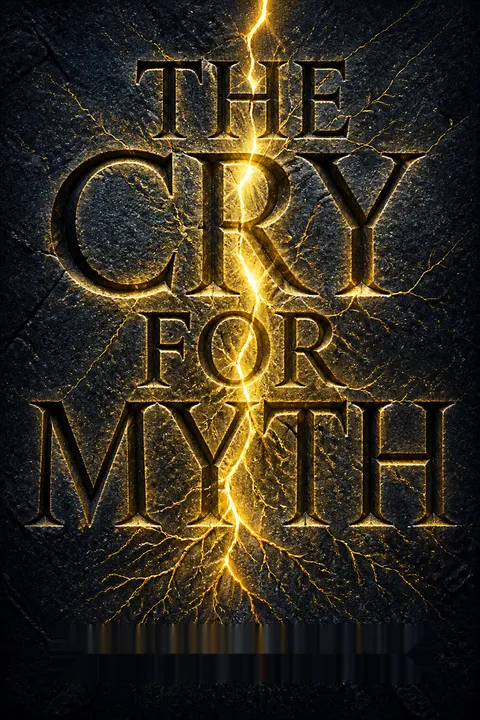
The Cry for Myth by Rollo May is widely praised for its insightful exploration of the importance of myths in human psychology and culture. Readers appreciate May's ability to weave together philosophy, psychology, and literature. Many find the book eye-opening and relevant to modern life, despite being written in 1991. Some criticize its Euro-centric focus and repetitiveness. Overall, reviewers consider it a thought-provoking and valuable read, particularly for those interested in psychology and mythology.
People Also Read






Glossary
Myth
Meaning-making narrativeFor May, a myth is a dramatic story or pattern that helps people interpret experience and orient themselves toward identity, community, moral values, and the mystery of existence. Its importance does not depend on literal factual truth. Myths connect personal emotion with shared cultural meaning, and can be inherited or created in individual life.
guiding fiction
Personal life-organizing storyAdler’s term for an early memory or significant childhood event that becomes a narrative template for a person’s way of living. The memory may be factual, imagined, or uncertain. Its psychological importance lies in how the person interprets it and uses it, often without awareness, to anticipate relationships and understand the self.
kairos
Opportune moment for changeA Greek term May uses for a moment when conditions are ripe for a significant change or development. Unlike ordinary clock time, kairos describes timing charged with possibility. In his reading of Briar Rose, change cannot be forced by impatient suitors; it becomes possible when the person and situation are ready.
presence
Attentive human availabilityMay’s term for a quality of relationship in which one person is genuinely available to another, not merely performing a role or offering advice. A therapist’s presence can provide steadiness while a patient faces difficult material. In personal relationships, presence makes reciprocal recognition and the development of a fuller self possible.
creative waiting
Active readiness for emergenceMay’s description of waiting that participates in the development of something not yet ready to appear. It is neither passive resignation nor an attempt to force an outcome. The idea applies to personal growth, relationships, and creative work, where patience, attention, and responsibility can help an emerging possibility take form.
daimonic
Powerful human impulseMay’s term for an intense force within human experience that can be constructive or destructive depending on how it is integrated. It may appear as passion, anger, creativity, or aggression. The daimonic is not simply evil; denying it can make it harder to understand, while acting on it without restraint can cause harm.
FAQ
What's The Cry for Myth about?
- Exploration of Myths: Rollo May explores the significance of myths in contemporary society, emphasizing their role in providing meaning and coherence to our lives.
- Psychological Perspective: The book examines how the absence of myths contributes to personal crises and societal issues, highlighting their importance in bridging biological instincts and personal identities.
- Cultural Critique: May critiques modern culture's dismissal of myths as falsehoods, arguing for their rediscovery as tools for understanding ourselves and our place in the world.
Why should I read The Cry for Myth?
- Understanding Human Experience: The book enhances understanding of how myths shape human experience and identity, offering insights into psychological and cultural implications.
- Relevance to Modern Issues: It addresses contemporary issues like loneliness and depression, providing valuable perspectives for those grappling with similar challenges.
- Therapeutic Insights: For psychology enthusiasts, May's work offers a unique lens on integrating myth into psychotherapy to foster healing and personal growth.
What are the key takeaways of The Cry for Myth?
- Myths Provide Meaning: Myths are essential for giving significance to our existence and helping us navigate life's challenges.
- Crisis of Identity: The absence of myths leads to personal crises, anxiety, and a "lonely search for internal identity."
- Role of the Therapist: Therapists should recognize and respect the myths clients bring into therapy to help reconstruct their narratives.
What are the best quotes from The Cry for Myth and what do they mean?
- “Myth making is essential in gaining mental health.”: This underscores the importance of myths in psychological well-being, helping individuals make sense of their experiences.
- “We are all like Deborah in this sense...”: May emphasizes that everyone needs myths to bridge the gap between biological instincts and personal identities.
- “Language abandons myth only at the price of the loss of human warmth...”: This highlights the importance of myths in maintaining emotional depth and connection in communication.
How does Rollo May define a myth in The Cry for Myth?
- Narrative Resurrection: Myths are narratives that resurrect primeval realities, fulfilling deep religious and moral needs.
- Bridge Between Worlds: They connect the conscious and unconscious, helping individuals navigate existence's complexities.
- Cultural Reflection: Myths reflect societal values and beliefs, shaping moral landscapes and evolving over time.
How does The Cry for Myth relate to contemporary issues?
- Mental Health Crisis: May links the decline of myths to rising rates of anxiety, depression, and suicide, attributing this to a lack of meaningful narratives.
- Cults and Escapism: The book discusses how individuals turn to cults or drugs for meaning when traditional myths fail.
- Cultural Disconnection: May critiques the dismissal of myths, suggesting it leads to a fragmented sense of self and community.
How does Rollo May connect myth to psychotherapy in The Cry for Myth?
- Therapeutic Framework: Myths provide a framework for understanding psychological issues, helping articulate struggles and aspirations.
- Symbolic Representation: Characters in myths symbolize aspects of the human psyche, allowing deeper exploration of identity and conflict.
- Healing Through Narrative: Engaging with myths can lead to healing and insight, resonating with universal human experiences.
What is the function of myths according to Rollo May?
- Sense of Identity: Myths help individuals answer "Who am I?" by providing a narrative structure for understanding their place in the world.
- Community and Belonging: They foster a sense of community by uniting individuals around shared stories and values.
- Moral Framework: Myths underpin moral values and ethical behavior, guiding actions and decisions within a cultural context.
How does The Cry for Myth address the theme of despair?
- Despair as a Catalyst: May suggests despair can lead to profound self-reflection and personal growth.
- Connection to Identity: Despair is linked to the loss of identity, necessitating confrontation of inner struggles to find meaning.
- Therapeutic Implications: Understanding and embracing despair is crucial in therapy, allowing for healing and integration.
What is the significance of Peer Gynt in The Cry for Myth?
- Journey of Self-Discovery: Peer Gynt represents the struggle for identity and the consequences of avoiding commitment.
- Critique of Individualism: His character critiques narcissism and the dangers of self-interest over relationships.
- Path to Integration: Peer’s journey illustrates the importance of integrating various aspects of the self for wholeness.
How does May interpret the myth of Faust in The Cry for Myth?
- Struggle for Meaning: Faust embodies the quest for knowledge and power, reflecting human desires and the dangers of hubris.
- Duality of Good and Evil: The myth explores the tension between good and evil, suggesting understanding comes from grappling with both.
- Redemption and Responsibility: Faust's journey leads to redemption, highlighting the importance of taking responsibility for one's actions.
What role do therapists play in relation to myths according to Rollo May?
- Facilitators of Myth Exploration: Therapists help clients explore and engage with personal myths, assisting in narrative reconstruction.
- Respect for Client Myths: Respecting client myths fosters a deeper therapeutic relationship and a sense of safety.
- Guides Through Personal Hell: Therapists guide clients through struggles, akin to Virgil guiding Dante, aiding in healing and self-discovery.
About the Author
Other books by Rollo May


Download PDF
Download EPUB
.epub digital book format is ideal for reading ebooks on phones, tablets, and e-readers.








