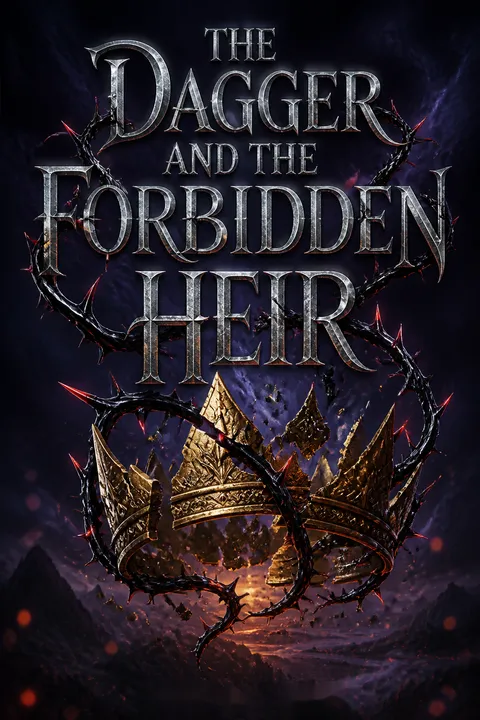


Plot Summary
Prologue
King Jameson has loved the healer Ophelia since before his arranged marriage to Idina, but he keeps their relationship secret to preserve his oath to the queen’s powerful family. When Ophelia gives birth to their daughter, Elianna, Jameson tells Idina the truth and asks her to accept the child.
Idina responds with fury, then leaves Ophelia alone with Callius, her guard. Moments later, she claims Ophelia has died from blood loss. Jameson returns to a room soaked in blood and an empty bed. As he holds his newborn, Idina warns that she will pursue her war and raise an heir of her own.
The opening frames the war as the political afterlife of a private betrayal. Jameson believes that love and good intentions can soften the consequences of secrecy, while Idina sees the child as both an insult and a threat to succession. His willingness to leave Ophelia during labor, despite his devotion, exposes the weakness beneath his romantic idealism: he trusts procedure and personal affection more than he investigates power. The bloody absence in the healer’s room gives the story a mystery as well as a wound. Elianna’s life begins inside a history her father cannot face directly.
A War Older Than Elianna
A century and a half after her birth, Elianna commands Velyra’s land forces against humans, though she believes the living should not pay for crimes committed generations earlier. After a costly victory, she clashes with Kellan Adler, her lover and commander of the sea fleet, over his hatred of mortals.
The long ride home adds two preventable deaths to the human and fae casualties because Queen Idina has denied the soldiers healers. Elianna takes responsibility for telling every bereaved family herself. Meanwhile, her father, King Jameson, grows mysteriously ill, with a burning pain inside him that healers cannot explain. The queen limits their access to him, and Elianna suspects her old hatred of healers is involved.
Elianna’s command is defined by a contradiction: she participates in a war she considers morally unjust, yet her rank makes her responsible for its immediate costs. Visiting the bereaved families is not merely kindness; it is her refusal to let military hierarchy turn the dead into statistics. Kellan’s certainty about human inferiority makes their relationship a miniature version of the kingdom’s political divide. The king’s unexplained illness adds urgency to Elianna’s private loyalty, while Idina’s control of medical care shows that power in Velyra works through ordinary institutions as well as battlefields.
The Wyvern Under Isla
At home, Elianna finds comfort in Avery, the sheltered princess who longs to see beyond the castle, and Finnian, their gentle younger brother. She also discovers Finnian’s secret romance with Landon, a stable keeper, and promises to protect them from Kai’s cruelty. That promise becomes urgent when she follows Lukas into the dungeons and finds Kai taunting a captive wyvern.
Callius had taken the creature’s egg from the Sylis Forest, and it has spent nearly two years imprisoned and poorly fed. Lukas has secretly named it Nox and brings it fresh meat. Elianna recognizes that Kai’s appetite for cruelty is not confined to people, while her bond with Lukas and Nyra, her rescued wolf, gives her a small circle of trust.
The dungeon scene gives physical form to the violence Elianna has learned to recognize in court: a powerful heir treats a living being as an object whose pain entertains him. Nox’s confinement also establishes a concrete threat and a possible source of knowledge, rather than offering a symbolic creature detached from the plot. Elianna’s protection of Finnian and Landon reveals a quieter kind of leadership, one exercised through discretion and loyalty instead of rank. The castle’s hidden tenderness exists beside its abuse, and Elianna must navigate both without being free to name the truth publicly.
Kellan Breaks Their Claim
Lukas tells Elianna that Kellan has spent days at a brothel, where she finds him with another woman. Kellan lies, and she ends their relationship, refusing to let his claim over her excuse his betrayal. Her father gives her an obsidian dagger marked with a wolf carved from white stag antler, a gift tied to Nyra. Soon the queen orders Elianna and Kellan to destroy a reported human camp at Ceto Bay.
Elianna objects to the mission’s purpose but accepts it to protect the kingdom’s soldiers. On the eve of departure, Jameson is frail, still drinking the nightly wine he believes helps him sleep. Elianna leaves Isla with an uneasy sense that both her personal life and her father’s safety are slipping from her control.
Kellan’s infidelity matters because it makes the conflict between private attachment and public authority impossible for Elianna to ignore. She does not leave him because she has ceased to care; she leaves because trust cannot survive a relationship in which his possessiveness is treated as a substitute for respect. The dagger from Jameson offers a more honest form of inheritance: it honors the companion Elianna chose and the skills she earned. Yet she still sails under the queen’s orders, showing how little freedom an ethical refusal can secure inside a militarized state.
The Bay Turns Red
Human commander Jace Cadoria has secretly built a far larger resistance than the fae believe, and he prepares his forces to ambush the fleet sent to Ceto Bay. Elianna’s party detects the trap before the humans can strike.
The attack becomes a rout: most of Jace’s men die, while he and a small group surrender and are bound as prisoners. Elianna intends to take them for questioning, but Kellan reverses the agreement. He has Vincent, a trusted crewman, execute the thirteen captives in front of Jace.
Elianna watches Jace’s grief harden into hatred, then discovers that Kellan has used the killing to punish her for treating Jace’s infected leg. She confronts Kellan, who admits his jealousy and forces a kiss on her. The journey home begins with her trust in him shattered.
The slaughter transforms a military victory into a moral defeat for Elianna. Kellan does not simply disregard her order; he uses the deaths to reassert control over her, turning command into a personal weapon. Jace’s helpless witness to his men’s execution gives his hatred a specific source, even as the story makes clear that his own people have also organized for war. The coerced kiss removes any ambiguity about Kellan’s possessiveness. Elianna has now seen that the danger is not only the enemy across the battlefield, but also the authority she has been expected to obey.
A Shipwreck Changes Captors
A violent storm breaks the ship against offshore rocks. Elianna risks herself to secure a sail, then frees Jace from his flooded cell when the vessel begins to sink. She is swept into the sea and struck against the rocks. Jace dives after her, frees her from a crevice, and keeps them both afloat on wreckage until they reach shore.
He wakes first and ties her to a willow tree, believing she is still his enemy and a source of intelligence. Elianna wakes furious and disarmed, while Jace refuses to trust her enough to release her hands. Their roles have reversed, but neither can safely return to the side they came from, and the dangerous Sylis Forest lies between them and any settlement.
The shipwreck breaks the military structure that had kept Elianna and Jace in clearly assigned roles. Each chooses to save the other before either has reason to expect gratitude, which makes their later distrust more complicated than simple hostility. Jace’s decision to bind her shows that one act of mercy does not instantly undo the habits of war. Elianna, meanwhile, is forced to depend on someone whose cause she opposes. Their survival begins not with reconciliation but with mutual obligation, a more credible foundation for change than sudden trust.
The Troll Was Real
As they travel through Sylis Forest, Jace keeps Elianna’s hands bound and dismisses her warnings about the creatures said to live there. She tells him that mortals weakened the queen’s relatives with poisonous velaeno berries, then proves the danger when the leaves beneath the berries begin to wither. Soon a forest troll disguised as a boulder rises beneath Elianna.
It hurls a tree at Jace, and Elianna knocks him out of its path. Jace gives her a spear, but it is her dagger and her knowledge of the troll’s weak spots that save them. She breaks her bindings, retrieves the weapon, climbs a tree, and drives the blade through the creature’s torso. Jace can no longer dismiss her knowledge as childish superstition.
The forest strips away the assumptions each character carried from home. Jace’s disbelief is not harmless skepticism; it nearly costs him his life, while Elianna’s knowledge proves practical and embodied. Yet she does not simply lecture him into respect. She acts decisively, first protecting him, then using her own judgment to kill the troll. The episode shifts their power balance without erasing their conflict. Jace must begin learning from the enemy he had reduced to a single category, while Elianna gains evidence that survival can create a limited, necessary trust.
A Kiss Over Water
At a hidden waterfall, Jace tells Elianna that his mother was assaulted by fae and that he was born from that violence. Elianna recognizes how much of the war’s history she has never been told. Jace notices the three whip scars on her back, and she admits that Queen Idina ordered them when she was a child. Their shared histories unsettle the enemy stories each has inherited.
Jace kisses Elianna, and they fall together into the pool below. She tells him she once believed Kellan was her mate, but now suspects the queen’s cruelty has been hidden behind the kingdom’s official account. Jace later reveals he saved Elianna from drowning. At the village inn, their attraction becomes physical, though the future between them remains uncertain.
The waterfall is the point where political knowledge becomes intimate knowledge. Jace’s account of his mother does not absolve the human resistance, and Elianna’s scar does not erase the harm of fae warfare; instead, each story makes a single, flattering account of either people untenable. Their kiss follows recognition, but it does not settle the moral questions they have uncovered. Elianna’s admission about the queen also marks a change in her own allegiance: she can no longer treat the crown’s version of events as neutral simply because she has served it.
The Enemy's Village
Jace’s cousin Zaela and his friend Gage emerge alive after hiding in the trees during the massacre at Ceto Bay. They capture Elianna, but Jace persuades them to bring her to Celan Village rather than kill her. There, he explains that his rapid healing comes from being a halfling, though he resists the label.
Five village guards later corner Elianna after discovering her pointed ears and threaten her. She kills the attackers who press her, and Jace executes the last man before he can harm her. He admits that she is no longer his prisoner or enemy. That night they sleep together. In the morning, Elianna agrees to share what she knows with Gage and Zaela, despite Zaela’s continued suspicion.
Jace’s choice to stand between Elianna and his own men marks a shift from tactical cooperation to personal responsibility. The attack by the guards shows that violence against her is not limited to the formal armies; prejudice travels easily into a village that is otherwise living ordinary, communal life. Elianna’s defense of herself remains central, but Jace’s intervention changes what she can reasonably expect from him. Their intimacy does not solve the war. It does, however, create a relationship in which each must risk being judged by actions rather than ancestry.
The Heir and the Hidden Army
Elianna tells Jace, Gage, and Zaela that Jameson is her father and that she was his first child, though the kingdom knows her only as an orphan raised in the castle. Jace reveals that the human population has not dwindled as Velyra believes: millions live beyond the Ezranian Mountains in Alaia Valley, with hidden soldiers and settlements elsewhere.
The group sees a path to ending the war by bringing Elianna’s claim and the human testimony before Jameson. They send a falcon to Lukas, asking him to meet them at Ceto Bay. Before they leave, a strange old woman delivers a prophecy about a fallen pillar, an heir, and a stranger of kin. She vanishes before they can question her, leaving them with a warning they cannot interpret.
The two revelations alter the scale of the conflict. Elianna’s identity makes succession a possible route to peace, while Jace’s hidden population means the humans are not a nearly defeated remnant but a society that has survived through concealment. Neither revelation alone guarantees a just outcome. The prophecy complicates the group’s practical plan by suggesting forces beyond their control, yet its ambiguity offers no easy instruction. The characters must choose to act without certainty, combining political legitimacy, testimony, and military reality rather than relying on a single heroic gesture.
A Queen's Long Crime
Back in Isla, Avery and Finn overhear Idina tell Kai the truth: she killed Ophelia after Elianna’s birth, then secretly poisoned Jameson with wyvern blood in his nightly wine. She kept the war alive to punish humans and to prevent Elianna from challenging her plans. After Jameson dies, Avery and Lukas find his private journal, which confirms his regret and his wish for Elianna to inherit the throne.
Kellan intercepts Elianna’s falcon message to Lukas, exposing the plan to meet at Ceto Bay. He has Lukas arrested and learns that Elianna is alive. Idina names Kellan commander of both armies, while Avery and Finn are left with evidence of the queen’s crimes but no safe way to act openly.
The parallel plot turns suspicions into documented crimes. Idina’s confession shows that the war is not merely a response to old losses; it is a political instrument she has maintained through murder, poisoning, and control of succession. Jameson’s journal supplies evidence of his remorse, but also records how his passivity helped her rule. Avery and Finn’s position is especially precarious: they possess knowledge and moral clarity without the authority to use either. The letter’s interception converts Elianna’s attempt at connection into a route for Kellan to locate her.
Celan Burns at Dawn
Before the planned departure from Celan, Kellan’s forces attack the village, setting buildings alight and killing civilians. Zaela initially believes Elianna betrayed them, but Elianna stays to help evacuate residents and then enters a burning building to reach Zaela.
When a fae soldier aims at Zaela, Elianna takes the arrow through her side and falls from the collapsing structure. Jace finds her bound and wounded under Kellan’s control.
He attacks, killing several soldiers, but Kellan captures him and cuts his face with Elianna’s dagger coated in Nox’s blood. The blood burns through Jace’s skin. Kellan drugs Elianna and takes her toward Isla, while Jace is left unconscious. Elianna realizes she can feel his pain and understands they are mates.
The attack tests whether Elianna’s new loyalties are merely emotional or have become active commitments. She risks her life for Zaela despite their hostility, and the rescue makes their alliance a consequence of action rather than a promise. Kellan’s assault on Celan reproduces the very atrocities that shaped Jace’s hatred, confirming that the crown’s violence reaches civilians as well as combatants. The mating revelation arrives through pain, not romantic certainty. It binds Elianna to Jace at the moment Kellan separates them, making intimacy both a source of recognition and a new vulnerability.
The Sister in Chains
Jace survives the wyvern blood because of his halfling healing, then learns Elianna has been taken. With Gage and Zaela, he decides to gather the human forces and march toward Isla to retrieve her and challenge the crown. Elianna wakes nine days later aboard Kellan’s ship, drugged and bound.
Back in the castle dungeons, Kellan chains her beside Nox, and Callius reopens the childhood wounds Idina inflicted by whipping her. Later, Kai visits and confirms that Idina poisoned Jameson with the wyvern’s blood. He lets slip that he knows Elianna’s true connection to the king, addressing her as his sister. The book ends with Elianna imprisoned, her father dead, and the opposing forces moving toward a confrontation.
The ending refuses a false resolution. Jace’s survival creates the possibility of rescue, but his decision to mobilize the hidden army also risks expanding the war he hopes to end. Elianna’s return to the dungeon where Nox is held brings the story’s private and political violences into one space: the queen’s old punishment, the king’s death, and the wyvern’s weaponized blood. Kai’s recognition of her as his sister turns a concealed identity into immediate danger. The cliffhanger leaves the question of succession inseparable from survival, and peace dependent on what the characters choose to do with power.
Analysis
The novel builds its political conflict from a distinction between justice and revenge, then steadily shows how difficult that distinction becomes inside a hereditary state. Idina’s original loss may be real, but her war targets generations of people who did not commit the act that provoked it. Jameson’s desire to avoid bloodshed is morally better, yet his failure to confront Idina allows her decisions to become law. The story therefore refuses to equate good intentions with ethical leadership. Silence can protect a loved one in one moment and enable a regime in the next.
Elianna’s role makes that contradiction personal. She is asked to serve the crown while questioning the crown’s account of the war, and her military skill gives her credibility without giving her freedom. Her care for fallen soldiers, Finnian, Nox, and eventually the humans she captures is not a rejection of duty. It is an attempt to define duty around living people rather than inherited grievance. Jace begins from the opposite certainty: the fae are collectively responsible for the violence against his people. His encounters with Elianna challenge that generalization, but they do not erase the suffering that produced it. Their attraction matters because it grows through evidence, disagreement, and reciprocal risk, not because love magically settles the history between them.
The hidden human population and Elianna’s concealed parentage turn private secrets into political instruments. Both reveal how official reality has been managed: one side has hidden its people to survive, while the other has hidden an heir to preserve a succession plan. The final revelation that Idina killed Ophelia and poisoned Jameson makes the family history inseparable from the war. Yet the novel ends before truth can become justice. Elianna is captive, Jace is preparing a military response, and Kai knows who she is. The unresolved danger is whether a bid for peace can escape the methods of power that have sustained the conflict.
Review Summary
The Dagger and the Forbidden Heir receives mixed reviews averaging 3.87 stars. Many readers praise the strong FMC Elianna, enemies-to-lovers romance with Jace, popular tropes (one bed, fated mates, "touch her and die"), fast pacing, and emotional character connections. Fans compare it to ACOTAR, Throne of Glass, and Game of Thrones. Critics cite shallow worldbuilding, lack of magic system, predictable plot, rushed romance, underdeveloped characters, poor foreshadowing, modern slang in fantasy setting, and editing issues. Several note it's enjoyable for vibes despite lacking originality. The cliffhanger ending leaves readers eager for book two.
People Also Read




Characters
Elianna Solus
The reluctant war captainElianna is a fae captain raised inside Isla’s castle and trained to command armies in a society that distrusts both women warriors and sympathy for humans. She measures leadership by the lives entrusted to her, which is why she visits bereaved families and resists collective punishment. Her loyalty is genuine, but it is not blind: she questions the queen’s war and notices how power limits access to healers and truth. A dry wit protects her from humiliation, while her fierce independence can make accepting help difficult. Beneath her confidence lies a persistent hunger for family and recognition. She is most herself when choosing whom to protect, even when that choice carries political risk.
Jace Cadoria
The human resistance commanderJace leads the human resistance with a strategist’s patience and a soldier’s appetite for decisive action. His hatred of the fae grows from the violence inflicted on his people and the suffering endured by his mother, so he initially treats every fae as part of the same threat. That certainty serves him as a commander, but it narrows his judgment. Elianna’s choices force him to distinguish a person from the system she serves. He is protective of the people under his command and deeply loyal to his closest companions, though grief can make him reckless. His guarded manner hides a capacity for tenderness he has long considered a liability.
King Jameson
The divided fae kingJameson rules Velyra with a temperament shaped by affection, duty, and avoidance. He loves his family and wants to prevent a broader war, but his habit of keeping peace through silence allows stronger personalities to dictate the kingdom’s course. He is especially tender with Elianna, whose presence connects him to a past he cannot openly repair. His private regrets show that he understands the cost of his compromises, even when he delays acting on them. Jameson’s weakness is not lack of conscience but the belief that personal kindness can compensate for political inaction. His story asks whether a benevolent ruler can remain innocent while allowing harm to continue.
Queen Idina
The vengeful queenIdina is a beautiful, commanding ruler whose grief and resentment have hardened into a politics of collective punishment. She believes order depends on control: of succession, of healers, of the court’s version of history, and of those who might oppose her. Her public composure contrasts with the cruelty she directs at people with less power, especially Elianna. Idina does not experience herself as a villain; she treats retaliation as justice and sees personal humiliation as a political injury. That conviction lets her turn private grievance into policy. Her influence over Kai and the war makes her dangerous not simply because she is ruthless, but because she can make ruthlessness appear legitimate.
Kellan Adler
The possessive fleet captainKellan commands Velyra’s sea forces and is accustomed to getting obedience through confidence, rank, and force. His relationship with Elianna contains real familiarity, but he mistakes closeness for ownership and treats her independence as a challenge to overcome. In battle, he favors swift, brutal solutions and sees mercy toward enemies as weakness. His ambition is sharpened by his connection to the queen’s court, and his polished apologies often conceal a practical desire to regain influence. Kellan’s danger lies in the gap between his public role as a capable commander and his private belief that other people’s choices are his to manage.
Lukas Salvinae
Elianna's steadfast guardianLukas is a veteran guard and military leader who helped raise Elianna while protecting her from the court’s attention. He distrusts Idina and Kellan, but his loyalty to Jameson keeps him from forcing the king to confront every suspicion. His care is practical: he watches over Elianna, Nyra, and the younger royals, and he tries to warn those he loves before danger arrives. Lukas’s restraint can look like passivity, yet it comes from a lifetime of weighing the risks of open defiance in a dangerous court.
Avery
The sheltered princessAvery is a warm, curious princess whose polished life inside the castle leaves her yearning for the world beyond its gates. She and Elianna share a deep friendship built on confidences, secret excursions, and a mutual envy of each other’s freedoms. Avery’s gentleness does not make her passive; she notices emotional shifts in those around her and can act boldly when the family is threatened. Her desire for adventure is also a desire to participate in her own life rather than be traded through political marriage. She represents a quieter form of courage, one that begins with asking what the court has hidden.
Finnian
The gentle younger princeFinnian is quiet and considerate, often uncomfortable when his elder brother turns cruelty into entertainment. He cares deeply for Avery and Elianna, and his secret relationship with Landon reveals a capacity for tenderness that he cannot safely show at court. Fear makes him hesitant, particularly when Kai is near, but his conscience remains active even when he cannot intervene. Finnian’s struggle is the distance between knowing what is wrong and finding the courage to oppose it. His gentleness is not weakness, though he has not yet learned how to make it a source of power.
Kai
The cruel royal heirKai is the queen’s eldest son and a prince accustomed to treating rank as permission. He mocks those who cannot retaliate, bullies the castle’s staff, and takes pleasure in cruelty toward animals and people alike. His father’s reserve toward him has done little to produce self-reflection; instead, Kai interprets distance as insult and entitlement as compensation. He is perceptive enough to notice weakness and disloyalty, but he uses that perception to control rather than understand. Kai embodies the danger of succession when power is inherited without the discipline of responsibility.
Ophelia
The healer and belovedOphelia is a healer whose compassion and independence draw Jameson into a love that conflicts with his political marriage. She understands the danger of remaining secret and worries that a child born into royal scandal will become vulnerable. Her instinct is to prioritize the child’s safety over her own recognition, a choice that reveals both her generosity and the limited power available to her. Though she is absent from the main timeline, her memory shapes Elianna’s sense of belonging and Jameson’s unresolved grief. Ophelia’s role in the story is not simply romantic; she represents the human cost of a court that treats private love as a threat to political order.
Callius
The queen's hard-handed guardCallius is Idina’s personal guard and an experienced officer whose loyalty to the queen often outweighs compassion. He carries out her orders, keeps secrets, and uses his authority to intimidate those beneath him. His presence unsettles Elianna because he is connected to the punishment she suffered as a child. Callius is more than a blunt enforcer: he understands how information and access can be controlled, making him useful to the court’s political machinery. His relationship with Kellan also gives him influence over the military hierarchy.
Gage
Jace's loyal secondGage is Jace’s longtime friend and second-in-command, a capable fighter with an irrepressible sense of humor. He offers emotional loyalty without pretending Jace is always right, and his easy warmth helps soften the resistance camp’s severity. Gage’s teasing can cut through tension, but he is dependable when danger arrives. He values the people around him as individuals, which makes him a useful counterweight to Jace’s more absolute instincts.
Zaela
Jace's fierce cousinZaela is Jace’s cousin and a formidable fighter who considers herself his truest strategic partner. She is direct, suspicious, and quick to answer perceived danger with force, especially when the fae are involved. Her distrust comes from lived loss rather than abstract prejudice, and she sees protecting her people as more important than appearing gracious. Zaela’s loyalty to Jace is fierce, but she is not a mindless follower; she challenges plans she considers foolish. Her guardedness makes trust difficult, yet her code is rooted in responsibility to her community.
Nox
The imprisoned wyvernNox is a rare wyvern captured as an egg and kept beneath Isla’s castle. Kai treats him as a source of amusement, while Lukas brings him fresh food and recognizes his capacity for fear and self-defense. The creature’s fire gives him a formidable means of protection, though he cannot use it constantly. Nox’s confinement exposes the cruelty hidden beneath royal authority and places a dangerous power inside the castle itself. Elianna’s sympathy for him reflects her refusal to mistake strength for permission to dominate.
Nyra
Elianna's rescued wolfNyra is a white wolf Elianna found alone after her pack was attacked. She is fiercely attached to Elianna and protective of the people she accepts, especially Avery and Lukas. Her wariness around Kai offers a plain, instinctive judgment that contrasts with the court’s elaborate excuses. Nyra is a companion rather than a possession, and her presence gives Elianna comfort beyond the castle’s political relationships.
Landon
Finnian's secret belovedLandon is a stable keeper whose relationship with Finnian must remain hidden in a court where Kai can turn private affection into leverage. He is conscientious about his duties and willing to accept blame to protect Finnian. His steady loyalty contrasts with the prince’s volatility, while his reserved manner makes him difficult to read at first.
Vincent
Kellan's concealed enforcerVincent is a crewman who works in the background of Kellan’s command and carries out tasks that Kellan does not want publicly connected to himself. He is obedient, ruthless, and comfortable with deception. His willingness to stage loyalty and perform violence makes him a practical instrument of Kellan’s ambition.
Veli
The hidden court healerVeli is a gifted healer who continues treating Jameson despite Idina’s restrictions. Her work is discreet because the queen has made medical care politically fraught. She represents the surviving practice of healing in a court that has discouraged it, and her access to the king gives her quiet importance.
Lady Lorelai
The brothel's calculating ownerLorelai runs the Evergreen Belle, a fashionable brothel where Kellan spends time after returning from battle. She once belonged to Isla’s social circle but chose wealth and influence over dependence on a powerful lord. Elianna sees her business as exploitative, particularly toward young women with few alternatives. Lorelai is adept at reading what customers want and turning that knowledge into leverage.
Plot Devices
The wolf-hilted dagger
A gift becomes a weaponJameson gives Elianna an obsidian dagger with a white-stag antler wolf carved into its hilt, honoring Nyra and Elianna’s chosen family. The blade lets her fight effectively during the journey through Sylis Forest, where she uses it to kill the troll that nearly attacks her and Jace. Kellan later coats it with wyvern blood and uses it to injure Jace, then breaks it in front of Elianna. The dagger carries several meanings at once: her father’s affection, her own competence, and the cost of Kellan’s desire to punish her. Its destruction turns a treasured object into an immediate marker of loss.
Wyvern blood
A hidden poison becomes a weaponNox’s blood can melt flesh, and Idina exploits that property by putting small amounts into Jameson’s nightly wine. The substance is difficult for healers to identify, allowing his illness to appear mysterious. Kellan later applies it to Elianna’s dagger and cuts Jace’s face, expecting the injury to kill him. The blood connects the wyvern’s captivity to the political struggle: a creature abused beneath the castle becomes the source of the queen’s method for killing the king and Kellan’s means of punishing a rival. Its use also exposes how knowledge of nature can be turned into state violence.
The mating bond
Pain reveals a hidden connectionFae lore describes mates as able to sense each other’s pain, though Elianna has dismissed the idea as a romantic fantasy. She and Jace are drawn toward one another despite their opposing roles, and their intimacy deepens after they begin to see the violence behind each other’s inherited beliefs. When Kellan wounds Jace with wyvern blood, Elianna feels his pain and recognizes the bond. This mechanism transforms their relationship from a personal complication into a supernatural and political fact. It does not resolve their differences or guarantee trust; instead, it makes separation and danger more consequential.
Alaia Valley's hidden people
A false defeat conceals survivalThe fae believe the human population has dwindled to a few hundred thousand, but Jace reveals that millions have been moved beyond the Ezranian Mountains into Alaia Valley. The resistance has hidden its civilians and maintained armies while allowing the enemy to believe its numbers are collapsing. This secret changes the balance of the war and gives Jace a force capable of acting beyond isolated ambushes. It also raises a strategic question: whether a hidden population can be used to end the war without exposing civilians to a larger retaliatory attack.
The village prophecy
An omen unsettles the planAfter Elianna and Jace send a falcon to Lukas, a mysterious old woman appears in Celan Village and speaks of a fallen pillar, an heir, and a stranger of kin. Her eyes are striking, and she vanishes before the pair can question her. The prophecy offers no practical instructions and does not confirm whether it refers to Elianna, the royal succession, or the approaching conflict. Its function is to widen the story’s uncertainty at the moment the characters believe they have found a workable political strategy. It makes their plans feel consequential without providing a shortcut through them.
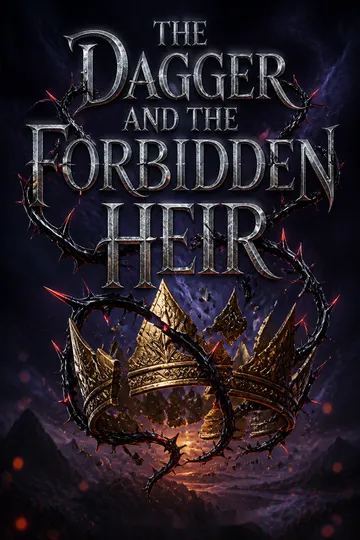
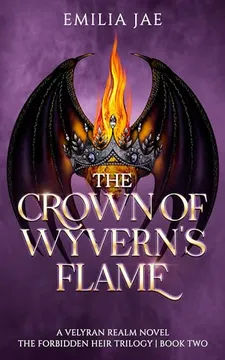
The Forbidden Heir Trilogy Series
About the Author
Other books by Emilia Jae
Download PDF
Download EPUB
.epub digital book format is ideal for reading ebooks on phones, tablets, and e-readers.








