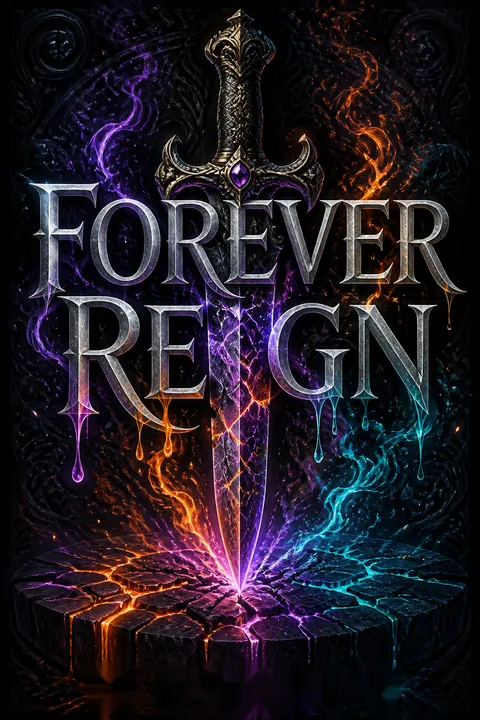


Plot Summary
Prologue
The prologue recasts a once-loved huntress as a lonely presence among the stars. Separated from her home and raised beyond the reach of ordinary life, she carries grief and power together, longing for the freedom and warmth she once knew.
Its unnamed figure is Isla, now transformed by the events on Iona into something greater than an immortal. The promise of a forever reign sounds less like triumph than exile: she has gained almost everything, yet fears she has lost the life that made her whole.
The prologue frames Isla’s new power as a form of estrangement rather than uncomplicated elevation. Its movement from a communal life to isolation among the stars compresses the novel’s central dilemma: survival can demand a self so altered that the survivor no longer recognizes her own future. By withholding Isla’s name, the opening initially makes her transformation feel mythic, then the story restores the person inside the myth through work, friendship, grief, and intimate choices. The contrast also challenges the fantasy convention that greater power automatically means greater agency. Isla may see everything, but what she wants is the ordinary freedom to belong somewhere.
Karstos Under Strange Skies
Three months after returning to Karstos, King Sebastian is trying to repair the harm done while the spirit elemental Celesine controlled his mind. He reverses unjust taxes, offers palace shelter to storm-displaced families, and struggles to earn back a court that still fears him.
Then a blizzard strikes his tropical kingdom, while reports describe floods in the desert and avalanches elsewhere. Sebastian knows the disasters are no ordinary weather.
His former allies lost their elemental powers, and Isla, the young huntress he believes dead, vanished with Celesine. When Iona, a kingdom long hidden from the world, invites him and the other rulers to a festival, his fear of returning is overtaken by the possibility that the island holds answers.
Sebastian’s political repair work makes guilt material. He is not merely regretting a corrupted past; he is redirecting shipments, opening royal property, and facing people harmed by policies issued under his name. The disasters complicate that labor by making the natural world itself register the cost of the elemental crisis. His suspicion of Iona is therefore both strategic and traumatic: the island recalls his captivity, but may also hold the means to protect his people. The invitation forces him to act before he feels absolved. His kingship begins to change when responsibility becomes a practice, not a claim to innocence.
Water in the Mine
In Ara Mir, Kai has found purpose as an apprentice healer, while her husband Aidan mines jewels and learns the limits of his once-immortal body. When a sudden flood tears through the deep level of Castle Rock, Aidan helps fellow miners reach the lift, then stays behind to operate its manual lever.
He rigs the mechanism so the others can rise and escapes by climbing an old ladder through the flooded shaft. Kai, terrified by news that he has not returned, races toward the mine before he appears, exhausted but alive.
The disaster strengthens their suspicion that the missing elements are destabilizing nature. A delayed letter from Jade and Rynn confirms that Iona has invited them too, and Aidan sees the island as the likely place to find answers.
Aidan’s rescue shows how losing power has changed the meaning of courage. Formerly accustomed to control and invulnerability, he now chooses a mortal risk because another worker has had less time to live. The act is morally generous, but Kai’s panic reveals its cost to the people who love him. Their marriage is no longer an eternal promise insulated from danger; it is a daily attachment made vulnerable by ordinary bodies and dangerous work. The mine disaster also turns the global storms from distant reports into immediate consequences. Aidan and Kai are not simply seeking adventure when they return to Iona. They are responding to evidence that their private choice of mortality may have public consequences.
The Reluctant Return
In Evonlea, Jade cares for the injured Rynn, whose wound from Iona has left him dependent on a cane and help from a young healer, Emilee. The two former elementals have built an uneasy domestic life, but neither has made peace with losing their powers. Jade watches over Isla’s grieving friend Brielle and her father, Luca, while Rynn doubts Isla could have survived the mortal wound he witnessed.
An invitation to Iona only deepens their mistrust. Sebastian arrives in person and tells them Isla is alive and needs all four former elementals at the festival. He adds that finding the Dagger of Volnus may let them reclaim what they lost. Jade and Rynn agree to go, and Brielle insists on joining them so she can help Isla herself.
Jade and Rynn embody two different responses to diminished power. Jade turns care into a substitute purpose, even while she grieves her lost bond with the earth. Rynn experiences dependence as an assault on identity and tries to protect himself with irritability and refusal. Their shared care for Luca and Brielle exposes the contradiction in their retreat: they claim they cannot protect anyone, yet continue arranging their lives around other people’s safety. Sebastian’s news makes hope possible, but it also makes the journey emotionally costly. For Rynn, the invitation is not merely a route back to an island. It is a chance to learn whether his belief in Isla was insight or the last defense against grief.
Visions Above the World
During her months on the spirit plane, Isla has relived the world’s history through visions: the elementals first helping humans build kingdoms, then growing proud, controlling, and brutal.
She sees the civil war that broke Iona and wonders whether Celesine’s judgment of the elementals held any truth, though it cannot excuse her crimes. The Primeval gods finally appear as five stars and explain that the stolen elements have left nature unbalanced, causing the disasters across the kingdoms.
Isla must recover the Dagger of Volnus and return the power to its proper place. They grant her an extended stay in the physical world so she can act during Iona’s festival, but their instructions remain incomplete. She accepts because the people suffering below matter more than her uncertainty.
The visions deny Isla the comfort of a clean moral history. The elementals were once generous, but their later abuses grew incrementally from the same power that once let them help. Seeing this does not make Celesine right; it makes Isla wary of explanations that divide the world into pure protectors and pure monsters. The gods’ demand adds another pressure: they describe balance as a cosmic necessity but leave the practical and ethical burden to a grieving mortal. Isla’s willingness to act grows from compassion, but also from a familiar impulse to carry responsibility alone. The spiritual revelation therefore advances the quest while exposing the habit that may endanger her most.
A Visit from the Dead
Isla first reaches Sebastian in his bedchamber, where he recognizes her as real before she can explain how she crossed from the spirit plane. Her appearance ends with a plea that he protect her father, Luca, and a promise to find her again. Eight days later, she appears in Sebastian’s office and explains that the gods want the dagger found on Iona.
A violent earthquake and cyclone strike Delarossi while they speak. Isla rushes outside and pulls the storm away from the city, forcing wind and debris into herself until the shaking stops. The effort sends her back to the spirit plane, but Sebastian now knows she is alive and can sometimes intervene. He agrees to bring the others together and begins arranging for Luca’s safety.
The first reunion gives Sebastian evidence that hope is not only a private fantasy, but it also refuses him the relief of possession. Isla appears, asks him to protect someone else, and vanishes before he can keep her. Their connection is meaningful precisely because neither can control its duration. When she later diverts the cyclone, her power becomes visibly useful, yet the cost of each intervention confirms that access to the world is precarious. Sebastian’s role shifts from grieving for Isla to acting as her logistical ally: safeguarding Luca and gathering the former elementals. The romance and the quest become linked through care, but their unequal knowledge and limited time remain a source of danger.
Iona’s Red-Gowned Guest
Sebastian’s party reaches Iona with Kai, Aidan, Jade, Rynn, Brielle, his advisor Annalise, and a small Karstos delegation. Palace Noctem has been rebuilt, but its empty gardens and guarded corridors make the welcome feel staged.
At the first feast, the four Chamber members present Iona as a kingdom rising from a brutal civil war. Isla then enters without an invitation, introduces herself by her Vasileia family name, and lets Sebastian claim her as part of his delegation.
Her appearance unsettles the hosts and reunites her friends with proof of life. The Chamber places her in the Karstos wing, beside Sebastian’s room. That night, Isla uses his signet ring to reach his thoughts, an intimate gesture that also reminds him of the mind-control Celesine once used.
Isla’s entrance is an act of self-authorship. She does not wait for the Chamber to validate her presence, and the Vasileia name makes her history public before she understands the political consequences. Yet the scene also shows how visibility can be weaponized: the same declaration that lets her reclaim her identity gives the hosts a reason to regard her as a threat. Her contact through Sebastian’s ring tests the possibility of intimacy after his psychic violation, while his alarm exposes how trauma can make even affectionate gestures resemble coercion. The festival’s polished ceremony and the empty palace grounds establish a dissonance between Iona’s public story of renewal and the unease its guests can feel.
The Dead Are Named
In the Karstos wing, Brielle embraces Isla, then confronts her friends for leaving her and Luca to mourn Arden and Isla without an explanation. Isla admits she could not reach them from the spirit plane and feared facing her father.
The group recounts how Celesine controlled Sebastian, how Isla took the elementals’ powers to stop them fighting, and how she survived by taking Sebastian’s blood. Annalise, hearing the history for the first time, recognizes how thoroughly her closest friend had suffered without her knowing why.
Isla says the gods want the elements restored, though no one yet knows what that will require. Before the night ends, she senses that Kai is pregnant. Kai and Aidan, newly confronted with the possibility of a child, privately decide to seek confirmation.
Bri’s anger supplies a necessary corrective to the group’s inward grief. The elementals and Sebastian have suffered, but their silence also left ordinary survivors carrying losses without context. Her challenge makes accountability relational: being traumatized does not erase the harm caused by withdrawing from friends who needed them. Isla’s apology opens a path toward reunion, but the group still treats her as the center of a crisis whose meaning she cannot fully explain. Kai’s pregnancy introduces a future that resists the quest’s abstract scale. The world’s balance may require sacrifice, but Kai and Aidan now have a particular, vulnerable life to consider, making any return to immortality a choice with consequences beyond themselves.
A Rescue Becomes a Riot
While exploring Farrow, Isla and Bri reach a natural bridge above the sea just as a boy falls into shark-filled water. Isla dives in, calms the waves, steadies the child, and brings him back up the rocks. The mother recoils from Isla because the water has left her clothes strangely dry, and the crowd turns on the woman who saved the boy.
Isla’s earth power freezes their minds long enough for her and her friends to escape, but she realizes Jade has never told her about that ability. Akir, a distant Vasileia relative who once helped protect Bri, leads them into an underground resistance. He explains that the Chamber has spent generations teaching Ionans to blame magic for hardship, then using that fear to keep control.
The rescue reveals how public perception can reverse the meaning of an action in seconds. Isla saves a child, but the crowd reads the impossible details of her power through a political story designed to make her frightening. Her response, freezing minds, protects her friends while also making her newly aware of how much she can do to others without their consent. Jade’s withheld knowledge deepens the breach between them because it links Isla’s grief over Arden to an ability she might have used earlier. Akir’s resistance offers a counterhistory, yet his account also insists that fear is not simply ignorance. It is manufactured, maintained, and made useful by people who profit from it.
A Crown Written in Blood
As trade talks expose the Chamber’s appetite for resources, Mariana quietly hints that she knows about Sebastian’s crimes under Celesine’s control. He tells Isla that Celesine once forced his council to pass a succession clause: if he dies or becomes unfit to rule, Iona gains Karstos. Soon after, Annalise finds the missing guard Kingsley stabbed in his room.
Isla cannot save him, but uses her power to ease his pain as he dies. Sebastian confronts Mariana, who refuses to offer a credible account of the killing. The murder makes the succession clause feel less like a buried legal danger and more like a plan with a body attached. The visitors now have reason to suspect the Chamber is willing to use violence to secure its influence.
The succession clause turns Sebastian’s private history into an institutional trap. Celesine’s coercion survives her apparent disappearance because it has been converted into law and approved by people who may not understand how they were manipulated. Kingsley’s death then gives that hidden mechanism physical weight. Isla’s effort to relieve his pain cannot reverse the violence, but it lets her offer care without pretending she can repair everything. Sebastian’s anger at Mariana is both a defense of his people and a test of his restored authority: he must confront a threat without becoming the tyrant his enemies expect. The scene shows how coercion outlasts its immediate perpetrator when power is embedded in procedure.
The Storm Cellar
A later storm batters Palace Noctem as Ottorius corners Annalise and tries to assault her. Rynn reaches them through shattered corridors, stops Ottorius, and leads Annalise to a cellar when the palace becomes unsafe. There, Annalise tells him that an assault at eighteen left her carrying shame and fear alone; Rynn listens without turning her disclosure into a demand that she be rescued.
At the same time, Isla attempts to stop the storm outside. Her elements resist her, and lightning throws her against a tree before she forces the rain and wind to settle. The effort leaves her injured, soaked, and nearly unconscious. Sebastian carries her to a bath and stays beside her, while the weakened connection to her powers becomes another warning.
The cellar scene makes protection more complicated than physical intervention. Rynn can stop Ottorius, but he cannot decide what Annalise needs after the danger passes. His willingness to listen, and her choice to disclose, shift care away from control toward consent. Across the palace, Isla’s struggle with the storm similarly challenges her assumption that power means reliable command. She can still save people, but the effort is painful and her elements seem less willing to answer. Sebastian’s care afterward is intimate without being curative: he can warm and comfort her, not remove the risk. These parallel scenes distinguish support from rescue fantasy. Love matters, but it cannot make another person’s burden disappear.
The Dagger’s Final Use
Following a hidden map in the Vasileia records, Isla returns alone to the tunnels beneath the Chamber’s rooms. She opens a stone wall into the hot springs, then passes through earth, water, fire, and air to reach the Dagger of Volnus in a glowing elemental sphere. The Primeval gods explain that the blade can no longer transfer power as it did before.
To release all five elements from her body and restore nature, Isla must give up her life. The deadline is midnight on the Spring Equinox, when her temporary access to the physical world ends and Celesine may regain her full power. Isla takes the news alone and hides it from her friends, convinced that telling them would only make them try to stop her.
The dagger’s location makes the quest a test of relationship as much as elemental skill: Isla can reach it only by responding to each force, not by imposing one solution. The revelation then turns her familiar self-sacrifice into a conscious ethical dilemma. She is not merely risking death in a battle; she is being asked to decide whether her continued existence is worth the danger to everyone else. Her secrecy repeats the protective withdrawal Bri challenged earlier. Isla treats her friends’ grief as something she can manage by withholding the truth, confusing love with unilateral decision-making. The gods’ certainty intensifies this flaw by presenting a cosmic demand in a form that leaves almost no room for shared deliberation.
A Murderer by Decree
At the Spring Equinox feast, the Chamber accuses Isla of poisoning an Aramian priest, killing Kingsley, and murdering Princess Jessenia. They produce hemlock from her room and a dagger bearing her name, though Rynn knows he brought that weapon from the ship.
Isla refuses capture, uses her powers to scatter the guards, and vanishes into Akir’s resistance tunnels. The false charges expose how the Chamber turns evidence and fear into political tools. Isla stays hidden while Akir’s people shelter her, and she learns the resistance is already stretched by families displaced from their homes.
Rather than spend the day plotting revenge, she helps restore fields, clear storm-damaged roads, and reopen water routes, offering the people a visible alternative to the Chamber’s frightening account of magic.
The frame-up is effective because the Chamber does not need to prove Isla’s guilt beyond doubt; it needs to make the existing fear feel confirmed. The named victims and planted objects convert a complex conflict into a simple accusation that other kingdoms can repeat. Isla’s escape prevents the authorities from controlling her body, but it also strengthens the public image they have prepared for her. Her choice to help rebuild is therefore political as well as compassionate. She answers propaganda not with a competing speech but with repaired roads, crops, and water. The work lets ordinary Ionans judge her by what her power gives them, not only by what their leaders have taught them to fear.
One Last Dance
After helping Iona’s storm-struck people, Isla meets Sebastian in the palace gardens during the ball. She lets them share a dance before explaining that the gods require her to release the elements, and that the transfer will kill her. Sebastian begs her to find another path and offers to face the gods with her, but Isla refuses to risk his life or leave Karstos vulnerable to the succession clause.
She admits she loves him and allows him to understand what their time together has meant. Then she uses her Aether power to make him close his eyes and leaves for the palace tunnels alone. He cannot follow, not because he agrees, but because her final act of control gives her the time to reach the dagger.
The farewell is the emotional consequence of Isla’s secrecy, but it is also the point at which she finally names her choice to the person most affected by it. Sebastian’s plea exposes the difference between accepting sacrifice as noble and accepting the loss of someone loved. Isla’s reasoning is not abstract: she fears what could happen to his kingdom and refuses to let him share a danger she believes only she can bear. Yet making him close his eyes repeats the very pattern she has been learning to resist, taking his agency in order to spare him pain. The scene holds tenderness and coercion together, refusing to let love make her decision uncomplicated.
The Cave at Midnight
Isla reaches the hot springs, retrieves the dagger, and finds the Chamber waiting; they admit that Celesine has worked with them for generations and arranged the trap to gain power over Karstos. They capture and beat Sebastian before Aidan, Kai, Jade, Rynn, Brielle, and Annalise arrive.
A bomb damages the cavern, and at midnight Isla’s Aether power returns, allowing Celesine to take physical form. Isla cuts her arm to release the elements, but the magic divides among Jade, Rynn, Brielle, Annalise, and Celesine instead of killing Isla.
As the cavern erupts, Jade recovers her buried ability to still minds, freezes the attackers, and drives the dagger into Celesine’s heart. The Aether leaves Celesine, ending her hold over the group and the Chamber.
The climax breaks the premise that moral action must follow the gods’ instructions exactly. Isla begins the prescribed sacrifice, but the others’ presence changes its result: the elements find hosts, and she survives. This is not a simple victory of love over fate; it is a collective intervention made possible by the people Isla tried to exclude. Jade’s recovered mind power is equally significant because it returns through self-forgiveness rather than domination. Her decisive use of it creates the pause in which Celesine can be killed, but Jade acts with grief for the mentor she once loved. The cavern concentrates the novel’s arguments about power: its danger lies less in possession than in the refusal to share choice and responsibility.
The Elements Go Free
With Celesine dead, the survivors restrain the four Chamber members and help the wounded. Isla asks Akir, whose resistance has protected Iona’s people for years, to help replace their corrupt leadership. The remaining elementals then choose to surrender the powers that briefly returned to them.
Isla uses the dagger to release water from Annalise, fire from Brielle, air from Rynn, and earth from Jade back into nature. Kai and Aidan remain mortal, able to pursue the family they have begun.
The group spends several days helping Akir organize relief, political change, and new treaties before preparing to leave. Isla returns to Evonlea with Brielle, Jade, and Rynn, while Sebastian heads back to Karstos with the others, leaving the couple to face a future they have not yet settled.
The final transfer distinguishes restoration from restoration of the old order. The elementals do not reclaim permanent command over nature; they choose to let their powers go, treating the magic as something entrusted to them rather than owned. Brielle’s brief inheritance also confirms that power does not automatically fit its recipient, while Kai and Aidan’s mortal future remains intact. Politically, Akir’s possible leadership answers the Chamber’s rule with a different basis for authority: service and accountability rather than inherited fear. The departure prevents victory from erasing grief or practical uncertainty. The characters leave with a safer world, but not with identical desires or a single shared destination.
Home, Then Karstos
In Lockhurt, Isla’s father, Luca, embraces her after believing both his children dead. She resumes life in their village while Sebastian’s letters make clear that he still loves her. Isla hesitates to leave Luca so soon after returning, until he admits that the family business does not have to keep them rooted and offers to move with her.
Two months after Iona, she arrives at Sebastian’s palace in a storm and tells him she wants a life with him. Sebastian welcomes her without hesitation. Her choice is not a rejection of home: Luca will accompany her, and the life she builds can include the people who raised and sustained her. Isla’s return turns love from a fragile weeklong reprieve into a future she actively chooses.
Isla’s final decision corrects the novel’s recurring confusion between devotion and self-erasure. Earlier, she treated love as a reason to decide alone, whether by hiding her danger from Bri or leaving Sebastian without a shared plan. Here Luca refuses the false choice she has constructed between filial care and romantic attachment. He can move with her, and she can ask what she wants without abandoning him. Her arrival at Karstos is therefore not simply the fulfillment of a romance; it is an act of negotiated belonging. She does not have to return to the person she was before Iona. She can carry home with her while entering a life shaped by the person she has become.
Epilogue
One year later, Isla helps prepare for Annalise and Rynn’s wedding while Kai worries over her baby, Amaya, and the gathering of their found family. After the ceremony, Sebastian takes Isla to a candlelit garden gazebo and asks her to marry him, naming her his equal as well as his beloved.
She accepts. The ending turns the book’s uncertain promise of a future into a shared commitment, surrounded by friends whose lives have moved beyond the crisis that first brought them together.
The epilogue gives permanence a different meaning from the immortal forever that once defined the elementals. Isla and Sebastian’s future is not secured by supernatural power or freedom from loss; it is chosen in the middle of a living community, with marriage, friendship, parenthood, and work all visible around them. Annalise and Rynn’s wedding mirrors the central romance without making either couple a cure for the other. The final proposal also makes equality explicit. Isla is not being absorbed into a king’s life as a reward for survival; she is asked to share authority and future. The book closes by locating wholeness in reciprocal commitment rather than invulnerability.
Analysis
Forever Reign makes the fantasy of power answerable to the ordinary lives it affects. Its disasters are not decorative spectacle: floods close mines, storms destroy homes and crops, and displaced people crowd into refuges. The world’s condition gives Isla a real reason to accept responsibility, but the novel is alert to the danger of turning responsibility into solitary martyrdom. Isla repeatedly assumes that love means making decisions for others, from hiding her survival to concealing the price of restoring nature. Her friends’ interventions show that care becomes ethical only when it leaves room for shared knowledge and choice.
The elementals’ history extends this question across centuries. Their original service to humanity does not prevent them from becoming controlling; good intentions decay when gratitude is treated as a debt and power as a right. Celesine’s authoritarian answer to past violence repeats that error on a larger scale. The Chamber’s political success depends on turning real suffering into a story that directs public fear toward magic instead of toward the leaders who exploit it. Akir’s resistance counters this not with a purer myth, but with shelter, records, relief work, and accountability.
The romances offer no escape from these systems. Sebastian must repair a kingdom damaged under his name while learning to trust Isla with his own fear. Rynn must discover that protecting Annalise does not grant him authority over her. Kai and Aidan’s hoped-for family makes mortality an intimate future, not simply a loss of former powers. These arcs converge in the decision to release the elements rather than reclaim dominion over them. The resolution does not restore the old hierarchy or erase grief. It offers a more modest form of wholeness: people choosing one another without pretending they can control every danger, history, or outcome.
Review Summary
Forever Reign is the highly-praised conclusion to V.B. Lacey's Elementals of Iona duology. Readers loved the character development, found family dynamics, and elemental magic. The romance between Isla and Sebastian was particularly well-received. Many praised Lacey's writing style, pacing, and ability to evoke strong emotions. While some found the first half slow, most felt the ending was satisfying and tied up loose ends well. The book features political intrigue, multiple POVs, and themes of overcoming trauma. Overall, readers found it a captivating and emotional fantasy romance.
People Also Read


Characters
Isla Vasileia
The grieving huntressIsla is a skilled huntress from Lockhurt whose compassion often outruns her instinct for self-preservation. The losses of her mother and twin brother have made her cautious, anxious, and fiercely attached to the people she still has. She is also curious and practical, more comfortable with a bow, a blade, or work at her father’s forge than with grand declarations of destiny. Her relationships with Brielle, the former elementals, Sebastian, and Luca pull her between the familiar life she loves and a much larger world of magic and political danger. Isla’s deepest struggle is learning that caring for others does not require her to decide everything alone or erase her own needs.
Sebastian Avax
The penitent kingSebastian rules Karstos with wit, charm, and a practiced ease that often conceals shame and fear. For years, he was controlled by the spirit elemental Celesine and committed acts that damaged his people and his reputation. Once freed, he tries to repair concrete harms while struggling to believe that anyone can trust him again. He relies deeply on his childhood friend and advisor, Annalise, but has difficulty explaining the trauma he carries. Isla draws out his more vulnerable self because she sees beyond the crown and the corrupted king he once appeared to be. His central motivation is to become worthy of the authority he holds, even when he cannot undo what has been done.
Kai
The devoted healerKai is warm, perceptive, and generous, with a gift for caring for injured people. She once embodied the water element, but now lives as a mortal in Ara Mir with Aidan, the partner she has loved across centuries. Her new work as an apprentice healer gives her a practical purpose, while ordinary physical vulnerability forces her to confront how much she has changed. Kai can be playful and direct, but she is also alert to the emotional cost of the group’s choices. Her hopes for a family make her especially protective of the life she and Aidan are building, even as loyalty to Isla draws her back into danger.
Aidan
The mortal firebrandAidan is broad-hearted, bold, and quick with humor, a former fire elemental who now works as a miner in Ara Mir. He loves Kai with an easy, physical tenderness and has to learn that his mortal body can be injured or killed. His instincts still push him toward danger when someone else is at risk, but his courage increasingly comes from service rather than a need to dominate. Aidan is the group’s irreverent voice, yet his jokes often conceal serious reflection about fairness, family, and what makes a good life. His desire to protect Kai coexists with respect for her independence, and the two are strongest when they make choices together.
Jade
The guarded earth keeperJade is disciplined, observant, and sharp-tongued, a former earth elemental who has spent much of her life wrestling with the consequences of power. She values restraint because she knows that even an attempt to prevent harm can produce more violence. After losing her magic, she directs her attention toward caring for Rynn and protecting Isla’s loved ones, though she often struggles to express tenderness plainly. Her skepticism is a defense against betrayal, not a lack of compassion. Jade’s bond with the land is deeply intimate, and her challenge is to separate care from control while accepting that guilt cannot be repaired by endless punishment of the self.
Rynn
The wounded air elementalRynn is proud, controlled, and analytical, accustomed to solving danger through preparation and command. Once an air elemental, he now carries a serious leg injury that makes ordinary movement painful and leaves him dependent on others. He resents that dependence because he has confused usefulness with strength. His history with Isla includes real affection as well as possessiveness, and he must learn to support her without treating her choices as his to manage. Beneath his severity is a capacity for loyalty and careful listening. Rynn’s gradual willingness to accept help reveals a man trying to replace control with trust, both in himself and in the people around him.
Brielle Harvish
Isla’s fierce best friendBrielle is energetic, outspoken, adventurous, and intensely loyal to Isla. A reader and dreamer, she wants a life larger than the familiar town she grew up in, but real danger tests the distance between enjoying imagined adventures and living through their consequences. She carries grief for Arden and anger at the people who left her and Luca without answers. Brielle’s bluntness can wound, but it also forces the others to recognize that trauma does not make their friends’ needs disappear. Her curiosity and appetite for experience remain sources of joy, while her fierce protectiveness makes her a formidable presence even without magical power.
Annalise Dalgard
The king’s steadfast advisorAnnalise is Sebastian’s childhood friend and royal advisor, a capable administrator whose sharp humor keeps his evasions in check. She has spent years carrying both professional responsibilities and private pain without asking others to notice the strain. Her loyalty to Sebastian is not blind: she challenges him when he neglects his duties and expects him to be honest with her. Annalise’s composure is a form of competence, but it can also become armor that leaves her isolated. She values work, order, and self-reliance, while her closest relationships invite her to accept care without interpreting it as weakness.
Celesine
The spirit elementalCelesine is an ancient spirit elemental who once served as a mentor and confidante to the other elementals. Brilliant, patient, and fiercely convinced that she knows what the world needs, she treats control as a safeguard against the mistakes others might make. Her vision of order allows her to justify manipulation and coercion as necessary tools. She understands how to work through institutions and individuals rather than relying only on open force. The pain of seeing those she once loved change has not softened her; it has helped harden her certainty that freedom creates disorder. Celesine’s presence tests whether good intentions can remain good when they refuse to respect another being’s agency.
Akir
The resistance elderAkir is an elderly descendant of Iona’s Vasileia line and the organizer of a resistance against the Chamber. He is warm, strategic, and patient, with a deep commitment to giving shelter even to people who may not join his cause. Akir understands that fear has been built into the kingdom’s history, so he answers it with records, practical aid, and persistent organizing. His relationship with Isla gives her a connection to the family history she was denied, while his work offers a model of leadership based on service rather than entitlement.
Luca Vasileia
Isla’s devoted fatherLuca is Isla and Arden’s father, a craftsman who taught his children practical skills and treated his daughter as capable of defending herself. He keeps family history close, partly from fear that knowledge of their ancestry might pull his children into danger. His love is steady but not flawless; he withholds information because he believes he can decide what is safest for them. Luca’s presence anchors Isla to the life she knew before the elemental conflict and to a family bond that remains important even as her world expands.
Eliza
Akir’s welcoming sisterEliza is Akir’s sister, a warm older woman whose direct affection gives Isla a rare sense of being welcomed into extended family. She helps sustain the resistance’s underground refuge and treats displaced people with practical kindness. Eliza’s ability to comfort without demanding a performance contrasts with the suspicion Isla encounters elsewhere on Iona. Her presence connects the island’s political struggle to ordinary acts of hospitality.
Mariana de Faye
The Chamber’s iron voiceMariana is the most commanding public voice among Iona’s four Chamber leaders. She is polished, politically perceptive, and skilled at presenting coercive aims as stability and public protection. Mariana reads Sebastian’s vulnerabilities quickly and understands the value of keeping opponents uncertain. Her authority depends on controlling the story the kingdom tells about itself, especially its fears about magic and disorder. She represents leadership that prizes survival in office above the consent of the people it governs.
Stefan Rigaldi III
The Chamber’s crowned faceStefan is one of Iona’s Chamber leaders and a public symbol of the kingdom’s renewed place in the world. He presents himself with confidence and ceremonial polish, helping give the Chamber’s rule the appearance of legitimate order. Beneath that formality is a willingness to use force when its authority is challenged. His position shows how a political system can make an individual ruler seem inseparable from the institution he serves.
Nor Noxen
The Chamber’s hard enforcerNor is a physically imposing member of Iona’s Chamber, blunt in manner and prepared to enforce its decisions. Unlike Mariana’s careful polish, he is more likely to reveal his impatience openly. His confidence in the Chamber’s rule depends on the belief that people need a strong authority to protect them. Nor’s readiness to act makes him a visible threat, but also exposes how much the leadership relies on intimidation.
Ezeretta Bannock
The Chamber’s velvet maskEzeretta is a pale, composed Chamber leader whose soft voice and gracious manner conceal a rigid commitment to the ruling order. She understands the persuasive force of appearing reasonable, especially when others are angry or frightened. Her polished presence helps the Chamber make exclusion sound like protection. Ezeretta is a reminder that coercion does not always announce itself through blunt threats; it can arrive in calm assurances and impeccable manners.
Ottorius Rejev
The predatory Triad memberOttorius is a member of Ara Mir’s ruling Triad, arrogant and accustomed to treating his status as permission. He provokes Sebastian and Annalise in public, resentful of anyone who challenges his authority. His polished appearance contrasts with his willingness to exploit vulnerable people and use intimidation when rebuffed. Ottorius represents the everyday abuse of power that can flourish even outside the story’s supernatural conflict.
Jessenia Kegameth
The ambitious Evonlean princessJessenia is a royal of Evonlea with a history of flirtation and political calculation around Sebastian. Confident in her beauty and social position, she is accustomed to drawing attention and testing the loyalties of those around her. Her presence reminds Sebastian of the courtly habits and relationships he has outgrown.
Emilee
Rynn’s patient healerEmilee is a young healer who assists Rynn with his injury and helps make daily life manageable in Evonlea. She is gentle, competent, and patient with a man who resists being cared for. Her practical kindness offers Rynn a way to experience help without turning it into a judgment of his worth.
Arden Vasileia
Isla’s beloved twinArden is Isla’s twin brother, a quick-moving, teasing presence in her memories and a central part of the family life she longs to recover. He shares her childhood training and closeness with their father. Isla’s recollections of his humor and companionship keep grief personal rather than abstract.
King Adrik Kegameth
Evonlea’s cautious monarchAdrik rules Evonlea with Queen Melanora and values long-standing trade agreements with the neighboring kingdoms. He is formal and protective of his family, while political negotiations test how much his kingdom is willing to risk for Iona’s re-entry into the world.
Queen Melanora Kegameth
Evonlea’s protective queenMelanora is Adrik’s queen and the mother of their children. She is attentive to her family and accustomed to the careful rituals of royal life. Her place among the visiting monarchs reflects the personal stakes beneath the diplomatic discussions.
Kingsley James
Sebastian’s royal guardKingsley is a relatively new member of Sebastian’s royal guard, responsible for protecting the king during the uncertain festival. His position connects the political threat surrounding Sebastian to the people who serve him directly.
Zephania
Kai’s healer mentorZephania leads the healing tent in Ta’aveen and teaches Kai the practical work of treating injuries. She is warm but capable, offering the former water elemental a grounded role in her new mortal life.
Plot Devices
The Dagger of Volnus
The costly transfer bladeThe Dagger of Volnus can kill immortals and move elemental power between beings. It is tied to the Vasileia bloodline, and it responds to Isla in ways that make it seem almost alive. After Isla uses it to remove the elementals’ powers, it vanishes and returns to Iona, where the group must locate it again. The blade’s limits shape the final crisis: it cannot simply reverse the first transfer, and recovering it does not provide an easy escape from the consequences of using it. Its role in the climax turns a weapon into a choice about who should carry power and who should be free of it.
The Elemental Imbalance
Nature’s escalating warningWhen Isla takes the four elementals’ powers and later carries the Aether as well, the natural forces no longer remain properly rooted in the world. Blizzards hit tropical Karstos, floods burst into Ara Mir mines, storms batter Iona, and other disasters threaten communities. The catastrophes turn the magical conflict into a material crisis, affecting shelter, food, work, and public safety. They also make Isla’s responsibility feel immediate, giving her a reason to accept the gods’ demand even when their instructions are incomplete. The storms function as both plot pressure and a measure of how far the world has been pushed out of balance.
The Spirit Plane
A realm of memory and distanceThe spirit plane holds Isla after she takes Celesine’s power and appears to Sebastian. There she experiences vast visions of the realm’s history, including the elementals’ creation and their gradual corruption. Time and physical presence do not work as they do in the kingdoms, leaving Isla isolated from the people she loves and unsure how often she can reach them. The plane lets the novel reveal ancient history without abandoning Isla’s grief, because each vision is filtered through her personal losses and questions. It also makes reunion a fragile event rather than a certainty.
The Vasileia Records
A family archive of cluesThe Vasileia books preserve family history, accounts of old objects, and knowledge that helps Isla understand the dagger. A second record kept by Akir’s ancestor supplies a map of hidden palace passages and fragments of Iona’s earlier history. The books are not complete manuals: their gaps and personal notes require Isla and her companions to compare evidence, question assumptions, and explore the physical spaces described. The archive links Isla’s private family identity to the island’s public past, while showing how records can preserve truths that rulers try to suppress.
The Succession Clause
A legal trap for KarstosWhile under Celesine’s control, Sebastian was made to secure a law stating that Iona would inherit Karstos if he died or became unfit to rule. Because his council approved it, the clause cannot be casually withdrawn. It gives the Chamber a political motive to undermine Sebastian and turns his past coercion into an ongoing threat to his kingdom. The clause also complicates his feelings for Isla: he cannot treat his own survival as a private matter when Karstos’s people and his mother may suffer if he disappears. Its presence shows how manipulation can continue through institutions long after the manipulator leaves the room.
About the Author


Download PDF
Download EPUB
.epub digital book format is ideal for reading ebooks on phones, tablets, and e-readers.








