


Plot Summary
A Goddess Wakes Burning
After Andrel stabs her and Dravyn carries her dying body to the Tower of Ascension, Karys wakes with divine power drawn from the God of Fire and the Moraki. Her old burn scars now glow as marks of magic, but her first surge nearly drives her to kill the defeated elves fleeing the battlefield. Dravyn holds her back, reminding her that vengeance chosen in a storm of rage may become another regret.
As the other gods gather, Karys learns she is a middle-goddess, not merely an extension of Dravyn. The missing sparrow charm at her throat brings Andrel's final revelation to mind: her sister, Savna, may still be alive. That possibility gives Karys a purpose beyond surviving her new existence.
Karys's ascension changes her body before it settles her identity. The glowing scars convert a former source of shame into evidence of power, yet the new power arrives with a dangerous appetite for retaliation. Dravyn's intervention matters because he does not deny her anger; he distinguishes it from the choice she would make with a clearer mind. The sister revelation then redirects the plot from aftermath toward pursuit. Karys's divine future begins not as a clean break from her mortal past, but as a problem of carrying that past without letting it dictate whom she harms.
Ederis Calls Her Back
Six weeks into her new life, Karys still wakes from nightmares with fires burning around her. She struggles to control them, to travel by magic, and to decide whether she belongs among the gods or the elves. Halar, the God of Storms, arrives at Dravyn's palace with reports of a growing elven movement in the Hollowlands.
Its followers call their leader the Godwalker, a woman said to have walked among the heavens and returned. Karys suspects Savna, while also wondering whether her old friend Cillian has joined the movement. Dravyn identifies the city's name as Ederis, a place he once destroyed after his siblings were murdered there. The rebellion's growth now threatens both the mortal kingdoms and the divine court.
The six-week interval makes Karys's new status feel less like triumph than an unsettled apprenticeship. Nightmares turn fear into literal fire, while her uncertainty about belonging makes even routine magical tasks feel like tests of identity. Ederis concentrates several histories in one place: elven political survival, Dravyn's guilt, and Karys's hope of finding Savna. The city is therefore not merely a destination. It is where the protagonists' private wounds and the public conflict are likely to meet, making the decision to go there emotionally costly before it becomes strategically necessary.
Dravyn Enters Altis
Dravyn travels alone to his former kingdom, Galizur, using a ring from Mairu to hide himself. At Altis, he slips into the palace behind injured soldiers and hears Captain Sordrin's council discuss elven attacks near the village of Ghaun. The humans plan to defend the village, then push the elves back, a response likely to deepen the conflict.
Dravyn avoids his brother, King Fallon, but the old palace leads him past his dead siblings' rooms and their family portrait. The memories leave him unable to return through the inter-realm river until he focuses on Karys and the Palace of Fire. He reaches her exhausted, his magic weakened, carrying proof that the rebellion is already drawing human forces toward war.
Dravyn's secret visit exposes the cost of treating estrangement as a form of protection. He enters Altis to gather information, but the palace turns the mission into an encounter with the family he has kept at a distance. His failed return through the river gives that avoidance a physical consequence: he cannot find his way back while memory overwhelms his sense of destination. Karys becomes the focus that restores his passage, a sign of their bond's practical strength, but also a warning that he has begun relying on her to navigate what he has never repaired.
The Wrong Heaven
Determined to master transportation before entering enemy territory, Karys practices with Mairu and Valas but repeatedly panics as her body begins to dissolve into flame. One attempt sends her to Zachar's dark dominion, where the Death God argues that she is stuck because she keeps trying to return to the powerless person she used to be.
Karys rejects his certainty, yet the thought follows her. Later, she senses Dravyn returning and uses her desire to reach him as a destination. She arrives by fire in his stairwell, where he catches her before she falls. Their shared magic intensifies their attraction, but Karys's success also gives her the first proof that she can move through the realms by trusting her own power.
The failed spell is not simply a technical obstacle. Karys can describe the mechanics of transportation, but cannot tolerate the loss of control it requires, because her life has taught her that surrender invites danger. Zachar's reading of her past is provocative rather than definitive; she does not accept his judgment, but his challenge makes her examine the difference between remembering an old self and being governed by it. Her successful return through Dravyn shows that attachment can steady her without replacing her agency. The bond is a bridge, not yet a map.
Karys Chooses Ederis
At a council held in Dravyn's palace, the gods argue over whether to intervene in the mortal conflict. Karys ends their stalemate by volunteering to enter Ederis, where her elven upbringing gives her a better chance of passing unnoticed than any other god. Dravyn supports her in public, though he had previously warned her not to leave the divine realm while her magic remained unstable.
Mairu offers a disguise, and Zachar adds a spell to suppress Karys's divine energy. Dravyn and Valas will wait near the Hollowlands' boundary for her return. The plan gives Karys a role beyond being protected, but it also sends her toward the people and history she has been trying to understand.
Karys secures permission by making herself useful to the same council that regards her as an unpredictable risk. Her volunteer decision is partly strategic, since she knows the gods need firsthand evidence, and partly personal, because Savna may be there. Dravyn's public support marks a shift from protection as control toward protection through cooperation. Yet the disguise and suppression spells reveal how conditional that cooperation remains: Karys must enter enemy territory by concealing the very divinity that is changing her. The mission makes her a mediator in possibility, but an infiltrator in practice.
Savna Swings the Sword
Inside Ederis, Karys passes the city's anti-divine ward and finds a disciplined military stronghold concealed behind ordinary shops and tents. She spots Andrel, her former ally and lover, then learns from a bomb-maker that Cillian has been in the city but has gone to Stillwind.
As Karys follows Andrel toward a public trial, she sees the executioner lift her sword and recognizes Savna. Her sister is alive, but she is killing captured humans before an applauding crowd.
Karys's involuntary shout exposes her, and Andrel's soldiers seize her for knowing the Godwalker's real name. She breaks free by striking them, injures Andrel, and flees toward the ward, carrying confirmation of Savna's survival and a far more troubling picture of her leadership.
The discovery of Savna does not resolve Karys's grief; it overturns the comforting image that grief has preserved. The familiar face and practiced smile coexist with a public execution, forcing Karys to confront the possibility that her sister has changed in ways she cannot explain away. Her own disguise lets her move through Ederis, but it also gives her a false sense of safety that collapses once Andrel notices her. The scene converts longing into moral conflict: Karys has found the person she sought, but cannot yet tell whether reunion would mean rescue, recruitment, or another form of danger.
The Hollowlands Bite Back
Dravyn and Valas cross Ederis's ward after sensing Karys's pain, following the claw marks she left on trees. They find her bloodied and shaken, then face elven soldiers whose bomb releases a powder that weakens divine magic. Dravyn and Valas fight through waves of attackers while Karys joins them with a stolen sword.
Andrel arrives and recognizes her disguise; Dravyn calls Karys his equal, not his servant, before Valas pulls them back toward safer ground. In the days after, Karys tries to steady herself by cooking family recipes, while Dravyn retreats to control the fury stirred by Ederis and the massacre he once caused there. Reports now point to Cillian at Mindoth's Keep, a military training ground under threat.
The battle makes the conflict's technology concrete: the elves are not merely resisting divine authority, they are developing weapons that can make gods vulnerable. Karys's use of a sword after her magic falters shows that her competence does not depend on divine power alone, even as the violence unsettles her. Dravyn's declaration of equality counters Andrel's attempt to define her as a servant, but the retreat prevents that declaration from settling the conflict. Back at the palace, cooking gives Karys a structured way to approach memory, while Dravyn's withdrawal shows how guilt can turn protective anger into isolation.
Cillian Refuses Her
Dravyn and Karys learn that Cillian is at Mindoth's Keep, where Galizur trains its army. They enter a rebel encampment by drawing its guards into a distraction, then Karys finds Cillian in his tent. He is glad she survived, but refuses to stop the operation planned for that night.
He still believes humans and gods threaten elven survival, and he asks Karys to choose a side. She insists that violence will bring a larger war, but cannot persuade him. Their conversation breaks off when the camp abruptly falls silent.
Outside, the rebels are assembling in greater numbers than expected, and Dravyn reports that their real operation may be larger than a single strike. Karys's hope of changing Cillian's mind gives way to an urgent need to prevent a massacre.
Cillian's refusal hurts because it comes from someone who once served as Karys's mentor and refuge. His reasoning is not presented as random malice: he sees collective survival as justification for acts that would be monstrous when judged one life at a time. Karys has moved beyond the binary worldview he still inhabits, but she cannot yet offer him a credible alternative strong enough to compete with fear. The meeting also clarifies the limits of personal loyalty. Shared history can keep a conversation open, but it cannot guarantee agreement when each person believes the other's political future threatens their people.
Mindoth Takes a King
The attack on Mindoth spreads through tunnels, docks, and fortified walls. Karys reaches Savna amid the confusion, but her sister injects her with poison and carries her away, insisting she is saving her from the gods. Dravyn loses Karys's magical presence, then learns the rebels targeted Fallon, who was visiting the keep.
Poisoned by an arrow himself, he digs his brother out of a collapsed building and hands him to his soldiers. Andrel escapes after Dravyn wounds and mutilates him, while the God of Fire's weakening power prevents him from pursuing both enemies. Mairu forces Dravyn back to the divine realm for treatment; the rebels retreat with Karys, and the attack leaves the planned ceasefire in ruins.
The simultaneous loss of Karys and danger to Fallon pulls Dravyn between the two bonds he has spent years refusing to face. He chooses action rather than hiding, but the poison exposes the limits of divine power and turns rescue into a race against bodily failure. Savna's intervention is more complicated than a simple abduction: she believes the gods have captured Karys and acts under that conviction. The misunderstanding does not make the poison harmless, but it preserves the emotional possibility of reconciliation. By the time Dravyn saves Fallon, both kingdoms' private wounds have become inseparable from the public war.
The Childhood House
Karys wakes in her childhood bedroom, where Savna explains that she hid for years while building an elven movement and feared the gods would exploit Karys. Karys rejects the claim that she was taken unwillingly, and confronts Savna over the executions at Ederis and the people harmed in the rebellion.
Savna insists the humans were not innocent and urges her sister to return to the cause. Andrel later visits, using their former intimacy and shared history to pressure Karys into serving the rebellion.
He reveals that the attack on Mindoth targeted Fallon and threatens to exploit Savna's loyalty. Karys recognizes that the runes around the house are draining her magic, so she studies and sketches them instead of wasting strength on another failed escape.
The house turns memory into an instrument of control. Savna hopes familiar surroundings will restore their old closeness, while Andrel uses remembered intimacy to make coercion feel like a return to what was. Karys's growing resistance depends on distinguishing affection from agreement: she can love her sister without accepting her account of the war, and she can recognize Andrel's past importance without granting him authority over her now. Her decision to study the runes is a shift from reactive escape to deliberate analysis. Even under confinement, she begins using the habits that once seemed like signs of helplessness as tools of agency.
Cillian's Last Lead
While Karys studies the runic prison, Dravyn returns to Altis and persuades Fallon to let him question the captives from Mindoth. In the dungeon, Cillian admits that Savna wanted to reach Karys and that he helped direct her toward the old family home. He gives Dravyn its approximate location, then realizes the prison water has been poisoned, likely to prevent captives from revealing more.
Cillian asks Dravyn to carry an apology to Karys, but dies before help can reach him. Dravyn brings his body from the dungeon and learns that Karys is still missing. The information gives him a destination, while Cillian's death leaves Karys unaware that the friend who refused her plea has tried, too late, to make amends.
Cillian's final act refuses an easy moral verdict. He helped the operation that put Karys in danger, yet he also supplies the clue that may bring Dravyn to her. His apology does not erase his choices, and his death prevents him from negotiating his way back into Karys's trust. Dravyn's decision to retrieve him rather than leave him in the dungeon reflects a developing ethic: enemies and failures are still people whose lives matter. The poison in the water makes the rebellion's internal discipline as lethal as its battlefield weapons, revealing how fear of betrayal has turned its cause against its own members.
Fire Breaks the Ward
Karys uses her careful drawings to identify a repeated foundation pattern in the runes around the house. She concentrates her remaining fire on one section and burns away enough symbols to force an opening through the anti-divine barrier.
Outside, Dravyn's earlier fires still mark the land, helping her recover strength and begin transporting herself home. Andrel intercepts her and throws anti-divine knives, while archers poison her wings. Savna turns against him long enough to knock him away and order Karys to flee.
Karys returns to the middle-heavens and collapses, where Dravyn and the others nurse her through the aftermath. Once awake, she learns Cillian died and understands that escape has not resolved the conflict with Savna or the war beyond it.
Karys escapes through attention rather than brute force. She studies the ward until she can identify its load-bearing pattern, transforming her compulsive need to map and categorize into a practical means of survival. The fires Dravyn left behind become a path home, a form of care that reaches her even while he cannot physically protect her. Savna's brief intervention complicates the sisterly fracture: she has helped confine Karys, yet she also risks herself to let Karys go. The escape restores Karys's agency, but the news of Cillian's death prevents it from feeling like a clean victory.
The Shade God’s Offer
As Dravyn seeks healing for Savna, Karys follows the residue left by a tellesk, a shadow creature sent by the upper-gods, to the upper realm of Valla. There she confronts Malaphar, the God of the Shade, and rejects the idea that she must belong solely to the elves or the gods. Malaphar confirms that he has watched her because he sees her as a link between realms.
He gives her Antaeum, a dagger made by the Moraki to restore and protect, and says its power can neutralize the rebels' anti-divine weapons and help the elves rebuild. To awaken it, Karys must complete a final trial. She keeps the gift secret from Dravyn, knowing that the task may change her place in the divine world.
The encounter answers Karys's question about why she was allowed to ascend, but it does not eliminate uncertainty; it gives that uncertainty a political assignment. Malaphar sees her ability to understand multiple sides as an instrument, while Karys claims it as a choice she is willing to make. Antaeum is both aid and obligation, a promise of restoration whose terms remain partly hidden. The order to keep the weapon secret from Dravyn creates an intimate cost for her new mission. For the first time, Karys's independence requires withholding information from the person who has helped her become strong enough to act.
Sisters Return to Ederis
After Armaros's medicine stabilizes Savna, Karys returns to Galizur with Dravyn and proposes a second meeting between her sister and Fallon. The king agrees to hear them, and Dravyn gives Karys a family ring as a sign that he accepts her changing role.
Savna agrees to work with Karys against Andrel, though neither sister can yet erase their mistrust. They return to Ederis in disguise while thousands of human soldiers approach the Hollowlands.
Karys and Savna quietly recruit rebels loyal to Savna, planning to disarm Andrel's leaders from within; Dravyn, Valas, and Mairu will delay the human army. Karys carries Antaeum without explaining its purpose to the others, and the plan begins before they know whether the dagger can fulfill Malaphar's promise.
The return to Ederis is a fragile coalition, not a reconciliation secured by affection. Karys and Savna cooperate because the alternative is a massacre, while Dravyn's ring offers Karys a form of belonging that does not require her to abandon her past. The separate plans expose the asymmetry in trust: Karys asks others to rely on her while concealing the central object of her mission. That secrecy is not simple deception for advantage; she is bound by a larger promise she cannot yet explain. The approaching armies ensure that emotional repair must proceed under conditions that leave little room for error.
Antaeum Demands a Heart
Karys cannot awaken Antaeum at the supposed heart of Ederis, even after planting it in the earth. Meanwhile, Dravyn and Mairu divide the human forces from the elven army with walls of fire and ice, but anti-divine bombs break their defenses and poison Valas. Karys reaches the battlefield, finds Valas badly wounded, and helps Savna's followers turn against Andrel's commanders.
As the fighting continues, Antaeum responds when Karys parries Andrel's rune-enhanced sword. She realizes the point of new life is not hidden under the city: she is the balance point the dagger requires. With Dravyn watching, Karys plunges Antaeum into her own heart, choosing the trial before Andrel can take her or the armies can destroy one another.
The climax makes the book's central question bodily: can Karys become a bridge without being consumed by the role others have designed for her? Antaeum's failure in the ground redirects the search from geography to personhood. Her sacrifice is an act of agency, but it is not uncomplicated liberation; Malaphar's plan still determines the form her choice must take. Meanwhile, the battlefield's poisons and collapsing barriers show that ordinary divine force cannot impose peace. Karys's decision interrupts the logic of retaliation by making herself the site where the conflict's powers meet, at a cost she cannot control in advance.
The World Reforges
Karys's body ignites, and her fire briefly forms a phoenix before becoming a sword in Dravyn's hand. He uses it to kill Andrel, while silver energy spreads from the battlefield, clearing poison and blood from the air and healing Valas. Karys awakens transformed, carrying two daggers and a new power that reshapes the battlefield into a living landscape shared by elves and humans.
She tells the others that she is now the Arbiter of Realms, responsible for keeping balance between worlds. Savna survives, and Fallon and Dravyn begin repairing their relationship. Karys leaves to master her new role, but promises to return to help the elves rebuild. She and Dravyn part with the certainty that their bond can survive distance.
The resolution does not restore the old world; it changes the ground on which its inhabitants must live. Karys's phoenix form makes destruction and renewal part of the same transformation, while the cleansed battlefield gives physical shape to a peace that is only beginning. Dravyn's killing of Andrel answers a personal threat, but the story does not mistake revenge for political repair; Karys assumes the longer work of governing the boundaries between communities. Her departure preserves the romance without making it a substitute for her vocation. Home becomes something she can carry and return to, not a place that confines her.
Epilogue
Three centuries later, the elven city of Irithyl has grown around clear water, blue flowers, and glass-windowed homes. On Forging Day, the young storyteller Soraya tells the people of Mistwilde how an elf once went to war against the divine and found a life remade through love.
She carries a silver ring passed down from her parents, and her stories seem to draw on memories rather than legend alone. The God of Fire and the Arbiter of Realms still move between their homes in the mortal world and the middle-heavens. Soraya finishes her tale as the city lights its festival fires, presenting the transformed world not as a perfect peace, but as something continually rebuilt.
The epilogue converts Karys and Dravyn's private history into civic memory. Soraya's storytelling preserves the conflict, but reshapes its emphasis: the founding story is not a victory over an enemy so much as a world reforged through choices made after violence. The ring links this public legend to family inheritance, suggesting that the future is carried through ordinary objects as well as divine monuments. Soraya's uncertain origin also leaves the narrative open to continuing movement between realms. Peace has become a tradition worth celebrating, but not a finished condition; the city's annual forging honors the labor required to keep making it.
Analysis
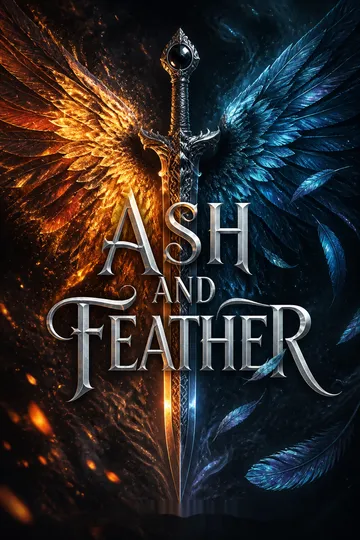
Ash and Feather treats identity as a political problem as much as a personal one. Karys is asked to choose among categories that others find convenient: elf or goddess, rebel or servant, sister or enemy. Her eventual task does not require her to erase those affiliations, but to make them answerable to one another. That distinction matters because the novel refuses a simple conversion narrative in which divine power makes her former loyalties foolish. Her knowledge of elven grievances remains necessary to any credible settlement, even as she rejects the rebellion's escalating violence.
The book also gives trauma practical form. Karys's nightmares ignite gardens, her need for patterns becomes a way through the ward, and Dravyn's memories physically obstruct his return from Altis. These effects are not decorative metaphors; they alter what the characters can do. Healing therefore arrives through repeated acts of agency and relationship, not through forgetting. Karys can love Savna while refusing her politics. Dravyn can love Karys without keeping her safely inside his territory. Fallon and Dravyn can begin repairing their bond without pretending their history has disappeared.
The romance is most meaningful when it changes how each character handles power. Dravyn's strength initially takes the form of rescue, but Karys insists on shared risk and equal standing. Their magic remains intertwined, yet the plot repeatedly tests whether intimacy can survive separateness: Karys hides Antaeum, undertakes the final trial alone, and leaves to serve a role beyond the Fire Court. The ending answers with a home that is portable rather than possessive. The world is not healed by love alone, nor by divine authority. It is changed when people stop treating survival as permission to dominate and begin building structures in which former enemies can live with power, memory, and difference still intact.
Review Summary
Ash and Feather received mixed reviews, with many praising the character development, world-building, and emotional depth. Readers appreciated the growth of Karys and Dravyn's relationship, as well as the found family trope. Some found the pacing slow and the ending unsatisfying, while others loved the unique conclusion. The book explores themes of identity, power, and sacrifice. Overall, fans of fantasy romance enjoyed the duology's conclusion, though some felt it didn't quite live up to the first book's expectations.
People Also Read







Characters
Karys
Reluctant fire-born mediatorAn elven woman whose survival has depended on sharp observation, practical skill, and an exacting memory. Karys is drawn to lists, maps, recipes, and patterns because they make chaos legible, but she can mistake control for safety. Her old loyalties and her growing bond with Dravyn pull her toward competing accounts of the war. She is neither naturally detached nor easily persuaded to abandon people she loves. Her defining struggle is learning to act without pretending that the past can be erased, and to distinguish care from obedience.
Dravyn
God of fire and refugeThe God of Fire, a former Galizur prince whose power is matched by a long memory of family loss and violence. Dravyn protects through action, often before he has admitted how frightened he is, and his instinct to carry every burden alone can become another form of distance. Karys unsettles that habit by insisting on partnership rather than rescue. His love is intense and sincere, but it exists alongside guilt for the destruction he has caused and estrangement from his brother. He must learn that loyalty can require listening as well as shielding.
Savna
Karys's formidable older sisterKarys's older sister is remembered as a protector, leader, and source of comfort, yet her political convictions are shaped by years of danger and loss. Savna is capable of rallying people and making difficult decisions, but her protective instincts can become controlling when she decides she knows what someone else needs. Her bond with Karys carries both genuine tenderness and the strain of years spent apart. She embodies the painful question of whether family love can endure when siblings no longer share the same understanding of justice.
Andrel
Charismatic rebel commanderA persuasive elven leader and former intimate confidant of Karys, Andrel knows how to make political ambition sound like personal loyalty. He understands the grievances that fuel the rebellion and uses them to gather support, but his charm is inseparable from manipulation and a readiness to treat people as instruments. His relationship with Karys is marked by familiarity, which makes his influence more unsettling than that of a stranger. He represents the point at which a cause of survival can become a justification for domination.
Cillian
Bomb-maker and old friendKarys's longtime friend and mentor, Cillian is a gifted maker of explosives whose steadiness once gave her a model for courage. He thinks strategically and tends to judge actions by their hoped-for collective outcome, a reasoning that can obscure the individuals made to pay for it. His friendship with Karys is genuine, but history does not prevent him from making choices she cannot accept. Through him, the story examines how loyalty to a threatened community can harden into complicity.
Valas
Teasing god of winterThe God of Winter is quick with a joke, fond of sleep, and more attentive than his relaxed manner suggests. He helps Karys practice her unstable powers and offers practical support without demanding that she become someone else. His humor gives the group relief from its accumulating fear, while his control of ice makes him a formidable ally. Valas's easy companionship shows that intimacy can be built through teasing, reliability, and the willingness to stay when danger stops being entertaining.
Mairu
Serpent goddess of controlThe Goddess of Control is a decisive strategist who can shape bodies, appearances, and circumstances with exceptional precision. She offers Karys disguise and training, but does not confuse help with ownership. Her clashes with the Goddess of Stars reveal a deeper commitment to change and human choice over fixed destiny. Mairu's directness can feel severe, yet it is tempered by practical care and loyalty to her court. She models control as a resource that can create room for another person's agency.
Zachar
Death god who sees patternsThe Death God governs more than endings, and his unsettling manner often conceals a broader view of change and renewal. He speaks to Karys in riddles and challenges her assumptions about identity, grief, and the self she believes she must leave behind. His support is difficult to separate from the orders of the higher powers he serves, which makes trust in him an ongoing question. Zachar unsettles her not by offering comfort, but by naming possibilities she would rather avoid.
Fallon
King of GalizurDravyn's older brother and the king of Galizur, Fallon has learned to carry authority as a defense against vulnerability. He is controlled, proud, and wary of divine interference, shaped by the demands of ruling a kingdom under threat. His estrangement from Dravyn reflects a shared history neither brother knows how to approach directly. Fallon is not simply stubborn; he believes that hesitation can cost his people their homes, and that responsibility often requires decisions made without emotional reassurance.
Malaphar
Moraki of knowledgeThe God of the Shade is one of the Moraki, the upper powers who shape the world's deeper order. Malaphar is observant, politically cautious, and willing to admit that divine decisions can produce harmful consequences. He evaluates Karys as both a person and a possible answer to a problem the gods helped create. His gift carries immense potential but also demands secrecy and sacrifice. Malaphar's quiet authority makes clear that divine guidance is never free of power or political purpose.
Rieta
Dravyn's steadfast caretakerA practical, warm presence who helped raise Dravyn in his mortal life and continues to care for him in the divine realm. Rieta sews, cooks, and notices what others are trying to hide. She understands that trauma does not vanish simply because a person has survived it, and she offers comfort without pretending to cure everything. Her matter-of-fact tenderness gives Karys a model of care that respects pain while still making room for ordinary routines.
Armaros
God of healingThe God of Healing is a solemn practitioner whose power is expressed through treatment, restraint, and careful attention to the body. His remedies help the group confront the material consequences of poison and battle rather than assuming divine status makes them invulnerable. Armaros is not the center of the political conflict, but his expertise gives the others time and capacity to face it. He represents healing as skilled work, not a magical erasure of what happened.
Halar
Storm god and hard skepticThe God of Storms is quick to anger and suspicious of Karys because of her former ties to the elven rebellion. His questions expose genuine risks in the divine court's judgment, even when his hostility makes cooperation difficult. Halar values forceful clarity and tends to treat distrust as prudence. He provides a counterweight to Dravyn's protectiveness and Karys's hope, reminding the court that good intentions cannot substitute for evidence.
Moth
Thieving little fire griffinDravyn's small, flame-tailed griffin is a shameless thief of pastries and shiny objects, as well as a loyal companion to Karys. Moth's comic appetite interrupts moments of grim reflection, but his attachment to the people around him is unmistakable. He responds to distress with physical closeness rather than explanation, making him a small, persistent reminder of comfort and routine amid political catastrophe.
Cepheid
Star goddess of fateThe Goddess of Stars reads patterns of fate and is reluctant to intervene in mortal affairs. Her confidence in destiny puts her at odds with Mairu, who champions the possibility of deliberate change. Cepheid's reserve reflects a belief that observation can be wiser than intervention, though her distance has consequences for those left to face danger.
Edea
Sky goddess of protectionThe Goddess of Sky is associated with protection and is widely revered by mortals. She is cautious about entering conflicts that could expose the divine courts to risk. Her presence makes the gap between worship and practical aid visible, especially when human communities face threats beyond their own strength.
Soraya
Storyteller of MistwildeA young elven storyteller who preserves the history of the Arbiter of Realms and the God of Fire for the people of Irithyl. Soraya's tales transform a turbulent political history into a shared cultural inheritance. Her presence in the epilogue suggests that memory can remain alive without remaining fixed, changing in the telling while preserving the choices that shaped a community.
Plot Devices
The shared fire bond
Connection across distanceDravyn gives Karys an unprecedented share of his fire magic to help her ascend, creating a powerful connection between them. Their proximity strengthens their abilities, and each can sometimes sense the other's emotions or perceptions across distance. This link helps Karys learn transportation by focusing on Dravyn as a destination, and it lets the pair find one another amid battle and separation. The bond is not simply romantic shorthand: it creates practical advantages while raising questions about dependence, consent, and whether shared power can remain distinct from either person's agency.
Anti-divine runes and poison
Weapons against the godsThe rebel elves develop runic barriers, poisons, and bombs that suppress divine abilities and can injure gods. The wards make Ederis difficult for divine beings to enter, while the poison weakens Dravyn and later threatens Karys and Valas. These tools transform the political conflict: the gods can no longer assume that their power will end a fight quickly, and the rebels gain leverage against a hierarchy that once seemed untouchable. The weapons also intensify the risk of escalation, since both sides can now cause losses they cannot easily reverse.
Tellesk and divine currents
Paths between realmsTellesk are shadow servants of the Moraki that observe thoughts, feelings, and events. Their traces let Karys locate a powerful source of the Shade God's magic and travel to Valla. More broadly, divine currents and inter-realm rivers allow gods and other beings to cross between worlds, but travel depends on concentration, magical markers, and the traveler's ability to surrender to the current. The mechanics turn internal states into plot action: Karys's fear can derail a journey, while a clear emotional destination can carry her where calculation cannot.
Antaeum
A weapon of renewalMalaphar gives Karys Antaeum, a dark dagger created by the Moraki to carry restorative and protective power. He says it can neutralize the rebels' anti-divine weapons and help establish a new source of elven power, but its strength will awaken only through a final trial. Karys must conceal it from the other gods and determine where its power can take root. The dagger appears to promise a technical solution to the conflict, yet its true demand is personal: it forces Karys to decide whether she will become the balance point the upper powers believe the world needs.
The Watching Pools
Warnings from the mortal realmThese magical pools correspond to regions of the mortal world and change in color and clarity as conditions there shift. Dravyn shows Karys that the water associated with Galizur has grown dark and turbulent, a visible warning of intensifying violence. The pools cannot tell the gods exactly what will happen, but they make the consequences of inaction difficult to ignore. Their changing surfaces give the divine court a way to register political danger while emphasizing the limits of its knowledge.
Flame and Sparrow Duology Series

About the Author






Download PDF
Download EPUB
.epub digital book format is ideal for reading ebooks on phones, tablets, and e-readers.








