

Plot Summary
The Sun Palace Cell
Weeks after killing High King Haben, Alaya is shackled in the Sun Palace, where Serpent-kind Sylven Adler urges her to use her power for the Sun king’s plans. Sun magic and torture leave her bloodied, but she refuses to fight back. Controlling another person’s magic would drain her life and leave her mind open to Sylven’s influence, which has already warped her memories.
He has saved her before, but his healing carries a price: his own controlling magic enters her thoughts. Now he wants her to help clear the Valinesian throne for him by killing Emrys, Haben’s son. Alaya endures another assault rather than let Sylven turn her power against the people she loves.
Alaya’s refusal is not passive surrender. She is choosing the form of resistance she can still control: withholding consent from both her captors and her own most dangerous power. That choice carries a bodily cost, but it protects the fragile boundary between her thoughts and Sylven’s influence. The prison also makes political violence intimate. A struggle over the empire’s throne is reduced to chains tightening on one woman’s limbs, revealing how rulers convert people into instruments before they call the result peace.
Eliana’s Hidden Door
Queen Eliana secretly tends Alaya’s wounds and explains why the Sun court wants her alive. Levant hopes to use Sylven and Alaya to weaken Emrys’s claim, then persuade the Council of Fifteen that a Sun ruler should take the empire’s highest throne. Alaya’s power could remove Emrys and make Sylven’s appointment seem necessary.
Eliana warns that staying in prison will not prevent war, and promises to arrange an escape if Alaya can endure one more day. Her plan depends on convincing Levant to halt the torture long enough for an accomplice to reach the cell. Alaya agrees, though she fears that unleashing her full magic might make her easier for Sylven to control.
Eliana’s intervention complicates the assumption that loyalty follows royal marriage. She shares the court’s access to power, but uses that access against her husband’s ambitions because she sees the human cost of his political logic. Alaya, meanwhile, cannot treat power as a simple weapon: its use may save her body while compromising her agency. The escape plan therefore asks for a difficult kind of courage, endurance without surrender and trust without certainty.
A Crown Under Siege
In Rykarra, Emrys tries to rebuild the court after Haben’s death while preparing for his coronation. Sade, his blunt ally, searches for Alaya and suspects Levant is hiding her. Emrys refuses to abandon the search, but he cannot leave the capital without endangering his unsettled rule. Instead he plans to send soldiers covertly into Idalia.
A message and a flame-shaped key also tempt him toward forbidden magic: he can take other clans’ abilities and use them to find Alaya or overpower her captors. Emrys knows Haben began down that road, yet fear for Alaya makes the shortcut feel persuasive. He hides the key, then keeps it close, unable to dismiss the possibility.
Emrys’s danger is not simply that he may imitate his father. He can recognize the moral slope and still imagine that urgency makes his first steps exceptional. The crown sharpens this conflict: every private choice has public consequences, while every delay might endanger Alaya. Sade’s practical search offers a counterweight to his temptation, but it cannot erase his helplessness. His growing authority does not produce control over events; it gives him more ways to rationalize what he might do in response.
Hounds Across Idalia
Hacari, a young Mist-kind woman working for Eliana, opens a portal through Alaya’s cell wall and guides her through the palace. Alaya breaks her enchanted restraints by controlling their Mountain-kind magic, then drinks a restorative potion and follows Hacari through the gardens.
When royal hunting beasts corner her in the city, she drives them away from a crowded tavern, killing some and forcing others to follow her rather than attack civilians. Sylven finds her near the river and turns the encounter into a fight.
He uses his magic to confuse her thoughts and forces her underwater, counting on her to exhaust herself parting the river. Alaya survives, but collapses. Sylven’s healing pulls her back from the brink while deepening his hold on her mind.
The escape refuses a clean division between heroism and survival. Alaya risks herself to divert the hounds from ordinary people, even though every use of her power carries a personal cost. Hacari’s portal offers freedom, but it cannot remove the political and magical systems pursuing her. Sylven’s rescue is especially coercive: care and domination arrive through the same touch, making dependence feel like safety. The scene lays bare why Alaya’s later memories and judgments cannot be treated as fully reliable.
A Reunion Turns Violent
Ten days later, Sade locates Alaya near Rykarra during Emrys’s coronation celebrations. Emrys slips out of the palace and meets her at a shrine; the two reunite and retreat to an inn. There, he asks about the burns on her arm and the darkened Serpent mark. Alaya insists Levant may want peace, but Emrys cannot trust that account while Sylven’s influence clouds her memories.
He confesses his love, and she hears him, though she cannot answer before the corruption in her mind takes over. She drugs his wine, takes up her sword, and wounds him as he tries to escape. Rue arrives, and Alaya regains herself only after Emrys is bleeding in the mud. At his urging, she flees before the palace party finds them.
The reunion offers intimacy without restoring trust. Emrys’s confession reaches Alaya, but love cannot by itself undo the magical control shaping her choices. Her attack is a tragedy of compromised agency, not a sudden revelation of her character. The scene also reverses the familiar rescue pattern: Emrys is physically vulnerable, while Alaya is dangerous and unable to recognize herself. Their bond survives, but it now has to include accountability for harm neither of them can simply wish away.
The Spinner’s Warning
Alaya escapes into the Mosaic Forest, fights Sade when her friend tries to stop her, and leaves on Rue’s back. At Vespera, she follows Queen Eliana’s note to the Spinner of Stars. He gives her a heart-shaped stone that holds a fragment of her mother Mairu’s divine essence; when Alaya absorbs it, her magic steadies.
The Spinner explains that Mairu scattered several pieces of her power to hide her divine nature and protect Alaya. Rue may carry another fragment, and Alaya suspects a further piece remains in Vanish.
The Spinner’s star stones also repeat the prophecy of death, betrayal, and destruction, then reveal that visions end after Alaya’s nineteenth birthday. With twelve days left, she chooses to seek the next fragment rather than accept the prophecy as a verdict.
The revelation reframes Alaya’s instability as partly inherited and partly engineered by protection that she never understood. Her mother’s scattered essence is both a practical means of stabilizing her and a record of a life spent hiding. Yet the prophecy threatens to turn that history into fatalism. Alaya’s decision to keep searching does not disprove the stars; it refuses to let prediction substitute for action. The Spinner offers possibility, not certainty, and the distinction matters.
Kaladrius Finds Her
Near Vespera, Kaladrius, Sylven’s father and a leader among the Serpent-kind, ambushes Alaya while others subdue Rue with poisoned arrows. Alaya fights through Kaladrius’s guards, using trees and their roots to overpower them, then watches Rue kill Kaladrius when he attacks again. The poison leaves the dragon unable to fly.
Sade arrives with a roan and helps Alaya escape as the Sun army pours into the mountains; Valinesian soldiers meet the pursuers, confirming that Emrys has sent forces to protect her. Sade recognizes the poison as related to petrifying plants from the Verlore Forest and prepares an antidote. Alaya and Sade shelter Rue in a cave, waiting while the blackened scales spread.
Kaladrius’s attack exposes conflict within Alaya’s own clan: he sees her as a threat to Serpent identity, not as a person whose choices deserve respect. Her increased strength lets her survive, but victory does not prevent Rue from being poisoned or the landscape from becoming a battlefield. Sade’s return offers a different kind of power, knowledge and practical care. The dragon’s vulnerability also tests Alaya’s deepest source of safety, forcing her to protect the creature who has helped protect her.
Vanish Gives Back
After Sade’s antidote begins to work and Rue recovers enough to fly, Alaya returns to Vanish. Madelaine, the orphanage keeper Alaya calls Ma, reveals that she knew Alaya was Serpent-kind and had helped hide her since childhood. Mairu entrusted Ma with a fragment of divine power and instructions to keep Alaya close.
When Ma embraces Alaya, the fragment transfers into Alaya’s mark, bringing a calm she has rarely known. Alaya also sees Gavin, the child she once saved, but leaves him asleep rather than forcing a reunion. Sade, who has her own painful history with the village, visits Ma in turn. Alaya decides the remaining fragment is likely in her mother’s bracelet at the Sun Palace, then turns back toward Emrys and Rykarra.
Vanish is not merely a place Alaya left behind. It is the first community that protected her without demanding that she become useful in return. Ma’s confession alters the meaning of Alaya’s childhood: secrecy was not always rejection, and protection was sometimes quiet and deliberate. The reunion does not erase grief or repair every relationship, especially with Gavin and Sade, but it gives Alaya a more stable account of who she has been. Home becomes a source of strength rather than a destination for retreat.
The Rook Crown Rises
Alaya and Sade return to Rykarra just as Emrys is formally crowned. In front of the court, Alaya embraces him, and he orders the guards to release her. Isoni escorts Alaya to a guest room, where she challenges the older advisor’s hostility and learns how personally she fears Emrys’s early accession.
Before the coronation celebrations, Emrys and Alaya admit their love and exchange what each has hidden: Alaya describes the prophecy and the fragments, while Emrys acknowledges he has been acquiring other clans’ magic.
When Alaya insists on returning to Idalia for the bracelet, Emrys refuses to let her go alone. He arranges a summit with Levant at the Gate of the Sun, and they set out with soldiers, despite recognizing the meeting may be a trap.
The coronation places private love inside public power, where neither can be protected from the other’s consequences. Alaya’s return is a refusal to remain hidden, but her acceptance of the court is not immediate or effortless. Emrys’s honesty repairs part of their trust while revealing a genuine moral threat: he has adopted a method that resembles Haben’s. Their decision to travel together is both intimate and political. They are choosing partnership, but the choice does not make their disagreements disappear.
The Summit Becomes a Trap
On the road south, Emrys secretly practices the Air-kind magic he has taken, while Alaya remains wary of his secrecy. A Sand-kind spell suddenly immobilizes the camp, leaving Emrys frozen as he reaches for Alaya. She wakes to find Sylven waiting among the motionless soldiers. He reveals that he has a fragment of Mairu’s power, taken when he helped Alaya and her mother escape years earlier, and that he has stolen the fragment from her bracelet.
He has been tracking Alaya’s search and intends to take every piece she has gathered. Alaya locates a hidden Sand-kind and kills him, breaking part of the spell and freeing some soldiers. As the camp erupts into combat, she confronts Sylven, who turns their meeting at the Gate into open war.
Sylven’s revelation transforms the fragments from a private healing quest into a contest over who can possess Alaya’s inheritance. He has made protection, kinship, and accumulated power serve his own claim. Emrys’s secret Air magic compounds Alaya’s distrust, even though it may prove useful. The attack also literalizes the danger of political blindness: an entire camp is rendered helpless before it understands who has acted against it. Alaya’s discovery of the hidden Sand-kind restores agency, but not safety.
The Gate Breaks Open
At the Gate of the Sun, Alaya and Emrys’s forces clash with Levant’s allies while Sand-kind magic and Sylven’s control threaten to overwhelm them. Alaya fights through the camp, kills several opponents, and briefly draws blood from Sylven, revealing the life-force she could not previously sense.
Her power surges beyond her control, and she kills Serpent-kind opponents, including Mira, as she pursues him. When an avalanche threatens to bury them, Emrys reaches Alaya and uses Air magic to transport them away.
Alaya is furious that he concealed the stolen power, but he explains that another army is advancing on Rykarra. They leave the battle behind on Rue’s back, forced to prioritize the capital and the people who cannot escape its coming siege.
The battle makes Alaya’s strength both indispensable and frightening. She can wound Sylven, but the surge that follows erases distinctions between enemies, allies, and her own clan. Emrys’s Air magic saves them while confirming that his secrecy has concrete costs for their trust. Their retreat is not a victory at the Gate; it is an ethical and strategic choice to protect a threatened city. The scene asks whether power counts as control when its wielder can no longer choose where it lands.
The Fields of Etherin
Emrys and Alaya reach Rykarra as Levant’s much larger army bears down on the city. Emrys rallies Rook soldiers, fire-mages, and returning Serpent-kind; Lady Korva brings part of the legendary Sword of Winter.
The enemy conceals its numbers behind Sky-kind shields and Mimic-kind illusions, but Alaya reveals and breaks the shields so the defenders can respond. The battle spills across the Etherin Fields. Rue is struck by Storm magic and crashes, while Alaya fights beside Emrys and Sade.
A crossbow bolt hits Sade in the throat. Korva’s Ice soldiers keep her body alive long enough for healers to reach her, and Alaya turns back to battle believing her friend may die. Sylven arrives amid the fighting, ready to claim Alaya and the power she carries.
The defense of Rykarra depends on cooperation among groups that have been taught to distrust one another. Korva’s Ice soldiers, Serpent-kind fighters, and Rook forces make a coalition visible before it is secure. Alaya’s ability to expose the hidden enemy turns perception into a military resource, while Sade’s injury reveals the personal cost beneath strategic victories. The battle does not make unity sentimental or easy; it makes it necessary. Every alliance here is tested under immediate pressure.
The Last Fragment Burns
Alaya meets Sylven in the battle’s wreckage, but he uses their magical bond to choke her and wounds her beneath the armor. She cuts his neck with a small knife, exposing the golden life-force she can now grasp. When Sylven’s stolen sword drives deeper, Alaya hurls earth into his chest and begins drawing out the final fragments of her mother’s power.
Emrys arrives and burns through Sylven’s armor with his sword, giving Alaya the opening to pull the essence from him. She absorbs it despite the risk that it may kill her, then collapses from her wound. Emrys catches her and calls for a healer. As the field darkens, he presses his hand to her, and a cold pulse reaches her fading senses.
The climax resolves the fragment quest through a dangerous convergence of inheritance, violence, and chosen trust. Alaya does not simply recover what Sylven stole; she risks her life to claim the power he has gathered and used to dominate her. Emrys’s intervention matters because it creates the opening, not because he replaces her agency. Yet the victory has no clean triumphal shape: Alaya’s body gives way immediately, and the people she loves remain exposed to the battle’s consequences.
The Stars Return
Alaya wakes beneath a sky of stars, her wound treated and Emrys beside her. Rather than retreat with the defenders, she walks toward the remaining enemy army and uses her now-stable power to force its soldiers to stop and withdraw. She does not drain their lives; she controls their movement until fear and confusion turn them back.
The surviving defenders hail her alongside Emrys, but the battlefield remains full of the dead and wounded. Alaya cannot mistake the outcome for a painless victory. She has stopped the immediate assault, yet the sight of blood keeps the cost before her. With Sylven dead and Levant’s forces driven off, the remaining work is not simply to rule, but to keep the peace from collapsing again.
Alaya’s final act distinguishes mastery from domination. Earlier, her power often ended in suffocation, destruction, or loss of self; now she uses it to interrupt violence without reproducing its most absolute form. That restraint is not softness. It is a deliberate exercise of control over both the enemy and her own impulse to destroy. The cheering crowd offers recognition, but the bodies prevent victory from becoming moral absolution. The novel’s resolution therefore turns power into an ongoing responsibility rather than a single decisive achievement.
Epilogue
Two weeks later, Alaya returns from Idalia, where Levant is now held in the Sun Palace and Queen Eliana has taken responsibility for the southern crown. The fighting between the kingdoms has stopped for now. Sade is alive but recovering from her wounds, and Rue remains with Alaya, though their magical communication has faded.
On the library tower, Emrys gives Alaya a silver crown joined from dragon and bird wings, with three diamonds for the kingdoms. She accepts his offer to become his queen. They dance beneath the night sky, no longer asking it to tell them what comes next.
The epilogue resolves the immediate political crisis while refusing to pretend that peace erases what happened. Levant’s imprisonment and Eliana’s new role stop the current fighting, but Alaya still carries the memory of its dead, and Sade’s slow recovery keeps the cost present. The crown’s joined bird and dragon forms make partnership a public commitment without making it a cure for difference. Most tellingly, Alaya and Emrys dance without consulting the stars. Their future is not guaranteed; it is something they will have to make and maintain.
Analysis
The novel makes political succession a bodily problem. Alaya’s magic can alter who holds power, but using it risks draining her life or surrendering her thoughts to Sylven. Emrys inherits a throne that appears to demand strength, and the stolen magic he acquires offers the kind of immediate security his father once pursued. Their parallel temptations are not identical: Alaya fears losing herself through a power she already carries, while Emrys chooses to take power from others. Both confront the same political fantasy, that enough force can end vulnerability.
The story counters that fantasy through relationships built on imperfect forms of care. Eliana risks her position to free Alaya. Ma protects her without demanding explanation. Sade helps even when anger and grief remain unresolved. Rue gives Alaya a refuge that is neither royal nor human. These bonds do not erase conflict, but they offer alternatives to possession. Sylven’s healing is the dark inverse: assistance becomes a means of shaping another person’s will.
The scattered fragments of Mairu’s essence make inheritance literal. Alaya’s identity is not a stable, self-contained inheritance; it has been distributed among people and objects because her mother tried to protect her. Gathering it can give Alaya greater control, but it also draws Sylven’s attention and increases the stakes of her survival. Wholeness is therefore not a return to an untouched self. It is a new capacity assembled through relationships, memory, and risk.
The prophecy establishes uncertainty rather than destiny. The stars can name a catastrophe, but they cannot see what follows it. Alaya’s final use of power matters because she forces the invading army to retreat without killing it, choosing restraint when destruction would be easier. The ending does not claim that one victory has cured the empire. Instead, it presents peace as recurring labor: a political practice that must be protected against the appetites of rulers and the seductive belief that violence, once successful, will be the last violence.
Review Summary
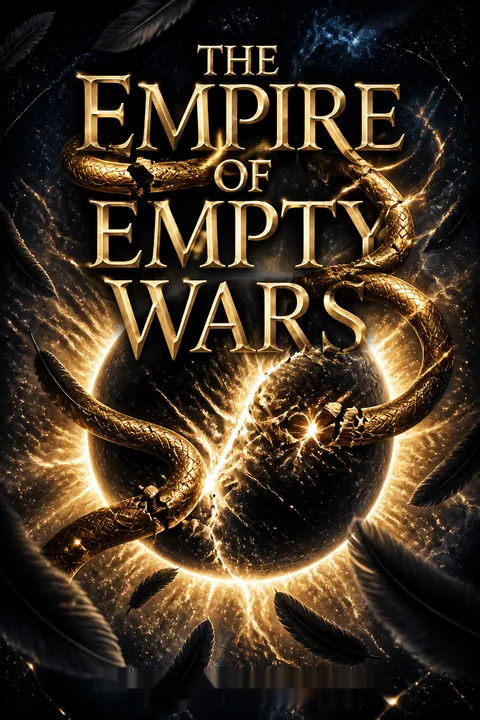
The Empire of Empty Wars concludes the Serpents and Kings trilogy with high praise from readers. They commend the engaging plot, well-developed characters, and satisfying ending. Fans appreciate the epic battles, complex world-building, and the growth of protagonists Alaya and Emrys. While some found parts slow-paced, most readers were captivated by the story's twists and turns. The book's themes of love, betrayal, and redemption resonated with many. Overall, it's considered a strong finale that ties up loose ends and leaves readers eager for more from this universe.
People Also Read

Characters
Alaya
The divided DragonAlaya is a young woman marked by the Serpent clan and shaped by a childhood spent hiding her identity. Her power lets her control other magic, but intense use can drain her and make her vulnerable to outside influence. She is fiercely protective, quick to act when others are threatened, and suspicious of help that comes with hidden conditions. Her bond with Sade, her complicated love for Emrys, and her connection to Rue pull her toward people even as fear urges her to flee. Alaya’s central struggle is not simply becoming stronger; it is learning how to use strength without losing her judgment or reducing others to instruments.
Emrys
The untested Rook kingEmrys inherits the highest throne after his father’s death and must establish authority in a palace still shaped by Haben’s rule. Thoughtful, politically inexperienced, and fiercely attached to Alaya, he wants to govern differently from his father but fears that restraint will leave the people he loves unprotected. This anxiety tempts him toward stolen magic, a method he knows is dangerous. Emrys often uses wit to deflect scrutiny and duty to postpone difficult emotional choices. His development turns on whether he can accept limits, speak honestly, and lead through alliances rather than treating power as the only reliable shield.
Sade
The stubborn archerSade is Alaya’s lifelong friend, a skilled archer with a blunt tongue and a talent for finding trouble when someone she loves is in danger. She carries grief and guilt from the past, including the death of Kian, but does not let those burdens make her passive. Her instinct is to act first, argue second, and return for Alaya even when told not to. Beneath her jokes is a sharp practical intelligence that becomes increasingly important as Alaya’s power grows harder to manage. Sade’s loyalty is neither blind nor gentle; she challenges Alaya, protects her, and insists that friendship must survive painful truths.
Sylven Adler
The controlling SerpentSylven is a powerful Serpent-kind whose healing can restore Alaya while entangling his magic with her thoughts. He wants access to her extraordinary abilities and sees political rule as a means to remake an empire he believes has wronged his clan. Patient and calculating, he rarely needs open force when persuasion, dependence, or altered memory can serve him. His apparent care for Alaya is inseparable from his desire to shape her choices. Sylven represents a particularly intimate kind of coercion: he does not merely want obedience, but seeks to make his preferred plans feel as though they originated in the person he controls.
Rue
The veiled dragonRue is a large dragon who can camouflage herself and share thoughts and vision with Alaya. Her communication is sparse, often dryly judgmental, but her actions reveal steadfast attachment: she carries Alaya, protects her, and offers a rare refuge from intrusive magic. Rue is not a mount or a weapon under simple command. She has her own preferences, limits, and stubbornness, and Alaya must learn to treat their connection as a relationship rather than a resource. The dragon’s presence embodies a form of protection that does not depend on rank, political bargains, or spoken assurances.
Queen Eliana
The secretive Sun queenEliana is Levant’s wife, a royal figure whose grief over the death of her daughter has made her an object of rumor. In private, she is observant, compassionate, and willing to risk her position to protect Alaya. Her knowledge of court politics allows her to see how Levant and Sylven plan to turn Alaya’s power into a route to the throne. Eliana does not confuse affection with helplessness: she arranges an escape and relies on trusted allies when direct action would expose her. Her choices reveal the quiet influence available to someone whom the public assumes is broken.
King Levant
The ambitious Sun rulerLevant rules Lumeria beside Eliana and wants greater control over the Sundolian Empire. He sees the unstable transfer of power after Haben’s death as an opening to challenge Rook rule, and he relies on Sylven’s influence over Alaya as part of that political design. Levant is not simply reckless; he couches ambition in arguments about stability and succession. His impatience and fear of Alaya’s potential make him willing to imprison her while treating her as an asset. He embodies the way rulers can describe domination as a necessary response to disorder.
Lady Isoni
The wary royal adviserIsoni is a Bone-kind adviser who served Emrys’s mother and remains close to the young king. Severe, politically alert, and protective to the point of interference, she distrusts Alaya and fears that Emrys’s attachment will endanger his rule. Her hostility grows from more than prejudice: she has watched the palace survive a tyrant and does not want to lose another member of the royal family. Isoni uses blunt counsel as a form of care, though she often makes it difficult to recognize as such. She represents the burden of protecting a ruler while accepting that he must eventually make his own choices.
Lady Korva
The Ice-born strategistKorva is the daughter of Lord Marius and an emerging leader of the Nyres province. Raised among Ice-kind warriors, she is direct, politically perceptive, and impatient with courtly maneuvering that wastes time. Her concern for her province’s influence can make her seem self-interested, but she understands the practical value of military alliances and speaks plainly about what the crisis demands. Korva treats Emrys as a ruler to assess rather than a romantic prize. Her capacity to act decisively gives her a distinct place in a court where many people prefer to debate before committing.
Orion
Alaya’s estranged fatherOrion is Alaya’s father and a Serpent-kind leader connected to the exiled clan. His relationship with Alaya is strained by years of separation and by the history that has shaped them differently. He approaches Emrys’s court cautiously, uncertain whether reconciliation between their people can last, yet willing to consider cooperation when the empire faces a larger danger. Orion’s reserve makes him difficult for Alaya to read, but his presence forces her to confront the difference between shared blood and earned family. He carries the political memory of Serpent-kind persecution into every proposed alliance.
Madelaine Amani
The orphanage keeperKnown to Alaya as Ma, Madelaine raised children in Vanish with stern affection, busy hands, and a practical sense of care. She believes people can be cruel toward what they do not understand, so she protects without demanding that Alaya explain herself. Her habit of feeding, watching, and giving advice offers a grounded counterpoint to the empire’s grand claims about destiny and power. Ma’s own grief is present but rarely performed; she lets routine carry emotion when words fail. For Alaya, she represents an early experience of safety and a home that remains available despite long absence.
The Spinner of Stars
The uncertain star readerThe Spinner is a Star-kind seer who reads patterns through stones and offers Alaya a fragment of her mother’s power. His manner is eccentric and his insight incomplete; he can identify the approaching darkness in prophecy but cannot explain what lies beyond it. He treats uncertainty as something to live with rather than a failure to be concealed. His guidance gives Alaya a practical next step while warning her against mistaking predictions for simple instructions. He stands at the intersection of knowledge and its limits, where even supernatural vision cannot settle what people must choose.
Hacari
The Mist-kind guideHacari is a young Mist-kind woman with unusual strength in her clan’s path-opening magic. Sent by Eliana, she risks herself to get Alaya out of the Sun Palace and gives her practical directions for reaching safety. Hacari is confident, quick-moving, and frank about the limits of her abilities. Her brief alliance shows how people outside the ruling clans can change the course of events through skill and courage.
Kaladrius
The Serpent clan elderKaladrius is Sylven’s father and a leader among the Serpent-kind. He believes Alaya’s power is a dangerous corruption of their goddess’s legacy and is driven by a need to repair what he sees as his clan’s past failures. His conviction makes him formidable but narrows his view of Alaya into a symbol rather than a person. He represents a conservative response to persecution: the belief that safety can be won by eliminating whatever unsettles the existing order.
Captain Grim Helder
The king’s steady captainHelder is a Rook-kind soldier who has protected Emrys for years and becomes head of the young king’s guard. Practical and disciplined, he distrusts rash diplomatic decisions and understands how vulnerable the new reign remains. He speaks plainly about military risks but continues to serve even when Emrys ignores his advice. Helder’s loyalty is rooted in duty and long familiarity, not flattery, making him one of the few people willing to warn the king when his personal hopes threaten the wider defense.
Mira
The scarred Serpent allyMira is an older Serpent-kind woman whose experiences make her wary of Rook power and receptive to Sylven’s account of the coming conflict. She carries the marks of violence on her body and speaks from a history Alaya does not fully share. Her presence shows how common fear and injury can make a coercive political story feel persuasive, even to people who might otherwise resist it.
Plot Devices
The Serpent mark
Power with a bodily costAlaya’s mark identifies her as Serpent-kind and enables her to seize and redirect the magic carried by others. The strongest uses can drain her life and leave her mind vulnerable, so each act of control carries a risk beyond immediate exhaustion. Sylven’s magic can exploit that vulnerability, while the fragments of Mairu’s essence gradually stabilize her. The mark therefore functions both as a source of capability and as a record of Alaya’s changing relationship to power. It is never just a badge of identity: it shapes how others fear, pursue, and attempt to use her.
Mairu’s scattered essence
A map toward wholenessAlaya’s mother, a divine shade of Mairu, divided her remaining power among objects, people, and possibly creatures to hide herself and protect her daughter. The Spinner helps Alaya recognize and absorb one fragment, and Ma carries another. Rue is associated with a further protective fragment, while Alaya’s mother’s bracelet becomes a contested source of power. The fragments connect Alaya’s personal search for stability to the wider political struggle, because Sylven has also acquired pieces and intends to take the rest. Their collection provides a concrete quest while raising questions about inheritance, consent, and whether wholeness can be obtained without danger.
The Star prophecy
A deadline without certaintyStar-kind visions associate Alaya with death, betrayal, and destruction, then fail to see beyond the period surrounding her nineteenth birthday. Sylven uses that forecast to frighten and manipulate her; Alaya must decide whether it predicts a fixed fate or describes a crisis that can still be shaped. The prophecy creates urgency for the characters and a political pretext for those who want Alaya dead. Its most important function is not to reveal the ending, but to establish a limit on what even supernatural knowledge can provide. The characters must act without knowing whether their efforts will lead to renewal or ruin.
Sylven’s healing bond
Care turned into controlWhen Alaya pushes her power too far, Sylven can restore her by sharing his Serpent-kind energy. His magic also influences her thoughts, however, making her unsure which memories and decisions are truly her own. The bond gives Sylven a route to manipulate her and allows him to sense changes in her power. It also complicates Alaya’s ability to reject him, because the same person who harms her can appear to be the one who saves her. The device links intimate dependence to political coercion and makes emotional trust a question of agency, not merely affection.
Emrys’s stolen magic
A crown tests its heirEmrys acquires other clans’ magic through rituals that transfer its essence into his body. Fire, Air, and Storm abilities give him ways to fight and travel, but the process risks changing him and recalls the methods Haben used. His motive begins in fear for Alaya and expands into the desire to defend the capital and the empire. Each new power thus creates an immediate advantage and a moral question: whether good intentions can distinguish his choices from his father’s abuses. The magic also becomes a secret between Emrys and Alaya, so its tactical usefulness cannot undo the damage secrecy causes to their trust.
The Serpents and Kings Trilogy Series
About the Author
Download PDF
Download EPUB
.epub digital book format is ideal for reading ebooks on phones, tablets, and e-readers.








