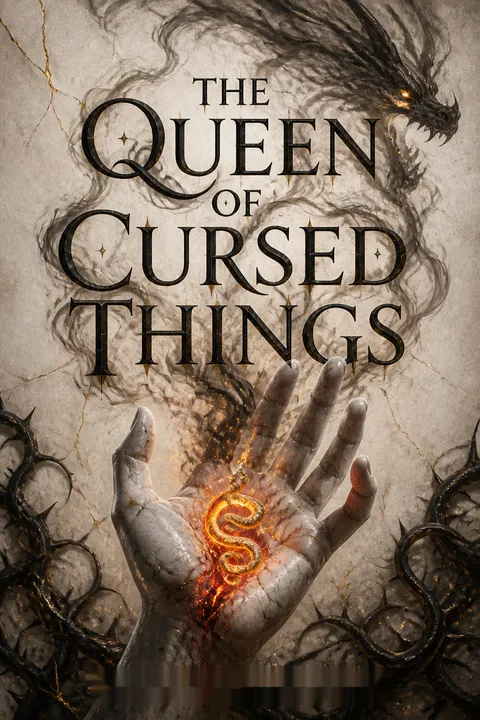


Plot Summary
Prologue
Before Alaya is old enough to remember, her mother watches a council decide that the child must die at dawn. The girl’s birth is said to threaten an entire world, and her mother is ordered to return alone to the empire.
Instead, she takes up a sword, wraps her daughter against her chest, and fights their way out of the sanctuary. As they flee, the land trembles and burns around the child, hinting that the danger the council fears is real, even if its judgment is cruel.
The opening makes the novel’s central conflict intimate before it becomes political: a community claims to protect the world by sacrificing a child, while a mother refuses to let prophecy overrule love. The child’s destructive effect on the landscape keeps the mother’s choice from being an easy rebuttal of the council. Their fear may have evidence behind it, but evidence does not make a child responsible for what she is. The prologue establishes the emotional pressure Alaya later inherits: she must decide whether accepting her power means accepting other people’s definition of her as a threat.
The Lightning Bird Mask
On a night of High King Haben’s soul collections, Alaya uses a mask, a blood-scented decoy, and stolen horses to get the Vell family out of Vanish before the Collectors can seize them. When she doubles back to help her rebel companions, a Collector nearly kills her; Sade’s poisoned darts and the others’ attack bring it down.
At the village fire, frightened residents blame the raids on a serpent hidden among them. Alaya returns to her room and uncovers the serpent mark she has kept concealed since childhood. The next day, the king’s soldiers arrive to take children from the orphanage. Alaya tries to protect them, her mark is exposed, and the captain orders her taken to the capital.
Alaya’s rebellion begins as practical care: she risks herself to move a family beyond the king’s reach, not to claim power or lead a revolution. The village’s fear then converts her private inheritance into public evidence, abruptly changing her from protector to alleged danger. Her decision to reveal the mark under pressure is both an act of honesty and a loss of control over who gets to interpret her. The opening therefore binds heroism to exposure. Every rescue makes Alaya more visible, while the people she protects may still fear what she is.
Three Beads Until Sunset
In Rykarra, Alaya and Sade are dressed as honored guests, though the three red beads on their earrings mark Alaya’s remaining days before a public sacrifice. Queen Zahra cuts Alaya’s face during the ceremony, and Haben’s black fire erases her blood from the royal platform. Among the palace paintings, Alaya meets the crown prince, Emrys, who speaks her village’s language and recognizes that the court means to kill her.
Later, Lady Isoni, a powerful councilwoman, reveals that Haben’s collections steal the victims’ abilities and extend his life. She says the serpent fire-soul, hidden in Amara, may be the only power capable of ending him. Isoni demands Alaya’s cooperation and threatens Vanish if she refuses.
The court’s pageantry makes violence look like public service: Alaya is adorned, displayed, and marked for death while the king performs legitimacy for his subjects. Emrys’s willingness to explain the ritual does not yet make him trustworthy, but his use of Alaya’s language creates a rare opening for understanding. Isoni then turns that opening into a political bargain, offering a route to resist the king while threatening the village Alaya wants to protect. The section shows how coercion can wear several faces at once: ceremony, rescue, and alliance may all conceal unequal power.
Impendium Opens the Cell
Sade and her father, Auric, are imprisoned and tortured for information about the rebels. Sade uses a poisonous berry to imitate death, allowing palace allies to remove her, though Auric remains behind. At a royal banquet, Emrys deliberately tells Alaya that Sade has died, provoking her into attacking him.
He invokes an old law that gives him sole authority over her punishment, then uses that authority to get her out of her cell. When guards bar their way, hidden archers kill them. Emrys explains that Sade’s death was staged and leads Alaya to the house where she is recovering. The escape leaves Alaya with her closest friend again, but also with evidence that the king’s loyalists have killed many of the other captured rebels.
Emrys’s rescue depends on making Alaya look dangerous in public. His provocation exploits the court’s expectations and Alaya’s fear for Sade, converting her anger into legal cover. Sade’s escape likewise depends on the body becoming a convincing performance of death. In a regime that treats people as symbols and resources, survival requires manipulating what power believes it sees. The reunion is not uncomplicated relief: it brings Alaya face to face with the cost of their capture and the uncertain fate of their wider circle, widening her responsibility beyond the two people she can reach.
Rykarra Splits Open
With the city’s soldiers closing in, Alaya and Sade race toward the bridge out of Rykarra. An arrow brings Alaya down, and the pursuing riders surround her. The mark on her palm responds to the city’s buried curses: the ground breaks into glowing ravines, a vast dragon-shaped shadow rises, and the road collapses beneath the attackers.
Alaya cannot control the destruction or tell who has been caught in it. Emrys finds her afterward, kneeling amid the wreckage while frightened townspeople throw salt at her. Rather than retreat, he offers his allegiance and helps her up. Alaya leaves the capital alive, but the power that saved her has made her appear to confirm the empire’s worst stories about serpent-kind.
The eruption is a victory measured in escape, but its scale makes that victory morally unstable. Alaya’s power answers immediate danger without distinguishing between aggressors, bystanders, or the city itself. The result gives her a new kind of leverage, fear, while making her less certain that she can use it without harming people. Emrys’s allegiance matters because it is offered after the destruction, not in ignorance of it. His choice complicates the empire’s simple division between Rook and serpent, even as Alaya struggles to see herself as anything but a danger.
Vanish Turns Against Her
Alaya returns to Vanish for her sword and her father’s hidden book. Kian has been attacked by investigators seeking evidence about her, and his injuries make the danger to everyone around her plain. When Alaya tells him she intends to find the fire-soul and kill Haben, Kian chooses to leave with her rather than let her go alone.
Before they can depart, former rebels led by Kivos try to hand her over for the king’s reward. Sade stands beside Alaya, and the serpent mark frightens the crowd long enough for both women to escape. Kian meets them outside the village. The group retrieves Alaya’s belongings, including a journal written in an unknown script, and sets out toward the southern edge of the empire.
Vanish’s rejection reverses the meaning of home. The village once sheltered Alaya by letting her blend among outcasts; now its people treat her concealment as a threat to their own survival. Kian’s choice is especially consequential because he has been harmed for his connection to her, yet he refuses to turn that harm into abandonment. Sade’s continued loyalty gives Alaya enough confidence to leave, but their escape is secured by the very mark that has isolated her. The scene exposes the limits of belonging when safety depends on denying part of oneself.
Sirin Over the Mountains
As the four travelers cross the Sinhara Mountains, the king’s sirin spies find their camp. Sade’s darts weaken the first creature, and Alaya, Sade, and Emrys kill it and two more in a rain-soaked fight. A fourth attacks Sade, and Alaya is nearly strangled before the group brings it down. Emrys is badly cut in the battle, forcing them to shelter while Kian treats his wound.
A petrified leaf from Alaya’s father’s box gives them a better lead than the competing legends: it likely came from the cursed Verlore Forest. They continue southeast through the drought-struck Nephele Dustfields, where heat exhausts them, then enter the shifting woods in search of the place where the serpent sanctuary may be hidden.
The mountain fight establishes that Alaya’s journey is not a solitary test of magical strength. Sade’s skill, Emrys’s willingness to fight, and Kian’s medical knowledge keep the group alive, while each person’s vulnerability changes what the others must do. The petrified leaf shifts their route from inherited rumor toward material evidence. Yet the path forward remains dangerous and uncertain: the group must read clues left by a father Alaya barely knows while crossing land damaged by older conflicts. Knowledge here is useful, but never cleanly separated from risk.
The Varghest’s Stillness
In Verlore, a varghest hunts the group and petrifies whatever its starry fog touches. Alaya first tries to fight it with a sword, then realizes she can command the creature to hold still long enough for Sade to strike it. When it dies, the forest returns to life and reveals a path to an invisible barrier.
Alaya opens it, bringing her companions into Amara, the hidden serpent sanctuary. There, an armed group seizes them, and its leader claims that Alaya’s father’s journal belongs to him. He is the father she has believed dead since childhood. The discovery brings her to the family she has been seeking, but he has arrived as a captor, not a welcoming parent.
The varghest encounter marks a change in Alaya’s relationship to power: she still faces danger, but she begins to direct rather than merely survive it. Her command works through attention and restraint, not simply force, and the restored forest becomes a visible consequence of that shift. The reunion with her father immediately complicates the reward. Amara is both sanctuary and confinement, and the person who might explain Alaya’s past is aligned with the people who once wanted her dead. Finding home does not resolve the question of belonging; it makes the question harder to avoid.
The Daughter Condemned Again
Alaya’s father says her mother left Amara without telling him and insists that the fire-soul should remain asleep. He confirms that the council which separated her parents still governs the sanctuary. Sylven Adler, the oracle’s son, explains that the fire-soul is a piece of the goddess Mairu’s power, while the surrounding curses are failed attempts to control it.
Before the council, the oracle reveals that Alaya’s mother was Mairu in human form and that Alaya inherited part of her power. He calls Alaya unstable and declares her guilty before hearing her defense. The council sentences her to death. Sylven volunteers to take her into custody, while Alaya’s father offers no public challenge to the verdict.
The revelation enlarges Alaya’s identity but does not grant her belonging or authority. The council interprets her inherited power as proof of guilt, turning origin into a sentence before she can choose what to do with it. Her father’s guardedness adds a quieter wound: explanation arrives without the recognition she hoped for. Sylven is more ambiguous, offering apparent protection while treating Alaya as a useful instrument. The section asks whether knowing what one is can clarify a moral choice when every institution insists that birth has already decided the outcome.
Fire-Soul Under the Dragon
Sade and Kian help Alaya escape her cell by poisoning a guard, bending the bars with her new ability, and taking his keys. Sylven intercepts them, returns their weapons, and agrees to help locate Emrys. Alaya’s father recognizes her in disguise and quietly lets her pass, returning a bracelet that belonged to her mother.
She finds Emrys quarantined in a hut and frees him. In Mairu’s temple, Kian takes the black crystal from its column while Alaya fights the guardian dragon and briefly controls it. Sade carries the fire-soul through the barrier. As armed factions converge, Alaya’s group escapes Amara, leaving her father behind and the sanctuary in violence.
The escape gathers the novel’s competing forms of power into one sequence: poison, force, secrecy, inherited magic, and the small mercies of a parent who cannot openly undo the past. Alaya chooses her companions over the council’s verdict, but taking the fire-soul does not settle what they should do with it. The guardian dragon can be commanded, yet its intelligence unsettles the idea that power is simply a tool. The sanctuary’s violence also prevents a clean homecoming. Alaya carries the prize beyond the barrier, but leaves behind the father and community she hoped to reclaim.
Sade’s Arrow Finds Kian
After escaping Amara, the travelers make camp in the forest. Sade turns on Alaya, shooting her with poison, then hits Kian in the heart when he moves between them. Sade had believed Alaya’s serpent blood might let her survive the poison and had hoped to save her father by cooperating with Isoni. Kian collapses, and Alaya is left beside him, barely conscious.
Sylven appears and offers the help she needs. In the interlude, Alaya’s father sends a warning to the royal palace: his daughter has broken the barrier and is coming with allies. Four weeks later, the capital is under attack, Haben is dead, Zahra is missing, and Emrys faces a city collapsing around him.
Sade’s betrayal grows from a distorted attempt to save two people, not from a simple rejection of Alaya. That motive cannot undo the consequence: Kian takes the arrow meant for his friend, and Alaya’s circle fractures at its most vulnerable moment. Sylven’s arrival makes survival another bargain, while the father’s warning carries the private disaster into the wider political crisis. The four-week leap refuses immediate consolation. Alaya’s grief does not pause the war, and the capital’s collapse shows how quickly intimate choices are absorbed into the machinery of public power.
The Palace Changes Hands
Emrys watches serpent forces attack Rykarra after Haben’s death and Queen Zahra’s disappearance. Elsewhere, Isoni reveals that Zahra used stolen power to kill the king, then died from the backlash; Isoni blames Alaya rather than the queen’s ambition or her own complicity. When Alaya reaches the palace, she confronts Emrys and accuses him of abandoning her.
He explains that Isoni had ordered him to retrieve the fire-soul and leave Alaya behind, and that he thought Alaya dead when he returned to the capital. He says Sade was manipulated, but Alaya will not accept his account as enough. She leaves him and continues searching the besieged city for her friend.
The revelation of Zahra’s role dismantles the court’s public story of a helpless queen and a devoted king. Both rulers sought power through stolen souls, though their motives and methods differed, and Isoni helped sustain the deception. Emrys inherits not a stable throne but the consequences of his parents’ secret war. His confession explains his absence without repairing the abandonment Alaya experienced. Their confrontation shows that political context can make a betrayal intelligible without making its emotional cost disappear.
Rykarra’s Dragon Unleashed
Isoni leads an army against Alaya and blames her for both royal deaths. During the battle, Isoni poisons Alaya with bone magic and stabs her, but Alaya summons the dragon and directs it to kill Isoni. She then orders the dragon to destroy the palace. Sade, released from prison by Emrys, finds Alaya among the ruins and explains that Isoni promised her a chance to save Auric; Sade intended the first poisoned arrow to disable Alaya, not kill her.
Alaya cannot erase Kian’s death, but she listens. When Sylven urges the serpent faction to claim the throne, Alaya overpowers their raised weapons and makes them withdraw. Emrys calls for a cease-fire, and Alaya chooses not to turn the ruin into another massacre.
The climax gives Alaya the power to answer violence at its largest scale, then tests whether command must mean destruction. Isoni’s death ends one immediate threat, but the palace’s collapse does not repair what Alaya has lost. Sade’s explanation makes betrayal comprehensible without making it harmless; forgiveness begins as an acknowledgement of motive, not a cancellation of consequence. By disarming Sylven’s faction and accepting a cease-fire, Alaya refuses to let either dynasty or revolution define her as an instrument. Her restraint is an active exercise of power, not a retreat from it.
Epilogue
Three days later, Alaya prepares to leave Rykarra with the fire-soul and her sword. Emrys asks her to stay, promising that he will tell the city the truth about her, but she believes neither the wounded capital nor she is ready for that life.
Sade offers to go with her, then accepts Alaya’s choice to travel alone after securing her promise to return. They part with the farewell they learned in Vanish. Alaya rides toward an uncertain road, not because she knows where it leads, but because she is choosing her next direction for herself.
The departure refuses the easy reward of a throne, a romance, or an immediate restored home. Emrys can offer public recognition, but Alaya understands that recognition alone cannot heal the damage she carries or make the city ready to receive her. Leaving is not the same as rejecting the people who remain: she promises Sade she will return and leaves Emrys to govern. The final movement converts the book’s recurring image of a path from something hidden or imposed into a decision Alaya can make. Her future remains uncertain, but uncertainty is no longer proof that others should choose for her.
Analysis
The novel makes inheritance both a source of power and a political accusation. In Sundolia, clan marks are treated as natural evidence of who deserves rule, service, or suspicion. Alaya’s hidden mark unsettles that system because it cannot be placed safely within its hierarchy, so rulers and councils explain their fear by calling her a curse. Their language converts uncertainty into authority: if she is dangerous by birth, they need not answer for what they do to her.
Yet the book does not treat Alaya’s power as an uncomplicated gift. Her first major act of magical force saves her life but devastates a city, and the fear this creates is not wholly baseless. The ethical question is therefore not whether power is good or evil in the abstract, but whether its wielder can remain accountable when the consequences exceed intention. Alaya’s final restraint matters because she has already seen what happens when survival becomes a justification for unlimited force.
Relationships offer a counterweight to institutions, though they are not immune to pressure. Sade’s betrayal grows from a desperate attempt to save her father; Emrys’s divided loyalties come from the palace that raised him; Kian’s care repeatedly asks what solidarity costs. Their actions complicate a simple division between loyal and disloyal, just as the rulers’ private motives complicate public stories of benevolence.
The ending grants Alaya neither instant peace nor a clean return to home. She leaves with unfinished questions and an obligation to return, but also with greater command over how she uses her inheritance. The book’s most durable hope is modest and hard-won: identity need not dictate action, and refusing to repeat a system’s violence can be a form of rule.
Review Summary
The Queen of Cursed Things received mixed reviews, with an average rating of 3.78 out of 5. Readers praised the unique world-building, complex characters, and intriguing plot twists. Many enjoyed the found family theme and character development. However, some felt the pacing was slow at times and the world-building overwhelming. The revised edition was generally well-received, with improvements in clarity and character relationships. Criticisms included predictable elements and occasional confusion with the magic system. Overall, most readers found it an engaging fantasy read with potential for the series.
People Also Read


Characters
Alaya Mellouk
Vanish’s hidden rebelAlaya is a resourceful young rebel raised among the outcasts of Vanish. She measures danger by the people it threatens and repeatedly risks herself to get others to safety. Her habit of acting before she has a complete plan is both a strength and a danger: it lets her intervene when others hesitate, but can leave her carrying consequences she cannot yet control. She is deeply attached to her chosen family and wary of any identity imposed by rulers, councils, or prophecy. The hidden part of her past makes her question whether she can protect the people she loves without becoming the threat others expect.
Sade
Alaya’s fearless best friendSade is an inventive fighter whose skill with darts, poisons, and masks complements Alaya’s instinct for action. She uses humor and bravado to keep fear from controlling a room, but her loyalty is not blind or effortless. Her bond with Alaya is built on years of shared danger, play, and blunt honesty, making concealment between them especially painful. Sade’s identity as an unmarked person has taught her to distrust systems that value people by inherited status. She wants to protect her loved ones, though urgency can narrow her view of what protection will cost.
Kian
The gentle field medicKian is the son of Ma and one of Alaya’s oldest companions. He works in the fields and orphanage, tending to practical needs with a patience that contrasts with Alaya’s readiness to fight. His care is active rather than passive: he treats wounds, studies plants, and makes a place for people who have been rejected elsewhere. Kian fears the harm Alaya’s rebellion may bring to those around her, yet he also understands that staying safe by doing nothing can become its own form of abandonment. He is a steady presence whose gentleness has to withstand a violent world.
Emrys Calder Valon
The unruly royal heirEmrys is the crown prince of the Rooks, raised inside a palace whose polished rituals conceal cruelty. He is observant, fluent in social performance, and more willing than most courtiers to question the rules that protect his family’s power. His humor lets him deflect scrutiny, while his concern for his mother reveals how deeply he remains tied to the royal household. Emrys is drawn to Alaya’s candor and refuses to treat her as a mere political symbol, but he is not free of divided loyalties. His struggle is to decide what responsibility means when the institutions he may inherit are built on harm.
Lady Isoni Kiba
The queen’s calculating counselorIsoni is a bone-clan councilwoman and trusted attendant to Queen Zahra. She is strategic, patient, and comfortable moving through the hidden channels of palace power. Her loyalty to the queen is both political and deeply personal, giving her a capacity for devotion that can become ruthless when she believes the cause demands it. Isoni reads people as carefully as she reads institutions, and she often frames coercion as an opportunity for cooperation. Her confidence in her own judgment makes her formidable, but it also narrows the space she allows others to choose for themselves.
Auric
Sade’s rebel fatherAuric leads the rebel network and trains Alaya and Sade, balancing military discipline with protective affection. He expects the young fighters to follow instructions because he knows how quickly courage can become needless risk. His bond with Sade is loving but demanding, shaped by years of trying to prepare her for a dangerous world without hardening her completely.
Alaya’s mother
The mother who hid herAlaya’s mother is a determined protector who tries to give her daughter an ordinary life despite the danger surrounding her birth. She teaches Alaya a spell to hide what others might fear and brings her to Vanish, where a child can disappear among outcasts. Her love is expressed through both tenderness and secrecy, leaving Alaya with protection but also unanswered questions.
Alaya’s father
The keeper of the journalAlaya’s father is a guarded man shaped by the laws and fears of the hidden sanctuary. His journal preserves fragments of a past Alaya has never been allowed to know. He is cautious about the fire-soul and the consequences of disturbing it, and his restraint can feel like rejection to his daughter. His connection to Alaya’s mother remains central to how he understands the choices that separated them.
Queen Zahra
The unmarked royal consortZahra is the High Queen of the Rooks, a politically ambitious woman whose unmarked status complicates her place in a society that treats clan marks as proof of worth. She is sharp-minded and determined to secure authority in a court that is ready to underestimate her. Her private bond with Isoni gives her a confidante within a world of ceremony and suspicion.
High King Haben
The soul-collecting rulerHaben rules the Sundolian Empire through the Rook clan and presents his campaigns as necessary defenses against disorder. His authority rests on the empire’s hierarchy of souls and on the fear generated by his Collectors. To his subjects, he is both distant sovereign and immediate threat, a ruler whose pursuit of stability has made ordinary life increasingly precarious.
Sylven Adler
The oracle’s ambitious sonSylven is the son and apprentice of Amara’s oracle. He is confident in his knowledge of the sanctuary and its magic, and he sees Alaya’s abilities as a force that could be useful to his people. His composure can shade into entitlement, especially when he assumes that another person’s future should serve a larger cause. He offers help, but his terms reveal how easily assistance can become a claim of ownership.
Kaladrius
Amara’s stern oracleKaladrius leads the council that interprets the sanctuary’s traditions and prophecies. He believes he is acting for the safety of his community, and his authority rests on the conviction that divine signs can guide political decisions. His caution is not mere cruelty, but it leaves little room for evidence that might challenge the verdict he has already reached.
Ma
Vanish’s steadfast caretakerMa oversees Vanish’s orphanage and feeds its children despite the village’s shortages. She is practical, sharp-tongued, and difficult to impress, but her rules serve care rather than status. Her home gives Alaya and Kian a daily life rooted in chores, food, and mutual responsibility.
Mira
Sylven’s armed allyMira is a capable fighter who helps Sylven navigate Amara’s political dangers. Her direct manner and knowledge of local customs make her a practical guide during the escape from the sanctuary.
Plot Devices
The serpent mark
Hidden power made visibleAlaya’s concealed palm-mark identifies her with a feared clan and reacts to the old curses embedded in the landscape. Her mother teaches her to suppress it, but the mark becomes harder to hide as Alaya approaches cursed places. It makes her a target for the king and the sanctuary council, while also giving her access to powers she must learn to direct. The mark is not simply a badge of identity: it is the physical point where inheritance, political fear, and personal choice meet.
The soul collections
Tyranny disguised as orderHaben’s Collectors seize people during recurring raids, ostensibly to protect the empire from serpent threats. The collections gradually reveal a more self-serving purpose: the king takes the victims’ souls and abilities to strengthen and prolong his own rule. This mechanism connects village raids to royal immortality and explains why isolated communities are suddenly targeted. It also makes the empire’s hierarchy tangible, as bodies and inherited gifts become resources the ruling clan claims for itself.
The blood-written journal
A family trail through mythAlaya’s father’s battered book contains sketches, cryptic notes, and writing that becomes readable when she uncovers her mark. Its scattered references point the travelers toward the edge of the empire and the hidden sanctuary. The journal is both a practical map and an emotional object: Alaya searches its pages for evidence that her father knew her, while the clues repeatedly disclose more about the history that separated her family.
The fire-soul
Power with a dangerous priceThe fire-soul is a concentrated piece of Mairu’s power, hidden in a temple and guarded by a living dragon. It can affect the natural world on a scale no ordinary clan magic can match, making it the apparent answer to Haben’s stolen strength. Yet the sanctuary’s past shows that attempts to wield it have left uncontrolled curses across the empire. Retrieving it solves the problem of access, not the harder question of how it should be used.
The oracle’s prophecy
Fate used as a verdictAmara’s council interprets the stars as foretelling betrayal, death, and destruction around Alaya. Rather than treating the prophecy as uncertain information, the council uses it to justify a death sentence before hearing her case. The prediction also affects Alaya’s own judgment: after the destruction in Rykarra, she wonders whether the council was right about her. The story sets that fatalism against the decisions characters continue to make, suggesting that a forecast can influence events without proving that those events were inevitable.
The Serpents and Kings Trilogy Series
About the Author
Download PDF
Download EPUB
.epub digital book format is ideal for reading ebooks on phones, tablets, and e-readers.








