


Plot Summary
Prologue
During a battle in the SandWing war, Clay’s siblings Marsh, Reed, and Sora survive another bloody retreat. Sora resents fighting for queens and a throne that have nothing to do with her, while Marsh worries that Clay, supposed to lead them, is absent. Reed argues that Clay and the other dragonets may end the war. Sora can only hope they do so before the fighting takes anyone else she loves.
The brief battlefield scene gives the prophecy a human cost before the story turns to its chosen dragonets. Sora’s doubt is not cowardice but a refusal to mistake obedience for purpose: she cannot see why ordinary dragons should die for a royal contest. Marsh, meanwhile, feels the burden of leadership because Clay is missing, even though the prophecy has assigned the larger burden to someone else. Their conversation establishes the war as an intimate wound, measured in absent siblings and repeated battles, rather than a distant political arrangement. It also frames hope as conditional. The dragonets matter because people like Sora need the war to end.
Dragged Back to NightWings
Starflight, the NightWing dragonet raised in hiding by the Talons of Peace, wakes in his tribe’s island fortress after being captured in the rainforest. His half-sister Fierceteeth and other NightWings question him about Glory, the RainWing dragonet, and Clay, the MudWing who escaped with her.
Starflight tries to protect his friends, but fear and confusion make him reveal that Glory knows about the tunnel between the kingdoms. At a council meeting, the NightWings realize their secret route may be exposed.
Starflight also learns that Queen Battlewinner has kept her tribe isolated and that the captured assassin Deathbringer is accused of helping the dragonets escape. The council imprisons Deathbringer while Starflight remains under suspicion.
Starflight’s first failure is not treachery but the failure of a frightened mind under interrogation. He wants to protect both the friends who raised him and the tribe he has long imagined as his own, and the council makes those loyalties appear mutually exclusive. The NightWings’ fear of exposure also complicates their cultivated aura of superiority: they do not know what Glory will do, so they treat uncertainty as a threat. Meanwhile, the arrest of Deathbringer establishes a world where authority converts suspicion into punishment quickly. Starflight enters his homeland not as a returning son but as evidence to be extracted.
The Volcano Laboratory
Morrowseer takes Starflight through the fortress, where the dragonet sees how little food the NightWings have and how the volcano has damaged their home. He meets Mastermind, a bookish scientist who is delighted to discover that Starflight is his son, though their reunion quickly becomes a tour of experiments rather than an intimate conversation.
Mastermind demonstrates RainWing venom and explains his research into protective armor. When Starflight objects to the way RainWing prisoners are treated, he understands that the experiments serve a coming invasion.
Blister, one of the SandWing queens, has promised the NightWings territory in return for their help. Starflight realizes his tribe intends to seize the rainforest and drive out the dragons who live there.
Mastermind’s laboratory turns the NightWings’ private deprivation into a political motive, but it also reveals the danger of treating knowledge as morally neutral. He studies venom with genuine intellectual excitement while ignoring the bodies and suffering that make his discoveries possible. Starflight had imagined his tribe as naturally brilliant and principled; the laboratory forces him to distinguish intelligence from wisdom. The promised rainforest is not simply a prize. It is a justification that allows the NightWings to describe conquest as rescue from their own failing home. Starflight’s realization makes knowledge a responsibility: because he has learned the plan, silence now has consequences.
The Candidates’ Hunt
Starflight meets Fatespeaker, a cheerful NightWing who believes she is his replacement in the prophecy, then learns that Morrowseer has gathered a second set of dragonets as possible substitutes. Their group includes the SandWing Viper, the SkyWing Flame, the MudWing Ochre, and the SeaWing Squid.
To test whether Starflight can survive, Morrowseer orders the others to hunt him across unfamiliar ground. Starflight runs until he finds the caves where RainWings are chained.
A pursuing SkyWing and MudWing expose themselves by admitting they have come to kill a NightWing, prompting the guards to attack them. Fatespeaker finds Starflight hiding and chooses to help rather than obey the order. Her decision gives him his first ally inside the fortress.
Morrowseer’s test makes the candidates experience destiny as coercion: they are told their worth depends on obeying an order that may kill one of them. The alternate dragonets are not a stable team but a collection of frightened rivals, each encouraged to mistake survival for merit. Starflight survives not by becoming a better fighter but by noticing his surroundings and finding a place the pursuers overlook. Fatespeaker’s choice matters because she is also vulnerable to the system, yet she refuses to let its rules dictate her behavior. Her loyalty begins as an act of independent judgment, not proof that her visions are correct.
A Relic Reaches Home
While exploring a collapsed treasure chamber with Fatespeaker, Starflight finds a dreamvisitor, an enchanted object that lets him see dragons in their sleep. He uses it to look for his friends in the rainforest. Kinkajou is asleep, but Starflight can observe Sunny and the others nearby.
Sunny is angry and believes he may have betrayed them, while the rest are trying to work out why he vanished. Seeing them from a distance brings relief and a sharper loneliness: Starflight cannot explain that the NightWings captured him. He also witnesses how readily his friends imagine him choosing inaction. The dreamvisitor gives him a way to reach them, but not a way to make them understand.
The dreamvisitor offers contact without reciprocity. Starflight can see his friends, but he cannot control what they believe or give them the context they need. This makes the enchanted object less a convenient communication tool than a precise image of his isolation: he can witness intimacy while remaining outside it. Sunny’s suspicion hurts because Starflight’s self-image is built around caution and loyalty, yet from the rainforest he appears to have abandoned everyone. The scene also places a limit on prophetic identity. A relic can bridge distance, but only Starflight’s later choices can repair trust.
The SkyWing Outpost
Morrowseer flies Starflight and the alternate dragonets to a remote SkyWing outpost and orders them to persuade its soldiers to support Blister instead of Burn. Starflight tries to reason with the guards, but they do not believe the timid NightWing is the SeaWing prisoner they remember, and one soldier is furious that Blister killed his brother.
The attempt collapses into threats and confusion. Morrowseer takes the failure as proof that Starflight is unfit to lead and sends him away from the group. Squid is left behind in hostile territory, and Starflight fears the SeaWing will not survive alone. Fatespeaker stays with Starflight despite the risk, choosing her own judgment over Morrowseer’s verdict.
The outpost test measures leadership as persuasion, but Morrowseer controls the conditions so thoroughly that failure can confirm whatever judgment he already holds. Starflight is asked to overcome grief, mistrust, and a political history he barely understands, then blamed when a speech cannot undo them. The SkyWing soldier’s anger also punctures the fantasy that the war is a contest of abstract claims: Blister’s rise has already cost him a brother. Starflight’s concern for Squid marks a shift from worrying about whether he deserves the prophecy to worrying about what happens to someone the powerful have discarded.
The Queen in the Lava
After following Flame through the fortress, Starflight and Fatespeaker meet Deathbringer, still imprisoned for helping the dragonets. He points them toward the concealed chambers behind the council room.
They find maps of Pyrrhia, including a tunnel connecting the NightWing island to the rainforest, and crawl through a narrow passage to spy on the throne room. Queen Battlewinner is alive in a pool of lava. An IceWing’s frostbreath once froze her throat, and the volcano’s heat keeps the ice from killing her, but she is trapped in a painful balance.
She rejects Starflight and Fatespeaker’s plea for restraint and orders them away. Using the dreamvisitor afterward, Starflight warns Glory that the NightWings may target Tsunami, allowing the RainWings to guard her.
Battlewinner’s survival is a grotesque political image: the queen remains in power by enduring an environment that is slowly destroying her. The hidden passage makes secrecy literal, but it also shows how the fortress’s surveillance system serves a ruler who cannot appear openly before her tribe. Starflight’s appeal fails, yet the meeting changes his understanding of the crisis. The NightWings are not merely led by a cruel ruler; their entire society has become organized around concealment and emergency. His warning to Glory is a small but consequential use of knowledge, the first time he helps his friends from inside the enemy’s territory.
The Prophecy’s Wrong Eggs
Morrowseer’s combat lessons force the alternate dragonets to fight, and Viper’s poisoned tail wounds Flame. Starflight breaks formation to stop the fighting and help the injured SkyWing, despite knowing the move will anger Morrowseer.
He then challenges the choice of candidates: Flame and Ochre hatched weeks before the brightest night, while the NightWings have selected dragonets for convenience, not because they match the prophecy. Fatespeaker admits that her visions have not made her fearless or certain.
Meanwhile, Mastermind asks Starflight to help find a treatment for Flame’s SandWing venom. Starflight recognizes that the NightWings’ isolation has left them without knowledge other tribes possess. When a RainWing rescue attempt protects Tsunami, Battlewinner orders an invasion for that night.
Starflight’s interruption of the fight is a moral decision before it is a strategic one. He refuses to let Morrowseer’s rules make injury seem acceptable, and the truth about the candidates’ hatching dates gives his refusal an intellectual basis as well. Prophecy, in this moment, is not only a source of hope; it is a tool being used to push vulnerable dragonets into roles they cannot fulfill. Mastermind’s request opens another crack in NightWing certainty. Their isolation has produced impressive experiments but deprived them of useful remedies. The imminent invasion turns Starflight’s doubts into a deadline.
The False Medical Transfer
Starflight discovers that his dreamvisitor is missing and cannot use it to warn the rainforest about the planned attack. Fatespeaker helps him face the choice he has been avoiding: saving the RainWings means leaving the NightWing island and risking his own tribe’s anger. They recruit the poisoned Flame, then claim that the queen has ordered him carried through the tunnel for treatment.
The guards let them pass because Flame is the only SkyWing among the candidates and the NightWings still need the prophecy. In the rainforest, Clay and Tsunami bring Starflight to Glory. He tells her the attack is set for midnight, and Glory begins organizing the scattered RainWings while the reunited dragonets prepare to act.
The false transfer works because Starflight understands the NightWings’ priorities well enough to manipulate them: they will risk a prisoner’s escape if they believe he remains useful to their plan. His escape is therefore not a sudden transformation into a fearless hero. It is a practical act built from observation, Fatespeaker’s courage, and his willingness to admit that his own safety cannot be the only measure. The reunion with Clay, Tsunami, and Glory restores emotional connection, but it also brings immediate responsibility. Starflight has not arrived in time to prevent the invasion; he has arrived in time to help others prepare.
Sleep Darts at Midnight
Glory brings the dragonets and RainWing leaders together to plan against the NightWing attack. Starflight helps organize the rainforest defenses, while Sunny and Clay equip RainWings with their sleeping darts.
Instead of relying on the tribe’s venom, which many RainWings hesitate to use, the plan turns a familiar tool into a way to disable attackers without killing them. Starflight admits his love for Sunny before they risk the mission; Sunny returns his feelings but insists they focus on surviving.
At midnight the group crosses through the tunnel, frees the chained RainWings, and heads toward the fortress. Glory confronts Battlewinner and offers the NightWings a safe place in the rainforest if they stop the invasion and accept her leadership.
The RainWings’ defense challenges the assumption that strength must look like aggression. Their sleeping darts let them act without abandoning their reluctance to kill, though the plan still asks them to accept danger and coordinate. Starflight’s declaration to Sunny gives the battle a personal stake, but it does not become a substitute for action: he tells her what matters, then goes where he is needed. Glory’s offer to Battlewinner makes leadership a test of political imagination. She refuses both passive victimhood and simple revenge, proposing a future in which the NightWings can survive without taking the rainforest by force.
The Prophecy Was Manufactured
Battlewinner refuses Glory’s terms and returns to the lava as the volcano begins to erupt; its destruction ends her rule. Greatness accepts that the NightWings need a refuge and agrees to bring her tribe under Glory’s leadership.
Starflight and Fatespeaker free the prisoners, and the NightWings cross toward the rainforest, where Mastermind faces the harm his research helped cause. At the tunnel, Morrowseer reveals that he and Battlewinner invented the Dragonet Prophecy to recruit the dragonets, secure an alliance with a SandWing queen, and claim rainforest territory.
Starflight rejects Morrowseer’s attempt to control the prophecy’s meaning. The dragonets refuse him entry, then continue into the rainforest, where a sleeping dart catches Starflight as the battle’s strain finally overtakes him.
The revelation that the prophecy was fabricated does not erase the dragonets’ choices; it clarifies who benefited from presenting those choices as fate. Morrowseer used a story of destiny to make political manipulation feel inevitable, while Starflight and his friends repeatedly acted from loyalties the story could not contain. The ending avoids a clean moral reset. The NightWings receive a home, but their arrival follows imprisonment, torture, and an attempted invasion, so trust will require more than a change of ruler. Starflight’s refusal to let Morrowseer enter is a small boundary with public meaning: belonging to a community cannot be claimed through authorship or blood.
Epilogue
Far from the rainforest, Blister hears that the NightWings have joined her and that the dragonets may have destroyed a SkyWing outpost. She wants to find them before they can undermine her claim to the SandWing throne. Queen Glacier and Blaze also discuss the report, while Burn remains a danger in the background.
Scarlet, still a prisoner, wants the dragonets found and killed. The rival queens do not know what happened in the NightWing fortress, but they understand that the dragonets’ disappearance has become a political threat.
The epilogue widens the consequences without undoing the resolution. The rainforest has offered the NightWings a possible home, but the wider war remains active, and the dragonets’ actions have become rumors that rival rulers can use or fear. Each queen reads the same uncertain reports through her own political appetite: Blister sees a challenge to her influence, while Scarlet sees an opportunity for vengeance. The shift away from Starflight also prevents the ending from feeling like a final peace. One local crisis has changed direction, but the larger struggle continues, now complicated by a tribe that has changed allegiance and a prophecy whose authority has been exposed.
Analysis
The book’s central conflict is not simply whether the prophecy will come true, but who gains power by claiming to know what it means. Morrowseer and Battlewinner turn a fabricated prediction into a governing instrument. It assigns roles to dragonets, makes obedience sound like destiny, and promises the NightWings a home in exchange for participation in a war they cannot otherwise win. The revelation that the prophecy was invented does not make the dragonets’ actions meaningless. It exposes the distance between the meaning imposed on them and the commitments they choose for themselves.
Starflight is well suited to reveal that distance. He begins by believing that careful thought should produce the right answer before action is required. The NightWing fortress repeatedly denies him that comfort: he must decide whether to speak, whether to trust Fatespeaker, whether to risk leaving, and whether to act before he can know the consequences. His courage is not a sudden disappearance of fear. It is the gradual recognition that fear cannot be allowed to make every decision for him. His most important acts are concrete: he warns Glory, helps Flame, and assists in freeing prisoners.
The RainWings offer a counterpoint to the NightWings’ idea of strength. Their reluctance to use venom can look like weakness to a society preparing for war, yet their sleeping darts show that restraint can be paired with organization and effective defense. Glory’s leadership does not require her people to become copies of their enemies. Instead, she asks them to act in ways consistent with who they are while accepting the risks of protecting one another.
The settlement is hopeful but not morally clean. The NightWings need a home, while the RainWings have suffered captivity and planned invasion. A new queen and a shared territory cannot instantly repair that damage. The ending therefore treats peace as an ongoing arrangement of responsibility, not a magical reward. Its most durable lesson is that survival becomes more just when people stop confusing necessity with permission to harm others.
Review Summary
The Dark Secret receives mostly positive reviews, with an average rating of 4.38/5. Readers praise the character development, plot twists, and world-building. Many find Starflight's perspective compelling and enjoy the exploration of NightWing society. Some criticize the slow pacing at the beginning but appreciate the exciting climax. Fans of the series eagerly anticipate the next installment, particularly Sunny's story. The book tackles mature themes in an accessible way for young readers, making it a favorite among middle-grade fantasy enthusiasts.
Characters
Starflight
The cautious truth-seekerA thoughtful NightWing dragonet raised by the Talons of Peace, Starflight trusts books, patterns, and careful reasoning more readily than instinct. He is deeply attached to the friends who raised him, yet longs to understand the tribe from which he came. That divided belonging makes him especially vulnerable to authority that frames loyalty as obedience. Starflight notices details others dismiss and is often able to see the weakness in a confident argument, but his habit of waiting for certainty can leave him feeling powerless. His central tension is between knowing what ought to be done and believing he can be the one to do it.
Glory
The RainWing reformerGlory is a sharp-minded RainWing dragonet who refuses the assumption that her tribe’s gentleness makes it helpless. She is practical, observant, and willing to challenge both her own tribe’s habits and the authority of powerful rulers. Her care for the captured RainWings is expressed through decisions and plans, not sentiment alone. Glory expects others to contribute rather than protect her from hard choices, and she can be impatient with hesitation when danger is near. Her leadership grows from a desire to make her people safer without forcing them to become cruel in order to survive.
Fatespeaker
The hopeful alternateFatespeaker is a NightWing dragonet who believes she has visions and that she shares a destiny with Starflight. Her exuberance can appear naive, especially beside the fortress’s suspicious and joyless adults, but it also makes her unusually open to people. She notices Starflight’s fear without treating it as proof of weakness and repeatedly chooses companionship over the rewards of obedience. Fatespeaker wants her life to matter, yet her optimism does not prevent her from acting when the danger becomes real. She is most compelling when her cheerful expectations meet the consequences of the NightWings’ choices.
Sunny
The warm-hearted anchorSunny is a SandWing dragonet whose small stature and gentle manner conceal a clear moral instinct. She is quick to welcome others, attentive to what frightened or overlooked dragons need, and willing to trust kindness even when it carries risk. Sunny’s optimism is not simple denial; it gives her a way to act without waiting for guarantees. Her bond with Starflight rests on genuine affection and a capacity to see him beyond his timidity. She is also a practical member of the group, able to turn care into concrete support rather than leaving compassion as a feeling.
Clay
The protective MudWingClay is a broad, warm-hearted MudWing dragonet raised with the others by the Talons of Peace. He instinctively puts himself between danger and the people he loves, and his patience makes him a steady presence in a group of sharper tempers. Clay does not think of himself as clever or important, which can obscure how much others rely on his kindness. His family is still entangled in the war, giving his loyalty a connection to the lives the prophecy is supposed to save. He tends to judge people by how they treat others rather than by rank or reputation.
Tsunami
The forceful SeaWingTsunami is a fierce SeaWing dragonet whose confidence often takes the form of action before deliberation. She is protective of her companions and expects them to be equally direct, which can make her seem impatient with Starflight’s caution. Beneath that force is a strong need to know where she belongs and who can be trusted. Tsunami is comfortable challenging authority when she believes it is wrong, and her courage gives the group momentum. Her bluntness is not a lack of care; it is often how she expresses urgency and loyalty.
Morrowseer
The prophecy’s architectMorrowseer is a powerful NightWing who presents himself as the authority on prophecy and the future of his tribe. He is disciplined, intimidating, and convinced that the survival of the NightWings justifies harsh measures. He treats young dragons as instruments to be assessed and directed, rather than as people whose doubts might reveal a flaw in his plans. Morrowseer’s confidence is part of his power: he speaks as though uncertainty has already been settled. His relationship with Starflight exposes the difference between guiding someone and controlling the conditions under which that person is allowed to choose.
Queen Battlewinner
The hidden island rulerBattlewinner is the reclusive queen of the NightWings, a ruler whose tribe encounters her through screens, intermediaries, and carefully managed secrecy. She is fiercely protective of NightWing survival and distrustful of anyone who questions the strategy she has chosen. The fortress’s harsh conditions have made her rule inseparable from the tribe’s collective fear of losing its home. Her authority rests on distance and mystery, leaving her subjects to interpret what she wants rather than meet her as an ordinary leader. Battlewinner’s attachment to her tribe is real, but it is bound tightly to control.
Mastermind
The detached scientistMastermind is a NightWing scientist and Starflight’s father. He is delighted by evidence, experiments, and the possibility of a discovery, but often fails to notice the fear or pain of the dragons involved. His pride in his son is genuine, though he expresses it through observation and intellectual enthusiasm more readily than emotional attention. Mastermind represents the NightWings’ belief that knowledge is valuable in itself, even when its use is determined by political power.
Deathbringer
The questioning assassinDeathbringer is a young NightWing assassin trained to carry out orders with speed and charm. His work has taught him to treat killing as a profession, but time among other dragons has begun to unsettle the certainty behind that training. He can be playful and socially confident, qualities that make him harder to dismiss as a simple weapon. His conflict centers on whether obedience absolves him of responsibility for what he does.
Greatness
The queen’s daughterGreatness is Battlewinner’s daughter and the public face through which the queen often addresses the tribe. She occupies a difficult position between family loyalty and the demands of rule, while other NightWings assume that her title gives her more power than she actually wields. Greatness is not naturally drawn to the pageantry of leadership, but she understands that her choices affect the lives of her tribe.
Flame
The volatile SkyWingFlame is a SkyWing dragonet among the alternate prophecy candidates. He is quick to anger and eager to prove that he can survive a world where strength is rewarded. His hostility often covers fear, particularly when he is forced to depend on dragons he does not trust. Flame’s presence shows how a violent environment can make aggression feel like the only available protection.
Squid
The anxious SeaWingSquid is a SeaWing dragonet chosen as one of the alternate candidates. He complains openly when he is hungry or frightened, but his anxiety comes from being placed in a dangerous situation with little support. He is easy for more forceful dragons to overlook, which makes the way others treat him a measure of their priorities.
Ochre
The reluctant MudWingOchre is a MudWing candidate who would rather avoid fighting than prove himself through it. He is not eager to harm others, even when the adults around him call violence necessary. His reluctance is treated as weakness by the NightWings, though it also reflects a moral hesitation the fortress has little patience for.
Viper
The sharp-tempered SandWingViper is a SandWing candidate whose sour manner and poisonous tail make her dangerous in close conflict. She has learned to rely on intimidation and aggression, and she does not easily grant others the benefit of the doubt. Her harshness reflects the brutal standards imposed on the candidates, though she remains responsible for the choices she makes.
Mangrove
The searching RainWingMangrove is a RainWing searching for his missing partner, Orchid. His persistence gives the imprisoned RainWings a personal face: they are not merely subjects of an experiment but dragons with relationships and lives beyond their captors. He is patient enough to keep looking despite the NightWings’ power.
Orchid
The imprisoned RainWingOrchid is a RainWing held captive for the NightWings’ experiments. Even in confinement, she retains her sense of humor and refuses to treat her captors’ curiosity as a reason to cooperate. Her bond with Mangrove helps show what the NightWings’ imprisonment has taken from the RainWing community.
Kinkajou
The bright young RainWingKinkajou is a lively RainWing dragonet whose open-hearted manner stands in contrast to the suspicion surrounding Starflight’s disappearance. Through the dreamvisitor, Starflight sees her among the rainforest dragons and is reminded of the community he has lost contact with. Her cheerful presence helps make the rainforest feel like a home rather than merely a refuge.
Blister
The calculating SandWing queenBlister is one of three SandWing queens competing for the throne. She is politically calculating and makes alliances by identifying what other tribes want. Her promises can seem generous to the dragons who need them, but they are also instruments for extending her influence. Blister represents the strategic logic that keeps the war moving.
Blaze
The favored SandWing princessBlaze is one of the SandWing queens competing for power. Her beauty and apparent simplicity make her an appealing choice to some dragons, while her political position depends heavily on the support of others. She is a reminder that a royal contender can be treated as a symbol as much as a decision-maker.
Burn
The brutal SandWing queenBurn is the most openly brutal of the SandWing queens and holds the loyalty of many SkyWing soldiers through fear and force. Her rule gives other dragons immediate reasons to seek an alternative, but opposing her does not automatically make a rival just. Burn embodies the war’s most visible form of power: domination backed by violence.
Queen Scarlet
The imprisoned SkyWing queenScarlet is the former SkyWing queen, a ruler associated with spectacle, cruelty, and public punishment. Even as a prisoner, she remains politically dangerous because her ambition has not disappeared with her authority. Other queens treat her as a potential tool or threat, rather than as someone whose power has truly ended.
Queen Glacier
The watchful IceWing queenGlacier is the IceWing queen, alert to the shifting alliances created by the SandWing war. Her appearance in the epilogue shows that the conflict concerns rulers beyond the desert and rainforest. She approaches reports cautiously, aware that the dragonets’ actions may alter the balance between kingdoms.
Queen Ruby
The SkyWing successorRuby is the SkyWing ruler whose authority is invoked by soldiers at the northern outpost. Her position matters because the SkyWings are divided over who should command them after Scarlet’s rule. She is present through the soldiers’ arguments about allegiance, which reveal how unsettled the kingdom remains.
Sora
The war-weary MudWingSora is one of Clay’s siblings, a MudWing who questions why she must fight in a war over a SandWing throne. She cares deeply about her family and resents the way the conflict keeps demanding more sacrifices from ordinary dragons. Her doubts give the opening battlefield a personal, grounded voice.
Plot Devices
The Dragonet Prophecy
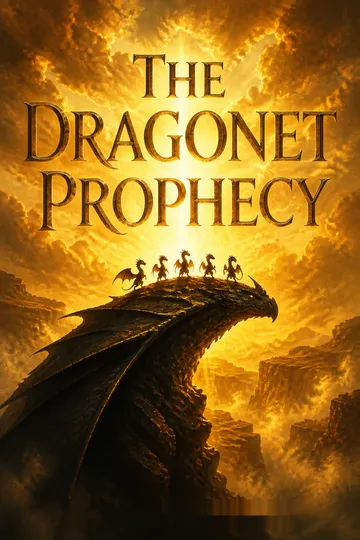
A destiny used as leverageThe prophecy claims that five dragonets born on a particular night will end the SandWing war. It brings the original dragonets together and shapes how both allies and enemies interpret their identities. The NightWings use its authority to justify controlling candidates, arranging alliances, and pursuing the rainforest. Its central function is political as much as mystical: dragons who believe the prophecy can be persuaded to obey people who claim to understand it. The story ultimately reveals that Morrowseer and Battlewinner fabricated it for strategic purposes, making its influence more consequential than its truth.
The dreamvisitor
Contact across captivityThis enchanted object lets Starflight observe dragons in their sleep and, when they are dreaming, communicate with them. It gives him a narrow route back to the friends who believe he may have betrayed them, and later lets him warn Glory about danger to Tsunami. The device cannot guarantee that the other dragon is dreaming or that the message will be understood. Its limits preserve the emotional distance created by Starflight’s capture, while its uses turn his knowledge into practical help.
RainWing defenses
Danger balanced with restraintRainWings can spray venom from their fangs, a defense the NightWings study in order to prepare for an invasion. The venom can kill or badly injure a target, but many RainWings are reluctant to use it against other dragons. Their sleeping darts offer another method: the rainforest defenders can incapacitate attackers without killing them. These defenses shape the moral and tactical conflict. The NightWings regard RainWing venom as a weapon to capture and control, while Glory’s allies try to protect their home without abandoning their own reluctance to kill.
The hidden tunnel
A route between threatened homesA concealed passage links the NightWing fortress to the rainforest. The NightWings intend to use it as an invasion route, while Starflight and Fatespeaker exploit it to escape with the injured Flame. Later, Glory’s forces use the passage to free RainWing prisoners and confront the NightWing leadership. The tunnel compresses the distance between the NightWings’ failing island and the rainforest they covet. It is both a practical means of movement and the point where two tribes’ competing claims to safety meet.
The lava balance
A ruler kept alive by extremesBattlewinner survives an IceWing’s frostbreath because the volcano’s heat counteracts the freezing in her throat. She remains alive in a pool of lava, but only through constant exposure to an environment that leaves her trapped and in pain. This unlikely balance explains why the NightWing queen is hidden from her own tribe and makes the volcano central to the fortress’s politics. The same geological danger that has helped sustain Battlewinner threatens the entire NightWing home, turning her physical condition into a concentrated image of the tribe’s precarious survival.
Wings of Fire Series




About the Author
Other books by Tui T. Sutherland
Download PDF
Download EPUB
.epub digital book format is ideal for reading ebooks on phones, tablets, and e-readers.








