

Plot Summary
Prologue
During a storm, IceWing Hvitur carries a stolen SkyWing egg toward the Talons of Peace, a movement hoping to end Pyrrhia’s war through the dragonet prophecy. Queen Burn catches him, drops the egg over a cliff, and kills him.
Kestrel, a scarred SkyWing working with the Talons, finds a shard of shell and learns that Asha, another guardian, has died bringing a MudWing egg to safety. With the SkyWing egg gone, Webs steals a RainWing egg to complete the five. Kestrel and Webs agree to hide and raise the dragonets, though the prophecy has already been damaged before its champions hatch.
The prophecy begins not as an unquestioned promise but as a political target. Burn’s attack shows that leaders can treat the foretold peace as a threat to their power, while the guardians’ decision to substitute a RainWing egg reveals how quickly human judgment enters a story supposedly governed by destiny. The dragonets are therefore born into both hope and manipulation. Even before they can act, adults have chosen what their lives should mean, and the missing egg makes the prophecy’s authority uncertain from the start.
A Destiny Underground
Six years later, Clay, a gentle MudWing dragonet, endures Kestrel’s punishing combat lessons while worrying that his violent hatching means he is secretly a monster. His friends are Tsunami, an impatient SeaWing; Glory, a sharp-tongued RainWing; Starflight, a scholarly NightWing; and Sunny, a trusting SandWing.
Their guardians keep them in a mountain cave until the prophecy is due, teaching them war history but never letting them see the world. After Tsunami proposes leaving early, Clay begins to imagine escape, though he fears the others are not ready. Their study games expose how little they know about their own origins, while their loyalty to one another offers more comfort than the prophecy’s distant promise.
The cave is both shelter and institution: it protects the dragonets from enemies while training them to accept someone else’s account of their purpose. Clay’s fear of his own supposed violence gives the prophecy an intimate cost. He wants to be useful, but not at the price of becoming the weapon Kestrel expects. The group’s playacting matters because it lets them question the war’s history together, turning lessons imposed by adults into shared interpretation. Their first resistance is not a grand act of rebellion. It is the growing belief that survival without choice is not the same as safety.
Morrowseer's Inspection
The guardians’ alarm announces Morrowseer, the NightWing who delivered the prophecy. His arrival turns the dragonets’ private doubts into an inspection. He mocks Glory’s presence as a RainWing and treats Sunny’s unusual appearance as a flaw, while approving Clay and Tsunami after they defend themselves during his attack.
Starflight is taken aside, then returns shaken and unwilling to explain their conversation. Morrowseer tells the guardians that Glory must be dealt with, and Kestrel, Webs, and Dune later decide to kill her before he returns.
When they chain Tsunami to a pillar to silence her protests, Clay realizes the danger is immediate. The group must choose between waiting for adults to fulfill their promise and escaping to save Glory.
Morrowseer’s authority rests less on wisdom than on the fear surrounding his reputation. The dragonets are assessed as pieces that either fit or disrupt a forecast, and Glory is particularly vulnerable because the prophecy never named her tribe. Clay’s instinct to protect her and Tsunami makes care, rather than combat skill, the first visible form of his courage. The guardians’ language of safety becomes hard to separate from control once Tsunami is chained. This turning point transforms escape from a teenage wish into an urgent moral choice: remaining obedient would leave Glory to die.
The River's Hidden Exit
Clay overhears the guardians planning Glory’s death, then returns to find Tsunami chained and the group scrambling for an escape route. Tsunami has discovered that the underground river continues beyond a narrow passage, but she cannot leave the others behind.
Clay dives in her place, following the current through a cramped, airless tunnel. He reaches a glowworm-lit cavern, survives a waterfall, and is nearly incapacitated by corrosive mineral deposits.
Tsunami has broken her chains with help from Sunny and Starflight, then catches up and washes the burning substance from Clay’s scales. Together they follow the river until bats and moonlight reveal an opening. Clay bursts into the sky, catches Tsunami after her injured wing sends her falling, and lands with her in warm mud.
Clay’s passage through the river makes his courage physical and specific: he keeps moving while every sign suggests the tunnel may end in darkness. His rescue is not solitary heroism, since Tsunami breaks free and follows him, and the other dragonets make that escape possible. The first mud and open sky give Clay a bodily sense of belonging that no lesson could provide. His world expands through sensation before ideology. Yet the freedom arrives with danger, and the newly discovered landscape does not erase the war waiting beyond the mountain.
Scarlet Finds the Runaways
In the forest, Clay and Tsunami meet a frightened scavenger carrying treasure. Before they can understand the creature, Queen Scarlet of the SkyWings arrives, kills it, and claims the jewels. Tsunami’s attempt to return a medallion fails when Scarlet recognizes them as intruders and orders them to her palace.
The dragonets pin the queen’s tail to the ground with the scavenger’s metal claw and flee before she can free herself. They reach the mountain ledge and spot smoke rising from the opening above their cave, the signal Starflight and Sunny have made.
Clay uses his knowledge of the tunnels to locate the hidden entrance. The smoke has also shown Scarlet where to find them, so the dragonets fly back toward a trap they do not yet know is waiting.
The scavenger scene overturns the dragonets’ sheltered assumptions in two directions. A creature they have been taught to regard as prey carries tools and treasure, while the powerful queen proves more dangerous than any scroll could make her feel. Tsunami’s attack on Scarlet is a desperate act of self-preservation, but its consequence is to make their escape personal to the queen. Clay’s spatial knowledge helps them return to their friends, even as their smoke signal gives away the cave. Their first freedom is already entangled with the habits of captivity: they still do not know what the outside world can cost.
The Cave Becomes Arena
The dragonets find the cave entrance from outside and move its hidden lever, reuniting with Sunny, Glory, and Starflight. Scarlet and her soldiers are already inside. Dune attacks the queen to protect the dragonets, while Webs fights the SkyWings long enough to escape through the underground river and alert the Talons of Peace.
Scarlet kills Dune, then chains the five young dragons and carries them to her palace. Clay is placed on a narrow stone spire above an arena, his wings clamped and his limbs linked by wires to other prisoners. Across the stadium he spots Starflight and Tsunami, but Sunny is missing and Glory is displayed beside Scarlet’s throne. Their escape has traded one hidden prison for a public one.
The capture exposes the limits of Clay’s belief that loyalty alone can protect everyone. Dune’s sacrifice and Webs’s escape show two different responses to the same danger, but neither can prevent Scarlet from taking the dragonets. The arena makes spectacle part of imprisonment: the captives are not merely contained, they are arranged for an audience. Clay’s inability to reach his friends sharpens his fear of failing them, while Glory’s treatment as decoration shows how power can make a person visible yet deny her agency. The outside world is larger than the cave, but not necessarily freer.
Peril's Burning Arena
A young SkyWing named Peril brings Clay food and explains the arena’s rules: prisoners win freedom only if they survive repeated fights, and she is sent to kill those who become popular. Her scales burn anything she touches, making her Scarlet’s nearly unbeatable champion. Peril says she was raised to fight and believes killing is her natural role, yet she seeks Clay’s company because other dragons fear her.
Clay recognizes a familiar pressure in her story: adults have treated her as a monster since hatching. He asks her to persuade Scarlet to send him into the arena before Starflight, whose lack of combat experience makes him especially vulnerable. Peril agrees to try, though she is forbidden to speak with Clay.
Peril and Clay are linked by the question of whether an origin determines a character’s moral future. She has been taught to read her lethal body as proof that violence is her proper identity; Clay has been told that his own first moments revealed a hidden killer. Their conversation briefly creates a space where neither is reduced to usefulness. But the relationship is unequal: Peril has power over Clay’s fate, and her need for companionship is tangled with the queen’s control. Sympathy opens a possibility, not a guarantee of safety.
A Victory Not Clay's
Scarlet sends Clay to fight Fjord, an IceWing who can blast freezing breath. Clay avoids the attack and wounds Fjord, but refuses to finish him, even as the queen demands a death. When Tsunami throws herself against the wires above the arena, Fjord looks away.
Black droplets suddenly strike him and dissolve his scales; Clay sees Scarlet, Glory, and Peril watching from the balcony, but cannot tell who acted. Fjord dies, and the crowd celebrates a victory Clay did not choose.
Peril visits him afterward, frightened by the killing and unsure whether she can trust her own role. Clay asks her to protect Starflight from the arena, then learns she knows where Sunny is. He agrees to help Peril hide during Kestrel’s trial in exchange for the information.
Clay’s refusal to kill is not a clean triumph, because another dragon dies in his place and the arena rewards the spectacle anyway. The venom attack foreshadows a power the dragonets do not yet understand, while Glory’s apparent passivity disguises an active judgment about when to intervene. Peril’s response to Fjord’s death complicates her self-image as a willing killer. Clay continues to treat people as more than the roles assigned to them, but his compassion cannot control what happens around him. The scene forces a distinction between winning a fight and acting freely within it.
Peril Chooses Kestrel
At dawn, Scarlet puts Kestrel on trial for disobeying her and fleeing the Sky Kingdom. Old Osprey argues that Kestrel once tried to save her twin dragonets, but Scarlet forced her to choose which one would die, then took the surviving hatchling. Peril realizes the hatchling was her and that Kestrel is her mother, whom she believed dead.
She invokes the Champion’s Shield, offering to fight Scarlet’s chosen opponent to spare Kestrel. Scarlet accepts, then drops Osprey from the sky when he has served his purpose. Kestrel is returned to prison, and Peril refuses to speak with her. Burn arrives with SandWing soldiers, making the next day’s arena games even more dangerous for the captives.
The trial recasts Peril’s loyalty to Scarlet as a relationship built on withheld truth. The queen has not simply trained a weapon; she has shaped the weapon’s understanding of family and then used that dependence to secure obedience. Peril’s choice to defend Kestrel does not erase the harm between them, and her refusal to reconcile immediately preserves the reality of that harm. Osprey’s death demonstrates that Scarlet’s legal rituals are theater rather than justice. The Shield gives Peril a narrow form of agency, but the queen still controls the conditions under which she can use it.
The Wires Sing Back
Clay discovers that a wire loosened by Peril’s burning touch can produce notes when he rubs it against another. He turns the wires linking the prisoners into a rough version of Tsunami’s song about the dragonets, and prisoners across the spires join in. Scarlet interrupts the singing and takes Clay, Tsunami, and Starflight to Peril’s room, where she traps them behind a wall of fire made from black rocks.
The flames do not harm Peril, and Starflight realizes she can move the burning rocks themselves. Clay also learns why Scarlet fears his red egg: a MudWing hatched from such an egg may resist fire. The clue gives the dragonets a way through the barrier, but they remain trapped until Peril decides whether to help.
The prisoners’ song turns an improvised signal into collective recognition. Dragons who have been isolated on separate towers answer one another, briefly changing the arena from a machine of competition into a community. Clay does not command them; he offers a sound they can choose to share. The new information about his egg similarly changes his self-understanding, though he has not yet mastered what the ability means. Both developments challenge the queen’s methods: solidarity undermines isolation, and Clay’s body contains a capacity her restraints cannot fully account for.
A Betrayal at the Cliff
Peril carries the dragonets through the fire by moving the black rocks and leads them toward a hidden cave below the waterfall. She agrees to retrieve Sunny from a cage above the feasting hall, while Clay and his friends plan to wait. As they reach the cliff path, Scarlet arrives with guards and thanks Peril.
The dragonets conclude that Peril has betrayed them, and they are captured and returned to the fiery cell. Tsunami and Starflight warn Clay that Peril may be possessive, not trustworthy; Clay struggles to reconcile that warning with the kindness she has shown him. The queens prepare the next day’s games, intending to use the arena to discredit the prophecy before killing the dragonets.
Peril’s action is deliberately hard for Clay to interpret because tenderness and control coexist in her. She helps them escape, yet her attachment to Clay may make freedom feel like abandonment; Scarlet exploits that vulnerability without needing to explain it. The other dragonets are right to judge the danger by what Peril does, not only by what she feels. Clay’s hope that kindness will be returned is morally generous but strategically costly. The episode asks whether empathy can recognize someone’s pain without excusing the choices that put others at risk.
Tsunami Refuses the Script
On Scarlet’s hatching day, Tsunami is forced to fight Gill, a SeaWing driven nearly mad by months without water. She defeats him and asks the crowd to let him live, but the audience demands a death and Scarlet presses the choice. Tsunami snaps Gill’s neck, visibly disgusted by the arena’s hunger for violence. Scarlet then pairs her with Starflight, expecting the friends to kill one another.
They refuse to fight, so the queen releases scavengers into the sand to force action. The scavengers attack, but Starflight and Tsunami protect each other instead of pursuing them. When Scarlet escalates by preparing to unleash IceWing prisoners, Morrowseer arrives with NightWings and takes Starflight away, refusing to rescue the others.
Tsunami’s fight makes her strength inseparable from moral injury. She can win, but the arena’s rules leave her with a choice between her own life and Gill’s, then turn the crowd’s appetite into a public verdict on her character. Her refusal to fight Starflight is a more radical resistance because it denies Scarlet the relationship she wants to exploit. Morrowseer’s intervention offers rescue in its narrowest, most political form: he claims the NightWing and leaves the rest. The dragonets’ supposed savior again treats them as pieces rather than a community.
Glory Breaks the Spectacle
Scarlet forces Peril to fight Clay, knowing Peril’s touch cannot hurt him and hoping she will kill the one dragon she has begun to care for. Clay dodges and grapples rather than attack lethally, telling Peril that neither of them has to obey a violent nature imposed by others. Scarlet orders Peril to use venom, revealing that the earlier attack on Fjord came from the hidden Glory.
Glory breaks free of her display tree and spits venom into Scarlet’s face. As the arena erupts, Peril burns through Clay’s bindings, and the friends free Tsunami and fly to Sunny’s cage. Peril cuts Sunny loose. Clay then turns back toward the palace to rescue Kestrel, choosing not to leave even a difficult enemy to die.
The climax gathers the book’s competing ideas of destiny into one public rupture. Scarlet wants the arena to prove that violence is inevitable, but Clay refuses to kill Peril, Peril refuses the queen’s command, and Glory uses a concealed ability at the moment she chooses. Their actions do not end violence; they expose how carefully Scarlet has staged it. Clay’s choice to rescue Kestrel follows the same principle as his refusal to kill: he will not let another dragon’s cruelty dictate the limits of his own care. That commitment is brave, but not naïve about the danger.
Kestrel Leaves the Flock
Clay, Tsunami, and Peril break Kestrel out of Scarlet’s prison while Glory and Sunny wait below the waterfall. Kestrel is startled to find Peril alive, but neither is ready to repair their relationship. She explains where the eggs came from: Tsunami was stolen from Queen Coral’s hatchery, Starflight’s egg came from Morrowseer, Sunny’s was found in the desert, and Clay’s came from a MudWing troop near the Diamond Spray Delta.
Kestrel also confirms Glory was a substitute, not a named part of the prophecy. She leaves with Peril, who refuses to return to Scarlet but is not ready to join the dragonets. The five escape downriver, carrying the knowledge that Clay’s family may be close.
The rescued guardians cannot simply resume their old roles. Kestrel’s past explains some of her hardness, but explanation does not make her a safe parent, and Peril’s hesitation shows that kinship cannot erase a history of abandonment. The dragonets now have facts that connect prophecy to actual places and families, yet those facts also expose how adults moved their eggs around without consent. Their departure marks a shift from being protected subjects to decision-makers. They choose movement and discovery, even without a reliable guide.
Cattail's Empty Welcome
At the MudWing delta, Clay and Glory find Cattail, the mother Kestrel identified. Cattail remembers the red egg but says she sold it to the Talons of Peace in exchange for cows, because other eggs were already in her troop. She is more upset that her sister Asha died than that Clay was taken, and she has no idea who his father is.
Clay’s imagined homecoming collapses; he leaves without asking another troop to claim him. Burn’s scouts arrive looking for the escaped dragonets, forcing Clay and Glory to hide in the marsh. Before they can slip away, five MudWing dragonets confront them. They have been searching for the sibling hatched from the missing blood egg.
The reunion fails because Clay has mistaken the emotional shape of a storybook for a universal family structure. Cattail is not secretly cruel; she lives by a communal system that does not center one egg or preserve a parent-child bond in the way Clay imagined. That makes the rejection sharper, not softer: he cannot dismiss it as a misunderstanding. Asha’s kindness survives only in the consequences of her choice, while Cattail’s indifference forces Clay to separate biological origin from belonging. The siblings’ arrival opens a different possibility, founded on mutual recognition rather than parental approval.
Clay Becomes Bigwings
The MudWing dragonets, led by Reed and including Umber, explain that their first-hatched sibling is the bigwings, responsible for helping the others out of their shells. Clay had not been attacking his nestmates; his instincts had been trying to free them. The discovery releases him from Kestrel’s story of an inner killer.
Though the siblings welcome him, Clay declines to replace Reed as their leader, believing the troop needs the brother who has raised and protected them. Back with Tsunami, Glory, and Sunny, Clay reunites with Starflight, whom Morrowseer has returned after keeping him in the mountains. The five decide to seek Tsunami’s mother, Queen Coral, and face the war themselves.
The revelation changes Clay’s past without erasing the consequences of how others interpreted it. His hatchling violence was an act of assistance misread through ignorance, and his family’s custom supplies the missing context. The name bigwings gives him a role rooted in responsibility rather than aggression. Yet he declines the title among his siblings because leadership is not a prize he can claim without regard for their existing trust in Reed. The ending resolves Clay’s central fear while leaving the prophecy’s political outcome open: he now knows what kind of protector he wants to be, not whether the world will let him succeed.
Epilogue
On a storm-beaten cliff, Morrowseer tells Blister that the dragonets will help make her queen of the SandWings. He has also given Starflight instructions that will turn him against his friends. Kestrel, summoned under the pretense that the dragonets are in danger, learns that the Talons of Peace no longer need her.
Blister kills her, and Morrowseer pushes her body into the sea. The two conspirators then agree that Webs must also be eliminated. Their plan reveals that the prophecy is being managed from behind the scenes by dragons who want its outcome to serve their own power.
The epilogue denies the reader the comfort of a simple escape story. The dragonets have acted independently, but powerful adults are already shaping what they will encounter next. Morrowseer’s decision to manipulate Starflight converts his private authority into a threat inside the group, while Blister treats prophecy as an instrument for acquiring a throne. Kestrel’s death also closes no moral account: the dragonets are unaware of it, and her complicated history with them remains unresolved. The final scene reframes the prophecy as contested political language, not a neutral map of the future.
Analysis
The novel treats destiny as a story people use, not a force that removes responsibility. The Talons of Peace steal eggs in the name of peace, guardians restrict the dragonets for their safety, and queens invoke or reject prophecy according to political advantage. Each group claims to know what the young dragons are for. The dragonets’ escape begins the process of testing those claims against lived experience.
Clay’s arc gives that conflict a psychological center. He has internalized Kestrel’s belief that his first moments revealed a killer, and he interprets hesitation as evidence that he is unfit for heroism. The revelation that MudWing hatchlings help their siblings out of their eggs changes the meaning of his earliest action. It does not grant him a new personality; it supplies the missing cultural knowledge that lets him understand himself differently. The story thus distinguishes identity from the stories imposed on identity, while acknowledging how difficult those stories are to escape.
The other dragonets make that argument more complicated. Tsunami resists confinement through action, Glory counters underestimation by hiding her abilities until she chooses to reveal them, Starflight seeks security in knowledge, and Sunny keeps faith in connection. Peril shows the most painful version of social labeling: her dangerous body is used to justify raising her as a weapon. Clay’s compassion matters because it refuses to equate capacity with destiny, but the novel does not present kindness as a cure for structural harm. Peril still betrays the group, Scarlet still rules through fear, and the war continues.
Family is likewise treated as a practice rather than a biological guarantee. Cattail rejects Clay, while Reed’s troop welcomes him, and the five prophecy dragonets repeatedly choose one another. Their bonds do not erase betrayal or conflict; they give them a reason to return, explain, and protect. The ending offers no victory over the war, only a more grounded basis for confronting it: shared choice instead of obedience to adults who claim to know the future.
Review Summary
The Dragonet Prophecy is a popular middle-grade fantasy series featuring dragons as main characters. Readers praise its engaging plot, diverse dragon characters, and themes of friendship and loyalty. Many find it surprisingly violent for its target age group but appreciate its complexity and world-building. The book appeals to both children and adults, with some comparing it to Warriors or Game of Thrones for younger readers. While some critics find it too dark, most reviewers recommend it for dragon and fantasy enthusiasts.
People Also Read








Characters
Clay
The protective bigwingsClay is a large MudWing dragonet who doubts that a gentle, food-loving dragon can fulfill a heroic prophecy. Kestrel’s brutal lessons have made him fear that a violent impulse at hatching defines his character. He is observant in practical ways, loyal to the other dragonets, and often more willing to risk himself than to claim authority. His instinct is to protect first and understand later, though the story teaches him that compassion must include judgment and courage. Clay’s longing for a family gives his adventures a tender center; his deepest question is not whether he is strong enough, but what he will choose to do with his strength.
Tsunami
The defiant SeaWingTsunami is a forceful SeaWing dragonet whose impatience with confinement turns frustration into action. She is physically confident, quick to challenge authority, and determined to decide her own future rather than wait for guardians to interpret the prophecy. Her bluntness can wound friends, but it also helps the group move when fear threatens to freeze them. Tsunami’s imagined identity as a lost princess expresses a real hunger for home and recognition. She values strength and leadership, yet her loyalty repeatedly pushes her to risk herself for the others, even when that means facing choices she finds morally repellent.
Glory
The underestimated RainWingGlory is a RainWing dragonet raised among dragons who treat her tribe as lazy and useless. She answers contempt with sarcasm and a guarded independence, refusing to beg for approval from adults who have already decided she does not belong. Beneath that armor, she studies and trains with determination, and she notices more than she lets on. Her camouflage makes concealment a literal skill, while her shifting colors reflect a character who controls how much of herself others can read. Glory wants to be accepted without being patronized, and her loyalty to the group is strongest when it is freely chosen.
Starflight
The anxious scholarStarflight is the NightWing among the dragonets, devoted to scrolls, historical details, and the belief that knowledge can prevent disaster. He is intelligent and conscientious, but his learning often becomes a refuge from physical danger and uncertainty. His pride in NightWing abilities sits uneasily beside his own fear that he may not possess the powers expected of him. Starflight prefers rules because they promise a world that can be understood, while his friends repeatedly ask him to act without complete information. He is deeply loyal, even when he hides behind caution, and his scholarship becomes most valuable when it serves the group rather than his need for certainty.
Sunny
The hopeful SandWingSunny is the smallest dragonet, a warm, optimistic SandWing whose unusual golden scales and harmless-looking tail make others question whether she belongs in the prophecy. She tends to trust people and to find possibility where her friends see danger. That openness can leave her vulnerable, but it also gives the group a counterweight to Tsunami’s suspicion and Glory’s defensiveness. Sunny dreams of family and happy endings, not because she is naïve about suffering, but because she refuses to let cruelty become the only believable outcome. Her kindness is active: she comforts, volunteers, and keeps insisting that the others remain a family.
Peril
The untouchable championPeril is a young SkyWing whose scales are so hot that ordinary dragons cannot touch her safely. Queen Scarlet has made her the champion of the arena, giving her a role and a place in a kingdom that otherwise fears her. Peril speaks about violence as if it were her nature, but her awkward attempts at friendship reveal how little experience she has with being valued beyond her usefulness. She is drawn to Clay because he treats her as a person rather than a weapon. Her central conflict is the gap between accepting herself and accepting the identity others have built around her.
Kestrel
The scarred combat tutorKestrel is a formidable SkyWing guardian who teaches the dragonets to fight through fear and pain. She is impatient, harsh, and convinced that softness will get them killed. Her contempt for Glory and Sunny, and her pressure on Clay to become more violent, make her an unreliable source of care. Yet her discipline and her history with the SkyWing kingdom suggest that her severity comes from wounds she does not know how to discuss. Kestrel measures affection through protection, a narrow and damaging language that keeps her from giving the dragonets the tenderness they need.
Webs
The conflicted SeaWing guardianWebs is a SeaWing member of the Talons of Peace and one of the dragonets’ guardians. Unlike Kestrel, he speaks gently and argues that the young dragons deserve to survive long enough to choose their role. His commitment to peace is sincere, though his participation in hiding the dragonets makes him part of the system that confines them. Webs is a reluctant fighter rather than a passive one, and he tries to balance loyalty to the Talons with responsibility for the five lives entrusted to him.
Dune
The embittered SandWingDune is a disabled SandWing guardian who teaches survival and war history. His old injuries and clipped, impatient manner make him seem more like a commander than a caretaker. He believes the dragonets must be kept alive for the prophecy, but he has little patience for their emotional needs or questions. Dune embodies a wartime logic in which protection is measured by survival alone. His hard pragmatism is shaped by what the war has taken from him, though it leaves little room for trust.
Morrowseer
The imposing prophetMorrowseer is the NightWing who delivered the dragonet prophecy and carries the intimidating authority of a dragon believed to possess extraordinary powers. He approaches the young dragons as a judge of whether the prophecy can still work, rather than as a mentor interested in their individual lives. His confidence and secrecy make him difficult to challenge, especially for dragonets who have grown up on stories about NightWing abilities. He represents the danger of treating foresight as a license to direct other people’s choices.
Queen Scarlet
The arena's cruel queenScarlet rules the SkyWings through spectacle, punishment, and a taste for public entertainment. She sees war as useful to her authority because it fills her arena and distracts potential challengers. Her charm is theatrical and her cruelty deliberate: prisoners become performers, and even trials are staged to flatter her power. Scarlet is particularly dangerous because she understands how to make violence appear like a game. She wants her subjects watching, laughing, or applauding, since a fearful audience is easier to govern than one capable of pity.
Burn
The warlike SandWing queenBurn is the largest and most openly brutal of the three SandWing sisters competing for their mother’s throne. She trusts physical force more than prophecy and sees compromise as weakness. Her alliance with Scarlet gives her access to the Sky Kingdom’s power, but her own ambition remains the center of her politics. Burn’s refusal to accept a future she cannot control makes the dragonets a threat before they have done anything to her.
Asha
The lost Talon guardianAsha is a MudWing and member of the Talons of Peace who carries an egg toward the hidden dragonets. She is remembered as generous, idealistic, and unusually tender toward young dragons. Her belief in the prophecy leads her into danger, but she is not defined only by sacrifice: her care leaves a lasting impression on those who knew her. Through what others say about her, Asha becomes an example of compassion practiced without certainty that it will be rewarded.
Hvitur
The IceWing courierHvitur is an IceWing who risks his life carrying a stolen egg to the Talons of Peace. His mission reflects a willingness to oppose the war even when the prophecy seems vulnerable and the danger immediate.
Blister
The calculating SandWing sisterBlister is the clever middle sister in the SandWing succession struggle. She favors strategy and alliances over direct combat, and other dragons suspect that her ambitions reach beyond a single throne. Her stillness can be more unsettling than Burn’s open aggression because it conceals how carefully she is calculating the next move.
Blaze
The popular SandWing sisterBlaze is the youngest SandWing claimant, admired by many of her tribe for her beauty and supported by the IceWings. Others question her judgment and strength. She represents the possibility that popularity and political fitness do not always coincide.
Cattail
Clay's MudWing motherCattail is a MudWing living within a troop-based culture where eggs and dragonets do not necessarily create lasting parent-child bonds. She is practical, blunt, and more concerned with her troop’s established life than with sentimental expectations. Her outlook conflicts sharply with Clay’s longing for a storybook family, without requiring her to see herself as cruel.
Reed
The steady MudWing leaderReed is the bigwings of Clay’s MudWing siblings, responsible for keeping the troop together and guiding them through danger. He is proud of his role but carries doubts about whether he can protect everyone. His authority comes from the trust his siblings place in him, not simply from size or birth order.
Umber
The curious MudWing siblingUmber is one of Clay’s MudWing siblings, a lively young dragon who notices Clay before the others accept who he may be. His curiosity helps turn a tense encounter into a welcome.
Osprey
The aging defense speakerOsprey is an elderly SkyWing who serves as a defense speaker in Scarlet’s trials. Nearly blind and unable to fly well, he is treated as a comic figure by the court, but he retains enough courage to speak when silence would be safer. His stories connect the palace’s present violence to an older world.
Vermilion
Scarlet's public announcerVermilion is Scarlet’s son and the SkyWing who announces arena contests and trials. He helps turn punishment into public entertainment, following the ceremonial role expected of him.
Fjord
The IceWing arena fighterFjord is an IceWing prisoner and experienced arena combatant. His freezing breath and disciplined attacks make him a dangerous opponent for Clay, who has never fought an IceWing.
Gill
The tormented SeaWing fighterGill is a SeaWing prisoner whom Scarlet deprives of water until he becomes dangerously unstable. His forced fight against Tsunami exposes the arena’s ability to turn captivity into another weapon.
Queen Coral
The absent SeaWing queenQueen Coral rules the SeaWings and is Tsunami’s mother, though Tsunami grows up without knowing her. Her kingdom’s political ties and family history give the dragonets a possible destination beyond the Sky Kingdom.
Plot Devices
The Dragonet Prophecy
A contested map of destinyThe prophecy predicts five dragonets who will end the war and influence the SandWing succession. It motivates the Talons of Peace to steal and hide eggs, gives Burn and Scarlet a reason to fear the young dragons, and encourages the dragonets to imagine they have a predetermined purpose. The missing SkyWing egg and Glory’s substitution make its wording unstable. As the story unfolds, the prophecy functions less like a reliable instruction manual than a political story that different dragons try to control.
The Stolen Eggs
Family severed before hatchingThe Talons of Peace remove eggs from several tribes and raise the dragonets in secrecy. The theft protects the young from queens who might kill them, but it also deprives them of family knowledge, customs, and choice. Their eggs become the material basis for the prophecy, while the adults who handle them argue over whether the prophecy matters more than the individual dragons. The different origins later lead the dragonets toward possible families, and the MudWing blood egg in particular reframes Clay’s behavior at hatching.
The Mountain Cave
Protection turned confinementThe hidden cave keeps the dragonets out of reach of the rival queens, but the guardians also control their movement and knowledge. The blocked entrance, narrow sky hole, and underground river make escape a physical puzzle. When the dragonets finally leave, the river’s path through glowworm caverns and waterfalls turns their first taste of freedom into a test of endurance. The cave’s exit later allows them to return for their friends, demonstrating that the same structure can be both a prison and a route home.
Scarlet's Arena
Violence staged as entertainmentScarlet confines prisoners above a public fighting pit, linking them with wires so their escape would endanger many captives at once. She uses the arena to entertain her subjects, discipline prisoners, and undermine belief in the prophecy by forcing the dragonets to fight. The rules make survival depend on performing violence for an audience. Clay’s improvised music on the wires reverses their purpose, allowing the prisoners to answer one another instead of remaining isolated. The arena therefore becomes both the clearest expression of Scarlet’s power and the place where her control starts to fail.
The Dragonets' Abilities
Bodies resisting assigned rolesEach dragonet’s physical traits shape the group’s options: Tsunami can breathe underwater and see in darkness, Glory can camouflage herself and has a hidden venomous defense, and Clay’s red egg gives him a developing resistance to fire. Peril’s burning scales make her dangerous to touch but also isolate her. These abilities are not simple solutions; they emerge unevenly and often carry costs or misunderstandings. Their narrative purpose is to show that the dragonets have capacities their guardians never taught them to use, so self-knowledge depends on experience as much as prophecy.
FAQ
Basic Details
What is The Dragonet Prophecy about?
- Five dragons, one destiny: The story centers on five young dragons from different tribes—Clay (MudWing), Tsunami (SeaWing), Glory (RainWing), Starflight (NightWing), and Sunny (SandWing)—raised in secret beneath a mountain by the Talons of Peace.
- A world at war: Pyrrhia is ravaged by a twenty-year war between three SandWing sisters (Burn, Blister, Blaze) vying for the throne after their mother, Queen Oasis, died.
- Prophecy of peace: The dragonets are believed to be the subjects of a prophecy foretelling their role in ending the war and choosing the next SandWing queen, set to occur on the "brightest night."
Why should I read The Dragonet Prophecy?
- Engaging character journeys: The book offers deep dives into the internal struggles and growth of young protagonists grappling with identity and heritage, destiny, and the harsh realities of their world, making their emotional arcs compelling.
- Intriguing world-building: Readers are introduced to a vibrant, dangerous continent with distinct dragon tribes, complex political alliances, and a rich history, providing a captivating fantasy setting.
- Themes of choice and friendship: Beyond the action, the story explores profound questions about whether fate is predetermined or if individuals can forge their own paths, highlighting the power and importance of found family and loyalty.
What is the background of The Dragonet Prophecy?
- A continent in conflict: The world of Pyrrhia is defined by a long-standing war initiated by the death of the SandWing queen, leading to a brutal civil war involving alliances with other tribes like the SkyWings, MudWings, SeaWings, and IceWings.
- Secretive peace movement: The Talons of Peace are an underground organization working to fulfill the prophecy, operating in secret due to the queens' hostility towards anything that might challenge their power.
- Ancient NightWing prophecy: The core conflict is driven by a prophecy delivered by a NightWing named Morrowseer ten years prior, which dictates the specific tribes and circumstances of the five dragonets' hatching and their role in ending the war.
What are the most memorable quotes in The Dragonet Prophecy?
- "The dragonets are coming.": This recurring phrase from the prophecy itself serves as both a beacon of hope for some and a threat to the warring queens, encapsulating the central premise and driving force of the narrative.
- "I'd like to be something more than alive.": Clay's powerful declaration to Tsunami near the end reflects his burgeoning sense of self and purpose beyond mere survival, highlighting the theme of choosing one's identity and heritage and values.
- "Everything I say is true.": Kestrel's harsh, final words to the dragonets before leaving encapsulate her brutal honesty and cynical worldview, serving as a stark contrast to the dragonets' idealism and forcing them to confront difficult truths about the world and themselves.
What writing style, narrative choices, and literary techniques does Tui T. Sutherland use?
- First-person perspective: The story is told primarily from Clay's point of view, immersing the reader in his thoughts, feelings, and limited understanding of the world, creating immediate empathy and revealing information gradually as he learns it.
- Foreshadowing and dramatic irony: Subtle hints about characters' pasts (like Kestrel's scars) and future events (like the true nature of NightWing powers or the prophecy's interpretation) are woven throughout, often understood by the reader before the protagonist, building suspense.
- Character-driven narrative: While plot-heavy, the story prioritizes the emotional and psychological development of the dragonets, using their interactions, internal conflicts, and evolving relationships as the primary engine of the narrative.
Hidden Details & Subtle Connections
What are some minor details that add significant meaning?
- Kestrel's scarred palms: Early mentions of Kestrel's "strange burn scars on her palms" during training (Part One, Chapter 2) seem like minor character details but subtly foreshadow her connection to fire and later, her relationship with Peril and the tragic events at the Diamond Spray River.
- Dune's missing foot/wing: Dune's physical injuries, described as a "foreleg stump and mangled wing" (Part One, Chapter 13), are initially presented as reasons for his guardian role but symbolize the permanent, crippling cost of the war that the dragonets are meant to end, grounding the conflict in tangible suffering.
- The prisoner wires: The "thin wires" connecting prisoners on the SkyWing spires (Part Two, Chapter 14) are a subtle visual detail illustrating Queen Scarlet's cruel control and the prisoners' interdependence, foreshadowing Tsunami's attempt to escape and the collective impact of one dragon's actions on others.
What are some subtle foreshadowing and callbacks?
- Scavenger's metal claw: The "pointy, like a giant dragon's claw" object carried by the first scavenger Clay and Tsunami meet (Part Two, Chapter 15) is a direct callback to the weapon used to kill Queen Oasis, subtly reminding the reader of the war's origin and the unexpected danger posed by seemingly weak creatures.
- Glory's "laziness": The guardians' constant complaints about Glory being "lazy and worthless like the rest of her tribe" (Part One, Chapter 13) are dismissed by the dragonets but foreshadow the reveal of her camouflage and venom abilities, which require energy and focus, subverting the stereotype.
- Clay's hatching ferocity: The guardians' repeated references to Clay being "ferocious when he hatched" and attacking the eggs (Part One, Chapter 2) are presented as evidence of a hidden monster, subtly foreshadowing the later reveal that this was actually his MudWing instinct to help his siblings hatch, re-framing his perceived violence as protective nature.
What are some unexpected character connections?
- Kestrel and Peril's parentage: The most significant hidden connection is the reveal that Kestrel is Peril's mother (Part Three, Chapter 32), a fact concealed from both characters and the reader, adding a layer of tragic irony to their interactions and Kestrel's harshness towards the dragonets.
- Asha's link to Clay's family: Asha, the dragon who delivered Clay's egg and died doing so (Prologue), is later revealed to be the sister of Cattail, Clay's biological mother (Part Three, Chapter 35), establishing a familial link between Clay and the dragon who sacrificed herself for his prophecy role.
- Osprey and the scavenger treasure: The old SkyWing prisoner Osprey's story about losing his treasure and ability to fly to a scavenger (Part Three, Chapter 32) connects him directly to the event that triggered the SandWing war (Queen Oasis's death by scavenger while guarding treasure), highlighting how seemingly isolated incidents are interconnected in the larger conflict.
Who are the most significant supporting characters?
- The Guardians (Kestrel, Webs, Dune): Beyond their role as caretakers, they represent different facets of the Talons of Peace's ideology and the toll of the war. Kestrel embodies cynicism and harshness, Dune the physical cost and resentment, and Webs the idealism and desperation that led to questionable choices (like taking Glory).
- Peril: While a major character in the second arc, her role in this book as Queen Scarlet's Champion and her complex relationship with Clay and Kestrel make her a pivotal supporting character whose actions directly enable the dragonets' escape and reveal crucial information about the Sky Kingdom and Kestrel's past.
- Clay's MudWing Siblings (Reed, Sora, Pheasant, Marsh, Umber): Though appearing late, they are significant as Clay's biological family and the key to understanding his true nature and the MudWing tribe's unique social structure, providing a stark contrast to the dragonets' found family bond.
Psychological, Emotional, & Relational Analysis
What are some unspoken motivations of the characters?
- Kestrel's desire for redemption/purpose: Beyond just following orders, Kestrel's intense focus on making the dragonets "fierce" and her later sacrifice suggest a deep-seated need to prove her worth and perhaps atone for past failures, particularly concerning her own dragonets. Her bitterness ("all I have to show for it is a pack of ungrateful lizards") hints at a profound disappointment beyond the prophecy itself.
- Peril's craving for acceptance: Peril's actions, from seeking Queen Scarlet's approval ("She likes me the way I am") to her desperate hope that Clay likes her ("You make me hope that's true"), reveal an unspoken motivation driven by profound loneliness and a desperate need for connection and validation due to her isolating abilities.
- Starflight's fear of inadequacy: Despite his intelligence, Starflight is constantly worried about not living up to NightWing expectations ("I have a lot to learn," "I'm just ordinary"). His unspoken motivation is a deep fear of failure and a longing to possess the powers his tribe is known for, which drives his anxiety and cautious behavior.
What psychological complexities do the characters exhibit?
- Clay's struggle with perceived nature: Clay grapples with the psychological burden of being told he's a "monster" who attacked his friends at hatching. His internal conflict between this perceived violent nature and his inherent protective, gentle instincts ("I felt about as dangerous as cauliflower") is a central psychological complexity.
- Glory's emotional armor: Glory employs sarcasm, feigned indifference ("I don't care"), and camouflage as psychological defense mechanisms to cope with feeling unwanted and underestimated by the guardians. Her complexity lies in the contrast between her outward aloofness and her deep loyalty and hurt.
- Tsunami's control issues: Tsunami's bossiness and need to take charge ("I'm assigning parts," "Stop talking now") stem from a psychological need for control in an environment where she feels powerless and confined, masking her underlying vulnerability and fear for her friends' safety.
What are the major emotional turning points?
- Clay's realization of his true nature: The most significant emotional turning point for Clay is learning from his MudWing siblings that his actions at hatching were instinctual protection, not monstrous violence (Part Three, Chapter 35). This revelation shatters the guardians' narrative and allows him to embrace his identity and heritage as a "bigwings," fundamentally changing his self-perception.
- Peril's discovery of Queen Scarlet's lies: Peril's emotional world is shattered when she learns the truth about her mother and brother from Osprey and Queen Scarlet's manipulation (Part Three, Chapter 32). This betrayal is a turning point that shifts her loyalty and motivates her to help the dragonets escape, despite her fear.
- The dragonets witnessing the war's reality: Seeing the brutal battlefield near the Mud Kingdom (Part Three, Chapter 35) is a collective emotional turning point. It moves the war from an abstract concept learned from scrolls to a horrifying reality, deepening their understanding of what they are fighting against and the stakes of the prophecy.
How do relationship dynamics evolve?
- Dragonets and Guardians: The relationship shifts from one of dependence and resentment ("treated like prisoners") to outright conflict and eventual separation. The dragonets lose trust in the guardians' methods and motives, culminating in their escape and the guardians' fates (Dune killed, Webs escaped, Kestrel captured/killed).
- Clay and Peril: Their dynamic evolves from initial curiosity and cautious friendship ("I like talking to you") to a complex bond tested by betrayal and conflicting loyalties. Clay's acceptance challenges Peril's self-perception, while her actions force him to confront his ideals about forgiveness and trust.
- The Dragonet Bonds: The shared trauma of captivity and escape strengthens the core bond between the five dragonets ("we five stick together"). Their loyalty to each other becomes the central anchor of the story, contrasting with the dysfunctional or absent family structures they encounter outside the mountain.
Interpretation & Debate
Which parts of the story remain ambiguous or open-ended?
- The true nature of NightWing powers: It remains unclear whether Starflight lacks powers entirely, if they develop later, or if Morrowseer is simply lying about them. The extent and reliability of NightWing telepathy and precognition are left ambiguous, adding mystery to Starflight's potential and the NightWings' motives.
- The prophecy's exact interpretation: While the dragonets are identified, the specific meaning of "two shall die and one shall learn" and "bows to a fate that is stronger and higher" regarding the SandWing queens is open to interpretation. The ending sets up Blister as the chosen queen, but the conditions and outcome are not fully revealed.
- The fate of Webs: Webs escapes through the underground river tunnel (Part Three, Chapter 31), but his ultimate fate and whether he successfully reaches the Talons of Peace or plays a further role in the immediate aftermath are left unresolved at the end of the book.
What are some debatable, controversial scenes or moments in The Dragonet Prophecy?
- Kestrel's death: Blister and Morrowseer's casual execution of Kestrel (Epilogue) is a brutal and controversial moment. Readers may debate whether Kestrel deserved this fate after her harsh treatment of the dragonets, or if her sacrifice for Peril and her complex past make her death tragic and undeserved.
- Cattail's indifference to Clay: Cattail's blunt admission that she "sold" Clay's egg because her troop "didn't need" him (Part Three, Chapter 35) is emotionally jarring and sparks debate about the nature of family, parental love, and whether her actions are understandable within MudWing culture or simply cruel.
- Peril's actions and morality: Peril's role as Queen Scarlet's Champion and her history of killing dragons raise questions about her morality. Readers may debate whether she is inherently monstrous, a victim of circumstance and manipulation, or capable of redemption, especially after she betrays the dragonets to Queen Scarlet.
The Dragonet Prophecy Ending Explained: How It Ends & What It Means
- Escape and newfound agency: The book ends with the five dragonets escaping the Sky Kingdom, reunited (minus Starflight, temporarily) and free from the direct control of the guardians and Queen Scarlet. They decide to seek out their families and experience the world on their own terms, rejecting the passive role assigned by the Talons of Peace.
- Prophecy's manipulation revealed: The Epilogue reveals that Morrowseer and Blister are actively manipulating the prophecy, with Morrowseer choosing Blister as the intended queen and planning to use the dragonets (particularly Starflight, whom he takes) to achieve this outcome, highlighting that the prophecy is not a neutral force but a tool for power.
- Meaning of the ending: The ending signifies the dragonets taking control of their own narrative. While the prophecy and its manipulators still exist, their escape and decision to explore the world and their heritage ("We're going to find our homes") means they will approach their destiny actively, informed by their own experiences and bonds, rather than passively following orders. It sets up their journey as one of self-discovery and choosing their path amidst predetermined expectations and external manipulation.
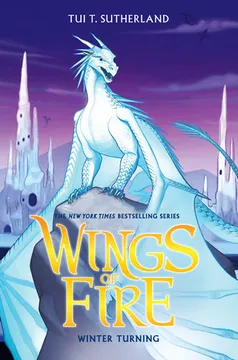
Wings of Fire Series


About the Author
Other books by Tui T. Sutherland
Download PDF
Download EPUB
.epub digital book format is ideal for reading ebooks on phones, tablets, and e-readers.








