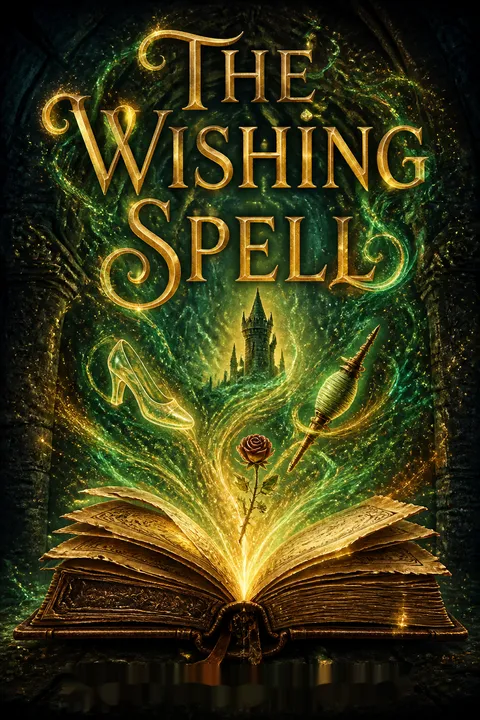


Plot Summary
Prologue
After Snow White becomes queen, she secretly visits her imprisoned stepmother, the woman known as the Evil Queen. Snow White wants to understand why the queen tried to kill her, and admits that she once hoped her stepmother might love her.
The queen refuses to explain until Snow White touches the stone heart she kept beside her in prison. She says her crimes were committed for someone she loved, then begins a history that has never been told. The story shifts from the queen’s cell to two children in another world.
The frame gives the familiar villain a private history before the main adventure begins, but it does not excuse her crimes or explain them too soon. Snow White’s visit is driven by a need to make sense of childhood rejection, not by a desire to absolve her stepmother. The stone heart turns that emotional question into a physical object, while the queen’s withheld story asks readers to suspend a settled judgment. By postponing the answer, the book makes curiosity itself part of the plot.
A Birthday Without Dad
Twins Alex and Conner Bailey are still grieving their father, who died in a car accident and whose death forced the family to sell its bookstore and home. Their mother works exhausting hospital shifts, while Alex retreats into fairy tales and Conner struggles at school.
On their twelfth birthday, their grandmother arrives with a feast, presents, and the old book she once read to them. Alex wishes she could live among its illustrated characters. That night, the book hums and shines beside her bed. The loss that has made the twins feel stranded in ordinary life now meets an impossible invitation.
The book’s magic enters through a family heirloom, not a stranger’s prophecy. That choice binds fantasy to the twins’ grief and to the stories their father used to tell them. Alex’s longing is not simply escapism: she wants a world where meaning and wonder remain available after bereavement. Conner’s humor gives the family another way to endure what cannot be repaired. The glowing book converts shared memory into action, turning an object of comfort into the cause of a dangerous journey.
Through the Storybook
After Alex investigates the glowing book, she reaches into its bright pages and accidentally falls inside. Conner follows her, and the twins land in a forest where the pencils and school things Alex dropped into the book have arrived before them. A passing troop carries apple-marked shields, confirming that the fairy-tale world is real.
The twins meet Froggy, a courteous man cursed into a frog-like form, who shelters them from the woods. He explains the kingdoms and gives them a journal describing the Wishing Spell, a collection of eight objects that can grant one wish. The twins decide to seek the objects and wish their way home.
The twins enter this world through curiosity, but staying becomes a practical problem almost immediately. Froggy is both a guide and a warning: his curse has made him hide from the very world he understands. The spell offers a concrete route home, yet its riddles make knowledge as necessary as courage. Alex tends to believe that stories can orient a life; Conner wants proof that they can get him back to his mother. Their shared quest begins with different needs, held together by their bond as siblings.
Wolves in the Dwarf Forests
On their first day without Froggy, Alex follows the smell of gingerbread to a witch’s house, where Conner distracts the witch long enough for Alex to talk her into granting him a wish. He wishes her appetite away, and the twins escape. Soon they hide from a pack of enormous wolves attacking a young swordswoman and her horse, Porridge.
The woman is Goldilocks, wanted for crimes across the kingdoms. When Goldilocks loses her sword, Conner throws it back to her, helping drive off the wolves. Goldilocks leaves the twins a dagger and warns them to keep moving. Their fairy-tale sightseeing has become a survival test.
The twins’ knowledge of familiar tales helps them recognize danger, but it does not make them masters of this world. Alex’s fascination takes them toward the witch, while Conner’s improvisation prevents her curiosity from becoming fatal. Goldilocks complicates the idea that a wanted person must be a simple villain: she risks herself to protect Porridge, then helps the children who helped her. The scene establishes a pattern the twins will need to learn: good judgment depends less on labels than on watching what people actually do.
The Queen's Other Hunt
At Rapunzel’s tower, Alex climbs the stonework while Conner discovers the staircase inside. They find a lock of Rapunzel’s hair and decode several of the journal’s riddles, including Cinderella’s slipper, Sleeping Beauty’s spindle, and jewels from Snow White’s coffin.
Elsewhere, the escaped Evil Queen summons the Huntsman and his mute daughter, who brings her the Mirror of Truth. The queen names the girl her Huntress and sends her to collect the same objects. Her Magic Mirror warns that a brother and sister are already searching. The twins have gained their first item, but they now have an unseen rival with royal resources.
The tower brings the twins’ personal motives into sharper focus. Alex’s climb reflects her identification with Rapunzel’s isolation, while Conner turns practical reading into progress on the quest. The parallel scene with the Evil Queen changes the adventure from a scavenger hunt into a race. The Huntress’s silence makes her difficult to read, and the queen’s possession of two enchanted mirrors suggests that information itself is a weapon. The widening structure also places the children inside a political world, where their private wish can affect people they have never met.
Cinderella's Missing Slipper
The twins reach the Charming Kingdom and enter Cinderella’s monthly ball disguised in blankets. Head guard Sir Lampton sees through their clumsy lies but chooses to show them the palace rather than expose them. Cinderella welcomes them into her display room, explains that becoming queen brought public scrutiny as well as happiness, and lets Alex hold a glass slipper.
The twins cannot bring themselves to steal it. When soldiers announce that the Evil Queen has stolen a mirror, the celebration breaks up. Later, Alex discovers a slipper in her bag, though neither twin knows how it got there. They leave with one Wishing Spell object and a mystery about their unexpected ally.
Cinderella’s account quietly revises the twins’ idealized idea of a fairy-tale ending: marriage changed her circumstances, but it did not remove conflict or public judgment. Alex responds by treating her as a person rather than a treasured character. The choice not to steal the slipper marks a moral limit, even when the quest is urgent. Its unexplained appearance preserves that limit while moving the plot forward. Sir Lampton’s kindness also suggests that the twins’ strangeness may be familiar to someone inside the palace, though they cannot yet understand why.
A Basket Room on Fire
In the Red Riding Hood Kingdom, Jack lets the twins accompany him to Queen Red Riding Hood’s castle. The queen keeps thousands of baskets, so Alex and Conner search her collection for the one with a bark rim. They find none before the handmaiden sends them away. That night, the twins sneak into the castle and discover a woman using a grappling hook to locate the same basket.
She cuts out a piece of bark and escapes, but her lantern starts a fire. Alex cuts another piece from the basket as the flames spread, and the twins flee through a window and down the watermill. Outside the walls, they witness Jack and Goldilocks meeting in secret, clearly bound by old affection.
The failed daytime search becomes a costly nighttime success: the twins secure the bark, but the fire makes their presence impossible to conceal. The Huntress is no longer only a name in the queen’s plan; she is now a competitor who can reach the same targets. Meanwhile, Jack’s hidden tenderness toward Goldilocks contrasts with his bleak public manner and Red’s obvious pursuit of him. Several characters are living under reputations that conceal private motives, preparing the story’s later challenge to easy moral categories.
The Shared Stone Crown
After losing their way, the twins are trapped by the troll and goblin slavers and taken beneath their territory. In the dungeon, they recognize the imprisoned Traveling Tradesman from the journal and learn that the writer may have completed his quest. Trollbella, the lonely troll princess, offers Conner freedom in exchange for a kiss.
Alex negotiates for both twins, then steals the key and frees the other prisoners as well. On their escape through the sleeping monsters’ common room, Conner spots the shared stone crown described in the riddle. He takes it, waking the kings and triggering a chase. The Tradesman blocks the pursuers, letting the twins escape with the crown while he stays behind.
Alex’s decision to free every prisoner expands the quest beyond her own survival. Conner’s discomfort with Trollbella’s bargain shows how quickly the children’s freedom can be made dependent on someone else’s desire, while Alex insists that a deal should include both of them. The Tradesman’s sacrifice reverses his reputation as a dishonest trader: he gives up his own chance to run so the children can escape. The crown is literally shared power, but its acquisition comes at a personal cost. The episode asks what a fair exchange means when one party has been made powerless.
Conner Challenges the Fairies
The twins reach the Fairy Kingdom, where they find Trix crying before a trial. She fears expulsion for briefly changing another fairy’s wings as retaliation for his teasing. Conner objects to the Fairy Council’s severe punishment, then tells them that trolls and goblins are still enslaving people underground.
The council pardons Trix and sends fairies to confront the slavers. As the hearing ends, the twins recognize the Council’s four-legged pet fish as the Walking Fish from a story their father once told Conner. The encounter gives them a new lead about their father, while Conner discovers that speaking up can matter more than following the rules.
Conner’s school failures have taught him to expect judgment, but the trial gives him a chance to challenge authority rather than submit to it. He does not defend Trix by claiming she did nothing wrong; he argues that punishment should be proportionate and that the Council is ignoring a graver abuse. The Council’s response shows institutional correction in action, not perfection. The Walking Fish is an intimate clue: a story associated with their father exists in this world. The children’s adventure is beginning to point toward family history, not merely a route home.
Sleeping Beauty's Spindle
In the Sleeping Kingdom, the twins find a land still weakened by the century-long curse. Its people drift through their work in exhaustion, and Sleeping Beauty refuses to punish them for the damage the spell caused. When the twins accidentally reveal Cinderella’s slipper, guards chase them into the queen’s tower.
Sleeping Beauty calls off the pursuit after learning they seek the Wishing Spell and lends them the spindle, asking that it be returned. She explains that she is working to restore the kingdom and has not allowed herself to sleep since awakening. Conner offers his rubber-band trick as a small aid. The twins leave with the spindle and a clearer sense of the burden behind a fairy-tale rescue.
Sleeping Beauty’s authority is defined by restraint. She refuses to make the people bear the cost of a curse they did not choose, even while her kingdom’s economy and landscape remain damaged. Her sleeplessness echoes the children’s own exhaustion, but her vigilance is tied to responsibility rather than fear. Conner’s practical trick offers help without pretending to solve the kingdom’s larger problem. By lending the spindle, she turns an object associated with helplessness into evidence of continued labor and recovery.
The Queen's Hidden Room
At Snow White’s palace, Alex and Conner use the journal’s directions to enter the old chamber where the Evil Queen kept her mirrors and poisons. The glass coffin is gone. While searching, they find love letters between two people named Evly and Mira, and a portrait that identifies the Huntress as the Huntsman’s daughter.
Snow White enters, admits the coffin was returned to the dwarfs’ mines, and warns the twins that her stepmother is dangerous. As the children leave, they notice the Curvy Tree their father once described from his childhood. Alex believes the resemblance means their father came from this world; Conner resists the conclusion, but both are shaken.
The room holds evidence of a past the kingdom has tried to put away: poisons, letters, portraits, and the missing coffin. Alex is alert to objects as traces of relationships, while Conner remains focused on what they must find next. Their father’s Curvy Tree story shifts the quest from wonder toward ancestry. Alex’s conviction offers emotional meaning, but Conner’s doubt protects him from accepting a revelation he cannot verify. Their disagreement expresses two forms of grief: reaching for connection and fearing that hope may be another loss.
The Mine Cart Escape
The twins find Snow White’s glass coffin beneath a portrait in the dwarfs’ mine and pry loose several jewels. Before they can leave, Malumclaw and the Big Bad Wolf Pack surround them. Conner tries to command the wolves like dogs, but Alex kicks a lantern into one of them, and the twins flee in a mining cart.
The cart races through the mountain and smashes through an old rockfall into the forest. They have escaped the wolves, but Egghorn and Bobblewart ambush them with clubs, tie them into their cart, and reclaim the children and their bag. The twins are again prisoners, now carrying the last objects the Evil Queen needs.
The mine turns the twins’ progress into immediate danger: the jewels are theirs, but every object they gather makes them more valuable to their rival. Conner’s failed command is comic until Alex’s quick action forces a real escape. Their cart ride makes the mountain’s abandoned infrastructure unexpectedly useful, but the reprieve lasts only moments. The second capture shows that the children cannot rely on one clever exit to end a threat. Their survival depends on adaptation, and their growing collection now exposes them to enemies who know what they possess.
The Slipper Shatters
As Egghorn and Bobblewart haul them back toward the underground territory, Conner lets blood from his wolf wound mark their route. When the wolves attack the captors, Alex uses Cinderella’s glass slipper to cut through their ropes, breaking the treasured object into pieces.
The twins escape the cart, but the pack pursues them to a cliff above Mermaid Bay. With the wolves almost upon them, Conner pushes himself and Alex over the edge. They hit the ocean and disappear beneath the water. Their escape costs them the ability to return the slipper intact and leaves their fate uncertain.
The broken slipper is a sharp moral and practical cost: Alex destroys an object she revered because preserving it would mean surrendering their lives. The act also shows how the quest has changed her. She can still value wonder, but she no longer mistakes an artifact for the person it represents. Conner’s push is violent but protective, an instant choice between certain capture and uncertain survival. Their plunge suspends the story at its lowest point, with the children separated from land and nearly every plan they made.
Goldilocks Learns the Truth
While the twins are lost beneath the sea, Goldilocks hides from soldiers in an abandoned barn. She puts on a blue dress she finds there and sees how far her years as a fugitive have carried her from the girl she was. The Evil Queen speaks to her through a mirror and reveals that Red Riding Hood sent the childhood letter that lured Goldilocks into the bears’ house.
Red had hoped to remove a rival for Jack, and the resulting charges drove Goldilocks into a life on the run. Goldilocks leaves the barn determined to take revenge on Red. The queen has given her a truth, but also pointed her toward an act that serves the queen’s purposes.
Goldilocks’s history turns a comic childhood tale into a long consequence of betrayal. The letter matters because Red’s childish jealousy became an adult system of punishment that Goldilocks could not escape. The Evil Queen offers recognition, but she does so strategically, directing Goldilocks’s pain toward revenge. Goldilocks is neither absolved of later crimes nor reducible to them; she has been harmed and has also harmed others. The scene makes the difference between understanding a person and endorsing what that person chooses to do.
The Mermaid's Knife
Mermaids rescue the twins and bring them to an underwater air pocket, where the Sea Foam Spirit reveals herself as the Little Mermaid. She identifies the final riddle as the knife once given to the mermaid by the Sea Witch, a weapon she could not use against the prince.
The man who borrowed it failed to destroy it and dropped it into the Thornbush Pit. The spirit gives the twins enchanted shells to protect them there, but warns that the Evil Queen is seeking the same knife and the Wishing Spell can be used only once more. The mermaids carry the children toward land, where the last leg of the quest begins.
The Little Mermaid’s story turns the final object into a moral inheritance: the knife was meant to save its owner, but using it would have required killing someone she loved. Its survival suggests that refusing violence does not make a difficult choice disappear. The shells offer protection with a fragile condition, giving the next task a clear physical risk. Most importantly, the spirit confirms that the twins are racing not just against time but against the possibility that the spell will be consumed by someone else.
The Thornbush Pit
Wearing the shells, Alex and Conner descend into the Thornbush Pit, where cursed vines drag the dead and discarded into its depths. They search among rubbish and skeletons until Conner finds the sea-glass knife. On the climb out, a branch tears away his shell and the living plants seize them.
Froggy, who has left his hidden home to search for the children, hauls them to safety. Before they can celebrate, Goldilocks arrives dragging Red Riding Hood toward the pit, intent on revenge. The Huntress intercepts Red and takes her away. Then Malumclaw’s pack surrounds the twins and Goldilocks, demanding the children for the Evil Queen. Froggy escapes to seek help.
The pit concentrates the quest’s physical and ethical dangers: the objects are buried among the remains of people who failed to escape, and the twins almost join them. Froggy’s rescue is a consequence of his own decision to leave isolation, not a convenient coincidence alone. Goldilocks’s arrival brings her private grievance into the children’s immediate path, while the Huntress and wolves pull the conflict toward the Evil Queen. The group’s alliances remain unstable, and the final object does not yet mean freedom.
Evly and the Mirror
The wolves deliver the twins, Goldilocks, and Red to the Evil Queen’s ruined castle. She has gathered the other spell objects and explains that she was once Evly, a village girl engaged to Mira. The Enchantress killed Evly’s adoptive parents and imprisoned her; when Mira tried to reach her, the Enchantress trapped him inside a mirror.
Evly killed the Enchantress, but could not free Mira, and eventually had her own heart turned to stone to escape the pain. She became queen to gain power for her search, while Snow White grew up without her affection. Conner knocks the fairy-tear vial away, but Alex’s tear completes the spell. Evly frees Mira, who dies in her arms.
The revelation gives the Evil Queen a history without turning history into an acquittal. Her first acts resist the Enchantress, but grief hardens into a project that harms Snow White and others. The stone heart is an attempt to survive unbearable loss, yet it also disables the emotional capacity that might have checked her pursuit. Alex’s compassion activates the spell unintentionally, showing that empathy can have consequences beyond the empathizer’s control. Mira’s brief return grants Evly the reunion she wanted, but not the life she imagined.
The Castle Comes Down
Froggy returns with Sir Grant’s soldiers and Jack, while the wolves enter the castle to claim Red. Cannons destroy the drawbridge, and Jack and Froggy rush inside. Red escapes the wolves, Goldilocks duels the Huntress, and Jack kills the Huntsman while defending himself.
As the castle collapses, Alex gathers the spell objects and the Evil Queen disappears with Mira when the Magic Mirror falls over them. Froggy carries the survivors outside. Goldilocks lives, but Sir Grant moves to arrest her; Red later pardons her kingdom’s charges and frees her from the dungeon. Jack leaves with Goldilocks, while Red must face the loss she helped cause.
The siege resolves the external contest through several characters’ choices rather than a single heroic intervention. Jack risks himself for Goldilocks, Froggy acts despite his old fear of public exposure, and Alex refuses to leave the spell objects behind. The Evil Queen’s disappearance is deliberately less tidy than a public execution: her story ends in uncertainty, while her victims and pursuers must continue living. Red’s pardon does not erase Goldilocks’s crimes elsewhere, but it is a first concrete attempt to repair the harm Red caused.
Grandma's Other World
At Snow White’s palace, Alex gives the queen the Evil Queen’s stone heart and learns that Snow White helped her stepmother escape, hoping to understand her. Later, Cinderella invites the twins to her daughter’s celebration.
In the palace clock tower, the Fairy Godmother turns out to be their grandmother, and the journal is revealed as their father’s. He used the Wishing Spell to reach the other world and meet their mother. Their grandmother explains that she and their father were born here, and that the twins’ birth brought the worlds’ time into alignment.
She opens a door to their home. Before they leave, she lifts Froggy’s curse, revealing him as the lost Prince Charlie. The twins return to their mother with their family history transformed.
The final revelations join the twins’ private grief to the world they have crossed. Their father did not merely love fairy tales; he came from the place that produced them, and his journal becomes a posthumous guide rather than a simple clue. The grandmother’s explanation answers the children’s fear that time has separated them from their mother. Froggy’s restoration also completes a parallel journey from concealment toward belonging. Home is not a retreat from the adventure but the place to which the adventure can now return with new knowledge.
Analysis
The Wishing Spell is structured as an adventure in which the objects are clues, but the deeper puzzle is how to judge people whose stories are incomplete. Alex and Conner begin with different ways of reading: Alex trusts the moral architecture of fairy tales, while Conner tests their logic and notices practical contradictions. The journey makes both approaches necessary. Alex’s knowledge deciphers the riddles; Conner’s improvisation and willingness to challenge authority repeatedly keep them alive. Their development is not a reversal of temperament but a widening of each child’s capacity. Alex learns that reverence cannot replace judgment, and Conner discovers that his humor can carry serious moral insight.
The familiar characters are not simply updated for novelty. Their public stories conceal the labor and injury that follow a supposed happy ending. Cinderella faces rejection as queen. Sleeping Beauty inherits a kingdom damaged by the curse that supposedly ended with her awakening. Goldilocks lives with the consequences of a childhood frame-up, while Red’s vanity masks a desire to be loved. The Evil Queen most forcefully tests the distinction between explanation and excuse. Her suffering makes her comprehensible, but her choices still injured Snow White and endangered the kingdoms. The book asks readers to widen their understanding without erasing responsibility.
Grief links the fantasy plot to the Bailey family. The twins enter the storybook world while trying to live without their father, then discover that his stories and journal were shaped by a life they never knew. Their return does not undo his death. It changes what his absence means: the stories he left behind become evidence of connection and a means of finding their place in both worlds. The book’s central claim is therefore less that goodness guarantees a happy ending than that attention, empathy, and courage can make a painful history more intelligible, and help people choose what to do with it.
Review Summary
The Wishing Spell received mixed reviews from readers. Many praised its imaginative fairy tale world, entertaining characters, and nostalgic appeal. Some found it charming and fun, especially for younger readers. However, critics noted simplistic writing, predictable plot elements, and underdeveloped characters. Some felt it lacked depth for older readers. While some loved the twist on classic fairy tales, others found the morality heavy-handed. Overall, it seems to be an enjoyable, if flawed, middle-grade fantasy adventure.
People Also Read





Characters
Alex Bailey
The searching bookwormAlex is an observant, academically gifted twin who finds companionship and order in books, especially fairy tales. Her intelligence can become a form of overthinking, and her loneliness makes the storybook world feel like a place where she might finally belong. She is deeply attached to her family and remembers her father through the stories he told. Alex tends to lead with curiosity and compassion, sometimes taking risks because wonder feels more compelling than caution. Her relationship with Conner is affectionate but often argumentative; she wants him to take things seriously, while also needing the humor and loyalty he brings.
Conner Bailey
The quick-witted twinConner is sociable, funny, and far less successful at school than Alex, a contrast that leaves him feeling underestimated. He often masks embarrassment with jokes and resists being measured by conventional academic standards. His humor is not a lack of insight: he notices practical opportunities, improvises under pressure, and understands how discouragement feels. Conner’s closeness with Alex is expressed through teasing, protection, and a willingness to follow her into danger. He wants to get home to his mother and friends, but the journey gives him chances to discover that courage and intelligence take forms his teachers may not recognize.
Grandma
The generous storykeeperThe twins’ grandmother is affectionate, energetic, and attentive to people beyond her family. She travels widely, reads to children, and keeps alive the stories that helped Alex and Conner feel close to their father. Her generosity often appears in practical gestures, from arriving with birthday food to quietly helping the twins’ mother with bills. She also carries a deep sense of duty, which sometimes keeps her away from the family she misses. To the twins, she is a source of warmth and continuity, a person whose stories make difficult experiences feel speakable.
Froggy
The hidden guideFroggy is a polite, book-loving man cursed into an amphibian form. He offers the twins shelter, knowledge of the kingdoms, a map, and the journal that makes their quest possible. His humor and courtesy coexist with insecurity about being seen, and he has built a life of safety underground rather than face the world that changed him. Froggy understands the children’s confusion because he knows what it is to feel disadvantaged and exposed. His early kindness gives the twins a foothold in a dangerous place, while his fear makes his later choices emotionally significant.
The Evil Queen
Snow White's feared stepmotherThe Evil Queen is a former monarch whose attempts on Snow White’s life made her one of the most feared figures in the kingdoms. She is controlled, commanding, and skilled at using reputation and fear to influence others. Her fixation on beauty and power shapes how the court understands her, while her private history remains hidden from nearly everyone. Snow White’s stepmother is a complicated presence in the twins’ journey: dangerous enough to demand caution, yet human enough to raise questions about what lies behind a villain’s public identity.
Snow White
The compassionate queenSnow White is a young queen who inherited a kingdom after surviving her stepmother’s attempts to kill her. She is compassionate without being naïve, and her concern for the Evil Queen reflects a need to understand the person who raised her rather than simply inherit the kingdom’s hatred. Her childhood was marked by neglect, but she still seeks an explanation for it. Snow White’s authority is personal as well as political: she listens, protects her people, and makes difficult decisions with an awareness of how pain can distort a family.
Goldilocks
The fugitive swordswomanGoldilocks is a capable fighter who travels with her horse, Porridge, and survives by staying alert. Wanted across the kingdoms, she trusts few people and has learned to treat vulnerability as a danger. Her guarded manner hides a lasting attachment to Jack and a history that ties her to Red Riding Hood. Goldilocks is not simply the familiar trespasser from a children’s tale: in this world, she is an adult shaped by years of flight, with the ability to protect others and the capacity for vengeance.
Jack
The quiet beanstalk heroJack is the former poor boy whose beanstalk adventure brought him wealth and a place in the Red Riding Hood Kingdom’s history. As an adult, he is reserved and uncomfortable with attention, especially when people approach his home to see the famous beanstalk. His feelings for Goldilocks remain a private burden, while Red Riding Hood’s pursuit places him in an awkward public role. Jack’s quietness is not indifference; his choices reveal how deeply he values loyalty and how little he wants status to dictate whom he loves.
Red Riding Hood
The self-conscious queenRed Riding Hood rules the small kingdom built after villagers revolted against wolf attacks. She enjoys ceremony, dresses, and admiration, while her grandmother handles much of the practical governing. Red’s public vanity can make her seem shallow, but her pursuit of Jack exposes a more vulnerable wish to be chosen. She has a long history with Goldilocks, whose presence complicates her romantic hopes and her authority. Red is used to being the center of attention, yet must contend with the consequences of decisions she made before understanding how long they would last.
Cinderella
The grounded queenCinderella is a former servant who became queen through her marriage to Prince Charming. She is gracious toward the twins and candid about the pressure of public life, including the resistance she faced from aristocratic families. Her display room preserves objects from her earlier life, but she does not treat them as proof that hardship is over. Cinderella values her marriage and coming family while recognizing that royal status brings new difficulties. Her warmth makes the children feel welcome, and her honesty helps Alex see the person beneath the celebrated fairy-tale image.
Sleeping Beauty
The sleepless restorerSleeping Beauty is a queen responsible for a kingdom still recovering from the century-long curse that once halted its life. She refuses to punish ordinary people for the damage the spell caused and resists solutions that would restrict their freedom. Her own exhaustion reflects the work she believes she owes her kingdom. She treats the twins with compassion after learning why they need the spindle, and her willingness to lend it shows both trust and respect for another person’s urgent hope.
The Huntress
The silent royal trackerThe Huntsman’s mute daughter is a skilled tracker who brings the Evil Queen a stolen Mirror of Truth. The queen appoints her to collect the Wishing Spell objects, sending her across the kingdoms and into direct competition with Alex and Conner. The Huntress communicates through action rather than speech, relying on stealth, scent, and careful observation. Her loyalty to her father and her competence make her a formidable presence, though the twins know little about what she wants for herself.
The Huntsman
The queen's indebted hunterThe Huntsman is an aging tracker who once served the Evil Queen and feels responsible for failing to carry out one of her commands. He has a limp, a crossbow, and a history of service that binds him to the queen more strongly than simple obedience. He brings his daughter to help with the new task he can no longer manage himself. His sense of debt shapes how he responds to the queen, even when his age has made him less capable.
Trix
The anxious young fairyTrix is a small fairy facing a hearing after using magic in retaliation for another fairy’s teasing. She is frightened of losing her home and admits that she has few friends. Her anxiety makes her receptive to Alex’s kindness, while Conner sees the unfairness in the punishment proposed for her. Trix’s case gives the twins a chance to see how the Fairy Council enforces its rules and how even powerful institutions can mistake severity for justice.
The Sea Foam Spirit
The mermaid's enduring spiritOnce the Little Mermaid, the Sea Foam Spirit lives on after a spell turned her body into sea foam. She is perceptive and hears what is said or felt near water, which allows her to understand the twins’ quest. Her history is marked by love, sacrifice, and a refusal to harm the prince she wanted. She helps the children find the final object, but makes them promise to destroy it afterward, insisting that help should carry responsibility.
Malumclaw
The wolf pack's leaderMalumclaw leads the enormous Big Bad Wolf Pack and carries a personal grievance against Red Riding Hood. He is forceful and strategic enough to negotiate with the Evil Queen, agreeing to capture the twins in exchange for Red. His pack’s strength makes him a persistent physical threat, while his desire for revenge gives his violence a history beyond hunger.
Sir Lampton
The palace's watchful guardSir Lampton is the head of Cinderella’s Royal Guard. He notices that Alex and Conner do not belong at the ball, yet chooses to guide them through the palace rather than humiliate or arrest them. His amusement at their improvised disguise is balanced by a genuine kindness toward children who are clearly out of their depth. He is observant, warm, and more personally invested in the twins than they can initially understand.
Charlotte Bailey
The overworked motherCharlotte is the twins’ widowed mother and a nurse at the local children’s hospital. She works double shifts to support her family after her husband’s death, hiding financial trouble when she can and feeling guilty about the time her job takes from her children. Her love is steady, but grief and exhaustion leave her struggling to maintain the family’s former life. Alex and Conner try to protect her from further disappointment, a sign of how much responsibility they have taken on too young.
John Bailey
The storyteller fatherJohn is the twins’ late father, remembered through his warmth, humor, and gift for inventing stories that help each child understand their own strengths. He ran a bookstore and made family trips to his mother’s cottage a source of lasting comfort. Alex remembers him as a listener who encouraged her intelligence; Conner remembers him as a patient guide when school made him feel inadequate. His absence shapes the twins’ grief, while his stories continue to influence how they interpret the world.
The Traveling Tradesman
The unpredictable traderThe Traveling Tradesman moves through the kingdoms exchanging animals and possessions for objects he claims are magical. His bargains have earned him warrants and distrust, but he also knows about the Wishing Spell and once pointed the journal’s writer toward Hagatha. The twins encounter him after he has been enslaved, stripped of his freedom and much of his former confidence. He represents both the danger of a bad bargain and the possibility that a person can make a better choice.
Trollbella
The lonely troll princessTrollbella is the Troll King’s daughter, bored by the cruelty and disorder of her underground home. She becomes infatuated with Conner and offers him a way out of the dungeon, though her bargain initially excludes Alex. Her romantic fantasies and possessiveness make the twins wary, but her presence also shows that dissatisfaction and loneliness exist even among the ruling monsters.
Mrs. Peters
The exacting teacherMrs. Peters teaches the twins’ class and takes fairy tales seriously as moral instruction. She favors Alex’s preparation and becomes frustrated by Conner’s sleeping and weak test results. Her strictness sometimes deepens Conner’s sense of failure, though she eventually recognizes that the twins’ family circumstances have affected them. She represents the limits of judging children by classroom performance alone.
Hagatha
The guarded spellkeeperHagatha is an isolated witch who knows the riddled list of objects required for the Wishing Spell. She charges the journal’s writer for the information and warns that collecting the objects is dangerous. Her knowledge sets the quest in motion, while her death leaves the twins without an easy way to ask for clarification.
Plot Devices
The Land of Stories book
A doorway between worldsThe old storybook is both a family heirloom and a portal. When Alex’s longing activates its magic, the twins fall into the fairy-tale world, and objects she has dropped into the pages arrive there too. The book connects childhood memories of their father and grandmother to the adventure, making the crossing feel rooted in family rather than random chance. It also establishes that stories are not merely descriptions of this world: for the Baileys, they are a passage into it.
The Wishing Spell
A costly route homeThe Wishing Spell requires eight objects described in riddles, from a lock of Rapunzel’s hair to the Little Mermaid’s knife. Its promise of one wish gives Alex and Conner a plausible way to return home, but the objects are scattered across rival kingdoms and guarded by dangerous people. The spell drives the quest while forcing the children to interpret stories as practical clues. Its limited number of uses makes the race against the Evil Queen consequential rather than merely competitive.
The journal and riddles
A map made of storiesThe journal records the earlier journey of a man who sought the Wishing Spell, combining travel instructions with cryptic descriptions of the required objects. Alex’s fairy-tale knowledge lets her decode much of it, while Conner’s unconventional interpretations often help. Missing pages leave the twins uncertain whether they have understood every clue correctly. The journal turns remembered stories into navigation, but also provides a route for an enemy who can seek the same objects.
The enchanted mirrors
Windows into hidden truthsThe Evil Queen’s Magic Mirror communicates information and warnings, while the Mirror of Truth reflects a person’s inner self rather than their present appearance. Together, the mirrors allow the queen to plan from a distance and give physical form to the gap between public identity and private history. They also make reflection an active force in the plot: what the world sees can be incomplete, and the truth may emerge only when someone looks beyond an ordinary image.
The stone heart
Grief made tangibleThe Evil Queen’s stone heart is an object she keeps close and uses to suppress the pain of losing Mira. It explains why Snow White experienced her stepmother as emotionally absent, while also embodying the price of trying to survive grief by refusing to feel it. The heart gives the queen’s hidden history a concrete presence in the dungeon and later becomes something Snow White can hold, linking the stepmother’s private suffering to the daughter who lived with its consequences.
FAQ
Synopsis & Basic Details
What is The Wishing Spell about?
- A Modern Fairy Tale Journey: The Wishing Spell follows twelve-year-old twins, Alex and Conner Bailey, as they grapple with the recent death of their father and their mother's struggle to keep their family afloat. Their lives take an extraordinary turn when their grandmother gifts them an old storybook, The Land of Stories, which magically transports them into a world where classic fairy tales are real.
- Quest for a Way Home: Stranded in this fantastical realm, the twins discover the legendary Wishing Spell, a powerful enchantment that can grant any wish if eight specific, rare items are collected. Their adventure becomes a desperate scavenger hunt across various kingdoms, forcing them to confront familiar fairy-tale characters who are far more complex and flawed than their storybook counterparts.
- Unraveling Family Secrets: As they navigate dangers from witches, wolves, trolls, and even the infamous Evil Queen, Alex and Conner not only seek a path back to their own world but also uncover profound family secrets that link their heritage directly to the Land of Stories, forever changing their understanding of themselves and their place in the universe.
Why should I read The Wishing Spell?
- Reimagined Fairy Tale Magic: Readers should dive into The Wishing Spell for its fresh, witty, and emotionally resonant take on beloved fairy tales. Chris Colfer masterfully subverts expectations, presenting classic characters like Cinderella, Snow White, and Goldilocks with unexpected depth, flaws, and modern sensibilities, making them relatable and compelling.
- A Journey of Self-Discovery: Beyond the thrilling adventure, the book offers a powerful narrative about grief, resilience, and finding one's place in the world. Alex and Conner's individual and shared growth, as they confront their fears and embrace their unique strengths, provides a heartwarming and inspiring core to the story, making it a perfect read for those seeking character development and emotional depth.
- Engaging Mystery and World-Building: The quest for the Wishing Spell is a cleverly constructed mystery, filled with riddles and unexpected twists that keep readers hooked. Colfer's vibrant world-building brings the Land of Stories to life, inviting readers into a fantastical realm that feels both familiar and entirely new, promising an escape into pure imagination.
What is the background of The Wishing Spell?
- Grief and Financial Hardship: The story is set against the backdrop of the Bailey family's profound loss. The sudden death of their father leaves Alex and Conner's mother working tirelessly to cover mounting debts, including funeral expenses and the loss of their family bookstore. This real-world struggle for stability and normalcy deeply impacts the twins, fueling Alex's desire for escape and Conner's cynicism.
- Modernity Meets Tradition: The narrative establishes a contrast between the twins' contemporary, technology-driven world (where fairy tales are "no longer relevant") and the timeless, magical Land of Stories. Mrs. Peters's lament about "bastardized" fairy tale adaptations highlights the author's intent to return to the deeper morals and complexities of the original tales, setting the stage for the twins' immersive experience.
- A Legacy of Storytelling: The twins' connection to fairy tales is rooted in their childhood, where their father and grandmother lovingly read to them from The Land of Stories. This tradition of storytelling, passed down through generations, becomes the literal and metaphorical bridge to their adventure, revealing a hidden family history intertwined with the very fabric of the fairy-tale world.
What are the most memorable quotes in The Wishing Spell?
- "A villain is just a victim whose story hasn't been told.": This profound statement from the Evil Queen in the prologue (Chapter 0) encapsulates a central theme of The Wishing Spell analysis, challenging readers to look beyond superficial labels of good and evil. It foreshadows the complex motivations and tragic backstory that will later be revealed for many characters, including the Evil Queen herself, offering a fresh perspective on classic villains.
- "Sometimes we forget about our own advantages because we focus on what we don't have.": Mr. Bailey shares this wisdom with Conner in the "Walking Fish" story (Chapter 3), directly addressing Conner's feelings of inadequacy compared to Alex. This quote is a powerful message about self-worth and perspective, resonating with Conner's character development and highlighting the importance of recognizing one's unique talents, even when they differ from others.
- "The world will always choose convenience over reality. It's easier to hate, blame, and fear than it is to understand. No one wants the truth; they want entertainment.": Spoken by the Evil Queen (Evly) in Chapter 20, this poignant observation reflects her bitter experience with how her story was perceived. It serves as a sharp critique of societal judgment and superficiality, reinforcing the book's overarching themes in The Land of Stories about empathy and the complexity of human nature, urging readers to seek deeper understanding.
What writing style, narrative choices, and literary techniques does Chris Colfer use?
- Accessible and Engaging Narrative Voice: Chris Colfer employs a clear, straightforward, and often humorous narrative style that makes the complex world and themes accessible to young readers while still engaging adults. His third-person omniscient perspective allows for insights into both Alex's analytical mind and Conner's sarcastic observations, creating a balanced and dynamic storytelling experience.
- Subversion of Fairy Tale Tropes: A key literary technique is the deconstruction and reimagining of classic fairy tales. Colfer takes well-known characters and plots, then infuses them with modern psychological depth and realistic flaws, challenging reader expectations. For example, Cinderella struggles with public perception (Chapter 9), and Goldilocks is a hardened fugitive (Chapter 6), adding layers to their traditional portrayals and enriching the fairy tale symbolism.
- Foreshadowing and Intertextuality: Colfer skillfully uses foreshadowing, often through seemingly innocuous details or Mr. Bailey's stories (e.g., the Curvy Tree in Chapter 2, the Walking Fish in Chapter 3), to hint at deeper connections and future revelations. The constant allusions to classic fairy tales, both in their traditional and subverted forms, create a rich intertextual dialogue that rewards attentive readers and deepens the The Wishing Spell analysis.
Hidden Details & Subtle Connections
What are some minor details that add significant meaning?
- The Evil Queen's Stone Heart: In the prologue, Snow White observes her stepmother's "heart of stone" on a table, a seemingly symbolic object. This minor detail gains profound significance in Chapter 20 when the Evil Queen reveals it is her literal heart, removed by Hagatha to numb her unbearable grief for Mira. This transforms a metaphorical villain into a tragic figure, deepening the Evil Queen motivations and challenging the simplistic good-vs-evil narrative.
- Mr. Bailey's Bedtime Stories: The tales of "The Curvy Tree" (Chapter 2) and "The Walking Fish" (Chapter 3) told by the twins' father are initially presented as simple moral lessons. However, the twins later encounter these very elements—the Curvy Tree in Chapter 15 and the Walking Fish in Chapter 12—as living parts of the Land of Stories. This subtle connection reveals their father's true origins and the twins' inherent link to the magical world, foreshadowing their own magical heritage.
- Sir Lampton's Knowing Smile: When Alex and Conner attempt to sneak into Cinderella's ball (Chapter 9), Sir Lampton, the head of the Royal Guard, greets them with a knowing smirk and later helps them, even placing a glass slipper in Alex's bag. This seemingly minor act of kindness, later revealed in Chapter 24 to be because he "knew your father," highlights the hidden network of allies and the deep, unspoken connections that exist within the Land of Stories, extending beyond the immediate plot.
What are some subtle foreshadowing and callbacks?
- Mrs. Peters's Lament on Fairy Tale Adaptations: In Chapter 1, Mrs. Peters expresses frustration over "bastardized" film adaptations of fairy tales, mentioning "Cinderella as a struggling hip-hop singer and Sleeping Beauty as a warrior princess battling zombies!" This subtly foreshadows the book's own reimagining of these characters, presenting them with complex, non-traditional roles (e.g., Goldilocks as a warrior fugitive, Cinderella as a queen facing political challenges), setting up the Land of Stories themes of subverting expectations.
- Conner's "Twin-tuition": Early in Chapter 4, Conner jokingly claims to have "twin-tuition" to explain his awareness of Alex's strange behavior. This lighthearted phrase subtly hints at the deeper, almost magical connection between the twins, which is later revealed to be a manifestation of their shared fairy heritage. It foreshadows Alex's innate magical abilities and their unique role as "children of both worlds" (Chapter 24), linking their sibling bond to the story's magical elements.
- The Evil Queen's Mirror Warning: In Chapter 8, the Magic Mirror warns the Evil Queen that "a duo move throughout the land... A young brother and sister collect at a quick pace, and may defeat my queen in the Wishing Spell race." This direct, yet initially mysterious, prophecy immediately establishes Alex and Conner as the Evil Queen's rivals, creating a sense of urgency and a clear antagonist for their quest. It's a powerful piece of The Wishing Spell foreshadowing that raises the stakes significantly.
What are some unexpected character connections?
- Froggy's Royal Identity: The most significant unexpected connection is Froggy's true identity as Prince Charlie Charming, the long-lost fourth Charming brother (Chapter 24). This revelation transforms a seemingly minor, cursed character into a central figure in the royal lineage, explaining his wisdom and kindness, and adding a layer of tragic backstory to the Charming family. It highlights the theme of hidden potential and the importance of looking beyond appearances.
- Jack and Goldilocks' Secret Romance: The enduring, forbidden love between Jack (of beanstalk fame) and Goldilocks (the fugitive) is a surprising twist on their traditional narratives (Chapter 10). Their clandestine meetings and Jack's unwavering loyalty to Goldilocks, despite Red Riding Hood's affections, reveal a deep emotional complexity. This connection subverts expectations, showing that even in fairy tales, love can be messy and defy societal norms, adding a romantic subplot to the Goldilocks character analysis.
- Snow White's Compassion for the Evil Queen: In a shocking twist (Chapter 22), Snow White reveals that she helped her stepmother, the Evil Queen, escape prison. This unexpected act of empathy, driven by Snow White's understanding of her stepmother's tragic past, completely redefines their relationship. It challenges the traditional hero-villain dynamic, emphasizing themes of forgiveness and the profound impact of understanding another's pain, offering a fresh perspective on Snow White's character development.
Who are the most significant supporting characters?
- Sir Lampton, the Observant Royal Guard: Sir Lampton, initially appearing as a minor palace guard, proves to be a crucial, albeit subtle, ally. His quiet observation of the twins, his gentle amusement at their antics, and his deliberate act of placing a glass slipper in Alex's bag (Chapter 24) demonstrate his deep connection to their father and his understanding of their quest. He represents the hidden kindness and wisdom that exists even within the rigid structures of the fairy-tale world, providing unexpected aid in The Wishing Spell quest.
- The Traveling Tradesman, a Link to the Past: The Traveling Tradesman, first mentioned in the journal as the source of information about the Wishing Spell (Chapter 7), later appears as an enslaved prisoner in the Troll and Goblin Territory (Chapter 11). His capture and eventual sacrifice to help the twins escape highlight the dangers of the world and the cost of knowledge. He serves as a poignant reminder of the journal's author's journey and the real-world consequences of seeking magic, deepening the Land of Stories themes of sacrifice.
- Trollbella, the Unexpected Ally: Trollbella, the troll princess, initially appears as a comical, lovesick antagonist (Chapter 11). However, her infatuation with Conner becomes the unexpected catalyst for the twins' escape from enslavement. Her character demonstrates that even those from "evil" races can possess unexpected kindness and a desire for connection, subverting the typical portrayal of trolls and goblins and adding a touch of humor and humanity to a dire situation.
Psychological, Emotional, & Relational Analysis
What are some unspoken motivations of the characters?
- Alex's Deep-Seated Loneliness and Desire for Belonging: While Alex explicitly states her desire to meet her "friends" in the fairy-tale world (Chapter 6), her unspoken motivation is a profound loneliness exacerbated by her father's death and her feeling of being an outcast at school. Her eagerness to embrace the magical world and its inhabitants stems from a deep yearning for a place where she truly belongs and is understood, driving her Alex Bailey character development and quest.
- Conner's Mask of Sarcasm and Insecurity: Conner's constant sarcasm and underachieving facade (Chapter 1) are unspoken coping mechanisms for his grief and his insecurity about not being as "smart" as Alex. His initial reluctance to engage with the fairy-tale world and his desire to return home quickly are rooted in a fear of further loss and a need for the familiar, even if imperfect, comfort of his own world, revealing the layers beneath his Conner Bailey motivations.
- The Evil Queen's Quest for Redemption and Lost Love: The Evil Queen's relentless pursuit of the Wishing Spell is not for power or vanity, but an unspoken, desperate attempt to free her beloved Mira from the Magic Mirror (Chapter 20). Her entire life's villainy, including her crimes against Snow White, is revealed to be a tragic consequence of her profound heartbreak and a desperate, misguided effort to reclaim her lost love, offering a complex Evil Queen analysis that evokes empathy.
What psychological complexities do the characters exhibit?
- Snow White's Burden of Forgiveness and Empathy: Snow White, despite being the victim of her stepmother's cruelty, exhibits immense psychological complexity by choosing to understand and even aid the Evil Queen (Chapter 22). Her internal struggle to reconcile the "Evil Queen" with the heartbroken "Evly" demonstrates a profound capacity for empathy and forgiveness, challenging the simplistic hero archetype and highlighting the emotional toll of her past.
- Red Riding Hood's Vanity as a Shield for Insecurity: Queen Red Riding Hood's exaggerated vanity, self-obsession, and constant need for attention (Chapter 10) are psychologically complex defenses against deep-seated insecurity and a desperate longing for love, particularly from Jack. Her past betrayal of Goldilocks, driven by jealousy, reveals the destructive nature of her unaddressed emotional needs, making her a more nuanced character than a simple "prissy queen."
- Sleeping Beauty's Post-Traumatic Responsibility: Queen Sleeping Beauty, having awoken from a century-long curse, carries the psychological burden of her kingdom's stagnation (Chapter 14). Her sleeplessness and unwavering determination to restore her land, even at personal cost, show a complex sense of responsibility and guilt. She embodies the psychological aftermath of a traumatic event, demonstrating that "happily ever after" is often just the beginning of new, profound challenges.
What are the major emotional turning points?
- The Twins' Discovery of Their Father's Origins: The emotional turning point for Alex and Conner occurs in the Dwarf Mines (Chapter 16) when they realize their father was from the Land of Stories, triggered by seeing the Curvy Tree. This revelation transforms their quest from a simple journey home into a deeply personal exploration of their heritage, filling the "emptiness they were left with when their dad died" and providing a new sense of purpose and connection to their lost parent.
- The Evil Queen's Tragic Reunion with Mira: The most poignant emotional turning point is the Evil Queen's use of the Wishing Spell to free Mira, only for him to die in her arms (Chapter 21). This moment of profound grief humanizes the villain, revealing the depth of her love and the ultimate futility of her life's work. It forces the twins, and the reader, to confront the tragic consequences of her choices and the devastating power of loss, serving as a powerful The Wishing Spell analysis of sacrifice.
- Froggy's Embrace of His True Self: Froggy's decision to leave his secluded home and actively help the twins (Chapter 19), culminating in his transformation back into Prince Charlie Charming (Chapter 24), marks a significant emotional turning point. Overcoming years of shame and fear of judgment, his actions demonstrate the power of courage and self-acceptance, leading to his long-awaited reunion with his brothers and a renewed sense of purpose.
How do relationship dynamics evolve?
- Alex and Conner: From Bickering to Unbreakable Bond: The sibling bond between Alex and Conner evolves significantly, moving from typical sibling rivalry and Alex's frustration with Conner's antics to a deep, mutual reliance and understanding. Their shared dangers and triumphs forge an unbreakable bond, as seen when Conner saves Alex from drowning (Chapter 16) and Alex defends Conner's ideas to the Fairy Council (Chapter 12). This transformation is central to their sibling bond analysis.
- The Twins and Fairy Tale Characters: From Awe to Empathy: Initially, Alex and Conner view the fairy tale characters with childlike awe, but their interactions quickly reveal the complex, flawed humanity beneath the legendary personas. Their relationships evolve from hero-worship to genuine empathy and understanding, as they witness Cinderella's burdens (Chapter 9), Goldilocks's pain (Chapter 10), and the Evil Queen's tragedy (Chapter 20), fostering a more mature perspective on heroism.
- Goldilocks and Jack: A Love Forged in Adversity: The relationship between Goldilocks and Jack deepens from a secret, star-crossed romance to an open commitment to a life together on the run (Chapter 22). Their shared history of betrayal and longing culminates in Jack's choice to abandon his royal prospects for a life with Goldilocks, demonstrating a powerful bond built on unwavering love and mutual sacrifice, challenging the traditional "happily ever after" narrative.
Interpretation & Debate
Which parts of the story remain ambiguous or open-ended?
- The Full Extent of the Twins' Magic: While it's revealed that Alex and Conner are "children of both worlds" and possess innate magic (Chapter 24), the precise nature and limits of their abilities remain largely unexplored. Alex's ability to activate the Wishing Spell with her tear and her reflection showing wings are hints, but the full scope of their powers and how they might develop in the future is left open-ended, inviting speculation about their destiny in The Land of Stories.
- The Future of the Land of Stories' Governance: Conner's blunt critique of the Fairy Council's focus on minor issues while major threats like troll enslavement persist (Chapter 12) raises questions about the effectiveness and future direction of the Happily Ever After Assembly. While the council takes action, whether this leads to lasting systemic change or if the kingdoms will continue to face similar, unaddressed dangers is left ambiguous, prompting readers to consider the ongoing challenges of leadership and justice.
- The Fate of the Evil Queen and Mira: After the castle collapses, the Evil Queen and Mira vanish into the shattered Magic Mirror (Chapter 21), with Alex finding only the heart of stone. Their ultimate fate—whether they are truly gone, trapped in another dimension, or transformed—is left open to interpretation. This ambiguity allows for a lingering sense of tragedy and the possibility of their return or a different kind of existence, adding a layer of mystery to the Evil Queen ending explained.
What are some debatable, controversial scenes or moments in The Wishing Spell?
- Red Riding Hood's Betrayal of Goldilocks: The revelation that Red Riding Hood, a seemingly innocent fairy tale character, deliberately framed Goldilocks as a child out of jealousy for Jack (Chapter 17) is a controversial moment. This act of malice challenges the traditional perception of Red as a pure victim, forcing readers to confront the darker side of even beloved characters and sparking debate about the nature of "villainy"
The Land of Stories Series
About the Author
Other books by Chris Colfer
Download PDF
Download EPUB
.epub digital book format is ideal for reading ebooks on phones, tablets, and e-readers.








