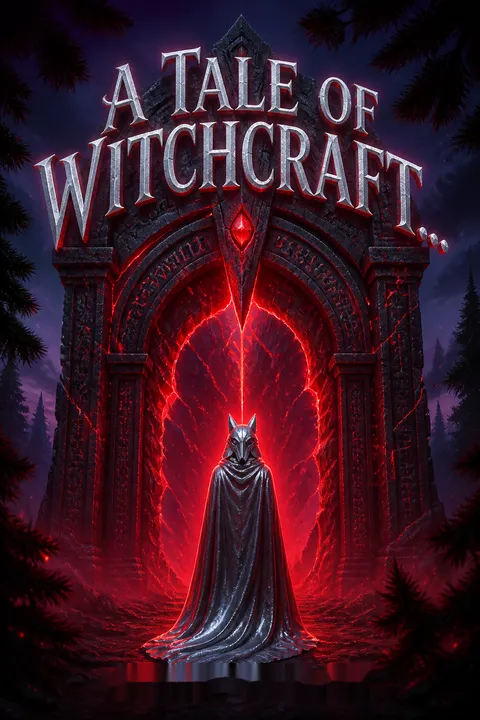


Plot Summary
Prologue
For the first time in six centuries, 333 masked men gather at the Righteous Brotherhood’s ruined fortress. Their leader explains that the Fairy Godmother, Brystal Evergreen, has undone the order they spent generations imposing: magic is legal, women may study, and magical creatures have homes.
The Brotherhood intends to restore its rule with the help of a future king, and its ancient weapons are made of bloodstone, a material that magic cannot stop. The High Commander marks Brystal as the first target. The Brotherhood has returned not merely to oppose her reforms, but to make her destruction the opening move in a campaign against magic.
The prologue makes inherited prejudice an organized political force. The Brotherhood’s members do not need to know one another; secrecy turns private obedience into collective power, while the family oath makes ideology feel like a duty rather than a choice. Its leaders describe equality and magic as threats to civilization, a reversal that exposes how dominance disguises itself as protection. Bloodstone gives this old doctrine a concrete weapon, and Brystal’s portrait gives it a target. The looming conflict is therefore not simply magical versus nonmagical. It is a contest over who gets to define order, and whose safety counts as civilization.
The Piano Dam
When earthquakes crack the Western Dam, King Warworth asks Brystal’s Fairy Council to repair it during Dam Day. Brystal seals the leak and dries the city, but Lucy, desperate to give the crowd a bigger show, accidentally brings the entire dam down. Brystal and the other fairies hold back the flood while Lucy summons a hillside of pianos that forms a barrier and saves Fort Longsworth.
The cheering crowd treats the disaster as entertainment, yet Brystal feels exposed rather than celebrated. A voice in her thoughts insists the public will turn against magic again. Back at the academy, Brystal removes Lucy from the council after the near catastrophe, while the strange, self-condemning thoughts continue.
The rescue is both a public triumph and an emotional warning. Lucy’s instinct to entertain turns aid into spectacle, while Brystal’s instinct to limit the performance cannot prevent the city from demanding more. Their disagreement is not simply about recklessness; it concerns whether the magical community must continually earn acceptance by pleasing its audience. Brystal’s intrusive thoughts sharpen that pressure into personal dread. The crowd’s applause proves that opinion has changed, but her fear that it can change back reveals how little safety she feels beneath the public praise.
An Invitation Home
At the academy, requests and visitors keep Brystal from finding quiet, and her worry about the voices grows. She admits to Pip, a young fairy she once knew at the Bootstrap Correctional Facility, that she cannot make herself feel happy despite everything she has achieved. Pip recognizes the hollowness left by their former confinement, and their shared honesty gives Brystal a brief moment of connection.
Then Tangerina and Skylene bring a wedding invitation from Brystal’s family: her brother Barrie is marrying Lady Penny Charming. Brystal has not seen her family since she escaped a life that rejected her, so the invitation brings dread as well as hope. Though her negative thoughts suggest she is unwanted, she decides she will attend.
Brystal’s distress persists even in a life she has built herself, complicating the idea that external success automatically heals internal injury. Pip’s account of feeling empty in a safe home gives Brystal a language for the way old deprivation can outlast its circumstances. Their exchange matters because neither can fix the other, yet each makes the other’s pain legible. The wedding invitation then brings the past into the present. Brystal’s choice to go is not proof that she has overcome her shame; it is a small act of movement while shame is still speaking.
Wedding Under Fire
Brystal arrives at the Evergreen home to find her mother more confident and her childhood house transformed. Her mother explains that she demanded help and better conditions from Justice Evergreen, while Barrie greets Brystal warmly.
Her father remains hostile, and her brother Brooks, stripped of his legal post, masks disappointment with drink and sarcasm. Brystal also meets Prince Gallivant, known as Seven, whose jokes and love of the same stories make her feel unexpectedly at ease.
During Barrie’s wedding, masked attackers fire bloodstone weapons that pierce Brystal’s protective magic. Seven takes an arrow meant for her, and Brystal heals him. The attackers withdraw, leaving a message of hatred toward magic and confirming that Brystal herself is their target.
The wedding compresses Brystal’s competing histories into one crowded lawn: her mother’s growing agency, her father’s refusal, Brooks’s wounded pride, and Barrie’s affection. Seven offers a different kind of recognition, meeting Brystal as a person rather than a public symbol. Then the attack turns that tentative intimacy into a test of trust and courage. Bloodstone matters because it makes Brystal vulnerable in a way ordinary magic cannot remedy. Seven’s injury also establishes a reciprocal bond, though the scene’s warmth will later make it harder for Brystal to judge what she sees.
The Witch at the Hedge
At the academy, the Fairy Council studies the attackers’ bloodstone arrow, and Mrs. Vee recognizes the group behind it as the Three Thirty-Three before fear drives her from the room. Soon a witch, Mistress Mara, arrives at the territory with four students and invites fairies to join her new Ravencrest School of Witchcraft.
She argues that the academy’s welcoming, orderly version of magic does not speak to everyone. Pip, still unsure where she belongs, chooses to leave with Mara. Brystal tries to stop her, but Pip insists on deciding for herself and stretches her arm free of Brystal’s grasp. The departing carriage carries Pip into the woods, leaving Brystal distressed and Mara’s intentions uncertain.
Pip’s departure turns Brystal’s desire to protect into a problem of authority. Brystal believes she sees danger, but her attempt to physically hold Pip repeats the logic of confinement that both girls have endured. Pip’s choice may be risky, yet it is also a claim to self-direction. Mara’s appeal succeeds because it names a real absence: Brystal has created safety, but Pip still does not feel that safety means belonging. The scene thus resists an easy division between a benevolent institution and a dangerous outsider. Brystal’s good intentions cannot decide another person’s identity for them.
The Mentor in Ice
After Pip leaves, Brystal travels beneath the northern lights to find the source of her growing despair. In an icy cavern she discovers the Snow Queen frozen inside a wall, then encounters Madame Weatherberry, her former mentor, in ghostlike form.
Weatherberry explains that she separated herself from the Snow Queen and remained in the mountains to keep the danger contained. Brystal admits that responsibility, fear of public rejection, and the burden of her friends’ choices have overwhelmed her. Weatherberry advises her to seek help rather than treat misery as a personal failure.
She also identifies the attackers as the Righteous Brotherhood, a centuries-old society devoted to human supremacy. Lucy, who followed Brystal, discovers the frozen Snow Queen is Weatherberry and leaves in anger over Brystal’s secrecy.
The cavern links private suffering to an older, unresolved secret. Weatherberry can counsel Brystal, but she cannot return to ordinary life or remove the burdens Brystal carries. Her advice reframes asking for help as an act of courage, directly opposing Brystal’s tendency to conceal distress until it becomes unmanageable. Lucy’s discovery then shows the cost of that concealment within friendship. Brystal kept the truth to protect others, but Lucy experiences the silence as exclusion. The scene makes loyalty complicated: love can motivate secrecy, yet secrecy also denies loved ones the chance to respond.
Lucy Enters Ravencrest
Furious with Brystal, Lucy flies away and eventually reaches Ravencrest Manor, where she finds Pip and the witch students. The school’s eerie rooms and its lynxes unsettle her, but curiosity keeps her there. While seeking another place to sleep, Lucy wanders into Mara’s private study.
Hareiet follows and accuses Lucy of spying, but Mara punishes Hareiet by transforming her into a lynx and stores a pumpkin bearing her likeness. Later, the manor’s shifting corridors carry Lucy near the study again, where she overhears Mara and a masked visitor discussing a curse intended to kill Brystal and harm the king. Lucy decides to remain at Ravencrest, learn the plan, and stop Mara herself.
Ravencrest gives Lucy the distance she wanted from Brystal, but it replaces familiar conflict with a more dangerous mystery. Her comic confidence is tested by a school where punishment is severe and the rules are opaque. Hareiet’s transformation reveals that Mara’s authority is not merely theatrical, while the hidden meeting confirms Lucy’s suspicion that something larger is underway. Lucy’s decision to stay is partly strategic and partly emotional: she wants to protect Brystal, but she also wants to prove she can act without the Fairy Council. The urge to repair the friendship is present, even while pride keeps her from returning immediately.
A Curse Beneath the Moon
Mara tests Lucy and Pip in jinxes, hexes, potions, and curses. Pip’s magic gives her claws, whiskers, and eventually a skunk tail; Lucy resists harming people, but still curses the ballerinas who once mocked her by turning them into swans. At Ravencrest’s enrollment ceremony, the girls drink a potion beneath a blood moon and take the school’s oath.
Their classmates remove necklaces that had concealed their witch forms, but Lucy and Pip collapse before learning what has happened to them. Lucy wakes wearing a necklace that restores her preferred appearance and hides the effects of witchcraft. Mara says it is protective, but Lucy’s instincts warn her that the necklace is concealing something far worse.
The entrance exams make witchcraft a moral practice as much as a technical one: each girl must decide what harm she is willing to cause and what she considers justice. Lucy’s reluctance distinguishes her from Mara’s definition of power, even as personal humiliation draws her into revenge. The ceremony then converts consent into a trap. Lucy and Pip believe they are joining a school, but they lack essential information about the ritual and its consequences. The necklace becomes a visual metaphor for managed self-image: it offers confidence by hiding evidence, but that concealment prevents Lucy from recognizing the danger inside her.
Tea Before the Coup
With Lucy missing and her own thoughts darkening, Brystal nearly refuses Seven’s invitation to tea. Her friends persuade her to go, and the two spend a long day laughing, sharing books, and speaking about the loneliness of their families. Seven’s company briefly quiets Brystal’s despair.
At night, they see a masked Brotherhood member crossing the town square and decide to follow him rather than alert the guards. Disguised in silver robes, Brystal and Seven infiltrate the Brotherhood’s coastal fortress.
There, its leader announces that the group will soon attack the Fairy Territory and claims Brystal will surrender after being made notorious. Brystal suspects Prince Maximus is the Righteous King. They rush to the castle and find King Champion XIV dead, with Seven’s uncle accusing Brystal of murder.
The tea gives Brystal a rare interval in which connection changes how the world feels, not because her problems disappear but because another person shares her attention. The sudden pursuit turns intimacy into danger, binding Seven to the political plot in Brystal’s mind. Her inference that Maximus leads the Brotherhood is plausible because his views fit its doctrine, but plausibility is not proof. The dead king and immediate accusation make Brystal’s investigation collapse into crisis. Her willingness to trust Seven and her confidence in her own reading of events are both about to be tested.
The Surrender Letter
Brystal escapes the castle, but Prince Maximus’s accusation spreads and turns public opinion against her and the magical community. The Brotherhood marches toward the Fairy Territory, while Brystal’s intrusive thoughts insist that she is a failure and that the fairies would be safer without her.
She asks Emerelda to take over if anything happens, then writes her a letter explaining what she knows about the Brotherhood, the bloodstone weapons, Maximus, and the Snow Queen’s hiding place.
Brystal leaves her wand behind and surrenders at the border, hoping her absence will protect the others. The High Commander reveals that the Brotherhood has taken Seven and offers his book as proof. Brystal follows the men, believing she has run out of ways to help.
Brystal’s surrender is presented as a decision made under emotional coercion, not as a calm strategic sacrifice. Her letter shows that she still thinks carefully enough to pass on vital information, even as her self-trust collapses. This split between competence and self-condemnation is central to the curse’s effect: she can recognize what others need while believing she herself is expendable. The hostage detail exploits her compassion and makes surrender feel like a rescue attempt. Her choice is therefore understandable, but it leaves the Brotherhood with exactly the access and control it wants.
The Beast Within
At Ravencrest, Lucy wakes restored by her necklace but cannot shake her suspicion that Mara has hidden a curse. She flies to the academy with swans and seven pumpkin-shaped curse counters, then asks Brystal’s friends for help. Using a guide to dark magic, they identify a Shadow Beast growing inside Lucy; it will kill her when it reaches full strength.
The necklace has disguised its effects, and the curse tricks Lucy into believing she should keep it. Emerelda, Tangerina, Skylene, and Xanthous build a circle of salt, sage, crystals, and candles, then join hands with Lucy. Their repeated ritual forces the beast out. It escapes as a shape-shifting cloud, and Lucy leads the others toward Ravencrest, certain Mara intends to use it.
Lucy’s rescue depends on friends who had reason to distrust her and every reason to ask for an explanation. Her return is messy and urgent, but the council responds to the danger rather than demanding that Lucy first prove herself worthy of help. The Shadow Beast’s false persuasion resembles Brystal’s intrusive thoughts: both turn self-preservation into apparent selfishness or failure. Lucy survives because her friends distinguish her voice from the entity exploiting it. The scene also reverses the earlier pattern of Lucy acting alone to win recognition. This time, she accepts cooperation before she can control the outcome.
Seven’s Crown Unmasked
At the fortress, Brystal discovers that the Righteous King is Seven, who used their friendship to steer her into the frame for the king’s murder. He has also deceived Mistress Mara, whose Shadow Beast raises 999 founding members of the Brotherhood as an army of the dead. Seven then shoots Mara with a bloodstone arrow, revealing that he wants world domination rather than revenge.
He plans to blame Brystal for the deaths of the king, Maximus, and Maximus’s sons, then present himself as the hero who commands the dead. Trapped beneath a bloodstone net, Brystal loses consciousness and dies. Seven’s betrayal turns the safety she felt with him into the instrument he used to bring her down.
Seven’s betrayal works because it exploits what Brystal most needs: an experience of being seen without being treated as a symbol. His warmth is not incidental to the conspiracy; it is its most efficient disguise. Mara is also manipulated through an older wound, her desire to punish humanity for the losses she has endured. The army of the dead literalizes political inheritance, returning ancestors as obedient instruments after stripping away their personhood. Seven’s ambition does not merely reject the Brotherhood’s ideology; it consumes that ideology as a route to power, showing how easily grievance can be repurposed into domination.
The Pumpkins Tell All
Lucy and the Fairy Council reach Ravencrest and tell the witch students that Mara used the school to create a Shadow Beast. In Mara’s private study, Lucy finds the pumpkin bearing her own face, then recognizes another carved likeness as Brystal.
Old Billie and the invisible butler confirm that the pumpkins record people Mara has cursed. Emerelda reads Brystal’s letter, which identifies the Brotherhood’s fortress and warns that Brystal intends to surrender.
Lucy also tells the others that Madame Weatherberry survives within the Snow Queen. At first, the fairies resist the revelation, but Lucy explains that Brystal’s recent despair may have been forced upon her. The group decides to rescue her, and the Ravencrest students volunteer to join them.
The pumpkins turn a grotesque collection into evidence, making private harm visible to people who had not known what to look for. Lucy’s discovery also gives her a chance to interpret Brystal’s actions with compassion rather than repeating the anger that separated them. Her confession about Weatherberry shows that she, too, had withheld the truth to spare her friends pain. Instead of using that parallel to excuse secrecy, Lucy uses it to understand Brystal’s position. The alliance between fairies and witches begins not with an abstract declaration of tolerance, but with a shared decision to save someone whom both institutions have failed to protect.
A Bargain with Death
Between life and death, Brystal meets Mistress Mara in a strange field where trees and clocks represent people’s lives. Mara reveals that she cursed Brystal’s mind to make her vulnerable and that the curse lifted whenever Brystal was with Seven, helping create her attachment to him. She explains that she is the Daughter of Death, who has spent ages grieving the people humanity took from her.
Death arrives to claim Brystal, but Mara offers to take her place if Brystal will hunt down the Immortal who once deceived Death. Brystal accepts a one-year deadline, hoping the ancient enchantment that can kill the Immortal may also stop Seven’s army. Her clock starts again, and she is pulled back toward life with the curse still unresolved.
The afterlife scene reframes the story’s antagonists without absolving them. Mara’s grief gives her vengeance a history, but history does not make her harm to Brystal acceptable. Brystal’s many watches show her a version of herself that her curse concealed: someone whose actions have helped people continue living. The bargain restores a future, but attaches it to a new obligation, so survival is neither a clean rescue nor a return to innocence. Crucially, Mara identifies the cure for Brystal’s mental curse as the mind itself, leaving Brystal with an unfinished struggle that cannot be solved by a stronger spell.
Climbing Out Alive
Brystal wakes at the bottom of a grave in the fortress, battered and without her wand. The voices in her mind urge her to stop, but memories of the people she has helped give her enough resolve to climb. Above ground, Lucy, the Fairy Council, Pip, the Ravencrest witches, and the lynxes attack the Brotherhood to create an opening.
Lucy finds Brystal in the grave, and the two apologize for the secrecy and anger that split them. The group begins to escape, but Seven orders the archers to fire. Mrs. Vee arrives with animated kitchen utensils, disrupting the attack long enough for everyone to flee by carriage and broomstick. The Brotherhood remains powerful, but its immediate attempt to seize Brystal fails.
Brystal’s climb is an act of resistance performed before she knows rescue is coming. She cannot disprove every cruel thought or restore her strength at once, but she can choose a next step and draw on remembered relationships. When Lucy finds her, their apologies do not erase the harm between them; they make reconciliation possible by naming shared responsibility. The rescue itself is collective and delightfully unorthodox, from the lynxes to Mrs. Vee’s utensils. That variety matters: the Brotherhood’s force depends on uniform weapons and obedience, while Brystal’s allies survive through distinct abilities used together.
The Territory Fortifies
Back at the academy, Brystal quickly assigns work instead of retreating into fear. Emerelda will raise an emerald wall around the territory, with Xanthous adding a barrier of fire.
Tangerina will bring Brystal’s family out of the Southern Kingdom, while Skylene warns the other sovereigns that Seven has killed King Champion XIV and plans to expand his power. Lucy will prepare pamphlets exposing the truth and distribute them across Chariot Hills with help from the witches. Brystal also reinstates Lucy on the Fairy Council.
Her thoughts may still darken again, but she now recognizes fear as something that can distort judgment rather than prove defeat. The group prepares for a war they have not yet won, carrying hope as a practical choice rather than a guarantee.
The ending resolves the immediate crisis without pretending the larger danger has vanished. Brystal’s renewed leadership is visible in concrete delegation: she distributes responsibility instead of carrying every decision alone. Reinstating Lucy makes that change relational as well as political, since Brystal chooses trust after both friends have acknowledged their failures. The pamphlets and defensive barriers address distinct fronts, public belief and physical safety. Hope here is not optimism that events will turn out well; it is the disciplined refusal to let fear dictate the next action. The Brotherhood still threatens the world, but its opponents are no longer isolated or unaware.
Analysis
The novel puts public progress beside private vulnerability. Brystal has changed laws, established a home for magical people, and earned crowds of admirers, yet the applause does not repair the shame she carried from her childhood. Her experience resists the comforting idea that external acceptance automatically produces inner security. In fact, being made into a symbol intensifies the pressure: she fears that every mistake will be treated as evidence against an entire community.
The central conflict is fought through competing forms of control. The Righteous Brotherhood enforces inherited hierarchy with secrecy and bloodstone; Seven turns affection and political theater into tools for personal power; Mara converts grief into vengeance; and Brystal’s curse makes self-condemnation sound like reason. These forces differ, but each narrows another person’s ability to choose. The story’s answer is not perfect virtue or solitary strength. It is the less glamorous practice of recognizing manipulation, asking for help, respecting another person’s agency, and distributing responsibility.
That principle shapes the friendships. Brystal’s attempt to protect Pip by stopping her departure repeats the coercive structure she wants to oppose. Lucy’s anger at Brystal’s secrecy is understandable, but her later return turns insight into repair rather than accusation. The council, witches, lynxes, and Mrs. Vee succeed together because no one ability can meet the Brotherhood’s threat. Their rescue does not defeat the enemy, and the book does not pretend that courage cancels danger. It restores the possibility of acting together.
The story also treats hope as a practice rather than a prediction. Brystal cannot make the intrusive thoughts disappear, and she cannot promise that public opinion will remain kind. She can challenge the thoughts, remember the people who care about her, climb out of the grave, and make plans with her friends. The ending’s hope is therefore credible because it does not depend on certainty. It depends on continuing to choose connection and action while uncertainty remains.
Review Summary
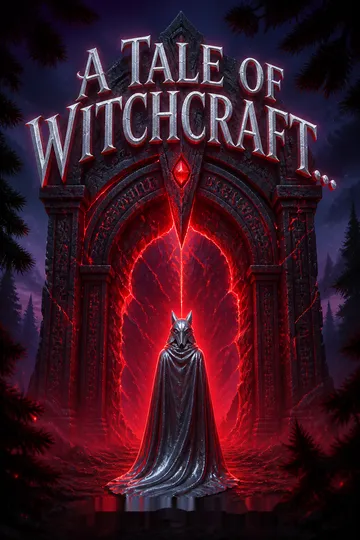
A Tale of Witchcraft... is a highly enjoyable sequel that continues the magical adventure of Brystal and her friends. Readers praise Colfer's creative world-building, engaging characters, and important themes like mental health and acceptance. The book is darker than its predecessor, with unexpected plot twists and new magical elements. While some found it less captivating than the first installment, most readers were entertained by the fast-paced story and eagerly anticipate the next book in the series.
People Also Read



Characters
Brystal Evergreen
Reluctant public heroBrystal is a young fairy whose magical talent has helped change laws and create a safe home for magical people. She is compassionate, practical, and inclined to measure her worth by how much she can do for others. Public admiration makes her uneasy because it cannot erase memories of rejection or guarantee that acceptance will last. Her instinct to protect friends can become controlling when she is frightened, and she often hides her own distress until it overwhelms her. Brystal’s central struggle is learning that responsibility does not require isolation. She is most effective when she can accept help, listen to others’ choices, and separate painful feelings from reliable evidence.
Lucy Goose
Trouble-loving loyalistLucy is a member of the Fairy Council whose unpredictable magic tends to turn plans into spectacles. A former performer, she understands audiences and worries that public acceptance of magic can vanish if people lose interest. Her humor protects a more vulnerable desire to be valued for her unusual abilities rather than treated as a liability. Lucy is bold, curious, and quick to act, sometimes before considering the danger to others. Her loyalty to Brystal is deep, though anger and pride can make her withdraw instead of speaking honestly. She thrives when she can turn mischief into purposeful action and allow friends to share the risk.
Prince Gallivant, called Seven
Bookish seventh heirSeven is a young prince far down the Southern Kingdom’s line of succession. He is witty, restless, and more comfortable with stories and games than with the rigid ceremonies surrounding royalty. The loss of his parents shaped his understanding of family and protection, while his closeness to his grandfather gives him an emotional anchor in court life. He connects easily with Brystal because he treats her as a person rather than a celebrated figure. Seven’s casual charm sits beside the pressure of a royal family organized around rank, inheritance, and competition.
Lucy’s friends on the Fairy Council
Brystal’s working circleEmerelda, Tangerina, Skylene, and Xanthous are Brystal’s closest colleagues and the other core members of the Fairy Council. Emerelda is organized and protective of the group’s time. Tangerina is socially perceptive and confident, while Skylene is openhearted and often asks the questions others overlook. Xanthous is thoughtful and tries to make sense of unfamiliar magic. Together they turn Brystal’s reforms into practical work, from repairs to public aid. Their differing temperaments give the council balance, though they can become so busy supporting Brystal that they fail to notice when she needs support herself.
Pip Squeak
Searching young fairyPip is a young fairy who survived the harsh Bootstrap Correctional Facility and is still learning how to feel at home beyond it. Her body can stretch and bend in unusual ways, but her deeper uncertainty concerns where she belongs and whether she is allowed to choose for herself. Pip is perceptive about the difference between forced cheerfulness and genuine happiness. She appreciates Brystal’s care, yet resists being treated as someone whose decisions can be made on her behalf. Her journey toward witchcraft grows from a real hunger for identity, not simple rebellion.
Madame Weatherberry
Brystal’s former mentorMadame Weatherberry founded the magical school that Brystal inherited and taught her to see magic as a way to help others. Warm, imaginative, and deeply hopeful, she believes that changing how people think can change what they believe is possible. Her confidence in Brystal is sincere, but her decisions carry consequences that Brystal must navigate without her daily guidance. Weatherberry is both a source of wisdom and a reminder that even good intentions can create burdens when difficult truths remain hidden. She values empathy, yet her history shows how hard it can be to ask for help before a problem grows beyond control.
Mistress Mara
Shadowed witch headmistressMistress Mara is the founder of the Ravencrest School of Witchcraft, an elegant and unsettling teacher who presents witchcraft as an alternative to the Fairy Council’s polished form of magic. She is charismatic, exacting, and willing to use fear as a teaching tool. Mara appeals to young people who feel out of place by promising them room to embrace what others label strange or dark. Her concern for witchcraft’s standing is tangled with old grievances and a powerful need to control outcomes. She can recognize the pain that drives others, but that insight does not always restrain her from exploiting it.
Mrs. Evergreen
Newly assertive motherBrystal’s mother is loving and perceptive, with a practical understanding of how much courage it takes to change a life from within. Once constrained by her husband’s rules, she begins demanding help and respect in her own home. She supports Brystal without making her responsible for her happiness, a distinction that gives their relationship warmth and freedom. Mrs. Evergreen recognizes that her daughter’s example helped her imagine a different future, but she also insists that Brystal is allowed to live her own life.
Barrie Evergreen
Brystal’s affectionate brotherBarrie is Brystal’s younger brother, a nervous but affectionate man who is happiest when he can pursue his interests and build a loving life. His fascination with locks and keys helps him meet Penny at the library, and his excitement about marrying her makes him unusually vulnerable to wedding-day jitters. Unlike their father, Barrie welcomes Brystal without asking her to hide or apologize for who she has become. His open affection offers her a glimpse of family love that does not depend on obedience.
Brooks Evergreen
Disgraced older brotherBrooks is Brystal’s older brother, proud and sharp-tongued, but privately unsettled after losing his position as a Deputy Justice. He once followed the career his father expected, without knowing what he wanted for himself. His bitterness often comes out as sarcasm and drinking, yet he is capable of stepping between Brystal and a crowd when she is overwhelmed. Brooks’s uncertainty is not simple laziness; he has lost an inherited identity before discovering a new one.
Justice Evergreen
Brystal’s disapproving fatherJustice Evergreen is Brystal’s father and a powerful figure in the Southern Kingdom’s legal system. He is conservative, proud, and accustomed to having the final word at home and in court. His regard for status and order makes him resistant to Brystal’s choices and to the changes she represents. He is not emotionally expressive, and his family often has to reckon with what his authority has denied them. His presence helps explain why Brystal learned to anticipate rejection before she learned to trust her own judgment.
Mrs. Vee
Jovial academy housekeeperMrs. Vee manages the academy’s household and is known for her warmth, abundant energy, and relentless jokes. She appears to find joy in nearly every task, from cooking for a growing community to planning a kitchen expansion. Her cheerfulness makes her easy to underestimate, especially when fear causes her to retreat. Mrs. Vee represents the quiet labor that keeps a community functioning, but she is not merely a caretaker. When danger reaches the people she loves, she can act with surprising force and inventiveness.
King Champion XIV
Reform-minded sovereignKing Champion XIV rules the Southern Kingdom and is willing to reconsider laws that have long excluded women, magical people, and talking creatures. He trusts Brystal’s judgment and gives her the political room to argue for change. His age and royal position make his support consequential, but also place the reforms within a system that can shift when a successor takes power. He is a grandfather to Seven and a father to Prince Maximus, connecting the kingdom’s public future to a divided royal family.
Prince Maximus
Traditionalist royal heirPrince Maximus is King Champion XIV’s son and a determined defender of the kingdom’s old hierarchy. He disapproves of Brystal’s reforms and believes women, magical people, and talking creatures should not gain the standing she has helped secure. At court he is confident, politically observant, and accustomed to being treated as the likely next sovereign. His rigid beliefs make him a sharp contrast to his father’s openness and Seven’s less formal temperament.
The High Commander
Brotherhood’s masked leaderThe High Commander is the public face of the Righteous Brotherhood, speaking for a secret society whose members conceal their identities even from one another. He treats the group’s inherited beliefs as sacred duties and directs its members with practiced authority. His speeches recast domination as stability and persecution as protection of the natural order. He is committed to the Brotherhood’s cause and expects its members to obey a strict chain of command.
Horence
Three-headed border guardHorence is the imposing knight who guards the Fairy Territory on a massive three-headed horse. His antlered helmet and silent watchfulness make him frightening at the border, but his role is protective rather than hostile. He later works inside the academy, showing how a once-intimidating barrier can become part of everyday community life.
Sprout
Farm-bred witch studentSprout is a Ravencrest student with green hair, a farm background, and an affectionate fascination with soil and fertilizer. She is practical in unexpected ways and often supplies literal-minded observations amid the witches’ stranger habits. Her relaxed manner makes her seem indifferent, though she is loyal to her classmates.
Beebee
Stuttering insect enthusiastBeebee is a small, bespectacled witch student who stutters and collects insects. She can seem timid, but she is competitive, observant, and confident about the subjects she knows well. Her love of bugs reflects a desire to feel powerful in a world where she has often been overlooked.
Stitches
Doll-making witchStitches is an unsettlingly cheerful witch student who knits dolls and enjoys frightening stories. Her humor tends toward the macabre, and she takes pride in being difficult to shock. Behind the theatrics is a curious student learning to turn her craft into a form of magic.
Hareiet
Suspicious witch studentHareiet is a twitchy, sharp-eyed Ravencrest student who distrusts outsiders and is quick to suspect Lucy of spying. Her vigilance makes her confrontational, especially when she believes the school is under threat. She is one of the first students Lucy encounters there.
Death
Keeper of life’s thresholdDeath governs the passage between life and the afterlife and appears as a towering figure cloaked in darkness. The landscape associated with Death gives each person a tree and a clock, suggesting a particular relationship between time, purpose, and mortality. Death is not portrayed as a simple villain, but as a powerful presence whose choices affect the balance between living and dying.
Old Billie
Living wall illustrationOld Billie is a black goat illustrated on Ravencrest’s walls, able to move from room to room and communicate through looks and gestures. Mischievous and observant, she notices more than she reveals. Her silent guidance makes her an unusual presence in a manor where even the walls seem to have intentions.
Plot Devices
Bloodstone
Magic-piercing weaponBloodstone is a glowing red material used by the Righteous Brotherhood to make arrows, cannonballs, chains, and other weapons. Unlike ordinary weapons, it passes through magical shields and burns the skin of magical beings. Its limited supply helps explain why the Brotherhood uses it carefully, while its existence gives the group a way to threaten Brystal directly. The material later proves important beyond the battlefield, linking Death’s power to the possibility of ending a life that ordinary magic cannot touch.
Brystal’s mind curse
Turns fear inwardBrystal experiences intrusive thoughts that magnify her doubts, isolate her from friends, and make every setback seem like proof that she has failed. She assumes the thoughts come from her own judgment, which makes them especially persuasive. The curse also eases when she is with Seven, helping her misread relief as evidence of trust. Its damage culminates in Brystal surrendering to the Brotherhood. She later learns that the curse is not simply removed by magic; resisting it requires her to question its claims and draw on her own judgment and relationships.
The Shadow Beast
Power grown inside a hostA Shadow Beast is produced through a ritual involving a host, a potion, a full moon, and the rhythm of a heartbeat. The entity grows inside its host and can strengthen a witch’s power for a major enchantment, but it will kill the host if it is not removed in time. Mara’s ceremony disguises its effects behind a magical necklace and manipulates Lucy into believing she should keep the creature. Lucy’s friends use a circle of purity and their joined efforts to force it out. Mara then uses the creature to animate the Brotherhood’s dead ancestors.
Ravencrest’s curse counters
Evidence hidden as pumpkinsWhen Mara curses someone, a jack-o’-lantern bearing that person’s likeness appears in her private study. A black candle inside each pumpkin reflects the curse’s remaining duration. The counters first seem like an unnerving collection, but Lucy eventually recognizes her own likeness and then Brystal’s. Their faces prove that the two friends have been cursed and help the Fairy Council understand that Brystal’s despair may not reflect her true judgment. The pumpkins turn Mara’s private record of power into evidence her opponents can use.
Map of Magic
Tracks the magical communityThe Map of Magic displays a light for every living witch and fairy, showing where magical people are located across the kingdoms and territories. Brystal uses it to monitor the community and find Lucy after their separation. Its tracking function becomes essential when Mrs. Vee needs to locate the missing fairies and rush to the fortress. Nearby, a globe lets Brystal watch the northern lights, whose continued brightness indicates that the Snow Queen remains contained in the mountains. Together, the objects make care visible as attention, monitoring, and timely response.
A Tale of Magic Series
About the Author
Other books by Chris Colfer
Download PDF
Download EPUB
.epub digital book format is ideal for reading ebooks on phones, tablets, and e-readers.








