


Summary Unavailable
This book is not suitable for a summary (it may be a textbook, workbook, cookbook, reference book, or collection). However, you can still explore the FAQs, about author, and other metadata below!
Plot Summary
Prologue
During a storm, Queen Burn catches Hvitur, an IceWing carrying a stolen SkyWing egg meant for the prophecy. Burn drops the egg from a cliff and kills Hvitur, apparently destroying the chance to hatch one of the five foretold dragonets. Below, Kestrel and Webs find only broken shell.
They have already lost Asha, who carried a MudWing egg to safety and died of her wounds. Webs refuses to abandon the remaining eggs, and sets out to steal a RainWing egg as a replacement. Their plan to end the war survives, but it begins with a missing dragonet and a prophecy already bent by violence.
The opening makes the prophecy less a secure promise than a fragile human project. Burn can dismiss destiny because she has the power to destroy its symbols, while Webs answers by improvising a replacement rather than accepting defeat. That choice saves the movement's plan but also establishes its moral cost: the dragonets will be raised through secrecy, theft, and coercion in the name of peace. The scene's harshest irony is that the prophecy is supposed to stop a war, yet its guardians begin by losing lives to it. Fate here is not an escape from politics; it is another object that political power can damage.
Saltwater, Bad Judgment
After escaping Queen Scarlet's prison, Tsunami reaches the shore determined to find her SeaWing family. Her companions are wary, especially Starflight, who urges them to hide from the patrols still searching for them. When Tsunami spots a SkyWing soldier slowing above the trees, she assumes he has seen Sunny and attacks.
Clay helps drag the soldier into the sea, where Tsunami holds him under until he stops moving. Then guilt overtakes her: she and Clay haul him ashore, and Clay revives him. The dragonets pin him beneath a fallen tree and leave. Tsunami insists she acted to protect her friends, but their alarm exposes the difference between courage and reflex. She has kept them alive before, yet her certainty can endanger them too.
Tsunami's first decision on the open shore is both protective and premature. She does not attack for pleasure; she sees a possible threat to Sunny and acts before danger can become certain. But the rescue turns into a killing because she treats her own interpretation as fact. The others' objections matter because they are not simply condemning her. They make her confront the cost of leadership when force is used without consultation. Her attempt to save the soldier after realizing he may have been innocent shows that her conscience is active, even when she tries to deny it. The scene begins her movement from command as impact to leadership as judgment.
Riptide's First Lesson
Tsunami leaves the others asleep and searches the islands alone, hoping to reach the SeaWings before her friends can question her again. She follows a blue SeaWing named Riptide, but he flees when she approaches.
Their signals and glowing stripes become a disastrous misunderstanding: Tsunami thinks he attacks her, while Riptide believes she has sent him a friendly message in Aquatic, the SeaWing language. Once they reach the air, she discovers that Webs never taught her how SeaWings communicate underwater.
The revelation wounds her more than the fight. She is built for the sea but cannot read its inhabitants. Riptide eventually recognizes her as a SeaWing and, after a brief clash with Clay, agrees to guide the group toward the hidden Summer Palace.
The encounter turns Tsunami's imagined homecoming into a test of belonging. Her body identifies her as SeaWing, but the language that would make her legible to her own tribe has been withheld. That gap is not just an inconvenience. It makes her mistake another dragon's intentions and transforms her hunger for connection into aggression. Riptide's embarrassment and Tsunami's shame create a small, useful intimacy: both must revise their first judgments. Her ignorance also exposes how incomplete her guardians' care was. They prepared the dragonets for survival and prophecy, not for the ordinary knowledge that would let Tsunami live among her people.
A Princess, Not Home
Riptide leads the dragonets through a submerged tunnel into the Summer Palace, where Queen Coral recognizes Tsunami as her stolen daughter. Tsunami gets the reunion she has imagined, complete with pearls and a loving embrace, but Coral's welcome changes when she sees the other dragonets.
She orders them held in a guarded cave, insisting that unfamiliar tribes pose a danger to the SeaWings. Tsunami's younger sister, Anemone, arrives tethered to Coral by a harness and already trained in royal duties.
Shark, Coral's brother and palace commander, initially threatens the friends, then backs down when Tsunami claims authority as a princess. Tsunami wants to believe she has found safety and family, yet the welcome is divided: she is cherished, while the dragons who matter most to her are treated as prisoners.
The palace offers Tsunami the recognition she has craved, but the recognition comes with a political price. Coral's affection is sincere, yet it does not make her instinctively trust the people Tsunami trusts. That contradiction unsettles Tsunami's idea of home: being loved by a parent does not automatically make her friends safe. Anemone's harness gives physical form to Coral's anxious care, while Tsunami's insistence that the group stay together signals an emerging loyalty that competes with her royal fantasy. The scene also introduces a difference in power. Tsunami can command in the name of her rank, but she has not yet learned how the palace's deeper authority works.
Gill Beneath the Arena
A report of a dead SkyWing near the palace brings Tsunami to Kestrel's body, but she hides that she knows the slain guardian. She fears Coral will suspect the dragonets, and she is not ready to face her companions' judgment. At the next Council meeting, wounded SeaWings report disorder in the Sky Kingdom, and Tsunami admits the dragonets escaped Scarlet's palace.
Coral then asks about Gill, a captive she hoped to rescue. Tsunami tells her that Gill died in the arena, where Scarlet forced him to fight. The worst truth follows: Gill was Tsunami's father, and Tsunami killed him while trying to survive. She remembers not only the necessity of the act, but the power she felt in it. Her new family begins with grief she cannot explain away.
Tsunami's reunion fantasy collapses under two separate forms of recognition. Kestrel's corpse makes the old guardians impossible to leave behind, while Gill's identity forces Tsunami to reinterpret an act she had filed under survival. The shame is complicated because the fight was coerced and Gill had been driven out of his mind, yet Tsunami recalls feeling powerful as she killed him. That detail prevents the scene from offering easy absolution. Her moral distress comes from seeing that necessity does not erase the emotional truth of what she did. By telling Coral, she accepts the risk of being known rather than keeping her past sealed away.
The Hatchery's Hidden Killer
Someone attacks Tsunami in a submerged tunnel, but she escapes by flashing her stripes and reaches Coral with a warning. Coral immediately fears for the eggs at the Deep Palace and takes Tsunami there. In the Royal Hatchery, one of Coral's two remaining female eggs is smashed, and the dragonet inside has been strangled. The queen orders Tortoise, the guard who left her post briefly to eat, brutally executed.
Tsunami cannot accept that the hatchery is safe simply because Coral says so. She takes the last egg, secures it to herself with an enchanted harness, and volunteers to protect it. Her decision is shaped by the broken body she has seen, and by the realization that a secret route must exist into a room meant to be sealed.
The hatchery disaster exposes the danger hidden inside Coral's protective system. Her fear for her daughters is real, but her response to failure turns care into terror and terror into punishment. Tsunami's choice to take the egg is not a simple rejection of her mother. It is a practical judgment that the queen's established safeguards have repeatedly failed. By accepting the egg and the risk attached to it, Tsunami begins to protect someone without claiming ownership over her. The scene also shifts the story from family reunion to investigation. A secret entrance, a murdered guard, and a repeated pattern of attacks suggest that the palace's danger comes from within.
One Egg Through Storm
Carrying the egg through a violent storm, Tsunami loses her way before Riptide finds her and uses an ocean current to guide her back. At the Summer Palace, she discovers Clay chained in a flooded cave with Glory, Starflight, and Sunny piled above the rising water. She takes the egg from the danger and confronts the guards who hold Clay's key.
Instead of attacking them, she reminds them that their obedience could drown the MudWing needed to fulfill the prophecy. The guards hand her the key, trusting her promise to protect them if Coral retaliates. Tsunami frees Clay and brings the group to a dry cave. Back with her friends, she admits that the SeaWing palace does not feel like home, even though it is where she was born.
This is the first clear revision of Tsunami's leadership. She begins the crisis alone, assuming that force and stamina will solve the storm, but she survives the journey only because she accepts Riptide's knowledge of currents. At the prison, she chooses persuasion over violence even when she could imagine overpowering the guards. Her appeal to their fear of failing the prophecy gives them agency rather than reducing them to obstacles. The change is small but consequential: Tsunami earns help by making a promise, then has to live up to it. Her return to her friends also clarifies that blood and birthplace cannot substitute for mutual trust.
Blister's Knowing Smile
Queen Blister arrives to meet the dragonets, and her polished friendliness does not hide her interest in controlling their choice of SandWing queen. At breakfast, Tsunami publicly reveals that Coral's guards chained and neglected her friends; Coral punishes Lagoon and Shark, though the display does not erase Tsunami's distrust.
When Coral mentions the dead SkyWing, Blister knows Kestrel's throat was cut, a detail she should not know. Tsunami recognizes the clue but waits rather than accusing her in front of the court.
Blister and Coral then demonstrate Anemone's animus power, which Blister wants used as a weapon. Later, Blister captures Webs spying in the canopy. Coral arrests him and Riptide, while Blister encourages the queen to blame them for the murdered princesses.
Blister's power in this section is interpretive. She does not need to seize the throne openly; she tries to shape what Coral believes, what the dragonets choose, and how Anemone's unusual ability should be used. Tsunami begins to notice that the queen's smooth explanations leave facts unexplained, especially Blister's knowledge of Kestrel's wounds. Her decision not to accuse her immediately marks a new restraint, learned through the consequences of her earlier impulsiveness. Coral, meanwhile, is vulnerable to the story that best confirms her fear. The scene shows how political manipulation works through selective truth, not simply force, and how the dragonets' value makes every adult's protection suspect.
Orca's Marble Assassin
Coral allows Tsunami to guard the final egg in the Royal Hatchery, though the queen believes Webs and Riptide have already been caught as the killers. Alone in the heated chamber, Tsunami watches Orca's statue turn from its pedestal and lunge for the nest. Its stone claws wound her and crack her ribs, but she wedges a narwhal spear into its mouth and pins it against the floor.
As the egg begins to hatch, Tsunami carries the green dragonet through the open doorway. The statue falls still once it is exposed. Anemone later uses her power to make it reveal its enchanter: Orca, Coral's first daughter, who had created a weapon to eliminate future rivals. The hatchling survives, and the years of royal egg murders finally have an explanation.
The statue turns a political mystery into a physical struggle with inherited violence. Orca's attempt to secure her own future by eliminating challengers has continued beyond her life, making the past an active danger rather than a finished chapter. Tsunami survives not by overpowering stone but by understanding the conditions of the enchantment: the statue can act only in secrecy. Opening the door becomes both a tactical solution and a demand that the palace witness what it has concealed. The hatchling's arrival gives the scene a counterimage to the statue's purpose. A new royal life is protected not by a perfect system, but by a dragon willing to stand between it and the old one.
The Spear Finds Whirlpool
Anemone visits the dragonets in Coral's prison, unable to free them without exposing herself to punishment. Instead, she enchants a narwhal spear to find the dragon who attacked Tsunami in the tunnel. It returns with Whirlpool, Coral's tutor and adviser, who admits he wanted Tsunami gone so Anemone could become queen and he could marry into power.
When Anemone strikes him with the spear, he falls into the moat and the electric eels kill him. Tsunami risks crossing the briefly quiet current to reach Anemone, then works the mechanism that stops the prison's water barriers. She frees her friends, but the escape is interrupted by the sounds of fire and approaching wings above the canopy. The palace is under attack.
Anemone's action makes the episode's central ethical problem concrete: she can use immense power, but every use draws her closer to a future others have chosen for her. The enchanted spear gives her a way to act without performing the destructive magic Blister wants. Yet the result is still lethal, and Anemone must confront the fact that unintended consequences can be as frightening as deliberate ones. Tsunami answers by taking responsibility for the next risk herself. She crosses the moat only after hearing her friends' counsel, then frees them. Her escape is no longer a solitary act of force; it depends on Anemone's agency and the group's knowledge.
Fire Over Summer Palace
SkyWings and MudWings attack the Summer Palace with burning logs, and the crowded exit tunnel becomes a bottleneck. Tsunami helps her friends release Webs and Riptide from another prison island, then learns Riptide has secretly worked with the Talons of Peace to learn about his father.
Before she can settle her anger, Crocodile, a Talons infiltrator, reveals she led the attackers to the hidden palace. Glory blinds her with venom. The dragonets escape through the burning canopy; Riptide turns back to defend his tribe, while Tsunami saves Webs from Blister, who stabs him with her poisonous tail.
In the forest, the group chooses the RainWing territory to find help for Webs and to seek Glory's family. Tsunami gives up the throne she imagined for a leadership built on trust.
The siege forces Tsunami to choose between the family she has just found and the companions who have made a family with her. Coral and Anemone remain in danger, and Riptide's decision to defend the SeaWings shows that loyalty can pull in different directions without becoming false. Tsunami does not resolve her anger at his deception, but she leaves room for a future reckoning instead of letting hurt dictate the immediate choice. Saving Webs also reverses the helplessness she once felt under his guardianship: she can protect him while still judging his failures. Her final choice is not to reject responsibility, but to detach responsibility from rank.
Epilogue
Three days after the Summer Palace burns, Blister surveys its wreckage with Morrowseer, the NightWing who delivered the prophecy. She is angry that the dragonets escaped and that Coral and her daughters survived, but she still intends to control the succession. Morrowseer introduces Nautilus, a Talons of Peace leader with a backup plan: substitute dragonets who might take the place of the originals.
Blister considers the plan, asking whether these replacements can be made obedient. The conversation reveals that the dragonets are not the only pieces in play. Even the peace movement is prepared to manufacture alternatives if its chosen heroes refuse to follow its script.
The epilogue widens the story's conflict beyond the dragonets' immediate escape. Blister's ambition is not defeated by their refusal; she simply searches for another way to obtain the outcome she wants. More unsettlingly, the Talons of Peace also treat the prophecy as something they may engineer, replacing living children when the originals prove inconvenient. The dragonets are therefore trapped between rival systems that claim to protect Pyrrhia while denying them choice. The final question is not whether destiny can be fulfilled, but who gets to define fulfillment and what they are willing to sacrifice to make the story come out their way.
Analysis
The novel makes inheritance feel less like a gift than a set of competing claims. Tsunami arrives in the SeaWing kingdom expecting her bloodline to settle the question of belonging, only to find that she lacks the language, customs, and political knowledge that make a royal dragon legible to her own tribe. Her mother's affection cannot repair that gap by itself. Coral loves her daughters, but treats care as surveillance, and the palace's safeguards repeatedly become instruments of confinement or punishment.
Tsunami's development is measured through changes in how she protects others. At first, she equates speed and force with responsibility, as when she attacks a SkyWing before knowing whether he is a threat. Later, she persuades the guards to release Clay, accepts Riptide's guidance through the currents, and trusts Anemone to act within her own limits. These choices do not make Tsunami passive. They make her strength more accurate. The story argues that leadership is not the absence of mistakes, but the capacity to revise one's method after seeing who pays for it.
The prophecy intensifies this struggle because every faction claims to serve a future while trying to control the dragonets in the present. The Talons of Peace steal eggs and raise children under harsh conditions; Coral confines the dragonets for their safety; Blister wants their endorsement and Anemone's magic; Morrowseer treats them as pieces in a plan. Even Orca's statue preserves an old bid for royal security by murdering potential heirs. Against these systems, the dragonets' loyalty to one another becomes a modest but meaningful refusal. Tsunami leaves the palace without a settled plan, yet she has learned that a chosen family is not a consolation prize for failing to inherit a throne. It is a community whose members must be allowed to choose, disagree, and still be protected.
Last updated:
Report IssueReview Summary
The Lost Heir receives overwhelmingly positive reviews, with readers praising its engaging plot, character development, and exciting action scenes. Many find it an improvement over the first book, appreciating Tsunami's perspective and the underwater setting. Readers enjoy the murder mystery, complex characters, and themes of family and leadership. Some criticize Tsunami's initial behavior but note her growth. The book is popular among young readers and adults alike, though a few find it juvenile. Overall, it's considered a strong sequel in a beloved series.
People Also Read



Characters
Tsunami
The forceful SeaWing heirTsunami is a blue SeaWing dragonet raised far from the ocean by guardians who trained her for a prophecy but left her unprepared for her own tribe. She is physically brave, quick to defend her companions, and deeply attached to the idea that strength should make her a natural leader. That confidence can become impulsiveness: she often mistakes acting first for protecting others. Beneath her swagger is a strong conscience, particularly when she sees the cost of violence she has caused. Tsunami wants a family and a place where she belongs, but she gradually learns that neither blood nor royal status guarantees trust. Her central struggle is to keep her protective instinct while becoming more willing to listen, revise her judgment, and share responsibility.
Clay
The group's steady heartClay is the broad, brown MudWing dragonet whose strength and fire-resistant scales make him the group's natural shield. He is gentle, hungry, and emotionally transparent, often noticing another dragon's distress before he can explain his own. His apparent simplicity masks a reliable moral intelligence: he tends to care about the individual in front of him rather than the tribe they represent. Clay's loyalty keeps the group together when Tsunami's forcefulness and Glory's skepticism pull them apart. He rarely seeks authority, but his willingness to protect even an enemy gives the others a model of strength that does not depend on domination. His calm presence is one of the few things that can make Tsunami feel at home.
Glory
The sharp-eyed RainWingGlory is a RainWing dragonet whose camouflage and dry wit make her difficult to overlook, even when she is trying to disappear. Raised among dragons who dismiss her tribe, she is alert to condescension and reluctant to trust anyone who offers easy praise. Her sarcasm protects a more vulnerable wish to be taken seriously and to know where she comes from. Glory is observant, tactical, and capable of decisive force, but she guards her feelings so closely that others can mistake reserve for indifference. She challenges Tsunami when the SeaWing's confidence becomes self-justification, while remaining loyal to the group when danger arrives. Glory's tension between independence and belonging gives her a distinct form of courage.
Starflight
The wary scholarStarflight is the NightWing dragonet, a devoted reader who gathers facts because knowledge is the clearest way he knows to be useful. He worries about danger before the others do and can turn caution into anxious control, especially when Tsunami's decisions seem reckless. Beneath that caution is a fear that he lacks the physical bravery his companions possess. He is not a natural fighter, but his attention to history, geography, and patterns repeatedly gives the group options they would otherwise miss. Starflight's relationship with Tsunami is competitive and affectionate at once: he wants her to value his judgment, while she wants him to act without retreating into worry. His quieter courage appears when he speaks despite knowing it may cost him safety.
Sunny
The hopeful SandWingSunny is the smallest dragonet, a SandWing with bright golden scales, a harmless tail, and a generous instinct to believe that other dragons can be kind. Her optimism is not the same as ignorance: she notices emotional shifts and can recognize when a friend needs reassurance. Others sometimes underestimate her because she is gentle and physically less intimidating, including the friends who tease her affectionately. Sunny's trust gives the group a moral counterweight to its more suspicious members, though it can also make her vulnerable. She wants the prophecy to matter and wants the dragonets to remain together. Her steadiness reminds Tsunami that care can be an active choice rather than a show of force.
Queen Coral
The watchful SeaWing queenCoral rules the SeaWings through a council and a tightly managed royal household. She is affectionate toward her daughters, proud of her writing, and convinced that constant oversight is the best defense against loss. Those qualities coexist uneasily: she can be generous and attentive, yet her fear makes her controlling and her anger can become frightening. Coral's authority is also shaped by the war and the threats surrounding her family, so her behavior cannot be reduced to simple cruelty. Tsunami wants to see her as the loving mother from a story, while Coral must face a daughter who has grown up without her customs or habits of obedience. Their bond tests whether care can make room for independence.
Anemone
The sheltered younger princessAnemone is Coral's young daughter, pale blue and small enough to be mistaken for delicate. Her mother keeps her close, while tutors prepare her for royal duties and the expectations attached to her bloodline. Anemone is witty, frustrated by confinement, and more perceptive about the palace's emotional life than adults assume. She envies Tsunami's friends even as Tsunami initially sees her as a rival. Their relationship offers each sister a glimpse of the childhood the other was denied. Anemone's development turns on the difference between being protected and being allowed to choose. She wants affection without constant supervision and the right to decide how much of herself she gives to the kingdom.
Riptide
The guarded patrol dragonRiptide is a young, sky-blue SeaWing assigned to patrol the distant islands. He is capable in the water, quick to read danger, and more compassionate than his awkward first meeting with Tsunami suggests. His family history makes him wary of how other SeaWings judge him, so he often withholds information until trust has already become difficult. Tsunami is drawn to his humor and directness, while he respects her willingness to challenge authority. Their connection grows through practical help, especially as he teaches her the language and currents she was never taught. Riptide embodies the conflict between loyalty to one's home and sympathy for those the home rejects.
Webs
The imperfect guardianWebs is the SeaWing guardian who helped raise the dragonets under the mountain. Unlike Kestrel and Dune, he tries to teach them and sometimes brings food they enjoy, but his gentleness does not erase his failures to protect them from harsher treatment. He is a deserter from the war and a believer in the peace movement, shaped by guilt as much as conviction. Tsunami remembers both the care he offered and the care he withheld. Webs is not a simple villain or a sufficient parent; he is an adult whose good intentions repeatedly fall short of the courage his charges need. His choices force the dragonets to distinguish motive from consequence.
Queen Blister
The calculating SandWingBlister is one of three SandWing sisters contending for the throne and an ally of Queen Coral. She is composed, persuasive, and skilled at making a proposal sound like the sensible choice. Her interest in the dragonets is political as well as personal: their decision could alter the war's balance. Blister studies what others fear and uses that knowledge to position herself as a solution. Her intelligence makes her more difficult to dismiss than a blunt tyrant, because she can present coercion as protection. The dragonets' refusal to accept her preferred outcome reveals how little she trusts them to choose freely.
Whirlpool
The queen's court tutorWhirlpool is a SeaWing tutor and adviser who teaches Anemone and is closely involved in Coral's writing. He is self-important, eager to impress the queen, and fond of presenting rote instruction as wisdom. His polished manner makes it difficult to tell whether his attention is genuine or strategic. Tsunami finds him irritating, while Anemone resents his lessons and the assumptions he makes about her future. Whirlpool's position near the royal family gives him access to sensitive knowledge and political influence, even though he is not a warrior or a ruler.
Morrowseer
The prophecy's NightWing sourceMorrowseer is the NightWing who delivers and interprets the prophecy that gives the dragonets their public purpose. He speaks with the authority of someone who believes the future can be managed, and he approaches the dragonets as instruments in a political design. His attention to outcomes leaves little room for their fears or disagreements. Even when he provides useful information, his presence reminds them that adults have already built plans around their lives. Morrowseer represents the distance between foretelling a future and respecting the people expected to make it happen.
Kestrel
The brutal SkyWing guardianKestrel is a scarred SkyWing who helps raise the dragonets under the mountain. She is fierce, impatient, and more comfortable with threats than tenderness. Her history in the Sky Kingdom gives her practical knowledge of its dangers, but she rarely offers the young dragons patience or emotional safety. Sunny remains attached to her despite the harm she causes, revealing how children can preserve affection for a caregiver who has failed them. Tsunami's memory of Kestrel is similarly mixed: resentment and recognition coexist, particularly when the dragonets encounter the consequences of the war.
Dune
The harsh SandWing guardianDune is the SandWing guardian who teaches the dragonets to hunt. Practical and severe, he contributes to an upbringing organized around survival rather than comfort. His presence helps establish that the Talons of Peace's care was uneven, not uniformly cruel or benevolent.
Hvitur
The fallen IceWing courierHvitur is an IceWing who carries a stolen egg for the peace movement. His attempt to protect the prophecy makes him an early casualty of the war and demonstrates how little the movement's ideals can shield its members from royal violence.
Queen Burn
The ruthless SandWing contenderBurn is the most openly violent of the three SandWing sisters seeking the throne. She trusts military force and treats the prophecy as an obstacle to her ambitions rather than a guide. Her decision to destroy the stolen egg sets the story's danger in motion.
Queen Blaze
The favored SandWing contenderBlaze is the third SandWing sister in the succession struggle and has support from many SandWings and the IceWings. The dragonets have not met her yet, so she remains an uncertain alternative to Burn and Blister.
Queen Scarlet
The SkyWing arena rulerScarlet rules the SkyWings through spectacle and fear, using her arena to turn captives into entertainment. Her kingdom's military strength makes her a danger beyond the palace walls, while her appetite for control puts the dragonets' survival at risk.
Shark
Coral's suspicious commanderShark is Coral's brother and the commander responsible for defending the SeaWing palaces. He distrusts outsiders and treats security as a reason to keep others under control. His cold manner makes him an intimidating presence, especially to dragons whose status in the kingdom is uncertain.
Moray
Coral's devoted councilorMoray serves on Coral's Council and oversees communications and the distribution of the queen's writing. She is impeccably loyal in public and eager to affirm Coral's decisions. Her devotion appears to leave little room for independent judgment, making her difficult for Tsunami to read.
Tortoise
The hatchery's anxious guardTortoise is assigned to guard the Royal Hatchery. She is nervous and hungry, and her brief absence from her post becomes part of the palace's deadly chain of blame and suspicion.
Gill
The imprisoned SeaWingGill is a powerful SeaWing held in Queen Scarlet's arena. He is remembered by Coral as a brave figure who could persuade other dragons to resist fighting. His fate links the SeaWing royal family to the violence of the SkyWing prison.
Orca
The royal sculptorOrca is Coral's eldest daughter, remembered for her skill as a sculptor and for her place in the royal succession. Her legacy shapes how Coral thinks about daughters, inheritance, and the danger of challenges to the throne.
Crocodile
The scarred MudWingCrocodile is a hard-edged MudWing with a scarred mouth and an opportunistic manner. She moves through the war's shifting alliances with little sentiment, making her difficult to trust.
Nautilus
The Talons' plannerNautilus is a leader among the Talons of Peace who proposes alternatives when the original dragonets do not follow the movement's plan. He reflects the organization's willingness to manage the prophecy as a political project.
Plot Devices
The Dragonet Prophecy
A destiny under disputeThe prophecy predicts five dragonets will end Pyrrhia's war and influence the choice of SandWing queen. It gives the dragonets a reason to be guarded, pursued, and courted by rival powers, but it never supplies a clear method for achieving peace. That uncertainty becomes central to Tsunami's development: adults use the prophecy to justify controlling the dragonets, while the dragonets struggle to decide what it requires of them. The prophecy is also physically vulnerable. Burn destroys the intended SkyWing egg, and the Talons of Peace replace it with a RainWing egg, meaning the plan's supposed inevitability rests on improvisation from its beginning.
Aquatic
A language of lightSeaWings communicate underwater through glowing stripe patterns and talon gestures. Because Webs never teaches Tsunami the language, she mistakes Riptide's signals and cannot understand palace orders or warnings. The language turns belonging into a practical skill rather than a birthright: Tsunami's scales mark her as SeaWing, but she cannot participate fully until she learns to read them. Riptide's lessons also create a channel of trust between them. The same signals can carry insult, urgency, questions, and reassurance, so each new pattern gives Tsunami a way to connect without relying on rank or force.
Orca's Enchanted Statue
A murder weapon in stoneThe statue of Orca in the Royal Hatchery is enchanted to attack royal eggs and dragonets when no one is watching. Its stillness lets the murders appear to come from an unknown intruder, while its location allows it to strike repeatedly without a visible killer entering the room. Tsunami cannot defeat it through ordinary fighting; she pins it with a narwhal spear and discovers that the enchantment stops when the hatchery door is open. Anemone later makes the statue reveal that Orca created it. The device connects an old succession conflict to the present murders and gives the hatchery's beautiful memorial a lethal second purpose.
Animus Enchantment
Power with a personal costAnimus dragons can enchant objects to act according to their commands. Anemone demonstrates the ability by moving a necklace and a spear, and Coral and Blister see her as a possible weapon in the war. Anemone has heard that using the power can erode the dragon's sense of self, a fear reinforced by the story of Albatross, who used magic to build the Summer Palace and later became murderous. The power therefore creates more than a tactical advantage. It places Anemone under pressure to sacrifice her autonomy for the kingdom, while Tsunami must decide whether protecting her means limiting what others ask her to do.
The Electric Eel Prison
A cage made of waterCoral's prison holds dragons on dry stone islands surrounded by channels and falling curtains of water. Giant electric eels in the channels can send lethal shocks through the water, making the apparent openness of each cell deceptive. The prison forces the dragonets to think beyond ordinary bars and guards. Anemone's enchanted spear, Starflight's knowledge of eel behavior, and Tsunami's willingness to take a calculated risk each become necessary to the escape. The design also makes Coral's idea of protection difficult to separate from imprisonment, a distinction Tsunami has repeatedly encountered in the palace.
FAQ
Synopsis & Basic Details
What is The Lost Heir about?
- A SeaWing's Quest: The Lost Heir follows Tsunami, a fierce SeaWing dragonet, as she and her four friends escape their secluded mountain home and journey to the Kingdom of the Sea to find her birth family and fulfill a prophecy to end a devastating war.
- Unveiling Royal Secrets: Tsunami discovers she is the long-lost princess, but her homecoming is complicated by her mother Queen Coral's paranoia, the imprisonment of her friends, and a dark mystery surrounding the assassination of all other female SeaWing heirs.
- Navigating Betrayal & Destiny: As Tsunami grapples with her royal identity, a cunning SandWing queen, Blister, arrives, further entangling the dragonets in political intrigue and a desperate search for the true killer, all while their own prophecy hangs in the balance.
Why should I read The Lost Heir?
- Deep Dive into Identity: Readers will be captivated by Tsunami's intense journey of self-discovery, exploring themes of belonging, leadership, and the conflict between personal desires and a predetermined destiny, making it a compelling read for those interested in character-driven narratives.
- Intricate World-Building & Mystery: The book offers a rich, underwater world filled with unique SeaWing culture, animus magic, and a gripping murder mystery that keeps readers guessing, appealing to fans of fantasy and detective stories.
- Complex Moral Dilemmas: It challenges readers with nuanced portrayals of good and evil, forcing characters (and readers) to confront difficult choices, the cost of power, and the blurred lines between protection and control, providing a thought-provoking experience beyond simple adventure.
What is the background of The Lost Heir?
- War-Torn Pyrrhia: The story is set against the backdrop of a twenty-year war among the dragon tribes of Pyrrhia, specifically focusing on the SandWing succession crisis and its ripple effects, which have plunged the continent into chaos and suffering.
- SeaWing Isolation & Power: The SeaWing tribe, known for its underwater palaces and unique Aquatic language, has largely remained isolated from the direct fighting, maintaining alliances (like with Blister) but primarily focusing on internal security and the protection of its royal line, especially after a history of animus magic and assassination.
- The Dragonet Prophecy's Influence: The entire narrative is framed by the Dragonet Prophecy, a cryptic foretelling that five dragonets from different tribes will choose the next SandWing queen and end the war, driving the actions of the Talons of Peace and influencing the political landscape.
What are the most memorable quotes in The Lost Heir?
- "I'm a big thing with teeth.": Tsunami's defiant declaration to Starflight (Chapter 1) perfectly encapsulates her fierce, impulsive nature and her self-perception as a powerful warrior, highlighting her struggle to fit into a world that often underestimates her.
- "Tell me, ice dragon, do you really believe in that pompous old NightWing's prophecy?": Queen Burn's chilling question to Hvitur in the Prologue sets the tone for the skepticism and violence surrounding the prophecy, immediately establishing the high stakes and the powerful forces opposing the dragonets' destiny.
- "There are more important things than becoming queen.": Tsunami's realization at the end of the book (Chapter 28) marks a pivotal moment of growth, signifying her shift from seeking personal glory to prioritizing her chosen family and the greater good of ending the war, a core theme of the novel.
What writing style, narrative choices, and literary techniques does Tui T. Sutherland use?
- First-Person Perspective: Sutherland employs a close first-person point of view, primarily through Tsunami's eyes, allowing readers deep access to her impulsive thoughts, emotional turmoil, and evolving understanding of her world, fostering strong empathy and connection.
- Vivid Sensory Descriptions: The narrative is rich with sensory details, particularly in describing the underwater world of the SeaWings, using vibrant colors, sounds, and textures ("emerald umbrella," "glowing jellyfish," "salt water rushed into her gills") to immerse the reader in Pyrrhia's diverse environments.
- Dialogue-Driven Pacing & Humor: The story maintains a brisk pace through dynamic, often witty dialogue that reveals character, advances the plot, and provides moments of levity amidst serious themes, balancing action with character development and emotional beats.
Hidden Details & Subtle Connections
What are some minor details that add significant meaning?
- Orca's Sculptural Talent: Queen Coral mentions Orca's talent as a sculptor (Chapter 6), a seemingly innocuous detail that later becomes crucial when the animated statue of Orca is revealed as the assassin, subtly foreshadowing the animus magic and its tragic legacy.
- Blister's "NightWing Friends": Blister's casual mention of "NightWing friends" (Chapter 24) to Tsunami and her friends, particularly Starflight, hints at a deeper, more sinister alliance with Morrowseer and the NightWings, revealing her extensive network of spies and manipulation beyond the SeaWing alliance.
- The Royal Stripe Patterns: Tsunami's unique "spirals around the outer edges" and "starbursts shaped like webbed dragon footprints" (Chapter 4) are noted to match Shark's, subtly indicating their shared royal bloodline before Tsunami fully understands her family connections and the significance of these markings.
What are some subtle foreshadowing and callbacks?
- Anemone's Harness as a Symbol: The "stretchy, gummy, clear material" of Anemone's harness (Chapter 7) is later revealed to be animus-enchanted, foreshadowing her magical abilities and the queen's extreme measures to protect her, while also serving as a callback to Tsunami's own feeling of being "trapped" by the prophecy.
- Whirlpool's "Magic & Publishing" Role: Whirlpool's unusual Council title (Chapter 9) subtly hints at his involvement with animus magic and his ambition, as he later attempts to exploit Anemone's powers, connecting his seemingly disparate roles to a singular, self-serving goal.
- The "Missing Princess" Scroll's Irony: The children's story "The Missing Princess" (Chapter 2) is a recurring motif, initially representing Tsunami's idealized homecoming, but later becomes ironic when she discovers her mother wrote it (Chapter 6) and her reality is far from the fairy tale, highlighting the queen's self-serving narrative and Tsunami's disillusionment.
What are some unexpected character connections?
- Riptide's Paternal Link to Webs: The revelation that Webs is Riptide's father (Chapter 7) creates an unexpected and poignant connection, linking Tsunami's kidnapper to her first SeaWing friend, complicating her feelings of betrayal and forcing her to confront the nuances of loyalty and inherited guilt.
- Crocodile's Double Agent Role: Crocodile, the MudWing who appears at the end (Chapter 27), is revealed to be a double agent, infiltrating the Talons of Peace for the SkyWings, showcasing the pervasive nature of espionage and betrayal even within seemingly allied groups.
- Shark and Moray's Family Tie: Queen Coral's offhand comment that Shark is "your father, Moray" (Chapter 10) reveals an unexpected family connection between two Council members, adding a layer of understanding to Moray's unwavering loyalty to Coral and her animosity towards other potential heirs.
Who are the most significant supporting characters?
- Riptide, the Conflicted Ally: Riptide serves as Tsunami's primary guide and emotional anchor within the SeaWing kingdom, his conflicted loyalty to his tribe and the Talons of Peace mirroring Tsunami's own internal struggles and providing a crucial bridge for her understanding of SeaWing culture and politics.
- Anemone, the Burdened Animus: Anemone is pivotal as the only other surviving female heir and a powerful animus dragon, her existence and powers driving much of the plot's mystery and ethical dilemmas, forcing Tsunami to confront the true cost of power and the queen's suffocating love.
- Whirlpool, the Oily Schemer: Whirlpool, initially presented as a mere tutor, becomes a significant antagonist through his ambition to marry into the royal family and exploit Anemone's magic, embodying the corrupting influence of power and the dangers of unchecked self-interest within the court.
Psychological, Emotional, & Relational Analysis
What are some unspoken motivations of the characters?
- Coral's Grief-Driven Control: Queen Coral's extreme overprotection of Anemone and her new eggs, including the harness and constant surveillance, is an unspoken manifestation of her profound grief and trauma from losing all her previous daughters to Orca's enchantment, driving her to desperate, suffocating measures.
- Starflight's Quest for Usefulness: Starflight's constant studying and anxiety, particularly his attempts to impress Blister, are driven by an unspoken desire to prove his worth to the group and to himself, compensating for his perceived lack of physical strength or NightWing powers.
- Glory's Hidden Vulnerability: Despite her sarcastic exterior and claims of not caring, Glory's occasional flashes of pink in her scales (Chapter 28) and her fierce protection of Sunny reveal an unspoken longing for acceptance and a deep, though often concealed, emotional attachment to her friends.
What psychological complexities do the characters exhibit?
- Tsunami's Identity Crisis: Tsunami grapples with a profound identity crisis, torn between her ingrained warrior instincts and the expectations of royalty, leading to impulsive actions (attacking the SkyWing, killing Gill) and guilt, as she struggles to reconcile her past with her desired future.
- Coral's Paranoia and Denial: Queen Coral exhibits deep paranoia, seeing threats everywhere and punishing perceived failures harshly (Tortoise's execution), yet she remains in denial about the true source of the assassinations, clinging to convenient scapegoats like Webs and Riptide.
- Anemone's Fear of Power: Anemone, as an animus, displays a complex fear of her own immense power, understanding its corrupting influence through the story of Albatross and actively trying to suppress or misuse it to avoid becoming "evil" or a pawn in the war.
What are the major emotional turning points?
- Tsunami's Discovery of Gill's Identity: The revelation that Gill, the dragon she killed in the arena, was her father (Chapter 9) is a devastating emotional turning point for Tsunami, forcing her to confront the horrific consequences of her impulsiveness and the blurred lines of her own morality.
- Sunny's Protective Stance for the Egg: Sunny's unexpected and unwavering determination to protect the last egg (Chapter 23), even against Blister and Coral's wishes, marks a significant emotional turning point for her, showcasing her quiet bravery and commitment to life beyond her usual optimism.
- Webs's Confession and Redemption: Webs's confession of his role in stealing Tsunami's egg and his subsequent willingness to face punishment (Chapter 26) is an emotional turning point, allowing Tsunami to begin to understand his complex motivations and the sacrifices made for the prophecy, paving the way for forgiveness.
How do relationship dynamics evolve?
- Tsunami and Coral: Love vs. Control: Tsunami's relationship with Queen Coral evolves from idealized longing to a complex dynamic of love, disappointment, and rebellion, as Tsunami rejects her mother's suffocating control and manipulative tendencies, ultimately choosing her own path over royal expectations.
- Tsunami and Riptide: Trust Forged in Secrecy: The bond between Tsunami and Riptide develops from initial suspicion to a deep, if complicated, trust, despite his hidden affiliation with the Talons of Peace, as they find common ground in their desire for peace and their willingness to defy authority for what they believe is right.
- The Dragonets' Unity Under Pressure: The dragonets' internal relationships are severely tested by the SeaWing court's pressures, Tsunami's perceived abandonment, and the constant danger, but ultimately, their shared experiences and mutual protection reaffirm their chosen family bond, proving stronger than any external force.
Interpretation & Debate
Which parts of the story remain ambiguous or open-ended?
- Blister's Full Network of Spies: While Blister's alliance with Morrowseer and her "NightWing friends" is revealed (Chapter 24), the full extent of her spy network and how deeply she has infiltrated other tribes or organizations like the Talons of Peace remains ambiguous, leaving readers to wonder about her long-term strategic reach.
- The True Cost of Animus Magic: The story emphasizes the "price" of animus magic leading to madness (Albatross, Anemone's fear), but the exact mechanism or inevitability of this corruption remains open to interpretation, prompting debate on whether it's an inherent flaw or a psychological consequence of immense power.
- The Prophecy's Ultimate Interpretation: Despite the dragonets' efforts, the prophecy's true meaning and how it will ultimately be fulfilled remain open-ended, as they explicitly state they "don't know" their plan (Chapter 25), leaving their future actions and the war's resolution uncertain.
What are some debatable, controversial scenes or moments in The Lost Heir?
- Tsunami's Killing of Gill: Tsunami's forced fight and subsequent killing of Gill (Chapter 9), who is later revealed to be her father, is a highly controversial moment, sparking debate on whether her actions were justified by self-preservation or if it highlights her impulsive violence and the tragic nature of war.
- Queen Coral's Punishments: Queen Coral's brutal execution of Tortoise (Chapter 12) and her willingness to imprison and starve the dragonets (Chapter 3, 5) are debatable, raising questions about the morality of her leadership and whether her extreme measures are truly for protection or a manifestation of her own madness and paranoia.
- Blister's Framing of Webs and Riptide: Blister's calculated framing of Webs and Riptide for the princess murders (Chapter 26), despite knowing the true assassin, is a controversial act that highlights her ruthless manipulation and the ease with which truth can be twisted for political gain, prompting readers to question the nature of justice in Pyrrhia.
The Lost Heir Ending Explained: How It Ends & What It Means
- Rejection of Royal Destiny: The Lost Heir concludes with Tsunami rejecting her birthright as the SeaWing queen, choosing instead to leave the Kingdom of the Sea with her friends to continue their quest to end the war. This signifies her growth beyond personal ambition, prioritizing her chosen family and a greater purpose over power and privilege.
- Unity of Chosen Family: The dragonets, having faced betrayal and imprisonment, reaffirm their bond, with Tsunami realizing her true home is with her friends, not the SeaWing palace. This ending emphasizes the theme that loyalty and love are forged through shared experience and choice, not just blood, and that together, they are stronger.
- A New Path, Unwritten Destiny: The group sets off for the rainforest to find Glory's family, acknowledging they still "don't know" how to fulfill the prophecy (Chapter 28). This open ending underscores the theme of agency, suggesting that their destiny is not fixed but will be shaped by their collective choices, courage, and willingness to forge their own path to peace.
Wings of Fire Series

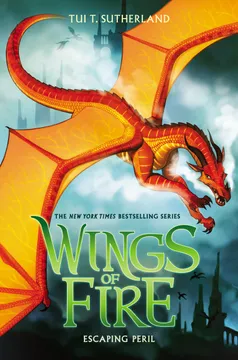
About the Author
Tui T. Sutherland is a children's book author born in Venezuela and raised in various countries before settling in the United States. She is named after the tui bird from New Zealand, her mother's homeland. Sutherland graduated from Williams College and initially pursued theatre before turning to writing. Her works include beginning readers and novels for teenagers. She is best known for the Wings of Fire series and her collaboration on the Seekers series. Sutherland currently resides in Boston with her family and a dog named Sunshine. Her diverse background and experiences contribute to her storytelling abilities.
Download PDF
Download EPUB
.epub digital book format is ideal for reading ebooks on phones, tablets, and e-readers.








