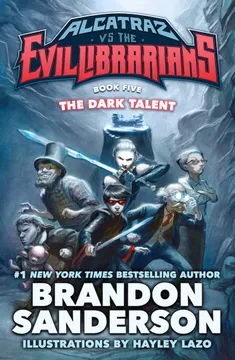


Plot Summary
Prologue
Before the action begins, Alcatraz explains why Mokia's victory has not brought relief. His Talent for breaking things has disrupted the Smedry family’s powers, Bastille lies in a coma, and his father, Attica, is pursuing a plan to give everyone a Talent.
Alcatraz must enter the Highbrary, the Librarians’ hidden stronghold, with help from his estranged mother, Shasta. He presents the account as the painful end of his autobiography, warning that his failures will matter more than the jokes he has used to disguise them.
The foreword turns the novel into a confession before the reader sees its events. Alcatraz frames his failures as evidence against his own heroic self-image, yet his insistence on being judged also suggests a desire to control how the story is remembered. Humor has been his instrument for managing fear and shame; announcing that it will fail prepares us for a narrative in which wit cannot prevent grief. The summary of the stakes gives the mission urgency, while the promised confession shifts attention from whether Alcatraz can win to what he will do when winning demands a sacrifice.
A King Speaks Through Glass
Mokia is still mourning the people lost in the siege, and Alcatraz, its king for only one day, is left to choose ceremonial clothes while Bastille remains unconscious. When his Oculator power surges through the palace’s Communicator’s Glass, he accidentally reconnects the Free Kingdoms’ monarchs after they have dismissed a meeting about the war.
Alcatraz condemns their decision to send help only after Mokia has been defended, then announces that he will enter the Highbrary and finish the conflict with the Librarians. The broadcast reaches far beyond the meeting. His grandfather, Leavenworth, recognizes that the spectacle may buy time against Attica, while Alcatraz hopes the Highbrary contains a cure for Bastille and the comatose Mokians.
Alcatraz’s public challenge is both a political intervention and an attempt to give his anger a useful shape. The monarchs treated Mokia as expendable, so he answers their distance with a message they cannot quietly ignore. Yet the power behind the broadcast is not fully controlled: the speech spreads because Alcatraz can now charge glass beyond its expected limits. His moral confidence and his technical uncertainty arrive together. That tension defines the mission. He wants to act as a leader, but the force that makes others follow him is already behaving in ways he cannot explain or reliably govern.
Missiles Over Mokia
The Librarians answer the broadcast with missiles, forcing Queen Kamali to send Mokians into shelters as robots descend to tear apart the emptied city. Alcatraz and Kaz run to the makeshift jail where Shasta, Alcatraz’s mother and a Librarian insider, is being held. A missile has broken open the building, and Shasta is still inside, insisting that she stayed because she needs Alcatraz to help find Attica.
When spider-like machines block their route, Alcatraz powers a fallen missile and sends it into the robots. The blast clears their path to Penguinator, a glass flying ship Leavenworth has prepared. Alcatraz insists that Shasta come with them, despite his grandfather’s distrust, and they launch as Mokia burns behind them.
The attack collapses the distinction between Alcatraz’s announced plan and the immediate need to protect people. He cannot solve Mokia’s grief or repair the damage, but he can retrieve the one person who may know where Attica is going. His insistence on bringing Shasta is not trust; it is a decision to use knowledge despite personal injury. The missile he powers also shows that his altered relationship with glass has practical force, even if he does not understand it. The mission begins in a landscape where every useful choice carries risk, and where family loyalty is already tangled with resentment.
The Smedrys Take Flight
During the flight toward Washington, Alcatraz discovers that Draulin, Bastille’s armored mother, has secretly boarded with her daughter still in a coma. Draulin explains that she could not leave Bastille behind during the missile strike, then admits how much she has worried about the lonely life she pushed her daughter toward as a knight.
The group also finds a Librarian tracking device planted aboard, which Draulin destroys. At the Worldspire, Leavenworth and Kaz collect Dif, a talkative Smedry cousin whose Talent makes people forget its use.
Alcatraz chooses a tuxedo rather than Hushlander clothes, deciding that he can belong to his family even if he fits neither society. Leavenworth also warns that the family’s Lenses are releasing far more power than usual.
This stretch replaces the fantasy of a self-sufficient hero with a crowded, difficult family. Draulin’s tenderness toward Bastille complicates her severe manner, while Shasta’s composure leaves Alcatraz with no easy model for what parental care should look like. His tuxedo choice is a modest act of self-definition: he stops trying to settle whether he is Hushlander or Free Kingdomer and claims the identity he can actually inhabit. Dif’s forgetfulness and the abnormal Lens energy also plant two different uncertainties. One concerns whether Smedry powers still work; the other concerns what the family’s power is becoming.
The Dome Gives Way
A hundred Librarian jets intercept Penguinator before it can reach Washington. Leavenworth bends wind and fire against the attackers, Draulin bats missiles aside with her sword, and Alcatraz uses a Shamefiller’s Lens to disable incoming weapons.
The Lens exposes the private shame of whatever it touches, making its destructive power feel cruel even when it saves the ship. The crew is close to being overwhelmed when Free Kingdom airships arrive, answering Alcatraz’s broadcast and turning the fight into a real assault.
To cross Washington’s hidden protective dome, Alcatraz aims the Lens at the shield and forces open a gap. Shasta proposes a landing cover, but Dif pushes Alcatraz out of Penguinator too early, sending the group into the city before the planned smoke screen.
The aerial battle makes Alcatraz’s influence visible in two conflicting forms. His broadcast gathers allies, but his weapon succeeds by turning private embarrassment into a means of destruction. The shameful thoughts he hears are not abstract weaknesses; they are ordinary regrets weaponized against their owners. He recoils from the Lens, yet keeps using it because the immediate danger leaves little room for moral comfort. The air guard’s arrival demonstrates that his earlier confrontation has consequences beyond his control. It helps the assault, but also increases the number of people exposed to retaliation. Leadership here means accepting that others may act on his words before he knows what the cost will be.
A Barricade in Washington
The group lands under fire in Washington and flees through streets where ordinary residents watch a battle they have been taught cannot exist. Alcatraz follows smoke toward a barricade, only to find that its defenders are Librarians wearing the same uniforms as the troops chasing them.
These rebels are led by Himalaya Smedry and her husband Folsom, who have moved beyond distributing pamphlets against Librarian rule. They explain that the Highbrary extends through caverns beneath the city and that the party must create an opening from above.
Himalaya’s fighters use Librarian anti-Smedry bombs to punch through the protected ground, while Alcatraz’s team draws fire. Before the assault, Alcatraz uses the Shaper’s Lens on Shasta and sees her longing for peace between the two worlds, though not freedom from Librarian rule.
The resistance complicates the simple division between Librarian and enemy. Himalaya remains a Librarian, but she has chosen to fight the institution from within, turning knowledge of its habits into practical resistance. Alcatraz’s view of Shasta changes only slightly: the Lens reveals a desire for peace, not a hidden store of maternal warmth that would erase their history. That distinction matters. Understanding someone’s deepest wish does not automatically make their choices acceptable or their relationship safe. The planned use of anti-Smedry bombs also makes the family’s familiar role of drawing fire literal. Their survival depends on turning the danger aimed at them into access for others.
Down Into the Highbrary
Leavenworth’s strengthened Windstormer’s Lens blows the team clear before the bombs open a deep shaft, and Alcatraz climbs down into the Highbrary with Shasta and Dif. The rebels hold the entrance while the three search for Attica and the Forgotten Language records.
To pass unnoticed, they steal robes from archivists who care more about rare playing-card instructions than their own safety. A Dark Oculator recruits them into a squad and sends Alcatraz to investigate roaring in a side tunnel. Dif follows him across a chasm, but knocks Alcatraz’s Truthfinder’s Lens into the ventilation fans.
The supposed monster is a group of friendly dinosaurs; they help stage a convincing battle. When the pair returns, a sudden windstorm exposes them, scattering the Librarians. Shasta has meanwhile stolen the Dark Oculator’s authenticator, giving them a map of the complex.
The Highbrary makes the Librarians’ organizing impulse both comic and threatening: its archivists protect obscure printed rules with more urgency than their own lives. Alcatraz’s disguise succeeds by exploiting that misplaced priority, but the loss of his Truthfinder’s Lens removes a tool he expected to use on his father. Dif’s presence is similarly unstable. His enthusiasm appears useful when he joins Alcatraz in danger, yet the careless loss of the Lens makes the cousin’s help difficult to rely on. The staged dinosaur fight shows Alcatraz learning to manipulate the institution’s assumptions rather than simply charging through them. Shasta’s theft quietly proves that her competence is more than a claim.
A Cure and a Clue
Shasta uses the authenticator’s map to identify the Forgotten Language archive, but Alcatraz first diverts the group to a medical laboratory, hoping to find a cure for Bastille and the Mokians. He tricks two scientists into handing over a concentrated antidote, then tries to force open the cabinet containing more.
His Shamefiller’s Lens activates without his command, melting through the wall and destroying the room as Alcatraz escapes with a larger bottle. He calls Kaz and directs him to rescue Himalaya’s trapped fighters, though he falsely claims he has another way out.
At the archive, Alcatraz recognizes that Attica is hiding behind a ghostly disguise. He has found his father, the Forgotten Language research, and the medicine, but his unpredictable powers and broken communication line leave the team exposed.
Alcatraz’s detour to the laboratory is a test of what he considers worth saving. Shasta argues for the world-sized danger, while he spends time and risks discovery to secure a remedy for people who cannot help themselves. His failure to open the cabinet by ordinary means intensifies his sense of lost agency; the Lens then acts without his consent, providing the cure at a cost he cannot control. The call to Kaz reveals a related habit: Alcatraz shields others from danger by lying about his own escape. He has not yet learned that self-sacrifice can become another form of refusing to let friends choose for themselves.
The Family Is the Fuel
Attica reveals that the ancient civilization of Incarna fell through an energy crisis, not because the Smedry Talents destroyed it. Alcatraz connects the records to the strange power surging through glass: the Incarna made the Smedry line a vast energy source, and the Talents may once have diverted that force.
With the Talents broken, the energy has begun spilling into glass and Lenses. Attica plans to use the Worldspire to give every person a Talent, convinced that this will defeat Librarian control.
Alcatraz asks him to wait until they understand the risk, but Attica barely listens. Shasta raises a gun, then lowers it when Alcatraz asks for a chance to speak with his father. Attica knocks her unconscious. As Leavenworth arrives, Dif shoots him.
The revelation turns the family’s troublesome powers into evidence of a historical intervention: the Smedrys are not merely gifted, they are part of a system built to manage dangerous energy. Alcatraz’s insight is careful and collaborative, but Attica responds as though discovery itself licenses action. His universal Talent plan repeats the very failure he claims to oppose: imposing a vast change before understanding its effects. Shasta’s decision to lower her gun gives Alcatraz the conversation he asks for, but Attica uses that restraint against her. The shooting of Leavenworth destroys the family’s remaining assumption that eccentricity and danger are manageable through improvisation.
Dif Was Biblioden
Dif’s manner changes as he reveals himself as Biblioden, the ancient Scrivener who founded the Librarian order. He had impersonated a Smedry for years, using the family’s trust to reach the Worldspire and infiltrate their mission.
Biblioden’s soldiers seize Attica, Shasta, Draulin, and Alcatraz, while Leavenworth remains dead. Biblioden takes Attica’s notebooks and learns that the Talents have been broken and that the Smedry line carries extraordinary energy.
He plans to use the Worldspire to turn the Free Kingdomers into power sources, destroying the society he considers uncontrolled and strange. Alcatraz tries to get the antidote to the captured Draulin, but a guard strikes him and the bottle falls into the ventilation shaft. Biblioden has him dragged toward the central altar.
The betrayal retroactively changes Dif’s comic behavior into a performance built from contempt. His imitation was convincing because the Smedrys themselves often explain away disorder as family character. Biblioden’s infiltration exploits their generosity and their eagerness to welcome a relative, not just their poor security. His plan also mirrors Attica’s ambition in a darker register: both seek to alter everyone through a single intervention, but Biblioden wants to erase difference rather than spread power. Alcatraz’s attempt to save Draulin fails materially, yet the lost antidote enters the ventilation system. A mistake becomes an unintended source of hope, though Alcatraz cannot know that yet.
The Choice at the Altar
Biblioden binds Alcatraz to an altar of old books and offers to release one of the two captives, forcing Alcatraz and Attica to choose who will die. Cinnamon fumes from the antidote spread through the Highbrary’s ventilation system and wake Bastille, who storms from Penguinator with her sword.
The assault distracts Biblioden, but he orders the ceremony hurried forward and holds a gun to Alcatraz’s head. Attica volunteers to take his place; Alcatraz, terrified and unable to offer himself, makes the same choice.
Biblioden sacrifices Attica before Bastille can reach the platform. Alcatraz survives, but his father’s body remains on the altar. Bastille, Kaz, and the revived Draulin reach him afterward, while the enemy leaders flee and Leavenworth’s death leaves the family broken.
The climax refuses the easy equation of courage with a heroic declaration. Alcatraz has spent the novel acting boldly, yet when the choice becomes concrete, fear governs him. Attica’s willingness to die does not erase his earlier failures as a father or his dangerous ambition, but it makes the loss more intimate: Alcatraz cannot reduce him to an enemy at the moment of death. Bastille’s return supplies physical rescue, not moral rescue. She can fight her way back into the story, but she cannot undo the choice or the sacrifice. The result is survival without triumph, the emotional distinction Alcatraz has been trying not to face.
The Story Ends in Defeat
Bastille and the others carry Alcatraz away from the altar as he shuts himself against their questions and the memory of Attica’s death. The Librarians abandon the Highbrary, and Leavenworth’s sabotage triggers its destruction about an hour later.
The underground collapse is concealed as an earthquake, while Librarians interview witnesses and erase memories of the battle and Alcatraz’s broadcast. Public life resumes under the same manufactured account that had hidden the Librarians’ power.
In his final account, Alcatraz rejects the idea that the ending will reveal a secret victory. He says he could have offered himself in his father’s place and did not. His autobiography ends not with the restoration of his family or the world, but with his admission that he failed.
The resolution is deliberately political as well as personal. Destroying the Highbrary does not end Librarian control because the institution can rebuild its headquarters and rewrite public memory. The battle’s visible consequences are converted into an official explanation, showing how power survives by controlling not only information but the stories people use to interpret catastrophe. Alcatraz’s final confession resists that same kind of concealment. He refuses to invent a hidden triumph, though his judgment of himself remains severe. The gap between the people who carried him away and the failure he believes he committed leaves the reader with a question the narrative cannot settle: whether honesty about cowardice is itself a first act of courage.
Epilogue
In the afterword, Alcatraz explains that the Highbrary was destroyed but the Librarians concealed the disaster, rebuilt, and erased witnesses’ memories. The world returned to its previous shape, with the Librarians still controlling what ordinary people could know. Alcatraz ends his autobiography by refusing to claim that he saved the day.
He believes his choice to let Attica die proves that he is no hero, and offers no promise of another adventure or later redemption. The final account is an apology to the reader and an attempt to leave the truth intact, even when the truth makes him look unforgivable.
The afterword completes the book’s conflict over authorship and memory. The Librarians restore order by making the battle disappear from public consciousness, but Alcatraz uses his autobiography to preserve what their institutions would erase. His confession is not a neutral record: he selects the moment of his failure as the meaning of everything that came before. That self-condemnation may be another attempt to control the story, this time by deciding in advance that no reader can absolve him. The ending denies conventional consolation, yet its act of testimony matters. Alcatraz cannot repair the dead or expose the truth to the world, but he can refuse to falsify what happened.
Analysis
The Dark Talent asks what happens when a person who has been treated as a source of disorder is given the power to reshape the world. Alcatraz’s Talent for breaking things has made him feel guilty for accidents he could not control. When he loses it, he discovers that power was not simply a weapon attached to him: it was part of a system the ancient Incarna created to manage energy. This reframes the family’s apparent flaws as adaptations, while refusing to make them harmless. The Talents can protect people, but they can also destabilize the world when their purpose is misunderstood.
Attica and Biblioden offer opposing visions that share a dangerous structure. Attica wants everyone to receive Talents in the name of equality; Biblioden wants to transform the Free Kingdomers into energy sources so he can eliminate difference and resistance. Both imagine that a society can be repaired by imposing a single grand design. Alcatraz’s more careful theory is ignored, which shows that knowledge alone does not create wisdom. A discovery matters only when people accept the limits of what they know and listen to those who may bear the consequences.
The novel’s struggle over information also reaches beyond the Highbrary. The Librarians conceal the battle, rebuild their institution, and erase witnesses’ memories. Alcatraz’s autobiography resists that erasure, but his account is not detached: he reads the outcome through his own shame and calls himself a failure. The ending refuses the comforting promise that a hero’s survival proves the world has been saved. Alcatraz preserves what happened, including his inability to sacrifice himself, and leaves the reader to separate truthful testimony from self-punishment. In that unresolved space, the book treats courage not as the absence of fear, but as the harder question of what a frightened person does next.
Review Summary
The Dark Talent received mixed reviews, with an average rating of 4.12 out of 5. Many readers praised Sanderson's humor, worldbuilding, and plot twists. However, some found the ending unexpectedly dark and disappointing for a middle-grade series. The book's use of footnotes and unconventional chapter naming was appreciated by fans. Despite the controversial ending, most readers enjoyed the continuation of Alcatraz's story and looked forward to the next installment. Some felt the tone shift was jarring compared to previous books in the series.
People Also Read
Characters
Alcatraz Smedry
Reluctant Smedry heroAlcatraz is a thirteen-year-old raised in the Hushlands who discovers that his family belongs to the Free Kingdoms and carries strange Talents. His own Talent for breaking things has shaped how he sees himself: as a source of accidents rather than a person with agency. He uses jokes and digressions to manage embarrassment, fear, and the loneliness of having been moved between homes. In this story he tries to act as a leader while doubting his judgment, especially when family members make choices he cannot control. His curiosity about how powers work grows alongside a deeper need to understand where he belongs and what responsibility means when his actions put others at risk.
Shasta Smedry
Librarian motherShasta is an experienced Librarian and Alcatraz’s estranged mother. Her discipline, reserve, and talent for taking command make her difficult for him to read, while her history with him leaves anger beneath every practical exchange. She believes the danger surrounding Attica requires hard decisions, and she distrusts the Smedrys’ improvisational habits. Yet her calculations are not simply cold: she wants an end to the conflict between the Hushlands and the Free Kingdoms, even if her idea of peace preserves a system Alcatraz opposes. Shasta’s difficulty is that competence has become her substitute for intimacy. She can direct a mission more easily than repair the relationship at its center.
Attica Smedry
Visionary fatherAttica is Alcatraz’s father, a gifted Oculator and an ambitious member of the Smedry family. He pursues a plan to give every person a Talent because he believes it will break the Librarians’ hold over the Hushlands. His confidence allows him to imagine solutions on a world-changing scale, but it also makes him dismiss questions about consequences and other people’s objections. Attica wants recognition and family, though he has not learned how to make either desire compatible with listening. His relationship with Shasta is marked by opposing views of risk, power, and social control, while his relationship with Alcatraz is burdened by absence and the hope that a single discovery can make up for it.
Leavenworth Smedry
Unruly family anchorAlcatraz’s grandfather, Leavenworth, is a tuxedo-wearing adventurer whose lateness and theatrical instincts often frustrate the people around him. Beneath the comedy, he is a skilled Oculator who understands that knowledge can be more powerful than force, and he tries to prepare Alcatraz without stripping him of choice. He offers affection openly, even when he disguises advice as a joke or a reckless scheme. Leavenworth’s faith in the Smedrys is not simple optimism. He knows their improvisations can cause harm, but believes their willingness to act when institutions fail is worth preserving. For Alcatraz, he represents a form of family belonging that does not require him to be conventional.
Bastille
Alcatraz’s knight protectorBastille is a young Crystin knight sworn to protect Alcatraz and the Smedry family. Her silver sword, blunt manner, and fierce sense of duty make her seem almost impossible to intimidate, though her fear of heights exposes a vulnerability she would rather fight than discuss. She and Alcatraz rely on each other in danger, and their affection grows through practical loyalty rather than grand declarations. Bastille’s standards can make her impatient with the Smedrys’ chaos, but she understands that protection is not the same as control. Her family ties, especially her complicated relationship with her mother, shape how she thinks about the cost of a knight’s life.
Kaz
Practical Smedry uncleKaz is Alcatraz’s uncle, a compact, capable fighter who approaches family disasters with dry humor and practical judgment. His Warrior’s Lenses help him in combat, and his piloting skills make him essential to the journey. Kaz is willing to point out when a Smedry plan is reckless, but he rarely lets criticism become an excuse to abandon the people involved. His bond with Leavenworth is affectionate and argumentative, and his teasing of Alcatraz often doubles as a way to steady him. He is a useful counterweight to the family’s appetite for spectacle.
Draulin
Bastille’s stern motherDraulin is a Crystin knight and Bastille’s mother, known for strict discipline, severe judgment, and a formidable command of weapons. She initially treats Smedry behavior as a threat to order, but her concern for Bastille reveals the tenderness beneath her armor. Draulin wants her daughter to be safe, though she has struggled to respect the life Bastille has chosen. Her relationship with Leavenworth carries an old familiarity that surfaces through their constant teasing. She measures care through vigilance and action, sometimes missing the comfort another person needs.
Dif
Eccentric Smedry cousinDif presents himself as an exuberant Smedry cousin with a powerful Talent connected to forgetfulness. He fills silences with odd observations, elaborate enthusiasm, and attempts to make every situation feel more spontaneous. Kaz finds him irritating, while Alcatraz initially sees a familiar kind of family strangeness and tries to treat him kindly. Dif’s apparent expertise in Hushlander culture makes him useful during the infiltration, though his behavior leaves the others uncertain how much of his performance to take seriously. He embodies the Smedry family’s difficulty distinguishing harmless eccentricity from a real warning.
Biblioden
Legendary Librarian founderBiblioden, known in Librarian tradition as the Scrivener, is the absent figure credited with shaping the Librarian order. His ideology is built around controlling what people know and limiting the disorder he associates with difference. Even before his full role in the present conflict is clear, his name carries an unsettling authority among Librarians, who treat reports of his return as more than rumor. He serves as the ideological counterpoint to the Smedrys: where they accept disruption as a source of possibility, he seeks a world made legible through control. His history is bound to the hidden past of the Free Kingdoms and the origins of their power.
Himalaya Smedry
Librarian resistance leaderHimalaya is a Librarian by background and a Smedry by marriage. She leads an armed resistance against the Librarian establishment, combining knowledge of its habits with a willingness to fight. Her cape and machine gun make her an unmistakable presence, but her attention to order and cataloguing remains deeply Librarian. That tension gives her character texture: she has rejected the institution’s rule without simply shedding the instincts it formed in her. She is married to Folsom and measures Alcatraz less by his speeches than by whether he can help keep her people alive.
Folsom
Rebel and Smedry cousinFolsom is a Smedry and Himalaya’s husband, a lanky man whose Talent is connected to dancing badly. He helps organize resistance to the Librarians and supports Himalaya’s work, even when her desire for order clashes with his more relaxed manner. Folsom’s commitment shows how opposition can begin with persuasion and pamphlets, then change shape when the institution answers with force. He brings warmth and an instinct for distraction to a movement that needs both.
Brig
Bastille’s worried fatherBrig is the High King and Bastille’s father. He appears through Communicator’s Glass during the monarchs’ discussion of Mokia, tired and worried about the political consequences of the Librarians’ defeat. His concern makes him more cautious than Alcatraz or Leavenworth, but he recognizes the fear shaping the other rulers.
Kamali
Mokia’s young queenKamali is the young queen of Mokia, responsible for guiding her people through renewed attacks after the siege. She orders civilians into shelters and keeps attention on the danger to the city rather than on Alcatraz’s dramatic claims. Her authority is practical, shaped by the immediate needs of a population under fire.
Kamiko
Cautious monarchQueen Kamiko is one of the Free Kingdoms’ rulers. She challenges Alcatraz’s right to address the monarchs and represents the cautious political leadership he believes abandoned Mokia. Her position reflects a genuine fear that provoking the Librarians could bring a larger war.
Charles
Dinosaur researcherCharles is a well-spoken pterodactyl and one of the dinosaur researchers Alcatraz meets inside the Highbrary. He and his colleagues value the battle as an extraordinary opportunity to study human behavior, which makes him a less dependable combat ally than Alcatraz hopes.
Douglas
Short-tempered T. rexDouglas is a small Tyrannosaurus rex with a low tolerance for pain and a talent for making noise. He helps Alcatraz and Dif stage a convincing monster fight, despite his complaints about being asked to bite his injured lip again.
Plot Devices
Oculator Lenses
Glass-powered abilitiesOculator Lenses let their users access particular powers through specially made glass. Alcatraz uses a Shamefiller’s Lens to disable missiles and eventually weaken Washington’s protective dome, while the Shaper’s Lens exposes the deepest desires of people he looks at. The devices provide practical solutions, but their effects are not morally neutral: Alcatraz hears the shame the Lens uses against its targets, and learns that seeing someone’s desire does not give him the right to control them. As the family’s energy surges unpredictably, the Lenses also become less reliable and more dangerous.
Smedry Talents
Family flaws as powersEach Smedry possesses a Talent that often resembles a personal failing, such as breaking things, arriving late, or making people forget. Alcatraz’s Talent is the ability to break things, a power he has long treated as a curse. At the start of the story, the Talents have stopped working after Alcatraz’s actions in Mokia. Their absence makes the family vulnerable and drives his search for what happened. The Talents are also tied to the story’s deeper explanation of the Smedry family and the energy moving through glass.
The Authenticator
Map through the HighbraryA high-ranking Librarian’s authenticator opens restricted areas and projects a map of the Highbrary’s passages, rooms, and archives. Shasta steals one during the confusion around the Dark Oculator, giving the group a way to locate the Forgotten Language texts and a medical laboratory. The device changes the infiltration from blind wandering into a navigable plan, but it cannot protect the group from the Librarians who control the complex or resolve the moral choices waiting at its center.
The Worldspire
Connection to every personThe Worldspire is an immense crystal connected to the Crystin knights and, as Alcatraz learns, to living beings throughout the world. Its connection makes it central to Attica’s plan to distribute Talents and to Biblioden’s attempt to use the Smedry energy source. The Worldspire’s effects are introduced through the strange shared sensations people experience when it is struck. Its meaning grows from an unexplained wonder into the mechanism through which powerful people hope to alter whole societies.
Highbrary Ventilation
Air carries cure and chaosThe Highbrary’s powerful ventilation fans pull air through vast shafts and distribute it across the archive network. Leavenworth exploits the airflow to scatter Librarian records and disrupt their work. Later, Alcatraz drops a bottle of concentrated antidote into the ventilation system. The same machinery that threatens to suck people and objects into the fans carries the medicine’s fumes through the complex, creating an unexpected route for Bastille’s recovery. The ventilation system binds the comedy of the archive’s disorder to a crucial consequence in the climax.
About the Author
Other books by Brandon Sanderson



Download PDF
Download EPUB
.epub digital book format is ideal for reading ebooks on phones, tablets, and e-readers.








