

Plot Summary
Prologue
A young girl has not seen her mother for days, and her father has disappeared from the family home. The servants keep the children from the upper floor and offer no explanation, so she measures time by the clocks she can no longer reach.
Then three men in black coats arrive under Ministry orders. The girl watches as they enter, unaware that the upheaval in her house is part of the same political violence that will later engulf Celeste Temple and her companions.
The opening makes political power intimate before it becomes spectacular. The child cannot understand ministries or conspiracies; she understands that trusted adults have barred the rooms where her parents should be. Her effort to track time through forbidden clocks turns uncertainty into a physical confinement. The officials' arrival translates that private distress into state action, suggesting that the machinery of power reaches the household through absences, commands, and frightened servants before anyone can name what is happening.
A Shore Without Answers
After surviving the sinking dirigible, Celeste Temple wakes in a fishing village, bruised, fever-weakened, and haunted by the fact that she shot her former fiancé, Roger Bascombe. She also carries intrusive sensations from a blue-glass book that held other people's memories.
The women sheltering her have washed blood from the bedding, and their account of recent deaths has revived the fear that danger followed the survivors ashore.
Elöise Dujong returns, explains that Doctor Svenson and Cardinal Chang have gone ahead, and hurries Celeste out before the villagers turn against them. As their cart leaves, armed locals watch in silence. Celeste learns that several people have been killed, officially by wolves, and suspects the explanation is too convenient.
Celeste's survival is not a clean escape. She wakes with a body that records violence and a mind that no longer cleanly distinguishes her experience from memories imposed by the glass. Her first response is practical, food, clothing, information, but each need runs into secrecy. The villagers' hostility makes refuge conditional, while Elöise's urgency prevents Celeste from choosing the terms of her departure. The episode therefore establishes a protagonist caught between newly acquired agency and an older habit of expecting other people to arrange the world around her.
The Wolf Has Boots
Celeste persuades the driver to stop at the Jorgens cabin, where she finds no signs of a wolf forcing entry. A horse's hoofprint, a spur mark, and a long black hair instead suggest a mounted human attacker. At the mining town of Karthe, she searches the stable and finds a blue stain on a sleeping pallet, then enters a deserted house that reeks of indigo clay.
A pale face appears at its window before she escapes. Back at the inn, she finds Cardinal Chang's poetry book and learns that Doctor Svenson and Chang have both passed through. After Elöise disappears, Celeste finds Franck dead in a cottage, his throat hollowed without blood. Mr. Olsteen attacks them; Celeste flees and discovers the Contessa waiting aboard a freight train.
Celeste turns a social disadvantage into a method: because others dismiss her questions, she investigates without waiting for permission. Yet her deductions remain provisional, and the clues force her to admit that an animal cannot explain the bootprints, the glass, or the bloodless wound. The pattern also tests her emerging confidence against physical fear. She is not transformed into a fearless detective; she keeps moving while frightened, and that distinction matters. Her discovery of the Contessa at the end of the pursuit turns the supposed aftermath of the airship disaster into a continuing threat.
Chang Follows Blue
On the coast, Chang buries fragments of a shattered blue-glass book and helps Doctor Svenson examine the murdered grooms. He finds indigo residue in a privy, evidence that someone has been sickened by the glass.
When he argues that their enemies may be returning to the city, he leaves the village to pursue two armed hunters. Chang defeats one man, but the second escapes with the horses. At Karthe, Chang finds a groom poisoned by a glass shard, burns the shard, and follows signs of another rider.
In the stable he encounters the Contessa, who has enlisted a boy's help and possesses a case made to hold a Comte-built instrument. She knocks Chang unconscious, then flees when a glass-tainted horse panics. On the train, a blue-discharging attacker pursues her and nearly kills Chang too.
Chang's investigation is shaped by grief and distrust. The loss of Angelique leaves him withdrawn, yet he repeatedly acts to protect strangers, including the poisoned groom, even as he resents the obligations that bind him to others. His refusal to share every discovery with Elöise shows how suspicion can masquerade as competence: he withholds information because he cannot decide whom to trust. The glass-tainted attacker complicates his initial model of the danger. The enemy is no longer simply a surviving conspirator; the substance itself can alter bodies, minds, and allegiance.
Svenson Maps Two Killers
While Celeste sleeps, Svenson examines the stable killings and later the dead fisherman. Floodwater proves that the murders could not all have been committed by one person: the stable and boat were cut off from each other.
When the villagers blame Chang, Svenson maps the flooded paths and argues that the timings require different killers. He leaves to calm local suspicion and finds young Willem dying among the black rocks, his wounds threaded with blue glass. At a second search, Svenson discovers a glass book hidden near the boy.
Martin Potts looks into it and loses his grasp of his identity. A blue-smeared attacker then kills Potts and the search party, throws Svenson into a mine shaft, and escapes with the book. Svenson survives, convinced Francis Xonck is alive.
Svenson's medical training becomes a form of moral resistance: he insists on distinguishing evidence from a convenient scapegoat, even when the villagers want Chang blamed. His map is not merely a practical tool; it makes geography answerable to human choices. Yet his care has limits. He conceals the blue-glass evidence from the villagers and leaves Elöise without a full account of the danger, partly because he hopes to manage everything himself. The deaths expose the cost of that paternalism. His duty to protect others is sincere, but it can become another way to avoid emotional honesty.
A Book at Stropping
The Contessa tells Celeste that Francis Xonck survived the wreck in a grotesquely altered state and that Chang is alive. Their uneasy bargain on the freight train lasts only until the train reaches Stropping. Celeste sees Xonck hiding from officials and steals the heavy bag he is trying to recover. She uses the ensuing confusion to escape his pursuit, but Ministry agents arrest her and take the bag.
At Stäelmaere House, Andrew Phelps removes a blue-glass book from it. Joseph Soames, an official already being consumed by the glass, interrogates Celeste about the Contessa and her companions. When Soames collapses, Phelps brings Celeste before Mrs. Marchmoor, a glass woman controlling the silent, decaying Duke of Stäelmaere.
Celeste's survival depends on improvisation, but the stolen bag turns her into an object of competing systems. Xonck wants his book, the Ministry wants information, and Mrs. Marchmoor wants access to memories she cannot otherwise reach. At Stäelmaere House, political authority appears physically intact while its servants decay and its ruler is a puppet. The contrast makes the state feel less like a stable institution than a body kept upright by hidden mechanisms. Celeste's movement from fugitive to prisoner does not reduce her agency; it changes the scale at which she must exercise it.
The Canal's Hidden Owner
After reaching the city, Chang learns that government agents and hired criminals are searching for him. He breaks into the Trapping home, where he finds a Ministry investigator searching a bedroom that actually belongs to Elöise.
A letter from the murdered Caroline Stearne links Elöise and Charlotte Trapping to a concealed inquiry. Chang then searches public records and discovers that Alfred Leveret, a Xonck Armaments employee, has acquired a mill beside a newly approved canal. The arrangement would let weapons and machinery reach the sea without ordinary tolls.
When Chang returns to Stropping, a large force is searching the station. He escapes beneath trains, spots Xonck on a departing train, and follows. Inside a hidden railcar, he finds the Comte's equipment and plans bearing Leveret's production marks.
Chang reads institutions as carefully as he reads a room before a fight. Property records, canal permissions, and a woman's bedroom become connected evidence of political and financial control. His method uncovers a key fact: the conspiracy's ambitions are not confined to the court or the airship; they have been built into transport, manufacturing, and state contracts. Yet his personal conduct remains less clear-sighted. He reduces Elöise's hidden life to a question of loyalty before understanding its pressures. The contrast between his investigative acuity and emotional suspicion keeps his competence from becoming a claim to moral authority.
Elöise's Wound Remembers
Svenson boards the train from Karthe and finds Elöise, wounded by a blue-glass blade and believed dead by the townspeople. He removes the shard and discovers that it contains a broken jumble of impressions rather than a coherent memory. Risking the same substance, he briefly wounds himself with the altered glass and glimpses fragments from Elöise's past, including her connection to Arthur Trapping, Francis Xonck, and Caroline Stearne.
At Parchfeldt, he and Elöise leave the train to pursue the Contessa. They reach Elöise's uncle's cottage, where Robert Vandaariff is hiding, but Elöise vanishes with Charlotte Trapping and the Comte's paintings. Svenson wakes alone, injured, and follows their trail to a barge carrying the Comte's machines.
The glass injury makes memory a bodily problem rather than a simple gap in recollection. Svenson learns that experience can persist in altered form even when a person cannot consciously retrieve it, which complicates any easy distinction between innocence and concealment. His self-experiment is both scientific curiosity and desperation to understand Elöise, a mixture he refuses to acknowledge clearly. Their separation sharpens that failure. He saves her life, but saving someone is not the same as knowing them, and his effort to turn care into evidence only deepens the distance between them.
Harschmort's Second Fire
At Harschmort, Celeste learns that Mrs. Marchmoor has kept the dead Duke moving and has been searching for a way to use the book Celeste stole. Francis Xonck arrives, demanding it, and battles Marchmoor while Phelps intervenes with a pistol.
Celeste escapes the struggle with the book. She finds the Comte's laboratory burned and the great machinery removed, then understands that both surviving enemies came to the estate seeking what is missing.
The book's contents overwhelm her when she touches it: it contains the Comte's mind at the moment of death, saturated with despair and corruption. Celeste hides in the house, where a disorderly gathering of Cabal adherents has collapsed into exhaustion and appetite, and searches for the Trapping children.
Celeste's contact with the second book reverses the sensory seduction of the first. One book floods her with appetite; this one makes appetite feel futile and contaminated. The contrast prevents her from treating either set of memories as a transparent truth about herself. The abandoned laboratory and removed machines also reveal that knowledge alone is not power: the book needs a body, machinery, and a source of energy. Celeste begins to grasp the scale of the danger, but her understanding is purchased through involuntary exposure that weakens her capacity to decide what belongs to her.
A Barge to Parchfeldt
Searching Lydia Vandaariff's rooms, Celeste finds a note from the Contessa warning her not to follow, then dresses in Lydia's clothes and restores her curls. She encounters Captain Tackham escorting the Trapping children and learns that their mother is missing.
In a hidden room, she finds Roger Bascombe's correspondence and a message showing that Caroline Stearne once arranged a secret meeting between Charlotte and Elöise. Celeste realizes Elöise has concealed more of her past than she admitted.
At Harschmort, she also finds Andrew Rawsbarthe and learns that Mrs. Marchmoor has been pressing her will through the Ministry. When the children and their captors leave by canal barge, Celeste hides aboard, carrying the dangerous book and watching the party head toward the factory.
Celeste's renewed attention to clothes and grooming is not simple vanity. It is a brief attempt to recover a recognizable self after illness, pursuit, and involuntary memories have stripped away her social protections. The letters then turn intimacy into evidence: Elöise's silence is no longer an abstract betrayal but a concealed connection shaped by the Cabal's leverage. Celeste still interprets people harshly, often before she understands their motives, yet she acts to find the children rather than retreat to safety. Her choice is imperfect, but it marks a shift from curiosity about danger to responsibility for someone more vulnerable.
The Factory Under Glass
Chang reaches Harschmort and finds its laboratory burned, its machines removed, and signs that Xonck escaped. He follows a trail of blue discharge to a concealed route through Parchfeldt Park. Before continuing, he finds Charlotte Trapping, Elöise, and the emptied financier Vandaariff hiding in a ruin.
Charlotte admits little, but her stolen paintings and the bundle of blue-glass cards suggest she has been investigating her family's business herself. Soldiers arrive and arrest the group.
Chang is transported with them toward the factory, where Xonck, Svenson, and the Contessa have also converged. On the way, Chang and Xonck make a temporary alliance to escape a shared danger. Their route leads to Leveret's new mill, where the Comte's machines are already operating.
The factory's existence is the material answer to the political mystery Chang has been tracing. A canal, a failed mill, and a private weapons firm have become one infrastructure for the Comte's science. Charlotte's presence unsettles Chang's assumptions about her: the society widow he had dismissed has acted decisively, even if her motives remain difficult to trust. The temporary alliance with Xonck makes the same point in harsher form. In a system built on shifting loyalties, cooperation is neither reconciliation nor virtue; it is a calculation forced by immediate danger.
The Wrong Army Arrives
On the Parchfeldt barge, Svenson meets the fugitive Contessa after she has killed the barge-master. Her clues lead him to a factory protected by Leveret's private soldiers and filled with the Comte's salvaged machinery.
A crowd of Cabal adherents gathers outside, expecting admission, while the factory's defenders keep the gates shut. Svenson enters by allowing the crowd to mistake him for one of their allies, then is seized by Leveret's men. He recognizes that the machines are being powered for an operation, not merely stored.
After escaping through the ducts, Svenson climbs the exterior ladder and meets the Contessa on the roof. Chang and Xonck arrive there too. Charlotte Trapping appears with soldiers and takes command, turning the former conspirators into prisoners in her factory.
Svenson survives by abandoning the comfort of a purely medical role. He lies, improvises, and climbs into danger because the factory's machinery makes neutrality impossible. The crowd outside embodies a second kind of vulnerability: privileged adherents assume that proximity to power guarantees a place inside it, even as the new operators exclude them. Charlotte's arrival reverses the hierarchy once more. Authority in this world is not stable enough to be inherited; it is repeatedly seized by whoever controls the weapons, information, or mechanisms at hand.
Children at the Machine
The factory's defenders turn back the adherents and Dragoons with cannon fire, leaving the grounds cratered and the crowd pinned outside. Celeste escapes the barge and finds Charles and Ronald guarded near the factory, along with vials of the children's blood that have been altered by the glass.
She reaches Francesca on a dark stairwell, where the frightened girl has been left to watch for her. Celeste persuades her to come away and carries her into the upper factory room, interrupting a gathering of Charlotte, Leveret, Mrs. Marchmoor, and their captives.
There she sees Vandaariff strapped beside the Comte's machinery, with the book she carried now prepared for insertion. Elöise reaches Celeste and tries to explain that both sides have been using her to bring the book safely to the factory.
The children make the machinery's abstract stakes immediate. Blood samples, a frightened sentry, and a captive girl show how the powerful turn family bonds into usable instruments. Celeste's rescue attempt is impulsive and compromised by the fact that she has unknowingly helped the plot advance, but she still responds to Francesca as a child in danger rather than as a bargaining piece. Her confrontation with Elöise adds a painful complication: care and betrayal have coexisted. The scene refuses a simple division between loyal helpers and manipulative enemies, because people have been acting under pressures others concealed from them.
The Comte Returns Corrupted
Fochtmann installs the blue-glass book and the marrow-sparge device, then directs its energy into Vandaariff. The financier survives the procedure with the Comte d'Orkancz's memories and identity restored, but Mrs. Marchmoor discovers too late that the book carries a corrupting taint.
When she tests Vandaariff through Francesca, the child begins to sicken. Xonck seizes Vandaariff and demands a cure for his own glass-poisoned body. The Comte instead straps Xonck into the machinery and transforms him into a glass being, removing the corruption while making him dependent on his creator.
Charlotte's effort to control events collapses; Leveret is shot, and Mrs. Marchmoor's mental blast drops nearly everyone in the room. The survivors face a balance of powers no one can safely break.
The attempted restoration exposes the difference between recovering information and recovering a person. The Comte's memories return, but they have passed through death and a corrupted book; the result carries knowledge without the former man's limits or attachments. The machinery can preserve and transfer experience, yet it cannot guarantee continuity of character. Francesca's illness reveals the cost that the adults repeatedly overlook when they treat children as instruments. Xonck's transformation then makes power literal: his survival is purchased by becoming subject to the very science he once hoped to exploit.
A Shell, Then Flight
When the Comte bargains Francesca as the price for sparing the others, Xonck turns on him. A struggle around the factory's explosive shell ends in a blast that destroys glass bodies and kills Charlotte, while Chang shields Celeste from the impact.
The mob floods the damaged factory, and Celeste escapes with Chang before the Contessa strikes him with her glass spike. Outside, Svenson faces Tackham in a saber duel and kills him, but suffers a severe wound. Celeste runs, then finds Elöise and Francesca in the ruins.
The Contessa catches up, kills Elöise, and takes Francesca. Celeste wakes after being struck with Lydia's case and sees Elöise's body. With Chang and Svenson apparently lost and Francesca taken, she heads toward the canal and the city, determined to seek revenge.
The ending does not restore order; it strips away the machinery that briefly made control seem possible and leaves its human costs visible. The shell destroys the factory's fragile coalition, but it does not erase the violence that created it. Celeste's last movement toward revenge echoes the opening guilt over Roger: she is again choosing action after a death, but now without the certainty that action can repair anything. Her farewell to Elöise is especially bitter because both women wanted to protect others and repeatedly mistook secrecy for protection. The novel closes on survival as an unresolved obligation, not a victory.
Analysis
The novel treats memory as both a record and a form of possession. The blue-glass books do not simply preserve the past; they make other people's experience physically available, altering the viewer's desires and destabilizing the boundary between self and archive. The Process extends that logic into government, converting ambition and fear into mechanisms of obedience. Together, these devices make political control a bodily practice rather than an abstraction. A ministry can command because a mind has been modified; a family can be leveraged because a child's blood or memory can be used as a tool.
Against this system, the central characters offer imperfect forms of resistance. Celeste investigates by noticing what polite society ignores, but her confidence often outruns her understanding. Chang can read institutions and danger with extraordinary precision, yet grief makes him isolate himself from allies. Svenson brings care and evidence to situations that reward force, while his guilt repeatedly clouds his judgment. Elöise's missing memories show how little any of them can claim certainty about the past, even when they sincerely believe they are acting for someone else's good.
The book's deepest conflict is not simply between conspirators and their opponents. It is between people who treat others as usable material and people who struggle, inconsistently, to recognize others as ends in themselves. The Contessa, the Comte, and the Xoncks each understand the mechanics of power, but none can control the consequences of making human beings into instruments. The factory's destruction therefore does not amount to moral repair. Celeste survives with her grief, her contaminated memories, and a new purpose shaped by loss. The ending asks whether revenge can be an act of agency without becoming another form of the violence that produced it.
Review Summary
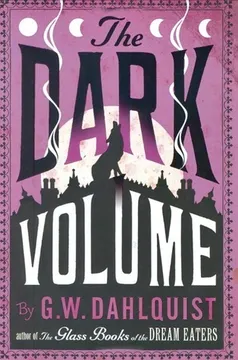
Reviews of The Dark Volume are mixed, averaging 3.63/5. Many readers found it inferior to its predecessor, The Glass Books of the Dream Eaters, citing repetitive chase sequences, lack of character development, and an unsatisfying middle-book structure. Common criticisms include convoluted plotting, excessive physical descriptions, and pacing issues in the middle third. Positive reviews praise Dahlquist's vivid prose, evocative settings, and compelling protagonists — particularly Miss Temple and Cardinal Chang — with some readers finding it an exciting, page-turning continuation despite its flaws.
People Also Read




Characters
Celeste Temple
Restless investigatorA wealthy West Indian heiress whose engagement to Roger Bascombe ended abruptly, Celeste is sharp-minded, impatient with condescension, and accustomed to having servants manage the ordinary details of life. Under pressure, she turns that privilege into investigative nerve, noticing what others dismiss and asking questions that make powerful people uncomfortable. Her confidence is real but uneven: she often mistakes self-protection for insight and can be cruel when frightened or wounded. The blue-glass memories challenge her sense of ownership over her desires and identity, forcing her to confront how much of herself has been shaped by class, habit, and other people's expectations.
Cardinal Chang
Scarred strategistA feared criminal with severe scars across his eyes, Chang moves through the city by knowing its hidden routes, unofficial economies, and human weaknesses. He is observant, tactically inventive, and more protective than his reputation suggests, though grief makes him withdraw and distrust can turn his caution into secrecy. He values competence and dislikes dependence, yet repeatedly takes risks for people who cannot repay him. His fascination with poetry offers a private counterweight to violence: he is capable of sustained attention and tenderness, even when he would rather conceal both.
Doctor Abelard Svenson
Duty-bound surgeonA naval surgeon from Macklenburg, Svenson combines medical discipline with a habit of self-reproach. He is attentive to physical evidence and often acts with courage, but he can mistake service for intimacy and guilt for moral clarity. His long grief for his cousin Corinna has narrowed his expectations of happiness, while his feelings for Elöise disturb the orderly life he has built around duty. He tries to help through diagnosis, negotiation, and practical care, yet the unfolding crisis repeatedly forces him to act without adequate tools or certainty.
Elöise Dujong
Tutor with missing memoriesElöise is a thoughtful, capable tutor who has spent years caring for the Trapping children and navigating the expectations of her employers. The theft of part of her memory leaves her uncertain about her own past, especially where private loyalties and shame are concerned. She is compassionate and brave, but her instinct to protect others by withholding information creates mistrust. Her attachment to Svenson is complicated by grief, memory loss, and loyalties she does not fully understand. She wants to remain useful to the people around her even when she no longer knows what they believe her to be.
Rosamonde, the Contessa di Lacquer-Sforza
Cabal's dangerous tacticianThe Contessa is a politically connected aristocrat whose elegance conceals a volatile appetite for risk and control. She reads other people quickly, uses charm as readily as violence, and regards morality as less useful than leverage. Her alliances are conditional, but she is not a simple opportunist: she has personal attachments and a strong instinct for survival, both of which can complicate her calculations. Celeste's presence draws out a more intimate, unpredictable side of her, while her rivalry with the Comte and Francis Xonck places her within a world where ambition constantly threatens to consume its own architects.
Francis Xonck
Disregarded younger sonThe youngest Xonck sibling is a cultivated dandy whose manners disguise a taste for violence and strategic risk. Denied a meaningful role in the family empire, he turns exclusion into a private education in appetite, manipulation, and endurance. He is clever enough to exploit other people's assumptions about his laziness, yet his self-awareness does not make him humane. His relationships with Charlotte and Henry are shaped by unequal power within the family, and his pursuit of the Comte's science reflects both a desire to survive and a refusal to accept the limits others set for him.
Charlotte Trapping
Dispossessed Xonck sisterCharlotte is the wife of Colonel Arthur Trapping and sister to the formidable Xonck brothers. Socially polished but repeatedly excluded from the family business, she has learned to observe more than she is permitted to decide. Her pride, sharp temper, and theatrical manner can make her seem frivolous, but she is attentive to patterns of influence and determined to recover agency. Her relationship with Elöise is close and strained at once, shaped by class dependence, private history, and competing ideas about what protection requires.
Mrs. Marchmoor, Margaret Hooke
Living glass survivorOnce Margaret Hooke, a courtesan, Mrs. Marchmoor is the survivor of the Comte's attempt to remake a human being as living glass. Her new form grants her unusual access to other minds, but also isolates her from ordinary human contact and makes her dependent on the systems that created her. She is intelligent, ambitious, and acutely alert to betrayal, yet her power does not erase vulnerability. She seeks a place in the political order without returning to the role of an object controlled by more powerful men.
Oskar d'Orkancz, the Comte
Alchemist of memoryThe Comte is an alchemist and engineer whose work with indigo clay and memory-capturing glass gives the Cabal its most dangerous tools. He treats the human mind as both a source of information and a material that can be altered, a perspective that reflects his aesthetic ambition and moral detachment. His brilliance is inseparable from a belief that other people can be used as components in an experiment. Even among conspirators, his knowledge makes him both indispensable and feared.
Robert Vandaariff
Financier and hidden prizeA newly ennobled financier and father to Lydia Vandaariff, Robert possesses wealth on a scale that makes him a central target for political and commercial schemes. He believes himself capable of directing the Cabal, but his power depends on relationships and information that others can manipulate. His confidence in money and influence masks a more complicated vulnerability: the people around him treat his body and mind as assets that can be transferred, emptied, or controlled.
Francesca Trapping
Watchful eldest childThe eldest Trapping child is observant and guarded, forced to make sense of adults who disappear, withhold explanations, and move her between unfamiliar houses. Francesca tries to behave responsibly toward her younger brothers, even when she is frightened herself. Her questions and silences show how children register political crisis through disrupted routines and broken trust.
Charles Trapping
Restless middle childCharles is Francesca's younger brother and Ronald's older brother. He is direct, curious, and quick to challenge adults, especially when their explanations fail to match what he sees. His confidence is a child's defense against a household where authority has become unreliable.
Ronald Trapping
Youngest sheltered childThe youngest Trapping child is shy, easily frightened, and dependent on his siblings when adults move him through the crisis. His small acts of stubbornness show that even a very young child tries to retain some control when the world around him is being decided by others.
David Tackham
Ambitious dragoon captainTackham is a skilled cavalry officer whose polished manners cover a sharp appetite for advancement. He reads shifts in political power quickly and is willing to exploit confusion rather than remain loyal to a failing command. His easy charm makes his opportunism more dangerous, especially around people with less institutional protection.
Andrew Rawsbarthe
Ministry functionaryRawsbarthe serves as an assistant in the Foreign Ministry and has spent years in Roger Bascombe's shadow. He is eager for recognition and increasingly drawn toward the circles of power that once seemed inaccessible to him. His ambition makes him useful to senior figures, but it also leaves him vulnerable to forces he barely understands.
Marcus Fochtmann
Engineer seeking advantageFochtmann is a theoretical engineer summoned to assess the Comte's machinery. He regards the devices as an extraordinary scientific opportunity and believes technical understanding can give him leverage over political patrons. His curiosity is real, but so is his willingness to treat dangerous consequences as manageable costs.
Alfred Leveret
Xonck works managerLeveret is a senior employee of Xonck Armaments who oversees manufacturing and access to the company's resources. He is practical, possessive of his authority, and keenly aware that machinery and weapons can create independent power. His work places him between corporate interests and the court's political struggles.
Noland Aspiche
Cabal's dragoon colonelAspiche commands the 4th Dragoons and has been drawn into the Cabal's political arrangements. He is a disciplined soldier who values command and order, but his loyalty is tied to a structure whose leaders are increasingly unreliable. His military competence gives him influence beyond his personal standing.
Caroline Stearne
Contessa's discreet agentCaroline is a trusted associate of the Contessa and a well-traveled woman whose careful conduct helps conceal more consequential work. Her connection to Charlotte and Elöise places her among people whose private lives are entangled with the Cabal's political plans.
Roger Bascombe
Celeste's former fiancéRoger is a rising Foreign Ministry official whose polished manners and political ambition made him an attractive match to Celeste before their engagement ended without explanation. He values advancement and carefully manages how others perceive him, treating social grace as an instrument as much as a habit.
Martin Potts
Ministry investigatorPotts is a city official sent to investigate the northern killings. His confidence in his own authority leads him to approach the blue glass as a problem he can simply inspect, rather than a danger that demands restraint.
Willem
Karthe stable boyWillem works at the Karthe stables and is eager to help the people around him. His loyalty to the adults who show him kindness makes him vulnerable in a crisis shaped by secrets he cannot understand.
Plot Devices
Blue-glass books
Memory made materialThe books store human memories in indigo glass. Looking into one can make the viewer experience another person's memories as if they were their own, while a specially arranged machine can transfer a book's contents into a human mind. The books therefore function as evidence, weapons, and unstable archives. Their contents can be fragmented or corrupted, and contact with blood can produce dangerous glass growth in living tissue. Celeste's exposure to different books makes it increasingly difficult for her to separate her own desires from what she has absorbed.
The Process
Loyalty by implanted commandThe Cabal's Process uses alchemical machinery to alter a subject's mind and implant a control phrase. A person exposed to the Process can later be compelled through that phrase, giving the Cabal a means to make officials and soldiers obey. Its political usefulness depends on secrecy: people may carry out orders without recalling who gave them. The device turns obedience into an engineered condition, while its physical and mental consequences leave visible signs of strain.
Indigo clay
Alchemy that alters bodiesThe Comte's indigo clay is the raw substance behind the glass books and the machinery that makes them. Refined and combined with blood, it can harden living flesh into glass, preserve or transmit memories, and produce severe illness when handled incorrectly. Its fumes and residue provide clues at murder scenes, while fragments can act as blades or enter wounds. The material links the novel's mysteries to its bodily horror: every political plan built around memory has a physical cost.
The marrow sparge
A bridge from book to bodyDesigned by the Comte, the marrow sparge connects a glass book to a human subject through a system of needles, hoses, and machinery. It directs the book's stored memories into the body's nervous system, making a mind available for transformation. The device is needed to transfer a book's contents into an emptied or prepared person; possessing the book alone is not enough. Its existence gives the rival factions a practical reason to gather at Leveret's factory.
The 296 shell
A weapon against glassThe Xonck Armaments 296 shell is designed to scatter glass through an enclosed space. At the factory, Leveret uses it as a deterrent against the glass woman, believing that a blast of fragments can destroy her body. The weapon changes the balance between mental power and physical force, but it also threatens everyone nearby and turns the factory's own machinery into part of the final conflict.
Download PDF
Download EPUB
.epub digital book format is ideal for reading ebooks on phones, tablets, and e-readers.








