

Plot Summary
Under the Bridge
At twenty-one, Brooklyn Meadow is homeless, living by theft and remembering the father who died when she was eleven. Years of bullying and a violent assault at school have left her with a taste for vengeance and little faith in anyone. When she hears men trying to abduct another girl beneath a bridge, Brooklyn attacks with her switchblade.
The traffickers overpower her, inject her with a sedative and carry her away. The intervention echoes the moment she was once trapped in the woods, but this time she has no chance to turn the violence back on her attackers. She wakes in captivity, stripped of control and treated as merchandise by the people who have taken her.
Brooklyn’s first defining act is both protective and self-destructive: she moves toward danger because another victim reminds her of her own past. Her refusal to experience fear as a command to flee makes her formidable, but it also leaves her exposed to people who understand violence as a tool of commerce. The scene establishes her contradiction without reducing her to it. She can be callous, funny and fiercely resourceful, yet the impulse beneath those defenses is a longing to prevent someone else from being abandoned as she was.
An O'Brien Marriage Bargain
Niall O’Brien begins his day carrying out a killing for his father, Liam, the head of an Irish crime family. The work is routine; the memory of Ava, his murdered wife, is not. Liam summons Niall to breakfast with Russian gangster Vlad Novikov and Vlad’s daughter, Anastasia, proposing their marriage as a bond between the families.
Niall refuses the match in all but name, then leaves before his father can make him accept it. His resistance carries little force against the family hierarchy: Liam expects obedience, while Niall’s brothers watch for any weakness they can exploit. As a lethal fixer with no interest in ruling the empire, Niall feels trapped by the very loyalty that keeps him in his father’s service.
Niall’s violence functions as both occupation and emotional anesthesia. He can control a killing, but he cannot control how his family assigns his future, and his refusal of marriage is bound up with guilt over Ava rather than simple independence. Liam’s offer makes intimacy another instrument of organized power: a union is proposed not for affection but for political leverage. Niall’s alienation from his brothers and father explains why his later choices gravitate toward people he can protect or command, even when those choices repeat the coercion he resents.
Sold Beneath Red Lights
The traffickers take Brooklyn to a hidden sex-trafficking operation run by Señor Castillo, who appraises her as a saleable asset. Drugged and dressed for an auction, she is chained among other women and sold to a masked buyer for a high price. In the private room, the buyer tries to restrain her on a bondage bench.
Brooklyn turns the chain around his neck and kills him before he can assault her. Her resistance does not free her. Castillo and the masked man who arranged the test treat the killing as proof of her value, sedate her again and move her into the club’s custody. The first buyer is dead, but Brooklyn remains trapped inside a system that rewards violence when it can profit from it.
The auction converts a person into a price, while the buyer’s test converts her refusal into another commodity to be evaluated. Brooklyn’s killing disrupts the expected script of victimhood, but the club absorbs her resistance instead of recognizing it as a claim to freedom. That inversion matters: her agency is real, yet the institution can still use it against her. The scene also establishes her central survival strategy, improvising with whatever is available when direct strength cannot overcome the people controlling the room.
The Last Cage Standing
At the club, Brooklyn is sold again, this time as a proxy for a masked member who pays to enter her in a death match. Fifteen prisoners are released into a maze stocked with weapons and traps; only one is promised survival. Brooklyn evades larger opponents, steals weapons from the arena and kills until she is the last contestant standing.
A member thrown from the balcony lands above the cages, giving her a chance to attack one of the spectators who helped create the spectacle. Niall, attending with his nephew Kyan and Kyan’s ally Tatum, watches her fight. Kyan is there to gather evidence against the club, but Niall is captured by the sight of Brooklyn’s ferocity.
The death match takes the club’s logic to its naked conclusion: people with power buy entertainment from other people’s desperation. Brooklyn survives by reading the arena rather than trying to overpower it, turning its traps and discarded weapons into extensions of her own instincts. The spectators’ distance is part of the violence; they can watch without risking themselves. Niall’s attention begins as fascination with a kindred capacity for brutality, not yet care. That distinction foreshadows the difficulty he will face in treating Brooklyn as a person rather than as a mirror of his own damage.
Bought for Half a Million
After Brooklyn wins, Niall asks the club’s leaders to sell her to him rather than reserve her for another sexual encounter. He pays five hundred thousand dollars, disguising the expense from Liam as part of the cost of a dead member. When staff try to sedate and clean Brooklyn, Niall strikes one of them and carries her out himself.
In his car, he drives off a bridge into a lake, forcing her to face the water because she cannot swim. He cuts her free before she drowns, then takes her to his isolated farmhouse. There he reveals Mateo Ortega, a Mexican cartel fixer chained in a basement cage. Brooklyn has escaped one kind of ownership only to wake beside another captive.
Niall’s intervention is morally mixed from its first moment. He removes Brooklyn from the club’s immediate control, but he buys her and takes her home without her consent. The lake episode intensifies that contradiction: he rescues her from drowning after deliberately creating the danger. His behavior makes tenderness and coercion difficult to separate, while Brooklyn’s history makes that ambiguity especially volatile. Mateo’s presence adds a second captive whose confinement is not incidental. Niall’s home is not a sanctuary yet; it is a private system of power with rules only its owner can change.
Lessons in Blood
Niall insists he will not rape Brooklyn and gives her access to a bed, a shower and spare clothes, but he still keeps her inside his locked basement. She tries to escape, attacks him with a fork and is put in the cage beside Mateo. Niall then offers her a place working with him as a killer, claiming she has instinct but needs training.
His first practical test goes badly: he releases Henry, a wife murderer, for Brooklyn to fight, then intervenes repeatedly until Henry falls from a window and dies. Brooklyn accuses Niall of stealing her chance to prove herself. Niall calls her unfit, and their attraction grows in the same space as their contests over control.
Niall offers Brooklyn a role that matches her existing appetites, but the offer is made inside captivity, so choice remains compromised. Training becomes a language through which the two test each other’s limits: her hunger for competence meets his need to control risk. His intervention during the fight exposes a conflict between what he says he wants, a capable partner, and what his fear permits him to allow. Brooklyn’s anger is not simply wounded pride. Killing is the one ability she believes the world cannot take from her, so his judgment threatens the identity she has built to survive.
A List on Black Stone
Niall finds Brooklyn’s police file and asks for her account rather than trusting the label that she is dangerous. She describes how Penelope Weston, her school’s popular girl, lured her into the woods with Andrew Fig and other football players, where they assaulted and humiliated her. Brooklyn fought back with a knife, killing two attackers, but Andrew and Penelope escaped.
At juvie, she was sent to Eden Heights, where head nurse Madam Lucille and her staff used their authority to torment patients. Brooklyn had secretly stopped taking medication and escaped. Niall listens, then offers to hunt down the people who harmed her. She writes their names on a black stone, names it the Death Club’s first record, and includes Mateo in the group.
The confession reframes Brooklyn’s violence as a response to an earlier failure of protection, without making it harmless or simple. She identifies how social acceptance became the bait that led her into the woods, while institutional authority repeated the same pattern of control under a respectable name. Niall’s promise gives her a future-facing purpose, but it also risks turning revenge into the only form of recognition she trusts. The stone list is a compact counter-archive: it records names the courts and institutions have not treated as accountable, and gives Brooklyn a way to define the club on her terms.
The Bidder in the Fire
Niall continues Brooklyn’s training with weapons and moving targets, but she struggles to land controlled strikes. For her first field test, he takes her to the home of Lionel Barnes, a wealthy member of the trafficking club. Brooklyn recognizes Lionel as one of the men who bid on her at the auction. When Niall begins strangling him for information, she attacks, stabbing and mutilating him before he can answer questions about the club.
Niall is furious that she has destroyed a source, but he cannot undo the killing. They find a captive woman upstairs and release her, giving her a route to safety through one of Niall’s contacts. Brooklyn has made her first successful strike against someone from the auction, though not by Niall’s plan.
Brooklyn’s first field operation is simultaneously a victory and a failure of procedure. She identifies the target as a participant in her own sale and turns an abstract mission into personal vengeance. Her action prevents Niall from extracting intelligence, so her capacity to kill does not yet make her a reliable collaborator. The rescue of the captive woman complicates Niall’s charge that Brooklyn is merely uncontrolled: amid her revenge, she helps someone else escape. Her moral compass is not conventional, but it is not absent. It is organized around who has been made vulnerable and who is responsible.
The Russian Ring Arrives
Liam continues pressing Niall toward marriage with Anastasia Novikov, using the proposed union to secure an alliance against the Castillo Cartel. At a family gathering, Niall’s brother Connor mocks the memory of Ava, and Niall attacks him before Liam forces an apology.
The public engagement proceeds despite Niall’s refusal to pretend affection. Anastasia makes clear that she expects a shared household and children, while Niall refuses both in private.
He returns to his farmhouse with the ring imposed on him and a more immediate problem: Mateo, the former cartel fixer, holds information about stolen cartel wealth that Niall wants for an escape from his family. The marriage arrangement tightens the pressure around Niall even as he tries to build another allegiance.
The engagement exposes Niall’s limited freedom within the criminal family. He can kill for Liam and resist emotionally, but the patriarch still treats marriage as another assignment. His violent response to Connor’s reference to Ava shows that grief remains active rather than resolved. The proposed alliance also links the O’Brien family’s ambitions to Mateo’s hidden wealth and the Castillo Cartel, placing private captivity inside a broader struggle among criminal organizations. Niall wants an exit from his father’s system, yet his methods of securing one depend on controlling another person.
The Dress in the Fire
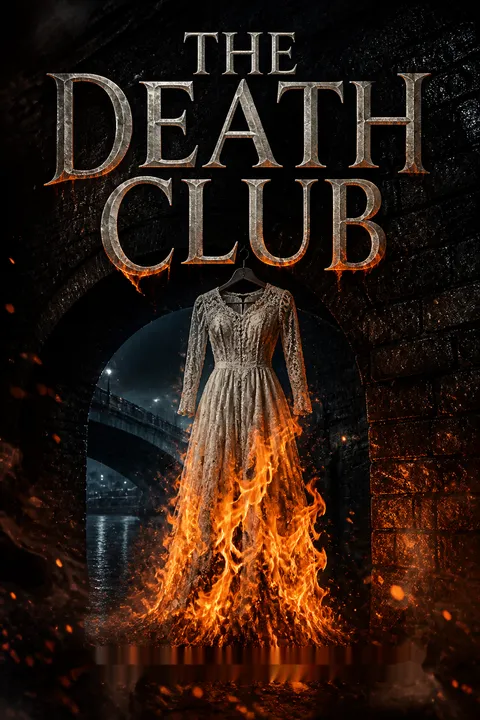
After returning from a job helping Kyan, Niall is wounded, and Brooklyn stitches his arm while he is exhausted. She finds the boxes holding his few remaining belongings from Ava and, hoping to comfort him, puts on Ava’s wedding dress. Niall sees the gesture as an invasion of the last pieces of his marriage.
He tears the dress, throws Ava’s possessions into the fire and shows Brooklyn the recording of Ava’s torture and death. He kisses Brooklyn in the middle of his breakdown, then pushes her away and sends her to the basement. Mateo holds her while she cries. Niall’s attempt to erase his grief leaves both captives to absorb its consequences, and Brooklyn understands that kindness cannot always reach him.
Brooklyn’s act is an attempt to restore Niall’s lost happiness through an object, but the wedding dress carries a history she cannot fully know. His rage is not simply a reaction to poor judgment; he experiences her gesture as a threat to the boundary separating memory from present desire. The kiss briefly breaks that boundary, making the rejection that follows sharper. Mateo’s comfort offers Brooklyn a different kind of contact, one less entangled with Niall’s self-punishment. The sequence shows how trauma can make an intended gift feel like trespass, while also revealing the cost of keeping grief untouched.
Seduction Becomes a Weapon
Niall calls an escort named Mel to coach Brooklyn in seduction, then gives her two months to draw Mateo into revealing where he hid the treasure stolen from the Castillo Cartel. Brooklyn and Mateo have meanwhile tested escape with a screwdriver, but Niall defeats them and strengthens his control.
As Niall leaves on another job, Mateo and Brooklyn grow closer through shared food, hand-holding and sexual intimacy. When Niall returns, he finds Brooklyn performing oral sex on Mateo and reacts with violent jealousy.
Brooklyn tells Niall she has feelings for Mateo; Niall says Mateo is using her. Their bond now contains genuine desire, but it is entangled with Niall’s demand for information and Mateo’s need to escape. Brooklyn cannot easily tell affection from strategy.
The seduction assignment makes intimacy explicitly transactional, but the emotional relationships resist the terms Niall sets. Brooklyn’s desire for Mateo is not merely a performance, even though the mission asks her to use it. Mateo’s captivity and Niall’s leverage make consent and strategy difficult to disentangle for all three. Niall’s jealousy exposes feelings he has tried to discipline through distance, while his claim that Mateo is manipulating her may be both perceptive and self-serving. The triangle is less a contest for possession than a collision between three people who have learned to use control when they fear dependence.
Back to the Woods
During the confrontation, Brooklyn learns that Niall is engaged to Anastasia and hears him dismiss her as useless at both killing and seduction. She leaves his farmhouse in his truck, carrying weapons and the file that identifies Andrew and Penelope. At their secluded home, Andrew catches her before she can get inside and brings her to the attic where he and Penelope keep captives.
Brooklyn recognizes the room as evidence of a continuing pattern of abuse. She fights Andrew, stabs him repeatedly and suffocates him with a sex toy; then she takes Penelope’s gun and shoots her. The killings end the danger these two have represented since the woods, but Brooklyn leaves the house covered in blood, with no plan for what follows.
The departure is driven by a double wound: Niall’s rejection and the discovery that he has a separate future arranged without her. Brooklyn responds by reclaiming the unfinished business that began in the woods. Her killings are acts of vengeance, but the attic reveals that Andrew and Penelope have continued harming others, making her intervention larger than private score-settling. The scene also shows the limits of her hard-won confidence. She can defeat her former tormentors, yet she has no practiced strategy for disappearing afterward. Revenge restores a measure of agency while leaving her exposed to the institutions waiting to recapture her.
Blood on the News
Niall reaches Andrew and Penelope’s house after Brooklyn has killed them. He finds the bodies, watches the recording that documents the assault on her, and burns the house to destroy evidence that could identify her. He chooses not to follow her, believing that distance is the only protection he can offer.
Brooklyn, exhilarated and still covered in blood, enters a supermarket for food and is arrested when frightened customers call the police. The report identifies her as the escaped Bully Butcher and announces her return to Eden Heights. Niall has spent three days drinking and killing before he sees the broadcast. Once he understands where she has been taken, he abandons his self-destruction and decides to get her out.
Niall’s decision to leave Brooklyn alone is framed as sacrifice, but it is also avoidance: he chooses separation rather than risking the vulnerability of staying. His attempt to protect her by burning the crime scene cannot protect her from her own exhaustion and lack of caution. Brooklyn’s arrest follows not from a failure to defeat her enemies, but from the ordinary visibility of carrying their blood into a public store. The contrast is pointed. She can survive an attic confrontation yet be caught by a routine police response. Niall’s return to action begins when he recognizes that his protective withdrawal has not made her safe.
Two Killers at Eden Heights
Niall finds Brooklyn’s arrest on the news and returns to the basement, where Mateo has gone days without proper food. He offers chocolate and releases him from the cage on a new shock collar, demanding help with the rescue while warning that the collar can still punish disobedience. Mateo accepts because Brooklyn is inside Eden Heights, and the two enemies drive there together.
At the hospital, they bluff and fight through security, using stolen credentials, weapons and Niall’s flamethrower. They set off the fire alarm to force the staff to open locked areas, then break toward the high-security ward. Their uneasy cooperation is driven by the same immediate goal, though each expects the old conflict to resume once Brooklyn is safe.
The rescue requires Niall to surrender some control without relinquishing it entirely. He frees Mateo, but replaces one restraint with another, making cooperation an extension of his coercive habits. Mateo’s participation is equally practical: Brooklyn’s danger temporarily outweighs his hatred of the man who imprisoned him. Their assault on the hospital echoes the institution’s earlier power over Brooklyn, but the invaders use spectacle and force to reverse the balance. The temporary alliance is not reconciliation. It is a negotiated pause, sustained by a shared attachment to someone neither man can safely claim as property.
Seen Through the Bus Window
Inside Eden Heights, Brooklyn wakes drugged and restrained as the fire alarm triggers an evacuation. Angry Jack, a fellow patient, carries her through the corridors while staff try to regain control. Brooklyn breaks away long enough to confront Madam Lucille, the nurse who tormented her, and kills her with a stolen taser.
Jack is captured as guards load patients onto buses; Brooklyn is also caught and chained beside other inmates. Niall and Mateo reach the high-security ward, find it empty and search the grounds. From the bus window, Brooklyn spots the two men amid the burning hospital’s confusion. She recognizes them as they look toward the departing transport, but the story ends before they can reach her or decide how to get her free.
The ending grants Brooklyn a final act of chosen retaliation against the person who made institutional power intimate and humiliating. Yet killing Lucille does not automatically restore freedom: guards still control the transport, and Jack is separated from her. Her sighting of Niall and Mateo changes the emotional endpoint from isolation to recognition without supplying a rescue. The cliffhanger therefore holds two truths together. Brooklyn has demonstrated that she can act even while drugged and restrained, but she remains subject to systems larger than her individual strength. The men’s arrival offers possibility, not resolution.
Analysis
The novel builds its central relationship around a problem of agency rather than a simple opposition between captor and rescuer. Niall buys Brooklyn out of a trafficking club and protects her from immediate assault, but he also confines her, trains her for his purposes and controls her movement. Mateo is another captive, yet his withheld secrets and emerging intimacy with Brooklyn give him a different kind of leverage. Their competing claims expose how readily protection can become possession when each character has learned to survive through control.
Brooklyn’s humor is not a sign that her injuries are minor. It is a method of keeping her own voice active in settings designed to make her an object: the auction, the hospital, Niall’s basement and the police response. Her killings offer a counterforce to helplessness, but the book distinguishes revenge from lasting freedom. She can kill Andrew, Penelope and Lucille, yet she is still arrested because her escape into public life has no plan beyond surviving the next minute.
Institutions recur in distorted forms. The elite club hides exploitation behind masks and money; Eden Heights hides abuse behind treatment and security; the O’Brien family hides coercion behind loyalty and alliance. Each system claims to impose order while giving powerful people discretion over others. Brooklyn’s resistance challenges these systems, but it also reveals the danger of treating violence as the only language that earns recognition.
The unfinished ending refuses to settle the romantic triangle or the rescue. Niall and Mateo reach the hospital, but Brooklyn is already being transported away. The final recognition through the bus window offers connection without safety, preserving the book’s most difficult question: whether people shaped by ownership can build intimacy without reproducing it.
Review Summary
The Death Club is a darkly humorous romance featuring three psychopathic characters: Brooklyn, Niall, and Mateo. Readers praise the unique, chaotic narrative and memorable characters, particularly Brooklyn's unhinged personality. The slow-burn romance and intense chemistry between characters are highlights. However, some found the pacing slow and the characters too over-the-top. Overall, it's a divisive book that appeals to fans of dark, unconventional romances but may not suit everyone's tastes. The cliffhanger ending leaves readers eager for the sequel.
People Also Read





Characters
Brooklyn Meadow
The runaway killerBrooklyn is a homeless young woman shaped by early bereavement, poverty and repeated betrayal. Her irreverent humor and elaborate fantasies keep despair at a manageable distance, while her instinct to fight makes her dangerous when threatened. She distrusts authority because institutions have repeatedly treated her as a problem to contain rather than a person to hear. Beneath that defiance is a longing for companionship and touch that she struggles to reconcile with her fear of being controlled. Brooklyn’s choices are often impulsive, but not empty of principle: she reacts intensely to predation and recognizes vulnerability in others because she knows it from experience.
Niall O'Brien
The grieving hitmanNiall is the youngest son of an Irish crime boss and an exceptionally capable killer who prefers operating outside the family’s social machinery. He masks grief with dark humor, cigarettes and calculated brutality, but his self-image is governed by guilt over the loss of Ava, his wife. Loyalty to his father’s organization conflicts with his desire to escape its control, and he often mistakes possession for protection. Niall is drawn to people whose darkness resembles his own, yet fears that intimacy will expose them to the same danger he associates with himself. His instincts can be protective, but his methods remain coercive and volatile.
Mateo Ortega
The caged cartel fixerMateo is a former high-ranking fixer for the Castillo Cartel, now held captive by Niall and refusing to disclose the location of stolen cartel wealth. He is controlled, observant and physically formidable, with a history that has made trust difficult and power feel inseparable from danger. His silence is a form of resistance, not passivity. Brooklyn unsettles his guarded habits because she offers companionship without behaving as though she is afraid of him, while his own desire threatens to become possessive. Mateo understands violence as a language he speaks fluently, but he is less practiced at expressing vulnerability.
Liam O'Brien
The family patriarchNiall’s father and head of the O’Brien crime family, Liam prizes obedience, alliances and control of succession. He treats his children as pieces in the organization’s larger strategy, including when he pressures Niall into a political marriage. His authority rests as much on family conditioning as on force: his sons know that refusing him carries consequences beyond a single argument.
Anastasia Novikov
The Russian heiressVlad Novikov’s daughter, Anastasia is polished, ambitious and alert to the political value of marriage. She approaches Niall as a potential ally and future partner in power, not as a romantic ideal. Her confidence and strategic manner distinguish her from the passive role her father’s arrangement would assign her, even as she remains entangled in the expectations of two criminal families.
Ava
Niall's lost wifeAva is Niall’s wife, remembered through his grief, old photographs and the remnants of their shared life. She represents the possibility of a gentler existence that Niall believes he failed to protect. His memories of her are inseparable from guilt, and time has blurred the woman herself even as the circumstances of their marriage continue to shape his choices.
Kyan
Niall's trusted nephewKyan is Niall’s nephew and the one member of the O’Brien family he trusts. He is building a loyal circle with friends and pursuing a campaign against the secret club, motivated by a fierce sense of justice and personal loyalty. Niall respects his independence and is willing to help him even when doing so risks conflict with Liam.
Tatum
Kyan's steadfast allyTatum is part of Kyan’s close-knit group and accompanies him into the dangerous club they hope to expose. She is alert to the risks around her and wary of Niall’s volatile nature, but she participates in the group’s attempt to gather evidence and protect people caught in the club’s system.
Andrew Fig
The charming predatorAndrew is a former school football star whose public charm masks a capacity for cruelty. He is closely tied to Penelope and to the formative events that shaped Brooklyn’s distrust of apparent kindness. His confidence depends on social standing and the expectation that others will accept his version of events.
Penelope Weston
The smiling tormentorPenelope was the popular girl who helped make Brooklyn an outcast at school. She is socially perceptive and knows how easily a gesture of acceptance can invite trust. Her polished appearance and practiced charm conceal a willingness to use humiliation and other people’s pain for her own purposes.
Madam Lucille
The ward's cruel authorityLucille is a senior nurse at Eden Heights who uses her institutional authority to dominate the patients in her care. She understands that control over medication, privacy and routine can be used to punish as effectively as physical force. To Brooklyn, Lucille represents the danger of respectable authority when accountability is absent.
Angry Jack
The silent fellow patientAngry Jack is a large, mostly nonverbal patient at Eden Heights whose imposing presence and explosive temper make others wary of him. Brooklyn sees more than his reputation, imagining a possible friend beneath the institutional labels. His physical strength can turn a confined corridor into an avenue of escape, though the hospital’s control remains difficult to overcome.
Santiago Castillo
The cartel power brokerSantiago Castillo leads the cartel whose interests connect Mateo’s past to the hidden wealth Niall wants to locate. His organization reaches into the trafficking club and the wider criminal economy, making him a source of danger even when he is not physically present. He represents the power structures Mateo has escaped and Niall may be forced to confront.
Plot Devices
Royaume D’élite
A market for violenceRoyaume D’élite is a secret club serving wealthy and powerful members who buy access to sexual exploitation and staged violence. Masks and numbers conceal participants’ identities, while auctions and proxy death matches turn captives into entertainment. The club gives Kyan a target for his effort to expose its members and brings Niall into contact with Brooklyn. Its central mechanism is anonymity: members can enjoy cruelty while imagining that secrecy will keep them beyond consequence. The club’s existence also connects the separate criminal interests of the O’Briens, the Castillos and the people trafficking women.
The Death Club stone
A ledger of vengeanceBrooklyn writes the names of people who harmed her on a black stone after telling Niall the history behind them. The list gives her anger a concrete form and allows Niall to promise practical retaliation rather than offering sympathy alone. It also supplies a working identity for the group that develops around Brooklyn, Niall and Mateo. The stone is not merely a hit list: it records Brooklyn’s account of events that institutions have minimized or misrepresented. Its meaning lies in her insistence that she, rather than the police file or her former caregivers, gets to name what happened to her.
Shock collars
Control disguised as safetyNiall uses shock collars to restrict Brooklyn’s movements and keep her within the limits he sets at home. The collars can punish escape attempts remotely, allowing him to claim that he is protecting or training her while preserving a direct means of coercion. Mateo later receives his own collar when Niall needs him to help reach Brooklyn. The devices make the balance of power visible: whoever holds the remote can decide when another person moves freely. Even when the characters form attachments, the collars keep the question of consent and ownership physically present.
Mateo's hidden fortune
A possible road outMateo has stolen valuable assets from the Castillo Cartel and refuses to reveal where he hid them. Niall believes the wealth could finance an escape from his father’s criminal empire, while the cartel wants its property and secrets recovered. He therefore keeps Mateo captive and considers using Brooklyn’s attraction to extract the information. The fortune links the intimate conflict in the basement to the wider criminal plot and gives Niall a practical reason to prolong Mateo’s captivity. It also makes the proposed escape uncertain: even if the money is found, the characters would still have to decide what freedom means to them.
The Hades Virus
A world under lockdownThe Hades Virus is a deadly pandemic that has emptied streets and tightened public restrictions. It shapes Niall’s daily routines, his uneasy disregard for precautions and the need for vaccination. The emergency also makes clandestine movement easier, as fewer witnesses are outside, while turning hospitals and quarantine into places of heightened fear. For Brooklyn, whose past includes psychiatric confinement, institutional isolation carries danger beyond infection. The virus is not the central mystery of the plot, but it intensifies the characters’ sense that ordinary public life has become unstable and that safety can be used as another rationale for control.
Dead Men Walking Series Series
About the Author
Other books by Caroline Peckham



Download PDF
Download EPUB
.epub digital book format is ideal for reading ebooks on phones, tablets, and e-readers.








