


Plot Summary
The Windowless Spare Room
Ava Jade Mason has recently arrived at Briar Hall after her father’s death, but her entanglement in the Crows’ violence has put her under gang leader Diesel St. Crow’s control. The trials are presented as her only alternative to being killed. At the Crow’s Nest, Rook wakes from a rare, vivid dream of her and finds her locked in a windowless spare room.
Ava wakes alone, kicks apart the lock, then removes every bedroom and bathroom doorknob she can find. She dumps the handles over a cliff and slips back to campus. Her escape turns the Crows’ attempt to contain her into an early contest of wills, and it confirms that captivity will not make her obedient.
Ava’s first decisive act is not an escape from the gang itself, but a refusal to accept the form of control imposed on her. Removing every handle is petty, practical, and pointed: she makes the house unlivable for her captors without needing to defeat them physically. Rook’s dream complicates the conflict from the outset. His attraction begins as an involuntary breach in a life he experiences as numb, while Ava’s resistance is deliberate. The imbalance between his power and her constrained choices is central to the romance’s danger.
Three Crows, One Warden
Corvus, Grey, and Rook track Ava to her shared apartment and find her showering. She refuses to return to the Nest or accept the trials quietly, while her roommate Becca Hart steps between Ava and the three men. Corvus relents on forcing her to move, but insists that one Crow stay with her at all times and that she answer their calls.
Grey becomes her assigned shadow. During a run, he apologizes for his part in taking her freedom, though Ava rejects the apology as useless. Their uneasy routine begins to expose how differently the brothers approach her: Corvus commands, Rook provokes, and Grey tries to repair harm without pretending he can undo it.
The scene with Becca matters because Ava’s resistance is not simply solitary bravado. Her friendship gives her a witness and an ally, while also revealing how little Becca knows about the danger surrounding them. Grey’s apology is psychologically more complex than a clean reconciliation: he wants relief from guilt, but Ava insists that remorse does not restore agency. The brothers’ different styles of control create distinct relational pressures. Grey offers closeness through accountability, while Corvus mistakes protection for authority, setting up the conflicts that will later make trust more consequential.
The Stalker in the Woods
While running with Grey, Ava receives messages from an unknown number that describe private encounters and threaten to punish her for being touched by the Crows. Convinced Corvus has been watching her, she storms back to the Nest and accuses him. Grey takes her phone, and Corvus reads a message that reveals the sender knows what happened behind a curtain on fight night.
Corvus denies sending it, and Grey vouches that Corvus does not hide his actions. Ava realizes the sender has also been watching her elsewhere, including near an abandoned yard. She conceals the older messages rather than explain them, leaving the brothers aware of a threat but unable to understand its history.
Ava’s error about Corvus is understandable because his controlling behavior supplies a ready-made explanation for the messages. Yet the revelation that he is not the sender does not restore safety; it enlarges the threat beyond the immediate household. Her refusal to share the full history is a survival strategy shaped by years of learning that information can be used against her. The brothers’ response, especially taking her phone, repeats the very invasion they claim to oppose. Protection becomes ethically unstable when it depends on overriding the person being protected.
The Diner’s First Trial
Diesel leaves Rook to devise Ava’s first trial, and Rook stages a robbery at a remote diner. He enters masked, presses a gun to Ava’s head, and orders her to help collect cash and customers’ phones. Ava quickly recognizes the performance as a con, then plays the frightened hostage convincingly enough to keep the diners compliant.
She even secures an enormous ice cream before she and Rook leave with the money. In the Rover, Rook tells his brothers that she passed. Corvus is furious that Rook arranged the trial without him, but Ava has already earned a cut of the proceeds. Her skill at reading danger turns a test designed to intimidate her into a source of exhilaration and unexpected partnership.
The robbery makes the trials’ central contradiction visible: Ava is being tested for membership in a criminal order by demonstrating the very skills that make her dangerous outside it. Her talent is not merely physical. She reads the room, adjusts her performance, and understands that fear can be directed like a weapon. Rook’s choice to make the test theatrical rather than simply brutal signals an affinity between them, but his gun at her temple keeps that intimacy ethically charged. Her enjoyment is real, yet it does not erase the coercive conditions that put her there.
Blood That Wasn’t Hers
Back at the Nest, Ava and Rook stage her apparent death with homemade fake blood, hoping to frighten Corvus and Grey. When the brothers find her, Corvus believes she is dead and attacks Rook, choking him while Grey searches Ava for a pulse. Ava sits up and reveals the prank, but Corvus leaves in fury and Grey follows.
Rook stays, and the two share fragments of their histories: Ava admits she killed the man who assaulted her near the train tracks, while Rook reveals he was badly abused as a boy. Their attraction turns physical, but Rook holds back when she asks him to go further. The prank makes Ava see that her supposed jailers can be hurt by losing her.
The prank converts a game of revenge into an involuntary emotional test. Ava intends to expose the Crows’ hypocrisy, but Corvus’s panic reveals attachment that his commands have concealed. Rook’s willingness to absorb violence, and his restraint during their encounter, challenge the image of him as an uncontrollable predator. Their shared histories create recognition without making trauma a shortcut to intimacy. Ava’s disclosure is an act of selective trust, not a cure; Rook’s hesitation shows that desire and fear coexist, especially when pain has been part of both their pasts.
A Crow’s Replacement Blade
Corvus makes Ava breakfast and gives her a custom black blade bearing a silver crow and blue stone, payment for the weapon he lost. He also lets her leave the Nest without an escort for a few hours. On her run, Ava encounters Officer Vick, a policeman who has been trying to recruit her as an informant.
He asks what she knows about the Crows; she says she has no usable evidence yet and warns him not to approach her again. She returns carrying both a renewed sense of threat and the possibility of escape through testimony. Corvus’s gift unsettles her because it can mean either belonging or ownership, and she cannot yet decide whether she wants either.
The blade functions as both practical restitution and a charged social symbol. Corvus returns something Ava needs, but the crow insignia makes the gesture difficult to separate from recruitment into his world. Her meeting with Vick introduces a competing route to agency: she could undermine the organization from within, but doing so could expose her before she has protection or proof. Ava does not make a principled choice between law and crime here. She calculates risk, which is psychologically consistent with someone for whom institutions have not reliably meant safety.
The Voice in the Booth
Searching Corvus’s room, Ava discovers that the dark, soundproofed closet is a recording booth. She tests the microphone, then tries to sing a song associated with her father, who taught her music alongside criminal survival skills. The memory breaks through her defenses, and she cries for the first time in years.
Corvus has been listening from outside; when she confronts him, he says he stopped recording once he understood what the song meant. Ava strikes him and runs from the Nest, furious that he witnessed grief she had kept private. The encounter reveals that her father’s death remains unresolved inside her, while music can reach parts of her that anger usually keeps sealed.
The recording booth is a private chamber inside a house built around surveillance and control. Ava enters it expecting to inspect Corvus’s equipment, then discovers that sound gives her access to grief she has avoided. Her father’s lessons bind affection to danger: music was one of their few ordinary rituals, but it existed alongside the skills he taught her to survive. Corvus’s decision to stop recording is a gesture of restraint, yet his presence still violates her privacy. The scene makes clear that care without consent can feel indistinguishable from intrusion.
The Needle at Briar Hall
A masked man attacks Ava in her Briar Hall room and tries to inject her with a syringe. Rook breaks into the academy after finding himself locked outside and throws the attacker through a window when Ava calls for help. The man disappears, leaving Ava bruised and cut but not drugged.
The syringe contains Diazepam, a sedative associated with Rook’s own traumatic institutionalization, so the assault does not resemble an ordinary Saint trial. Grey confirms Becca did not send the threatening texts, and the brothers recover Ava’s deleted messages. They move Ava and Becca into the loft above the Nest’s garage, add security cameras, and begin trying to identify the attacker without alerting Diesel.
The attack changes the stalker from a voice on a phone into a bodily danger, while the drug’s connection to Rook’s past makes the threat feel deliberately cruel. Rook’s intervention is protective, but his breaking into the academy also shows how little control the brothers have over the situation. Moving Becca with Ava recognizes that danger radiates through relationships, not just toward the named target. The group’s decision to investigate secretly reflects their distrust of Diesel, even before they can prove he is involved. Their protective circle is becoming a family structure, but one built on fear and secrecy.
Poison in the Chalice
At Sanctum, Diesel gives Ava her second trial: two silver cups hold whiskey, and one contains poison. He tells her that passing requires obedience even when an order may harm her. Ava inspects both cups, chooses one, and drinks. Grey has secretly obtained the antidote, so she avoids the severe illness the trial is meant to cause; the brothers conceal this from Diesel.
Afterward, Ava plans to attend a Primal Ethos concert with Becca. Rook stays behind to investigate the attack, while Grey accompanies the women. Diesel’s test makes obedience the stated measure of loyalty, but Grey’s quiet intervention shows the brothers are already willing to break the rules to keep Ava alive.
The poison trial presents obedience as a communal virtue while making the leader the sole interpreter of communal good. Ava’s choice is therefore not a simple test of courage; refusal would be defined as failure, regardless of whether the command is justified. Grey’s antidote exposes a counterethic within the Crows: care may require disobedience to authority. Keeping the intervention secret protects Ava in the moment but also deepens the group’s reliance on concealed bargains. The scene asks whether loyalty means submitting to a system or protecting people from its worst decisions.
The Bone Man’s Song
At the concert, Ava hears a woman’s voice join Primal Ethos’s song and realizes it is her own, recorded in Corvus’s booth without her permission. Then she recognizes Corvus beneath the skeleton makeup: the masked performer known as the Bone Man. His final new song is about Sparrow, making their private tension public to the crowd. Ava pushes through the venue and confronts him backstage.
Anger gives way to a fierce kiss, and they begin a sexual relationship after Corvus warns that crossing this boundary will change their connection. Ava admits she has not forgiven him, but she wants to try to understand him. The revelation transforms the music that once comforted her into both an intimate betrayal and a bridge between them.
Corvus’s public persona gives form to a private self he has kept separate from his gang identity. Ava’s discovery is doubly destabilizing: the artist whose work helped her feel understood is the man who has controlled her, and he has used her voice without consent. Her response does not resolve that violation; it holds anger and desire together. The backstage encounter marks a shift from forced proximity toward chosen intimacy, but choice here remains complicated by secrecy, power, and the emotional force of recognition. Understanding someone is not the same as excusing what they did.
Deadwood and the Black Diamond
During the Halloween gathering, Diesel’s men seize Ava and stage a hunt trial in the woods. Six masked hunters carry crossbows, and Ava has only a short head start. She injures two men, one badly enough to leave a blade in his body, then takes an arrow through her shoulder. At a cliff above the lake, Diesel confronts her; with the hunters closing in, Ava jumps roughly seventy-five feet and swims to the Docks.
Rook finds her bleeding and cold, and Grey treats the wound. At dawn, Ava gives Rook his repaired black-diamond necklace, which belonged to his mother. He tells her about the abuse that shaped him, and the gift deepens the trust between them even as Diesel promises another trial.
The hunt strips away any pretense that the trials are safely symbolic. Ava’s survival depends on tactical judgment, but the cliff jump is also a refusal to let Diesel dictate the terms of her death. Her return to the Docks is not a clean victory: she is injured, exhausted, and still subject to the next test. The necklace offers a quieter counterpoint to the spectacle. Ava repairs an object tied to Rook’s mother, and Rook shares a history he has guarded. Their intimacy is expressed through attention to damaged things, not only through danger or desire.
Becca’s Hanging Trial
A video shows Becca bound above a warehouse floor, and Diesel orders Ava to come alone. Inside, recordings reveal that Becca had been seeing an Iron Ace and had shared some information about Ava, though she had resisted helping him betray her. Diesel had used Becca’s messages to lure Ava into a final trial.
Ava fights through an obstacle course as a timer threatens Becca’s life, then cuts her down and turns Diesel’s gun on him. When Corvus, Grey, and Rook arrive, Ava refuses their attempt to explain and drives away with Becca. She stops on the road and emails Officer Vick, offering the evidence he wanted. The book ends with her choosing uncertain exposure to the law over remaining in Diesel’s reach.
The final trial forces Ava to choose between institutional loyalty and a particular person whose life is in immediate danger. Becca’s partial cooperation complicates betrayal: she has made harmful choices under pressure, but she has also refused the decisive act Diesel’s trap is designed to expose. Ava’s rescue rejects the logic that relationships are expendable proof of obedience. Her departure does not resolve the danger; it transfers the conflict into a new arena by bringing Officer Vick into play. The ending preserves emotional ambiguity: Ava leaves people she has come to love because their system has made love unsafe.
Analysis
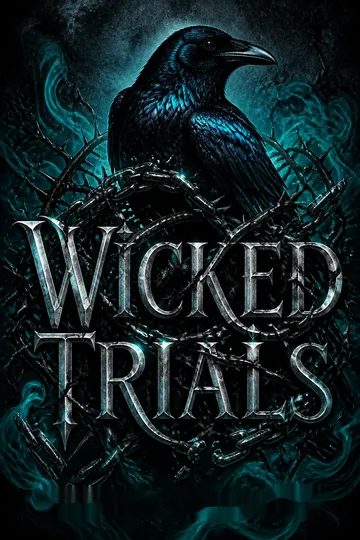
Wicked Trials builds its romance inside a system where affection and coercion repeatedly occupy the same room. The Crows watch Ava because they fear for her, but surveillance, confinement, and orders still deprive her of choice. Their motives may be protective; the consequences remain controlling. That distinction gives the relationship its ethical pressure. Ava is not asked only whether she can desire these men, but whether she can belong to them without surrendering the judgment that has kept her alive.
The trials turn this conflict into repeated decisions. A diner robbery rewards improvisation, the poisoned chalice demands submission, the hunt tests bodily endurance, and Becca’s suspended life makes loyalty personal. The tests are not neutral measures of character. Diesel designs their terms, decides what counts as failure, and can use them to confirm what he already suspects. Ava’s refusal to treat those rules as sacred is part of what makes her both threatening and valuable.
The novel also treats survival skills as morally ambiguous inheritance. Ava’s father taught her music and criminal competence; those lessons sustain her, but they also draw her toward the violence she hoped to escape. The Crows have similar histories, and their attraction partly grows from recognizing one another’s damage. Yet recognition does not itself heal trauma. The characters’ choices matter more: Corvus must confront the difference between protecting and possessing, Rook must distinguish intensity from harm, and Grey must learn that remorse is not repair.
The ending refuses an easy romantic resolution. Ava has found real attachment, but Diesel’s final trial makes that attachment unsafe by forcing her to choose between Becca and the gang. She leaves with her friend and contacts Officer Vick, choosing uncertainty over submission. The choice is not a clean return to innocence or proof that the law will save her. It is a renewed claim to agency, made at the cost of leaving people she has begun to love.
Review Summary
Wicked Trials receives mixed reviews, with an overall rating of 4.30/5. Readers praise the intense action, plot twists, and character development, particularly enjoying the dynamic between Ava Jade and the Crow boys. Some criticize Ava's stubbornness and the slow-burning romance. The book is noted for its dark themes, steamy scenes, and cliffhanger ending. Many readers express excitement for the next installment, while others feel disappointed by certain plot elements and character choices.
People Also Read
Characters
Ava Jade Mason
The armed new initiateAva Jade arrives at Briar Hall carrying grief, street-honed instincts, and a determination not to be owned. She reads rooms quickly, handles blades with confidence, and treats escape as a practical problem rather than a fantasy. Her defiance is not simple fearlessness: she calculates danger because experience has taught her that trust can be costly. Music and memories of her father reveal a tenderness she rarely shows, while her sharp humor helps her keep others at a distance. Drawn into the Crows’ world, she must decide whether belonging can coexist with independence. Her central tension is between the life she hoped to build and the dangerous competence that makes her valuable to the people controlling her choices.
Corvus James
The controlling second-in-commandCorvus is the disciplined, watchful center of the three Crow brothers. He expects obedience, treats vigilance as a form of care, and becomes especially controlling when he fears losing someone. Ava’s refusal to submit unsettles the self-command on which he relies. Beneath his severity are artistic instincts and a capacity for tenderness that he protects behind secrecy and routine. He has difficulty distinguishing keeping someone safe from deciding for them, so even his generous gestures can carry the weight of possession. His bond with his brothers is foundational, but Ava challenges him to recognize that loyalty cannot be demanded into existence.
Rook
The volatile Crow brotherRook is impulsive, sexually bold, and drawn to risk, with a history that has left him wary of vulnerability. He uses provocation and dark humor to approach people without having to admit how much they matter. Ava meets his appetite for danger with a matching refusal to be intimidated, making their attraction unusually combustible. His apparent recklessness coexists with the ability to hold back, especially when he senses that desire could become harm. Rook’s loyalty to his brothers is fierce, though he often expresses it through action rather than explanation. He is both a source of danger and one of the few people willing to meet Ava on her own terms.
Grey Winters
The reluctant protectorGrey is the brother most likely to soften an order into a conversation. He apologizes when he recognizes harm, watches Ava closely without sharing Corvus’s instinct for command, and tries to make himself useful when she is distressed. His gentleness is not weakness; he is capable of violence and understands the criminal world well enough to anticipate its dangers. Grey’s care often takes practical forms, from staying near Ava to helping with her injuries and security. He also carries obligations to Diesel and his brothers, which means he cannot offer uncomplicated freedom. His struggle is to protect Ava without turning himself into another warden.
Diesel St. Crow
The dangerous patriarchDiesel leads the Saints and raises Corvus, Grey, and Rook as sons. He sees himself as responsible for preserving both his family and the organization, and he measures people by whether they can be trusted under pressure. His authority is calm rather than showy, which makes his threats more effective. Ava unsettles him because she is difficult to read and already has a history of surviving violence. Diesel’s tests are designed to reveal loyalty, but his methods also expose his own fear of betrayal and loss. He believes harshness can prevent greater harm, a conviction that repeatedly puts his protective role at odds with the people he claims to protect.
Becca Hart
Ava’s loyal roommateBecca is Ava’s closest friend at Briar Hall, warm, sociable, and more perceptive than her cheerful manner first suggests. She offers Ava ordinary companionship through coffee, movies, music, and plans for the future. Her loyalty is complicated by a private romantic life and by family grief she rarely discusses. Becca wants to protect Ava but does not fully understand the dangers surrounding the Crows until they reach her own door. Their friendship gives Ava a connection to a life beyond the gang, and Becca’s vulnerability makes that connection matter under pressure.
Officer Vick
The police recruiterOfficer Vick is a policeman who approaches Ava in secret and wants her to provide information about the Saints. He sees her proximity to the Crows as an opportunity to build a case, while she sees the danger of cooperating before she has reliable protection or evidence. His persistence creates a possible route out of the gang’s control, but also risks exposing her to Diesel. Vick represents a law-enforcement system Ava cannot simply trust, even when it offers the only apparent alternative.
Aunt Humphrey
Ava’s distant guardianAva’s aunt brings her to Thorn Valley and expects her to attend class and maintain grades. Her messages focus on school, college prospects, and family obligations, offering little emotional support. She represents the respectable future Ava was meant to pursue, but not a secure refuge from the past she carries.
Kit
Ava’s Lennox connectionKit remains in Ava’s life through occasional messages and connections in Lennox. He knows part of the world she has left behind and can potentially help her find tools or information. Their contact keeps her former life present, even as Ava increasingly avoids returning to it.
Dom
A distant old friendDom is a friend from Ava’s life in Lennox. Ava’s brief messages to her show the guilt she feels for withdrawing from people who once mattered, and the difficulty of maintaining old bonds while surviving a new crisis.
Julia Clayton
Rook’s absent motherJulia is Rook’s mother, remembered as a gifted singer with ambitions of her own. Her influence survives in the keepsake Rook guards and in the questions he carries about his origins. Though absent from the present action, her story gives emotional context to his guardedness and longing for family.
Plot Devices
The Saint trials
Loyalty by ordealDiesel’s trials determine whether Ava can enter the Saints, but they also function as coercion because failure is treated as a death sentence. The tests change form: a staged diner robbery, a poisoned drink, a crossbow hunt, and a timed rescue. Each one demands a different kind of proof, from performance and obedience to endurance and loyalty. Their unpredictability keeps Ava from establishing a stable sense of safety, while the brothers’ secret interventions reveal that the trials are not morally neutral tests. They are instruments of power whose rules can be bent by the people who control them.
Anonymous messages
Threat without a faceTexts from an unknown sender describe private moments, threaten punishment, and suggest that Ava is being watched. Because the messages arrive through disposable numbers and reveal no clear identity, they create sustained uncertainty even after the brothers decrypt them. The threat contributes to the attack at Briar Hall, but the book does not conclusively identify the sender. This unresolved danger connects Ava’s past to the present without letting the Crows simply name an enemy and declare the problem finished.
Crow insignia blades
Belonging made tangibleAva’s lost blade and the replacement Corvus gives her turn a weapon into a question of allegiance. The replacement bears a crow emblem, marking a possible place among the brothers while also suggesting that she may be absorbed into their identity. Ava can use it to defend herself, but she resists deciding what its symbolism means. Later, the weapon becomes practical during the hunt, where survival depends on skills she already possesses. Its double function captures the story’s recurring tension between being equipped by others and being claimed by them.
The Bone Man persona
Art behind a maskCorvus performs as Primal Ethos, concealing his face beneath skeleton makeup and building a public identity around songs that express pain and alienation. Ava’s admiration for the music predates her discovery that the performer is Corvus. At the concert, he also uses a recording of her voice from his private studio, making the persona a source of both recognition and violation. The mask gives Corvus a place to express what he cannot say plainly, but it also lets him control what Ava knows about him.
Rook’s black diamond
A repaired family bondThe black-diamond necklace is a keepsake connected to Rook’s mother. Ava has it repaired and returns it to him on his birthday, creating a quiet gesture of care after the violence of the hunt. Rook responds by sharing memories he usually keeps hidden. The necklace does not erase their histories or guarantee safety, but it gives their growing bond a material focus: something damaged, preserved, and made wearable again. Its significance comes from the attention Ava gives to an object Rook had kept out of sight.
Boys of Briar Hall Series

About the Author




Download PDF
Download EPUB
.epub digital book format is ideal for reading ebooks on phones, tablets, and e-readers.








