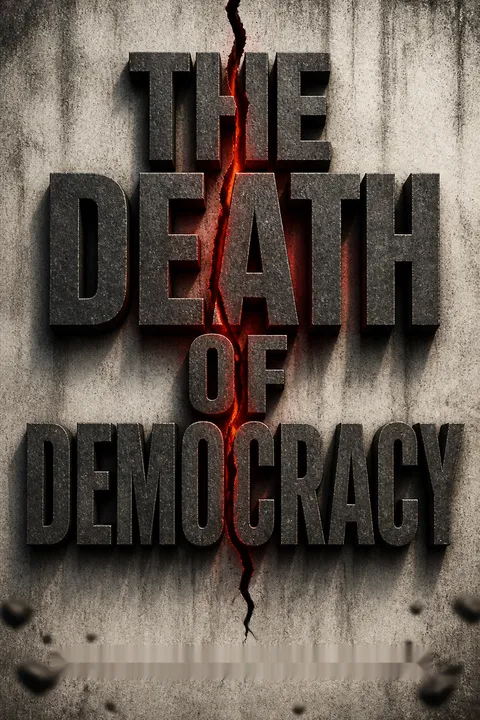


Key Takeaways
A constitution cannot defend democracy when its guardians use it against democracy
Rules need guardians. The Weimar Constitution of 1919 protected civil liberties and set up an elected parliament, but it also gave the president emergency powers under Article 48. Its framers expected a president and parliament committed to democracy. They did not imagine that an elected president might use emergency orders to bypass parliament, or that parties hostile to democracy might gain decisive power. When President Hindenburg and his advisers used these mechanisms to govern without stable parliamentary support, the constitution could not enforce its own democratic purpose. The danger was not simply a badly written document. It was the choice of powerful officials to treat legal authority as a tool for weakening the system that authorized them.
Democracy depends on restraint. Hindenburg repeatedly sought to avoid responsibility for difficult decisions, while advisers such as Kurt von Schleicher and Franz von Papen pursued authoritarian rule through constitutional maneuvers. Their actions show why formal safeguards matter only when political actors accept limits on their own power. A democracy can be undermined by people who insist they are acting legally, especially when opponents are too divided to stop them.
What's striking is how the constitutional failure was also a failure of political ethics. A written rule cannot distinguish a genuine emergency from a convenient excuse unless independent actors can question its use. This resembles a general problem in institutional design: safeguards work only when those responsible for interpreting them expect others to follow the same rules. The Weimar case also cautions against treating legality as proof of legitimacy. Yet constitutional design still matters. Clearer limits on emergency authority might have raised the cost of abuse, even if no document could have neutralized determined officials acting together.
Challenge comforting national myths before they turn defeat into treason
Memory became political fuel. After the First World War, many Germans embraced two connected stories: that the nation had been united in August 1914, and that traitors at home had caused defeat in November 1918. The second story, the “stab in the back” myth, was promoted by military leaders who knew the army had lost. Germany had suffered about 1.7 million military deaths, but its territory was not occupied when the armistice came, and censored wartime reporting had obscured the scale of defeat. The story of betrayal offered a simpler explanation than military exhaustion and the Allies’ greater resources.
The myth had force, not facts. The supposed unity of 1914 was never universal. In Berlin, as many as 100,000 people attended antiwar meetings in July 1914. Still, the contrast between a supposedly glorious beginning and a humiliating ending gave nationalists a powerful emotional script: unity had been stolen, and enemies within had to be punished. Hitler made that script central to his politics.
A shared account of the past can bind a community, but it can also create a moral permission structure for revenge. The key political danger is not simply historical error. It is the conversion of uncertainty into a story with villains, innocence, and a promised restoration. Memory scholars distinguish between evidence about past events and the meanings communities attach to them; Hett shows those meanings shaping actual political loyalties. Correcting falsehoods is necessary, but facts alone may not dislodge a story that gives people dignity or belonging. Democratic leaders need credible accounts of loss that do not require scapegoats.
Weimar's recovery proves collapse was political, not preordained
Recovery was real. Germany endured revolution, hyperinflation, political violence, and the failed Beer Hall Putsch of 1923. Yet the republic stabilized. Foreign Minister Gustav Stresemann helped restore Germany’s international standing through negotiations including the Dawes Plan, the 1925 Locarno Treaties, and entry into the League of Nations in 1926. The economy recovered from hyperinflation, and in the 1928 election the democratic parties formed a parliamentary coalition. Weimar also supported remarkable innovation in art, science, and social life. This record contradicts the idea that Hitler’s rise was the inevitable result of an inherently unworkable republic.
Success did not settle conflict. The republic’s opponents grew more intransigent even as it recovered. Rural Protestants, industrialists, and military leaders had distinct grievances, but many wanted less influence for the Social Democrats and a more authoritarian state. Political camps remained socially and religiously divided, while parties often rewarded ideological purity over compromise. Recovery bought time, but it did not create agreement about who belonged in the political community or how Germany should relate to the postwar order.
The distinction between a system’s weaknesses and its fate matters. Weimar’s survival through severe shocks shows that institutions can adapt, while its later collapse shows that adaptation is not the same as shared legitimacy. Political science often describes parties or groups with the power to block a decision as veto players. When there are many, bargaining becomes harder, but the Weimar story adds a sharper point: actors may prefer paralysis if compromise would weaken their preferred social order. That does not make democratic compromise a cure-all. It does make the refusal to compromise a political choice, not merely a constitutional malfunction.
When economic pain feels imposed from abroad, scapegoats can beat explanations
The crisis had many causes. Germany entered the Depression already vulnerable. Rural food prices were falling, industrial automation was eliminating jobs, and unemployment had reached about 1.3 million by mid-1928. The country also depended on foreign loans, many short-term, to manage reparations and sustain spending. The Wall Street crash mattered, but the book argues that the capital rush to New York before the crash had already helped weaken Germany. By early 1932, unemployment had reached about six million, roughly 40 percent of insured workers.
Nationalism made hardship legible. The Nazis presented dependence on international finance and trade as a loss of freedom, and offered autarky, or economic self-sufficiency, as an answer. Their promised path also relied on excluding people defined as outsiders and acquiring territory in the east. Chancellor Brüning’s austerity and his pursuit of nationalist goals worsened suffering. He turned away a possible French loan and favored ending reparations over measures that might have eased the Depression. Economic distress did not mechanically produce Nazism, but it made its explanations more attractive.
Economic shocks rarely arrive with a ready-made political meaning. People interpret them through stories about fairness, status, and who controls the rules. That helps explain why a technical issue such as short-term lending could become a nationalist grievance, while antisemitic conspiracy offered a false, emotionally simple culprit. The account also resists a convenient monocausal story in which the 1929 crash alone creates Hitler. One caution is that policy alternatives were constrained by debt, inflation fears, and international commitments. Recognizing those constraints does not erase political responsibility, but it prevents hindsight from making difficult choices look effortless.
Emergency powers meant to save the state can hollow it out
A temporary device became a governing method. After the 1930 coalition collapsed, Chancellor Heinrich Brüning relied on Article 48 to issue executive orders when parliament rejected his policies. The orders could be overturned by the Reichstag, but the president could dissolve parliament and call another election. This arrangement made a presidential cabinet possible: a government increasingly dependent on the president rather than a parliamentary majority. Brüning still had Social Democratic support, though the party’s policy of tolerating his government angered many of its own voters.
The precedent invited escalation. Papen’s government went further. In July 1932, it used emergency powers to remove Prussia’s elected government, claiming the state could not maintain public order. Prussia contained three-fifths of Germany’s population and had a large police force, so taking control of it mattered enormously. The action weakened one of the last major democratic administrations and showed that an emergency decree could be used against a political rival. Measures presented as temporary protection made the next, more sweeping abuses easier to justify.
Emergency authority creates a dilemma familiar to disaster planning: governments need speed, but speed reduces scrutiny. A useful safeguard is not simply a sunset clause. It is independent review, transparent reasons, and a legislature that can meet and act while the emergency continues. The Weimar example also shows how exceptional powers can become normalized through repetition. Still, not every use of emergency authority is a step toward dictatorship. The decisive questions are whether the threat is genuine, whether powers remain limited, and whether the government accepts a return to ordinary accountability.
Make violence look defensive, and intimidation begins to resemble public order
The street shaped the story. The Nazi Stormtroopers, or SA, fought political opponents and tried to control neighborhoods, meetings, and campaign routes. In Berlin, Joseph Goebbels understood that the violence also generated publicity. Nazis often portrayed their own attacks as responses to Communist aggression, a framing that could make Brownshirts seem like defenders of order to alarmed middle-class observers. In the 1931 trial of four Stormtroopers, lawyer Hans Litten pressed Hitler on a Nazi pamphlet that openly discussed revolution. Hitler struggled to explain the contradiction between such language and his party’s claims of legality, but the judge stopped the questioning.
The Reichstag fire amplified the tactic. In February 1933, the parliament burned and the government blamed a Communist uprising. The Dutch communist Marinus van der Lubbe confessed, but the evidence reviewed by Hett makes it unlikely that he acted alone. The precise perpetrators remain disputed. What is clear is that the Nazis used the fire to justify mass arrests and suspend civil liberties. Their political advantage came from presenting their own coercion as a response to an enemy threat.
Political violence communicates twice: it harms opponents directly, and it teaches bystanders what resistance may cost. When authorities accept a perpetrator’s account of self-defense without serious scrutiny, the state can become an amplifier of intimidation. Research on propaganda often emphasizes repetition and emotional simplicity; this episode adds the importance of narrative position. The aggressor claims the role of protector. Yet the case also warns against certainty where evidence is incomplete. The Reichstag fire’s authorship remains contested, while the regime’s opportunistic response is much better established. Those are different claims and should not be collapsed.
Hitler won one-third of votes, but conservative elites gave him office
Votes were not enough. The Nazis became Germany’s largest party, but they never won a majority in a free national election. In July 1932 they received 37.3 percent of the vote, a striking result that still left most voters choosing other parties. Their path to the chancellorship depended on President Hindenburg and conservative politicians who believed Hitler’s popularity could serve their own agenda. Schleicher tried to use the Nazis as a mass base for authoritarian rule. Papen, after losing office to Schleicher, negotiated with Hitler and helped persuade Hindenburg to appoint him.
The bargain was deliberate. Hindenburg had repeatedly refused to make Hitler chancellor, but by January 1933 he feared an unconstitutional emergency government, political violence, and possible legal consequences for himself. Papen promised that conservatives could contain Hitler within a cabinet where Nazis held only a few posts. He and others underestimated the power of control over the police, propaganda, and mass mobilization. Hitler’s appointment was not an unavoidable consequence of the vote. It was a choice made by elites who preferred a dangerous alliance to political compromise.
This distinction between electoral strength and access to state power is essential. Populist movements can gain influence through votes, but governing authority often depends on coalitions, appointments, and control of coercive institutions. The elites’ error was not merely misreading Hitler’s personality. They treated their own institutional access as a reliable restraint, while helping him acquire resources that could change the balance. At the same time, their motives were not identical: Hindenburg sought unity on the right, Papen sought renewed influence, and Schleicher wanted a governable authoritarian state. Shared opposition to democracy made their divergent plans temporarily compatible.
Use legal procedures to dismantle the institutions that make law meaningful
The takeover moved quickly. After the Reichstag fire, Hindenburg signed a decree suspending basic civil liberties and allowing the central government to override state administrations. Police arrested political opponents, while SA violence went largely unchecked. In the March 1933 election, the Nazis won 43 percent, and their nationalist allies added 8 percent. The result gave their coalition a bare majority, not the two-thirds needed to change the constitution. The Enabling Act passed only after Communist deputies were excluded, other opponents faced intimidation, and the remaining parties voted under threat.
Coordination removed alternatives. The Nazis called the process Gleichschaltung, or coordination: bringing states, professions, media, and political organizations under Nazi control. The Enabling Act let Hitler’s government make laws without parliament, while the regime dismissed civil servants deemed politically unreliable or Jewish, dismantled parties, and made the Nazi Party the only legal party. This was more than one vote or one decree. It was the systematic removal of places from which opposition could organize or appeal.
The sequence matters because democratic collapse is often imagined as a single dramatic seizure, when it can instead proceed through a legal-looking series of administrative acts. Each measure narrows the capacity to contest the next. Institutional pluralism is therefore not decorative complexity; it gives people independent routes to information, representation, and appeal. The episode also complicates a simple account of consent. The Nazis had significant popular support, but the vote occurred amid violence and restrictions, and the law was passed under coercion. Popular enthusiasm and state intimidation operated together.
Protect independent institutions before the secret police inherit the streets
Opposition became harder by the day. A small resistance network formed inside Papen’s vice-chancellery office. Its members included speechwriter Edgar Julius Jung, press secretary Herbert von Bose, and intelligence adviser Fritz Günther von Tschirschky. They had once opposed Weimar democracy themselves, but became alarmed by Nazi lawlessness and repression. They helped vulnerable people, shared information with foreign journalists, and tried to persuade officials to resist the regime. Jung drafted the 1934 Marburg speech, which criticized Nazi terror, propaganda, and attacks on religious freedom while cautiously praising Hitler.
Courage lacked a power base. The Nazis blocked the speech’s wider circulation, arrested Jung, and killed him and Bose during the Night of the Long Knives. Papen, the supposed sponsor of their effort, had not known the full extent of the resistance and did not act decisively when his staff came under threat. By then, parties, unions, the press, state governments, and much of the bureaucracy had been brought under control. The group’s actions mattered morally, but independent institutions and broad alliances had been weakened before resistance could become effective.
The resistance story is powerful partly because its members were not uncomplicated democratic heroes. Their earlier hostility to democracy helps show that opposition to a dictator does not automatically mean commitment to pluralism. Their practical work, however, crossed old political and religious boundaries to help people in danger. That kind of cooperation is difficult to build after opponents have been isolated and intimidated. The section suggests a demanding standard for resistance: courage matters, but so do durable organizations, trusted communication, and alliances formed before repression makes every act of coordination dangerous.
Analysis
Hett explains Weimar’s destruction as a convergence, not a straight line from national defeat to dictatorship. The First World War supplied the trauma and political myths. Global economic dependence and the Depression supplied new grievances. Deep social divisions made it difficult for democratic parties to bargain across established camps. Nazi organizing then translated resentment into votes, street power, and a promise of national unity through exclusion. The decisive final step was taken by conservative elites, who assumed they could borrow Hitler’s mass support without surrendering control.
This account’s strongest contribution is its attention to the interaction between public mobilization and elite maneuver. Neither factor is sufficient alone. The Nazis attracted a large constituency, but did not win an electoral majority. Hindenburg, Papen, and Schleicher possessed access to appointments, police, and executive power, but could not create durable popular authority without the Nazis. Their alliance was therefore mutually enabling, though profoundly unequal in its eventual consequences. The constitutional story reinforces this point: legal forms do not preserve democracy when political actors use them to disable opposition and accountability.
The book also refuses to treat Nazi appeal as a purely German aberration. It connects the movement to broader European reactions against liberal capitalism, political instability, and postwar borders, while identifying Germany’s particular history of defeat, antisemitism, and militarism. That wider frame helps explain why authoritarian populism could feel modern and responsive to grievances, rather than merely a return to the past. The argument should not be reduced to a warning that economic distress inevitably produces fascism. Weimar experienced recovery, and economic hardship took political meaning through institutions, identity, and strategy. Nor does emphasizing miscalculation excuse officials who knowingly weakened democracy. Hett’s narrative ultimately locates contingency in human decisions: the outcome was not guaranteed, but once independent institutions were dismantled and violence normalized, the choices available to opponents contracted with frightening speed.
Review Summary
The Death of Democracy examines how the Weimar Republic collapsed and Hitler rose to power. Reviewers praise Hett's detailed analysis of political maneuvering, particularly conservative elites who believed they could control Hitler. The book explores key factors: resentment over WWI's outcome, the "stab in the back" myth, political instability, and the embrace of irrationality over facts. Many reviewers note chilling parallels to contemporary politics, especially regarding populism, misinformation, and threats to democracy. While some found the detail overwhelming, most consider it essential reading for understanding democratic fragility and authoritarian rise.
People Also Read



Glossary
stab in the back
myth of domestic betrayalA false nationalist explanation for Germany’s defeat in the First World War. It claimed that the army had not been beaten militarily, but had been betrayed by politicians and civilians at home, especially Social Democrats and other democratic leaders. Military figures including Hindenburg and Ludendorff helped popularize the story, which weakened the legitimacy of the Weimar Republic.
Myth of 1914
myth of wartime unityThe belief that Germany’s entry into the First World War created a spontaneous, nationwide unity that erased political, class, religious, and regional divisions. The enthusiasm was never universal, but the image became a powerful ideal of national solidarity. The Nazis later presented their own movement as a restoration of that imagined unity.
Article 48
presidential emergency powerA provision in the Weimar Constitution that allowed the president to take emergency measures when public security and order were seriously threatened. The Reichstag could overturn those measures, but presidents and chancellors used executive orders and parliamentary dissolutions to govern around ordinary legislative processes. The provision became a route toward increasingly authoritarian rule.
presidential cabinet
government reliant on presidentA Weimar government that depended primarily on the president’s appointment and emergency decrees rather than on a stable majority in the Reichstag. Such cabinets became common after parliamentary coalitions failed. They could keep governing despite lacking ordinary democratic support, weakening parliament and making further executive rule seem normal.
political confessionalization
voting shaped by social milieuA pattern in which people’s political loyalties are reinforced by their surrounding communities, including religious institutions, workplaces, neighborhoods, clubs, and newspapers. In Weimar Germany, voters often stayed within broad socialist, Catholic, or Protestant middle-class camps. This social loyalty shaped party support as much as formal policy positions did.
Volksgemeinschaft
racially defined national communityThe Nazi ideal of a unified German people whose members would supposedly rise above class and political divisions. This promised unity depended on excluding people the Nazis defined as outsiders, especially Jews and political opponents. The concept drew emotional force from the myth of national unity in 1914, while disguising the coercion and racial hierarchy at its core.
autarky
national economic self-sufficiencyA policy goal of reducing dependence on foreign trade, investment, and resources by making a country economically self-sufficient. Nazi advocates presented it as a way to free Germany from international financial constraints. Hett explains that the project’s practical implications included state control, military preparation, and the conquest of territory and resources in eastern Europe.
Gleichschaltung
coordination under Nazi controlThe Nazi term for bringing political, administrative, and social institutions into line with the regime. After securing extraordinary legislative power, the government took control of state administrations, professional organizations, newspapers, radio, civil service, and political parties. The process removed independent centers of authority and made organized opposition increasingly difficult.
cross front (Querfront)
coalition across political divisionsKurt von Schleicher’s proposed coalition linking groups that normally opposed one another, including labor unions, Social Democrats, and the Nazi faction associated with Gregor Strasser. Schleicher hoped it could provide employment, parliamentary support, and a mass base for an authoritarian government without handing Hitler full control. The plan failed when Hitler rejected any arrangement that did not make him chancellor.
Download PDF
Download EPUB
.epub digital book format is ideal for reading ebooks on phones, tablets, and e-readers.








