

Plot Summary
A Falcon in the Tide
Amalia Cornaro, scholar and heir to a powerful Raverran family, trains with Zaira, a fire warlock whose destructive balefire Amalia can release or seal. During practice, Zaira’s flames nearly reach Captain Marcello Verdi, but she pulls them back herself. Their instructors warn that Vaskandar is preparing for war, and Zaira admits she will stay with the Falcons only while she can learn enough control to avoid harming innocents.
Amalia hopes to reform the law that forces mage-marked people into military service, but knows wartime politics may bury it. Their argument ends when they find a Falconer’s body tangled among the island rocks. The dead man is Anthon, and his throat has been cut. His Falcon, the artificer Namira, is missing.
The opening makes the novel’s central ethical problem physical: Zaira’s power can protect the Empire, but its use may kill people she never meant to harm. Amalia’s authority over that power is both intimate and political. She wants to protect Zaira without controlling her, yet the jess and the release word make that distinction difficult. Anthon’s murder turns this private negotiation into a national crisis. The body also punctures the comforting belief that the Falcons’ luxurious confinement keeps them safe. From the beginning, security and care are entangled with coercion.
The Names on Paper
At a dinner party, Marcello grieves Anthon and reveals that he has been promoted to captain, a change Amalia learns about only after the fact. His sister Istrella, a gifted young artificer, turns a spoon into a listening device so Amalia and Zaira can overhear Ambassador Varnir speaking with a cold Vaskandran agent.
The agent serves the Lady of Thorns, one of Vaskandar’s sovereign Witch Lords, and has a list of targets. Amalia and Zaira sneak into the private room and retrieve the discarded paper. Istrella’s name is circled, as are Zaira’s, Marcello’s colleagues, and Amalia herself. They reach the ladies’ dressing room just as the agent attacks Istrella with a dagger and a sleep potion.
Information here behaves like both weapon and liability. Istrella’s improvised device lets Amalia penetrate diplomatic secrecy, but the knowledge they gain immediately exposes someone they love to danger. The list binds apparently separate events, Anthon’s murder and Istrella’s assault, into a coordinated campaign. Amalia’s investigative instincts are valuable, though she is still learning that identifying a threat does not give her time to control it. Her name among the targets also unsettles the familiar divisions between political heir and military asset. The attack is not simply aimed at the Falcons; it is aimed at the people and relationships that sustain them.
The Crow Lord's Courtship
Amalia and Zaira save Istrella from the assassin, who escapes, and the discovered list gives them grounds to confront Varnir. He explains that Vaskandar has no central government: each Witch Lord rules a separate domain, and their coming Conclave may decide whether enough of them unite for war. Amalia’s mother, Lissandra, warns that Prince Ruven and his father are aligned with the Lady of Thorns.
At the Festival of Beauty ball, Amalia meets Kathe, the Crow Lord of Let, while playing a balancing game. Hoping to create a counterweight to the hostile Witch Lords, she accepts his offer to court her as a sign of alliance. He accepts, but hints that she carries a dangerous inheritance she does not understand.
Amalia’s first major political move comes through a form she does not know how to navigate: courtship. She is not merely pretending to be romantically available; she is using the social grammar of intimacy to create leverage between rival powers. The move suits her ability to think strategically, but its emotional cost becomes clear when Marcello is left outside the choice. Kathe complicates the bargain because his humor obscures intention without concealing his intelligence. His hint about Amalia’s inheritance suggests that diplomacy cannot remain a contest among institutions. Her own ancestry, body, and private attachments are now part of the board.
The Falcons Are Hunted
After the ball, Amalia tells Marcello that her courtship with Kathe is political, and he struggles to accept that she has chosen a Witch Lord over the possibility of them. Meanwhile, attacks spread across the Empire.
An artificer disappears, an alchemist dies in a burning inn, and other Falcons are murdered or abducted while traveling. Colonel Vasante concludes that the attackers knew private travel plans, which means someone inside the Mews is leaking records.
Lord Caulin, the doge’s secretive adviser, arrives at the officers’ meeting and urges surveillance, confinement, and punishment of suspected Falcons. Amalia supports Vasante and Marcello in resisting those measures. The immediate danger is real, but Caulin’s intervention makes the Falcons’ own government look like another threat.
The campaign against the Falcons creates a double bind: the Empire must protect its most powerful defenders while treating them as potential traitors. Caulin exploits that fear to extend state control, whereas Marcello’s trust in the people under his command initially resists the possibility of betrayal. Amalia recognizes both the intelligence failure and the political opportunity hidden inside it. Her instinct is not to choose between safety and liberty, but to ask who benefits when one is used to erase the other. The strain with Marcello deepens because she has made herself an instrument of policy even in their private relationship.
Poison on the Road
The Council sends Amalia to Callamorne, where she must inspect a mysterious artifice circle near Mount Whitecrown, while Zaira prepares for possible combat. On the journey, the assassin disguises herself as a server and poisons the travelers’ wine.
Amalia’s alchemical ring detects the toxin; the assassin stabs at Zaira, whose protective clothing deflects the blow, then aims a pistol at Amalia. Marcello shoots the attacker before she can fire. He recognizes her as one of the people who kidnapped Emmand, a mage-marked boy, four years earlier.
He had tried to rescue the child but was shot and left behind as the kidnappers fled. The assassin dies without explaining the wider plot. Marcello now has to face the possibility that his old failure connects to the current attacks.
This ambush converts Marcello’s private guilt into evidence about the enemy’s methods. The attack succeeds in revealing how little a prepared escort can guarantee, even when the travelers know they are targets. Amalia’s ring saves them by detecting alchemy, while Zaira’s shield turns aside the knife; neither defense can solve the larger mystery. Marcello’s memory of Emmand complicates the image of military competence with a wound he has kept hidden. His attempt to save one child failed, and the present campaign suggests that the child may have been absorbed into a system built on coercion. Protection can be sincere and still arrive too late.
The Thorns Reach Home
Before the group reaches Callamorne, Kathe leads Amalia away from the road to meet the Lady of Thorns. The Witch Lord threatens her, then withdraws when Kathe reminds her that killing the queen’s granddaughter would ruin her own purpose. Kathe suspects she killed Amalia’s father, Prince Embran, though he cannot prove it.
At court, Amalia learns her cousin Bree has hidden vivomantic abilities, and that their grandfather was the son of the Lady of Eagles, a powerful Witch Lord. This ancestry may explain why the Lady of Thorns wants the Lochaver family dead. The queen orders stronger defenses, while Amalia’s visit is meant to reassure Callamorne that the Empire will honor its protection. The old family connection is now a battlefield.
Inheritance in this section is not a decorative genealogy but a claim that can change who has power over land and people. Amalia learns that blood connects her to the same magical order threatening her family, while Bree’s hidden ability makes the royal succession more precarious. The Lady of Thorns’ threat places intimate history inside public diplomacy: the question of who killed Amalia’s father can no longer be separated from the war. Kathe offers useful information, but only in fragments, leaving Amalia to decide whether partial truth is help or manipulation. Callamorne’s welcome also reminds her that belonging is political, not simply emotional.
A Thorn Tree in Court
At a public reception, the Lady of Thorns appears without invitation and offers to spare Callamorne if the queen cedes northern territory. Queen Galanthe refuses. The Witch Lord drops seeds that grow into a vast thorn tree inside the hall, forcing guards and royals to fight their way through its branches. Kathe withers a branch before it reaches Amalia.
The Lady of Thorns escapes, but a thorn cuts the queen, giving the Witch Lord a taste of Lochaver blood. Kathe explains that she can now turn the living things in her domain against the queen and her heirs. Istrella discovers that someone altered the castle’s wards to let the attacker inside. The family survives the assault, but the border threat has followed them indoors.
The attack is a demonstration of political power performed through the architecture of a court. The Lady of Thorns does not merely threaten Callamorne; she makes its own hall, protections, and living materials betray it. Galanthe’s refusal preserves sovereignty but brings an immediate cost, and the blood-mark turns family membership into a vulnerability that can be tracked and exploited. Istrella’s technical discovery shows how small, almost invisible alterations can open a path for overwhelming force. The scene also exposes the limits of Zaira’s power: she cannot safely unleash balefire in a crowded room. Restraint, not force, is sometimes the only protection available.
Banebriar in the Well
The expedition leaves Durantain to investigate the volcano circle, carrying Istrella, Marcello, Terika, and their Falconers. At a mountain village, Terika recognizes banebriar poisoning in the villagers’ water and stays behind with Bree to brew an antidote.
The party continues toward Highpass, but a wounded messenger reports that Vaskandran raiders attacked the ingredient-gathering group and captured Terika. Amalia and Zaira turn back with soldiers. They find Lienne dead among the trail’s casualties and Bree trapped in a living thicket.
Bree’s hidden vivomancy lets her break free, but her ankle is badly injured. Zaira refuses to abandon Terika, and Amalia agrees to cross into Vaskandar with a small force. The rescue begins as a choice between safety and leaving a friend to captivity.
Terika’s village makes the war personal in a way the military maps cannot. The poison targets ordinary people through their shared water, while the soldiers’ response depends on knowledge Terika carries from her childhood. Her decision to stay is not reckless: it is an act of responsibility toward the community that raised her. Bree’s rescue exposes the difference between a concealed capacity and a chosen role, while Zaira’s insistence on pursuing Terika reveals how deeply she has begun to care. Amalia must lead without reliable information, weighing people rather than abstract resources. The deaths along the trail make every subsequent decision carry a visible cost.
Across the Witchwall
Inside the Lady of Thorns’ domain, the forest attacks the rescue party with chimeras. Zaira releases her balefire to stop the creatures, then Amalia seals it before it consumes the woods. The force is not enough to hold off later packs, and soldiers stay behind to buy Amalia and Zaira time to escape. Amalia’s leg and arm are torn by a chimera.
The two women cross boundary stones into the Wolf Lord’s domain, where the creatures cannot follow, then seek shelter in a village. Zaira’s mage mark makes the villagers kneel, revealing how Vaskandar ranks people by magic. Amalia uses a Raverran spy’s coded message to warn Highpass that they are alive. They have escaped immediate pursuit, but Terika remains missing and their companions are dead.
The border stones offer a sharp distinction between domains, but crossing them does not make Amalia and Zaira free. Their survival depends on a costly chain of sacrifices, and the people left behind cannot be reduced to a tactical price without changing how Amalia experiences the mission. Zaira’s fire is both protection and exhaustion; Amalia’s command to seal it protects the group while preserving Zaira’s agency. In the village, Zaira’s sudden deference from strangers exposes the cruelty of a hierarchy that reverses the Empire’s but still assigns human worth by magical status. Amalia’s use of spy codes shows her political education becoming practical under pressure.
The Wolf Lord's Castle
A crow guides the injured women through the Wolf Lord’s domain toward a safer route. They discover that its people live better than those in the Lady of Thorns’ territory, then reach the castle of the Wolf Lord and his son, Prince Ruven.
Ruven confirms that Terika is there and invites the visitors to remain. His father regards Zaira as a threat, while Ruven offers her status and freedom from the Mews if she joins his court. The offer is persuasive because the Empire also treats her as a weapon.
Ruven reveals that he wants a domain because Witch Lords can live for centuries, and sons may wait generations for inheritance. He then brings Terika to them, her jess removed, but she insists she wants to stay. Her frightened eyes tell Amalia and Zaira that something is wrong.
Ruven’s offer is dangerous partly because it identifies a real injustice. Zaira is not free in the Empire, and the Mews’ comforts do not erase compulsory service. But Ruven presents freedom as admission into a hierarchy where those without magic remain beneath the marked. His treatment of Terika makes the contradiction legible: removing a jess can look like liberation while leaving a person unable to choose. Amalia notices the mismatch between Terika’s words and her body, relying on close attention rather than force. The scene asks how coercion disguises itself as rescue, especially when the rescuer names a genuine grievance.
The Wolf Lord Burns
Amalia and Zaira escape their guest room by climbing the castle’s living lattice. They overhear Ruven arguing with his father about a plan to trigger Mount Whitecrown, then find Terika among other captured Falcons. Terika cannot leave because Ruven’s potion binds her to his commands.
The pair leave without her and break into a study, where they find the volcano design. When the Wolf Lord confronts them in the forest, Zaira unleashes balefire on him. His domain’s plants and animals feed his body, so the fire becomes a battle between two kinds of magic: one sustained by life, the other consuming it.
Zaira burns through the domain’s living force and kills him, then collapses. Amalia carries her through the night, while the Wolf Lord’s death gives Ruven an immediate claim to his father’s domain.
Zaira’s greatest victory is also the most destabilizing act in the story. Her fire can defeat a Witch Lord only by consuming the life that sustains him, so power becomes inseparable from ecological devastation. Amalia survives as witness and caretaker, not as strategist, and must carry the human consequences after the spectacular violence ends. The Wolf Lord’s death does not remove a threat cleanly; it transfers a domain to Ruven, whose ambitions are more dangerous. The sequence rejects the fantasy that defeating a tyrant automatically restores order. In Vaskandar, power is structurally inherited, and a successful act of defense can create a worse political reality.
Blood Beneath the Stone
Amalia wakes in the forest beside Zaira and follows a crow that appears to have been sent by Kathe. The bird leads them into Atruin, the Lady of Eagles’ domain, where elk guide them toward an old cave.
Inside, Amalia finds a blooding stone connected to an underground stream and realizes Witch Lords bind their power to a domain through blood, water, and boundary markers. The Lady of Eagles appears and takes Amalia to an active volcano circle on Mount Whitecrown.
Amalia finds deliberate gaps left by a coerced artificer and carves symbols that stop the circle from building more pressure. The Lady of Eagles confirms the circle threatens her land, but refuses to promise help against Ruven. She offers Zaira refuge, leaving her to choose between the Empire and a life beyond its control.
The cave turns Amalia’s scholarship into a way of reading political power at its material source. Blood, water, and stone are not symbols floating above the world; they are mechanisms that bind a ruler’s authority to living territory. Her discovery explains why the Witch Lords seem omnipresent within their domains and why inheritance can transform a person’s reach overnight. The Lady of Eagles offers knowledge and shelter but refuses to become an instrument of imperial policy. Zaira’s possible freedom therefore remains a real choice, not a reward Amalia can grant or revoke. Amalia’s response marks a growing distinction between protecting a friend and claiming ownership of her.
Istrella's Missing Signals
Kathe escorts Amalia and Zaira back to Highpass. Marcello greets them with relief, but Amalia soon discovers Istrella under Ruven’s control. A device Istrella built immobilizes Amalia while Istrella tries to force poisoned coffee on her.
Amalia escapes by blowing the liquid away, and Lord Caulin catches Istrella as she flees. He claims she is the Mews traitor because she leaked travel schedules and altered wards. Amalia explains that a potion compelled her, and Marcello refuses to let Caulin take his sister without proper authority.
Together, they block the arrest. Istrella recovers enough to confirm Ruven used her, though she had tried to leave clues. Marcello admits he missed them. Amalia then tells him not to wait for her, choosing duty over a promise of future love.
Istrella’s apparent betrayal exposes the danger of judging behavior without examining the conditions that produce it. The evidence against her is real, but it conceals the coercion that made her actions possible. Marcello’s intervention matters because he defends her before he fully understands what happened, choosing relationship and due process over expedient suspicion. Amalia’s refusal to promise Marcello a future is similarly an attempt at honesty, but it hurts him because she cannot offer the certainty he needs. Both scenes test whether loyalty means obedience, trust, or truthful recognition. Amalia is learning that political responsibility can require decisions that damage the very attachments that sustain her.
The Order of Black Malice
The doge appoints Amalia a Serene Imperial Envoy and sends her to negotiate at the Witch Lords’ Conclave. While her group plans to disable the volcano circles and rescue the captured Falcons, Caulin privately gives her a vial of Black Malice.
If she cannot bring the captives home, he orders her to poison them rather than let the Empire appear unable to reclaim its mage-marked citizens. He tells her to keep the order secret from the military and from her mother.
Amalia suspects the instruction may be political leverage as much as policy, and Lissandra’s coded warning confirms that Caulin may be acting underhandedly. Amalia rejects the order in principle but cannot safely expose it yet. She prepares instead to rescue the Falcons and offer them a choice of where to live.
Caulin’s command converts the state’s fear of losing power into a demand that Amalia kill the people the state claims to protect. The order is especially corrosive because it is secret, verbal, and difficult to challenge without appearing disloyal. Amalia recognizes that either obedience or refusal could be weaponized against her reform effort. Her solution is not yet open rebellion, but she starts treating the captives as people whose wishes matter, rather than symbols of imperial prestige. The episode sharpens the novel’s distinction between duty and institutional self-preservation. Serving the Empire may require resisting the officials who speak in its name.
A Kiss Before the Vote
At the Conclave, Amalia and Zaira meet the Witch Lords whose decisions will determine whether Vaskandar invades. The ancient Truce Stones protect participants from deliberate violence, but rivalries and favors shape the negotiations.
The Lady of Thorns admits that Amalia’s grandfather betrayed her plan to claim Callamorne, and that she arranged Prince Embran’s death to clear the Lochaver line. Amalia restrains her anger. The Lady of Spiders warns that most Witch Lords lean toward war and offers to help only if she can learn their deepest secrets.
When the Serpent Lord questions whether Amalia and Kathe are truly courting, Amalia kisses Kathe to make their alliance credible. She is startled by how much she enjoys it, then returns to bargaining with the realization that attraction and strategy are no longer cleanly separable.
The Conclave makes political customs visible as mechanisms of power: a truce has boundaries, favors have value, and even affection can be tested as evidence. The Lady of Thorns’ confession gives Amalia a personal reason to strike back, but she uses discipline to keep the revelation from dictating her conduct. Her kiss with Kathe is both diplomatic proof and genuine bodily experience. Its success does not resolve her feelings for Marcello; it makes her choices harder to compartmentalize. The Lady of Spiders offers knowledge at the price of intimate exposure, forcing Amalia to see that information is not neutral currency. Every alliance demands access to something she would prefer to keep private.
The Falcons in the Tower
During the Conclave’s opening, Amalia and Zaira find Terika and the missing Falcons in a guarded tower. Ruven has used a potion mixed with his blood to bind them to his domain and orders Terika to attack Zaira. Terika’s poisoned blade cuts Zaira before the others restrain her and give her an antidote.
The captives explain that Ruven has forced them to make weapons and potions; one, Selas, is a mage-marked boy sold into Ruven’s household. Another, Harrald, does not want to return to compulsory service. Amalia promises the group a safe route to the Empire, but also offers passage to Kathe’s domain for those who choose it. She refuses to treat their rescue as a return of property, despite the doge’s order and the law.
The tower turns the supposed rescue into a conflict over what rescue means. The captives are not a unified group: some long for familiar homes, some fear the Mews, and others have never had a meaningful choice. Terika’s attack is not evidence that she has ceased to care for Zaira; it is evidence of how Ruven’s compulsion weaponizes care. Amalia’s offer of alternatives is politically dangerous because it acknowledges that imperial protection can resemble captivity. Her decision extends the principle behind her reform law into immediate practice. Freedom is not a single destination; it begins with giving people enough information to choose.
Emmand Names the Monster
As the Kindling begins, Zaira leads the captives out of the castle while Amalia returns to the throne hall. Ruven uses his new power to immobilize her and threatens to kill her discreetly, but releases her when the ceremony demands his attention.
Eleven candles soon burn for war, and Kathe’s speech changes few votes. Amalia argues that Ruven enslaves mage-marked people and plans to turn Mount Whitecrown against the land itself. Ruven dismisses her warning. Emmand then arrives after finding the bones of children Ruven had discarded, and tries to testify.
Ruven chokes him through his control of the boy’s body. The Elk Lord intervenes, condemns Ruven’s enslavement of mages, and moves his candle to peace; his followers and the Fox Lord follow. The balance shifts, leaving Ruven with few allies.
Amalia’s speech initially meets the limits of persuasion when the audience already knows Ruven is dangerous and has decided that danger is useful. Emmand changes the argument by placing a child’s testimony before the Witch Lords, making Ruven’s abuse impossible to treat as distant imperial propaganda. Ruven’s attempt to silence him becomes evidence in the very ritual meant to decide the war. The Elk Lord responds not to Amalia’s appeal for peace alone, but to a violation of Vaskandran rules about the status of mage-marked people. The turn exposes the partial nature of moral consensus: opposition grows when Ruven threatens the hierarchy’s own foundations.
The Price of Whitecrown
After the Lady of Eagles claims Ruven trespassed on her half of Mount Whitecrown, several Witch Lords move their candles away from war. Amalia leaves the hall to reach Ruven’s control circle, but the Lady of Thorns intercepts her in the forest and traps her in roots. Kathe appears, revealing that he shifted the Truce Stones beyond the garden so the Lady of Thorns would suffer for breaking the truce.
Her blood turns against her, cutting off her access to her domain, and Kathe kills her. Amalia is furious that he used her as bait, though he insists he never intended to let her die. He sends a crow to summon Jerith and continues to hold off Ruven’s forces while Amalia hurries toward the control circle.
Kathe’s maneuver is effective because it transforms the Conclave’s rules into a weapon, but it also makes Amalia’s body part of the trap without her consent. His private vengeance against the Lady of Thorns aligns with the Empire’s interests, yet that alignment does not erase the betrayal. Amalia’s anger is ethically important: a good outcome cannot retroactively make manipulation harmless. The scene also shows how fragile rules become when participants know exactly where their protections end. Kathe’s choices suggest affection and strategy can coexist, but they do not always coexist comfortably. Amalia must decide whether trust can be rebuilt without pretending the breach did not happen.
The Eruption's Chosen Path
At the control circle, Ruven has already triggered Mount Whitecrown. Zaira unleashes balefire, but Ruven survives by rebuilding his body with the life in his domain. As he begins killing the villagers he has forced to defend him, Amalia seals Zaira’s power, stopping the fire from consuming them all.
She studies the circle and discovers she can still redirect the eruption because her blood connects her to the Lady of Eagles’ claim on the mountain.
Every available direction endangers someone: she chooses the rugged eastern ridge, hoping to spare towns, fortresses, and the escaping Falcons. The eruption devastates that slope and kills Roland, her cousin and heir to Callamorne. The Empire’s defenses survive, but Amalia knows she chose a path that took his life.
The climax denies Amalia a clean solution. She can stop Zaira from burning innocent villagers, but cannot undo the eruption, and her knowledge only lets her choose where its violence lands. The decision is political arithmetic made bodily: every map marker represents a person, and the selected route contains someone she loves. Her bloodline gives her access to the mechanism, but access is not mastery. The scene also tests the difference between killing and murder without resolving it neatly. Amalia acts to prevent a wider catastrophe, yet the necessity of the choice does not soften its grief. Competence here is not triumph; it is the capacity to act and remain answerable.
A Future Still Unsettled
In Durantain, the city mourns Roland, and his sister Bree blames Amalia for choosing the direction that killed him. Queen Galanthe understands the necessity of the decision, but Bree cannot yet forgive it. Zaira remains with Amalia and agrees to keep her power sealed around crowds unless Amalia releases it at her request.
Caulin questions Amalia about Harrald, but she refuses to reveal that he chose to remain in Vaskandar. At Terika’s family home, Zaira meets her grandmother, while Kathe apologizes for using Amalia in his trap and offers Let’s help against Ruven. Amalia keeps courting him cautiously. Marcello agrees to support her Falcon reform effort, and she asks him to help her resist becoming numb to the lives she must weigh.
The ending offers no emotional reset after the military success. Bree’s anger preserves Roland as a person rather than allowing his death to become a statistic that justifies policy. Galanthe recognizes the burden of rule, but her validation cannot repair the family fracture. Amalia’s choices about Harrald and Zaira show that her politics are becoming more accountable to individual agency, even when that complicates imperial control. Kathe’s apology opens a possibility of renewed trust without guaranteeing it, while Marcello becomes a companion in the work rather than a promised romantic reward. Amalia’s emerging leadership depends on staying affected by loss, not learning to ignore it.
Analysis
The novel asks what it means to protect people when every available institution already claims some right over them. The Empire offers mage-marked people comfort and status in exchange for compulsory service; Vaskandar offers magical nobility while binding inhabitants to a Witch Lord’s domain. Neither system can be called free simply because one is more luxurious or the other more prestigious. Amalia’s reform effort matters because she begins to see that protection without choice can become another name for possession.
Magic is organized around relationships. Amalia’s jess connects her to Zaira, Witch Lord blood binds rulers to land and people, and Ruven’s potion manufactures obedience by turning intimacy and hospitality into instruments of control. These bonds create genuine care as well as coercion, which is why the novel resists easy moral sorting. Zaira’s balefire can stop a pack of chimeras, but it can also consume a forest or kill the people it is meant to defend. Amalia’s gift is not magical strength but an ability to see how systems connect, then act when analysis can no longer guarantee a harmless answer.
The Conclave presents political influence as accumulated favors, grievances, and performed credibility. Amalia learns to speak within that structure without accepting its assumptions. Her speech does not change the Witch Lords by itself; Emmand’s testimony and Ruven’s attempt to silence him expose a violation of their own rules. Political persuasion works when moral argument becomes evidence that an audience cannot ignore.
The ending refuses to make competence feel clean. Amalia saves the Empire’s defenses by redirecting the eruption, and Roland dies in the path she chooses. Bree’s anger preserves the personal truth that the policy calculation cannot absorb. Amalia’s growth is therefore not the shedding of grief but the decision to remain answerable for consequences. Her allies matter because they can keep her from mistaking endurance for moral numbness.
Review Summary
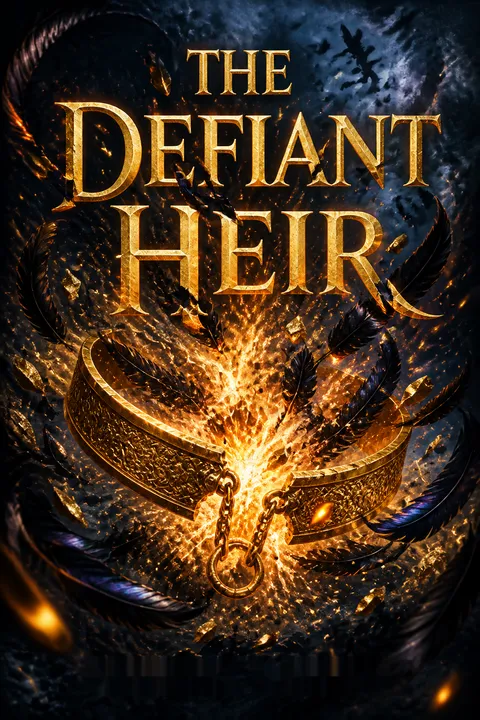
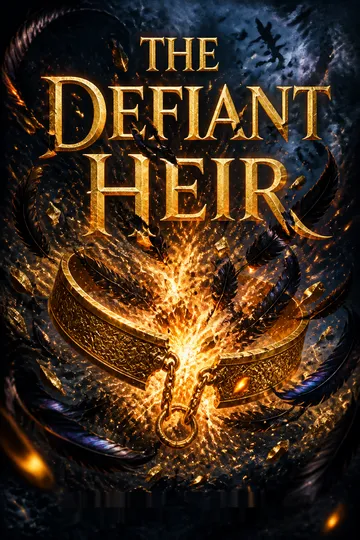
The Defiant Heir is highly praised as an excellent sequel, expanding the world and characters introduced in The Tethered Mage. Readers love the political intrigue, character development, and introduction of new characters like Kathe. The magic system and world-building receive high marks. Many reviewers consider it better than the first book, with compelling relationships and high stakes. Some criticism exists regarding the love triangle subplot. Overall, the book is viewed as a strong entry in an underrated fantasy series.
People Also Read

Characters
Amalia Cornaro
The reluctant envoyAmalia is a young scholar, heir to the politically formidable Cornaro family, and the Falconer responsible for controlling Zaira’s balefire. Her first instinct is to understand a problem, whether it involves magical theory, a coded message, or the history behind a political claim. She is compassionate, but not naturally decisive; experience forces her to act before certainty is possible. Her effort to reform compulsory service for mage-marked people puts her own privileges under scrutiny. Amalia is drawn between her duty to the Empire, her loyalty to friends, and her desire for a life not wholly designed by politics. Her central psychological struggle is learning to exercise power without treating other people as pieces she owns.
Zaira
The fire warlockZaira is a fiercely independent warlock whose balefire can destroy nearly anything it touches. Raised in the impoverished Tallows, she distrusts institutions, sentimental promises, and anyone who treats her magic as public property. Her wit and profanity often serve as armor, keeping people from noticing how carefully she watches those she loves. She remains with the Falcons partly to master her power and partly because she has not yet found a livable alternative. Her bond with Terika challenges her belief that caring for someone can only make them vulnerable. Zaira wants freedom, but not at the price of becoming the monster others already assume she is.
Marcello Verdi
The loyal Falcon captainMarcello is a skilled Falconer, a disciplined soldier, and Istrella’s older brother. His loyalty is practical: he protects his people, takes responsibility for their safety, and does not easily accept that someone he trusts could betray them. His devotion to Amalia is genuine, but he respects her political choices even when they wound him. He carries guilt over a failed rescue from his early career and over missing signs that Istrella was in danger. Marcello’s steadiness gives Amalia a rare place where she can speak plainly. His care is not passive; he challenges her to remember that people under the Empire’s protection have lives and desires beyond their service.
Kathe
The Crow LordKathe rules the Vaskandran domain of Let and commands an immense network of crows. Playful, observant, and difficult to read, he treats diplomacy as a game whose rules can be bent but should be understood. He is curious about Amalia’s ancestry and political intelligence, and candid about wanting influence, yet he conceals the full purpose of many actions. His humor masks a serious capacity for loyalty and grief. Kathe’s relationship with Amalia develops through bargains, intellectual challenges, and attraction, but his willingness to manipulate events strains her trust. He values information and companionship, and is still learning that a clever plan can harm the person it is meant to protect.
Ruven
The ambitious SkinwitchRuven is a Vaskandran prince whose rare Skinwitch abilities let him manipulate human bodies. He is charming when it serves him, cruel when challenged, and convinced that extraordinary power should bring extraordinary entitlement. His ambition is driven by fear of remaining subordinate to his father and by a desire for the long life and authority associated with ruling a domain. Ruven can recognize injustice when it benefits his arguments, especially the Empire’s treatment of Zaira, but his version of liberation preserves a rigid magical hierarchy. He regards people as resources and relationships as leverage. His intelligence makes him more dangerous than a merely impulsive tyrant.
Terika
The village-born alchemistTerika is a Falcon and gifted alchemist, raised by her grandmother in a Callamornish village. Warm, perceptive, and often playful, she understands the practical cost of poison better than most people around her. Her compassion is not softness: she can remain focused while her home and neighbors face catastrophe. Terika cares deeply for Zaira but refuses to let Zaira decide on her behalf what their relationship should mean. She has a strong sense of kinship with people the Empire and Vaskandar might treat as expendable. Her alchemical skill makes her valuable to rulers, while her insistence on personal choice resists being reduced to that usefulness.
Lissandra Cornaro
The calculating ContessaLissandra is Amalia’s mother, a member of the Council of Nine, and one of the Empire’s most capable political operators. She teaches through strategy, pressure, and carefully withheld information rather than comforting reassurance. Her pragmatism comes from a lifetime of governing in a system where kindness without leverage can leave people unprotected. She recognizes Amalia’s growing influence before Amalia does, and knows that reform can look like a challenge to imperial authority. Their relationship mixes affection with political instruction. Lissandra wants her daughter to become competent enough to survive power, while Amalia fears that competence may require surrendering too much of her own moral sensitivity.
Istrella Verdi
The inventive artificerIstrella is Marcello’s younger sister and an unusually talented artificer. Her mind moves toward devices and patterns even in social settings, and she often neglects ordinary conversation when a technical problem has captured her attention. Her ingenuity repeatedly gives Amalia tools that would otherwise be unavailable, from listening devices to defensive charms. Istrella is affectionate but not conventionally demonstrative, and she assumes others will notice what she cannot say directly. Her relationship with Marcello is loving, occasionally exasperated, and complicated by his responsibility as her Falconer. She illustrates how expertise can create both independence and vulnerability when powerful people decide to use it.
Brisintain, called Bree
The unruly princessBree is Amalia’s cousin, a Callamornish princess with a talent for drawing people into her orbit. She is quick to laugh, bold in public, and impatient with the ceremonial limits placed on her. Her contrast with her more reserved brother sometimes conceals a serious sense of duty. Bree’s instinct is to act when someone she loves is in danger, even when the consequences are uncertain. She resents being protected from meaningful responsibility and wants her courage to count for more than entertainment at court. Her hidden abilities and her place in the royal family make her a source of both personal loyalty and political uncertainty.
Roland
The anxious royal heirRoland is Bree’s brother and the heir to Callamorne. Serious, dutiful, and uncomfortable in crowds, he worries that he cannot match his grandmother’s heroic reputation or Bree’s easy popularity. He wants to serve his people directly, especially when war threatens the border, but his family’s protectiveness keeps him away from danger. His caution is not cowardice; it comes from an acute awareness of what the loss of an heir would mean. Amalia recognizes in him a familiar fear of failing expectations. His bond with his sisters is shaped by affection, rivalry, and the pressure of a role he did not choose.
Queen Galanthe Lochaver
The warrior queenGalanthe rules Callamorne and is celebrated for defending it against Vaskandran attacks. She carries authority in her bearing and expects her family to understand that leadership involves risk, grief, and public responsibility. Her protectiveness of Roland and Bree comes from having already endured personal loss, though she knows shielding them from danger cannot last forever. Galanthe respects Amalia’s growing judgment and treats her as both granddaughter and political actor. Her loyalty to Callamorne is grounded in a history of costly resistance, not abstract nationalism. She is a reminder that courage can mean standing firm, but also deciding when others must be allowed to act.
The Lady of Thorns
The territorial Witch LordThe Lady of Thorns rules Sevaeth through powerful vivomancy, directing plants and other life within her domain. She is proud, volatile, and contemptuous of people without magical ability. Her political choices are shaped by fierce devotion to her daughter and by a long-standing grievance against the Lochaver family. She treats power as the only reliable protection against loss, making her capable of tenderness toward her heir and brutality toward everyone else. Her refusal to separate love from possession gives her motives emotional force without making her methods benign. She embodies the danger of a ruler who can make private desperation into public policy.
The Lady of Eagles
The ancient domain keeperThe Lady of Eagles is one of Vaskandar’s oldest Witch Lords and Amalia’s great-grandmother. Her power reaches through land and water, but she is measured in her involvement with descendants and neighboring domains. She values boundaries, tradition, and the stability of her own territory, refusing to treat every conflict as her responsibility. Her restraint can seem cold, yet it follows a long perspective on the consequences of powerful rulers interfering in one another’s succession. She offers Zaira sanctuary without demanding service and recognizes Amalia’s usefulness without mistaking it for magical power. Her presence broadens Amalia’s understanding of inheritance beyond family names.
Lord Caulin
The Chancellor of SilenceCaulin is the doge’s legal adviser and secretly oversees imperial intelligence and assassins. Quiet, efficient, and difficult to read, he believes the state must retain control over the Falcons because their power underwrites imperial security. His manner is mild, but his proposals can involve surveillance, confinement, or lethal action. Caulin is not a simple villain: he sees himself as protecting the Empire, yet his focus on control blinds him to the people whose loyalty the system depends on. He regards Amalia as a political threat because her reform effort challenges an established source of military power. Their conflict is fundamentally about whether security justifies treating citizens as assets.
Jerith Antelles
The sardonic storm warlockJerith is a storm warlock and officer whose sharp humor masks experience with the Empire’s use of mage-marked people. He challenges Amalia and Zaira during training, insisting that power must be controlled before it is needed in battle. His skepticism about imperial motives is grounded in personal knowledge, not mere contrariness. He is married to Balos and brings a frank, irreverent presence to the Mews. Jerith understands both the danger of uncontrolled magic and the danger of institutions that claim to manage it for everyone’s good.
Balos
Jerith's steadfast husbandBalos is a Falconer, a strong and reassuring presence beside his husband Jerith. He tends to temper Jerith’s sharpness with physical warmth and practical steadiness. His relationship with Jerith offers Amalia a glimpse of intimacy that persists inside a military institution, even though both men must live with the dangers of the Mews and its rules.
Lienne
Terika's protective FalconerLienne is Terika’s Falconer, an experienced swordswoman with the warmth of a trusted aunt. She takes Terika’s safety seriously without treating her as helpless, and she is comfortable moving between care and command. Her skill and affection make her a stabilizing presence within the traveling party.
Namira
The captured master artificerNamira is an older Falcon and expert artificer whose work is important to the Empire’s defenses. Practical, self-possessed, and alert to technical weaknesses, she understands how expertise can be turned into a weapon by people who control its makers. Her experience gives Amalia crucial insight into the volcano design and the dangers of coerced labor.
Emmand
The manipulated young alchemistEmmand is a mage-marked boy taken from his family and raised under Ruven’s influence. His loyalty is complicated by the story he has been taught about his past and by the comforts Ruven offers him. He is neither naturally cruel nor immune to manipulation; he wants security, belonging, and an explanation for what happened to his family. His situation forces Amalia and Zaira to confront the difference between condemning an abuser and reaching the people shaped by one.
The Wolf Lord
Ruven's powerful fatherThe Wolf Lord rules Kazerath with the authority of a ruler bound to every living thing in his domain. He is formidable, suspicious, and accustomed to obedience, even from his son. His opposition to Ruven’s schemes grows from a judgment of their danger, not from a modern belief in equality. The tension between them reveals how a family hierarchy can become a political structure when power and inheritance are inseparable.
The Fox Lord
The wary northern allyThe Fox Lord is a politically nimble Witch Lord whose domain borders potential rivals rather than the Serene Empire. He is wary of trust, shaped by the need to anticipate threats close to home. His skepticism makes him difficult to recruit, but also capable of changing position when a proposed alliance offers a credible answer to his own danger.
The Elk Lord
The ancient power brokerThe Elk Lord is among the oldest and most influential Witch Lords. He sees war as part of Vaskandar’s recurring political cycle and initially accepts it as a necessary pressure valve. His authority comes from age, accumulated favors, and a belief in the order of nature. He is willing to revise his position when Ruven’s conduct violates the rules he considers fundamental.
Selas
The stolen mage childSelas is a young mage-marked boy taken from an Ardentine orphanage and forced into Ruven’s household. Shy and uncertain, he wants to see his sister and recover the chance to choose his future.
Harrald Callo
The unwilling artificerHarrald is an artificer from a farming family who wants the ordinary life the Empire’s compulsory service denied him. He is thoughtful and direct about the cost of being treated as a military resource.
Parona da Valisia
The practical alchemistParona is an experienced alchemist whose technical knowledge helps sustain the captured Falcons. She is pragmatic, clear-eyed about the risks they face, and quick to recognize when discretion is necessary.
Plot Devices
The Falconer's Jess
Power with a human tetherA jess binds a mage-marked Falcon to a Falconer, allowing the Falconer to release or seal the mage’s power. The bond gives the Empire access to extraordinary magic, but it also embodies compulsory service and a threat of lethal control if a Falconer dies before the jess is removed. Amalia’s responsibility for Zaira makes the device an ongoing ethical problem rather than a simple tool. Their relationship changes as Amalia learns that protecting Zaira requires giving her more say over when her power is available. The jess also makes freedom tangible: removing it can release a person from imperial law, but not necessarily from other forms of coercion.
Balefire
A fire that feeds on lifeZaira’s balefire is an intensely destructive magic that can consume living things and grow stronger as it burns. Amalia’s release word lets Zaira wield it, while a sealing word stops it and leaves her vulnerable to exhaustion. The magic is essential against chimeras and Witch Lords, yet its uncontrollable scale can endanger allies and innocents. Its use forces the pair to negotiate trust: Amalia must act quickly enough to protect others, while Zaira must decide whether she wants to unleash her power. Balefire embodies both the Empire’s dependence on a weapon it fears and Zaira’s struggle to define herself beyond what others want her to destroy.
Blooded Domains
Land becomes a ruler's powerWitch Lords bind themselves to domains through blood, water, and boundary stones. Once a claim is established, the living things in that territory become part of the ruler’s magical reach, granting power across distances and, in exceptional cases, great longevity. The system explains why a ruler’s death can transform a successor’s abilities, why ash from a volcano might carry a claim into new territory, and why Amalia’s ancestry matters. It also gives political conflict a material basis: land is not merely property but an extension of the ruler’s body. The device makes Vaskandran sovereignty powerful, intimate, and potentially coercive.
Ruven's Binding Potion
Captivity disguised as freedomRuven combines alchemy with his Skinwitch abilities to make mage-marked captives feel content and compliant within his domain. Blood and ground stone help the potion connect its drinkers to his power, making their apparent consent difficult to distinguish from compulsion. The potion allows him to exploit artificers and alchemists while disguising their captivity as hospitality or rescue from the Mews. Istrella’s actions and Terika’s forced resistance show how the potion can make friends appear to betray one another. Its importance lies not only in how it controls individuals, but in how it lets Ruven manufacture the appearance of loyalty.
Mount Whitecrown Circles
A volcano turned into a weaponRuven uses a network of artifice circles to build pressure inside Mount Whitecrown, contain it, and direct a future eruption. The design combines Raverran artifice with Vaskandran vivomancy, making it unusually difficult to dismantle. Namira and other coerced artificers leave gaps that Amalia can modify, but the separate control circle remains capable of directing the blast. The volcano raises the stakes beyond a conventional invasion: ash could destroy defenses and carry Ruven’s magical claim into imperial territory. The circle turns Amalia’s scholarship into emergency leadership, forcing her to choose where a catastrophe will land when she cannot prevent it altogether.
Swords and Fire Series
About the Author

Download PDF
Download EPUB
.epub digital book format is ideal for reading ebooks on phones, tablets, and e-readers.








