

Plot Summary
Ignazio’s Last Bargain
Amalia Cornaro, heir to Raverra’s powerful Cornaro family, visits her imprisoned cousin Ignazio after he claims to know Ruven’s next move. Ignazio says Ruven is developing a way to make his command potion permanent and warns that familiar faces may turn against the Empire. He will reveal more only if Amalia secures his release.
Before she can bring the demand to the Council, a chimera stings Ignazio to death in his cell, destroying the information with him. Outside the prison, Lord Caulin presses Amalia to abandon her effort to free the mage-marked from forced military service, hinting that her friends could suffer for her principles. Amalia refuses to be intimidated, but Ignazio’s warning now hangs over an Empire without a clear lead.
The opening binds private injury to public danger. Amalia has reason to distrust Ignazio, yet his death makes their family history newly unfinished: she cannot reduce him to a traitor once he is gone. Caulin’s threat reveals how imperial security can become a language for preserving privilege, especially when mage-marked citizens are treated as weapons rather than people. Amalia’s defiance is not uncomplicated heroism. She is learning that political choices expose others to danger, a cost that will become central as Ruven turns her attachments into leverage.
The Writ Beneath the Mask
Amalia, Zaira, and Falconer captain Marcello investigate a rumor that Ruven hired Tallows mages. Zaira’s contacts instead uncover a gray-market crew hired to disrupt Lady Aurica’s charity ball. At the party, Zaira spills the chocolate soup before anyone can drink it, then corners the crew’s leader, Miranda.
Miranda admits Caulin hired them to dose the soup with a brief sleep potion, creating a false attack that would make the Assembly fear mages and reject Amalia’s reform. Miranda kept Caulin’s sealed writ as protection.
Amalia takes the document and confronts Caulin, forcing him to retract his false intelligence while she keeps proof of his scheme. Her mother advises her to preserve the secret as leverage, but the real threat from Ruven remains unknown.
The episode turns investigation into a lesson in competing kinds of power. Amalia cannot publicly accuse a Council member on suspicion alone, so she must secure evidence, protect the hired mages, and preserve her credibility at once. Zaira’s neighborhood knowledge succeeds where official intelligence fails, showing that political insight depends on relationships beyond elite institutions. Amalia’s victory is real but limited: she gains leverage over Caulin, not knowledge of Ruven. The scene therefore rewards practical judgment while exposing the danger of treating a contained conspiracy as proof that the greater crisis is contained.
A Crow Brings War
Kathe, the Crow Lord of Let and Amalia’s uneasy suitor, arrives at the Cornaro palace carrying intelligence gathered by his crows. Ruven’s troops are moving toward the border despite winter, and human chimeras have crossed into Raverra.
Kathe also reports that Ruven’s methods are alarming other Witch Lords, giving Amalia a possible way to weaken his alliances. In their private exchange, Kathe and Amalia test each other’s loyalties through a game of difficult choices, revealing both attraction and the limits of their trust.
Kathe leaves quickly to defend Let, while Amalia realizes Ruven could exploit the Night of Masks, when thousands of citizens move through the city disguised. The festival becomes a security crisis, and Amalia spends the night searching for a plan she cannot yet see.
Kathe’s visit expands the conflict from an imperial emergency into a contest among magical rulers, but its emotional importance lies in how he approaches intimacy. His game makes values legible without demanding conventional confession, matching two guarded people who understand power better than vulnerability. Amalia’s attraction does not erase her memory of his earlier betrayal, and his assistance does not make him predictable. The approaching masquerade externalizes their shared problem: appearances can conceal danger, but masks can also allow people to move beyond fixed roles. Amalia must learn to read behavior rather than titles or faces.
Ruven Takes the Garden
At Lady Hortensia’s masquerade, Ruven appears in disguise, silences Amalia with his magic, and takes her into the garden. He offers an alliance: her blood and knowledge could help him seize rival Witch Lords’ domains, leaving the Empire untouched. Amalia refuses. Ruven’s chimeras seize Marcello and break his bones in front of her, intending to make her cooperate.
Kathe’s crow distracts one attacker, giving Amalia time to use her flare locket and escape with Marcello into the ballroom. Marcello survives, but Ruven has shown that he can enter the capital and strike at Amalia’s closest friends. Afterward, Amalia’s mother explains that Ruven also poisoned food at other parties. His apparent attack may conceal a more specific purpose.
Ruven’s offer exposes the structure of his desire: he wants not merely power but a partner who can make his ambitions intellectually and magically possible. Amalia’s refusal therefore threatens him in a way force alone cannot settle. His attack on Marcello converts affection into coercion, testing whether Amalia’s principles survive when their cost is embodied in someone she loves. The rescue is not a victory over Ruven; it is a narrow escape that reveals his access to the city and his willingness to use suffering as persuasion. Amalia’s guilt begins to attach itself to choices that were never truly hers to control.
Freedom Wins a Vote
While Raverra searches for Ruven’s hidden purpose, Amalia advances the Falcon Reserve Act. She persuades Zaira and other mage-marked Falcons to support a compromise: they may refuse active military service and live outside the Mews, but the Empire will retain the jesses that can suppress their magic.
Doge Niro warns that reform could weaken the Empire during a crisis, yet Amalia argues that coercion drives mages toward Vaskandar and makes them less loyal. The Marquise of Palova backs her with military evidence, and the Assembly passes the act.
The victory gives mage-marked people a choice, though not complete independence. Amalia’s triumph also creates a dangerous opportunity: a celebration at the Mews will bring its residents together to toast the new law.
The act’s compromise makes reform politically possible while refusing the fantasy that one law can dissolve an unequal system overnight. Retaining jesses preserves state control, but ending forced residence and service changes the meaning of consent. Amalia’s argument is ethical and strategic at once: belonging freely may produce stronger loyalty than obedience extracted through confinement. Her success also shifts her from advocate to policymaker, responsible for the consequences of imperfect reform. The celebratory toast that follows becomes a bitter demonstration of how quickly institutions can be attacked through the very routines that make them cohesive.
The Mews Goes Dark
When Amalia returns to the Mews with Marcello, Zaira, Terika, and Istrella, a controlled guard draws a pistol and the emergency wards seal the fortress. Ruven has poisoned the celebratory wine, giving him control of much of the Mews.
The group discovers that the courier lamps have been smashed, cutting off help, and Jerith is raising a storm from a tower to destroy Raverra. They fight through controlled friends without trying to kill them. Terika’s sleep potion and Istrella’s artifice open a path, while Marcello and Zaira subdue Balos.
Amalia and Zaira reach Jerith and put him to sleep before he releases the storm. Colonel Vasante breaks free from the armory, and her hidden ward puts the Mews under sleep enchantment, stopping the uprising.
The siege makes the Empire’s most trusted defense force its most intimate threat. Because the controlled Falcons resist their orders even while carrying them out, the conflict is not a simple battle between loyal and hostile sides; every encounter forces the rescuers to recognize the person inside the weapon. The heroes’ nonlethal tactics preserve that distinction at physical cost. The Mews’ emergency ward saves the city, yet its existence recalls that the institution was built with safeguards against its own inhabitants. Protection and captivity remain intertwined, making the new reform urgent rather than merely symbolic.
A Doge Falls, Another Rises
Amalia reaches the Imperial Palace with news of the Mews, only to discover Ruven has launched another attack. Marcello, still under Ruven’s influence, kills Doge Niro before Amalia can stop him.
Chimeras assault the Council chamber, where Ciardha and the Marquise of Palova defend Amalia’s wounded mother, Lissandra. The Council elects Lissandra doge in an emergency vote, and Amalia inherits her mother’s Council seat. Intelligence reveals Ruven’s army has crossed the Witchwall Mountains and is moving toward Ardence, while much of the Mews remains quarantined.
Marcello escapes custody before Amalia can see him again. Lissandra sends Amalia and Zaira to reinforce Ardence, where a small force must face Ruven before the Empire can assemble sufficient support.
The coup collapses private and public catastrophe into one night. Marcello’s violence is both an act Ruven has engineered and a wound that cannot be politically ignored, while Lissandra’s sudden elevation forces Amalia into power before grief can settle. The succession is not presented as uncomplicated triumph: her mother’s authority increases as her vulnerability becomes visible, and Amalia inherits duties rather than freedom. The invasion’s timing exploits institutional damage, especially the quarantine that removes the Empire’s strongest magical force. Ruven wins by making every emergency compound the next.
The Chimera at the Window
On the journey to Ardence, Marcello slips into Amalia’s room at an inn and warns her that Ruven’s influence is changing his thoughts from within. He says the cruelty feels like his own and blames Amalia for leaving him alone after the doge’s murder. Before she can keep him there, he senses his sister Istrella approaching and escapes through the window.
Amalia reaches Ardence with Zaira and discovers the city is only partly evacuated. As Ruven’s chimeras attack in the fog, Lucia is shot while protecting Amalia. Ruven appears with Marcello, whose face now bears scales and a predatory eye. He explains that he planted a piece of his own bone in Marcello’s shoulder, allowing him to transform him remotely, and renews his offer to Amalia.
Marcello’s transformation makes the body a record of political violence. Ruven has not simply commanded him; he has altered the physical conditions through which Marcello experiences anger, strength, and agency. That uncertainty destabilizes Amalia’s trust in her own perceptions, especially when Marcello’s accusations touch real regrets. The narrative refuses the comfort of treating every cruel impulse as wholly external, while making clear that Ruven has engineered the conditions that distort choice. Amalia must keep caring for Marcello without mistaking care for safe access or control.
Ardence Under Siege
Before Ruven’s main army reaches Ardence, he uses living roots to undermine the northern wall and collapse its gate. Chimeras pour through the breach, targeting Duke Domenic and killing soldiers in the fog. Zaira uses balefire in short, controlled bursts to destroy them, while Amalia and Lucia defend themselves. One chimera’s venom weakens Domenic, and another artifice trap pins Amalia until it fades.
The city’s defenses are already strained when thousands of Ruven’s troops arrive, including elderly people and children forced into the ranks. Artifice cannons kill many, but Ruven compels the survivors to keep advancing. Zaira understands that if she does not stop them, Ardence’s sixty thousand residents may become part of Ruven’s domain.
The siege turns military strategy into a collision between civilians and coerced combatants. Ruven’s army is not an impersonal mass: its frightened conscripts resemble the people of Ardence, and their forced march makes victory morally costly before the first decisive strike. Zaira’s precise use of balefire against individual chimeras foreshadows the scale she will soon be asked to control. Amalia’s entrapment and Domenic’s poisoning expose how vulnerable even capable leaders are when an enemy can alter terrain, bodies, and timing. The city’s survival depends on choices made under conditions designed to make every option disastrous.
Zaira Burns the Valley
Zaira meets the advancing army outside Ardence with Amalia beside her. At first she holds a narrow wall of balefire across the valley, trying to give the conscripts a chance to retreat.
When Ruven forces them forward again, the fire overwhelms Zaira’s control and sweeps through the army, farms, and surrounding fields. Amalia watches thousands die, then orders the flames quenched before they reach the last fleeing soldiers. Zaira collapses, alive but unconscious, and the valley becomes a blackened wasteland.
Amalia stays with her until morning, then helps her face the scale of the destruction. Zaira rejects the idea that the fire alone bears responsibility; she accepts that the act was hers, even though Amalia shared the decision to let it continue.
The valley is the story’s most severe test of the distinction between responsibility and blame. Zaira’s magic is part of her, but its escalation exceeds her conscious control; Amalia’s power to stop it does not absolve her from deciding how long to wait. Their disagreement afterward resists both easy exoneration and simplistic condemnation. The people killed were coerced, yet their deaths prevent Ruven from taking a city. The scorched landscape gives political necessity a material aftermath that cannot be argued away. Survival is achieved, but neither woman can return to an untouched version of herself.
The Spider’s Price
Amalia, Kathe, Zaira, and their allies search for a way to kill Ruven, whose domain can heal him faster than balefire can destroy him. They decide to obtain the ancient Truce Stones and use them to sever his connection to that power. The Lady of Spiders agrees to lend the stones in exchange for a secret from one of them.
Amalia cannot risk exposing state secrets, so Zaira accepts the spider’s venom. As the Lady of Spiders unravels Zaira’s memories, Zaira confronts the people she killed as a child when her fire first escaped control, including her mother. She also recognizes that she chose to unleash balefire at Ardence. Amalia understands that Zaira’s power must be accepted, not treated as an alien demon.
The spider’s bargain makes memory an instrument of governance: private pain is converted into information that can protect or destroy. Amalia’s refusal to expose the Empire’s secrets shows that public office has changed what she may freely surrender. Zaira’s ordeal is more intimate. She has survived by separating herself from the violence of balefire, but the separation also prevents her from understanding her own agency. The Lady of Spiders’ cruel method forces an integration Zaira would not choose. Amalia’s insight matters because she does not offer absolution; she helps Zaira see that ownership of power is the precondition for control.
A Friend in the Snow
As Amalia’s party travels north, Marcello finds her at an abandoned inn and pours away the elixir that keeps her alive. He claims Ruven can cure her, restore him, and end the war if she agrees to serve him. Amalia uses Istrella’s paralysis ring and an obsidian ring to incapacitate him, but Marcello later wakes, removes the ring, and escapes after emptying her remaining bottles.
He leaves behind one emergency dose. At Greymarch fortress, Amalia discovers Ruven has controlled the garrison and its alchemists, so Kathe turns the horses and flees. Across the border in Atruin, Amalia’s poison returns with force. A crow eventually delivers replacement elixir, saving her, while she and Kathe share a moment of care that deepens their bond.
The encounters with Marcello dramatize the difference between saving someone and possessing the means to save them. Amalia can restrain him, but each intervention is temporary, and the elixir he destroys is not only medicine but the basis of her own continued agency. Ruven’s bargain is frightening because it offers plausible relief alongside domination. The controlled fortress extends that coercion from intimate relationships to state infrastructure. Kathe’s practical help and emotional presence do not solve Amalia’s dilemmas, but they prevent isolation from becoming another form of surrender.
The Border Fortress Betrays
After escaping Greymarch, Amalia and her companions learn that Ruven has ordered the entire fortress to march south, including civilians gathered there for safety. The soldiers are controlled by his potion and will be forced toward Ardence, where Zaira’s friends may have to kill them. The group crosses into Kathe’s domain, where his subjects greet him with familiarity, revealing a model of Witch Lord rule unlike Ruven’s exploitation.
Meanwhile, Amalia and Zaira encounter Marcello near a boundary stone. Amalia bleeds on it to provoke Ruven and draw him toward a future trap, but the stone’s defenses strike Marcello when he crosses the border. He escapes wounded. The challenge succeeds: Ruven is now moving closer than expected.
The controlled fortress reveals Ruven’s method at a national scale: he turns the Empire’s own people and systems into instruments against it. The forced march is especially cruel because it makes resistance appear as responsibility for killing one’s neighbors. Kathe’s village offers a counterexample without idealizing him; affection between ruler and subjects can coexist with lethal defenses and a vast power imbalance. Amalia’s blood on the boundary stone is a calculated provocation, but Marcello pays the immediate price. Her plans increasingly depend on risking the very people she hopes to protect.
Blooding Stone Ambush
The Lady of Spiders lends the Truce Stones, and the group prepares a circle near Ruven’s blooding stone, where his claim spreads through the rivers of Kazerath. Hal volunteers to lure Ruven into the trap, while Kathe’s other Heartguard place the stones. Ruven arrives with Marcello, shoots Hal, and reveals that he has stolen one of the stones, breaking the circle before it can bind him.
Kathe attacks anyway, but Ruven’s chimeras and a specialized venom disable him. Roots haul Kathe under the frozen lake, exploiting his deepest fear of drowning. Marcello holds Amalia and Zaira at gunpoint. Ruven then raises dead bodies and animals as puppets, sending them toward the two women while he withdraws.
The failed trap is not simply a tactical reversal. It exposes the emotional cost of treating friends as pieces in a strategy, even when they volunteer. Hal’s death confirms that consent does not neutralize danger, while Kathe’s submersion turns his private history into a weapon. Ruven’s use of the dead violates the life cycle that underpins Witch Lord magic, making his power feel not merely immense but morally desecrating. Amalia’s plans have failed, and her allies are incapacitated. She must now act without the protection of expertise, hierarchy, or a clean solution.
The Jess on Ruven
Zaira unleashes balefire against Ruven’s undead army, but her damaged jess melts as the flames spread toward Amalia and the wounded Marcello. Amalia refuses to restrain her with another jess, trusting what Zaira learned about owning her power. Zaira recognizes Amalia and extinguishes the fire before it consumes them. Ruven approaches, offering to cure Amalia and restore Marcello if she becomes his partner.
Amalia pretends to accept, then slips a jess onto Ruven’s wrist and seals his magic. With his domain no longer healing him, Zaira’s balefire finally burns through his body. Ruven dies, ending his control over the invaded soldiers. Kathe breaks free from the lake, and Marcello survives, though his transformation remains.
The climax resolves its central problems through a chain of trust rather than a single superior weapon. Amalia trusts Zaira without the jess, and Zaira proves capable of returning from the fire. Amalia then uses the jess not to contain an ally but to strip Ruven of the power that makes him invulnerable. The reversal is ethically pointed: restraint is not inherently oppressive, nor is freedom automatically safe. What matters is consent, context, and who controls the mechanism. Amalia’s deception buys a narrow opening, while Zaira’s mastery turns that opening into an ending Ruven’s ambition could not survive.
A Future With Scars
In a Let village, Marcello survives his wound but remains a chimera, with permanent physical changes and an uncertain temperament. He and Amalia admit their love, yet decide they cannot marry: she is a Cornaro and Council member, while marriage would force him to leave the Falconers and his work for the mage-marked. They choose to remain allies and friends.
Zaira returns to Terika and accepts a new jess, choosing Amalia as her Falconer; Terika later accepts her marriage proposal. Back at the Mews, Istrella tests Marcello’s altered eye, then embraces him, and the Falcons begin planning civilian lives made possible by Amalia’s law. Amalia returns to the Council with greater authority and a clearer sense of what remains to be changed.
The ending refuses restoration as the measure of a happy resolution. Ruven is dead, but Marcello cannot be returned to his former body, Hal remains lost, and the valley stays damaged. Amalia and Marcello’s love becomes a chosen partnership rather than a conventional union, preserving both their commitments instead of forcing one to erase the other. Zaira’s renewed jess is not a retreat from self-knowledge; it is a boundary she now elects to use. The Falcon Reserve Act’s practical effects bring the political plot into daily life, where freedom appears as homes, work, and futures rather than a triumphant speech.
Analysis
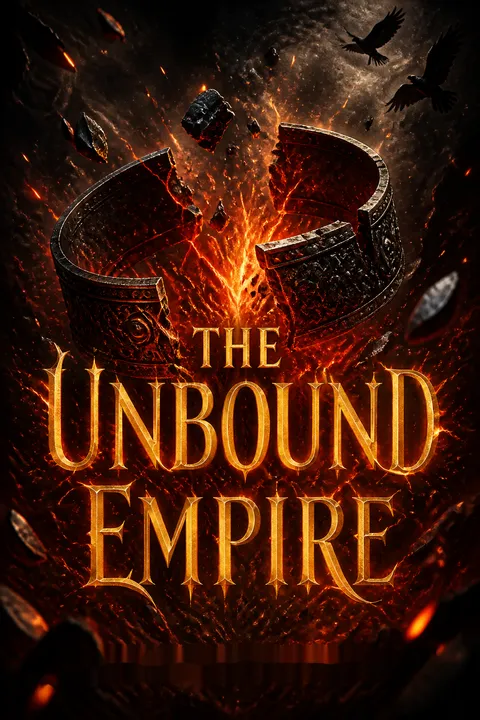
The Unbound Empire asks whether power can be made accountable without pretending it can be made harmless. Its institutions are not simply villains: jesses prevent catastrophe, the Mews trains defenders, and the Council coordinates a vast state. Yet those same structures confine mage-marked people and normalize their use as military resources. Amalia’s reform works because she changes the terms of participation rather than demanding instant trust from a frightened electorate. The compromise is morally incomplete, but it creates practical freedom that citizens can inhabit.
The novel places a parallel argument inside its magic. A jess can be a chain or a chosen safeguard; balefire can be an uncontrollable force or a part of Zaira that she must learn to recognize. Control is not equivalent to virtue. The crucial difference is whether power is imposed from outside or consciously integrated, and whether the person affected has meaningful choice. Ruven’s command potion and chimeras violate that distinction by making other people’s bodies serve his plans.
Amalia’s repeated guilt complicates the clean hero narrative. She has authority to make decisions, but authority does not grant omniscience or spare her from grief. Her responsibility for the valley’s destruction cannot be reduced to either innocence or culpability: she permits devastation to continue because the alternative may be Ardence’s enslavement. The ash remains after the strategic justification has done its work. The novel therefore treats ethical leadership as a practice of remembering consequences, not as purity preserved by avoiding action.
Its relationships offer imperfect checks on isolation. Kathe’s Heartguard challenge their ruler, Zaira trusts Amalia to bring her back, and Marcello’s compassion reminds Amalia that policy concerns people rather than abstractions. None can erase the damage each has suffered. The resolution instead makes room for altered bodies, grief, and ongoing public work. Freedom is measured not by a spotless ending but by the ability to choose a future, build a home, and remain answerable to those one loves.
Review Summary
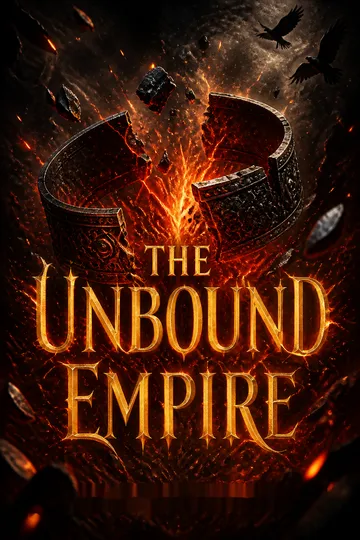
The Unbound Empire concludes the Swords and Fire trilogy with high praise from readers. Many cite it as a satisfying finale, praising the complex characters, political intrigue, and magical world-building. Amalia's growth as a leader and her relationships with Zaira and Kathe are particularly appreciated. The pacing and action are noted as gripping, with emotional moments balancing the suspense. While some found certain elements predictable or drawn out, most readers consider it a strong ending to an underrated fantasy series.
People Also Read


Characters
Amalia Cornaro
The scholar in powerAmalia is the nineteen-year-old heir to the Cornaro family, a student of magical theory, and Zaira’s Falconer. She approaches problems through research and political persuasion, believing institutions can be made more just without abandoning public safety. Her privilege gives her access to the Assembly, but her closeness to the mage-marked keeps her from seeing them as resources alone. Amalia’s central psychological tension is between duty and attachment: she is capable of making severe choices for the Empire, yet fears that repeated sacrifice will hollow out her capacity to love. Her relationship with Marcello offers moral steadiness, while Kathe challenges her assumptions about power, trust, and intimacy.
Zaira
The fire behind the jessZaira is a fire warlock whose balefire can destroy armies, and whose life before the Mews taught her to expect abandonment rather than security. She values candor, loyalty, and practical survival, often disguising fear with abrasive humor. Her bond with Amalia is a friendship between unequal social worlds, but their mutual trust steadily makes each more willing to be seen clearly. Zaira’s relationship with alchemist Terika provides a rare space where her magic is not the first thing others notice. She resists being treated as a monster, even as she wrestles with the harm her power can cause and the responsibility of choosing when to use it.
Marcello Verdi
The Falconer with a conscienceMarcello is a Falconer captain, Istrella’s older brother, and one of the few people Amalia trusts without calculation. His work is shaped by concern for the mage-marked, especially his sister, though ambition and a painful history with his father also influence him. He believes command should protect people rather than reduce them to military assets. His closeness to Amalia is tender but restrained by their different positions and obligations. Marcello’s gentleness is not passivity: he can act decisively under pressure, yet worries that institutional power may make him less humane. He wants a future in which the Falcons can serve by choice and retain dignity.
Kathe
The Crow Lord of LetKathe is the Witch Lord of Let, a domain whose animals and people are bound to his power. Clever, restless, and fond of games, he uses wit to approach questions of trust that he finds difficult to address plainly. His earlier betrayal of Amalia complicates their courtship, while his willingness to acknowledge mistakes gives their relationship room to change. Kathe cares deeply for Let, but his authority makes equality with its people impossible, so he relies on his Heartguard to challenge his choices and keep him accountable. His history of grief has made him wary of attachment without making him indifferent to it.
Ruven
The Skinwitch at warRuven is a Vaskandran Witch Lord and Skinwitch who seeks to expand his domain and increase his power. He treats living beings as instruments of dominion, developing a command potion and reshaping people into chimeras. His intelligence and capacity for invention make him more dangerous than a conventional conqueror, since he targets institutions, bodies, and loyalties at once. Ruven also understands the usefulness of fear, especially in those who have something to lose. His need for control appears bound to a history of rejection, but the harm he chooses to inflict is his responsibility, not an excuse supplied by that history.
Lissandra Cornaro
The Empire’s hidden handLissandra, Amalia’s mother, is the Contessa Cornaro and one of the most influential figures in Raverra. She is disciplined, politically perceptive, and skilled at shaping outcomes without publicly claiming credit. Her care for Amalia often arrives as instruction rather than comfort, because she believes responsibility requires preparation for painful choices. Lissandra understands how power can preserve the Empire and how it can quietly deform the person wielding it. She wants her daughter to inherit both competence and moral judgment, even when public alliances limit what she can say openly.
Terika
The alchemist who staysTerika is an alchemist, Zaira’s partner, and a survivor of childhood coercion. Her practical skill produces both healing remedies and dangerous substances, while her warmth makes her a steady presence in the Mews. She wants a home and a shared future, but does not confuse tenderness with naivety. Terika understands Zaira’s fear of her own fire without reducing her to it, and her patience helps Zaira imagine a life beyond constant flight.
Istrella Verdi
The artificer inventorIstrella is Marcello’s younger sister and an exceptionally inventive artificer. Curious to the point of distraction, she delights in devices, magical theory, and problems other people consider dangerous or impractical. Her affection for Marcello is direct, but she sees him as a person rather than an idealized protector. She wants her work to solve real problems and is increasingly interested in designs that disable opponents without killing them.
Domenic Bergandon
The Duke defending ArdenceDomenic is Amalia’s friend and the Duke of Ardence. Newly responsible for a vulnerable city, he tries to protect its people, libraries, and artistic heritage while learning the demands of leadership. His humor makes him approachable, but it cannot conceal how seriously he takes his duty to residents who may not understand the danger approaching them.
Lucia
The scholar turned aideLucia is a young scholar from Calsida who becomes Amalia’s aide and bodyguard. She wants to make institutions function better and sees public service as a route to meaningful influence despite her modest background. Eager and sometimes overly earnest, she learns to turn diligence into judgment under pressure. Her admiration for Ciardha gives her a model of quiet competence.
The Marquise of Palova
The general who speaks plainlyA respected former general and Council member, the Marquise of Palova brings military experience to debates about mage-marked citizens and imperial security. She values competence over ceremony and understands that coercion can strengthen an enemy by driving people away. Her bluntness gives political arguments the force of lived experience.
Lord Caulin
The Council’s dangerous brokerCaulin is a Council member whose connections reach into the criminal underworld and imperial intelligence. Mild manners conceal a calculating view of people as vulnerable pieces in political contests. He favors control as a defense against instability, putting him at odds with Amalia’s reform. Their rivalry is sharpened by mutual recognition: each understands that the other can be useful as well as dangerous.
Jerith
The storm warlockJerith is a Falcon and storm warlock whose control of wind and lightning makes him a powerful military asset. A provocative instructor, he pushes Zaira to treat control as understanding rather than suppression. His confidence is shaped by a childhood tragedy connected to his own magic, and he knows that discipline does not erase the cost of power.
Balos
The steady FalconerBalos is a Falconer, Jerith’s husband, and a calm presence in the Mews. He trusts disciplined training and the people under his care, even when his choices place him in painful conflict with friends. His physical strength is matched by a reluctance to use it carelessly.
The Lady of Spiders
Keeper of dangerous secretsAn ancient Witch Lord, the Lady of Spiders collects secrets through a painful magical process and guards the Truce Stones. She regards knowledge as both beauty and leverage, and seldom offers help without a price. Her understanding of fear is unsettlingly perceptive, though she does not confuse explanation with innocence.
Hal
Kathe’s outspoken HeartguardHal is a veteran member of Kathe’s Heartguard, valued for his loyalty, humor, and willingness to challenge his lord. He treats Kathe as a friend as well as a ruler, helping keep power accountable through blunt affection. His family and life in Let anchor his sense of what the Heartguard protects.
Ciardha
Lissandra’s trusted aideCiardha is Lissandra’s highly capable aide, known for composure, discretion, and swift action. She notices threats before others do and can turn a confused crisis into an organized response. Her professionalism is not emotional distance so much as disciplined care for the people and systems entrusted to her.
Bree
The Callamornish cavalry heirBree is Amalia’s cousin, a Callamornish princess and cavalry leader. Outgoing and courageous, she is more comfortable acting than waiting for permission. Grief has complicated her bond with Amalia, but she remains capable of offering practical counsel when Amalia is trapped in guilt.
Plot Devices
The Falcon Reserve Act
Choice within restraintAmalia’s legislation ends forced active military service and mandatory residence for mage-marked citizens, while retaining jesses to suppress magic when necessary. The compromise gives reform enough political support to pass without surrendering every imperial safeguard. Its effects recur throughout the story: the law shapes the Mews’ celebration, changes how Falcons imagine civilian futures, and gives Amalia a political achievement worth defending even during war.
Ruven’s command potion
Turning loyalty into a weaponRuven’s alchemical potion places anyone who consumes it under his command. Controlled people retain enough awareness to resist emotionally, but must carry out orders, making friends and colleagues dangerous without making them willing enemies. Ruven spreads it through food and drink, infiltrating the Mews and imperial forces. The blood test Terika develops can detect the potion, but it cannot prevent all exposure or identify people Ruven has altered through other means.
Jesses and balefire
Power held by a chosen bondA jess links a Falconer to a mage-marked Falcon and can seal the Falcon’s magic. It protects others from dangerous powers, but also embodies the Empire’s control over mage-marked citizens. Zaira’s balefire grows by consuming life and can overwhelm nearly any defense, including the jess itself. The story tests both sides of the device: Amalia must know when restraint protects and when trust requires releasing it.
The Truce Stones
Severing a Witch Lord’s claimAncient stones create a protected circle between Witch Lords and can temporarily cut a ruler off from the domain that sustains their power. Blood activates their binding effect, so Amalia’s group plans to use Ruven’s own blood in a trap. The stones were made to allow peaceful meetings, making their weaponization politically dangerous as well as tactically useful. Their failure forces Amalia to improvise another way to separate Ruven from his healing power.
Demon’s Tears elixir
A life measured in dosesAmalia’s body carries the alchemical poison Demon’s Tears, which her cousin Ignazio administered years earlier. A recurring elixir suppresses the poison’s lethal effects but does not cure it, making her survival dependent on regular supplies. Ruven offers a permanent cure as part of his bargain, and Marcello’s destruction of her bottles turns the threat into an immediate deadline. The medicine also gives the story a concrete measure of Amalia’s vulnerability amid political and magical power.
Swords and Fire Series

About the Author



Download PDF
Download EPUB
.epub digital book format is ideal for reading ebooks on phones, tablets, and e-readers.








