

Key Takeaways
Treat a damaged mouth as a clue, not merely a repair job
Norman changed the frame. Steven Lin recounts a patient referred by his cardiologist for dental clearance before quadruple bypass surgery. Norman had type 2 diabetes, high blood pressure, and severe gum disease; his remaining teeth had to be removed before the operation. He later died after complications. Lin cannot establish that Norman’s oral disease caused his death, but the case sharpened his concern: medicine and dentistry often treat connected systems as separate problems.
Look beyond the filling. Lin argues that cavities and gum disease can reflect wider influences, including diet and inflammation, as well as affect health beyond the mouth. His central proposal is that oral health deserves a place in prevention, not just in a dentist’s repair schedule.
The strongest insight is organizational: a symptom can matter both where it appears and as evidence about the conditions around it. The mouth is unusually accessible, so dental visits could help surface questions about diet, diabetes risk, or other health concerns. But a warning sign is not a diagnosis, and Norman’s story cannot prove a causal chain from gum disease to heart complications. The practical lesson is collaboration, not alarm: oral symptoms merit attention and, where relevant, communication between dental and medical professionals.
Give growing jaws real work through chewing and healthy breathing
Food shapes structure. Lin contrasts modern crowded dental arches with observations of traditional populations. Drawing on dentist Weston A. Price’s travels in the 1930s, he reports that decay and crooked teeth were rare in the communities Price studied, despite limited access to dental care. Lin connects this pattern to differences in diet and food preparation, especially the shift toward soft, processed foods.
Growth has inputs. The upper and lower jaws support the teeth, tongue, and airways. Lin argues that chewing firmer, fibrous foods provides stimulation for jaw muscles, while nasal breathing and a tongue resting against the palate contribute to oral development. He also discusses breastfeeding as an early source of oral muscle activity. These ideas place jaw development in a broader setting than heredity alone.
This section usefully treats the jaw as living, responsive tissue rather than a fixed rack for teeth. It also widens the idea of dental prevention: eating texture and breathing habits may matter alongside brushing. Price’s observations, however, compare communities with many differences, so diet cannot be isolated as the sole explanation. The book’s most practical contribution is to make development a question worth asking, especially for children. It should not be read as proof that tough foods or a particular breathing routine can independently prevent malocclusion.
Take snoring and crowded teeth seriously as possible airway clues
The airway has neighbors. Lin describes how the shape of the jaws and palate can affect space for the tongue and air passages. In his account, a narrow palate or small jaw may encourage mouth breathing or leave less room for the tongue, which can contribute to snoring and disrupted sleep. He discusses obstructive sleep apnea and upper airway resistance syndrome, a pattern of increased effort to breathe during sleep that can repeatedly disturb rest.
Notice the cluster. The book lists signs such as habitual snoring, daytime fatigue, teeth grinding, and difficulty concentrating in children. Lin suggests nasal breathing, tongue exercises, and chewing whole foods, but also describes airway-focused dental and medical care. The point is not to diagnose from a smile or a snore. It is to consider whether oral structure and sleep deserve evaluation.
The value here is in linking symptoms that are often handled in separate offices. Poor sleep can affect attention and daily functioning, so asking about breathing may broaden an assessment that otherwise centers on behavior or teeth. The limit is important: snoring, grinding, and crowded teeth have multiple possible causes, and the book’s proposed links do not make any one symptom proof of an airway disorder. Exercises may support function, but persistent sleep or breathing problems call for qualified assessment rather than a self-diagnosis based on facial appearance.
See tooth decay as microbial imbalance, not just a hygiene failure
Plaque is a community. Lin uses the term dental biofilm for the organized layer of microbes living on tooth surfaces. Some oral bacteria use sugars and release acids, while the broader community interacts with saliva and minerals. In the book’s account, frequent refined carbohydrates can favor fast-growing, acid-producing species and disrupt that balance. Decay is therefore more than sugar meeting a germ; it reflects an environment that repeatedly exposes enamel to damaging acids.
Feed the wider system. Lin connects the oral microbiome, the community of microorganisms in the mouth, with the gut microbiome through swallowed saliva and food. He recommends varied plant foods for fiber and fermented foods as sources of microbes. This reframes brushing as useful care, but not the whole explanation for why people experience different levels of decay.
An ecological model can explain why eliminating every microbe is not a sensible goal: microbial communities include organisms with different roles, and the conditions that favor them matter. It also makes food frequency and composition relevant to oral health, not just the number of brushing sessions. The model should remain a model, not a claim that a specific gut imbalance explains any individual cavity. Dental cleaning and fluoride-based prevention, where recommended by a dental professional, are not made unnecessary by thinking about microbial balance.
Nourish living teeth with minerals and vitamin-rich whole foods
Teeth have living parts. Enamel, the hard outer surface, contains no living cells and cannot repair itself in the way living tissue can. Beneath it, dentin contains odontoblasts, cells that form dentin and participate in the tooth’s defense. Lin presents this inner activity as one reason oral health cannot be managed only by polishing the surface.
Follow the mineral story. The book emphasizes vitamins D, A, and K2, alongside calcium. Lin describes vitamin D as supporting calcium absorption, vitamin A as supporting development and cell activity, and vitamin K2 as activating proteins involved in directing calcium toward bones and teeth. He points to foods such as eggs, organ meats, fish, fermented foods, and some full-fat dairy as sources. This is the book’s nutritional model, not a guarantee that supplements prevent decay.
The useful distinction is between a structure that cannot regenerate and the living tissues that maintain and defend it. That makes nutrition a reasonable part of a whole-person dental conversation. Lin’s vitamin narrative is more certain than the evidence presented in the book can support: biochemical roles and associations do not by themselves prove that a dietary change will prevent cavities or treat disease. Supplements also have individual risks and interactions. The safer takeaway is to pursue a varied, adequate diet and discuss specific deficiencies or supplementation with a qualified clinician.
Treat DNA as responsive biology, not a fixed dental sentence
Genes respond to context. Epigenetics is the study of chemical and cellular processes that influence how genes are expressed without changing the DNA sequence itself. Lin uses this idea to explain why inherited traits do not dictate every outcome, including jaw development. The book recounts Francis Pottenger’s multigeneration cat experiment: cats fed cooked meat and processed milk developed health problems across generations, while later generations improved after the diet changed.
Human evidence has limits. Lin also describes the Dutch Hunger Winter, when famine exposure during pregnancy was associated with differences in adult health among the children born during that period. These examples suggest that early environments can leave lasting biological effects. They do not show that a particular diet can reliably straighten teeth or reverse inherited risk, and the cat experiment is not a direct test of a human dental diet.
Epigenetics offers a more realistic alternative to both genetic fatalism and the fantasy of total control. Development emerges from inherited biology interacting with its environment, which gives prevention a meaningful role without promising command over outcomes. The book’s examples make that idea vivid, but vividness can blur evidential boundaries: animal experiments, famine observations, and a proposed human nutrition program answer different questions. A careful reader can retain the insight that environment matters while resisting the leap from biological responsiveness to a specific dietary cure.
Replace processed sugar and flour with food that still has its fiber
Convenience has a cost. Lin focuses on refined sugar, white flour, and processed foods that deliver rapidly available carbohydrates with much of the original food’s fiber removed. He gives an example of a day of supposedly healthy meals that adds up to 104 grams of sugar, before dessert or sweet drinks. The point is that sugar can arrive disguised in cereals, drinks, sauces, and packaged snacks.
Choose the intact version. Fiber slows the delivery of plant carbohydrates and provides food for gut microbes. Lin’s practical approach is to build meals around vegetables, legumes, herbs, nuts, and seeds, while reducing packaged sweets, white flour, and sugary drinks. Traditional grain preparation, such as soaking, sprouting, and fermentation, receives more favorable treatment than highly refined flour.
The book’s most actionable food insight is not simply to ban a sweet treat. It is to notice how refinement separates quickly available energy from the fiber and structure that accompany foods in nature. The sugar audit is a useful behavior tool because hidden sources are easy to miss. Still, the text sometimes treats broad food categories as uniformly harmful and ancestral diets as a clear benchmark. A realistic application focuses on reducing frequent added sugars and increasing varied, minimally processed foods without assuming every person needs identical restrictions.
Question low-fat rules without turning fat into a miracle
A policy can misfire. Lin challenges the low-fat advice that rose to prominence after Ancel Keys’s work on diet and heart disease. He argues that some low-fat products replaced fat with refined carbohydrates and sugar, making foods less satisfying while preserving their processed character. He also points to traditional cuisines that include eggs, full-fat dairy, seafood, and organ meats, rather than the narrow low-fat image sometimes attached to them.
Judge the whole pattern. Lin explains that fats serve structural and metabolic roles and that foods naturally combine different fats with other nutrients. His diet favors natural fats and rejects many refined oils. The book disputes simple claims that saturated fat or dietary cholesterol alone determine heart risk, but it does not establish one ideal fat intake for every reader.
This is a useful correction to nutrition advice that turns one nutrient into a villain, especially when reformulated products compensate with sugar or starch. Yet replacing a low-fat orthodoxy with a high-fat one would repeat the same mistake. The chapter’s own evidence argues for looking at foods and dietary patterns rather than treating a single blood marker or fat category as the whole story. Readers can question simplistic rules while keeping medical risk factors and individual needs in view.
Use a staged plan to change food habits without demanding perfection
Four aims organize the diet. Lin’s Dental Diet model seeks to support jaw and airway function, provide nutrients for teeth, maintain microbial diversity, and favor foods he believes offer beneficial biological signals. Its food pyramid places vegetables, legumes, and herbs at the base; animal foods and fermented foods next; fats, nuts, seeds, and spices above them; and fruit and grains in more limited roles.
Change in stages. The 40-day plan begins by removing processed foods, then temporarily removes sugar, reintroduces whole fruit, and gradually makes room for restaurant meals. Lin suggests aiming for the plan across most meals rather than treating one departure as failure. The book also proposes breathing and tongue exercises. Its strict restrictions and fasting suggestions are not suitable for everyone, so the plan is best treated as a framework to adapt, not a prescription.
The staged structure addresses a real obstacle: people are more likely to change when the next action is clear and the routine is not all-or-nothing. The pyramid also turns an abstract argument into shopping and cooking choices. Its weakness is that one plan cannot account for every medical condition, culture, budget, or food intolerance. A useful adaptation keeps the durable principles, such as fewer highly processed foods and more plants, while personalizing restrictions and seeking professional guidance when health conditions, medications, or disordered eating are relevant.
Analysis
The book’s most persuasive move is to use teeth as an entry point into a larger question: what does a visible, treatable problem reveal about the conditions that shaped it? That framing connects dental care to nutrition, development, sleep, and microbial ecology, and it gives the reader a memorable reason to think preventively. The story of Norman supplies emotional force, while the historical material and proposed food plan provide a route from concern to action.
The argument is also unusually broad, and that breadth needs careful handling. It moves from mechanisms inside a tooth to claims about facial growth, sleep disorders, gut health, and chronic disease. These are different levels of explanation. A plausible biological mechanism, an association between two conditions, and proof that changing a diet prevents an outcome are not interchangeable forms of evidence. The book’s comparisons of traditional and modern populations are suggestive, but differences in lifestyle and environment make it difficult to assign causation to food alone. The cat and famine examples illuminate environmental effects, yet they do not validate every specific recommendation in the program.
The practical center is stronger than the most sweeping promises: notice oral problems, reduce frequent refined foods, eat a varied diet, and treat breathing or sleep symptoms as worth discussing with professionals. The case against low-fat processed products is more compelling when framed as a warning about substitution than as proof that one kind of fat is universally beneficial. Similarly, vitamins A, D, and K2 deserve discussion as nutrients, but supplement use should not be inferred from mechanistic explanations alone. The book works best as a prompt to integrate dental and general health, not as a substitute for examinations, established dental care, or individualized medical advice.
Review Summary
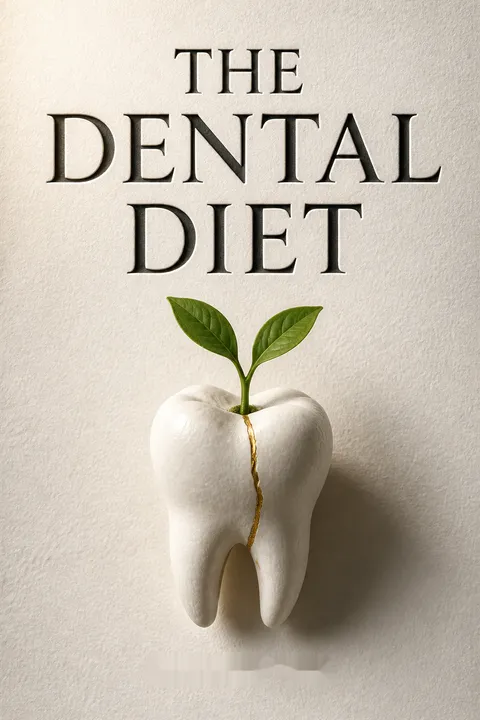
The Dental Diet explores the relationship between nutrition and dental health, challenging conventional wisdom. Readers appreciate its insights on fat-soluble vitamins, microbiome balance, and the impact of modern diets on oral health. While some find the dietary recommendations extreme or impractical, many value the book's holistic approach to dental care. Critics note a lack of scientific evidence for some claims. The book's emphasis on whole foods and reducing sugar resonates with readers, though the specific meal plans and recipes receive mixed reactions. Overall, it's seen as thought-provoking but controversial.
People Also Read







Glossary
Dental Diet
Nutrition-focused oral health planSteven Lin’s dietary approach to oral and general health. It emphasizes whole foods, jaw stimulation through chewing, nutrients including vitamins A, D, and K2, and dietary support for microbial diversity. The book organizes its recommendations into a food pyramid and a staged 40-day program, while presenting diet as one part of prevention rather than only treating dental problems after they appear.
Dental Diet pyramid
Four-tier food guideThe book’s visual guide to its preferred food pattern. Vegetables, legumes, and herbs form the base. Meats, eggs, fish, dairy, and fermented foods occupy the next tier; fats, oils, nuts, seeds, and spices follow; fruit and grains are placed at the top for more limited use. The model also stresses whole foods, preparation, and sourcing.
Activator X
Price’s unidentified nutrientThe name dentist Weston A. Price gave to a substance he believed helped the body use minerals and supported strong teeth and bones. Lin recounts the later proposal that Activator X was vitamin K2, a fat-soluble vitamin involved in activating proteins associated with calcium use. The historical identification is central to the book’s nutritional argument.
Osteoimmunity system
Bone and immune interactionA term for the interaction between skeletal processes and immune function. In Lin’s explanation, bone marrow stem cells can mature into different cell types, while cells in dentin both maintain tooth structure and participate in defense against microbes. The concept supports his view that teeth are living tissues connected to wider mineral and immune processes.
Dental biofilm
Microbial layer on teethThe organized community of microorganisms attached to tooth surfaces, commonly called plaque. Lin emphasizes that biofilm is not simply dirt: its microbes live in a structured environment and interact with saliva and minerals. An imbalance in that community, encouraged by frequent refined carbohydrates, can favor acid production and contribute to enamel damage.
Dysbiosis
Microbial community imbalanceAn imbalance in the composition or activity of microorganisms living in a body site, such as the mouth or gut. In the book’s model, disease is not always caused by an outside germ; it can arise when the conditions in a microbial community favor some organisms over others. Lin applies this idea to cavities, gum disease, and digestive health.
Malocclusion
Misaligned teeth or jawsA mismatch in how the upper and lower teeth or dental arches fit together. Lin treats malocclusion as more than a cosmetic issue, linking it to jaw development and, in some cases, airway space. He argues that diet, chewing, and breathing may influence development, though the book’s account does not establish them as the sole causes.
Epigenetics
Influences on gene expressionThe study of processes that affect how genes are used without changing the underlying DNA sequence. Lin applies the concept to development, arguing that nutrition and other environmental conditions influence how the body builds tissues such as the jaws and teeth. The term explains why genetic inheritance does not necessarily dictate a fixed outcome.
Upper airway resistance syndrome
Sleep disrupted by breathing effortA sleep-related breathing pattern discussed in the book in which increased resistance in the upper airway can repeatedly disturb sleep. Lin associates it with symptoms such as fatigue, light sleep, and teeth grinding, and discusses jaw and tongue structure as possible contributors. These symptoms are not specific enough to diagnose the syndrome without professional assessment.
Pottenger’s cats
Multigeneration cat diet experimentFrancis Pottenger’s 10-year study of cats fed different combinations of raw or cooked meat and milk. Lin recounts that cats eating cooked meat and processed milk developed worsening health and dental problems across generations, while later generations improved after diets changed. The book uses the experiment to illustrate environmental effects, but animal findings do not directly prove a human dietary treatment.
Dutch Hunger Winter
Prenatal famine exposure studyThe famine in the occupied western Netherlands during 1944 to 1945, described in the book through studies of people exposed before birth. Lin reports that health differences in adulthood varied with the timing of prenatal exposure. The example illustrates how early conditions may have lasting effects, but it does not demonstrate that a specific modern diet can reverse those effects.
Mouth-gut axis
Connection between oral and gut microbesThe continuing relationship between microbial communities in the mouth and digestive tract. The book describes how microbes enter the gut through swallowed saliva and how diet can influence communities in both locations. Lin uses this connection to frame oral health as relevant to digestive and immune processes, while recognizing that these systems are related rather than identical.
FAQ
1. What is The Dental Diet by Dr. Steven Lin about?
- Oral health as a gateway: The book explores the deep connection between dental health, nutrition, and overall well-being, arguing that oral health reflects and influences systemic health.
- Challenging conventional dentistry: Dr. Lin questions the traditional separation of dentistry and medicine, advocating for a holistic approach that addresses root causes rather than just symptoms.
- Integration of science and tradition: The book combines insights from nutrition, epigenetics, oral medicine, and anthropology, drawing on both ancestral diets and modern research.
- Practical program: It offers actionable dietary guidelines, a 40-day meal plan, and lifestyle advice to restore dental and overall health naturally.
2. Why should I read The Dental Diet by Dr. Steven Lin?
- Empowerment through knowledge: The book equips readers with the tools to take control of their dental health through diet, moving beyond the belief that dental problems are inevitable or purely genetic.
- Mouth-body connection: It reveals how oral health is both a symptom and a cause of systemic illnesses, filling a gap often overlooked by conventional medicine.
- Debunking health myths: Dr. Lin addresses misconceptions about fats, cholesterol, and the low-fat diet, showing how these have contributed to modern health issues.
- Comprehensive health benefits: Following the Dental Diet can improve oral health, immune function, metabolic health, and even cognitive function.
3. What are the key takeaways from The Dental Diet by Dr. Steven Lin?
- Oral health signals systemic health: Dental disease is not isolated; it often indicates deeper health issues and can contribute to chronic diseases like diabetes and heart disease.
- Modern diet is harmful: Processed foods, refined sugars, and vegetable oils have led to poor jaw development, imbalanced oral microbiomes, and increased disease risk.
- Fat-soluble vitamins are vital: Vitamins A, D, and K2 are crucial for bone and dental health, working together to regulate calcium and immune function.
- Epigenetics and environment matter: Diet and lifestyle influence gene expression, affecting jaw growth, tooth alignment, and disease susceptibility.
- Balanced oral microbiome is essential: A diverse and healthy oral microbiome protects teeth and supports gut and immune health.
4. What are the four principles of good dental nutrition in The Dental Diet by Dr. Steven Lin?
- Jaw, face, and airway health: Chewing hard, fibrous foods and practicing nasal breathing are essential for proper jaw development and airway health.
- Essential nutrients for the mouth: Focus on fat-soluble vitamins (A, D, K2), calcium, magnesium, zinc, and gelatin for strong teeth and bones.
- Balanced and diverse microbiome: Consume probiotics (fermented foods) and prebiotics (fiber-rich plants) to support oral and gut microbiome health.
- Epigenetic food messages: Choose foods that send healthy signals to your genes, influencing long-term health and disease risk.
5. How does The Dental Diet by Dr. Steven Lin explain the link between crooked teeth and diet?
- Modern problem, not genetics: Crooked teeth and impacted wisdom teeth are largely due to poor jaw development from nutrient-deficient, processed diets—not just genetics.
- Jaw growth needs nutrition: Adequate intake of fat-soluble vitamins and chewing tough foods are necessary for proper jaw and facial development.
- Epigenetic influence: Nutrition and environment shape gene expression, affecting jaw size and tooth alignment across generations.
- Breathing and posture: Nasal breathing and correct tongue posture, supported by good jaw development, are critical for airway health and straight teeth.
6. What role do vitamins A, D, and K2 play in dental and overall health according to The Dental Diet?
- Vitamin D for calcium and immunity: Helps absorb calcium and regulates immune cells inside teeth, preventing decay and gum disease.
- Vitamin K2 for calcium placement: Activates proteins that direct calcium to bones and teeth, preventing its buildup in arteries and soft tissues.
- Vitamin A for bone remodeling: Supports bone growth and maintains mucous membranes in the mouth and respiratory tract.
- Synergistic action: These vitamins work together to ensure calcium is properly absorbed and utilized, crucial for healthy teeth, jaws, and airways.
7. How does The Dental Diet by Dr. Steven Lin describe the oral microbiome and its importance?
- Bacteria as allies: The mouth hosts a complex ecosystem of bacteria that maintain oral health and protect against harmful microbes.
- Balance prevents disease: Tooth decay and gum disease result from microbial imbalance, often caused by excessive sugar intake.
- Mouth-gut axis: The oral microbiome seeds the gut microbiome, influencing immune function and systemic health.
- Restoring diversity: Eating fiber-rich and fermented foods supports beneficial bacteria, reducing inflammation and disease risk.
8. What is the Dental Diet food pyramid and how does it differ from traditional food pyramids?
- Four-tier structure: The base is plants, vegetables, legumes, and prebiotics; next are nutrient-dense animal products, fermented foods, and dairy; then healthy fats, nuts, seeds, and spices; with fruits and grains limited at the top.
- Nutrient density focus: Emphasizes whole, properly sourced, and prepared foods rich in fat-soluble vitamins and probiotics, unlike traditional high-carb, low-fat pyramids.
- Flexibility and sourcing: Encourages eating 80% of foods from the pyramid, prioritizing pasture-raised and organic sources.
- Preparation matters: Stresses food preparation methods that preserve nutrients and support microbiome health.
9. What is the 40-day Dental Diet meal plan in The Dental Diet by Dr. Steven Lin and what are its main phases?
- Stepwise approach: The plan is divided into six weeks, each with a specific focus—eliminating processed foods, going sugar-free, reintroducing fruit, and establishing new habits.
- Elimination and rebuilding: Early weeks focus on removing refined sugars, flours, and vegetable oils, while increasing intake of fat-soluble vitamins and fermented foods.
- Lifestyle integration: Includes breathing and tongue exercises to support digestion and airway health.
- Practical recipes: Offers meal ideas and snack suggestions to make adherence easier and promote long-term change.
10. How does The Dental Diet by Dr. Steven Lin critique the low-fat movement and its impact on health?
- Flawed low-fat assumptions: The book explains that the low-fat movement was based on unproven ideas linking saturated fat to heart disease.
- Negative consequences: Removing fats led to increased sugar and refined carbohydrate consumption, fueling epidemics of diabetes, gum disease, and metabolic syndrome.
- Restoring natural fats: Dr. Lin advocates for balanced intake of natural fats, especially from whole foods, to support vitamin absorption and overall health.
- Debunking cholesterol myths: Shows that dietary cholesterol does not directly raise blood cholesterol or heart disease risk.
11. What practical advice does The Dental Diet by Dr. Steven Lin offer for improving dental and overall health?
- Eat nutrient-dense whole foods: Focus on foods rich in vitamins A, D, and K2, such as organ meats, grass-fed dairy, fermented foods, and bone broths.
- Reduce sugar and processed foods: Eliminate refined sugars, flours, and industrial seed oils that disrupt the oral microbiome and promote decay.
- Practice nasal breathing and chew tough foods: Nasal breathing and chewing fibrous foods support jaw development and airway health.
- Incorporate breathing and tongue exercises: The book provides exercises to retrain breathing patterns and tongue posture for better facial and dental development.
12. What are the best quotes from The Dental Diet by Dr. Steven Lin and what do they mean?
- “The mouth is a great model for showing us which foods are good for us.” This highlights how dental health reflects overall nutrition and can guide dietary choices for systemic wellness.
- “Our bodies are an intricate reflection of our ancestral health, the microbes that live within us, and our genes.” Emphasizes the interconnectedness of genetics, microbiome, and environment in shaping health outcomes.
- “The answers to dental problems are in our food. It’s as simple as that.” Encapsulates the book’s core message that diet is foundational to preventing and reversing dental disease.
- Quotes reinforce core themes: Each quote underscores the importance of nutrition, ancestral wisdom, and the holistic approach advocated by Dr. Lin.
Download PDF
Download EPUB
.epub digital book format is ideal for reading ebooks on phones, tablets, and e-readers.








