

Key Takeaways
Treat the obesity crisis as a flavor problem, not merely a calorie problem.
The taste changed. In 1961, Jean Nidetch could lose weight on a diet, but she could not stop secretly eating the cookies she craved. The book argues that this is not simply a failure of discipline: people eat because food feels rewarding, and flavor helps create that desire. Since the early 1960s, American obesity rates have climbed sharply, even as diets and weight-loss programs multiplied.
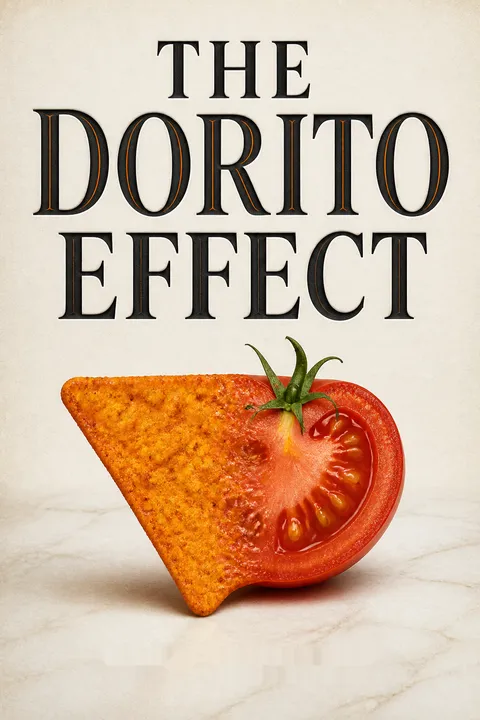
Two trends converged. Real foods became blander as farmers bred for yield, speed, and durability. At the same time, flavor technology grew adept at making processed foods taste like tacos, fruit, or meat. The author calls this combination the Dorito Effect: food loses flavor while manufactured flavor becomes more convincing. He argues that this can steer appetite toward foods that supply flavor without the nutrition associated with its natural source.
What's striking is the shift from asking what nutrients people consume to asking what makes them want to eat. That question connects food science to behavioral psychology, where cues and expectations can shape action before conscious deliberation begins. It also makes food environments part of the explanation, not just individual willpower. The argument is strongest as a way to broaden the obesity discussion, not as a settled single-cause theory. The book's examples support concern about flavor engineering, but they do not establish how much it contributes to population-level weight gain compared with food availability, portion size, income, or other factors.
When breeding rewards size and speed, flavor and nutrients can disappear.
Yield won the contest. The 1948 Chicken of Tomorrow competition judged birds for growth, weight, and feed efficiency, not taste. Its winning chickens reached about 3.75 pounds in roughly twelve weeks. Modern broilers can reach market size in about thirty-five days, while using less feed per pound of meat. Chicken became cheaper and more abundant, but older cooks began describing it as bland and needing help from herbs, sauces, and seasoning.
Plants faced similar pressures. A comparison of vegetables from 1950 and 1999 found declines in some measured nutrients, including roughly 15 percent less vitamin C overall in the tested crops. The book links such changes to breeding and farming practices that favor larger harvests, often with more water and carbohydrates. It calls this the dilution effect: as the amount of food produced rises, concentrations of some nutrients and flavor-related compounds may fall.
The chicken story makes agricultural priorities tangible: breeding goals become dinner-table experiences. It also shows why the word improvement needs a clear metric. A bird that grows quickly is improved for production, but not necessarily for taste, animal welfare, or nutritional quality. The same framing applies to crops. Still, historical nutrient comparisons are difficult because varieties, growing conditions, and measurement methods differ. The book's larger point remains useful even where the precise size of decline is uncertain: a food system optimized for reliable volume may leave qualities consumers value out of its scorecard.
Cravings often intensify before eating, not because eating feels better.
Wanting can outrun liking. In a brain-imaging study, participants who scored high on the Yale Food Addiction Scale showed stronger responses when shown a picture of a milk shake. Once they tasted the drink, they did not report more pleasure than participants with lower scores. The difference appeared in anticipation: one group wanted the shake more, even though the experience itself was not more enjoyable.
The distinction matters. The book uses incentive salience to describe a heightened pull toward a desired reward. It also recounts rat experiments in which prolonged access to rich foods was followed by diminished reward responses and compulsive eating. These findings suggest that repeated consumption can become a chase for expected satisfaction rather than satisfaction itself. The author argues that flavor helps create the expectation, while sugar, fat, salt, and other food properties can reinforce it.
Separating wanting from liking clarifies why a person can keep reaching for food that no longer delivers much pleasure. Similar distinctions appear in addiction research, where cues can trigger pursuit even as enjoyment declines. The concept is valuable because it reframes overeating as more than a simple preference for tasty food. However, the food-addiction model remains contested, and a small brain-imaging study cannot explain every person's eating behavior. The practical implication is more modest and still powerful: notice whether a food is genuinely satisfying or mainly provoking another round of anticipation.
Use flavor as information about what food delivers to your body.
Nature uses chemical signals. Plants produce compounds that can repel insects, attract pollinators, or alert neighboring plants to damage. In one example, a caterpillar-bitten plant releases odors that help parasitic wasps locate the attacker. Those compounds are part of the plant's chemical defenses, but they also become aromas humans recognize as flavor.
Animals learn from results. The book calls many defensive plant chemicals plant secondary compounds. Goats that became ill after eating tannin-treated feed later avoided its flavor. Sheep given phosphorus after eating maple-flavored feed learned to seek that flavor when phosphorus-deprived. Nutritional wisdom is the learned ability to connect a food's taste with its effects on the body. That process depends on post-ingestive feedback, the body's signals after food is swallowed. Flavor is not a perfect nutrition label, but it can become a meaningful cue.
This account connects ecology, learning, and appetite: flavor is not merely decoration but part of how organisms navigate chemically complex environments. The wasp example is especially useful because it shows that the same aroma can carry different meanings to different species. Human food choices, too, are shaped by experience and bodily feedback. The limitation is that the system is not an infallible guide. Learned preferences can be distorted by misleading cues, and biological needs do not always produce clear conscious cravings. The insight is best taken as a reason to value food's full sensory and nutritional context.
Beware foods that borrow a fruit's flavor but deliver mostly sugar.
A flavor can travel alone. The book traces how gas chromatography helped scientists identify individual aroma compounds and reproduce them in factories. Vanillin, the dominant aroma in vanilla, could be made without vanilla beans. Flavorists then learned to combine multiple compounds into convincing imitations. By the book's account, the list of permitted flavor chemicals grew from fewer than 700 in 1965 to more than 2,200.
The cue can mislead. A grape-flavored drink may taste like grapes while containing mostly water and sweetener, not the fiber and broad mix of nutrients found in grapes. The author calls this flavor-nutrient confusion: a familiar flavor can suggest a nutritional destination that the food does not provide. He does not argue that every added flavor is toxic. His concern is that synthetic flavor can make nutritionally different products seem varied, wholesome, or more satisfying than they are.
The key distinction is not natural equals good and synthetic equals bad. It is whether a sensory cue honestly corresponds to the food's contents. That question resembles information design: a product's flavor and packaging can function like a label, whether or not consumers interpret them that way. Clear ingredient lists help, but they cannot fully explain what a flavor suggests emotionally. The argument also calls for care with the word deception. Some flavoring preserves qualities lost in processing or makes food enjoyable without meaningful harm. The relevant issue is the overall product and how its cues shape expectations and consumption.
Choose vivid real foods that satisfy before engineered abundance invites another bite.
Pleasure need not mean excess. The author contrasts industrial fried chicken, which he found easy to keep eating despite limited enjoyment, with a richly flavored heritage chicken that left him satisfied after a smaller portion. He describes a similar change in his own eating: stronger cravings for fruit and vegetables, less sugar in coffee, and an unintended ten-pound weight loss.
The proposed mechanism is deep satiety. This means a fuller sense of satisfaction that may come from food meeting needs across several dimensions, rather than merely filling the stomach. The book suggests that nutrients and plant compounds can contribute to that feeling. It also reports animal studies in which some plant compounds reduced intake. These examples are suggestive, not proof that every intensely flavored food makes people eat less. The practical idea is to seek food that tastes distinctly of itself and observe how satisfying it feels afterward.
The contrast between compulsive nibbling and lasting satisfaction is a useful alternative to treating pleasure as the enemy of health. It invites attention to the full eating experience, including how the body feels after a meal. This overlaps with research on satiety and sensory-specific appetite, where food properties can affect how much people want to continue eating. Yet the author's personal experience cannot establish a general prescription, and rich flavor alone does not guarantee nutritional value. A better test combines taste, ingredients, portion, and post-meal response rather than assuming that vivid flavor is automatically beneficial.
Retrain your palate by sampling genuinely flavorful foods repeatedly.
Taste is adaptable. The author argues that preferences can change with exposure. In his appendix, he recommends trying unfamiliar foods repeatedly, even foods a person expects to dislike. His own palate shifted toward broccoli, collard greens, Brussels sprouts, unsweetened coffee, and bitter fruit. The story of arugula offers a market-scale example: once treated as an odd, peppery leaf, it found a wider audience and became a popular salad green.
Early experience counts. A study by pediatrician Clara Davis let fifteen young children choose among a range of ordinary foods without adults directing their selections. The children sampled broadly, developed changing preferences, and generally grew well. The small, historical study cannot prove that unrestricted choice always creates a balanced diet, but it challenges the assumption that palates are fixed. The book's practical advice is to offer variety, give new foods time, and make flavor a reason to explore rather than a reward reserved for sweets.
The palate is better understood as a learning system than as a fixed personality trait. Repeated exposure can reduce unfamiliarity, while preparation and context affect whether a new food becomes appealing. That makes the advice more humane than demanding immediate enthusiasm for vegetables. It also cautions against branding children as permanently picky. At the same time, exposure is not a guaranteed conversion, and access, culture, sensory sensitivities, and allergies matter. The strongest version of the recommendation is patient experimentation: present appealing real foods without treating one refusal as a final verdict.
Breed for taste and yield together instead of accepting blandness as inevitable.
Better tomatoes are possible. Plant scientist Harry Klee studied which tomato aromas people liked and found that many important flavor compounds are made from nutrients plants need. He and colleagues also found that some aromas can make tomatoes taste sweeter without adding more sugar. Klee crossed a flavorful heirloom tomato with a high-yielding commercial type to create Garden Gem. The resulting plant produced about 80 percent as much fruit as leading commercial varieties while retaining flavor rated comparably to its heirloom parent.
The compromise was not fixed. Garden Gem was conventionally bred, not genetically engineered. The example challenges the assumption that farmers must choose between delicious food and productive crops. The book also describes French Label Rouge chickens, bred and raised to mature more slowly and develop stronger flavor. Such examples show that breeding targets can include qualities eaters value, not just speed, uniformity, or shipping durability.
Garden Gem turns the book's critique into a research and design problem. Once flavor is measured and included in breeding goals, the apparent tradeoff between quality and output can become less absolute. This is a broader lesson for innovation: neglected outcomes often look impossible because institutions do not measure or reward them. The remaining obstacle is commercial, not simply scientific. Seed companies, growers, retailers, and shoppers all respond to incentives, and a flavorful variety will not spread if it cannot survive supply chains or earn a price buyers accept.
Pay for flavor when possible, because markets grow what buyers reward.
Demand can change production. The book points to France's Label Rouge chickens as proof that a slower-growing, more flavorful bird can sell at scale. They cost about twice as much as ordinary broilers, yet the author reports that they held more than half the French market for whole chickens. In the United States, arugula moved from a niche ingredient to a familiar salad green after consumers embraced its peppery taste. These examples suggest that flavor can be commercially valuable, not merely an expensive luxury.
Make quality visible. The book advises readers to seek food that tastes strongly of itself, ask producers and restaurants about ingredients, and complain when food is bland. It also acknowledges that heirloom produce and pastured meat can be costly and scarce. Consumer choices matter, but they work best when producers, breeders, and retailers can respond with accessible options.
The closing argument gives consumers a role in changing agricultural priorities, and the Label Rouge example shows that quality standards can organize a market around flavor. Still, individual purchasing power is uneven. A premium chicken or a seasonal tomato is not an available choice for every household, so consumer demand cannot carry the whole burden. Public research, procurement standards, and supply-chain investment also shape what becomes affordable. The durable insight is that taste should be treated as a measurable public value in food production, rather than a private indulgence for shoppers with extra money.
Analysis
The book's most useful contribution is its change of scale. Instead of reducing diet to calories or nutrients, it treats flavor as the interface between food and behavior. The Dorito becomes a compact model of a food system in which production removes or neglects qualities that make food distinctive, then industrial chemistry rebuilds some of those sensations without rebuilding the original food. This lens makes appetite legible as an interaction among biology, learning, technology, and markets.
Its strongest evidence concerns mechanisms that are comparatively concrete: chickens bred for rapid growth differ from older birds; flavor preferences can be learned through post-ingestive effects; aroma contributes substantially to what people experience as taste; and selected plant compounds can influence animal feeding. The weaker leap is from these findings to a broad causal account of human obesity. The book's studies range from animal experiments to small human samples, and its claim that manufactured flavor is a major driver of population weight gain is more persuasive as a hypothesis than as a demonstrated conclusion. Flavor also works alongside price, convenience, portion size, advertising, stress, and unequal access to appealing fresh food.
That distinction does not diminish the central insight. It makes the argument more valuable when used as a framework for questions rather than a replacement explanation. Are growers rewarded for flavor? Do product cues accurately signal ingredients? Does a meal satisfy, or only invite continued eating? Such questions connect sensory biology to food policy and commercial design. The proposed solution is likewise more than personal discipline: breeding, distribution, pricing, and consumer expectations must align around foods that taste good and nourish. The book's hope rests on proof of possibility, not inevitability. Garden Gem and Label Rouge suggest that better choices can be produced, but they spread only when institutions and buyers value them. The challenge is therefore cultural and economic as much as nutritional.
Review Summary
The Dorito Effect explores how modern food production has diminished flavor and nutrition, leading to increased consumption of artificial flavors and obesity. Schatzker argues that our bodies crave nutrients through flavor, but industrialized agriculture has bred blandness into our food. While some readers found the book informative and eye-opening, others criticized its repetitive nature and perceived classism. Many appreciated the scientific explanations and historical context provided, though some felt the proposed solutions were impractical. Overall, the book sparked discussions about the relationship between flavor, nutrition, and eating habits.
People Also Read







Glossary
The Dorito Effect
Flavor detached from foodThe book's name for the convergence of two changes: many crops and animals are bred or raised for traits such as yield, speed, and durability, often at the expense of distinctive flavor, while flavor technology becomes increasingly capable of reproducing attractive tastes. The result is food that can taste like something whose nutrients it does not contain.
dilution effect
More yield, less concentrationThe proposed decline in the concentration of some nutrients and flavor-related compounds as crops are selected and grown for greater yield. Faster growth, more water, and breeding for traits such as size or transportability can increase the amount harvested while leaving less of certain compounds in each portion. The book discusses evidence for this pattern but notes that it varies by crop and nutrient.
plant secondary compound
Plant-made chemical signalA chemical produced by a plant that is not among its basic structural or energy-producing compounds. These chemicals can deter insects or grazing animals, attract pollinators, signal damage, or affect organisms that consume them. Many contribute to the aromas and flavors of plants. Their effects can be harmful or beneficial depending on the compound, dose, and organism.
nutritional wisdom
Learned food selectionThe ability of an animal to learn which foods are beneficial or harmful by associating a food's flavor with its effects after eating. In the book's examples, goats learn to avoid a flavor associated with illness, while sheep learn to prefer a flavor paired with a needed mineral. It is learned through experience, not an infallible inborn knowledge of nutrition.
post-ingestive feedback
Bodily response after eatingSignals generated after food is swallowed, as the body responds to its nutritional or physiological effects. Those signals can become associated with the food's flavor and change future preferences. In animal experiments, for example, a flavor paired with phosphorus became more attractive to phosphorus-deficient sheep, even when the flavored food later contained no phosphorus.
incentive salience
Cue-triggered wantingA heightened motivational pull toward a desired reward. The book uses the term to distinguish wanting food from enjoying it: a cue such as a picture of a milk shake may produce strong desire even when the drink itself is no more pleasurable to the person than it is to someone with weaker cravings.
deep satiety
Satisfying fullnessThe book's term for a sense of completion that goes beyond a physically full stomach. It proposes that foods providing a broader combination of nutrients and sensory qualities may satisfy more fully than foods whose engineered flavors encourage repeated bites. The concept is suggestive, and the book does not establish one settled mechanism for it.
retronasal olfaction
Smelling food from withinThe perception of aromas that travel from the mouth through the back of the throat into the nasal cavity during eating. It combines with basic tastes such as sweet, salty, sour, bitter, and umami to create much of what people experience as flavor. This is why food can seem dramatically different when the nose is blocked.
FAQ
What's The Dorito Effect about?
- Exploration of Flavor: The Dorito Effect by Mark Schatzker delves into how the flavor of food has evolved and its impact on our eating habits and health.
- Flavor and Obesity: The book links the rise of obesity to the manipulation of flavors, suggesting that artificial flavors contribute to overeating.
- Real vs. Synthetic Flavor: Schatzker contrasts natural flavors with synthetic ones, emphasizing the importance of genuine flavor for health.
Why should I read The Dorito Effect?
- Unique Perspective: The book offers a fresh look at how the food industry influences our eating habits through flavor manipulation.
- Understanding Obesity: It provides insights into the obesity epidemic, connecting it to the artificial enhancement of food flavors.
- Practical Advice: Schatzker gives practical tips on making better food choices by focusing on real flavors.
What are the key takeaways of The Dorito Effect?
- Flavor's Importance: Flavor is crucial to our eating experience, and its manipulation can lead to unhealthy habits.
- Blandness Crisis: The book discusses how natural foods have become blander, leading to a reliance on artificial flavors.
- Nutritional Wisdom: Schatzker explores the concept of "nutritional wisdom," suggesting that our innate ability to choose nutritious foods is compromised by artificial flavors.
What are the best quotes from The Dorito Effect and what do they mean?
- “Flavor is the original craving.”: This highlights the fundamental role of flavor in driving our desire to eat.
- “The Dorito Effect can be reversed.”: Offers hope that focusing on real flavors can improve our relationship with food.
- “Food has become a life-threatening indulgence.”: Warns about the health risks of consuming processed and artificially flavored foods.
How does The Dorito Effect explain the rise of obesity?
- Flavor Manipulation: Schatzker argues that obesity is linked to the manipulation of flavors, drawing people to calorie-dense, low-nutrition foods.
- Behavioral Changes: The desire for flavor leads to overeating and unhealthy choices, exacerbated by the food industry's focus on irresistible products.
- Cultural Shift: There's a cultural shift towards convenience and artificial enhancements, normalizing unhealthy eating patterns.
What is the "Dorito Effect" as defined in The Dorito Effect?
- Blandness and Technology: The "Dorito Effect" describes how food becomes bland while flavor technology improves, creating a disconnect between taste and nutrition.
- Impact on Habits: This effect influences eating habits, drawing people to heavily flavored but nutritionally poor foods.
- Cultural Implications: It highlights the broader cultural implications of prioritizing flavor over health.
How does flavor influence our eating behavior according to The Dorito Effect?
- Flavor as a Driver: Flavor is a primary driver of eating behavior, often overshadowing nutritional considerations.
- Learned Preferences: We develop learned preferences for certain flavors, leading to cravings for unhealthy foods.
- Psychological Impact: Flavor affects our emotional responses to food, contributing to overeating.
What role do synthetic flavors play in our diets as discussed in The Dorito Effect?
- Prevalence in Foods: Synthetic flavors are common in processed foods, enhancing taste and masking blandness.
- Health Impact: These flavors contribute to unhealthy eating patterns and obesity by creating cravings for calorie-dense foods.
- Flavor Confusion: Synthetic flavors can confuse natural preferences, leading to a preference for artificial options over healthier choices.
How does The Dorito Effect suggest we can improve our relationship with food?
- Focus on Real Flavor: Schatzker advocates for returning to real flavors found in natural foods to restore healthy eating habits.
- Awareness of Manipulation: Encourages awareness of flavor manipulation in processed foods and seeking whole, unprocessed options.
- Emphasizing Nutritional Wisdom: Highlights the importance of understanding our body's nutritional needs and how flavor can guide us.
How does The Dorito Effect relate to modern agricultural practices?
- Focus on Yield: Modern agriculture prioritizes high yields over flavor, resulting in less nutritious and flavorful produce.
- Loss of Heritage Varieties: There's a decline in heritage breeds and heirloom varieties, which are often more flavorful and nutritious.
- Consumer Awareness: Schatzker calls for consumer awareness and demand for flavorful, nutrient-rich foods to influence agricultural practices.
What role do heritage breeds play in The Dorito Effect?
- Flavorful Alternatives: Heritage breeds offer flavorful alternatives to modern broilers, which are bred for size over taste.
- Nutritional Benefits: These breeds often provide better nutritional profiles due to more natural raising environments.
- Culinary Rediscovery: Encourages seeking out heritage breeds to enhance culinary experiences and reconnect with true food flavors.
How does The Dorito Effect address the concept of food addiction?
- Yale Food Addiction Scale: Schatzker uses this scale to show how engineered foods can create addictive behaviors.
- Psychological Impact: Discusses the psychological effects of consuming highly palatable foods, leading to regret and dissatisfaction.
- Nutritional Wisdom: Contrasts with "deep satiety," where real foods provide satisfaction, reducing overeating likelihood.
Download PDF
Download EPUB
.epub digital book format is ideal for reading ebooks on phones, tablets, and e-readers.








