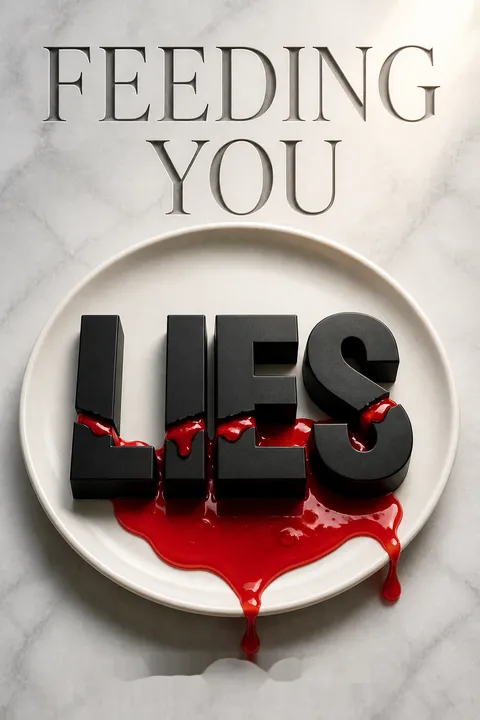


Key Takeaways
Follow the funding when food science suddenly sounds reassuring
The front group problem. The book describes front groups as organizations that present themselves as independent while advancing the interests of corporate sponsors. It cites an investigation estimating that four major food and chemical trade associations spent more than $500 million on public influence efforts from 2009 to 2013. It also recounts a beverage-industry research review in which industry-funded studies were reported to be four to eight times more likely to reach sponsor-favorable conclusions.
This is a practical lesson in information literacy: ask who paid, who selected the evidence, and whether the reporting includes competing interpretations. The strongest examples in the book rely on documents and disclosed relationships, which readers can verify more readily than broad claims about motive. Funding is a meaningful warning signal, but it cannot settle a scientific question by itself. A careful reader checks the study design and the wider body of evidence, not just the sponsor’s identity.
Compare the product, not the promise: identical brands change recipes across borders
Look beyond the logo. Hari compares versions of familiar foods sold in the United States and the United Kingdom. In her examples, U.S. Mountain Dew uses artificial coloring, while the U.K. version uses plant-derived color; McDonald’s fries also have different ingredient lists in the two markets. The contrast challenges the claim that certain additives are essential to the product. It also shows why a wholesome-looking package or familiar brand name says little about the actual recipe.
A cross-border comparison is a useful consumer test because it asks companies to explain why a formulation is possible in one market but not another. It does not, by itself, prove that every ingredient used in the U.S. is dangerous or that every alternative is healthier. Regulations, costs, and local preferences can also affect recipes. The more modest conclusion is powerful enough: when companies can make a simpler version, consumers can reasonably ask why they are not offered the same choice.
Choose food by its nutrient package, not calories alone
Calories are incomplete information. Hari compares a 135-calorie Twinkie with a pear containing roughly the same number of calories. The pear also supplies fiber and nutrients, while the packaged snack is primarily a sweetened, highly processed treat. The book argues that digestion, blood-sugar response, fullness, and appetite depend on more than the energy number printed on a label. It points to a Stanford study in which participants focused on whole foods and reducing processed foods, without counting calories, and lost weight.
The distinction between a calorie as a unit of energy and food as a biological package is valuable. Fiber, water, texture, and protein can influence how filling a meal feels, so equal calorie counts do not imply equal eating experiences. The caution is that this should not become a new false binary: calories still matter to energy balance, and whole foods are not automatically unlimited. The practical improvement is to use calorie counts as one measure, while judging food quality and satiety too.
Treat added sugar as a daily exposure, not a harmless treat
Follow the history of the advice. The book revisits a 1967 review about diet and heart disease, later reported to have received sugar-industry funding and input. Its conclusions emphasized dietary fat while downplaying sugar, a message that helped make low-fat, high-sugar products seem sensible. Hari contrasts this history with nutritionist John Yudkin’s warnings about excessive sugar. She advises checking ingredient lists for added sweeteners under different names, including syrups, dextrose, and fruit concentrates.
The historical case illustrates how commercial influence can shape a field’s research agenda, not only distort a single result. It also explains why public nutrition advice can swing dramatically as evidence and incentives change. The book’s language sometimes treats sugar as categorically toxic, which is stronger than the practical case requires. The clearer takeaway is to reduce frequent, concentrated added sugar, especially in drinks and packaged foods, without confusing that advice with a claim that all sugars or all amounts have identical effects.
Do not let soda companies turn a diet problem into a willpower problem
Watch who gets blamed. Hari argues that Coca-Cola promoted exercise and calorie balance as the answer to obesity, a framing that shifts attention away from sugary drinks. Soda supplies substantial sugar without the fiber found in whole fruit, and the book notes that liquid calories may do less to satisfy hunger. It also reports that the American Beverage Association, Coca-Cola, and PepsiCo spent about $67 million opposing soda taxes and warning labels from 2009 onward.
The case is strongest when it identifies a strategic omission: physical activity matters, but it does not make a sugary drink nutritionally equivalent to water. The broader lesson is that a message can be technically true and still misleading if it directs attention away from a product’s contribution. At the same time, obesity has multiple causes, and a single explanation cannot account for every person’s health. Effective public discussion can acknowledge complexity without allowing companies to use complexity as a shield from scrutiny.
A legal safety label is not the same as independent testing
Understand the GRAS pathway. GRAS means Generally Recognized as Safe, a U.S. designation used for substances added to food. The book describes a process in which manufacturers can make their own safety determination and are not always required to submit it to the FDA. A company may voluntarily notify the agency, but the book notes that a notice can be withdrawn if questions arise. It also cites a government audit criticizing gaps in FDA oversight and recordkeeping.
This regulatory example exposes a basic governance problem: the party that profits from a product may also generate the evidence used to assess it. That arrangement calls for transparency, independent review, and post-market monitoring, particularly when many products contribute to cumulative exposure. Still, GRAS is not a synonym for unregulated or automatically unsafe. Different ingredients have different histories and evidence. The reader’s best response is not to treat every unfamiliar additive as equally dangerous, but to ask what testing and oversight support its use.
Demand clarity when natural flavors conceal how processed food gets its appeal
Ask what the label omits. Hari explains that natural flavors are flavoring substances derived from natural sources, but the term does not identify the complete proprietary formula. Flavor mixtures can also include ingredients used to carry, preserve, or blend them. The book connects this technology to the rise of products whose base ingredients are bland or inexpensive. It uses Doritos as an example of a plain chip transformed into a highly flavored snack, and urges shoppers to prefer foods flavored with recognizable ingredients.
Flavor is not merely decoration. It helps people recognize and enjoy foods, and industrial flavoring can make convenient products appealing even when their ingredients offer little variety. The book’s concern about engineered cravings is worth considering, but its addiction language can overstate what the examples establish. Strong taste does not prove that a product is addictive. A more defensible point is that flavor, portioning, and convenience can encourage repeated consumption, so consumers benefit from knowing what is in a product and how it fits into their overall diet.
Ignore the halo: free, fortified, and gluten-free do not mean nourishing
Read the claim and the recipe. A sugar-free label may still accompany sugar alcohols or other sweeteners; fat-free products may replace fat with sugar or refined starch. Hari calls this the free food fallacy: the assumption that removing one ingredient makes a product healthy. Fortification can be useful, as with iodine in salt or folic acid in grain products, but adding vitamins does not erase excess sugar or heavy processing. Gluten-free products are essential for people with celiac disease, but are not automatically healthier for everyone else.
Health claims work as shortcuts: shoppers use a single feature to infer the quality of the whole product. That can be useful when the claim addresses a real need, but it is unreliable as a general nutrition judgment. The book is right to separate medical necessity from trend-driven marketing, especially for gluten avoidance. Its skepticism about fortification needs the same care: public-health programs have used nutrients to address deficiencies. The question is not whether fortification is good or bad in itself, but whether the product and the person’s needs make it worthwhile.
Use organic to reduce some exposures, not to assume zero risk
Know what the label promises. USDA-certified organic production prohibits GMOs and many synthetic pesticides, though it does allow some approved substances. Hari recommends organic produce, especially for items on the Environmental Working Group’s Dirty Dozen list, and organic animal products to limit certain pesticide, antibiotic, and hormone exposures. The glyphosate debate remains contested: the World Health Organization’s cancer research agency classified it as probably carcinogenic, while the U.S. EPA reached a different conclusion. The book urges consumers to choose organic as a precaution.
Organic is most persuasive as a production standard and a way to reduce exposure to some residues, not as a promise of superior health in every circumstance. The distinction between hazard and risk matters: identifying a substance as capable of causing harm does not alone establish the danger from a particular dose or exposure. The disagreement between agencies is a reason to examine methods and evidence, not to assume that one institution must be corrupt. Cost and access also matter, so selective organic purchasing can be more realistic than an all-or-nothing rule.
Ask three questions about ingredients, nutrition, and origin before you buy
Make the questions a habit. Hari’s Three Questions framework asks shoppers to examine a food through three checks:
1. What are the ingredients?
2. Are those ingredients nutritious?
3. Where do they come from?
The method moves attention from front-of-package promises to the ingredient list, food quality, and sourcing. The book’s examples include checking the origins of meat, asking restaurants about cooking oils, and choosing whole foods when a packaged product contains unfamiliar additives. Hari’s campaigns helped prompt companies including Subway, Kraft, and Starbucks to change ingredients or disclose more information.
The framework is memorable because it converts a sprawling debate into a repeatable decision process. It also links private choices to collective action: petitions and public attention can make ingredient changes commercially worthwhile. Yet the questions should not imply that every shopper can independently investigate complex supply chains or resolve scientific disputes in a grocery aisle. That burden belongs partly to regulators and manufacturers. The framework works best as a starting point for informed choice, while transparency rules and accountable oversight remain necessary public responsibilities.
Analysis
Feeding You Lies recasts food choice as a problem of information and power, not merely a test of individual discipline. Its narrative moves from Hari’s health crisis and consumer campaigns to a broader argument about how corporate funding, marketing, lobbying, and weak disclosure shape what shoppers hear and eat. That arc gives the book a memorable through-line: a food label is not only a list of ingredients, but also a claim made within a system of incentives.
The work is especially effective when it presents concrete, checkable evidence: ingredient comparisons across countries, examples of sponsored research, public records, and the GRAS process. These cases make the abstract concept of influence legible. Its practical advice, particularly reading the ingredient list and asking about sourcing, is usable without requiring readers to become nutrition researchers.
The main limitation is that the book sometimes treats different kinds of evidence as if they were interchangeable. A disclosed financial conflict, a laboratory result, an animal study, an observational association, and a demonstrated human health effect answer different questions. The book’s urgent rhetoric can blur those distinctions, and its criticism of industry influence can become a substitute for evaluating a claim on its merits. Its own advocacy therefore deserves the same scrutiny it recommends for corporate messaging.
The strongest synthesis is neither blanket trust nor blanket suspicion. Commercial funding can bias science and public communication, but a funding source alone cannot establish that a finding is false. Conversely, regulatory approval is not proof that every uncertainty has been eliminated. Readers gain the most from combining the book’s skepticism with calibrated judgment: compare evidence quality, look for independent replication, distinguish hazard from actual exposure, and prioritize dietary patterns over panic about any single ingredient. The lasting value is a sharper question, not a new food orthodoxy: who is making the claim, what supports it, and what is still unknown?
Review Summary
Feeding You Lies by Vani Hari exposes the deceptive practices of the food industry. Readers find the book eye-opening and informative, praising Hari's thorough research and practical advice on making healthier food choices. Many appreciate her focus on organic, whole foods and exposing industry corruption. However, some critics find the tone alarmist and privileged, noting that organic options aren't feasible for everyone. Despite mixed opinions on Hari's approach, most agree the book raises important questions about food safety and regulation in the United States.
People Also Read







Glossary
Front groups
Industry-backed apparent independentsOrganizations that present themselves as independent public-interest or science groups while receiving funding or direction from commercial interests. In the book, front groups are described as channels for industry messages that may reach journalists and consumers without making the sponsor’s role clear.
Astroturfing
Manufactured grassroots appearanceA public-relations tactic that makes coordinated or paid messages appear to come from ordinary members of the public. The book describes examples such as waves of similar online comments and fake event reservations, used to create the impression of broad public opposition or support.
Generally Recognized as Safe (GRAS)
Food-substance safety designationA U.S. regulatory designation for substances considered safe under intended conditions of use. The book focuses on the pathway that can allow manufacturers to determine that a substance is GRAS without mandatory FDA review, raising concerns about transparency, independent evaluation, and oversight.
Free food fallacy
Mistaking removal for healthHari’s term for assuming that a food is healthy because its label says it is free of sugar, fat, gluten, or another ingredient. The replacement ingredients may still be highly processed, and removing one component does not establish the overall nutritional quality of the product.
Obesogens
Chemicals linked to weight regulationA term for chemicals that may interfere with hormonal systems involved in appetite, metabolism, or fat storage. The book discusses certain pesticides and other environmental chemicals as possible obesogens. The concept describes a proposed influence on body weight, not proof that a particular exposure causes obesity in an individual.
Three Questions That Will Transform Your Health
Three checks for food choicesHari’s decision framework asks what a food contains, whether its ingredients are nutritious, and where those ingredients come from. It is intended to shift attention away from packaging claims and toward composition, nutritional value, and sourcing, including when buying packaged food or ordering at restaurants.
48-Hour Toxin Takedown
Two-day whole-food planA two-day eating plan presented in the book, built around whole foods such as vegetables, fruit, grains, and selected proteins, while avoiding many processed foods, sweeteners, alcohol, and caffeine. Hari frames it as supporting the body’s natural detoxification processes. The plan is not evidence that a brief diet removes unspecified toxins or treats disease.
FAQ
What’s Feeding You Lies by Vani Hari about?
- Exposes food industry deception: The book uncovers how Big Food, scientists, and the media mislead consumers by hiding harmful ingredients and spreading misinformation about food safety and nutrition.
- Empowers consumer choices: Vani Hari provides readers with tools and strategies to identify food industry lies and make healthier, more informed decisions.
- Advocacy and reform: The author shares her journey as a food activist, showing how collective consumer action can pressure companies to remove dangerous additives and improve food quality.
Why should I read Feeding You Lies by Vani Hari?
- Reveals hidden industry tactics: The book exposes how additives, artificial flavors, and chemicals are used to make food addictive and unhealthy, often disguised as healthy options.
- Offers actionable health advice: Readers receive practical steps, such as the "48-Hour Toxin Takedown," to detoxify their diets and avoid harmful substances.
- Promotes critical media literacy: The book teaches readers to question food-related information and recognize conflicts of interest among scientists, media, and government agencies.
What are the key takeaways from Feeding You Lies by Vani Hari?
- Industry manipulation is widespread: Big Food uses deceptive marketing, front groups, and paid experts to shape public opinion and policy.
- Ingredient awareness is crucial: Understanding what’s in your food, its nutritional value, and its source is essential for health.
- Whole, organic foods are best: The book advocates for eating real, organic foods to avoid toxins, additives, and synthetic chemicals.
- Consumer action drives change: Informed and organized consumers can successfully pressure companies to improve food safety and transparency.
Who are the main "guilty parties" in the food industry according to Feeding You Lies?
- Big Food corporations: These companies prioritize profit by producing processed foods loaded with additives, sugar, and chemicals, often at the expense of consumer health.
- Front groups and trade associations: Industry-funded organizations pose as independent experts to spread favorable information and discredit critics.
- Complicit academics and experts: Scientists and dietitians who receive industry funding often promote biased, industry-friendly messages without disclosing conflicts of interest.
How does the food industry spread misinformation, as described in Feeding You Lies by Vani Hari?
- Manipulating media and experts: Companies pay dietitians, academics, and PR firms to promote misleading messages, often without transparency about financial ties.
- Astroturfing and fake grassroots: Coordinated online campaigns create the illusion of public support or opposition, confusing consumers and silencing activists.
- Native advertising and paid advocacy: Industry-sponsored content is disguised as independent journalism or expert opinion on trusted platforms, further spreading misinformation.
What are the three key questions Vani Hari recommends asking about food in Feeding You Lies?
- What are the ingredients? Always read ingredient labels and avoid products with unnecessary additives, preservatives, or chemicals.
- Are these ingredients nutritious? Focus on whole, real foods and prioritize nutrient quality over calorie count.
- Where do these ingredients come from? Understand the source of your food, including whether it’s organic, non-GMO, or conventionally grown, and support local, sustainable farming when possible.
How does the flavor industry manipulate consumers, according to Feeding You Lies by Vani Hari?
- Addictive flavor engineering: Food companies design synthetic and natural flavors to make processed foods highly addictive and crave-worthy.
- Misleading "natural" labels: "Natural flavors" can include complex chemical mixtures, sometimes from unexpected sources, and may contain preservatives and solvents.
- Lack of oversight: The Flavor and Extract Manufacturers Association (FEMA) self-approves flavors without government regulation, raising safety and transparency concerns.
What does Feeding You Lies by Vani Hari reveal about fortified foods and synthetic vitamins?
- Fortification as marketing: Originally meant to address deficiencies, fortification is now used to make processed junk foods appear healthy.
- Synthetic vitamin concerns: Many fortified foods use synthetic vitamins from sources like coal tar or petroleum, which may be less effective or even harmful.
- Risk of overconsumption: Excessive fortification, especially in cereals and snack bars, can lead to vitamin overdoses, posing health risks for vulnerable groups.
What are the main food additives and ingredients to avoid, according to Feeding You Lies by Vani Hari?
- Artificial sweeteners and flavors: Ingredients like aspartame, sucralose, and neotame can cause cravings, weight gain, and potential toxic effects.
- Preservatives and dyes: BHA, BHT, TBHQ, and artificial colors such as Red #40 and Yellow #5 are linked to cancer, allergies, and behavioral issues.
- Refined oils and trans fats: Canola, soybean, and cottonseed oils are often GMO-derived and heavily processed; partially hydrogenated oils contain harmful trans fats.
- Other harmful additives: Carrageenan, maltodextrin, MSG, and synthetic vitamins are also flagged for negative health impacts.
How does Feeding You Lies by Vani Hari address the dangers of sugar and soda?
- Sugar as a chronic toxin: Excessive sugar intake is linked to obesity, diabetes, heart disease, and brain decline.
- Industry deception: The sugar industry funded biased research to shift blame away from sugar and delay public awareness of its risks.
- Soda’s health risks: Soda contains high sugar and harmful additives, and companies deflect blame for obesity by focusing on exercise rather than sugar intake.
- Addictive and misleading: Both sugar and artificial sweeteners in sodas can create cravings and are marketed as healthier than they are.
What does Feeding You Lies by Vani Hari say about glyphosate, pesticides, and organic food?
- Glyphosate contamination: The widely used herbicide glyphosate is found in many processed foods and is linked to cancer and gut microbiome damage.
- Organic food standards: Certified organic foods are free from GMOs, synthetic pesticides, and herbicides like Roundup, offering higher nutritional value and lower toxin exposure.
- Industry attacks on organics: Big Food and agrochemical companies fund campaigns to discredit organic food, as it threatens their profits.
What is the "48-Hour Toxin Takedown" plan in Feeding You Lies by Vani Hari, and how does it work?
- Short-term detox: The plan is a two-day eating regimen focused on whole, organic foods rich in vitamins, antioxidants, fiber, and nutrients that support detoxification.
- Key foods included: It emphasizes vegetables (artichokes, beets, brassicas), fruits (citrus, berries), whole grains, lean proteins, healthy fats, and fermented foods.
- Excludes harmful substances: The plan eliminates caffeine, alcohol, processed foods, and sweeteners to reduce toxin burden and improve energy, digestion, and skin health.
- Practical and accessible: Designed to be a simple, science-backed way for readers to jumpstart healthier eating and feel immediate benefits.
Download PDF
Download EPUB
.epub digital book format is ideal for reading ebooks on phones, tablets, and e-readers.








