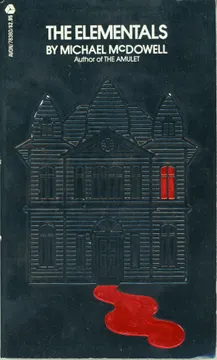


Plot Summary
Prologue
At Marian Savage’s private funeral in Mobile, her son Dauphin and daughter Mary-Scot carry out a family rite: they pierce their dead mother’s chest with a knife, then place it in her hands. The ceremony unsettles the McCrays, who have never witnessed it.
Among them are Dauphin’s wife, Leigh, her mother Big Barbara, Leigh’s brother Luker, Luker’s thirteen-year-old daughter India, and Odessa Red, the Savages’ longtime housekeeper. Marian had died at Beldame, the family’s isolated Gulf Coast retreat, and her burial sends the survivors back there.
The funeral gives the novel’s strangeness a social, almost administrative face. The family does not treat the knife as spectacle; it is a custom, performed with the same solemn practicality as closing the coffin. That composure makes the ritual more disturbing than panic would. It also establishes the Savage family’s unease with the boundary between death and the living, while the outsiders’ bewilderment makes clear that tradition has kept its logic private. The knife is both protection against a feared return and an inheritance passed from one generation to the next.
A Portrait Drawn Blind
After the funeral, Leigh explains why Savages carry knives: an ancestor once woke in her tomb, and the family began piercing its dead to prevent another burial alive. While India listens, her pencil produces a portrait of a nineteenth-century woman holding two misshapen infants. Dauphin recognizes the woman as his great-great-grandmother, but insists India could not have seen the locked family photograph from which the drawing matches.
The image unsettles Luker, India’s photographer father, and Dauphin, Marian’s surviving son. With the funeral behind them and the Great House newly empty, Dauphin asks Luker, India, Leigh, and Big Barbara to accompany him to Beldame, where Marian died. Odessa, who had been with Marian, travels with them.
The portrait makes family history behave less like inherited knowledge than a force that can reach across generations without permission. India is a modern, skeptical child, yet her hand reproduces an image guarded by the family archive. The episode quietly links the Savage custom of stabbing the dead to a deeper fear: the past does not stay safely past. The journey to Beldame follows naturally, since the family’s most troubling evidence has surfaced just as they are returning to the place where Marian died.
The House Beneath Sand
At Beldame, three nearly identical Victorian houses stand on a narrow spit of land that becomes an island at high tide. Luker and Leigh warn India away from the third house, which has been deserted for decades and is being swallowed by a white dune. India climbs the shifting slope and peers into a second-floor bedroom, still furnished as if its occupants had only just left.
She breaks a window by accident, allowing sand to stream inside. When she returns to look, she sees the bedroom door slowly close by itself. Luker admits that he and the other children feared the house when they were young, but the adults dismiss their old stories as childhood imagination.
The third house is not introduced as a conventional haunted ruin. Its carefully preserved room offers an intimate, domestic image, while the dune makes time visible as a physical pressure. India’s curiosity is active rather than passive: she damages the window and thereby changes the room she wants to inspect. The closing door turns that small act into a private encounter. The family’s refusal to explain its fear leaves India with a dangerous impression that she can settle the question by looking closer.
A Child Rises from Sand
On her next visit to the broken window, India watches sand gather into the shape of a little Black girl. The figure crawls toward her, revealing a red dress and a grinning face, then spills dry sand from its mouth. India flees but tells no one. Later, she asks Odessa about the house and learns that Odessa’s daughter, Martha-Ann, disappeared at Beldame eleven years earlier.
The family believes the child drowned in dangerous water, though her body was never found. Odessa says the third house contains a presence that imitates familiar forms to mislead whoever sees it. India recognizes that what she witnessed was not simply a dead child returned, but she still cannot tell what the house wants.
The apparition exploits the human need to make the unknown legible. India has not yet heard Martha-Ann’s story when she sees the child, so the resemblance cannot be dismissed as memory or suggestion. Odessa’s account rejects the comforting rules of ghost stories: the presence may borrow a face without being the person it resembles. That distinction matters psychologically. India wants evidence she can classify, while Odessa’s experience teaches her that recognition itself may be the trap.
A Dry House, An Oil Deal
Luker has brought Big Barbara to Beldame without alcohol, hoping to interrupt her drinking after her latest hospitalization. She resents the deception, but admits that she began drinking to escape the strain of motherhood and agrees to try sobriety. The respite is threatened when her husband, Lawton McCray, arrives with Sonny Joe Black, an oil company representative.
They want Dauphin to sell or lease Beldame, whose deep water access suits the company’s plans. Dauphin refuses to commit, but Lawton owns the McCray house and could sell that parcel alone, damaging the retreat. The family realizes that Beldame may be lost not to the shifting coast but to Lawton’s political and financial ambition.
The novel places two forms of coercion beside each other. Luker imposes abstinence on Big Barbara because he believes her drinking is destroying her, while Lawton treats family property and relationships as leverage in a private business deal. Both men claim to know what is best, but their motives differ sharply: Luker accepts the inconvenience of caring for his mother, whereas Lawton calculates what each person can yield. Beldame becomes the ground on which these competing versions of family obligation meet.
The Tomb Is Not Quiet
When Dauphin returns to Mobile to settle Marian’s will, Odessa goes with him to clean the Savage mausoleum. Inside, they find objects Odessa placed there after the funeral: Marian’s broken teacup, clock, shells, and medicine bottles, meant to remind the dead woman that she is dead. Odessa reveals that she fears Marian may return, though Dauphin rejects the belief.
The will gives Odessa a lifetime annuity and leaves the bulk of Marian’s estate to Dauphin. That night, alone in the family house, Dauphin discovers Marian’s parrot, Nails, dead in its cage. On his drive back to Beldame, he dreams of being trapped in the mausoleum with Marian and his vanished brother Darnley, then sees Darnley’s sail on the bay.
Odessa’s objects transform mourning into a practical defense. They are not offerings to invite Marian back, but reminders intended to keep her anchored to the fact of her death. Dauphin’s resistance is understandable: he trusts institutions, doctors, and the funeral rite he performed. Yet the dead parrot and the dream expose how little those assurances can control his private fear. His love for Marian does not cancel his fear of her; it makes the boundary between grief and dread harder to hold.
Seeds Against the House
As a record heat wave settles over Beldame, Odessa has India fill a pan with sand from beside the third house. She plants seeds in it, waters them with blood from both their cut thumbs, and bakes rolls from the crop that sprouts within hours. She believes the food may protect the family. The heat worsens, and Leigh, asleep in a hammock, hears footsteps in a long-unused upstairs room.
She finds sand across the floor and Odessa warns her out. That night India sees small sandy footprints on the McCray porch and a pale face at the third house. Odessa takes her keys and Bible, and they enter. She locks several bedrooms, but something reaches from the sand and bruises India’s ankle before Odessa pulls her outside.
Odessa’s ritual is a response to danger that refuses to wait for certainty. India helps even while doubting the method, and their shared blood makes protection a bodily act rather than an abstract belief. The crop’s sudden growth offers a brief, persuasive sign that the ritual has worked. Then the house intrudes into the neighboring home, and the attack proves the charm inadequate. The sequence shifts India from detached investigator to someone whose body has been touched by what she tried to explain.
Negatives Show the Hidden
Back in Mobile, India studies the photographs she took at Beldame and finds figures the viewfinder never showed her: a gaunt shape on the third house, a gray creature behind a railing, and Marian crouched in the bedroom with Nails on her shoulder. Odessa calls the images tricks, but Luker explains that the family calls the house’s evil presences Elementals, though nobody understands their true form.
He recounts seeing two legless men in flowered suits as a boy. Dauphin had earlier told India how Mary-Scot was found locked inside a chifforobe after seeing a figure that resembled her missing brother Darnley. Before the family leaves Mobile again, Odessa gives India a cryptic instruction: if anything happens, she must eat Odessa’s eyes.
The photographs appear to settle the dispute between perception and proof, but instead they make proof less secure. The images show forms no one saw at the time, and Odessa’s explanation shifts the danger from a hidden creature to the act of interpretation itself. Luker’s memory and Mary-Scot’s ordeal establish that India’s experience belongs to a longer family pattern, though none of the accounts agree on what the presence is. Odessa’s instruction is a stark act of trust, offered without an explanation India can use.
Barbara Chooses the Shore
In Mobile, Big Barbara drinks again after Lawton turns on her, despite having promised that his reassurance at Beldame meant their marriage would survive. She decides to accept a divorce and give up most of her claims, but insists on keeping Beldame.
Leigh reveals that she is pregnant, giving the family another reason to protect the retreat. Lawton fails to appear for the divorce arrangements, and the family prepares to return without knowing where he is.
On the morning of July Fourth, Lawton secretly carries gasoline to Beldame, intending to burn the three houses and force a sale. Inside the third house, he finds a malformed, living infant. After seeing Darnley’s sail outside, he falls and breaks his leg; a figure resembling Martha-Ann approaches with the infant.
Barbara’s choice gives her a measure of agency, though it comes after years of organizing her life around Lawton’s approval. She is willing to surrender money and status, but not the place that represents a life beyond his political reach. Lawton’s arson plan makes his earlier negotiation unmistakably predatory: he would rather destroy the property than accept the family’s refusal. The infant and the returning figures turn his confidence into helplessness, while Leigh’s pregnancy places the family’s hoped-for future in direct contrast to the house’s corrupted imitations of life.
Sand Buries the Savages
The family returns to Beldame through a violent rainstorm and finds an old truck submerged in St. Elmo’s Lagoon, far from shore. Odessa suspects it was placed there rather than driven into the water. At supper, sand begins pouring from the Savage house’s walls, ceiling, cupboards, and sealed containers.
The six survivors flee to the McCray house as the sand forms a geometric cone around Dauphin and Leigh’s home, swallowing its doors and lower floors. High tide traps them on the spit. Luker and Big Barbara test the channel and discover the water is hot enough to burn, while the Gulf beside it remains cool. With escape impossible until morning, the family waits together as the sand continues to fall.
The truck provides a physical clue that the landscape itself has been rearranged, but its meaning remains deliberately uncertain. The sand offers no such ambiguity: it advances through ordinary domestic spaces and destroys the distinction between shelter and exposure. A perfect geometric cone makes the event feel less like weather than intention. The scalding channel then converts Beldame’s familiar geography into a prison. The family’s survival depends on remaining together, even as their strongest instinct is to flee.
Odessa’s Eyes, India’s Sight
India returns to the third house and finds Odessa being dragged into the sand, her eyes torn out. India takes the eyes and swallows them, gaining Odessa’s way of seeing the Elementals. Upstairs, a raglike figure made to resemble Marian has slit Dauphin’s throat. India hacks it apart, while Luker joins her in driving a knife into Dauphin’s chest according to Savage custom.
A malformed infant then crawls toward Luker, who kills it with a cleaver as India stabs it. They escape, and Luker sets the third house alight. At a window, a figure resembling Lawton struggles inside the flames, but India knows the real Lawton is already dead. Leigh drives the survivors away before the Elementals can reach them.
India’s act of taking Odessa’s eyes is both inheritance and transformation. She accepts the older woman’s knowledge at the exact moment the family’s usual explanations fail, then uses that perception without confusing a deceptive likeness for the force behind it. The false Marian can be cut apart; the wider presence remains harder to define or defeat. Luker’s participation in Dauphin’s burial rite turns an inherited custom into a final act of care. Their escape is not victory over the Elementals, but a refusal to remain available to them.
Three Coffins, One Coast
The four survivors tell authorities that Lawton, Dauphin, and Odessa died exploring the burned house. Investigators accept the accidental-fire account, although almost nothing remains to identify the dead. Three empty coffins are buried in separate ceremonies. Sister Mary-Scot attends Dauphin’s funeral, and Leigh later gives birth to twin boys named Dauphin and Darnley.
Leigh and Big Barbara eventually sell Beldame to the oil company. Hurricane Frederic then erases the coast, the houses, and even the channel that trapped the family. When India later sees the twins, she tells Luker that they are Savages, not McCrays, and cannot bear to stay near them.
The family’s public story restores social order by replacing an incomprehensible event with a plausible fire and three funerals. The empty coffins preserve that fiction while exposing its cost: mourning proceeds without bodies, and certainty remains unavailable. The twins inherit names that bind new life to the lost brothers, but India sees that inheritance as dangerous rather than comforting. The hurricane appears to erase Beldame completely, yet the final unease lies in the possibility that geography can disappear while its family history continues.
Epilogue
Luker and India return to New York, while Leigh and Big Barbara travel before settling together. After the twins arrive, India avoids them, convinced their Savage identity matters more than the name Leigh gave them.
A year later, Hurricane Frederic obliterates Beldame’s houses, dunes, lagoon, and channel. The oil company must hire surveyors to locate the land it purchased. The family never returns. The coast is gone, but India’s new sight leaves her unable to treat the place, or what it contained, as finished.
The epilogue offers physical destruction without emotional closure. Hurricane Frederic removes the landscape that held the story’s horrors, but the survivors’ choices show that place has already become part of them. Leigh and Big Barbara build a household around the new twins; India, by contrast, reads the babies through the family’s inherited history and recoils. Her perception has become a burden rather than a gift. The oil company can own the property and the storm can erase its landmarks, yet neither can settle what the Savage line has carried forward.
Analysis
The novel makes its haunted house less frightening by what it reveals than by how thoroughly it frustrates explanation. The third house is not simply a container for ghosts. Its occupants imitate people, distort photographs, move through sand, and refuse the stable identities that would let the living set rules for them. India’s camera seems to promise objective sight, but the images it records are less trustworthy than her direct experience. Odessa’s knowledge is more useful, yet even she cannot predict the presence or guarantee safety. The story therefore treats certainty as a vulnerable human need, not a reliable defense.
Family inheritance gives that uncertainty emotional weight. The Savage knife ritual, Marian’s favoritism, Dauphin’s loyalty, and the stories of Darnley and Martha-Ann all pass fear from one generation to the next. Beldame intensifies those ties by offering the family a place outside ordinary obligations, then makes their refuge physically impossible to leave. The characters’ differing responses reveal their temperaments: Luker jokes and doubts, Dauphin accommodates, Barbara clings to a marriage she has helped build, and India insists on looking. None of these habits is sufficient when the danger stops being merely visible and begins to touch them.
Odessa’s role complicates the family’s moral center. She has spent decades serving people who love her but remain within a racially unequal social order. Her knowledge is indispensable, yet the family often expects her to interpret danger and care for them without granting her equal authority in ordinary life. India’s growing closeness to Odessa begins as curiosity and becomes dependence. When India takes Odessa’s eyes, she accepts not a complete explanation but a way of seeing that also carries grief and responsibility.
The ending refuses a clean victory. Fire and hurricane erase Beldame, but the survivors cannot confirm that they have destroyed what lived there. Their public lies allow them to return to society; India’s final judgment about the twins shows that the past remains active within the family. The coast disappears. Its inheritance does not.
Review Summary
The Elementals is widely praised as a masterpiece of Southern Gothic horror, earning an overall rating of 3.97/5. Readers love its atmospheric setting on Alabama's Gulf Coast, memorable characters—especially the father-daughter duo of Luker and India—and its slow-burning tension that builds to genuinely terrifying horror. Many highlight McDowell's brilliant dialogue and his ability to make sand and heat feel menacing. Critics note the pacing can be slow, with some feeling the ending is rushed. The supernatural creatures' ambiguity is seen by most as a strength, though a few found it frustrating.
People Also Read








Characters
India McCray
Skeptical young witnessIndia is Luker McCray’s thirteen-year-old daughter, raised in New York and accustomed to treating adults’ beliefs with amused suspicion. Artistic and observant, she notices details others avoid, then tests what she sees with a camera or an unsparing question. Her independence is partly armor: she has learned to rely on herself after her mother left, and she dislikes being managed or patronized. At Beldame, curiosity draws her toward the third house even as fear begins to alter her sense of what counts as evidence. India’s brisk wit and cool appraisal do not make her invulnerable; they are methods of keeping uncertainty at a manageable distance.
Luker McCray
India’s guarded fatherLuker is a New York photographer and Big Barbara’s son. He is irreverent, sexually frank, and often more comfortable deflating family pretensions than expressing affection. His closeness with India is unconventional but attentive: he trusts her intelligence, gives her room to act, and still tries to protect her when Alabama revives memories he would rather leave alone. His bond with Dauphin is gentler than his bond with his own father, Lawton, whose political ambition Luker distrusts. At Beldame, Luker’s skepticism coexists with a childhood fear he has never fully explained, revealing how easily adult self-command can conceal an old vulnerability.
Dauphin Savage
Gentle Savage heirDauphin is Marian Savage’s surviving son and Leigh’s husband. Wealthy and mild-mannered, he avoids confrontation and tries to preserve harmony, even when doing so puts him at odds with Luker. He is deeply attached to Beldame, where his friendship with Luker and his long relationship with Odessa gave him a sense of belonging that he lacked in his mother’s affection. Dauphin’s politeness is not indifference; he absorbs other people’s demands and often puts their comfort ahead of his own. His loyalty to his family is sincere, but it can make him slow to recognize when another person is using that loyalty for personal gain.
Leigh Savage
Dauphin’s steady wifeLeigh is Big Barbara’s daughter and Dauphin’s wife. Sociable, adaptable, and rarely rattled by ordinary inconveniences, she helps translate the private customs of the Savage family for the McCrays. Her charm should not be mistaken for passivity: she has her own judgment, knows how to manage her outspoken mother, and is alert to the emotional costs of Dauphin’s grief. Leigh’s easy manner is a form of competence, especially in a family where louder personalities can dominate every room. At Beldame, she is both an anchor to Dauphin and a witness whose ordinary attentiveness makes the house’s intrusions harder to dismiss.
Big Barbara McCray
Voluble family matriarchBig Barbara is Luker and Leigh’s mother, Lawton’s wife, and India’s grandmother. Generous, theatrical, and quick to fill silence, she uses humor and drink to manage disappointment she rarely names directly. Her affection for her children is genuine, though her dependence on alcohol has made her difficult for them to trust. She helped Lawton build his business and knows the political world he hopes to enter, but her identity is not reducible to being his wife. Beldame brings her into closer contact with India and gives her a chance to imagine a life no longer organized around Lawton’s needs.
Odessa Red
Keeper of household loreOdessa is the Black housekeeper who has served the Savage family for decades. Practical, self-contained, and devout, she knows the family’s habits as intimately as its private history. She rarely explains herself in the terms others expect, and her understanding of spiritual danger is rooted in experience rather than formal doctrine. Her long service reflects both a deep attachment to Dauphin and the rigid social boundaries that shape her life in Alabama. India initially keeps her at a distance, uneasy about the unequal relationship between employer and servant, but Odessa’s competence and care gradually complicate that judgment.
Marian Savage
Dauphin’s formidable motherMarian is the dead matriarch whose funeral begins the story. Proud, demanding, and emotionally difficult, she favored her other children and left Dauphin struggling for her approval. Her illness brought Odessa into an intimate caregiving role, while her history binds the Savage family to Beldame and its unsettling customs. Even in absence, Marian shapes how her son grieves and how the family understands its past.
Mary-Scot Savage
The nun in the familyMary-Scot is Dauphin’s sister and a Catholic nun. She is restrained where her family is talkative, and her faith gives her a structure for handling the family’s history that the others lack. She has been shaped by a frightening childhood experience at Beldame and by an estrangement from Marian over her vocation.
Lawton McCray
Ambitious family patriarchLawton is Big Barbara’s husband, Luker and Leigh’s father, and India’s grandfather. A successful fertilizer businessman and congressional candidate, he is forceful, calculating, and accustomed to treating charm as a political tool. His affection for his family exists alongside a transactional view of what they can do for him. Luker distrusts him; Big Barbara understands how much of her own past labor helped build his success.
Darnley Savage
The missing brotherDarnley was Dauphin’s older brother and Luker’s boyhood friend. He disappeared while sailing, leaving the family without a body or a definitive account of what happened. His absence became a lasting wound for Marian and a persistent source of uncertainty at Beldame.
Martha-Ann
Odessa’s lost daughterMartha-Ann was Odessa’s young daughter. She spent time at Beldame and was often kept to the lagoon side of the property because of the racial boundaries imposed on the household. Her disappearance left Odessa with a grief the family explains as drowning, though important questions remain unanswered.
Johnny Red
Odessa’s unreliable partnerJohnny Red is Odessa’s intermittently present common-law partner and Martha-Ann’s father. The family regards him as unreliable, yet Odessa remains tied to him by a complicated history.
Nails
Marian’s silent parrotNails is Marian’s red parrot, kept in a cage at the Savage home. The bird’s rare, unsettling mimicry makes it an unwelcome reminder of its former owner.
Sonny Joe Black
Oil company intermediarySonny Joe is the oil company representative who approaches Dauphin about Beldame. Polite and businesslike, he gives Lawton a route to turn the family’s secluded retreat into a profitable transaction.
Lula Pearl Thorndike
Lawton’s wealthy companionLula Pearl is Lawton’s longtime companion, a wealthy woman whose property has benefited from oil. Her connection to Lawton links his private life to the business opportunity he pursues.
Plot Devices
The Savage funeral knife
Ritual against waking deadEvery Savage receives a knife that is used at death, a tradition begun after an ancestor was reportedly buried alive. The family’s version of the ritual is restrained after one earlier ceremony went horribly wrong: the blade is pressed into the corpse, then left in its hands. The custom gives the family a concrete answer to an old terror, but it also suggests that their fear has been inherited rather than resolved. At the crisis in Beldame, the ritual becomes a desperate act of care for a dead family member.
The third house
A shifting supernatural thresholdThe unoccupied Victorian house sits between the McCray and Savage homes, slowly disappearing beneath a dune. Its preserved rooms draw India inside the mystery, while sand gradually enters those rooms and eventually crosses into neighboring houses. The house refuses stable explanation: it can appear merely abandoned, then become a place where doors move, forms gather, and familiar people seem to return. Its shifting appearance makes it impossible for the characters to rely on ordinary distinctions between memory, evidence, and physical danger.
India’s photographs
Proof that deepens doubtIndia photographs the third house to document its architecture and the advancing dune. When the prints are developed, they show figures that India and Odessa did not see while taking the pictures. The images seem to offer objective evidence, but they cannot establish what the figures are or whether they were physically present. Instead, the photographs reinforce the house’s power to manipulate perception and turn a tool of observation into another source of uncertainty.
The Elementals
Presence without fixed formThe family uses the name Elementals for the hostile presence associated with the third house, but the name does not provide a reliable account of what inhabits it. The presence may appear as people, animals, or malformed bodies, yet those shapes can be deceptive constructions rather than the force itself. It moves through sand and air, misleads witnesses, and breaks the characters’ assumptions about how spirits should behave. The less the family can define it, the harder it becomes to predict or resist.
Odessa’s seed ritual
Protection through shared bloodOdessa asks India to collect sand from beside the third house, then plants seeds in it and waters them with blood from their cut thumbs. The seeds sprout rapidly and become part of rolls served to the family. Odessa believes the food will protect them, drawing on a method she has used before. The ritual joins her inherited practical knowledge to India’s participation, but its failure shows that no protective practice gives the family dependable control over the house.
About the Author
Other books by Michael McDowell


Download PDF
Download EPUB
.epub digital book format is ideal for reading ebooks on phones, tablets, and e-readers.








