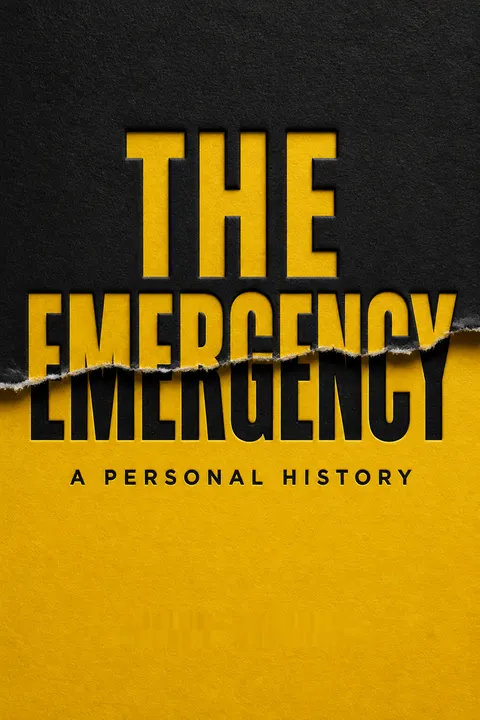


Key Takeaways
Recognize that India's Emergency was planned before its public justification
The plan came first. In January 1975, months before the Emergency was declared, West Bengal Chief Minister Siddhartha Shankar Ray sent Indira Gandhi a proposal for an internal Emergency and arrests of political opponents. The political crisis deepened in June, when the Allahabad High Court invalidated Gandhi's election and the Supreme Court gave only a limited stay. But the plan to suppress dissent was not an improvised response to that ruling. On the night of 25 June, Gandhi's government invoked emergency powers, arrested opposition leaders, and imposed press censorship.
A crisis became cover. The book's central warning is that constitutional procedures can be used to dismantle democratic practice. The Emergency lasted nineteen months, and the government justified extraordinary control as necessary to protect the country.
What's striking is the gap between the public rationale and the prior planning. In crisis governance, leaders can describe exceptional powers as temporary and defensive, while the machinery built to use them serves political survival. That is why the declaration itself is not enough to judge an emergency. The essential questions are who identifies the threat, what evidence is disclosed, and whether independent bodies can review the decision. Without those checks, legality can become a costume for executive choice.
A legal emergency can erase rights when institutions stop asking questions
Arrest became routine. In Delhi, officials were ordered to issue detention papers before receiving adequate grounds for arrest. Some forms were blank, with personal details filled in afterward. The Maintenance of Internal Security Act, or MISA, allowed detention without trial, and an amendment soon removed the requirement to tell detainees why they had been arrested. Fundamental rights were suspended, including the ability to seek court protection.
The courts split. In 1976, the Supreme Court ruled four to one that detainees could not seek a remedy for unlawful detention during the Emergency. Justice H.R. Khanna dissented, arguing that a state could not simply make arbitrary imprisonment lawful. His position cost him the chance to become chief justice. The decision showed how profoundly judicial review matters when government power expands.
This is a vivid example of the difference between having a constitution and having constitutional government. Legal scholar Joseph Raz distinguishes rule by law, where rules help officials exercise power, from the rule of law, where law also constrains them. The Emergency demonstrates how the first can survive while the second collapses. A robust system therefore needs more than formal rights: courts must retain jurisdiction, officials must be able to refuse illegal orders, and emergency measures must be reviewable in practice.
Protect independent reporting before censorship makes silence look like consent
Silence was engineered. On the first night of the Emergency, electricity was cut to newspaper offices on Delhi's Bahadur Shah Zafar Marg. Censorship rules then restricted reporting on arrests, courts, Parliament, demolitions, and even criticism of family planning. News agencies were merged into Samachar, while government radio and television gave prominent coverage to Indira Gandhi and Sanjay Gandhi. Between January 1976 and January 1977, All India Radio's main bulletins carried 192 items about Sanjay.
Some reporters resisted. The Indian Express printed a blank editorial space; The Statesman also used blank space to signal censorship. Small publications such as Opinion tried to circulate censored information, and journalists used oblique references and satire. These gestures could not replace free reporting, but they reminded readers that the official account was not the whole story.
Censorship does more than hide facts. It changes the apparent social reality: citizens see fewer signs of dissent and may conclude that opposition is marginal or nonexistent. This resembles pluralistic ignorance, a social-psychology pattern in which people privately disagree but misread others' silence as support. Independent reporting helps correct that error by making dispersed experiences visible. Yet the book also shows why symbolic resistance has limits: blank space can announce repression, but sustained journalism needs legal protection, plural ownership, and access to information.
Watch unelected family advisers when formal government becomes a rubber stamp
Power shifted offstage. Sanjay Gandhi held no elected office, yet his circle influenced appointments, policing, and Delhi's administration. Officials and ministers often treated his wishes as orders. His mother relied on his loyalty, while senior advisers who questioned him lost influence. The result was a parallel channel of authority operating alongside formal government.
Maruti exposed the pattern. Sanjay's proposed small-car company received government assistance despite lacking a viable prototype. Haryana acquired 290 acres for the factory at a price well below the rate for nearby land. Banks were pressed to lend, officials who raised objections faced retaliation, and some businesses were pressured to buy shares. The project became a test of whether public institutions served rules or a powerful family.
The pattern resembles a principal-agent problem: public officials are supposed to serve citizens through established rules, but their incentives shift toward pleasing a powerful patron. Informal influence can be especially hard to challenge because responsibility is blurred. The book's account suggests that nepotism is not merely a matter of unfair access. When private interests shape public decisions, agencies lose credibility and technical standards become negotiable. Still, the evidence should be read as a documented case, not proof that every family connection produces the same institutional damage.
Treat arbitrary detention as a system of fear, not isolated abuse
Fear spread beyond leaders. The first arrests targeted prominent opposition figures, but thousands of activists, students, teachers, journalists, and ordinary people were also detained. Some were picked up on flimsy grounds or because local officials wanted to settle personal scores. In overcrowded Tihar jail, the population rose from 2,669 to 4,250, although the prison was designed for 1,273. Food, water, sanitation, and medical care were inadequate.
The pressure reached homes. Kapoor recounts her husband Virendra's arrest after he challenged a Youth Congress worker who was beating a protester. He was released on bail, then detained under MISA and transferred to Bareilly jail. Kapoor was pregnant and caring for a newborn while trying to visit him and keep working. The fear of arrest also made friends and colleagues avoid the family.
The reach of repression matters as much as its formal targets. Political science describes this as a chilling effect: people change lawful behavior because the cost of being noticed feels unpredictable. That effect can outlast individual arrests, weakening associations, journalism, and everyday trust. Kapoor's family story gives the mechanism a human scale. At the same time, memoir testimony is strongest when combined with records and corroboration. The book draws on both personal recollection and the Shah Commission, helping connect one household's fear to broader administrative practices.
Measure policy by coercion on the ground, not targets announced in Delhi
Targets drove force. Sanjay Gandhi's five-point programme included family planning, slum clearance, tree planting, literacy, and opposition to dowry. The book describes how sterilization quotas were passed down to local officials, teachers, police, and other employees. In 1976-77, India recorded 81.32 lakh sterilizations, about 190 per cent of the national target. Some people were threatened with loss of jobs, services, or benefits; others were taken for operations against their will.
The city paid too. Demolitions displaced residents to poorly serviced colonies far from their work. In Turkman Gate, protest against demolitions and sterilization ended in police firing. The official death toll was eight, while residents believed it was higher. The book shows how a policy presented as modernization became, in practice, coercive rule over people's bodies and homes.
Targets can turn a public goal into a dangerous proxy. Once officials are rewarded for counts rather than outcomes, they have incentives to inflate numbers and conceal harm. This is a familiar problem in organizational measurement: what can be counted may displace what matters. Family planning also involves intimate bodily decisions, so consent is not a minor procedural detail but part of the policy's legitimacy. The account is a reminder that evaluating a programme requires disaggregated evidence about who bears its costs, not just headline totals.
Build resistance that can survive arrests, isolation, and internal mistrust
Networks kept dissent alive. RSS and Akali activists organized underground communication, leaflets, safe houses, and acts of protest despite mass arrests. Subramanian Swamy, a wanted opposition MP, returned from abroad in disguise and entered Parliament in August 1976 to challenge the official silence. He slipped away before officials could detain him. The episode became a public demonstration that resistance had not vanished.
Fernandes chose another route. Socialist leader George Fernandes helped organize the Baroda Dynamite Conspiracy, an underground effort that used explosives for sabotage intended to avoid casualties. He was arrested in 1976, and his trial drew international attention. The crackdown also involved torture: his brother Lawrence was badly beaten, while actor and activist Snehlata Reddy died shortly after release from detention. Resistance carried real costs and was not free of strategic disagreement.
Durable resistance depends on more than a brave individual. It needs trusted networks, secure communication, shared purpose, and ways to keep people involved when leaders are imprisoned. Swamy's parliamentary appearance was powerful partly because it punctured the regime's claim of total control. Fernandes's approach raises a harder question: where does resistance to authoritarianism cross into tactics that risk harming others or alienating potential allies? The book honors defiance without making every tactic equivalent. That distinction is vital to preserving both moral credibility and public support.
Moral authority can unite opponents, but it cannot settle leadership disputes
JP made a coalition possible. Jayaprakash Narayan, a veteran of the freedom struggle who had refused government office, gave the opposition movement moral force. His call for Total Revolution urged change across public life, not merely a change of government. In June 1975, he led a mass rally in Delhi and called for peaceful protest. His appeal to police and soldiers not to obey unconstitutional orders was later used by Gandhi to justify repression, although JP framed it as a warning against illegal commands.
Unity remained fragile. Socialists, the Jana Sangh, the Congress(O), and the Bharatiya Lok Dal joined forces, but disagreed over strategy and leadership. Charan Singh favored negotiations and resisted some forms of direct action. Talks with the government divided activists who saw compromise as surrender. The coalition's eventual unity required intense pressure from JP and from opposition workers.
A shared opponent can align groups that otherwise disagree, but negative unity is not the same as a common governing project. Coalition research often distinguishes coordination against a threat from agreement about institutions, policy, and leadership. JP supplied a moral center, but could not erase the ambitions and ideological differences of the parties around him. His movement also faced a dilemma common to civil resistance: a forceful appeal to state employees may defend constitutional limits, yet can be portrayed as an attack on elected authority. Meaning and framing become politically decisive.
Elections can punish authoritarianism when voters learn what censorship concealed
The opening surprised the rulers. Indira Gandhi called elections in January 1977, expecting a strong mandate. Opposition parties rapidly formed the Janata Party, and Jagjivan Ram's departure from Congress further weakened the government. Once campaigning began, reports of forced sterilizations, demolitions, arrests, and prison conditions reached voters. People who had not seen these accounts under censorship could now connect private grievances to a national pattern.
The verdict was decisive. Janata won 270 seats and its ally Congress for Democracy won 28, while Congress fell to 153. Gandhi lost her constituency, as did Sanjay Gandhi. The campaign relied not only on party leaders but also on ordinary citizens who organized rallies, shared information, and offered support. On 21 March 1977, the Emergency was repealed.
Elections matter most when citizens can use them to impose consequences on leaders. But this case also shows that voting is an information process: voters cannot judge what they are prevented from knowing. Once censorship loosened and opposition groups could campaign, scattered experiences became politically legible. The defeat was not simply a referendum on one leader. It reflected the accumulated costs of governing through fear. Electoral accountability, however, is episodic; it can remove officials without automatically repairing courts, media, or administrative norms.
Defeating Indira restored elections, but Janata's rivalries squandered the opening
Victory did not settle politics. The Janata government repealed constitutional changes made during the Emergency and tried to investigate abuses through the Shah Commission. Its findings documented illegal detentions, censorship, and the influence of Sanjay Gandhi's circle. But the coalition's leaders soon fought over power, policy, and the role of the RSS. Morarji Desai's government fell in 1979, less than three years after its election victory.
Accountability proved vulnerable. Indira Gandhi returned to power in 1980. Her government disbanded the committee acting on the Shah Commission and withdrew cases from special courts. Copies of the report were removed from public institutions. The book's epilogue therefore complicates the triumph of 1977: voters restored democratic government, but political fragmentation made it easier for the machinery of accountability to be dismantled.
The aftermath distinguishes electoral turnover from democratic consolidation. New leaders can inherit institutions weakened by emergency rule, then damage public confidence through factional conflict or selective retaliation. The Shah Commission's work mattered because it converted testimony into an official record, but a record without durable access and follow-through remains politically fragile. There is also a useful caution here: accountability should be evidence-based and institutionally independent, not merely revenge by a victorious party. A democracy needs both the ability to punish abuses and rules that keep punishment from becoming partisan.
Analysis
Coomi Kapoor's book is a political history told through the texture of lived experience. Its argument emerges through a sequence of intimate scenes: a power cut at a newspaper office, a midnight arrest, a journalist's husband taken from a protest, an underground politician appearing unexpectedly in Parliament, and voters waiting for election results. These episodes prevent the Emergency from becoming an abstract constitutional dispute. They show how decisions made by a small circle altered what could be printed, said, or safely done in ordinary life.
The book's most consequential claim is that the Emergency was not simply an overreaction to disorder. The January 1975 planning note, the preselected arrest lists, and the bypassing of cabinet process point to a political strategy that predated the immediate trigger of the Allahabad judgment. Kapoor also tracks the channels through which power operated: formal laws, compliant officials, family loyalty, business favors, and control of information. The result was not just centralized government but a hierarchy in which officials often anticipated the wishes of unelected actors.
The narrative's strength is its accumulation of testimony, documents, and personal memory. Its scope also makes careful distinctions important. Opposition groups were not identical in ideology or method, and the account includes both nonviolent protest and the Baroda dynamite effort. Likewise, a powerful account of Emergency abuses does not mean every opponent's political vision was democratic or coherent. The book's central concern is narrower and stronger: no political cause justifies eliminating the checks that allow citizens to contest power.
The 1977 result is a dramatic democratic recovery, but the epilogue refuses a simple victory story. Janata's disintegration and the subsequent suppression of the Shah Commission's work show that elections alone do not secure institutional memory or accountability. The book is therefore valuable not only as a record of one crisis, but as a study of how democratic safeguards fail, how civic networks preserve dissent, and how quickly political gains can be lost when institutions depend on the goodwill of whoever holds office.
Review Summary
The Emergency: A Personal History is praised as a gripping account of India's darkest period post-independence. Readers appreciate Kapoor's personal perspective and detailed narrative of the 21-month Emergency, highlighting its atrocities and impact on democracy. The book is lauded for its readability, thorough research, and ability to educate younger generations about this crucial historical event. While some note a slight bias, most find it an essential read for understanding Indian political history and the fragility of democratic institutions.
People Also Read

Glossary
Maintenance of Internal Security Act (MISA)
preventive detention lawAn Indian law used during the Emergency to detain people without a criminal trial. The government used it against opposition leaders, activists, journalists, and others it considered a threat. Emergency amendments weakened safeguards, including the requirement to communicate the grounds for detention, and severely limited detainees' ability to challenge imprisonment in court.
Defence of India Rules (DIR)
emergency control rulesRules used by the government to regulate conduct during an emergency. During the 1975-77 Emergency, they were applied to arrest and punish people, restrict publications, and control activities the authorities deemed harmful to public order or security. Their broad and elastic use helped extend repression beyond leading opposition politicians to journalists, students, and ordinary citizens.
Total Revolution
society-wide democratic renewalJayaprakash Narayan's call for fundamental change in political and social life, not simply the replacement of a government. It grew from student protests against corruption and misrule and developed into a broader movement for reform. JP described it as peaceful, but his appeal to state personnel not to obey unconstitutional orders became a central point of political dispute.
Twenty Point Programme
government economic programmeIndira Gandhi's economic and social programme announced during the Emergency. Its stated goals included reducing prices, curbing conspicuous consumption, ending bonded labour, increasing production, and developing the handloom sector. The government publicized it as evidence of constructive work, while critics questioned its implementation and contrasted it with the more coercive initiatives promoted by Sanjay Gandhi.
Baroda Dynamite Conspiracy
underground sabotage caseThe name given to the case against socialist leader George Fernandes and associates accused of plotting to overthrow the government and using explosives for sabotage during the Emergency. The defendants were charged with conspiracy, possession of explosives, and distributing underground material. Fernandes and his colleagues contested the charges, and the case was withdrawn after the 1977 election.
Shah Commission
inquiry into Emergency abusesA commission appointed by the Janata government in 1977, headed by former Chief Justice J.C. Shah, to investigate abuses during and immediately before the Emergency. Its reports documented arbitrary detention, censorship, and unconstitutional administrative actions. The commission's work became a major public record, but the government that returned to power in 1980 withdrew the follow-up process and removed copies from public institutions.
five-point programme
Sanjay Gandhi's social agendaSanjay Gandhi's programme centered on family planning, tree planting, slum clearance, literacy, and opposition to dowry. Unlike the government's broader economic programme, it was associated with forceful implementation, especially in sterilization campaigns and demolitions. Officials faced pressure to meet numerical targets, and coercive methods generated public anger, particularly in Delhi and parts of north India.
FAQ
1. What is The Emergency: A Personal History by Coomi Kapoor about?
- Personal and political narrative: The book offers a detailed, firsthand account of the Emergency period in India (1975-1977), blending personal experiences with a broader political history.
- Focus on key figures: It examines the roles of Indira Gandhi, Sanjay Gandhi, opposition leaders like Jayaprakash Narayan (JP), and influential journalists.
- Chronicle of events: The narrative covers the imposition of Emergency, censorship, mass arrests, suspension of rights, and the eventual restoration of democracy.
- Based on rich sources: Kapoor draws from interviews, archival material, and her own experiences as a journalist during the Emergency.
2. Why should I read The Emergency: A Personal History by Coomi Kapoor?
- Firsthand perspective: Kapoor’s direct involvement as a journalist provides unique insights into the political and social turmoil of the era.
- Comprehensive and balanced: The book is well-researched, using interviews and archives to present a nuanced view beyond simplistic good-versus-evil narratives.
- Reveals hidden details: It uncovers the inner workings of Indira Gandhi’s administration, Sanjay Gandhi’s influence, and the opposition’s underground resistance.
- Contextual understanding: The book includes timelines and forewords that help readers grasp the causes, consequences, and legacy of the Emergency.
3. What are the key takeaways from The Emergency: A Personal History by Coomi Kapoor?
- Democracy’s vulnerability: The Emergency exposed how easily democratic institutions and civil liberties can be undermined by unchecked power.
- Role of dissent: The importance of resistance, both from the press and political opposition, is highlighted as crucial for safeguarding democracy.
- Personal and political consequences: The period left lasting scars on Indian politics, shaping the careers and reputations of many leaders.
- Lessons on accountability: The book underscores the dangers of authoritarianism and the need for vigilance in protecting democratic norms.
4. What triggered the Emergency according to The Emergency: A Personal History by Coomi Kapoor?
- Allahabad High Court judgment: The immediate cause was the 1975 judgment disqualifying Indira Gandhi for electoral malpractices, threatening her political survival.
- Rising opposition and unrest: Student protests, strikes, and the Total Revolution movement led by JP created a climate of instability.
- Pre-planned crackdown: Evidence suggests plans for mass arrests and Emergency rule were in place before the official trigger, as revealed by Siddhartha Shankar Ray’s correspondence.
- Indira Gandhi’s response: Rather than risk political defeat, she chose to impose Emergency, suspending civil liberties and arresting opponents.
5. How did the Emergency affect the media, as described in The Emergency: A Personal History by Coomi Kapoor?
- Severe censorship: Newspapers faced pre-censorship, power cuts, and strict government control, with only a few like the Indian Express resisting.
- Government manipulation: The Ministry of Information and Broadcasting, influenced by Sanjay Gandhi, dictated news content and suppressed dissenting voices.
- Suppression of free press: Independent publications were shut down or forced underground, and foreign correspondents were expelled.
- Symbolic resistance: Some newspapers used blank editorials and subtle critiques to protest censorship.
6. What was Sanjay Gandhi’s role and influence during the Emergency, according to Coomi Kapoor?
- De facto power center: Sanjay Gandhi, though unelected, wielded enormous influence, forming a parallel secretariat and controlling key appointments.
- Enforcer of controversial policies: He aggressively pushed the Five-Point Programme, including family planning and slum clearance, often using coercive methods.
- Media and administrative control: Sanjay’s coterie managed censorship and administrative actions, bypassing legal norms and intimidating opponents.
- Source of excesses: His ruthlessness and unchecked authority were major factors in the abuses of the Emergency period.
7. What was the Five-Point Programme initiated by Sanjay Gandhi, and what were its consequences?
- Aggressive family planning: The programme enforced sterilization targets through state machinery, often using coercion and intimidation.
- Slum clearance and beautification: Large-scale demolitions displaced thousands, with little regard for legal procedures or human suffering.
- Public backlash: The excesses of the programme led to widespread resentment and contributed to the downfall of Indira Gandhi’s government.
- Symbol of authoritarianism: The Five-Point Programme became synonymous with the terror and arbitrariness of the Emergency.
8. How were political opponents and dissenters treated during the Emergency in The Emergency: A Personal History by Coomi Kapoor?
- Mass arrests: Thousands of opposition leaders, activists, and critics were detained without charges under preventive detention laws like MISA.
- Harsh prison conditions: Detainees faced overcrowding, poor sanitation, torture, and denial of basic rights, with some kept in solitary confinement.
- Suppression of dissent: The government used police intimidation and legal loopholes to silence opposition, with little judicial recourse.
- Impact on opposition unity: Despite repression, leaders like JP worked to unite the opposition, eventually forming the Janata Party.
9. What was the significance of the Supreme Court’s habeas corpus judgment during the Emergency?
- Suspension of rights: The Supreme Court ruled that even illegally detained persons could not approach courts during the Emergency, effectively legalizing arbitrary detention.
- Justice Khanna’s dissent: Justice H.R. Khanna’s lone dissent upheld the right to judicial review, highlighting the judgment’s threat to democracy.
- Erosion of safeguards: The ruling marked a key moment in the breakdown of constitutional protections and emboldened the regime’s authoritarianism.
- Long-term impact: The judgment remains a cautionary tale about the judiciary’s role in protecting civil liberties.
10. How did Ramnath Goenka and the Indian Express resist the Emergency, as described by Coomi Kapoor?
- Defiant editorial stance: The Indian Express continued to publish subtle critiques and blank editorials despite censorship and government pressure.
- Legal and financial battles: Goenka fought government attempts to take over the newspaper through tax raids, withdrawal of advertisements, and pre-censorship orders.
- Symbol of press freedom: The Express became a beacon of resistance, inspiring other journalists and citizens to stand up for free speech.
- Personal risk: Goenka’s commitment to press freedom came at great personal and financial cost.
11. How did the Emergency come to an end, and what were the immediate political consequences according to The Emergency: A Personal History by Coomi Kapoor?
- Announcement of elections: Indira Gandhi unexpectedly called for elections in early 1977, signaling a shift in strategy amid growing opposition.
- Janata Party victory: The united opposition won a landslide, with Indira and Sanjay Gandhi suffering personal defeats.
- Restoration of democracy: The end of the Emergency marked a dramatic rejection of authoritarianism and a reaffirmation of democratic values.
- Aftermath: The Janata government faced internal conflicts, and Indira Gandhi eventually returned to power, illustrating the volatility of Indian politics.
12. What is the legacy of the Emergency period as reflected in The Emergency: A Personal History by Coomi Kapoor?
- Test of democracy’s resilience: The Emergency demonstrated both the vulnerability and strength of India’s democratic institutions.
- Enduring political impact: The period shaped the careers and reputations of many leaders and influenced party dynamics for decades.
- Lessons on power and accountability: Kapoor’s account highlights the dangers of unchecked authority and the importance of dissent in a democracy.
- Public memory and civil liberties: The scars of the Emergency continue to influence debates on governance, civil rights, and the role of the press in India.
Download PDF
Download EPUB
.epub digital book format is ideal for reading ebooks on phones, tablets, and e-readers.








