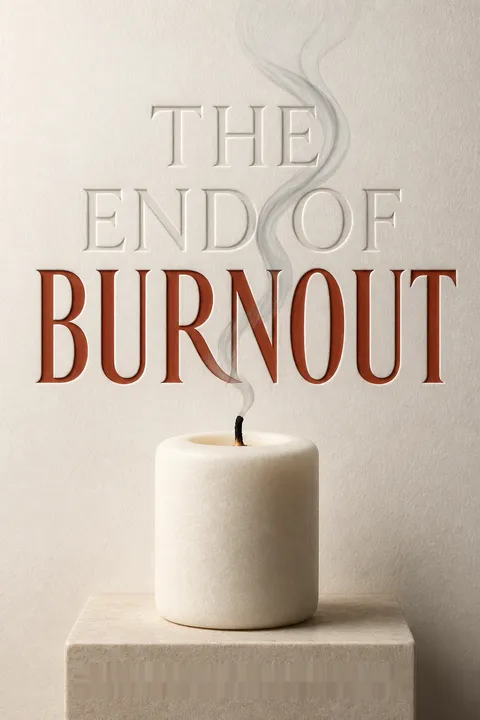


Key Takeaways
A dream job can still destroy you when its promise exceeds its reality.
The dream collapses. Jonathan Malesic had tenure, good pay, autonomy, and work he once longed to do. Yet he grew angry, exhausted, and convinced his teaching accomplished nothing. In one class, students sat silent as he struggled to draw them into discussion. He eventually quit. His story complicates the usual picture of burnout as the result of an obviously terrible job: favorable conditions do not guarantee that work feels worthwhile or sustainable.
A revealing contrast. Before becoming a professor, Malesic enjoyed a parking-lot job because he expected little from it and found friendship, trust, and love outside the booth. The difference was not simply job status. The professor role carried a much larger promise about identity and purpose, and the daily work could not fulfill it.
The contrast makes a useful distinction between a job’s objective advantages and its subjective fit with a worker’s expectations. That distinction can prevent the common mistake of treating distress as ingratitude: someone can have security and still experience a painful mismatch. The parking-lot story also resists a simple claim that meaningful work is harmful. The point is that when a job must provide a whole identity, ordinary disappointments become verdicts on the self. Lower expectations alone are not a social solution, but they can reveal how much meaning has been loaded onto employment.
Locate burnout in the gap between what work promised and what it delivers.
A mismatch, not a flaw. Malesic defines burnout as the strain of being pulled between ideals about work and the reality of a job. Psychologist Christina Maslach describes three common dimensions: exhaustion, cynicism toward the people one serves, and a sense of ineffectiveness. The dimensions can arrive at different times. Malesic first felt useless as a teacher, then became cynical and eventually exhausted.
The gap can widen. He compares the ideals and realities to supports pulling apart: the worker must stretch to hold both. A temporary difficult season may ease when a project ends. But if the distance persists, a worker’s capacity to cope can fray. A teacher who imagines lively intellectual exchange but spends much of the week on administration faces a different mismatch than a worker whose main problem is relentless volume.
This model joins inner experience to organizational conditions without reducing either to the other. It resembles a broader principle in psychology: distress often grows when a person’s goals and sense of agency conflict with the environment. The framework is especially useful because it asks what the job violates, not merely how tired someone feels. It should not, however, imply that every worker has equally adjustable ideals. A person may need the paycheck, face discrimination, or have few alternatives. Understanding the mismatch must lead to examining power and options, not simply telling workers to expect less.
Treat burnout as a spectrum, not a badge or a yes-or-no diagnosis.
Different patterns matter. The Maslach Burnout Inventory measures exhaustion, cynicism, and effectiveness, but studies have used inconsistent definitions and thresholds. That helps explain why reported burnout rates vary wildly. Malesic favors a spectrum with distinct profiles: workers may be mainly frustrated, overextended, cynical, or high across all three dimensions. In studies of hospital employees, roughly 40 to 45 percent showed no burnout profile, while about 5 to 10 percent scored high on all three dimensions.
History adds perspective. Earlier cultures named related forms of exhaustion differently. Ancient melancholia, the desert monks’ acedia, and nineteenth-century neurasthenia each reflected the era’s ideas about work, virtue, and modern life. The history suggests that exhaustion is real, while its labels and social meanings change. A broad public label can validate suffering, but it can also blur ordinary stress, clinical depression, and severe job-related impairment.
A spectrum model improves on the tempting binary of either being fine or being incapacitated. It also explains why two workers who use the same word may need very different support. The measurement problem is not merely technical: definitions influence who receives recognition, treatment, or workplace accommodation. At the same time, flexible categories can become too elastic. The strongest use of a spectrum is therefore not to label everyone, but to notice patterns early and match responses to them, while assessing serious symptoms for conditions that require clinical care.
Change how jobs are designed, not only how workers recover.
Work has shifted. Since the 1970s, employers have increasingly shifted risk onto workers through temporary contracts, outsourcing, and gig work. David Weil calls the resulting arrangement a fissured workplace: a lead company directs or benefits from labor while contractors carry much of the employment responsibility. Meanwhile, service work makes workers’ emotions and personalities part of the job. The result can be instability, surveillance, isolation, and pressure to perform friendliness.
More than workload counts. Maslach and Michael Leiter identify six common sources of mismatch: workload, control, reward, community, fairness, and values. A doctor may have a good salary yet spend more time on electronic records than with patients. A worker may have manageable hours but little recognition or say in how the work is done. Burnout risk follows the quality of the whole work environment, not just the number of hours worked.
The emphasis on job design corrects a familiar imbalance: wellness advice often targets the worker’s routines while leaving staffing, surveillance, and authority untouched. The six dimensions offer managers a practical diagnostic map, especially because a fix for overload will not repair unfairness or isolation. There is also a useful caution here. Not every administrative task is pointless, and some monitoring protects safety or accountability. The question is whether procedures serve the work and its human purpose, or whether workers are being made to absorb organizational inefficiency.
Stop confusing constant devotion with a meaningful or moral life.
Work makes a sweeping promise. Malesic traces a work ideal that promises more than wages: employment is supposed to confer dignity, build character, and provide purpose. In a 2014 Pew poll he cites, 80 percent of respondents described themselves as hardworking, reflecting the virtue attached to effort. Yet devotion can become self-erasure. The author uses the figure of the work martyr for someone who sacrifices well-being to prove commitment, often while employers benefit from the extra labor.
Engagement has a double edge. The Protestant ethic links disciplined work with moral worth, while modern business language celebrates employees who give themselves fully to their jobs. But commitment does not guarantee control, fairness, or purpose. Booker T. Washington’s faith that merit would be rewarded shows the danger of staking dignity on work in a society that may not honor the bargain. Pieper’s idea of total work describes a culture that treats nearly every activity as useful labor.
The argument identifies a subtle form of pressure: workers can internalize the employer’s demands and experience overwork as proof of virtue. This helps explain why even well-paid professionals may keep working after their material needs are met. The critique is not that dedication is foolish. Care, craft, and collective effort can be genuinely valuable. The problem arises when devotion is treated as an obligation without reciprocal security or limits. A healthier culture needs room to praise excellent work without making self-sacrifice the price of belonging.
Make human dignity independent of employment and job performance.
People confer worth on work. Malesic argues that a person’s dignity should not depend on having a job, being productive, or impressing an employer. Pope Leo XIII’s social teaching grounds labor rights in the worth of the worker, including the claim to a living wage and hours suited to a person’s health. Henry David Thoreau, from a different tradition, warns that work can turn people into instruments of someone else’s purposes.
The principle needs structure. Political philosopher Kathi Weeks argues for less work and more room to shape life beyond employment. Disability activists make the stakes especially clear: illness and impairment are ordinary human possibilities, not evidence of lesser worth. Policies such as stronger labor protections or universal basic income could reduce the pressure to remain in harmful work. The goal is not to dismiss paid labor, but to stop making it the admission price for social respect.
Inherent dignity is powerful because it changes the basis of both social recognition and workplace justice. If worth is not earned through output, then accommodations and income support become matters of fairness rather than charity. Yet moral language alone cannot redistribute security or bargaining power. The promise has to be built into institutions, including wages, leave, disability support, and access to care. This view also clarifies that reducing work’s dominance is not the same as devaluing workers. It is a way to protect people from having their entire social identity attached to a job.
Protect leisure with shared rules that make stopping normal.
The monastery sets a limit. At the Monastery of Christ in the Desert, Benedictine monks divide the day among prayer, meals, rest, and a work period of roughly three hours. When the work bell rings, unfinished tasks wait. One monk’s blunt counsel to a visitor was that a person has to learn to let the work go. Their schedule is communal, so stopping is not an individual failure of discipline.
A project was deliberately abandoned. The monks built a successful web-design business in the 1990s, but its orders began to crowd out prayer and community life. They closed it rather than expand the enterprise. The example is not a template for everyone. It shows that limits become credible when a group shares them, and when work is subordinate to something the group considers more important.
The monastery illustrates how rituals can do what individual resolve often cannot: coordinate expectations and make boundaries visible. A bell, a shared meal, or a protected weekly day off can prevent every worker from negotiating limits alone against an always-available workplace. The model does depend on an unusually supportive community and differs from life with children, bills, and ordinary employment. Its transferable lesson is narrower but valuable: stopping should be an institutional norm, not a private indulgence that workers must justify.
Build workplaces where recognition, flexibility, and care are operational rules.
Care needs procedures. At CitySquare, a Dallas nonprofit serving people experiencing poverty, staff meetings included public recognition of coworkers’ contributions. The organization offered up to 42 days off annually, including holidays and a year-end break, and expanded counseling access to six sessions for employees. Leaders also tried to move workers into roles that better suited their strengths instead of treating poor fit as grounds for immediate dismissal.
Good intentions have limits. CitySquare’s work is emotionally intense, and its relationship-centered culture depends partly on a charismatic founder. As the organization grew, bureaucracy and evaluation requirements became more draining for some employees. One former staff member valued the autonomy and personal relationships but found the later paperwork and role changes difficult. Humane workplaces need appreciation and flexibility, but also fair systems that do not depend entirely on a beloved leader’s personality.
CitySquare makes compassion concrete through time off, support, recognition, and role changes. These practices matter because goodwill without resources can become a demand for workers to endure more pain graciously. The account also surfaces a design challenge: intimate, mission-driven cultures may become fragile as organizations scale. Formal systems can preserve fairness, but they can also reproduce the bureaucracy that workers find alienating. The useful question is not whether an organization should choose love or rules, but how rules can protect people without flattening the relationships that make the work sustainable.
Keep a self beyond work through hobbies, art, and reciprocal community.
Identity can grow elsewhere. Malesic describes workers who find distinction and connection through cycling, car restoration, and other hobbies. Paul McKay used long rides to feel more than his dangerous factory job allowed, though he later recognized that the schedule took time from his children. Leisure can restore perspective, but it can also become another all-consuming pursuit.
Creation need not pay. Artists Erica Mena and Patricia Nordeen, both living with significant health limitations, make art within the energy they have and share it with others. Their projects provide structure, learning, and recognition without requiring a conventional job. Mena uses a timed playlist to remind them to stop before work overrides bodily limits. These examples show that purpose and contribution can arise through activities that are not measured by salary or professional status.
Leisure here is more than recovery time that makes someone productive again. It is a space where skills, friendships, and identity can develop without being judged by an employer. The examples also prevent leisure from becoming a new perfection project: a demanding hobby can crowd out relationships just as work can. Access matters, too. People with little free time, money, or energy cannot simply add an enriching pursuit. A genuinely post-work ideal must create room for leisure, rather than assigning individuals one more task called self-development.
Use solidarity to prevent other people's burnout, not just your own.
The pandemic exposed dependence. Covid-19 separated essential workers facing danger and poor conditions from many office workers who could stay home. Public praise called frontline workers heroes, but praise did not replace protective equipment, secure jobs, or adequate pay. At the same time, some people discovered that less commuting and fewer obligations gave them more time with family and leisure. The disruption made visible how work could be reorganized, and how unequal the ability to benefit from that change was.
Burnout travels through relationships. A struggling professor may mistreat students; exhausted doctors may have less capacity to care for patients; managers may themselves be constrained by institutional demands. The author’s proposed question is therefore collective: how can people prevent burnout in one another? Solidarity means recognizing shared dependence and changing rules, expectations, and working conditions together. The prospect of automation makes the question urgent: society needs ways to distribute the benefits of work without making employment the measure of human value.
This closing shift from self-management to mutual responsibility is the book’s strongest ethical move. It recognizes that burnout is not simply an internal state; it can damage relationships and pass through organizations as people with little power transmit pressure downward or sideways. Solidarity becomes more than sympathy when it changes staffing, safety, scheduling, and income security. The pandemic’s brief openings should not be romanticized: many people faced illness, unemployment, and unequal care burdens. The durable lesson is to preserve humane arrangements by design, rather than waiting for crisis to make them imaginable.
Analysis
The book’s most important move is to relocate burnout from the worker’s character to the relationship between work ideals and working conditions. That shift makes its account more than an argument for better wellness programs. It explains why a secure, respected professor can break down, why a lower-status job can feel humane, and why more engagement is not always the answer. The narrative arc carries the claim: Malesic first experiences professional collapse, then tests his assumptions against history, labor research, monastic life, disability, and pandemic disruption.
Its framework is strongest when it refuses two reductions. Burnout is not merely overwork, because futility, cynicism, unfairness, and loss of community matter too. Nor is it simply a cultural metaphor, because severe exhaustion and impaired functioning deserve careful assessment. The spectrum model accommodates variation while the critique of vague surveys warns against turning a label into a fashionable identity. That tension is productive, though the book’s estimates and examples cannot settle a diagnosis that remains inconsistently measured.
The argument also avoids a simplistic claim that capitalism alone explains burnout. Economic incentives matter, but the moral prestige attached to work gives those incentives emotional force. The book’s alternative is not idleness for its own sake. It combines better labor conditions with lower expectations of employment, universal dignity, leisure, and communities that make limits possible. The Benedictine model is compelling as a counterexample, not a universal blueprint: monastic security, shared belief, and freedom from parenting distinguish it from ordinary life. Likewise, hobbies and compassionate managers cannot compensate for poverty or weak labor protections.
The lasting implication is institutional and ethical. People should not have to choose between meaningful effort and a life beyond work. A society that values contribution without equating it with paid productivity can protect workers while honoring caregiving, disability, friendship, art, and rest. The book’s challenge is not to make every job inspiring. It is to make human flourishing possible even when a job is ordinary, disappointing, or gone.
Review Summary
The End of Burnout receives mostly positive reviews, with readers praising its insightful analysis of work culture and burnout. Many appreciate the author's exploration of societal factors contributing to burnout, rather than focusing on individual solutions. The book's historical context and critique of work-centered identity resonate with readers. Some find the latter chapters less engaging or practical. Critics note the author's privileged perspective and religious undertones. Overall, readers value the book's thought-provoking ideas on redefining work's role in society and personal fulfillment.
People Also Read







Glossary
Burnout spectrum
Range of work-related strainA way of understanding burnout as a continuum rather than a binary state. Workers may experience one or more dimensions, such as exhaustion, cynicism, or ineffectiveness, without showing all of them at once. The model makes room for varying severity and patterns, while recognizing that some workers experience a more comprehensive, debilitating form.
burnout profiles
Common symptom patternsCharacteristic combinations of burnout’s dimensions: exhaustion, cynicism, and ineffectiveness. Research discussed in the book identifies patterns such as overextension, frustration, cynicism, and high scores across all dimensions. Profiles distinguish workers who are depleted from those who feel ineffective or detached, which can help identify more appropriate responses.
Maslach Burnout Inventory
Burnout assessment questionnaireA standardized questionnaire developed by Christina Maslach to measure dimensions of occupational burnout. The educator version discussed in the book has 22 questions covering emotional exhaustion, depersonalization or cynicism, and personal accomplishment. It is widely used in research, although inconsistent definitions and scoring thresholds make comparisons between studies difficult.
six areas of worklife
Workplace mismatch frameworkA model associated with Christina Maslach and Michael Leiter that identifies six areas where workers and jobs can fail to fit: workload, control, reward, community, fairness, and values. Mismatches in any of these areas can contribute to burnout. The framework emphasizes that excessive hours are only one possible source of strain.
fissured workplace
Outsourced employment structureA workplace arrangement in which a lead company contracts out labor or services to other businesses while retaining influence over the brand and the standards of work. Employment responsibilities and risks are shifted to contractors and workers, who may receive lower pay, less security, and weaker access to benefits or labor protections.
total work
Life organized around productivityJosef Pieper’s term for a social order in which work and usefulness become the dominant measures of human activity. In a total-work culture, leisure must be justified as preparation for further labor, and people are treated as functionaries defined by their jobs. The concept offers a critique of work-centered ideas of value and purpose.
acedia
Restless aversion to monastic lifeA condition described by early Christian monks as a temptation to abandon prayer and communal life. Often called the noonday demon, acedia brought restlessness, boredom, dislike of one’s surroundings, and aversion to manual labor. The book uses it as a historical example of how cultures have named and interpreted forms of exhaustion.
work martyr
Self-sacrifice for employmentThe book’s term for a worker who treats self-erasure and personal sacrifice as proof of professional commitment. Work martyrs may keep laboring despite exhaustion or harm, believing that constant effort demonstrates their worth. This ideal can be praised as dedication while allowing employers to benefit from workers’ uncompensated or unsustainable effort.
right not to work
Worth without paid laborA principle associated with disability activist Sunaura Taylor: people should not have their value determined by productivity, employability, or salary. It asserts that a person can decline paid work, or be unable to perform it, without losing social standing or dignity. The book connects the principle to support for care, disability, and economic security.
FAQ
What's The End of Burnout about?
- Exploration of burnout culture: The book delves into how burnout has become a cultural phenomenon, especially in the U.S., where work is often linked to dignity and purpose. It highlights the disconnect between work ideals and reality, leading to burnout.
- Historical and personal context: Jonathan Malesic traces burnout's history, linking it to concepts like acedia and neurasthenia, and shares his own experiences with burnout as a professor.
- Call for change: Malesic advocates for reimagining work culture, emphasizing the need for collective efforts to prioritize human dignity over relentless productivity.
Why should I read The End of Burnout?
- Comprehensive understanding: The book offers a thorough analysis of burnout, its causes, and its societal implications, helping readers see it as a cultural issue rather than a personal failing.
- Cultural critique: Malesic critiques the work culture that equates personal worth with professional success, encouraging readers to rethink their relationship with work.
- Practical solutions: It provides actionable insights into addressing burnout and creating healthier work environments, making it valuable for anyone feeling overwhelmed by their job.
What are the key takeaways of The End of Burnout?
- Burnout as a cultural issue: Malesic emphasizes that burnout is deeply embedded in cultural ideals of work that promise dignity but often lead to exhaustion and despair.
- Burnout spectrum: The book introduces a nuanced understanding of burnout, with various profiles ranging from overextension to full burnout.
- Collective responsibility: Addressing burnout requires a cultural shift prioritizing compassion, community, and human dignity over productivity.
How does The End of Burnout define burnout?
- Gap between ideals and reality: Malesic defines burnout as the tension between work expectations and reality, causing emotional and psychological strain.
- Three dimensions: The book references Christina Maslach's model, identifying exhaustion, cynicism, and ineffectiveness as key dimensions of burnout.
- Cultural context: Burnout is seen as a reflection of societal values equating work with personal worth, requiring collective solutions.
What are the historical roots of burnout discussed in The End of Burnout?
- Acedia and melancholia: Malesic traces burnout's roots to acedia, a spiritual exhaustion faced by early monks, and melancholia, linked to intellectuals.
- Neurasthenia: The book discusses neurasthenia, a 19th-century diagnosis of nervous exhaustion, highlighting the psychological toll of modern work.
- Cultural shifts: Malesic connects burnout's rise to 1970s cultural shifts, including the decline of labor unions and neoliberal policies affecting job security.
What are the different profiles of burnout mentioned in The End of Burnout?
- Burnout spectrum: Malesic introduces a spectrum based on the Maslach Burnout Inventory, ranging from "no burnout" to "burned out."
- Overextended profile: Characterized by high exhaustion without significant cynicism or ineffectiveness, where workers feel overwhelmed but still perform duties.
- Cynical and ineffective profiles: The cynical profile involves detachment and negativity, while the ineffective profile reflects futility and lack of accomplishment.
What are the main causes of burnout according to The End of Burnout?
- Workload and control: Mismatches in workload and control are significant contributors, with burnout likely when workers feel overwhelmed without autonomy.
- Lack of recognition: A lack of recognition and reward can lead to feelings of ineffectiveness and cynicism, making workers more susceptible to burnout.
- Cultural ideals: Societal ideals equating personal worth with professional success exacerbate burnout, leading to chronic stress and emotional exhaustion.
What solutions does The End of Burnout propose for addressing burnout?
- Cultural shift: Malesic advocates for prioritizing human dignity, compassion, and community over productivity to create healthier work environments.
- Redefining work's role: The book suggests rethinking work's role, recognizing fulfillment can come from outside jobs, encouraging balance and meaning beyond professional identities.
- Community support: Building supportive communities where workers share experiences and challenges is crucial for combating burnout culture.
What are the best quotes from The End of Burnout and what do they mean?
- “Burnout is a cultural phenomenon.”: Highlights that burnout reflects societal values and expectations, emphasizing the need for collective solutions.
- “We dignify work, we shape its character, and we give it purpose within our lives.”: Suggests that work's meaning comes from our engagement and values, encouraging a reconsideration of our relationship with work.
- “The cure for burnout has to be cultural and collective.”: Stresses the importance of societal change over individual strategies to address burnout.
How does The End of Burnout relate to the current work culture post-pandemic?
- Shift in work dynamics: The pandemic disrupted traditional work structures, leading to reevaluations of essential work and work-life balance.
- Increased awareness of burnout: The pandemic heightened burnout awareness as workers faced new challenges adapting to remote work and responsibilities.
- Opportunity for change: Malesic argues the post-pandemic period is a chance to reshape work culture and address systemic burnout issues, fostering a more compassionate environment.
What role does community play in combating burnout according to The End of Burnout?
- Support systems: Community provides emotional support and helps mitigate feelings of isolation for those facing burnout.
- Shared values: Communities built around shared values foster belonging and purpose, crucial for combating burnout.
- Encouragement for change: Communities can drive change by advocating for better working conditions and supporting efforts to prioritize well-being.
How does The End of Burnout address the concept of dignity in work?
- Inherent dignity: Malesic argues dignity should be inherent to all individuals, not contingent on work or productivity.
- Cultural implications: The book explores how societal norms often dehumanize individuals by tying dignity to job performance.
- Practical applications: Malesic provides examples of fostering a culture of dignity by prioritizing employee well-being and creating supportive environments.
Download PDF
Download EPUB
.epub digital book format is ideal for reading ebooks on phones, tablets, and e-readers.








