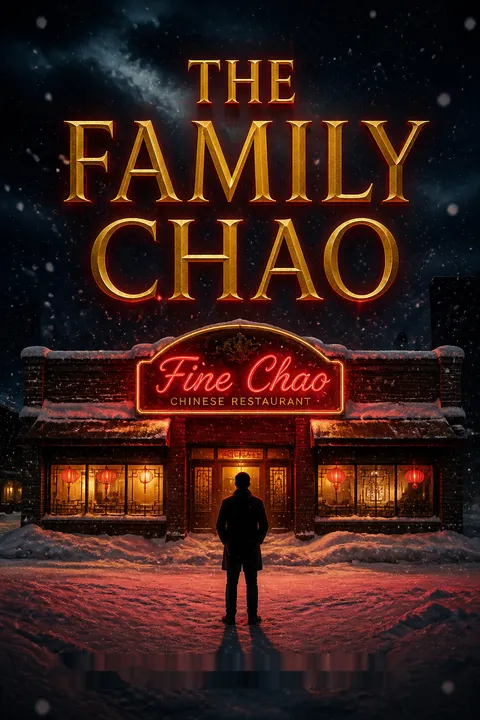


Plot Summary
The Stranger at Union Station
On his way home for Christmas, James Chao, a first-year premed student, hears an elderly Chinese traveler asking for help in Mandarin. James cannot understand the man, but follows the address on his photograph and guides him toward the right train. The traveler collapses on the station stairs.
James performs CPR until paramedics take over, then gives them the dumplings meant for his mother. He boards his train carrying the dead man’s carpetbag, intending to identify and return it to the family. The failure to save a stranger leaves James ashamed and unsettled; the unreturned bag, still in his possession, quietly joins the Chao family’s Christmas journey.
James’s first consequential choice is an act of care, but the scene refuses to reward care with rescue. His training gives him something to do, not control over the outcome. The bag becomes an extension of that helplessness: a practical obligation James accepts because he cannot undo the death. His lost Mandarin also sharpens the family’s central tension. He belongs to the Chinese community by inheritance, yet lacks the language that might have made this encounter less lonely. The opening makes responsibility feel less like a virtue than a burden that can pass from one person to another.
Three Brothers Come Home
Ming Chao, the middle brother and a successful New York financier, picks James up and drives him to Haven. Their mother, Winnie, has left Leo and moved into the Spiritual House, a Buddhist community that also shelters rescued dogs. Their oldest brother, Dagou, runs the family restaurant and wants Leo to honor a promise of partnership after six years of work.
Ming tells James that Dagou is involved with Brenda Wozicek, while still entangled with his longtime fiancée, Katherine Corcoran. Dagou’s group text asks both brothers to support him at the next day’s temple luncheon. James agrees, instinctively loyal to everyone. Ming sees that loyalty as a danger and urges James to stay out of the family fight.
The brothers return to the same family from sharply different distances. Ming has made distance his survival strategy, while Dagou has tied his future to the restaurant and James remains emotionally available to both. Winnie’s move to the Spiritual House makes the family’s conflict visible without resolving it: the mother has left, but the sons still organize their choices around her. Dagou’s request for support sounds simple, yet it asks his brothers to enter a long-standing contest over who owes whom. Their different responses establish the novel’s competing ideas of responsibility: withdrawal, endurance, and care.
The Luncheon Erupts
At the Spiritual House, James reunites with Winnie, now living in a nun’s robe among the community’s rescued dogs. The respected Gu Ling Zhu Chi warns Ming about his health and tells Dagou to stay away from the restaurant, but Dagou proceeds with the public appeal. He explains that Leo promised either money to return to New York or a partnership if Dagou stayed.
Leo denies the promise, calculates imaginary rent and food costs against his son, and insults Winnie when she supports Dagou. Dagou finally confronts him, but Leo orders him to apologize or lose his job. Before leaving, Leo throws bloody meat to the temple dogs. Alf chases another dog into the storm, and Winnie rushes after him.
The luncheon turns private family grievances into a public spectacle, where every person present must watch the old hierarchy reassert itself. Dagou’s case depends on a promise that was never written down, so his labor can be recast as a son’s duty rather than an investment. Leo exploits that ambiguity and uses humiliation to keep control. Winnie’s attempt to support Dagou does not protect him, and her chase after Alf briefly shifts her from spiritual restraint to urgent attachment. The dogs make the family’s rivalries physical: they scramble for what Leo throws, just as the sons compete for recognition he withholds.
Dagou’s Private Reckoning
After the luncheon, James visits Dagou in the apartment above the restaurant. Dagou has ended his engagement to Katherine, though she still wears the family’s valuable jade ring, and he is secretly involved with Brenda. He tells James that he wants to sell the ring to finance a new penthouse and a life with Brenda.
He has already signed the lease, but cannot afford it on his restaurant salary. His public demand for partnership is therefore not only about recognition: he needs money to make a future he has promised Brenda. Dagou also reveals his pirate radio broadcasts, where he airs family grievances and invites listeners to his Christmas party. James sees his brother’s hopes and desperation together.
Dagou’s confession complicates the image of a dutiful son simply asking for fair pay. He is both exploited and evasive, both candid with James and dishonest with Katherine about his finances. The jade ring condenses the family’s competing meanings of value: inheritance, promise, history, and cash. Dagou wants to convert it into a home and a new relationship, but his plan depends on other people accepting the future he imagines. His radio broadcasts extend that private hunger into public space. He wants witnesses to his life, even when exposure may deepen the trouble he is trying to escape.
Alf Vanishes in Snow
Dagou sends James to the Oriental Food Mart for party ingredients and then to Brenda’s house to retrieve Alf. At the store, Alice Wa shows James an intricate drawing of an underground animal community; he asks her to meet him privately, and she agrees. At Brenda’s home, James finds Katherine there too.
The two women discuss Dagou’s future and the ring, while Brenda challenges Katherine to admit how much she wants to keep it. James interrupts, accusing them both of making the argument about themselves rather than Dagou. Alf bolts into the snow, and James loses his trail. That night, James and Alice meet at his home, kiss, and begin a relationship just as news arrives that Winnie has suffered a stroke.
James’s first romance grows alongside the family crisis rather than outside it. His desire for Alice makes him bolder, yet it also distracts him from obligations he has accepted, including the missing dog and the carpetbag. The drawing gives him a glimpse of Alice’s private imagination, but her agreement to meet does not make her fully knowable. At Brenda’s house, he watches Katherine and Brenda turn the ring into a test of identity and possession. His outburst is perceptive but not disinterested: he wants to protect Dagou and to escape the emotional maze that has pulled him in.
A Night at the Hospital
Dagou rushes to the hospital after learning Winnie has suffered a stroke. She wakes long enough to tell him to love and obey Leo, advice he cannot accept after watching his father dominate her for years. When Dagou finds Leo joking about Winnie’s illness, he lunges and grips his father’s throat before Corey Chen, a young doctor, and others pull him away.
Shaken, Dagou drives off in Leo’s Ford. At a convenience store, he cannot gather enough cash for lottery tickets, lashes out at a customer, then drives to Brenda’s and shovels her path. He returns to the restaurant and retrieves money he had kept from Katherine’s gift, deciding to spend it on a lavish Christmas party for Winnie.
The hospital confrontation gives physical form to Dagou’s long-suppressed rage, but it does not settle what he will do with that rage. Winnie asks him to preserve a bond she has spent years trying to survive; he hears her plea as a demand to endure what damaged her. His impulsive violence is followed by frantic acts of service: he shovels Brenda’s driveway and plans a feast for his mother. That alternation matters. Dagou is not simply violent or generous; he repeatedly tries to repair relationships through work and gifts, even when those gestures cannot undo the harm already done.
A Feast Takes Shape
On Christmas Eve, Dagou expands his carefully planned meal into a party for dozens, buying poultry, vegetables, seafood, and cases of alcohol with the money he has saved from Katherine’s ten-thousand-dollar gift. He invites the Haven community and hires Tyrone and Freedy Davis, two young men connected to the Skaer family, to help in the kitchen.
The Skaers also send stew meat, which Dagou accepts as a generous gesture despite the brothers’ history of hostility toward the Chaos. Brenda replies that she will bring Eric Braun, her high-school boyfriend, as her guest. Dagou is hurt but continues cooking. He wants the meal to prove his talent, honor Winnie, and show Brenda the prosperous future he hopes to offer.
The party becomes Dagou’s substitute for the partnership Leo refuses him. He spends money he can ill afford because a feast lets him exercise authority in the one place where his skill is undeniable: the kitchen. Hiring the Skaer cousins also suggests that food can briefly cross old boundaries, though the meat they deliver will later become a source of suspicion. Brenda’s choice to bring Eric punctures Dagou’s fantasy without stopping his labor. His generosity is sincere, but it also carries an audience-dependent hope: he wants the community to witness his worth and Brenda to choose the life he is building.
Christmas Ends in the Freezer
Katherine transforms the Fine Chao dining room with Christmas decorations, and Dagou serves a remarkable sequence of dishes to the community. Brenda joins the work in the kitchen, praises the meal, and she and Dagou finally acknowledge their relationship. Eric leaves after Fang’s careless joke makes him fear the stew may be dog meat.
During a toast, Leo announces that he plans to sell the restaurant, then privately admits after the guests depart that the sale was only a bluff. Dagou remains at the restaurant with Leo and the kitchen worker O-Lan. Katherine later notices a light in Leo’s office. By morning, James finds Leo dead of hypothermia inside the locked freezer room, its exit key missing.
The party delivers Dagou the recognition he wanted, but only briefly. His cooking draws the community together, while Leo’s announcement that he will sell the restaurant reasserts the father’s power to revoke any future his son imagines. The dog-meat rumor exposes how quickly affection can become suspicion when racialized assumptions enter the room. The locked freezer then turns an ordinary feature of the restaurant into a lethal puzzle. Because no one sees the final events, the novel lets the family’s established patterns of anger, secrecy, and wishful thinking shape the reader’s suspicions without supplying a single reliable account.
The Bag Returns
After Leo’s death, police connect the freezer case to the carpetbag James carried from Union Station. The dead traveler, Zhang Fujian, was the grandfather of Cecilia Chang, who says the bag held fifty thousand dollars.
James cannot find it, and his attempt to save the old man now looks like the beginning of a theft. Winnie suffers another stroke and dies in January; James leaves college and returns to Haven. As the murder investigation becomes a national story, reporters turn Dagou, Brenda, and Alf into caricatures.
During the months before trial, Ming investigates O-Lan and learns she is Leo’s unacknowledged daughter. O-Lan accuses Ming of having knowingly abandoned Dagou to a danger he understood, worsening Ming’s sleeplessness and growing mental instability.
The missing bag converts James’s private failure into public evidence, binding two deaths that may or may not be connected. The amount of money also unsettles the family’s familiar hierarchy: the brothers are used to Leo controlling cash, but now the vanished savings can determine Dagou’s freedom. Winnie’s death removes the person who most often tried to interpret the family to itself. O-Lan’s revelation gives Ming a new way to understand the family’s exclusions, yet he cannot separate insight from guilt. Outside Haven, the story becomes a spectacle, and the family loses control of how its private life is named.
The Trial Makes a Story
At Dagou’s trial, prosecutor Simeon Strycker frames the case as a son’s resentment ending in murder, while defense lawyer Jerry Stern stresses that no one witnessed Leo’s death. Cecilia Chang testifies that her grandfather’s luggage contained his savings, though she cannot prove the money was inside. O-Lan says she heard Leo accuse Dagou of taking the bag and threaten to call police.
She also describes Dagou and Leo arguing after the party. Her account gives the prosecution a motive, but her undocumented status and limited English complicate how the jury hears her. The forensic locksmith explains that the freezer could only be opened from inside with a key. The key’s disappearance becomes the trial’s central unanswered fact.
The courtroom does not merely test evidence; it decides which version of immigrant family life will seem credible. Strycker’s framing turns Dagou’s anger and public statements into a coherent story of guilt, while Stern insists that coherence is not proof. O-Lan’s testimony is both powerful and vulnerable because the audience knows how little Haven knows about her. Her status makes her easy to dismiss, but also gives prosecutors leverage over her. The freezer key functions as a material fact surrounded by interpretive uncertainty. Everyone wants it to point in one direction, yet its absence leaves motive doing much of the work.
Witnesses Divide the Family
James testifies that he saw the freezer key on its shelf around eleven-thirty, then found Leo’s body the next morning. He admits he never searched the Ford after Ming urged him to, because he went to meet Alice. Alice confirms James stayed with her overnight, protecting his alibi, but also reveals that she heard faint banging from below and told him to return to sleep.
Katherine testifies that she gave Dagou ten thousand dollars after he admitted he was broke and wanted the ring back. Brenda says Dagou described considering the freezer plan but insisted he had not carried it out. Their accounts defend him in different ways, yet each supplies the prosecution with another piece of motive, opportunity, or concealment.
These witnesses expose how intimacy can become evidence without becoming certainty. James’s affection for Alice supplies his alibi but also reveals a consequential lapse: he did not search for the bag. Alice’s testimony protects him while admitting that both of them ignored a possible plea for help. Katherine’s financial support undermines the prosecution’s claim that Dagou needed the missing fifty thousand, but it also shows how long their engagement remained emotionally unfinished. Brenda offers the most direct account of Dagou’s fantasies, yet her loyalty makes the jury question her judgment. Every act of care arrives with a compromising shadow.
Ming Names Himself
Dagou takes the stand against his lawyers’ advice. He admits that he had imagined locking Leo in the freezer and stood near the open door that night, but says he turned away without taking the key. Under questioning, he describes years of wishing his father dead, then breaks down over his failure to act.
Ming, mentally unraveling, interrupts and claims responsibility, arguing that he knew the danger and left anyway. Katherine stops him by revealing the brass key in her purse. She says she found it in Dagou’s jacket after the party, while searching his pockets in distress. The judge dismisses the jury before deciding whether Ming’s outburst requires a mistrial. The key proves possession, not who used it.
Dagou’s testimony is a moral risk as much as a legal one. He chooses candor over a polished defense, and his distinction between imagining murder and carrying it out is emotionally legible but dangerous in court. Ming’s confession shows how guilt can become a need to control the family’s story, even when the facts do not support his claim. Katherine’s key disrupts both brothers’ accounts without resolving the central question. Her discovery links the object to Dagou, but not conclusively to the freezer door. The scene makes truth less like a hidden answer than a set of facts no one can fully assemble.
James Lets His Sister Go
After Ming is hospitalized, James finds O-Lan in her room with the blue carpetbag and Katherine’s jade ring. She explains that Leo abandoned her and her mother in China, and that Gu Ling Zhu Chi arranged her restaurant job in hopes of easing old harm. Winnie eventually learned who O-Lan was and left Leo partly because of that knowledge.
O-Lan does not plainly confess to killing Leo, but she accepts that James may see her as responsible and prepares to leave. James could call police; instead, he lets her pass. The jury later finds Dagou guilty of second-degree murder, and the judge sentences him to thirty years without parole. The family has a verdict, but no settled account of Leo’s death.
James’s decision is not an acquittal of O-Lan. It is an acknowledgment that legal certainty and moral understanding have come apart. He knows she carries the ring and the bag, hears the history of the injury done to her mother, and still cannot determine exactly what happened in the freezer. His choice to let her leave repeats his defining habit of taking responsibility for strangers, but this time he understands the consequence. Dagou’s conviction gives the court a conclusion the family cannot emotionally accept. The gap between punishment and knowledge becomes the cost everyone must carry.
The Family Reopens Its Doors
Months later, James learns that the Skaer cousins found Alf in the snow and kept him after Leo’s death made them realize the dog would not be reclaimed. James decides they should keep him.
Ming leaves his New York job and joins James in Haven, where they buy back the house and restaurant from the Spiritual House, using money returned after the trial and James’s savings. They discover Leo’s hidden gold in the freezer-room wall and leave it untouched for future need.
Dagou remains imprisoned while his lawyers prepare an appeal; Brenda and Katherine both stay involved in the family’s life. In the final coda, O-Lan appears in Las Vegas under her birth name, Chao Ru, carrying the jade ring and some of the missing money. She has escaped, but the brothers remain part of her history.
The resolution does not restore the original family arrangement. It builds a smaller, more deliberate one from people who have chosen to remain: Ming returns, James keeps the restaurant open, and Dagou’s imagined future becomes an appeal rather than a partnership. Alf’s recovery gives the brothers one loss they can accept without claiming ownership over what saved him. The hidden gold preserves Leo’s appetite for wealth even after his death, while leaving it buried marks a limit his sons can choose to respect. Chao Ru’s final appearance resists a simple moral verdict. She has found a family and escaped it at once.
Analysis
The Family Chao begins with care and ends without a clean account of what care can repair. James tries to save a stranger, then carries the man’s belongings into a family already burdened by promises, resentments, and unspoken debts. That bag turns generosity into legal exposure. The freezer key performs a similar transformation: an ordinary tool becomes evidence, while its movement remains uncertain. In both cases, the novel refuses the comfort of a simple distinction between innocent intention and harmful consequence.
The Chao family’s restaurant is not merely a setting. It is the physical form of Leo and Winnie’s marriage, their immigrant labor, and their sons’ inherited roles. Food sustains the community, but it also records who works, who profits, and who is expected to be grateful. Dagou’s lavish party briefly converts skill into authority, yet Leo can still threaten to sell the business. Ming’s pursuit of money and James’s wish for an ordinary life are different answers to the same inheritance: how to live without becoming an instrument of a parent’s ambition.
The trial enlarges these intimate questions into a public judgment of Asian American life. The prosecution can make Dagou legible by arranging his anger, appetite, relationship with Brenda, and financial need into a familiar narrative of a resentful son. That narrative may contain true details and still distort the people it claims to explain. The family’s own silence and secrecy make the distortion easier, but the novel does not treat visibility as automatic justice.
Responsibility remains distributed and unequal. Dagou imagines violence but says he turns away. James remembers the key yet ignores the sound below. Ming recognizes danger and leaves. O-Lan has been harmed by Leo and may have acted against him, but the book does not supply a definitive confession. Their choices do not become equivalent simply because each carries guilt. The closing family chooses to preserve the restaurant and support Dagou, while leaving Leo’s gold buried. That choice does not erase the past. It marks a tentative effort to inherit something other than his appetite for control.
Review Summary
The Family Chao is a modern retelling of The Brothers Karamazov, following a Chinese-American family running a restaurant in Wisconsin. The story explores themes of immigration, identity, and family dynamics through three brothers grappling with their domineering father's death. Reviews praise Chang's engaging writing and complex characters but note the slow pacing and occasional discomfort with stereotypical portrayals. While some found the book thought-provoking and masterful, others struggled with its dark themes and ambiguous ending. Overall, it's a polarizing but ambitious work that sparks discussion about the immigrant experience.
People Also Read










Characters
James Chao
The searching youngest sonJames is the youngest Chao brother, a college premed student who wants an ordinary life devoted to helping people. He is tenderhearted to the point of self-doubt, drawn to family members even when they frighten or disappoint him. His lost Mandarin separates him from parts of his heritage, while his close bonds with Dagou and Winnie keep him rooted in the family restaurant and Haven. James watches carefully, remembers sensory details, and often mistakes compassion for the ability to repair whatever is broken. His developing relationship with Alice awakens a new confidence, but also forces him to recognize how desire and responsibility can pull him in opposite directions.
Dagou Chao
The gifted eldest brotherDagou, whose English name is William, is the oldest son and the Fine Chao’s most passionate cook. He is physically imposing, emotionally candid, and hungry for both recognition and affection. After leaving New York, he returns to Haven to care for Winnie and gradually builds his identity around the restaurant, though he resents Leo’s control of it. Dagou’s warmth makes him easy to love, while his impulsiveness, appetite, and fear of disappointing people lead him into tangled promises. He wants to be generous and admired, yet often confuses a grand gesture with a durable plan. His bond with James is protective and teasing, marked by a trust the brothers rarely offer each other.
Ming Chao
The self-made middle sonMing is the middle brother, an ambitious financier who has built a life in New York through discipline, calculation, and distance from Haven. His intelligence helps him read money and social power, but it also encourages him to treat emotional dependence as a weakness. He is sharply observant, especially about the injuries his family refuses to name, yet his composure conceals a deep discomfort with his own identity and history. Ming loves his brothers in ways he struggles to express, often offering warnings or practical help instead of tenderness. His drive for financial security is both a route out of his childhood and an attempt to make vulnerability measurable.
Leo Chao
The tyrant restaurateurLeo is the Chao family patriarch and founder of the Fine Chao, a forceful, shrewd businessman whose appetite extends to food, money, sex, and control. He is charismatic enough to charm customers and friends, but his sons know the cruelty beneath that charm. Leo sees sacrifice as a claim on his children’s obedience and treats family labor as part of the business he owns. His immigrant story contains real hardship and achievement, yet he uses those facts to excuse exploitation. His humor can make a room laugh even as it humiliates someone in it, leaving his family uncertain whether they are witnessing affection, performance, or threat.
Winnie Chao
The family’s spiritual centerWinnie is Leo’s wife and the mother of the three Chao brothers. A gifted cook, she helped make the restaurant a refuge for Haven’s Chinese community, adapting ingredients while preserving the flavors she remembered. She is Christian and Buddhist, practical and spiritually searching, generous yet capable of fierce judgment. For years, she works beside Leo while privately enduring his betrayals and control. Her move to the Spiritual House reflects a desire to loosen her attachments and find quiet, not a simple rejection of her family. Winnie’s sons remember her through food, touch, and small acts of care, but her interior life remains larger than their understanding of it.
Alice Wa
The private artistAlice is James’s longtime friend, Fang’s sister, and the daughter of grocery-store owner Mary Wa. Quiet and observant, she has spent much of her life close to Haven’s family businesses, yet keeps an imaginative world of her own in her drawings. Her reserve is not emptiness: she notices what others overlook and does not always explain what she has seen. Alice’s bond with James is rooted in childhood companionship, curiosity, and physical trust. She is also negotiating her mother’s hopes for her and her own emerging ambitions. Her cautious manner can make her seem fragile, but she is more self-directed than the people around her assume.
Brenda Wozicek
The small-town provocateurBrenda is a Haven waitress with a vivid appearance, an independent streak, and a history of attracting the Chao brothers’ attention. She is candid about wanting security and comfort, refusing the assumption that ambition must mean leaving her hometown or building a career. Her involvement with Dagou unsettles his long engagement to Katherine and gives the family another reason to argue over money, desire, and belonging. Brenda enjoys being wanted, but she is not merely an object of male competition; she makes deliberate choices and can be unexpectedly generous. Her confidence sometimes conceals uncertainty about whether affection can survive financial dependence.
Katherine Corcoran
The steadfast former fiancéeKatherine is a Chicago attorney who has been engaged to Dagou for years. Adopted from China and raised by a loving white family, she is drawn to the Chao family’s food, history, and close community, while also seeking to understand her own origins. She is intelligent, orderly, and loyal, often trying to solve emotional problems through planning and persistence. Her affection for the Chaos is genuine, but it can blur the line between support and self-erasure. Katherine’s relationship with Dagou is shaped by long familiarity, shared rituals, and promises whose meaning has changed over time. She wants to be useful, yet must confront what usefulness cannot preserve.
O-Lan
The guarded kitchen workerO-Lan works in the Fine Chao kitchen, where she handles vegetables, cleaning, errands, and much of the restaurant’s unseen labor. She is wary, self-contained, and difficult for Haven’s residents to know. Her unusual Mandarin and apparent inability to speak English help keep her apart from the family and the wider community. Winnie once offered her work when she was vulnerable, but Leo treats her as an employee to be used rather than welcomed. O-Lan is efficient and observant, with a strong attachment to privacy. Her silence should not be mistaken for passivity; she has her own history, loyalties, and reasons for remaining in Haven.
Fang Wa
The community’s amateur sleuthFang is Alice’s brother and James’s childhood friend. He is intellectually intense, socially awkward, and willing to challenge the explanations other people accept. His knowledge of books, history, and local grudges makes him an amateur investigator during the murder case. Fang can be abrasive and prone to elaborate theories, but his attention to detail often exposes questions the family would rather avoid. He understands that public judgments of the Chaos are shaped by race as well as evidence, and he pushes James to consider who benefits from a tidy story.
Mary Wa
Winnie’s loyal friendMary owns the Oriental Food Mart and is Winnie’s closest friend in Haven. She is practical, protective of her children, and accustomed to balancing community loyalty against the demands of running a small business. Her store supplies the Fine Chao, making her part of the family’s daily life as well as its social circle. Mary remembers the ordinary kindnesses that bind people together, including Winnie’s care for Alice and Fang. She often sees trouble coming before others do, though loyalty can make her reluctant to force a confrontation.
Gu Ling Zhu Chi
The town’s Buddhist abbessGu Ling Zhu Chi leads the Spiritual House, a community center and refuge for women and rescued dogs. Small, composed, and difficult to read, she offers advice through a mixture of spiritual practice, intuition, and blunt authority. Leo respects her despite his contempt for much of what she represents, which gives her unusual influence over the family. She does not promise that her guidance will prevent harm. Instead, she repeatedly asks people to consider the consequences of their choices and to loosen their grip on what they believe they own.
Alf
The beloved family dogAlf is the Chao family’s French bulldog, small in stature but fearless around larger dogs and animals. He moves easily between family members, following food, affection, and his own curious instincts. Winnie loves him, James cares for him, and Leo treats him with teasing possessiveness. Alf’s disappearances unsettle the family because he is one of the few sources of uncomplicated affection in a house ruled by argument. His presence also exposes how quickly outsiders can turn a beloved pet into a symbol in a public scandal.
Jerry Stern
The family’s longtime lawyerJerry is Leo’s lawyer, restaurant regular, and closest connection to Haven’s American business world. He enjoys the food and tolerates Leo’s bluster, combining professional caution with a familiarity that resembles kinship. When Dagou faces trial, Jerry defends him with a clear-eyed emphasis on the limits of circumstantial evidence. His manner is less polished than that of the prosecutor, but he knows the town and its people. Jerry’s loyalty does not mean he believes every family account; he works to protect Dagou while understanding that the truth may remain incomplete.
Lynn Chin
The aspiring young journalistLynn is a college student who leaves data science for journalism, despite her parents’ preference for a more secure path. She is thoughtful, anxious about interviews and deadlines, and attentive to how language shapes public judgment. During Dagou’s trial, her blog becomes a record of the courtroom and of her own changing perspective on Haven’s Chinese American community. Lynn’s reporting is imperfect and personal, but she keeps writing even when the assignment’s rules and her family’s expectations discourage her.
Cecilia Chang
The traveler’s granddaughterCecilia is a Chinese American social worker who has maintained a relationship with her grandfather in China through letters and travel. At the Fine Chao Christmas party, she appears to be another community guest, though she is searching for her grandfather’s belongings. Her testimony connects the dead traveler to the Chao family and places the missing carpetbag at the center of the trial. Cecilia wants her grandfather’s final journey and possessions to be treated seriously, but she cannot personally verify everything the bag contained.
Simeon Strycker
The ambitious prosecutorStrycker prosecutes Dagou for Leo’s death. Tall, controlled, and methodical, he arranges the evidence into a persuasive account of resentment, money, and opportunity. His courtroom manner gives the family’s private conflicts a public shape, though that shape can also flatten the people inside it. Strycker understands the force of a memorable detail and uses the freezer, the missing money, and Dagou’s own statements to build his case. He is an effective advocate, not a neutral narrator.
Eric Braun
Brenda’s returning old flameEric is Brenda’s former high-school boyfriend, now a successful real-estate professional returning to Haven after divorce. He arrives at Dagou’s party as Brenda’s guest, bringing the past into a room already crowded with romantic and financial tensions. Unfamiliar with the restaurant’s food and community, he becomes uncomfortable when a joke makes him fear what he has eaten. His brief presence gives Dagou a visible rival and exposes the distance between the Chao family’s world and the one Eric inhabits.
Zack and Cody Skaer
The troublesome diner cousinsZack and Cody are younger members of the Skaer family, whose diner competes with the Fine Chao. They taunt James with racist insults and damage his phone during a snowy encounter. Their behavior continues a long history of hostility between the Skaers and the Chao brothers. They are children repeating the grudges and prejudices of the adults around them, though their later encounter with Alf complicates James’s understanding of their family.
Plot Devices
Zhang Fujian’s carpetbag
The missing money’s trailJames carries the dead traveler’s bag home, intending to return it to the family shown in a photograph. The bag disappears before James can inspect it, then resurfaces in police questions after Cecilia Chang reports that it held her grandfather’s savings. Its unexplained movement links the train-station death to Leo’s death and gives the prosecution a possible motive for Dagou. The bag also tests James’s belief that good intentions are enough: he accepts responsibility but fails to follow through before family emergencies overtake him.
The freezer key
A small object, many suspectsThe freezer room can only be opened from inside with a key kept on a shelf. The sign beside it warns workers not to remove the key, but the room remains a dangerous, poorly updated part of Leo’s restaurant. James remembers seeing the key late on Christmas Eve, while the police find it missing after Leo dies. Katherine later produces the key, which she says she found in Dagou’s jacket. The object establishes opportunity without settling who shut the door or whether the death was intentional.
FM 88.8
Private grievance goes publicDagou’s illegal pirate-radio broadcasts let him narrate family memories, complain about Leo, and advertise his Christmas party to anyone within range. The broadcasts reveal how Dagou understands his own childhood and his father’s control, while also providing the prosecution with evidence that he had imagined a way to trap Leo in the freezer. The radio turns speech into both confession and performance. Its rough signal also echoes the novel’s larger problem of transmission: family members speak, but listeners hear different meanings.
The jade family ring
Inheritance made portableThe jade ring Leo once gave Winnie passes to Dagou and then to Katherine as their engagement ring. It carries a story of the old country and becomes a source of money when Dagou asks Katherine to return it. Brenda challenges Katherine over whether she will surrender it, and O-Lan ultimately leaves Haven with it. The ring makes abstract disputes over family history, love, and ownership visible. Each character values it differently, so possession of the ring never guarantees agreement about what it means.
The Five Chinese Brothers
A lens on shared guiltFang recalls a children’s story in which five identical brothers use their unusual abilities to protect one another from punishment after a child dies. He reads the tale as a cruel image of how outsiders treat Chinese people as interchangeable while also marking them as strange. The story shapes James’s thinking as the trial tests whether one brother can bear blame for another. Its relevance changes as the brothers struggle with their own responsibility, showing that solidarity can protect a family while also obscuring what each person did or failed to do.
Download PDF
Download EPUB
.epub digital book format is ideal for reading ebooks on phones, tablets, and e-readers.








