

Key Takeaways
Turn accumulated facts into a map for living, not a pile of claims.
From facts to meaning. Alder opens with a familiar frustration: modern life offers technical knowledge and material comforts, yet people still feel anxious, confused, and unsure why they are here. She calls the seeker’s first task learning to distinguish knowledge, the collection of facts, from wisdom, the ability to connect facts into a useful view of life.
Her proposed bridge joins scientific inquiry to religious and esoteric traditions. The reader is urged to compare claims, examine evidence, and resist accepting a doctrine simply because it promises extraordinary powers. The book’s larger hope is that self-understanding can replace passive dependence on authorities and help people act with purpose.
The distinction between information and judgment remains useful in an age of searchable answers. Systems thinking similarly asks how separate facts interact, rather than treating each as an isolated result. Yet dissatisfaction with modern life does not itself establish that occult explanations are true. A productive reader can keep Alder’s demand for synthesis while applying the same scrutiny to her own explanations: coherence is valuable, but it is not the same as evidence.
Treat the third eye as a question about perception, not proof of hidden sight.
A proposed inner sense. The book’s “Third Eye” is an alleged capacity to perceive subtle aspects of the physical world that ordinary senses miss. Alder links it to the pineal and pituitary glands, claiming that their development can awaken perception of etheric forms, thoughts, and other invisible phenomena. Ancient images marked with a forehead symbol are presented as signs of this attainment.
This account is an esoteric doctrine, not an established description of human anatomy. The glands have biological functions, but modern evidence does not show that they enable clairvoyance or X-ray-like vision. The idea can still prompt a useful question: how much of reality escapes ordinary attention, and what tools or disciplines could help people notice more?
Human perception is selective, and instruments such as microscopes and telescopes reveal worlds unaided senses cannot register. That makes Alder’s central curiosity about perceptual limits compelling. It does not, however, validate the proposed psychic organ. The distinction matters because metaphor can guide inquiry, while an unsupported biological claim can mislead readers about health or ability. The strongest use of the Third Eye here is as an invitation to investigate what people can know, and how they know it.
Use the human body as a model, not a miniature proof of the cosmos.
A layered human being. Alder presents the “Seven Planes” as interpenetrating levels of existence, from physical matter through etheric vitality, emotion, thought, will, and spiritual reality. In her account, people have corresponding bodies or vehicles, each suited to a different level. The physical body is therefore only one part of a much larger human system.
She also uses the principle of the microcosm and macrocosm: patterns found in a small system are said to echo those in larger ones. Studying the human body or an atom, she argues, can offer clues to the universe. These are metaphysical models, not scientific maps of hidden anatomy. Their practical invitation is to consider how bodily, emotional, intellectual, and ethical life affect one another.
A layered model can help people avoid reducing human experience to a single dimension. Contemporary psychology, for example, distinguishes bodily states, emotion, cognition, and social context without needing to treat them as separate supernatural bodies. The microcosm analogy can also generate hypotheses, but an analogy is not evidence that the same laws govern every scale. Its value lies in opening questions, not settling them.
Let symbols connect experience, but test every claimed correspondence.
A universe of correspondences. Alder links seven colors, musical notes, planets, and stages of human development, then adds the twelve zodiac signs and their supposed lessons. She treats these correspondences as a symbolic language: color or sound can express qualities such as energy, calm, or aspiration, while number and myth can organize a larger story of development.
The book also applies this language to personality, health, and historical cycles. For instance, it associates planetary influences with bodily chemistry and character. These specific astrological and medical claims are not established science, and the author’s examples should not be used to diagnose illness or predict someone’s nature. The broader practice of reading symbols can still help people reflect on patterns and meaning.
Symbolic systems make complex ideas memorable, which helps explain why number, color, and myth recur across cultures. They can function as prompts for reflection without functioning as reliable measurement. The risk appears when a suggestive resemblance becomes a causal claim, such as inferring a disease from a birth sign. A useful test is to ask what observation could disprove a correspondence, and whether it predicts more accurately than chance or ordinary knowledge.
Make responsibility empowering without turning suffering into deserved punishment.
Consequences across lives. Alder combines karma, meaning cause and effect, with rebirth. In this account, actions and thoughts shape future experience, sometimes across multiple lives, and no experience is wasted in the long movement toward greater understanding. This view is meant to make people accountable for their conduct while encouraging forgiveness, service, and freedom from possessiveness.
The book also makes a troubling extension: it suggests that disability, illness, or other hardships may result from wrongdoing in past lives. That is a religious assertion, not a verified explanation, and it can turn compassion into blame. Its more humane lesson is available without that claim: present choices matter, relationships create consequences, and people can respond to harm with repair rather than revenge.
A long time horizon can encourage patience and accountability, especially when immediate rewards make selfish choices tempting. But claims that suffering is earned are ethically dangerous and impossible to verify in the way Alder presents them. They can stigmatize people already facing illness or disability. Responsibility is most constructive when it focuses on choices a person can make now, while recognizing that many hardships arise from biology, chance, and social conditions rather than moral failure.
Track your inner life across waking, sleep, and daily choices.
A continuous development. The book describes growth in seven-year stages, assigning major shifts to ages seven, fourteen, twenty-one, and forty-nine. It links these stages to the emergence of physical, emotional, mental, and higher capacities. Alder also treats sleep as a period of meaningful inner activity, and claims that an individual can travel beyond the body while asleep, connected by a “Silver Cord.”
Her practical advice is to review the day before sleep, noticing actions, motives, mistakes, and lessons without self-congratulation or self-condemnation. On waking, she recommends recording remembered dreams before they fade. These habits can strengthen reflection and recall, even if the proposed astral journeys and universal age schedule are not established facts.
A daily review resembles reflective practice used in education and professional training: experience becomes more useful when it is examined rather than merely repeated. A dream journal can also improve recall by directing attention toward dreams on waking. Those benefits do not demonstrate that consciousness leaves the body. Nor do seven-year intervals describe everyone’s development equally. The practical value rests in observation, not in treating one spiritual timetable as a biological law.
Use breath and silence to steady attention, not to chase miracles.
Rhythm shapes attention. Alder treats breathing as both a bodily process and a way of regulating mental state. She recommends calm, comfortable breathing and associates slower rhythms with less agitation and clearer concentration. She also emphasizes silence, singing, and harmonious sound, while warning that constant noise can exhaust attention. Her wider system gives color, sound, and diet spiritual significance, but many of its specific health claims are unsupported.
The useful core is modest: pause, breathe without strain, reduce unnecessary stimulation, and notice how the body responds. The book’s claims that particular breathing rates unlock clairvoyance, prevent pain, or extend life should not be taken as medical advice. Extreme breath control can be risky, and ordinary relaxation should not be confused with supernatural power.
There is a sound practical insight beneath the elaborate cosmology: attention is affected by bodily arousal and the surrounding sensory environment. Comfortable slow breathing can help some people settle, while quiet can make sustained focus easier. But effects vary, and a calmer state does not establish access to hidden planes. Alder’s caution against forcing advanced exercises is especially relevant; contemplative practice is better treated as training in attention than as a shortcut to extraordinary abilities.
Choose gradual discipline over forced spiritual awakenings.
Do not force the process. Alder describes Kundalini as a latent creative force, symbolized as a serpent at the base of the spine. She says that disciplined living can direct this energy upward toward mental and spiritual creativity. She warns that pursuing intense experiences through demanding breathing exercises, emotional excess, or spiritual ambition can destabilize a person who is not prepared.
The book’s account is speculative, and its claims about sexuality, gender, and spiritual development reflect dated assumptions. Still, the caution against chasing intense experiences has practical force. Change is more sustainable when it is gradual, grounded in ordinary responsibilities, and supported by trustworthy guidance. Distress or unusual perceptions are reasons to seek qualified help, not proof of spiritual advancement.
The warning against acceleration is a valuable counterweight to spiritual subcultures that advertise instant transformation. Gradual practice allows people to notice whether a technique is helping or causing distress. The surrounding theory of sexual energy and gender, however, should not be treated as a universal psychology. A safe interpretation preserves the principle of patience while leaving room for contemporary, evidence-based understanding of sexuality and mental health.
Judge spiritual teachers by humility, freedom, and accountability, not spectacle.
Scrutinize the guide. Alder warns seekers about teachers who use visions, claims of special status, or promises of occult power to attract followers. She urges readers to distinguish a teaching from the character of its teacher, and to watch for coercion, dependency, money-seeking, and demands for unquestioning loyalty. In her account, a wise guide respects another person’s freedom and does not need to advertise extraordinary abilities.
She also cautions that vivid visions may reflect desire or imagination rather than external truth. The practical response is to stay curious without surrendering judgment: ask what is being claimed, who benefits, and whether disagreement is allowed. A group that discourages questions or isolates members deserves particular scrutiny.
These warnings anticipate a central problem in any high-trust community: charisma can make claims feel true before they have been examined. Basic safeguards include transparent finances, independent relationships, freedom to leave, and accountability for leaders. Humility alone is not proof of integrity, but a teacher’s conduct is more informative than theatrical claims. Healthy communities make room for questions rather than treating doubt as a moral defect.
Make love and service the test of inner development.
From self to service. Alder’s conclusion moves from self-knowledge, through self-development, toward service to others. She distinguishes individuality, the steadier inner self, from personality, the shifting surface of moods and self-image. Spiritual insight matters, in her view, when it loosens fear, possessiveness, and self-absorption, and makes a person more loving and useful.
Service is not constant intervention. The ideal helper respects other people’s freedom, offers assistance when it is wanted, and avoids turning good intentions into control. Alder presents love and brotherhood as the foundation for a more cooperative society. The book’s final measure of progress is therefore not unusual experience or specialized knowledge, but whether a person contributes to others without making them an audience for the self.
This ending gives the book an ethical test that is more durable than its paranormal claims. In moral philosophy, good intentions are not enough; the effects of action and respect for other people’s agency matter too. That distinction also protects service from becoming paternalism. The ideal is not to rescue everyone according to a private plan, but to combine care with consent, competence, and attention to what people actually need.
Analysis
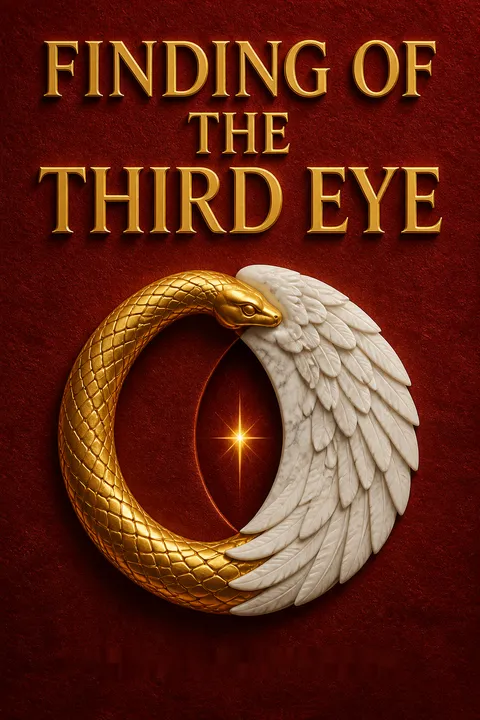
Finding of the Third Eye is a 1968 spiritual synthesis written as a guide for readers dissatisfied with both materialism and fragmented religious authority. Its structure moves from a critique of modern civilization to a wide-ranging occult account of human nature, then toward practical disciplines and a final ethic of love and service. The third eye supplies the book’s central promise: human capacities exceed ordinary perception, and disciplined self-development can open access to a deeper order.
The work’s most coherent thread is not clairvoyance but integration. It asks readers to connect body, emotion, thought, conduct, and social responsibility, rather than treating life as a collection of unrelated facts. Its repeated invitations to self-examination, restraint, patience, and compassion remain legible even when its cosmology does not. The meditation sequence, daily review, and warnings about spiritual profiteers are more practically grounded than its claims about astral travel, planetary chemistry, or miraculous control of matter.
The book’s central epistemic weakness is that it often moves from analogy to fact. A resemblance between an atom and a solar system, or a symbolic link between color and temperament, is treated as evidence for a hidden universal law. Its repeated appeal to science does not make these claims scientific. Readers should distinguish the author’s spiritual model from established knowledge, especially where it makes medical claims or attributes disability and illness to past lives.
The book is also historically situated. Its gender roles, sexual theories, and confidence in a coming Golden Age reflect the era and traditions from which it emerged. That context should neither erase its ethical aspirations nor excuse harmful claims. Read critically, the book offers a revealing portrait of twentieth-century esotericism and a durable challenge: pursue inner understanding, but judge it by intellectual honesty, respect for freedom, and care for other people.
Review Summary
Finding of the Third Eye receives mostly positive reviews, with an average rating of 4.2/5. Readers appreciate its insights on spirituality, ancient wisdom, and personal growth. Many find it thought-provoking and relevant despite its age. Some praise its scientific approach to mystical concepts, while others value its exploration of alternative religions. Critics note dated views on certain topics. The book is recommended for those interested in spirituality, self-discovery, and metaphysics, with some readers considering it a foundational text in the genre.
People Also Read





Glossary
The ‘Third Eye’
Proposed subtle perceptionA supposed faculty for perceiving aspects of the physical world beyond ordinary sight. Alder associates it with the pineal and pituitary glands and with trained spiritual perception. The book presents this as an esoteric capacity; modern science does not establish the glands as organs of clairvoyance.
The Seven Planes
Interpenetrating levels of existenceA model in which existence consists of seven graded, interpenetrating levels, from physical matter through subtler emotional, mental, and spiritual realms. Alder proposes that people and other forms of life have corresponding bodies or vehicles. The model belongs to occult teaching, not established physical science.
The Microcosm and the Macrocosm
Small patterns echo large onesA principle that patterns in a small system, especially the human being, reflect patterns in larger systems such as the universe. Alder uses it to connect anatomy, atoms, planets, and cosmic order. It functions as a metaphysical analogy, but resemblance alone does not prove that the same laws govern each scale.
Karma and Rebirth
Consequences across repeated livesA doctrine that actions and thoughts produce consequences, potentially across successive lives, and that experience contributes to ongoing development. Alder uses it to explain moral responsibility and the gradual evolution of human beings. Her specific claims that illness or disability can result from past lives are unverified and risk blaming people for suffering.
Kundalini
Latent spiritual creative forceAn Eastern spiritual concept that Alder describes as a latent force symbolized by a serpent coiled at the base of the spine. She claims it can be directed upward through disciplined development and associated it with heightened creativity and spiritual awareness. Her account is esoteric rather than medically established.
Silver Cord
Link between person and bodyA subtle connection said to join an individual consciousness to the physical body during sleep or out-of-body travel. Alder claims that death occurs when this link is severed. The term belongs to the book’s occult account of sleep and death; it is not a known anatomical structure.
Concentration, Meditation, Contemplation and Adoration
Four stages of inner practiceA progression Alder uses to describe meditation. Concentration steadies attention on one point. Meditation examines a chosen subject closely. Contemplation seeks its underlying meaning, while adoration describes a culminating sense of unity with the divine. The sequence is a spiritual framework, not a clinically validated procedure.
Epigenisis
Progress added through experienceA term Alder uses for development that adds something new to what already exists. In her account, repeated lives and cycles preserve experience while adding adaptation and understanding, so recurring historical patterns can unfold at a higher level. This is a spiritual theory of progress, distinct from the biological use of epigenetics.
Download PDF
Download EPUB
.epub digital book format is ideal for reading ebooks on phones, tablets, and e-readers.








