

Key Takeaways
Look for profit where incumbents see spoilage, then solve the clock.
Waste became an opening. Sam Zemurray noticed that banana importers discarded fruit that had ripened too soon to reach ordinary markets. He called these rejects “ripes,” and bought his first load with $150. The fruit had only days before it became worthless, so he rode beside it in a slow freight car, selling along the route.
Speed created the business. A brakeman suggested alerting merchants ahead of the train. Zemurray persuaded telegraph operators to spread the news, and buyers met the shipment at each stop. After six days, he had earned $40 after expenses. His advantage was not a novel product, but a faster way to match a perishable product with ready customers. The small-margin trade became his route into an industry controlled by much larger firms.
What's striking is that Zemurray saw a logistics problem disguised as a product problem. The fruit was not intrinsically worthless; its value depended on getting it to someone before its quality collapsed. This resembles modern markets for surplus food, excess computing capacity, or last-minute inventory, where coordination unlocks value already present. The lesson is more precise than simply looking for overlooked opportunities: assess the time limit, the cost of moving the resource, and whether a faster connection can beat established players. Not every discarded product has a buyer, and speed alone cannot create durable demand.
In a perishable business, own the route as well as the crop.
Bananas required infrastructure. Early traders depended on weather, rented ships, and uncertain harvests. The “fruit jobber” was a small-scale trader near the bottom of the industry, often buying and reselling fruit rather than growing it. After the disastrous 1899 season, surviving firms concluded they needed capital, plantations in multiple regions, and control over supply. Andrew Preston, Lorenzo Baker, and Minor Keith combined their businesses into United Fruit, which rapidly absorbed rivals. Its nickname, “El Pulpo,” or the Octopus, reflected its reach across shipping, railways, plantations, and sales.
Transport became power. United Fruit built a large private fleet, known as the Great White Fleet, and controlled routes that carried bananas, mail, and other cargo. That integration helped deliver cheap fruit year-round, but also allowed the company to disrupt commerce when disputes arose.
The banana trade shows why a supply chain can be more decisive than the product moving through it. Shipping, storage, land, and market access reinforced one another, creating reliability and lowering costs. In business terms, the company controlled both bottlenecks and distribution, not merely production. That can benefit customers when efficiency lowers prices, but it also concentrates power over workers and communities that have few alternatives. Integration is therefore not automatically virtuous or abusive. Its effects depend on who can contest the system, and who bears the cost when its owner uses it for leverage.
Outmaneuver a giant by knowing its terrain and exploiting its delays.
Cuyamel fought from the field. Zemurray built a smaller rival to United Fruit by learning the work firsthand and improving plantation practices, including drainage, plant support, pruning, and irrigation. By the 1920s, Cuyamel produced about eight million banana bunches a year, against United Fruit's forty million, yet it was increasingly profitable and attracted skilled employees.
A border became a battleground. The companies' rivalry over land along the Utila River became known as the Banana War. When United Fruit bogged down investigating competing land claims, Zemurray simply bought the disputed acreage from both claimants. When Honduras refused a bridge permit, he extended wharves on both banks and devised a removable crossing for the railway. In 1929, under pressure to settle the conflict, he negotiated a merger that gave him United Fruit shares worth more than $30 million.
This contest illustrates a classic asymmetry: a smaller organization can move faster when its leader has direct knowledge and fewer layers of approval. Zemurray combined operational detail with a willingness to take risks that a mature rival found difficult to match. Yet the story also shows that speed can intensify conflict. Buying land from both claimants and evading a permit may be tactically effective, but those moves do not resolve the underlying dispute. Competitive agility is valuable; it is not a substitute for legitimate rules.
Private political power can buy concessions while hollowing out sovereignty.
A business threat became a coup. In 1910, a proposed U.S.-backed refinancing plan for Honduras threatened to put customs revenue under foreign bank control and restrict the special tax arrangements Zemurray needed. He had already invested in Honduran land and expected favorable treatment. Rather than accept the risk, he financed an effort to remove President Miguel Dávila and restore former president Manuel Bonilla.
The bargain was concrete. Zemurray helped equip a force led by the mercenary Lee Christmas, including the warship Hornet. The insurgents seized coastal ports and the national treasury; Bonilla later won the presidency. His government granted Zemurray long-term privileges, including tax exemptions, infrastructure rights, land, and funds said to reimburse revolution expenses. The episode made a private fruit trader a decisive political actor in a sovereign country.
The episode is a stark case of private power using public institutions to protect investment. Political economists describe a related problem as regulatory capture: rules intended to serve a public can be shaped around the interests of a powerful firm. Here the intervention went further, helping determine who governed. The account should not reduce Hondurans to scenery, however. Local opposition to the refinancing plan and local political factions mattered to the outcome. The imbalance lay in Zemurray's money, ships, and access, which gave his preferred faction extraordinary means to act.
Take over the giant by bringing shareholders a better operating plan.
The old management lost the plot. After Zemurray merged Cuyamel into United Fruit, its Boston leadership expected him to retire. But the Depression battered the company: profits fell from $45 million in 1928 to $6 million in 1932, and its shares collapsed. Zemurray inspected the business at docks and plantations, identifying half-empty ships, wasted fuel, fruit lost to slow crossings, and managers whose practical advice was ignored.
He won control with evidence. When directors dismissed his proposals, Zemurray gathered voting proxies from other shareholders. At a 1933 board meeting, he used them to replace the leadership and take charge. He cut costs, changed shipping and planting decisions, and gave more authority to managers in the field. Investors responded quickly: the stock rose, reaching $26 by the fall of 1933. The turnaround began with operational judgment, not a polished presentation.
Zemurray's takeover joins two forms of credibility: firsthand knowledge of operations and the formal votes needed to change governance. His insistence on listening to local managers resembles the principle of subsidiarity, which places decisions close to the people with relevant information. That can reduce delays and improve adaptation. It also depends on capable managers and accountability. Decentralization without clear responsibility can fragment a company; centralization without local knowledge can make it blind. The important distinction is not simply local versus headquarters control, but whether decision rights match the location of useful knowledge.
Monoculture makes uniform quality a single point of failure.
The standard fruit was vulnerable. For decades, American consumers knew the Big Mike banana, prized for taste and its ability to survive shipping. Because commercial bananas were propagated from cuttings, plantations grew genetically similar plants. When disease spread, that uniformity became a liability. Sigatoka damaged leaves; Panama disease infected soil and could make entire plantations unusable. To keep production going, United Fruit bought vast areas of uncultivated land as a reserve for when infected fields failed.
Control had human costs. To combat Sigatoka, the company sprayed a copper-based mixture over plantations. Some workers who applied it lost their sense of smell and taste, became ill, and turned blue from exposure. They were called “Los Pericos,” or the Parakeets. The fruit's commercial reliability rested on biological vulnerability, land expansion, and risks borne by laborers.
This is a vivid example of efficiency creating systemic fragility. Uniform crops simplify harvesting and quality control, but genetic similarity can leave an entire production system exposed to the same pathogen. The same pattern appears in financial portfolios and technology platforms: standardization lowers routine costs while increasing correlated risk. The human consequences matter just as much as the crop failure. A business can appear resilient because it holds large reserves, while workers absorb the immediate health hazard and communities absorb ecological change. Resilience must be measured across the whole system, not only the company's balance sheet.
Sell a corporate grievance as national security, and facts lose the microphone.
Public relations changed the frame. In Guatemala, President Jacobo Arbenz's land reform threatened United Fruit because the company owned large tracts it left uncultivated. Public relations adviser Edward Bernays urged the company to present the conflict not as a dispute over land and compensation, but as evidence of Communist expansion. His method, which he called “indirection,” meant shaping the wider political setting rather than advertising a product directly.
The frame enabled intervention. United Fruit financed favorable media and hired influential political advisers. The CIA's 1954 Operation Success backed an exile force, psychological broadcasts, and pressure on the Arbenz government. The operation was presented as a popular anti-Communist revolt, although the book describes the company's land dispute as a central motive. Arbenz resigned, and a new government took power.
Framing determines which facts an audience treats as relevant. A land seizure can be debated as compensation, sovereignty, or ideological threat, and each frame invites a different remedy. Bernays's approach is powerful because it converts a narrow beneficiary's interest into a cause with broad emotional reach. Modern communications research likewise recognizes that attention is limited and that agendas shape public judgment. The danger is not persuasion itself, which is unavoidable in politics, but the concealment of who benefits and the suppression of competing explanations. Security language deserves especially careful scrutiny when it is used to excuse coercion.
A coup may restore property while creating a far larger backlash.
The immediate win carried a price. After Arbenz's removal, the new government returned United Fruit's seized land, ended union protections, and repressed political opponents. But the intervention also damaged the company's credibility. Reporters and officials questioned whether the Communist threat had been exaggerated to protect a corporation. Five days after Arbenz resigned, the U.S. Justice Department filed an antitrust suit against United Fruit, underscoring the political cost of its close ties to government.
The consequences spread. Che Guevara, then in Guatemala, took the defeat as evidence that reformers could not rely on compromise or outside protection. The coup helped deepen anti-American feeling and contributed to the region's revolutionary politics. United Fruit won back its property, but the company became a symbol of foreign domination, and the conflict in Guatemala fed decades of instability.
The distinction between tactical success and strategic success is central here. Removing a government can solve an immediate problem while weakening the legitimacy that makes future cooperation possible. Political science calls this a legitimacy deficit: authority may be enforced, yet no longer accepted as rightful. The book links Guatemala to later revolutionary conflict, a connection best understood as an important contribution rather than a single cause. Local inequalities, political institutions, and Cold War decisions also shaped what followed. Still, a short-term victory that hardens opposition can leave a firm less secure than before.
Use wealth to serve people, without confusing charity with repair.
Giving was part of his public life. Zemurray supported hospitals, Tulane University, research on Central America, and the Zamorano agricultural school in Honduras. He often gave privately, but his large gifts also built institutions and funded education. His concern for Jewish refugees and the future of Israel led him to help Zionist organizers find ships, money, and paperwork for efforts to bring survivors out of Europe and into Palestine.
His generosity had limits. Zemurray could fund a clinic or a school, yet the company he controlled remained deeply entangled in unequal labor relations and political interference. His philanthropy and business conduct belonged to the same life, but one did not cancel the other. The contrast makes his character harder to reduce to either a benefactor or a corporate predator.
The tension here is between personal generosity and institutional responsibility. Philanthropy can create durable public goods, especially when it supports health, education, and research. It can also soften a corporation's image without changing the practices that produced social harm. The distinction matters because gifts are discretionary, while fair wages, accountable governance, and limits on political influence are obligations. Zemurray's case resists easy moral accounting: his aid was consequential, but it cannot be treated as repayment for harms borne by workers and countries.
Train a successor before your instincts become the company's entire system.
The founder could not be replicated. Zemurray rescued United Fruit, but the company depended heavily on his judgment and authority. He struggled to find someone who could replace him, returned to leadership after attempts to step aside, and finally retired while ill. His son had died in the Second World War, a loss that left him permanently changed.
The company outlived its old methods. In 1961, Zemurray died as United Fruit's influence was already under pressure. The company continued to rely on political intervention, including its connection to the failed 1961 Bay of Pigs invasion, then began selling its Central American land. Later leadership and market changes weakened it further. His rise shows what a determined founder can build; the company's decline shows the danger of tying an institution too tightly to one person's strengths.
Founder-led organizations often move quickly because authority, expertise, and ambition converge in one person. That can be an advantage in crisis, but it creates key-person risk: essential knowledge and relationships remain personal rather than institutional. Succession planning is therefore not merely naming a replacement. It means distributing judgment, building trusted leadership, and changing routines so the organization can adapt without its founder. Zemurray's case adds a human dimension to that management problem. A life organized around work can produce extraordinary capacity while leaving too little room to prepare either family or company for his absence.
Analysis
This biography works simultaneously as an immigrant success story, a corporate history, and an account of American power abroad. Zemurray begins by finding value in bananas rejected by established traders, then builds the ships, plantations, political access, and managerial authority needed to compete at global scale. The arc is not a simple rise and fall. His ability to understand operations helps him challenge United Fruit, while the same appetite for control makes him willing to intervene in Honduras and support a covert campaign in Guatemala.
The book's most useful distinction is between personal competence and public legitimacy. Zemurray could improve shipping, agricultural practice, and local decision-making. Those strengths did not make his company's political power benign. Nor could schools, hospitals, and other gifts compensate for a system that limited workers' rights and treated national policy as a business obstacle. The biography makes the tension vivid without resolving it into a clean moral verdict.
Its narrative method also has a cost. Cohen openly acknowledges that some episodes survive as competing stories, especially in the lives of Zemurray and the mercenary Lee Christmas. The colorful scenes make business history memorable, but the drama can sometimes lend glamour to violence and obscure the experience of Hondurans and Guatemalans. A reader should therefore distinguish the well-documented sequence of corporate and political events from reconstructed dialogue and legend.
The title's central reversal is institutional as much as personal: a small trader enters a giant company, takes control, and saves it, yet the firm cannot preserve his practical imagination or its public standing. The broader lesson is not that boldness is good or power inevitably corrupts. It is that operational excellence, political influence, and social legitimacy are separate achievements. A company can win the first two for a time and still lose the third, with consequences that outlast its founder.
Review Summary
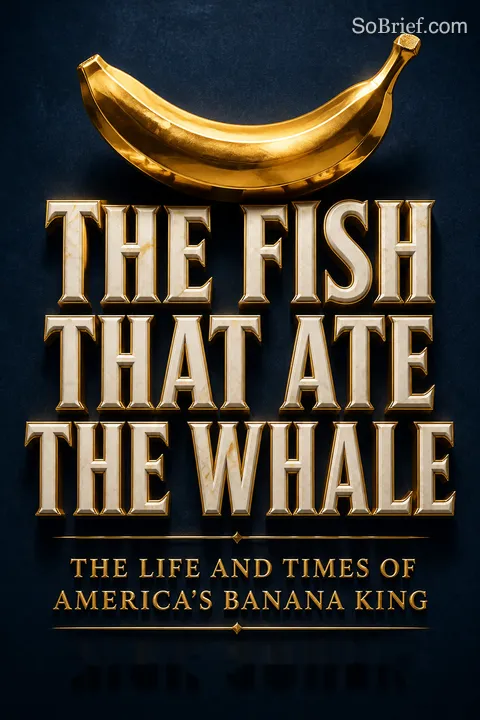
The Fish That Ate the Whale tells the fascinating story of Samuel Zemurray, a Russian immigrant who became America's "Banana King." Readers praise Cohen's engaging writing style and the book's exploration of United Fruit Company's influence on Central American politics. Some criticize the author's tangents and occasional lack of objectivity. Many found the historical context and Zemurray's rise to power captivating, though opinions varied on the book's overall effectiveness. While some felt it was too long or rambling, others appreciated the depth of research and compelling narrative.
People Also Read







Glossary
ripes
discarded overripe bananasBananas that have ripened too early to travel through the ordinary wholesale system before spoiling. Importers treated them as near-waste, but Zemurray bought them cheaply and sold them quickly in nearby towns. The trade depended on timing: once the fruit became too soft, it had little commercial value.
fruit jobber
small-scale fruit traderA low-status trader who bought and resold fruit, often working close to docks, rail depots, and street markets. In the banana industry, jobbers typically had little capital and limited access to growing or shipping infrastructure. United Fruit executives continued to use the label dismissively for Zemurray even after he became powerful.
El Pulpo
United Fruit's octopus nicknameSpanish for “the Octopus,” a nickname for United Fruit that reflected its spread into plantations, railways, ships, ports, and sales. The image captured both the company's integrated business model and its capacity to reach into the economies and politics of Central American countries.
Great White Fleet
United Fruit's shipping fleetUnited Fruit's fleet of white-painted ships, used primarily to carry bananas but also to transport mail and other cargo around the Caribbean and Central America. Because the company controlled so much regional shipping, the fleet was an economic asset and a source of leverage over ports and commerce.
Banana War
Cuyamel and United Fruit rivalryThe name given to the escalating competition between Zemurray's Cuyamel Fruit Company and United Fruit over valuable banana land near the Utila River. The conflict included disputed land claims, sabotage, political maneuvering, and competing infrastructure plans. It ended in a 1929 merger that made Zemurray a major United Fruit shareholder.
concessions
special business privilegesAgreements with governments that granted banana companies benefits such as tax exemptions, land, or permission to build railways, roads, and wharves. In the book's account, concessions were central to keeping costs low enough to compete. They could be obtained through political influence, kickbacks, or negotiated deals.
Los Pericos
workers sickened by sprayingSpanish for “the Parakeets,” the name used for plantation workers who turned blue after repeated exposure to a copper-based fungicide sprayed on banana fields to fight Sigatoka disease. Some workers also lost their sense of taste and smell or suffered other serious illness.
indirection
influence through a wider causeEdward Bernays's public-relations approach of changing the environment around a product or client rather than making a direct sales pitch. In the Guatemala campaign, this meant presenting United Fruit's land dispute as a broader threat of Communist expansion, so that journalists, politicians, and government agencies would treat the company's concern as a national one.
Operation Success
1954 Guatemala coup planThe CIA-backed operation that helped remove Guatemalan president Jacobo Arbenz in 1954. It combined an exile force, propaganda, psychological broadcasts, diplomatic pressure, and U.S. support. United Fruit's land dispute with Arbenz's government was a major context for the intervention, which was publicly framed as a campaign against Communism.
FAQ
What's The Fish That Ate the Whale about?
- Biography of Sam Zemurray: The book chronicles the life of Samuel Zemurray, a Russian immigrant who became a powerful figure in the banana trade and the president of the United Fruit Company.
- American Century Context: Zemurray's story is set against the backdrop of the American Century, illustrating the complexities of American expansionism, corporate power, and the impact on Central America.
- Themes of Power and Corruption: The narrative explores themes of ambition, corruption, and the moral ambiguities of capitalism, particularly in the context of foreign interventions and corporate influence in politics.
Why should I read The Fish That Ate the Whale?
- Insight into Corporate History: The book provides a detailed look at the banana industry and the rise of multinational corporations, offering insights into how business practices shaped modern economies.
- Engaging Storytelling: Rich Cohen's narrative style combines historical facts with vivid storytelling, making it an engaging read for those interested in history, business, or personal stories of ambition.
- Lessons on American Exceptionalism: The book serves as a case study on American exceptionalism, illustrating both the opportunities and the darker sides of pursuing the American Dream.
What are the key takeaways of The Fish That Ate the Whale?
- Power is Perception: The book emphasizes that "Power is based on perception. If you think you got it, you got it, even if you don’t got it," highlighting the importance of self-image in business and politics.
- The American Dream's Complexity: Zemurray's life illustrates the duality of the American Dream—success achieved through hard work and ambition, but often at the expense of ethical considerations and the well-being of others.
- Impact of Corporate Influence: The narrative reveals how corporate interests can shape foreign policy and local governance, as seen in Zemurray's dealings with the Honduran government.
What are the best quotes from The Fish That Ate the Whale and what do they mean?
- "In my beginning is my end.": This quote reflects the cyclical nature of Zemurray's life, suggesting that his humble beginnings were intrinsically linked to his eventual downfall and the complexities of his legacy.
- "There’s always a guy.": This phrase captures the essence of the unpredictable nature of business and politics, indicating that there is always someone ready to take advantage of a situation, for better or worse.
- “You gentlemen have been fucking up this business long enough. I’m going to straighten it out.”: This quote captures Zemurray's determination and assertiveness in reclaiming control over United Fruit, reflecting his belief in his ability to effect change.
How did Sam Zemurray rise to power in the banana industry?
- Started with Ripes: Zemurray began his career by selling "ripes," or overripe bananas that others discarded, demonstrating his ability to see value where others did not.
- Acquisition of Land: He strategically acquired land in Honduras, leveraging his knowledge of the banana trade and local politics to build a successful plantation business.
- Coup and Influence: Zemurray orchestrated a coup to install a friendly government in Honduras, which allowed him to secure favorable concessions and expand his business operations.
What role did United Fruit Company play in Zemurray's story?
- Corporate Rivalry: United Fruit was both a competitor and a partner for Zemurray, representing the larger corporate interests in the banana trade that he sought to challenge and eventually merge with.
- Symbol of American Imperialism: The company is depicted as a symbol of American imperialism, using its power to influence foreign governments and exploit local resources, which Zemurray both benefited from and fought against.
- Merger Outcome: Ultimately, Zemurray's merger with United Fruit allowed him to secure his legacy and financial future, but it also meant he had to navigate the complexities of corporate governance and ethics.
How did Zemurray's actions affect Central America?
- Political Interventions: Zemurray's influence led to significant political interventions in countries like Honduras and Guatemala, where he supported coups to protect United Fruit's interests.
- Economic Exploitation: The practices of United Fruit under Zemurray's leadership often exploited local labor and resources, leading to economic disparities.
- Cultural Impact: The actions of United Fruit contributed to the perception of the U.S. as an imperial power in Latin America, shaping cultural narratives around American intervention.
What were the consequences of Zemurray's actions in Honduras?
- Political Instability: Zemurray's involvement in the coup against President Dávila contributed to ongoing political instability in Honduras, as foreign interests often clashed with local governance.
- Corporate Power Dynamics: His actions exemplified the power dynamics between multinational corporations and sovereign nations, raising questions about sovereignty and the ethics of intervention.
- Legacy of Exploitation: While Zemurray achieved personal success, his story also reflects the broader legacy of exploitation and the impact of corporate greed on local populations.
How did Zemurray's background influence his business practices?
- Immigrant Experience: Zemurray's experience as an immigrant shaped his understanding of opportunity and risk, driving him to work tirelessly to achieve success in a foreign land.
- Connection to the Land: Growing up on a farm instilled in him a deep appreciation for agriculture, which informed his innovative practices in banana cultivation and plantation management.
- Cultural Adaptation: His ability to adapt to local cultures and languages allowed him to build strong relationships with workers and local leaders, which was crucial for his business success.
How did The Fish That Ate the Whale address the theme of colonialism?
- Corporate Colonialism: The book illustrates how United Fruit operated as a colonial power in Central America, exerting control over land and labor.
- Cultural Imperialism: Cohen discusses the cultural implications of United Fruit's dominance, including the imposition of American values and practices on local populations.
- Resistance and Revolution: The narrative highlights the resistance movements that emerged in response to corporate colonialism, showcasing the struggles of local populations against foreign domination.
What lessons can be learned from The Fish That Ate the Whale?
- Importance of Ethical Business Practices: The book serves as a reminder of the need for ethical considerations in business decisions.
- Understanding Historical Context: Readers are encouraged to consider the historical context of corporate actions and their impacts on communities.
- The Power of Individual Agency: The narrative emphasizes the role of individuals in shaping history, encouraging readers to recognize their own potential for impact.
How does The Fish That Ate the Whale relate to contemporary issues?
- Corporate Influence in Politics: The book raises questions about the ongoing influence of corporations in political decision-making, particularly in foreign policy.
- Globalization and Exploitation: Zemurray's story reflects the challenges of globalization, including the exploitation of labor and resources in developing countries.
- Legacy of Interventionism: The narrative serves as a historical lens through which to view contemporary U.S. foreign policy in Latin America and beyond.
Download PDF
Download EPUB
.epub digital book format is ideal for reading ebooks on phones, tablets, and e-readers.








