

Key Takeaways
Treat frequency as a practice of choosing love, attention, and action.
A spiritual operating metaphor. West uses “frequency” to describe the degree of love, joy, and connection a person embodies. Her central claim is that matching inner states attract corresponding experiences: fear and resentment draw trouble, while love opens the way to better outcomes. She calls this Frequency Attunement and presents it as both spiritual teaching and universal science. The practical heart of the idea is simpler: notice what you repeatedly give attention to, and choose thoughts and actions that support the life you want.
The book’s claims that emotions are measurable divine energy, or that they magnetically cause external events, are not established by physics. Its language may be most useful as a guide to attention and conduct, rather than as a literal scientific account.
What's useful here is the bridge between emotional state and everyday behavior. A hopeful person may notice opportunities, approach others more generously, and persist longer, which can change outcomes without any invisible force being demonstrated. That interpretation preserves the book's emphasis on agency while keeping its claims testable. The distinction matters: emotional states can shape choices and relationships, but illness, job loss, or mistreatment cannot responsibly be treated as proof that someone has been thinking at the wrong frequency. A metaphor that empowers should not become a verdict that blames people for hardship.
Test a dream against your mind, body, and spirit before pursuing it.
Three internal judges. The book’s triangle represents mind, body, and spirit, three aspects that West says must agree before a wish can be welcomed. A person might consciously want a promotion, for instance, while feeling physically exhausted at the thought of more responsibility or sensing that the role conflicts with deeper values. Those doubts are not necessarily self-sabotage; they may point to costs the wish’s headline hides.
West suggests imagining abundant freedom, then asking what each part of the self would choose. If a goal still feels too large, reduce it to a step that feels more manageable. The point is not to wait for perfect certainty, but to listen for resistance and understand what it is protecting before making a consequential change.
This self-check resembles approaches to decision-making that combine deliberation, bodily signals, and values. Each channel offers different information: analysis can estimate consequences, physical reactions can flag strain, and values can clarify what makes an outcome worthwhile. None is infallible. Anxiety can arise around a meaningful opportunity, and immediate comfort can favor avoidance. The triangle works best as a structured conversation, not a supernatural test that must produce unanimous approval. Asking what each part fears losing can turn vague resistance into a concrete issue that can be addressed.
Build a vivid, sensory rehearsal around the outcome you genuinely want.
Imagine the result in detail. West’s practical method begins with a clearly defined wish, then asks the reader to picture it happening now. The imagined scene should include people, sounds, sights, and the feeling of success, rather than remain a distant abstract hope. She recommends making it emotionally convincing enough to create genuine excitement. When the initial feeling fades, picture sharing the good news with someone who cares about you, and relive the imagined celebration.
West says a feeling needs at least sixteen seconds to create a vibrational wave. The book offers no evidence for that precise threshold, so it should be understood as her claim, not a scientific rule. The exercise itself can still help clarify what success would look like and make a goal feel more emotionally salient.
Mental rehearsal has a grounded use when it clarifies a desired outcome and helps someone prepare for action. Sports and performance settings often use imagery to practice skills, while a richly imagined reward can make a goal more motivating. But imagining success is not the same as planning the steps or rehearsing obstacles. Research on goal pursuit distinguishes positive fantasy from practical preparation: a person can feel briefly satisfied by imagining an outcome without moving toward it. The strongest version of this exercise pairs the scene with a question about what concrete action would make it more likely.
Use joy to rehearse possibility, then stop policing the clock.
Let good moments count. West advises making a wish when feeling genuinely joyful, and suggests that laughter, art, nature, or movement can help create that state. Her own example is a swing above a Big Sur road: watching passing drivers react made her feel playful and exhilarated, and she treated that moment as an opening to imagine what she wanted. After visualization, she recommends gratitude and releasing anxious demands about when the wish must arrive.
This combines emotional rehearsal with a shift away from constant checking. West says some wishes appear quickly, while others depend on timing and other people. If nothing changes, she suggests revisiting the wish, checking for internal resistance, or choosing a smaller step. The reader is encouraged to cultivate joy, not to treat a delayed outcome as personal failure.
The memorable detail is not a mysterious wave; it is the way playfulness can interrupt habitual thinking and make desire easier to access. Positive emotion can broaden attention, helping people see options they miss when tense, though it cannot guarantee a particular result. Gratitude may also reduce rumination by shifting attention from scarcity toward what is already present. Still, “letting go” should not mean abandoning follow-up or interpreting delay as a cosmic test. A useful distinction is to release the demand for control over timing while continuing to act on the parts of the goal that remain within reach.
Turn imagined possibility into choices that make room for it.
A dream needs a route. The book repeatedly returns to choice: what someone eats, how they spend free time, which relationships they maintain, and whether they accept help can all move life in a direction. West tells of opening a pretend café from her basement as a child, then years later buying and running a restaurant with two friends. She presents this as an early wish that eventually became real, even though she says she had little money to invest.
The story gives the manifestation idea a human-scale form: desire can persist, and unexpected routes can emerge. But the story does not show that visualization alone caused the restaurant to appear. In practical terms, a wish becomes more useful when paired with choices, skills, conversations, and openness to opportunities that fit it.
The café story makes the book’s strongest case for agency without needing a supernatural explanation. A childhood interest can shape what someone notices, what skills they build, and which opportunities feel worth pursuing. The eventual restaurant is an illustration, not controlled evidence that a wish attracted an outcome. This distinction protects both hope and responsibility: a person can pursue a dream while recognizing the roles of timing, resources, collaborators, and luck. The book’s advice to receive help is especially practical, because people sometimes reject support that could make a desired change possible.
Read fear as information, not an order to retreat.
Separate alarm from guidance. West presents fear as a signal that a person may be approaching change or confronting an old pattern. She encourages readers to ask what the fear is communicating rather than automatically letting it decide. The book also distinguishes fear that warns of physical danger from emotional fear tied to uncertainty, exposure, or self-doubt. This distinction supports reflection: fear around applying for a job, for example, may reflect concern about rejection rather than evidence that applying is unsafe.
The instruction to move toward fear needs limits. Fear can carry important information about real danger, coercion, or an unhealthy relationship. The practical lesson is to examine the signal, not to obey every alarm or ignore it. Identify the risk, seek support when needed, and choose a response proportionate to the situation.
Treating fear as information aligns with emotion research: emotions can direct attention toward potential threats, but they do not deliver an objective verdict about what to do. Reappraisal, the practice of examining a feeling and giving it a more accurate interpretation, can help distinguish anticipated embarrassment from genuine danger. The book’s courage-centered message is valuable when fear is narrowing a person’s life. Its more sweeping advice to confront what frightens someone is not universally safe, however. Exposure is most helpful when chosen carefully, paced, and used for manageable fears, not when it overrides evidence of harm.
Let feeling and forgiveness loosen old patterns without excusing harm.
Make room for emotion. West describes painful feelings as signals that something needs attention, and treats tears as a way to release what has been held back. Her advice is to notice distress, approach difficult experiences with compassion, and allow grief rather than treating it as weakness. She also presents forgiveness as a way to stop remaining bound to resentment and to reopen the possibility of love and connection.
The book frames recurring hardship as karma: not punishment, but feedback about a person’s choices and unresolved patterns. That spiritual interpretation may help some readers search for meaning, but it can become damaging if applied to abuse, illness, or another person’s wrongdoing. Forgiveness need not mean reconciliation, excusing harm, or giving up accountability. Emotional release and firm boundaries can coexist.
There is a productive insight in the idea that unacknowledged emotion can keep shaping behavior. Naming grief, anger, or fear can make a person’s needs easier to understand and communicate. Forgiveness can also be a personal process of loosening the hold of resentment, rather than a declaration that the injury was acceptable. The risk is converting a compassionate practice into an obligation. Some harms require distance, justice, or professional support, and pressure to forgive can silence legitimate anger. A careful reading keeps the emphasis on freedom from being consumed by pain, while preserving the right to protect oneself.
Use nature, music, and care for the body to reset.
Choose supportive surroundings. When readers feel overwhelmed, West recommends spending time with trees, water, animals, or music. She describes these as sources of calm and reconnection, and suggests singing or moving with music to let emotion shift. She also urges attention to the body through exercise, affection, and food. In one section, she favors naturally colorful foods, linking rainbow colors to bodily harmony and spiritual symbolism.
The grounded value is to notice how surroundings and routines affect mood and energy, then build in supportive experiences. Claims that particular colors of food restore a divine bodily form, or that food choices attract corresponding life events, are not substantiated in the text. Nutrition is better guided by reliable health information than by a vibrational ranking of foods.
This advice connects spiritual practice to sensory regulation. Time outdoors, music, and movement can offer structure, attention, and emotional relief, making them accessible supports rather than abstract ideals. The details matter: a walk, a song, or a meal can be a small intervention when someone feels stuck. Yet the book sometimes turns an ordinary preference into a universal hierarchy, especially in its claims about food and health. A balanced approach can keep the useful question, “What helps this body feel cared for?” while avoiding shame toward people whose health, weight, or circumstances do not match an ideal.
Treat sacred geometry as a reflective map, not laboratory proof.
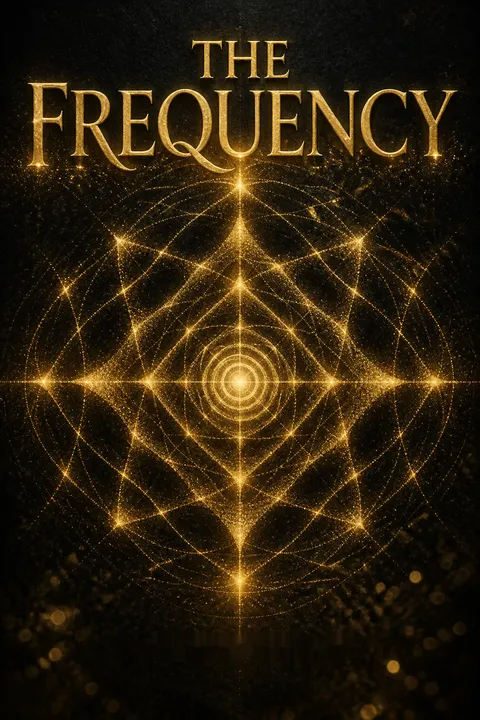
Symbols organize the spiritual story. West uses the circle to represent unity, the cross to represent separation or life in matter, and the triangle to represent mind, body, and spirit. She extends this symbolism through recurring patterns of twelve and thirteen, connecting them to religious traditions, the Mayan calendar, and ideas about matter and divine space. Her larger message is that people can feel less isolated by understanding themselves as connected to other life and to the natural world.
These images can prompt reflection on belonging and balance. The book also presents claims about dimensions, number patterns, planetary change, and communication beyond Earth as science. It does not provide evidence that establishes those claims. The symbols are most reliable as spiritual interpretations, not as measurements or predictions.
Symbols can make complex feelings memorable. The circle offers a compact image of belonging, and the triangle gives a reader a simple way to notice neglected parts of the self. Such meaning-making has value even when it is not a scientific description of the universe. The boundary becomes important when numerical patterns or sacred shapes are treated as empirical proof. Similar-looking numbers across cultures do not by themselves establish a shared cosmic mechanism. Reading the geometry as metaphor allows its emotional and ethical insights to remain available without confusing interpretation with evidence.
Analysis
The Frequency is a hybrid of spiritual manifesto, self-help manual, and channeled cosmology. Its two-part structure moves from an accessible visualization routine to an expansive account of love, karma, sacred geometry, destiny, and planetary transformation. The most useful thread is not the promise that thought can magnetically summon events. It is a set of practices for clarifying desire, checking for internal conflict, cultivating emotionally supportive states, and making choices consistent with a valued future. The childhood café story gives that practice a vivid human anchor, although it cannot establish that manifestation caused the later restaurant.
The book repeatedly calls its account a science of frequencies, but uses “frequency” in a spiritual sense that differs from the measurable oscillations studied in physics. Its assertions about quantum physics, light waves, specific numbers of seconds, Mayan time, immortality, and planetary alignments are presented without evidence sufficient to support them. That distinction should be explicit for readers. Treating these claims as metaphor or faith preserves the book’s meaning without granting unsupported authority from scientific vocabulary.
The work is most compelling when it encourages compassionate self-attention and least reliable when it explains adversity as the result of someone’s low vibration, karma, or lack of love. That framing can turn suffering into self-blame and obscure structural causes, chance, illness, or another person’s responsibility. Similarly, forgiveness and confronting fear can be liberating when freely chosen, but harmful when they override boundaries or safety. A grounded adaptation therefore keeps the book’s humane invitations: listen to competing needs, welcome joy, seek support, and pursue meaningful aims. It treats visualization as a way to focus intention, not a substitute for planning, resources, or action.
Review Summary
The Frequency by Linda West receives mostly positive reviews, with an average rating of 4.15/5. Readers appreciate its insights on energy, manifestation, and spiritual growth. Many find it enlightening and helpful for understanding frequencies and the law of attraction. Some praise West's writing style and personal experiences. However, a few critics argue it lacks scientific backing and relies too heavily on intuition. Several reviewers compare it to "The Secret" and recommend it for those interested in personal development and spirituality.
People Also Read






Glossary
Frequency Attunement
Choosing a spiritual frequencyWest’s term for tuning one’s thoughts, feelings, and choices toward a chosen spiritual quality, especially love. She presents it as a universal science through which people influence their lives by aligning with corresponding energies. The book’s spiritual definition is not equivalent to a scientifically measured frequency, and its claims about attracting external events are not established by the text.
Law of Affinity
Similar energies attractThe principle West uses to explain why people, events, and experiences supposedly gather around a person’s prevailing frequency. In her account, loving states attract more loving circumstances, while fear or anger attract similarly negative ones. This is a spiritual explanation rather than a demonstrated physical law, and should not be used to assign blame for hardship.
Law of Sympathetic Resonance
Similar states reinforce connectionWest’s term for the claimed process by which things with similar frequencies connect and continue to influence one another. She uses it to explain why an experience or relationship remains in a person’s life after being drawn in by the Law of Affinity. The book does not establish this as a scientific law in the sense used by physics.
The Triangle
Mind, body, and spiritA symbolic model in which mind, body, and spirit form three connected parts of the self. West uses it as a decision-making check: before pursuing a wish, consider whether each part welcomes it or signals resistance. In her broader spiritual system, a balanced triangle reconnects a person to the circle, her symbol for unity and divine connection.
Make-A-Wish Movie
Sensory goal visualizationWest’s name for imagining a desired outcome as if it were unfolding in the present. The reader constructs a detailed mental scene with people, sensory details, and the emotions associated with success, then imagines sharing the news with someone supportive. West claims that holding the feeling for at least sixteen seconds sends out a vibrational pattern, a claim for which the book provides no scientific evidence.
Karma
Feedback from choicesWest reframes karma as a guide to a person’s frequency choices rather than as punishment. In her account, difficult recurring experiences point toward unresolved lessons that can be addressed through more loving choices. This interpretation may offer a framework for reflection, but it should not be treated as proof that a person caused illness, abuse, loss, or other adversity.
FAQ
What's "The Frequency: Fulfill all Your Wishes by Manifesting With Vibrations" about?
- Manifesting with Vibrations: The book explores how understanding and utilizing frequencies can help you manifest your desires and create the life you want.
- Law of Attraction: It builds on the concept of the Law of Attraction, emphasizing the importance of high-frequency vibrations in attracting positive outcomes.
- Channeling and Guidance: Linda West shares insights she received from her guardian angel, White Eagle, about the science of frequencies and their role in manifestation.
- Practical Steps: The book provides a step-by-step guide to using frequencies to manifest your dreams, including exercises and techniques to raise your vibration.
Why should I read "The Frequency" by Linda West?
- Empowerment: The book promises to empower readers by teaching them how to control their life outcomes through frequency manipulation.
- Practical Guidance: It offers practical exercises and a five-step formula for manifesting desires quickly and effectively.
- Spiritual Insights: Readers gain spiritual insights from the author's experiences and channeled messages, which can enhance personal growth.
- Unique Perspective: The book combines scientific concepts with spiritual teachings, offering a unique approach to manifestation.
What are the key takeaways of "The Frequency"?
- Frequencies Dictate Outcomes: Your life experiences are influenced by the frequencies you emit; high frequencies attract positive outcomes.
- Manifestation Process: The book outlines a five-step process for manifesting desires, emphasizing clarity, high-frequency states, and visualization.
- Role of Love: Love is highlighted as the ultimate power and frequency that connects you to the divine and facilitates manifestation.
- Universal Laws: Understanding and applying the Universal Laws of Affinity and Sympathetic Resonance are crucial for successful manifestation.
How does Linda West suggest using frequencies to manifest desires?
- Identify Desires: Begin by clearly identifying what you truly want and ensuring all parts of your being agree on it.
- High-Frequency State: Get into a high-frequency state by engaging in activities that make you feel joyful and loving.
- Visualization: Create a vivid mental movie of your desire coming true, using all senses to make it feel real.
- Release and Gratitude: Let go of attachment to the outcome and express gratitude as if your desire has already manifested.
What is the five-step formula for manifestation in "The Frequency"?
- Decide What to Wish For: Clearly identify your desires and ensure they align with your mind, body, and spirit.
- Get into a High Frequency: Elevate your mood and energy to a high-frequency state to attract positive outcomes.
- Make a Wish Movie: Visualize your desire as a movie in your mind, feeling the emotions as if it's already happening.
- Extend the Feeling: Maintain the high-frequency feeling by imagining sharing your success with loved ones.
- Release to Receive: Let go of attachment to the outcome and remain grateful, trusting the universe to deliver.
What role does love play in "The Frequency"?
- Ultimate Power: Love is described as the ultimate power and frequency that connects you to the divine and facilitates manifestation.
- Keynote of the Universe: Love is the keynote frequency that holds together all other frequencies, enabling creation and connection.
- Healing and Transformation: Love is the force that can heal karmic blocks and transform low-frequency patterns into high-frequency experiences.
- Foundation of Manifestation: Manifestation is most effective when driven by love, as it aligns you with the highest frequencies.
How does Linda West describe the science of frequencies?
- Light Waves: Everything in the universe, including thoughts and emotions, is composed of light waves with unique frequencies.
- God-Force Measurement: Frequencies measure the amount of divine energy or God-force present in a light wave.
- Law of Affinity: Similar frequencies attract each other, meaning you draw experiences that match your vibrational state.
- Frequency Attunement: By attuning to higher frequencies, you can consciously create positive life experiences.
What is the Universal Law of Affinity in "The Frequency"?
- Like Attracts Like: The law states that similar frequencies are drawn to each other, creating harmony and resonance.
- Frequency Choices: Your life experiences are a reflection of the frequencies you choose to emit and attract.
- Conscious Creation: By consciously choosing high-frequency thoughts and actions, you can design a life filled with positive experiences.
- Manifestation Tool: The law of affinity is a key tool in the manifestation process, aligning your desires with the universe's energy.
What are some exercises suggested in "The Frequency" to raise your vibration?
- Breathing Exercise: Sit quietly and take deep breaths, focusing on mind, body, and spirit to center yourself.
- Visualization: Imagine receiving a large sum of money and explore what each part of your being desires to do with it.
- Triangle Check: Evaluate your desires by checking in with your mind, body, and spirit to ensure alignment and readiness.
- Nature and Music: Engage with nature and listen to uplifting music to naturally elevate your frequency.
How does Linda West address fear in "The Frequency"?
- Fear as a Guide: Fear is seen as a guidepost, indicating areas where you need to grow and find love.
- Facing Fear: Instead of running from fear, confront it directly to uncover the lessons and empowerment it offers.
- Illusion of Fear: Fear is described as an illusion that can be overcome by choosing love and faith.
- Transformation Tool: By transforming fear into love, you can raise your frequency and attract positive experiences.
What are the best quotes from "The Frequency" and what do they mean?
- "Love is the Power behind All Things, Known and unknown." This quote emphasizes love as the fundamental force that drives creation and connection.
- "You are the mover of the pieces." It highlights personal empowerment and the ability to shape your destiny through conscious choices.
- "We FEEL things into existence in the third dimension." This underscores the importance of emotions in the manifestation process, as feelings create vibrational patterns.
- "Fear is a fake." This quote challenges the validity of fear, encouraging readers to see it as an illusion that can be transformed through love.
How does "The Frequency" relate to the Mayan Calendar and universal time?
- Mayan Calendar Insights: The book discusses the Mayan Calendar as a tool for understanding universal time and aligning with higher frequencies.
- Universal Communication: The calendar's numbers, 13 and 20, are seen as keys to connecting with universal time and other life forms.
- End of the Cycle: The book references the end of the Mayan Calendar as a time of planetary alignment and frequency shifts.
- Evolutionary Shift: The alignment is described as an opportunity for spiritual evolution and the return to a higher state of consciousness.
Download PDF
Download EPUB
.epub digital book format is ideal for reading ebooks on phones, tablets, and e-readers.








