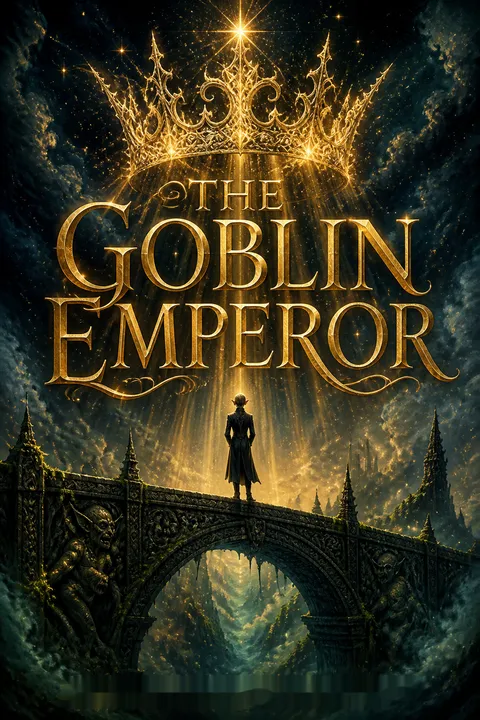


Plot Summary
The Heir at Edonomee
Maia Drazhar, the neglected youngest son of Emperor Varenechibel IV, is living in isolation at Edonomee with his harsh guardian, Setheris Nelar, when a court messenger brings word that an airship has crashed. Maia’s father and three elder brothers are dead, leaving him heir to the throne he was never taught to inherit.
Setheris immediately sees the danger: if Maia waits for the funeral, the Lord Chancellor can establish control before the new emperor arrives. Maia boards the courier airship with Setheris and reaches the capital within hours. He is grieving, frightened, and poorly dressed for court, but he has already learned that delay can make other people’s decisions irreversible.
The succession begins not as wish fulfillment but as an administrative emergency. Maia has been denied the education and relationships that usually make rule possible, yet the first lesson he receives is that power belongs to whoever acts before a rival can settle the ground. Setheris, despite his abuse, gives him useful political instincts; Maia’s challenge is to retain the intelligence without inheriting the cruelty. His accession also turns private neglect into public consequence. The court’s failures to prepare him are no longer merely injuries to one boy. They threaten the stability of an entire state.
A Court Without Welcome
At the Untheileneise Court, Maia asks Csevet Aisava, the messenger who brought the news, to guide him rather than search helplessly for the Lord Chancellor. Setheris identifies the danger in Chancellor Uleris Chavar’s funeral plans, and Maia insists that the coronation be arranged before the funeral can make him a supplicant to the old administration.
Chavar resists, then agrees to a timetable that lets the other princes attend. Maia also learns that the airship’s crew and servants will receive a separate service at a poor city temple. He chooses to attend, recognizing their deaths as equal in weight to those of his imperial family. The decision unsettles his guards, but earns the mourners’ gratitude.
Maia’s authority first appears through small acts of sequencing and attention, not through grand declarations. He changes the order of ceremonies to prevent Chavar from controlling the transition, then refuses the court’s assumption that servants are secondary casualties. These choices expose two different forms of power: control over procedure and the power to decide whose suffering counts. Maia has learned from his own exclusion what it means to be treated as expendable. His courtesy is therefore more than temperament. It is an early governing practice, though the court can easily mistake humane attention for weakness.
A Name Against Winter
Maia rejects the widow empress Csoru’s attempt to claim authority and makes clear that she is a dowager, not a reigning sovereign. He chooses the imperial name Edrehasivar VII, distancing himself from the Varedeise tradition associated with his father’s isolationist rule. Before the coronation, he visits the tomb of his mother, Chenelo, whom Varenechibel had sent away from court and whose belongings he later destroyed.
Then Maia undergoes the long vigil and is crowned before the court. He chooses his trusted guardsman Deret Beshelar and the quiet maza Cala Athmaza to accompany him, overruling Chavar’s preferred ritual choices. His first night as emperor brings no triumph, only exhaustion and the knowledge that his privacy is gone.
The new name is a political decision, but it is also Maia’s first attempt to define himself outside inherited injury. His mother’s tomb gives that choice an intimate counterweight: he honors the person who made him feel loved before stepping into an institution shaped by her rejection. The coronation’s rituals transform him in public, while the vigil strips away the comforts of being merely Maia. His decision to choose Beshelar and Cala signals that trust will matter more to him than ceremonial convenience. Yet the crown does not cure his isolation. It enlarges it, making even private grief part of public life.
Fire in the Wreckage
The scholars investigating the crash report that an unfamiliar incendiary device destroyed the Wisdom of Choharo and ignited its hydrogen. Maia’s father and brothers were murdered, but the investigators cannot identify who arranged it.
Chancellor Chavar launches a large judicial inquiry, while Csevet tells Maia about Thara Celehar, a former priest and Witness for the Dead living under Csoru’s protection. Maia appoints Celehar privately and accompanies him to the imperial tombs, where the bodies lie in closed coffins.
Celehar examines them with the prayers and care his calling requires, but the dead cannot identify their killers. He instead plans to question those who died alongside the imperial family, giving Maia a second line of inquiry beyond Chavar’s increasingly theatrical investigation.
The murder turns succession into a question of public safety, but the evidence is initially stubbornly incomplete. Maia’s choice to rely on both judicial investigators and Celehar shows that he is learning not to confuse institutional authority with exclusive access to truth. The two inquiries use different methods and carry different risks: one can become a political spectacle, while the other depends on a deeply personal spiritual gift. Maia’s presence at the coffins also complicates his feelings toward his father. He cannot summon grief for a relationship he never had, but he can recognize that a murdered emperor leaves fear among the living.
The Funeral's Unwanted Witness
At Varenechibel’s funeral, Maia watches the court mourn a father he barely knew and tries to offer compassion rather than counterfeit affection. During the wake, Princess Sheveän, widow of Maia’s dead half brother Nemolis, confronts him publicly over the opening of the coffins. Maia explains that Celehar and a canon handled the bodies reverently, but Sheveän treats the examination as an insult to her husband.
Her anger exposes how easily an investigation can be recast as disrespect. Maia promises her a fuller explanation, then turns to the court’s political demands. Eshevis Tethimar seeks a marriage with Maia’s sister Vedero, while another nobleman presses a replacement match for the dead prince’s fiancée, Stano Bazhevin.
The funeral stages competing definitions of loyalty. Sheveän sees respect as protecting her husband’s body and memory; Maia sees truth-seeking as necessary to protect the living from another murder. Neither position is emotionally simple, but the court rewards the appearance of grief more readily than the work of justice. Maia’s inability to perform sorrow convincingly makes him vulnerable to accusation, especially from relatives who do not know him. At the same time, marriage proposals begin turning women into instruments of political repair. The emperor must decide whether preserving alliances justifies repeating the coercions that damaged his mother and other women in his family.
Marriage as Statecraft
Maia asks Vedero what she wants, and learns that she would rather study astronomy than marry. Though Vedero warns him that her marriage could be a valuable political bargain, Maia refuses to negotiate while she is mourning and rejects both Tethimar’s pressure and the Bazhevada’s attempt to exchange one woman for another.
He also lets Stano Bazhevin choose her own future, accepting her wish to join Sheveän’s household rather than forcing her into a cloister. Maia gives Setheris a modest, useful post as liaison between the Lord Chancellor’s office and the city, keeping him at a distance without driving him back into exile. A visit to the dying Aro Danivaran, who once comforted Maia at his mother’s funeral, leads him to arrange coal for her cold rooms.
Maia is beginning to distinguish governing from simply satisfying the powerful. He does not pretend that marriage alliances are politically irrelevant; instead, he refuses to make another person’s body the price of his security. His decision to delay Vedero’s match risks angering noble houses, but it preserves her consent and gives grief its proper time. The same instinct appears in the quieter case of Aro Danivaran: remembering a kindness, Maia answers a material need rather than offering ceremonial sympathy. His treatment of Setheris is less forgiving, but still restrained. He uses authority to create distance and accountability, not to reproduce the cruelty that shaped him.
The Emperor's First Friends
Nurevis Chavar, the Lord Chancellor’s son, brings Maia into court society, where an opera performance introduces him to the singer Nedaö Vechin. Maia is captivated by her voice and by the easy warmth she offers, though he cannot manage the polished conversation expected of him.
Soon afterward, Csevet and the Corazhas select Csethiro Ceredin, a learned noblewoman, as his future empress. Their first meeting is stiff and governed by duty, but Csethiro later warns Maia that Nedaö is using his attraction to gain access for her clocksmith sister.
Maia accepts the warning without pretending it does not hurt. Meanwhile, Lord Berenar, the Witness for the Treasury, notices that Maia lacks the political education his office requires and offers to teach him. Maia accepts, gaining his first patient guide to government.
Maia’s social awkwardness is not a decorative trait; it is the predictable result of deliberate isolation. He has etiquette without conversational practice, authority without confidence, and a powerful appetite for ordinary affection. Nedaö’s attention answers that appetite, while Csethiro’s bluntness initially feels more dangerous because it refuses to flatter him. Berenar offers a different form of care: instruction that names Maia’s deficit without exploiting it. Together, these relationships distinguish intimacy from usefulness and kindness from manipulation. Maia is not yet skilled at telling them apart, but he is starting to notice that people can approach him for mixed reasons and still treat him as a person.
The Dead Speak Sideways
When Maia asks why Celehar left the priesthood, the Witness explains that he once identified his lover, Evru Dalar, as the murderer of Evru’s abusive wife. Celehar told the truth, but the cost of that truth left him convinced he had failed both his calling and the man he loved.
Maia responds with compassion and refuses to use the confession against him. Celehar continues investigating the airship deaths, first questioning the crew’s families in Cetho, then following a religious vision to Amalo, where the Wisdom of Choharo had been refitted.
He takes work among the airship laborers and listens to their grievances and their devotion to the executed philosopher Curnar. His letters warn Maia that a political motive may be hiding inside the workers’ talk of universal power.
Celehar’s history mirrors the novel’s central problem: truth can be ethically necessary and personally devastating at the same time. He does not regret telling the truth in any simple sense; he regrets the helplessness surrounding it and the punishment imposed by people who should have offered care. Maia’s willingness to hear him without demanding details for leverage creates a rare exchange not governed by rank. In Amalo, Celehar must distinguish a real grievance from the violence claimed in its name. Curnar’s language appeals to people excluded from power, but it can also make murder seem like moral housekeeping. The investigation asks whether liberation remains liberation when it treats individual lives as expendable.
A River Must Be Shared
At Nurevis’s gatherings, Nedaö introduces Maia to her sister-in-law Mer Halezh and the clocksmith Merrem Halezho, who explain their plan for a bridge across the Istandaärtha. The Corazhas has dismissed the proposal without hearing its designers, so Maia studies their plans in private.
He also resolves a dispute among Nelozho, the Dorashada, and the Prince of Thu-Cethor over land, pasture, and the Upazhera. Rather than award everything to one claimant, he divides the land, orders a shared bridge and patrol, and sets a deadline for cooperation.
The judgment succeeds despite the parties’ anger. Maia realizes he can make a decision without pleasing everyone, then uses Berenar’s lessons to map the Corazhas’ alliances and secure the clocksmiths a formal hearing.
The Upazhera ruling is Maia’s first practical proof that uncertainty need not end in paralysis. He cannot recover a pristine account of the dispute, since records and testimony have been distorted by self-interest, so he designs a settlement that distributes obligations as well as benefits. This is not a claim to perfect fairness. It is an attempt to prevent any one faction from converting confusion into ownership. The bridge proposal enlarges that logic from a local compromise to a national question. Maia begins to see that infrastructure is political: a river crossing can alter who travels, who trades, and whose labor remains trapped on one side.
Beneath the Palace
Before Winternight, Sheveän and Uleris Chavar abduct Maia from his bed and take him into a cellar beneath the palace. Chavar presents papers demanding Maia’s abdication in favor of Sheveän’s son, Idra, with Maia sent to a distant monastery.
The conspirators have silenced Maia’s guards, including the maza Dazhis Athmaza, and claim the move will restore Varenechibel’s preferred succession. Maia nearly yields, but recognizes that a child emperor under Chavar’s regency would be vulnerable and that his own life would remain a threat to them.
He demands to speak with Idra. When the boy arrives, he refuses to take the throne, condemns the seizure as unlawful, and orders the armed men to stop obeying his mother. The Untheileneise Guard breaks in and ends the coup.
The coup forces Maia to face the possibility that his own doubts are politically exploitable. He is tempted by the monastery because it promises silence and relief, not because he believes the conspirators are right. His resistance rests on a distinction between personal desire and public consequence: he may not want the throne, but that does not make an unlawful transfer harmless. Idra’s refusal is equally important. He is not merely a child being used by adults; he understands that becoming emperor through coercion would make him both a symbol and a hostage. Their exchange establishes a fragile kinship based on shared reluctance rather than rivalry.
Oaths and Aftermath
Dazhis admits that Chavar and Sheveän promised him future advancement if he helped them, then performs revethvoran, a ritual suicide for someone who has broken a sacred oath. Maia attends despite his anger, and Dazhis asks him to stay because he has no one else willing to witness his death.
Maia also keeps Lieutenant Telimezh from resigning out of guilt and appoints Berenar Lord Chancellor. Setheris, arrested with Chavar’s staff, is cleared of treason. He reveals that Varenechibel banished him after he challenged the emperor’s refusal to put accusations through a lawful trial.
Maia acknowledges his own hatred and the beatings he suffered, but releases Setheris from prison while refusing to keep him close. The coup leaves Maia with a wounded household, a government to rebuild, and no easy form of forgiveness.
The aftermath tests whether Maia’s commitment to humane rule survives betrayal by people he trusted and people who harmed him. Dazhis’s death is not a clean absolution: Maia cannot honestly claim forgiveness, but he can refuse to make his anger the final burden laid on the dying man. With Setheris, the moral situation is more complicated. Maia does not erase the abuse or confuse family with innocence, yet he declines to punish Setheris for a conspiracy he did not join. His release is not reconciliation. It is a deliberate refusal to make inherited power synonymous with revenge, while keeping a necessary boundary between himself and the person who once controlled him.
A Bridge Made of Brass
At last the Clocksmiths’ Guild presents its design to the Corazhas. The model shows a steam-powered bridge whose hinged sections fold back into towers to let ships pass, then reach across the river and lock together.
Mer Halezh, Merrem Halezho, and their master, Dachensol Evet Polchina, answer technical objections while the model moves before the witnesses. Maia is enthralled, but he does not mistake a working miniature for proof that the full bridge is safe.
The demonstration shifts the debate from mockery toward engineering questions and makes Lord Pashavar reconsider his opposition. Before the vote can happen, the Great Avar of Barizhan arrives for Winternight, bringing his household, soldiers, and a direct reminder that Maia’s rule has allies beyond the elvish court.
The model changes the terms of argument by making a dismissed possibility materially visible. It does not settle every engineering question; rather, it obliges skeptics to respond to a functioning mechanism instead of an image of foolishness. Maia’s enthusiasm matters because he recognizes the craft behind the spectacle, but his restraint matters too: he knows that wonder is not the same as evidence. The bridge also gathers economic stakes into one object. Its moving joints promise access across a river that has kept regions apart, while threatening established monopolies. The Avar’s arrival widens the political frame, reminding Maia that new alliances can alter the balance inside a court accustomed to its own rules.
The Avar's Winter Visit
Maia welcomes his grandfather, Maru Sevraseched, who arrives by an enormous coach and admits that he failed Chenelo by leaving her unsupported. The Avar’s daughter Nadeian tells Maia about the maternal relatives he never knew, and the Avar gives him a horse and a set of dragon-carved hair ornaments from another aunt.
On Maia’s nineteenth birthday, gifts arrive from couriers, merchants, workers, and the families of the airship crew, overwhelming him with evidence that strangers want him to be happy.
During the celebrations, Maia leaves the ball to visit Aro Danivaran, the woman who once showed kindness at Chenelo’s funeral; she dies soon after he holds her hand. Csethiro, his future empress, meets his grief with understanding rather than demanding he return to the festivities.
The Avar’s visit gives Maia access to family history without pretending that kinship repairs everything. His grandfather acknowledges a failure, but Maia must still live with the consequences of Chenelo’s abandonment. The birthday gifts matter because they come from people outside the court’s narrow hierarchy, including those whose families suffered in the airship crash. Their kindness reaches Maia where ceremony cannot. Aro’s death makes that recognition painfully immediate: he can repay her only by being present, not by changing the past. Csethiro’s response marks a shift in their relationship. She does not ask him to perform the emperor’s role when someone he remembers is dying.
The Knife at Midnight
As the Winternight Ball draws the court into a night of dancing, Eshevis Tethimar approaches Maia and lunges with a dagger. Deret Beshelar throws himself between them and is wounded, while Cala Athmaza kills Tethimar with a death-spell. The sudden violence breaks the celebration into panic, and Maia is left shaken as guards secure the hall.
He later learns that Tethimar had approached several allied nobles before the attack, then meets with Lord Berenar to identify them. Csevet brings news that Celehar has returned from Amalo. Maia also learns that the children of Sheveän, terrified by the commotion, have been waiting in the nursery. He leaves the investigation long enough to reassure Idra, Mireän, and Ino that he is alive.
The attack turns the political dangers Maia has been studying into immediate bodily fact. Beshelar’s intervention and Cala’s spell save him, but both acts carry a cost: one is physically injured, the other must live with having killed a man. Maia’s first impulse is not to restore the spectacle of imperial composure; it is to find the children who fear they have lost another protector. That choice makes his care visible at the very moment the court expects command. The assassination also sharpens the distinction between the two conspiracies. Tethimar is not merely a critic of Maia’s policies. He is a threat whose network must now be traced before it can strike again.
The Plot Behind the Crash
Celehar’s report identifies Aina Shulivar as the clocksmith who built the explosive device and Evrenis Bralchenar as the worker who concealed it during the Wisdom of Choharo’s refit. Atho Narchanezhen helped connect the conspirators, whose devotion to Curnar’s doctrine gave their violence a language of liberation.
Celehar believes Tethimar and his allies paid for the murder, though the plan originally called for the airship to be destroyed after his marriage to Vedero. The first blast was meant as a test, but the device detonated early and killed the imperial family.
After Tethimar’s attack, investigators arrest the surviving conspirators and expose his allies. Maia visits Shulivar, Bralchenar, and Narchanezhen in prison, hearing their justifications without allowing their political grievances to erase the people they killed.
The revelation does not offer a single villainous motive that can be dismissed as madness. Shulivar’s political diagnosis contains truths about concentrated wealth and factory deaths, but his remedy turns other people into acceptable losses. Tethimar’s aristocratic ambition and the Curneisei’s radical rhetoric converge in violence, though they imagine different futures. The botched test exposes how contingency can shape history: Maia’s accession was never the conspirators’ intended outcome. His decision to hear the prisoners is not leniency, nor does it excuse them. It is an effort to understand how recognizable grievances become an alibi for murder, so that judgment can distinguish reform from vengeance.
The Wisdom Bridge
The trials punish those responsible for the murder and the later assassination attempt, while Maia shows clemency to Chavar and Sheveän because their failed coup arose from misguided loyalty to Varenechibel rather than the Tethimada’s pursuit of power.
He sends Sheveän to a guarded estate but protects her children, and appoints Prince Orchenis guardian to Tethimar’s young sisters. Maia also frees Celehar to return to the priesthood as a Witness for the Dead, where his work can serve others.
Csethiro begins teaching Maia to dance, and they exchange their given names, turning a political engagement toward real affection. At the Corazhas vote, Maia breaks the tie in favor of the bridge and names it the Wisdom Bridge, honoring every life lost in the crash and the hope of a more connected realm.
The ending resolves the opening injury not by restoring Maia to a lost childhood, but by changing what authority means in his hands. He cannot make the court loving, erase the dead, or prevent political conflict. He can refuse to reproduce Varenechibel’s punishments, protect children from adult schemes, and give skilled people room to serve according to their abilities. Naming the bridge for the Wisdom of Choharo transforms a symbol of murder into a public commitment to connection. It is not a claim that progress will be painless. Rather, Maia chooses to build despite risk, treating the memory of the dead as a reason to change the living world.
Analysis
The Goblin Emperor treats political competence as something learned through attention rather than possessed by birth. Maia inherits a state but not the education that should have prepared him to govern it. His early survival depends on ceremonial knowledge, yet his more durable authority comes from asking who is missing from a room, whose testimony has been excluded, and which obligations are hidden beneath a polished performance. The court’s rituals are not empty; they protect continuity and make power legible. They become dangerous when officials use them to make their own interests appear inevitable.
The novel also distinguishes compassion from softness. Maia’s instinct to listen does not prevent him from making hard decisions. Instead, listening gives him better grounds for judgment. He lets Stano choose her future, protects Idra’s sisters, and refuses to treat the families of the dead as collateral. At the same time, he cannot pardon everyone or satisfy every faction. His humane rule is not based on universal approval, but on limiting the damage that power can do when it is exercised without scrutiny.
The conspiracies expose competing failures of political imagination. Chavar and Sheveän mistake dynastic preference for the public good. Tethimar turns aristocratic grievance into a personal campaign for dominance. Shulivar identifies real exploitation but converts human beings into a price he is willing to pay. Each conspirator believes that a desired order excuses the means used to reach it. Maia’s alternative is slower: he builds alliances, gathers evidence, and backs the bridge because its practical benefits could loosen the structures that preserve inequality.
The ending does not make Maia a finished ruler or guarantee that the bridge will be built. It gives him a method. He has learned that connection is not sentiment alone; it requires listening across social boundaries, sharing authority, and accepting that change carries risk. Naming the bridge for the dead turns memory into an obligation to the living. Maia’s achievement is not that he has escaped loneliness or inherited injury, but that he no longer allows either to dictate what kind of emperor he will become.
Review Summary
The Goblin Emperor receives mostly positive reviews for its character-driven story, intricate world-building, and unique approach to fantasy. Readers praise the protagonist Maia's character development and the book's focus on kindness and compassion. Some criticize the slow pacing, complex naming conventions, and lack of action. The novel is lauded for its exploration of court politics, social issues, and steampunk elements. While not for everyone, many readers find it a refreshing and comforting departure from typical fantasy tropes.
People Also Read









Characters
Maia Drazhar
Exiled heir turned emperorMaia is the youngest son of Varenechibel IV and Chenelo, raised far from court after his mother’s death. He enters adulthood with perfect etiquette but little experience of friendship, politics, or ordinary life. His sensitivity to exclusion makes him attentive to servants and common petitioners, while years under Setheris have taught him to expect anger and conceal uncertainty. Maia is neither naturally commanding nor politically innocent; he learns by asking questions, observing factions, and accepting help. What distinguishes him is his willingness to treat authority as a responsibility toward people rather than a prize to defend. He wants to act justly, but must learn that kindness without judgment can leave others exposed.
Setheris Nelar
The bitter former guardianSetheris is Maia’s cousin and longtime guardian at Edonomee, a proud, intelligent man whose political ambition and bitterness shape the household’s every day. He is capable of teaching Maia law, protocol, and strategic caution, but he delivers that knowledge through contempt and intimidation. His sense of dignity is rigid, and he often confuses control with responsibility. Setheris’s history with the imperial court leaves him both resentful of power and eager to be recognized by it. His relationship with Maia is defined by dependence, fear, and an unspoken struggle over who gets to determine what Maia may become.
Csevet Aisava
The emperor's indispensable secretaryCsevet begins as the courier who brings Maia news of the succession and becomes his secretary. He is quick-minded, socially agile, and skilled at translating courtly circumlocution into practical choices. His knowledge comes from years in the courier service, where he learned how information moves and how people use it. Csevet guides Maia without pretending that the young emperor already understands the court, though he sometimes tries to protect him by filtering what reaches him. Their working bond grows through trust, candor, and mutual correction. Csevet is a loyal servant, but his care for Maia is warmer and more personal than his role requires.
Deret Beshelar
The emperor's soldier-guardianBeshelar is a disciplined lieutenant of the Untheileneise Guard assigned to protect Maia. He takes his oath literally, values order, and often responds to the emperor’s informality with visible alarm. His sternness can make Maia feel judged, but it comes from a serious understanding of duty rather than contempt. Beshelar struggles to reconcile ceremonial expectations with Maia’s unusual way of treating those around him. Beneath his rigid bearing is loyalty expressed through action, vigilance, and a readiness to put himself between danger and the person he guards.
Cala Athmaza
The gentle maza guardianCala is a scholar-like maza sent to serve as one of Maia’s nohecharei. Myopic, absent-minded, and often more relaxed than Beshelar, he brings gentleness into the emperor’s guarded household. Cala does not mistake Maia’s rank for emotional invulnerability, and his quiet attention helps Maia endure fear, exhaustion, and isolation. His duty requires distance, yet his temperament naturally seeks human connection. He is thoughtful about spiritual questions and cautious about the boundaries imposed by his office, creating a persistent tension between the person he is and the role he has sworn to perform.
Thara Celehar
The grief-worn WitnessCelehar is a former priest of Ulis with the rare ability to Witness for the Dead. He is gaunt, reserved, and marked by an old grief that has made him wary of both authority and his own calling. His work depends on patient attention to the dead and the living people left behind, not on dramatic revelations. Celehar’s sense of duty is strong, but he doubts that his service can repair anything. Maia’s respect gives him room to act without coercion, while Celehar’s investigations offer Maia a form of truth the court’s official machinery cannot easily provide.
Csethiro Ceredin
The learned future empressCsethiro is a noblewoman chosen to become Maia’s empress. She is observant, educated, and initially guarded, shaped by a family that treats political duty as a matter of course. Her reserve is not emptiness: she has strong opinions, a sharp sense of humor, and a desire to choose her own responsibilities. Csethiro notices Maia’s vulnerabilities but does not automatically soothe or flatter him. Their relationship develops through directness and shared effort, particularly as she helps him learn courtly skills he was denied. She offers the possibility of partnership, though neither of them begins with certainty about what that can mean.
Idra Drazhar
The reluctant young heirIdra is Maia’s fourteen-year-old nephew, son of the late Prince Nemolis and Princess Sheveän. As heir to the throne, he understands that adults view him through the political future he represents. He is thoughtful, well educated, and unusually alert to the difference between a policy dispute and a moral wrong. His loyalty to his mother and his sense of justice can pull in opposing directions. Maia’s relationship with him develops through careful conversations rather than demands for obedience, and Idra offers the emperor a rare perspective from someone who knows court life but has not yet been hardened by it.
Vedero Drazhin
The astronomer princessVedero is Maia’s half sister, a dignified and intellectually serious woman who has spent much of her life under the expectations placed on imperial daughters. She is reserved, difficult to read, and accustomed to protecting her ambitions by revealing little. Her interest in astronomy expresses a wider curiosity about what women might study and do if family politics did not confine them. Vedero gives Maia cautious advice about the costs of rule, but she also tests whether his respect for her wishes is genuine. Their connection grows around intellectual independence rather than easy sentiment.
Sheveän Drazharan
The fierce imperial widowSheveän is the widow of Maia’s half brother Nemolis and mother of Idra, Mireän, and Ino. She is proud, forceful, and accustomed to protecting her family through influence and insistence. Her grief over her husband and hostility toward Maia shape her view of the new emperor, whom she sees as a threat to her family’s place. She is not naturally suited to the passive role expected of many noblewomen, yet the court offers few legitimate outlets for her strength. Her relationship with her children reveals a more complicated person than her public anger allows Maia to see.
Uleris Chavar
The entrenched Lord ChancellorChavar is the powerful Lord Chancellor who served Maia’s father and expects the new emperor to rely on his experience. He is forceful, politically confident, and accustomed to directing events rather than receiving instruction. His loyalty is attached to his understanding of the empire and its traditions, which makes him resistant to Maia’s priorities. Chavar is not a simple fool or a mere functionary: he knows how to exploit ceremony and institutional procedure. His conflict with Maia exposes the difference between expertise and entitlement, and the danger of an adviser who assumes that a young ruler’s inexperience gives him ownership of the throne.
Nurevis Chavar
The courtly social guideNurevis is Uleris Chavar’s son and a young courtier who introduces Maia to social gatherings and people beyond the formal machinery of government. He is polished, observant, and skilled at making awkward introductions feel less like tests. His affection for his father complicates his position, but he is not simply an extension of Chavar’s politics. Nurevis gives Maia access to ordinary court life, including music, gossip, and the company of his friends. His easy sociability shows Maia what a youth raised at court might have learned naturally.
Eiru Berenar
The patient political tutorBerenar begins as the Witness for the Treasury and becomes one of the most important advisers in Maia’s government. He is methodical, candid, and unusually willing to explain the history behind current disputes. Rather than treating Maia’s ignorance as a flaw to exploit, he sees it as a remediable consequence of the emperor’s upbringing. Berenar’s patience does not make him passive: he is attentive to corruption, administrative failure, and the limits of the existing investigation. His service is grounded in competence rather than flattery, which makes him one of the people Maia can trust to disagree with him.
Nedaö Vechin
The captivating opera singerNedaö is a celebrated soprano from Zhaö whose performances can command an entire room. Beautiful and socially assured, she recognizes Maia’s loneliness and knows how to draw his attention. Her approach to the emperor mixes personal warmth with practical aims, especially when she seeks help for her clocksmith sister. Nedaö is not reducible to her beauty or ambition: she has her own loyalties, artistic discipline, and capacity for regret. Her presence helps Maia recognize both his hunger for affection and his vulnerability to people who understand how power can open doors.
Maru Sevraseched
The formidable goblin grandfatherMaru Sevraseched is the Great Avar of Barizhan and Maia’s maternal grandfather. A towering, forceful ruler, he has spent decades balancing the rival claims of Barizhan’s lesser rulers. His bluntness and physical presence contrast with the intricate politeness of the elvish court, but beneath them lies a capacity for regret over the way his daughter Chenelo was treated. He offers Maia a connection to a family and culture that were largely withheld from him. His protection is real, though it is also shaped by the political limits of what he can safely do.
Vorzhis Gormened
The patient Barizheise ambassadorGormened represents Barizhan at Maia’s court and is both a skilled diplomat and a distant maternal kinsman. He understands how fragile relations between the two countries are, and he works to make the Great Avar’s visit useful rather than inflammatory. Gormened offers Maia a token of goodwill before knowing whether the new emperor will reciprocate. His careful manner conceals genuine concern for Maia’s safety, but he never forgets that he serves the Avar as well as the emperor.
Dazhis Athmaza
The second maza guardianDazhis is a maza assigned to protect Maia alongside Cala and the soldiers of the Untheileneise Guard. He is observant and formally dutiful, though less socially open than Cala. His position places him close to the emperor while also tying him to the strict spiritual obligations of the Athmaz’are. Maia depends on Dazhis’s training and presence, even as the young emperor struggles to understand the demands and limits of the nohecharei.
Kiru Athmaza
The healer-maza guardianKiru is a senior maza and a trained cleric of Csaivo who serves among Maia’s nohecharei. She has spent years tending the sick and brings practical calm to an institution built around ritual and protection. Kiru is perceptive without being intrusive, and she can care for Maia’s physical distress without treating him as helpless. Her unusual position challenges old assumptions about who may guard an emperor, while her experience makes her a natural source of steadiness in a household repeatedly shaken by crisis.
Eshevis Tethimar
The ambitious eastern heirEshevis is heir to the wealthy Tethimada and a prominent nobleman from the empire’s southeast. He is handsome, forceful, and accustomed to pressing his family’s interests in court. His confidence can look like charm when it serves him and intimidation when it does not. Eshevis sees political relationships as instruments for restoring his house’s influence, and he has little patience for a ruler who will not honor assumptions made on his behalf. His presence tests Maia’s ability to resist pressure without mistaking every opponent for an enemy.
Stano Bazhevin
The displaced young fiancéeStano is the daughter of Count Bazhevel and was engaged to Maia’s late half brother Ciris. His sudden death leaves her in an uncertain legal and social position. Quiet, anxious, and often overshadowed by stronger personalities, she nevertheless knows what she wants when Maia gives her room to answer. Her circumstances reveal how quickly noblewomen can become bargaining pieces when a political arrangement collapses.
Aro Danivaran
The remembered comforterAro is the noblewoman who helped Maia through his mother’s funeral when he was a child. Years later, illness leaves her dependent on her daughter’s care and struggling against the cold. Her earlier kindness remains vivid to Maia, who seeks her out to offer practical help and gratitude. Aro’s presence connects the young emperor’s public responsibilities to the private memories that formed him.
Plot Devices
The Corazhas
A government of competing voicesThe Corazhas is the emperor’s council of seven Witnesses, each representing a major institution or interest within the Ethuveraz. Its debates embody the limits on imperial rule: members disagree, form alliances, and can stall a proposal by refusing to hear it. Maia initially experiences the council as an opaque wall of procedure. As he learns its members’ habits and interests, he can make arguments that shift the balance without simply commanding obedience. The bridge proposal becomes the clearest test of this process, since Maia must win a hearing, withstand opposition, and ultimately cast the deciding vote.
Witnessing for the Dead
A spiritual path to evidenceA Witness for the Dead can receive impressions from those who died violently, especially when their bodies or graves are approached with ritual care. The practice does not guarantee a culprit or provide a complete account; it offers clues that must be tested against living testimony and physical evidence. Maia appoints Thara Celehar because the official inquiry risks becoming a political performance. Celehar’s work moves from the imperial coffins to the crew’s families and then to the airship workers of Amalo. The device links spiritual responsibility to investigative patience, while making clear that the dead cannot do the living’s work for them.
Curnar's Universal Ascendance
A grievance turned into ideologyThe executed philosopher Curnar argues that power should not remain fixed among inherited elites. His ideas appeal to workers who face dangerous labor and limited prospects, but different followers interpret them differently. Some imagine a world without domination; others use the doctrine to justify taking power by force. Celehar discovers that the conspirators’ political language does not erase their personal choices or the people harmed by them. The doctrine therefore functions both as a critique of entrenched hierarchy and as a warning about movements that turn future equality into permission for present violence.
The Imperial Name and Signet
Identity made public and officialUpon taking the throne, Maia chooses the name Edrehasivar VII and commissions an imperial signet. Rather than use his father’s familiar emblem, he selects a design that joins the Drazhadeise cat with the serpent associated with his mother’s Barizheise heritage. The name and ring make private choices legible to the court: each letter sealed with the signet becomes a public act, and each use of the name marks a break with the previous reign. The device gives Maia a way to claim imperial authority without pretending that he has no history before the crown.
The Istandaärtha Bridge
A machine that redistributes powerThe Clocksmiths’ proposed bridge is a steam-powered structure that folds back to allow ships through and locks together for land traffic. Its engineering is only part of its significance. A crossing would make travel and trade easier for western regions while threatening the eastern families whose wealth depends on controlling existing routes and markets. The model gives the Corazhas something concrete to assess, while Maia’s eventual vote makes infrastructure an expression of policy. The bridge remains a proposal at the novel’s end, but its name and approval announce the kind of future Maia hopes to build.
FAQ
```markdown
Synopsis & Basic Details
What is The Goblin Emperor about?
- An Unexpected Ascension: The Goblin Emperor follows Maia Drazhar, the long-exiled, half-goblin youngest son of the Emperor of the Elflands, who is suddenly thrust onto the throne after his father and three elder half-brothers die in an airship crash. Unprepared and isolated, Maia must navigate the treacherous labyrinth of the Untheileneise Court.
- Navigating Court Intrigue: The narrative centers on Maia's struggle to establish his authority, build a loyal household, and govern a vast empire he knows little about, all while facing deep-seated prejudice, political machinations, and assassination attempts from those who resent his unexpected rise.
- A Journey of Self-Discovery: Beyond the political plot, the novel is a profound character study of Maia's emotional and psychological journey, as he grapples with past trauma, learns to trust, and strives to rule with compassion and integrity, ultimately seeking to bridge divides within his fractured realm.
Why should I read The Goblin Emperor?
- Unique Compassionate Protagonist: Unlike many fantasy heroes, Maia Drazhar is defined by his empathy, kindness, and deep-seated desire to do good, offering a refreshing subversion of traditional power fantasies. His internal struggles with self-doubt and the lingering effects of abuse provide a rich psychological depth.
- Intricate World-Building & Etiquette: Katherine Addison crafts a meticulously detailed world, from the complex Elvish courtly etiquette and naming conventions to the distinct Goblin culture and advanced technology like airships and pneumatic tubes. This immersive setting feels both alien and intimately real.
- Themes of Healing & Connection: The novel is a powerful exploration of healing from trauma, the importance of building genuine relationships, and the quiet strength found in mercy and understanding. It's a story about finding one's place and purpose, even when thrust into an unwanted destiny.
What is the background of The Goblin Emperor?
- Ethuveraz: A Divided Empire: The story is set in the Ethuveraz, an empire ruled by the Drazhada dynasty for over two millennia, but deeply fractured by historical conflicts between its Elvish and Goblin populations, and internal political divisions between eastern and western principalities. This tension is embodied in Maia's mixed heritage.
- Complex Political & Social Structure: The empire operates under a tripartite government (Corazhas, Parliament, Judiciate) advising the emperor, alongside powerful noble houses with their own agendas. Socially, Elvish society is highly formal and hierarchical, contrasting sharply with the more familial and direct Goblin customs, which Maia often instinctively leans towards.
- Technological Advancement & Cultural Context: The world features advanced technology like airships and pneumatic communication, coexisting with traditional court life and ancient religious practices. The historical context of past emperors, rebellions, and suppressed philosophies (like Curnar's Universal Ascendance) subtly influences the present political landscape and character motivations.
What are the most memorable quotes in The Goblin Emperor?
- "It is not a crime to do without a chaplain, Serenity, it is no crime to wish to have one.": This quote, spoken by the Archprelate to Maia, encapsulates the novel's core theme of personal need versus public expectation, highlighting Maia's quiet yearning for spiritual solace and guidance amidst the overwhelming demands of his new role.
- "We believe that the Adremaza meant his advice for the best, but he was cruelly wrong. I do not ask, or expect, you to be friends with me as you are friends with other mazei, or other soldiers in the Untheileneise Guard. But it … it's silly to deny that we hold each other in affection.": Maia's heartfelt confession to his nohecharei, Beshelar and Cala, marks a pivotal moment of emotional vulnerability and the forging of a new, unconventional form of friendship, challenging rigid courtly boundaries.
- "Better to build new bridges, he thought, than to pine after what's been washed away.": This internal thought of Maia's early in his reign, before he even considers the literal bridge, perfectly foreshadows his eventual legacy as "Edrehasivar the Bridge-Builder," symbolizing his commitment to reconciliation, progress, and unity over stagnation and division.
What writing style, narrative choices, and literary techniques does Katherine Addison use?
- Intimate Third-Person Perspective: The novel is told from a close third-person perspective, almost exclusively following Maia's internal thoughts and perceptions. This allows readers deep access to his anxiety, self-doubt, and emotional growth, making his journey intensely personal and empathetic.
- Formal, Precise Language: Addison employs a formal, almost archaic prose style, rich in courtly titles, elaborate etiquette, and precise descriptions. This choice immerses the reader in the Elvish court's atmosphere, emphasizing Maia's struggle to master its complexities and the weight of tradition.
- Subtle World-Building Integration: Rather than exposition dumps, world-building details (e.g., naming conventions, political structures, historical events) are woven organically into the narrative through dialogue, Maia's observations, and his lessons with Csevet and Berenar, creating a sense of discovery and depth.
Hidden Details & Subtle Connections
What are some minor details that add significant meaning?
- Maia's Physicality and Self-Perception: Maia's constant awareness of his "dark skin," "ugly, lumpish knuckles," and "heavy curls" (contrasting with Elvish paleness and fine hair) underscores his deep-seated insecurity and outsider status, a direct result of Varenechibel's disdain and Setheris's cruelty. This physical self-consciousness is a recurring motif, highlighting his journey towards self-acceptance.
- The Tortoise Room as a Sanctuary: The recurring use of the Tortoise Room for Maia's most private and vulnerable moments (confronting Chavar, Setheris, Celehar, and even his own fears) subtly establishes it as his personal sanctuary within the vast, intimidating Alcethmeret. Its "warm without being oppressive" amber silk and fireplace offer a rare sense of comfort and control.
- Subtle Communication through Ears: The frequent mention of characters' ears twitching, flattening, or cocking (e.g., Csevet's "eartip twitching with irritation," Setheris's "ears flat against his head") serves as a nuanced, non-verbal communication system, revealing unspoken emotions and subtext in a culture where overt expression is often suppressed. This detail is unique to the Elvish/Goblin physiology and adds depth to character interactions.
What are some subtle foreshadowing and callbacks?
- Setheris's Early Political Acumen: Setheris's immediate and accurate assessment of Chavar's manipulative letter in Chapter 1 ("He presumes much, does Uleris... Use thy wits, boy") subtly foreshadows the deep political understanding he possesses, despite his personal failings, and hints at the strategic mind that Maia will later need to develop.
- The "Edonara" as a Metaphor for Court: Haru the gardener's warning to Maia about the treacherous Edonara marshes ("test every step before you take it. Don't trust it just because it looks all right... Because the Edonara takes its own sacrifices") serves as a powerful, understated metaphor for the Untheileneise Court, foreshadowing the hidden dangers and betrayals Maia will face.
- Varenechibel's "Damned Whelp" Echo: The single, chilling memory of Varenechibel's words, "The damned whelp looks just like his mother," is a recurring internal callback for Maia, fueling his self-doubt and fear of resembling his father. This deep-seated insecurity is subtly challenged and overcome as Maia consciously chooses a different path.
What are some unexpected character connections?
- Arbelan Drazharan's Mentorship: Arbelan, Varenechibel's first discarded wife, becomes an unexpected source of wisdom and courtly education for Maia. Her shared experience of being "relegated" and her quiet defiance ("Varenechibel was like a killing frost") forge a unique bond, offering Maia a maternal figure and a guide to the court's hidden histories and power dynamics.
- The Commoners' Unwavering Loyalty: Maia's genuine compassion for the "lesser" dead (airship crew, servants) and his interactions with commoners like Isheian (the shy server), Oshet (the gardener), and Cora (the page boy) reveal a deep, unlooked-for wellspring of loyalty and affection from those often overlooked by the court. This connection contrasts sharply with the nobles' political calculations.
- Shared Trauma with Csethiro and Vedero: Maia's eventual bonds with Csethiro and Vedero are rooted in shared experiences of being pawns in political marriages and having their personal desires disregarded. Csethiro's bluntness about her forced engagement and Vedero's quiet ambition to "study the stars" resonate with Maia's own lack of choice, forming a foundation for genuine respect and understanding.
Who are the most significant supporting characters?
- Nurevis Chavar: The Reluctant Courtier: Beyond his role as Chavar's son, Nurevis acts as Maia's initial social guide, providing invaluable, seemingly casual gossip and introductions that help Maia navigate court functions. His subtle defiance of his father's expectations and his genuine, if limited, friendship offer Maia a rare glimpse of normalcy and unburdened interaction.
- Captain Verer Orthema: The Experienced Outsider: As Captain of the Untheileneise Guard, Orthema provides a unique perspective. His own mixed heritage ("We, too, have been called an abomination") and experience fighting barbarians give him a pragmatic, less prejudiced view of the world, making him a surprisingly insightful ally and a voice of reason in critical moments.
- Idra Drazhar: The Innocent Heir: Maia's nephew and heir, Idra, initially appears as a pawn in Sheveän's plot, but his unwavering moral compass and clear-eyed understanding of his mother's actions ("that is a terrible lie") prove pivotal in thwarting the coup. His innocence and genuine affection for Maia highlight the human cost of courtly ambition and the hope for a different future.
Psychological, Emotional, & Relational Analysis
What are some unspoken motivations of the characters?
- Chavar's Loyalty to a Dead Emperor: Uleris Chavar's deep-seated motivation is not loyalty to the throne itself, but to the memory and policies of Varenechibel IV. His initial attempts to control Maia, his disdain for Maia's "unconventional" choices, and his eventual participation in the coup stem from a belief that he is upholding Varenechibel's legacy and preventing Maia from "ruining the Ethuveraz."
- Sheveän's Grief and Entitlement: Sheveän's fury and ambition are fueled by a potent mix of genuine grief for her husband, Nemolis, and a profound sense of entitlement. She believes her son, Idra, is the rightful heir and that Maia is an "unfit" usurper, driven by a desire to restore what she perceives as the natural order and honor her husband's memory.
- Celehar's Self-Punishment and Redemption: Thara Celehar's reluctance to engage with the world and his initial apathy are rooted in profound guilt and self-punishment for having condemned his lover. His motivation to serve Maia, despite his personal cost, is a desperate search for redemption and a way to atone for his past, finding purpose in seeking truth for others.
What psychological complexities do the characters exhibit?
- Maia's Imposter Syndrome and Trauma Response: Maia constantly battles imposter syndrome, feeling "gauche and grubby" and "unfit to be emperor," a direct result of years of emotional and physical abuse from Setheris and his father's neglect. His flinching, self-deprecating thoughts, and difficulty with social interaction are complex trauma responses, making his journey of self-acceptance and leadership deeply psychological.
- Setheris's Resentment and Failed Ambition: Setheris is a psychologically complex figure whose cruelty stems from his own thwarted ambitions and bitter resentment at his relegation. His "passion for control" over Maia is a projection of his own powerlessness, and his eventual fear of Maia reveals the depth of his brokenness and the psychological toll of his exile.
- Csoru's Performative Vulnerability: Csoru Drazharan's "tears and tantrums" and feigned illnesses are not merely manipulative tactics but a complex psychological defense mechanism. Having been treated as a "doll" by Varenechibel, she learned to wield vulnerability and emotional displays as her primary tools for exerting influence in a court where she otherwise lacked true power.
What are the major emotional turning points?
- The Ulimeire Funeral: Maia's decision to attend the funeral for the airship crew and servants, and his genuine empathy for their families, marks a crucial emotional turning point. It's his first public act of compassion that sets him apart from the cold court, revealing his inherent kindness and foreshadowing his future as a "Bridge-Builder."
- Confronting Setheris: The audience where Maia offers Setheris the civil liaison post, and Maia's blunt revelation of the scars on his arm, is a powerful emotional climax. This moment signifies Maia's personal liberation from Setheris's abuse and his first decisive assertion of imperial authority over his past tormentor.
- Maia's Confession to His Nohecharei: Maia's raw, unscripted admission to Cala and Beshelar that he is "fond of both of you" and that the Adremaza was "cruelly wrong" about them not being friends, is a profound emotional turning point. It shatters the formal barrier, allowing for genuine affection and mutual support, crucial for Maia's well-being.
How do relationship dynamics evolve?
- From Formal Guards to Found Family: Maia's relationships with his nohecharei (Beshelar, Cala, Telimezh, Kiru) evolve from strictly formal, duty-bound interactions to a deep, unconventional bond of mutual affection and trust. Their initial disapproval gives way to fierce loyalty and personal care, culminating in Maia's explicit declaration of "friendship."
- Political Alliance to Respectful Partnership: The relationship between Maia and Csethiro Ceredin transforms from a purely political arrangement into a partnership built on mutual respect, intellectual camaraderie, and burgeoning affection. Their shared experiences of being constrained by duty and their blunt honesty with each other lay the groundwork for a strong imperial marriage.
- The Great Avar: A Grandfather's Unconditional Support: Maia's relationship with his goblin grandfather, the Great Avar, provides a much-needed source of unconditional acceptance and familial warmth. The Avar's bluntness, his pride in Maia's goblin heritage, and his protective gestures (leaving Vizhenka's guard) offer Maia a sense of belonging and validation he never received from his Elvish family.
Interpretation & Debate
Which parts of the story remain ambiguous or open-ended?
- The True Nature of Varenechibel IV: While Maia's father is consistently portrayed as cold and distant, the novel leaves some ambiguity about his true character. Was his "disdain" for Maia purely spite, or a complex grief for Pazhiro? His "dearest wishes" for alliances and his concern for the empire's unity suggest a more nuanced figure than Maia's limited perspective allows.
- Long-Term Impact of Maia's Reforms: The novel ends with Maia having initiated significant changes (the bridge, judicial reforms, new appointments, compassionate treatment of conspirators), but the long-term success and societal acceptance of these reforms remain open. The deeply entrenched traditions and prejudices of the Elvish court suggest that true, lasting change will be a continuous, uphill battle.
- The Future of Elvish-Goblin Relations: While Maia's reign promises a new era of cooperation and understanding between Elves and Goblins, the novel acknowledges the deep historical animosity and cultural differences. The extent to which these divides can truly be bridged, beyond symbolic gestures and individual relationships, is left for the reader to ponder.
What are some debatable, controversial scenes or moments in The Goblin Emperor?
- Maia's Clemency Towards Setheris: Maia's decision to spare Setheris from further punishment and even grant him a respectable post, despite the years of physical and emotional abuse, is highly debatable. Some readers might view it as an act of profound mercy and healing, while others might see it as a failure of justice or a dangerous precedent for an emperor to forgive such personal cruelty.
- The Justification of Shulivar's Actions: Shulivar, the clocksmith who built the bomb, argues that his act of regicide was a "radical action" necessary to "free" stagnant power and bring about change, even claiming Maia's ascension as proof of his success. This presents a controversial philosophical debate: can a morally reprehensible act be justified by its unforeseen positive consequences?
- The "Unnatural" Nature of Maia's Birth: The recurring whispers and Varenechibel's own comments about Maia being "unnatural" or having "bad blood" due to his mixed heritage, and the court's prejudice against goblins, are controversial elements. The novel challenges these prejudices, but their presence highlights the deep-seated racism and xenophobia within the Elvish society.
The Goblin Emperor Ending Explained: How It Ends & What It Means
- A Reign Defined by Connection: The novel concludes with Maia having successfully navigated multiple assassination attempts and political coups, establishing his authority not through force, but through empathy, integrity, and the cultivation of genuine alliances. His decision to name the Istandaärtha bridge the "Wisdom Bridge" symbolizes his commitment to unity and progress, honoring the dead while building for the future.
- Personal Growth and Found Belonging: Maia's journey culminates in a profound sense of self-acceptance and belonging. He sheds the "imposter" persona, finds love and respect with Csethiro, and builds a supportive network of friends and allies (Csevet, his nohecharei, Arbelan, Vedero, the Great Avar, Nedaö). The final scene of him entering
The Chronicles of Osreth Series

Download PDF
Download EPUB
.epub digital book format is ideal for reading ebooks on phones, tablets, and e-readers.








