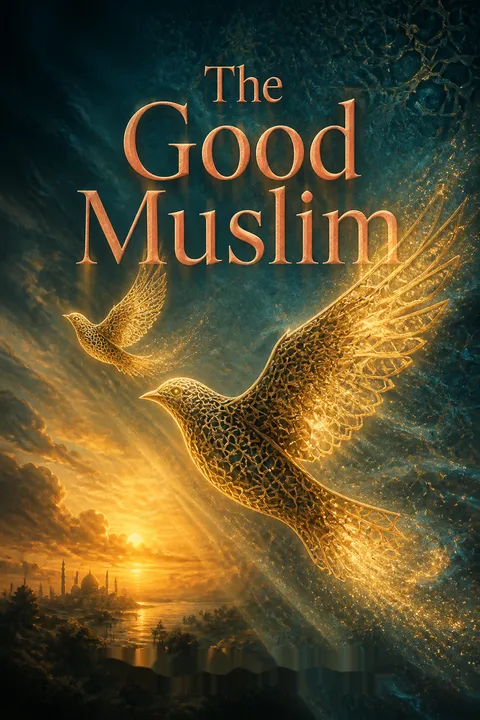


Plot Summary
Prologue
Eight days after the war, guerrilla fighter Sohail Haque walks home through a defeated country. In an abandoned army barracks, he finds the soldiers’ traces, then opens a room behind the munitions store and encounters something whose shock shadows his life.
The moment remains unexplained at first, but it establishes the novel’s central wound: peace does not end what violence has placed inside survivors. Years later, Sohail’s silence, faith, and estrangement from his family will all lead back to that threshold.
The prologue makes homecoming collide with horror before the story explains either. Sohail is still moving like a soldier, rifle ready, even when the enemy has retreated; his reflexes have outlasted the fighting. The abandoned barracks offers a false promise of closure, its neat traces of ordinary life sitting beside the evidence of occupation. By withholding what he sees, the novel makes the reader experience trauma as Sohail does: first as a bodily interruption, then as a force that shapes every later choice. His return to family and country begins not in safety, but in a room he cannot forget.
The House Above the House
Maya Haque, a doctor who has spent seven years away from Dhaka, returns after her sister-in-law Silvi dies. She carries a young mango tree for her mother, Rehana, but finds the family bungalow crowded by the religious community her brother Sohail has built in rooms above it. During Silvi’s memorial prayers, Rehana finally sees Maya and welcomes her without reproach.
Maya also glimpses her six-year-old nephew, Zaid, a neglected, quick-witted boy who lives upstairs with the followers. The familiar house has become both home and boundary: Sohail is physically near, yet Maya cannot simply walk into his life. She has come back expecting her mother; instead, she must also face the brother and child from whom she has been absent.
The homecoming is an intimate reunion staged inside a changed household. Rehana’s welcome crosses seven years of silence, but the crowded upstairs rooms show that affection cannot restore the family arrangement Maya left. The mango sapling offers a small, practical gesture of return, while the house itself records how other loyalties have taken root. Zaid’s first appearance makes the reunion ethically complicated: Maya is not only a daughter arriving late, but an adult who may be able to help a child her family has failed to protect. Her return begins as grief and quickly becomes responsibility.
A Soldier Comes Home
In 1972, Sohail returns from the liberation war thin, quiet, and unwilling to describe what he has endured. Soon afterward, Piya, a young woman he rescued from an army barracks, arrives at the Haque home after her family rejects her. Maya recognizes the injuries of wartime sexual violence from her work at the Women’s Rehabilitation Centre, where she has also performed abortions on women pressured to erase pregnancies caused by rape.
Piya begins to recover in the garden with Sohail and Maya, but she is carrying a child and asks for help ending the pregnancy. Maya arranges the procedure, then reassures Piya when she falters. Piya disappears soon afterward, leaving Sohail and Maya without the chance to learn what she chose.
Piya’s arrival exposes the gap between national victory and private repair. The state calls raped women heroines while urging them to forget, and Maya’s medical work becomes part of that contradiction: she offers care, but also repeats the language used to make unwanted pregnancies disappear. Piya’s retreat from the procedure is a moment of agency, however difficult to read; her disappearance shows how little control survivors retain over the stories told about them. Sohail’s tenderness toward her does not resolve the violence. It brings the war into the family as a presence no one knows how to name.
The Book on the Roof
After Piya vanishes, Sohail’s hands shake and he withdraws from friends, university life, and celebration. Rehana gives him the Qur’an, hoping its familiar prayers will comfort him; he first rejects it, then begins reading alone on the roof. His faith offers a structure for suffering that he cannot explain to Maya, who insists that his change is a response to trauma and resists his need for religious certainty.
Sohail gradually resumes public life, but now speaks about God to friends and followers. At his birthday gathering, Maya sees him refuse the jokes and drinking that once bound their circle together. His rooftop sermons grow into a religious community, and Silvi, his former love, joins it.
Sohail’s turn toward faith is neither a simple cure nor a simple betrayal of his earlier politics. The Qur’an gives form to guilt and grief that he cannot share with his sister, while Maya’s insistence on a medical explanation protects her from the possibility that his conviction answers a real need. The birthday gathering makes their conflict visible in a social setting: old friends treat religion as a passing eccentricity, but Sohail no longer accepts their terms of belonging. What Maya reads as distance, he experiences as a way to remain intact.
Ashes Across the Garden
Sohail and Silvi marry quietly, and their religious world grows more restrictive. In 1977, Maya finds her brother packing away the books he once treasured, convinced that his marriage and faith require him to abandon them. She tries to call him back by singing the songs and poems they shared, but Sohail carries the books into the garden and burns them.
Rehana blames Maya for pushing him, and Maya cannot bear to remain in the house. She leaves for Tangail, then works in clinics around the country before settling in Rajshahi. There she becomes a village doctor, while the bungalow’s upstairs rooms expand into a separate household. Her departure turns a sibling quarrel into a long, deliberate exile.
The burned books are more than a symbol of lost secular culture: they are a private archive of the siblings’ former intimacy. Maya responds to Sohail’s change with performance, believing shared songs can restore the person she remembers. The attempt fails because she is fighting for continuity while he is choosing transformation. Rehana’s accusation makes Maya confront her own part in the rupture, but shame does not make her stay. Her flight preserves her independence and also deepens the family’s separation, a cost that will surface when she returns to find Zaid growing up beyond her reach.
Nazia’s Hundred Lashes
In Rajshahi, Maya builds a small clinic and earns villagers’ trust by delivering babies, teaching oral rehydration, and securing a tube well. Her friendship with Nazia, a pregnant neighbour, is tested when the two women swim in a pond during a punishing heat wave. Nazia later gives birth to a child with Down syndrome, and her husband Masud accuses her of infidelity.
After a village meeting, men flog Nazia in public; Maya is cut when she tries to intervene. Nazia survives but refuses Maya’s offer to pursue the attackers, and Maya recognizes that she cannot force her friend into resistance. A telegram reporting Silvi’s death finally draws Maya back to Dhaka, carrying the scar and the knowledge that her work could not protect everyone.
Maya’s clinic makes knowledge concrete: clean water, safer births, and practical care save lives. Yet Nazia’s punishment shows how easily that work is overruled by male authority and communal fear. The women’s swim is not a reckless gesture so much as an ordinary pleasure that becomes evidence against them in a system eager to police their bodies. Maya’s injury marks the limit of her belief that expertise and courage can compel justice. Nazia’s refusal to pursue the men also matters: survival does not require performing the resistance Maya wants from her. The telegram brings Maya home, but not with her confidence restored.
A City Relearned
Back in Dhaka, Maya tries to know Zaid through Ludo, food, and lessons in Bangla and English. He steals small amounts of money, invents stories about school, and longs to study, while his father’s religious community keeps him under watch. Maya’s efforts to enroll him meet resistance from Sohail, who is often away.
At Shaheed Minar, she reconnects with Joy, a former freedom fighter and Sohail’s old friend, now returned from America. Joy takes her to a wealthy party where Maya feels out of place, then introduces her to Aditi and editor Shafaat at an underground newspaper. Maya begins writing about village life and authoritarian rule, finding a public purpose even as she struggles to belong in the city and in her own family.
Maya’s first acts of care for Zaid are small and imperfect. She offers play and teaching, but she cannot yet undo the deprivation built into his daily life. His lies and thefts are not presented as proof of bad character; they are signs of a child improvising where adults have left gaps. Meanwhile, Joy and the newspaper offer Maya two different forms of return: personal recognition and political participation. The contrast between the polished party and Shafaat’s risky newsroom helps her locate herself again, not by recovering the past but by choosing what she will say about the present.
A Son Sent Away
Maya discovers that Rehana has a uterine tumour and pushes her former medical professor, Dr Sattar, to arrange surgery. As Rehana begins treatment, the household’s fragile calm breaks over Zaid. After Maya buys him blue sandals, Sohail demands an explanation, then announces that he will send the boy to a madrasa in Chandpur, where he believes strict religious instruction will correct his behaviour.
Maya argues that Zaid needs school, family, and time to grieve his mother, but Sohail treats the decision as settled. Zaid proudly shows Maya his travel trunk, Qur’an, clothes, and new sandals, mistaking the journey for a chance at education. Maya watches him leave with his father, unable to tell him what awaits.
The sandals expose the difference between Sohail’s abstract ideal of discipline and Maya’s attention to the child in front of her. Zaid wants something ordinary and visible: shoes that fit, schooling, a place among other children. Sohail interprets his theft and restlessness as evidence that stronger control is needed. By sending him away, he turns grief into a disciplinary problem and gives Maya no authority to intervene. The boy’s excitement makes the decision more painful, because he cannot yet distinguish the promise of a journey from the institution that will receive him.
Water at the Hospital
Surgery reveals that Rehana’s cancer has spread, and chemotherapy leaves her weak while Maya keeps vigil. She begins attending the women’s religious gatherings upstairs, drawn to their companionship and the hope they offer, though she still doubts their teachings. When Rehana lies unconscious, Sohail arrives with fellow worshippers and gives her water from Zamzam while they pray around her bed.
Rehana wakes and later enters remission, an outcome Maya cannot explain away or fully accept as a miracle. During this crisis, Zaid escapes the madrasa and hides beneath a desk at home, but Maya must take Rehana to hospital. When she returns, Zaid has been sent back. The household has recovered its mother, but its child remains out of reach.
The hospital scene unsettles Maya’s certainty without converting her into a believer. She accepts comfort from the women upstairs because her mother’s illness has made abstract arguments feel inadequate, then witnesses a recovery that medicine alone cannot neatly account for. The same crisis reveals the cost of divided attention: Zaid returns in fear, and Maya cannot stay with him. Rehana’s survival is real, but it does not repair the family’s choices. The chapter places faith beside care rather than making them simple opposites, while showing that hope for one person can coexist with neglect of another.
Rokeya’s Warning
In early 1985, Maya returns to hospital work and attends a political meeting where Jahanara Imam calls for a people’s tribunal against war collaborators. The demand for public testimony revives Maya’s memory of Piya and the choices made at the Rehabilitation Centre. Later, she helps Rokeya, a former member of Sohail’s religious circle, deliver a breech baby at home.
After the birth, Rokeya tells Maya that Zaid ran away from the madrasa while Rehana was hospitalized. The boy had said the headmaster made him lie down, and Rokeya believes the words point to sexual abuse. Maya realizes she dismissed Zaid’s earlier distress and trusted the adults around him. Before dawn, she leaves to find the island school herself.
Rokeya’s disclosure converts scattered signs into a credible danger, but it arrives after Maya has already missed a chance to protect Zaid. The birth gives the scene a sharp counterpoint: Maya helps a new child enter the world while learning that another child may be trapped in an institution. Jahanara Imam’s call for testimony also prepares Maya to understand that private suffering needs witnesses, even when those who suffered have been silenced. Maya’s guilt is not abstract; it has a source in specific decisions to look away, trust authority, and postpone action.
The Island Cell
Disguised in a black veil, Maya travels upriver with Khoka, a young ferry vendor, searching the river islands for the madrasa. At last she persuades the school’s deputy headmaster to open a locked outbuilding, where she finds Zaid confined alone. She carries him to the boat, and he clings to her, still reciting lessons and asking for the ordinary things he has been denied.
Exhausted, Maya falls asleep beside him. Zaid slips into the Jamuna; Maya dives after him, but Khoka hauls her back aboard. Police seize Maya soon afterward, leaving her injured and unable to learn what has happened to the boy. Her rescue becomes another separation before she can bring him home.
The river journey turns Maya’s familiar role as a doctor into a rescue mission shaped by uncertainty. Khoka’s help matters because he treats her as a person in danger, not as a woman who should be kept from traveling. At the madrasa, the locked room confirms the threat, but rescue cannot undo the damage or guarantee safety. Maya’s exhaustion becomes consequential: she sleeps for a few moments, and the current takes Zaid. The river is not a moral judge or a symbol of fate; it is a physical force that makes the consequences of human choices irreversible.
A Trial Still Coming
In jail, Maya learns that the regime has imprisoned her for an article accusing the Dictator of complicity in the unpunished war crimes, not simply for taking Zaid from the madrasa. Rehana visits and explains that Sohail’s conversion began after he mistakenly killed an innocent man returning home after the war; Haji Mudasser gave his guilt a religious frame.
At her hearing, Maya is granted bail. Sohail is waiting outside and tells her that Zaid’s body was found in the river. He says he had intended to retrieve his son himself, but Maya cannot release herself from responsibility. Sohail plans to leave for Saudi Arabia after the mourning period, and the siblings part without resolving their past. Maya is free, but the boy is gone.
The revelation about Sohail’s killing does not excuse his later choices; it makes their emotional logic legible. He sought certainty after an accidental murder, while Maya has insisted that knowledge and action can keep people safe. Zaid’s death exposes the painful limits of both positions. The authorities’ decision to prosecute Maya for her writing also ties private grief to a state that protects its own power while evading historical accountability. Bail restores her freedom, not her sense of innocence. Sohail offers a way to understand the loss through faith, but Maya’s grief remains bound to the choices she made.
Epilogue
In 1992, Maya attends a people’s tribunal on war crimes with her five-year-old daughter, Zubaida. Piya, now an adult, takes the witness stand and recounts her captivity by the Pakistan Army. She introduces the son she named Sohail, after the man who rescued her.
Maya and Piya embrace after the testimony. The tribunal cannot return the dead or repair the years of silence, but it gives Piya’s experience a public witness. Maya understands that the wounds she and her brother carry are connected, even though they cannot restore the life they once shared.
The epilogue brings public testimony to bear on the private silences that have governed the novel. Piya, once unable to speak freely about her captivity, chooses the terms of her account and names her son after the person who helped her survive. Maya’s presence beside her suggests that witnessing is a form of repair, not a cure: the tribunal cannot reverse violence or settle every question of blame. Zubaida’s hand in Maya’s gives the scene a future-facing tenderness without erasing Zaid’s absence. The ending allows connection to continue where reconciliation remains impossible.
Analysis
The novel treats Bangladesh’s postwar history not as a clean passage from violence to independence, but as a struggle over who gets to define what happened and what must be forgotten. Maya and Sohail embody competing responses to that struggle. She trusts medicine, political speech, and public accountability; he seeks religious certainty after guilt and trauma make ordinary life feel morally unstable. Neither approach is sufficient on its own. Maya’s skill cannot stop Nazia’s punishment or guarantee Zaid’s safety, while Sohail’s devotion does not prevent him from imposing choices that wound his family.
The story is especially alert to the difference between care and control. The rehabilitation system praises raped women while pressuring them to erase pregnancies; a village council calls punishment justice; Sohail calls separation guidance. In each case, institutions claim to act for someone’s good while limiting that person’s power to decide. The novel counters these structures through embodied acts: Maya delivering babies, Rehana tending the house, Piya choosing when to testify, and Khoka helping a stranger cross the river.
Its treatment of memory is similarly unsentimental. Forgetting can be a survival strategy, but it can also protect perpetrators and leave survivors alone with shame. Maya’s writing and the later tribunal create forms of witness without promising that testimony will restore what was lost. The family’s grief remains unresolved, and Zaid’s death cannot be converted into a lesson that makes it acceptable. What the book finally offers is not reconciliation as a tidy ending, but recognition: people may remain divided in belief and blame while still acknowledging the injuries that bind their histories together.
Review Summary
The Good Muslim is a powerful sequel exploring post-war Bangladesh through the perspectives of siblings Maya and Sohail. Readers praised Anam's nuanced portrayal of family dynamics, religious extremism, and the lasting impact of war. Many found the characters complex and relatable, particularly Maya's struggle with her brother's transformation. While some felt the pacing was slow at times, most appreciated the emotional depth and vivid depiction of Bangladesh's history. The novel was lauded for its beautiful prose and ability to tackle difficult themes, though some readers recommended reading the first book in the trilogy for context.
People Also Read



Characters
Maya Haque
The returning doctorMaya is an independent physician and former freedom fighter whose work is shaped by a fierce belief that practical knowledge can protect people. She is quick to challenge authority, whether it comes from village elders, religious leaders, politicians, or her brother. That certainty also makes her impatient with forms of belief she cannot share, and she often mistakes persuasion for care. Her medical skill gives her a way to serve women and children, but the war has left her carrying guilt she has not learned to name. Maya’s strongest relationships are with her mother, Rehana, her brother Sohail, and her nephew Zaid. She is driven by a need to make suffering useful, even when she cannot control its outcomes.
Sohail Haque
The wounded preacherSohail is Maya’s elder brother, a former student leader and guerrilla whose intelligence and persuasive presence once made him a natural organizer. The war changes his relationship to ordinary life, and he turns toward religious devotion as a source of order and moral meaning. His faith is sincere, but his certainty can harden into rules imposed on those closest to him. He is a son to Rehana and a father to Zaid, yet he struggles to meet family needs while serving a wider religious community. Sohail’s central tension is between the harm he carries and the disciplined life he believes can contain it. His bond with Maya remains deep, even when their convictions pull them apart.
Rehana Haque
The family’s steady centerRehana, whom her children call Ammoo, raised Maya and Sohail after their father died. She protects the household through everyday acts: keeping the bungalow, feeding visitors, preserving rituals, and making room for people in need. Her gentleness is not passivity; she has survived poverty, bereavement, and years of living beside her children’s conflicts. Rehana’s faith is practical and intimate, rooted in prayer and the hope that people can endure what they cannot control. She often understands her children better than they understand one another, but she cannot force them back into closeness. Her instinct is to hold the family together without demanding that everyone believe or grieve in the same way.
Zaid Haque
The restless young nephewZaid is Sohail and Silvi’s son, a small, undernourished boy with light eyes, a crooked sense of humor, and an appetite for games and new words. He moves between the religious household upstairs and Maya’s more secular care downstairs, searching for attention and a place where he can learn. His mischief, inventions, and occasional stealing are ways of managing a life in which adults make decisions without explaining them. Zaid loves his mother’s memory and holds on to promises she made about school. He is both vulnerable and resourceful, keenly alert to the people around him even when he lacks the language to describe what is wrong.
Joy
The scarred old friendJoy is a former freedom fighter, Sohail’s close friend, and Maya’s companion from before the war. Captivity left him physically scarred, and losing family pushed him toward a life abroad before he returned to Dhaka. He is less argumentative than Maya, but his humor and steadiness make space for her anger without pretending to solve it. Joy has learned to live with painful memories by keeping some parts of his history private. His affection for Maya is patient rather than possessive, though he sometimes tries to move their relationship forward before she is ready. He connects the siblings’ shared past to a life beyond the war.
Piya
The war’s surviving witnessPiya is a young woman whom Sohail rescues from an army barracks during the liberation war. Her family’s rejection leaves her with few safe choices, and she arrives at the Haque home carrying physical and emotional injuries. She is quiet but not without agency; she makes decisions about what she can bear and when she can speak. Her connection with Sohail grows through shared time and tenderness, while Maya’s medical work brings her into difficult questions about pregnancy and the country’s treatment of survivors. Piya represents a life that cannot be reduced to victimhood or patriotic praise.
Silvi
Sohail’s devout first loveSilvi, also known by the religious name Rehnuma, is Sohail’s childhood love and Zaid’s mother. After becoming a widow during the war, she turns toward strict religious practice and builds a community with other women. Her conviction and reserve shape the atmosphere of the Haque household, particularly after she and Sohail marry. Maya sees Silvi as a force drawing her brother away from their shared past, but Silvi has her own grief and spiritual commitments. She values modesty, discipline, and a life organized around faith.
Nazia
Maya’s village friendNazia is a pregnant woman in Maya’s village who becomes her close friend and one of the clinic’s first patients. Her trust in Maya grows from practical help during childbirth and the everyday companionship they share. Nazia is warm and spirited, but she lives within a community where men can turn rumor into punishment. Her choices after a public assault do not always match Maya’s desire to seek justice, reminding Maya that survivors must retain control over their own response.
Khadija
The upstairs community’s guideKhadija is a confident religious teacher who leads the women’s gatherings in the rooms above Rehana’s bungalow. She organizes prayer, instruction, visitors, and the daily routines of a growing community. Maya initially sees her world as closed and restrictive, but Khadija’s warmth during Rehana’s illness complicates that judgment. She offers Maya companionship and reassurance without demanding that she adopt every belief. Her authority over the household also shapes Zaid’s upbringing and education.
Aditi
The dissident journalistAditi is a journalist who works with Shafaat at an underground newspaper critical of the military regime. She introduces Maya to a circle where political dissent remains active, even as many people prefer to avoid the past. Aditi is energetic, practical, and adept at persuading colleagues to publish work. She shares Maya’s concern about injustice but is more willing to use compromise and charm to get results. Her friendship helps Maya return to public writing.
Shafaat Rahman
The oppositional editorShafaat edits an underground paper that prints stories the regime would prefer suppressed. He is a smoker, a talker, and a man who likes to give orders, though the newsroom does not always obey him. He gives Maya an opening to write about village life and political power. His appetite for provocation is balanced by a pragmatic streak: he sometimes thinks the country must focus on current threats rather than revisit wartime crimes. His newsroom gives Maya a place to turn memory into public argument.
Rokeya
The doctor turned witnessRokeya is a young medical graduate who becomes part of the women’s religious community upstairs. Her education and skill sit uneasily beside the narrow life expected of her, and she is both devout and observant. She forms a connection with Maya through their medical training and later seeks her help during childbirth. Rokeya’s willingness to share troubling information shows that she can recognize danger even when the people around her prefer silence.
Khoka
The ferry vendor’s boyKhoka is a young vendor who works aboard a ferry, selling soft drinks instead of attending school. His practical kindness leads him to help Maya travel upriver when she is searching for her nephew. He is observant, hardworking, and less easily intimidated than Maya expects.
Sufia
The household’s longtime helperSufia has worked for Rehana for years and helps keep the bungalow running. She is strong-willed, attentive to household changes, and emotionally attached to Rehana. Her presence shows how the family’s private life depends on people who are rarely included in its decisions.
Haji Mudasser
Sohail’s religious mentorHaji Mudasser is a religious authority whom Sohail turns to after the war. He gives Sohail a framework for understanding guilt, violence, and moral responsibility. Though he is not often physically present, his teachings shape the religious community and its influence over Sohail’s household.
Zubaida
Maya’s young daughterZubaida is Maya’s five-year-old daughter in the later gathering at Suhrawardy Field. She stays close to her mother as the adults speak about the war and its victims. Her presence links Maya’s public work of remembrance with a younger generation.
Plot Devices
The Qur’an
A refuge and a fault lineThe Qur’an enters the story when Rehana gives it to Sohail after his return from war. He first resists the book, then finds in its teachings a language for guilt and a structure for life. For Maya, religious practice is tied to both comfort and political coercion, so she cannot accept her brother’s faith as a purely private matter. Prayer later brings family members together during Rehana’s illness, without making Maya’s doubts disappear. The text therefore works as more than a symbol of belief: it is an object that different characters use to interpret suffering, duty, and care.
The Madrasa
A promise concealing dangerSohail sends Zaid to a madrasa because he believes strict religious education will give the boy guidance. Zaid understands the journey as a chance to attend school, and Maya cannot tell him what the institution will be like. Later, a disclosure from Rokeya makes Maya investigate the school and find Zaid confined in a locked outbuilding. The madrasa turns a family dispute about education into an urgent question of child safety, while its isolation on a river island makes reaching the boy difficult.
The Jamuna River
A route with no guaranteesThe Jamuna connects villages, ferries, and river islands, allowing Maya to move through Bangladesh in search of work and later in pursuit of Zaid. Its crossings make travel depend on boatmen, weather, current, and chance. The river can open a path to a hidden place, but it cannot promise a safe return. It also recalls the country’s instability: land shifts, routes change, and the people who depend on them must adapt.
Maya’s newspaper writing
Private memory made publicMaya’s work for an underground newspaper begins with accounts of village life and grows into criticism of the regime and its refusal to confront wartime crimes. Writing lets her document people whose experiences are otherwise dismissed, including women harmed by violence and social punishment. It also draws state attention to her, showing the personal risk of making dissent public. The column prepares the novel’s later movement toward a people’s tribunal, where survivors can speak in their own names.
FAQ
Synopsis & Basic Details
What is The Good Muslim about?
- Post-war Bangladesh family struggles: The novel explores the lives of the Haque family in post-liberation Bangladesh, focusing on the siblings Maya and Sohail, and their differing paths after the war.
- Clash of ideologies: It delves into the tensions arising from Maya's secular, progressive views and Sohail's embrace of religious fundamentalism, examining the personal and political consequences of these contrasting ideologies.
- Search for meaning and healing: The story follows Maya's return home and her attempts to reconcile with her brother and mother, while grappling with her own past and the challenges of a changing society.
Why should I read The Good Muslim?
- Complex character dynamics: Anam crafts compelling characters with intricate motivations, offering a nuanced portrayal of family relationships strained by war, ideology, and personal trauma.
- Exploration of socio-political themes: The novel provides a thought-provoking exploration of the rise of Islamic fundamentalism in Bangladesh and its impact on individual lives and societal values.
- Beautiful and evocative prose: Anam's writing is rich in imagery and sensory detail, bringing the landscapes and emotions of Bangladesh to life for the reader.
What is the background of The Good Muslim?
- Bangladesh Liberation War context: The novel is set against the backdrop of the 1971 Bangladesh Liberation War, a pivotal event that shaped the nation's identity and continues to influence its socio-political landscape.
- Post-war societal shifts: It reflects the complex aftermath of the war, including the rise of religious conservatism, political instability, and the struggle to reconcile with the past.
- Cultural and religious influences: The story incorporates elements of Bengali culture, Islam, and Sufism, providing insights into the diverse religious and cultural influences that shape Bangladeshi society.
What are the most memorable quotes in The Good Muslim?
- "There is no time to linger, she told herself. Pull up your socks and go inside.": Resilience in face of adversity: This quote encapsulates Maya's determination to confront her past and rebuild her life despite the challenges she faces upon returning home.
- "For him, it is the afterlife that matters.": Sohail's driving motivation: This quote highlights Sohail's shift in focus from worldly concerns to religious devotion, explaining his actions and decisions throughout the novel.
- "It doesn't matter,' Sohail said. 'Whatever it was, it wasn't your fault.": Attempting to absolve guilt: This quote, spoken to Piya, reveals Sohail's desire to offer solace and forgiveness, but also hints at his own unresolved guilt and trauma.
What writing style, narrative choices, and literary techniques does Tahmima Anam use?
- Alternating timelines: Anam employs a non-linear narrative structure, weaving together past and present events to reveal the characters' backstories and the evolution of their relationships.
- Third-person limited perspective: The story is primarily told from Maya's point of view, allowing readers to intimately experience her thoughts, feelings, and perceptions of the world around her.
- Symbolism and imagery: Anam uses recurring symbols and vivid imagery to convey deeper meanings and enhance the emotional impact of the story, such as the recurring motif of water representing both cleansing and destruction.
Hidden Details & Subtle Connections
What are some minor details that add significant meaning?
- The missing molar: Years of unspoken history: Ammoo's missing tooth, noticed by Maya upon her return, symbolizes the years of separation and the unspoken hardships Rehana endured while Maya was away.
- The stolen cinema projector: Lost revolutionary ideals: The projector, a relic from Joy's wartime activities, represents the lost ideals of the revolution and the fading connection to their shared past.
- The red-and-blue checked shirt: Sohail's pre-war identity: Sohail's repeated wearing of this shirt after returning from the war symbolizes his attempt to cling to his pre-war identity and the struggle to reconcile his past with his present.
What are some subtle foreshadowing and callbacks?
- The postman's telegram: Impending family disruption: The postman's delivery of Silvi's death telegram foreshadows the disruption and change that Maya will encounter upon returning home.
- The recurring phrase "As-Salaam Alaikum": Evolving religious significance: The changing context of this greeting, from a casual salutation to a marker of religious identity, reflects the growing influence of Islam in Bangladeshi society and Sohail's transformation.
- The image of the woman eating grass: Underlying societal fragility: Maya's recurring memory of the woman eating grass highlights the underlying fragility of Bangladeshi society and the ever-present threat of poverty and desperation.
What are some unexpected character connections?
- Joy and Piya's shared trauma: Silent understanding of war's cost: Both Joy and Piya carry the physical and emotional scars of the war, creating a silent understanding between them that transcends words.
- Khadija and Maya's potential bond: Unexpected connection across divides: Despite their differing beliefs, Khadija and Maya share moments of connection and understanding, suggesting the possibility of empathy and compassion even across ideological divides.
- Sohail and Haji Mudasser's relationship: Unexpected influence on Sohail: The revelation of Haji Mudasser's influence on Sohail sheds light on the origins of his religious transformation and the forces that shaped his worldview.
Who are the most significant supporting characters?
- Sufia: Silent observer of family dynamics: As the family's servant, Sufia provides a unique perspective on the Haque family's internal struggles and the changing dynamics within the household.
- Joy: Reminder of shared past: Joy serves as a reminder of Maya and Sohail's shared past and the ideals they once held, challenging Sohail's current beliefs and prompting Maya to reflect on her own choices.
- Rokeya: Voice of female experience: Rokeya's experiences and perspectives offer insights into the lives of women within the religious community and the challenges they face.
Psychological, Emotional, & Relational Analysis
What are some unspoken motivations of the characters?
- Maya's need for redemption: Seeking atonement for past actions: Maya's return and her involvement in the community stem from a deep-seated need to atone for her actions during the war, particularly her role in performing abortions.
- Sohail's search for certainty: Finding solace in rigid faith: Sohail's embrace of religious fundamentalism is driven by a desire for certainty and order in a world shattered by violence and loss.
- Ammoo's desire for family unity: Maintaining peace amidst conflict: Rehana's primary motivation is to maintain peace and unity within her family, even if it means suppressing her own feelings and beliefs.
What psychological complexities do the characters exhibit?
- Maya's survivor's guilt: Internal conflict and self-doubt: Maya grapples with survivor's guilt and questions her own choices and actions during and after the war, leading to internal conflict and self-doubt.
- Sohail's repressed trauma: Internalizing war's horrors: Sohail's trauma manifests as a rigid adherence to religious doctrine, a way of suppressing his emotions and controlling the chaos within.
- Rehana's passive acceptance: Suppressed emotions and resignation: Rehana's passive acceptance of her children's choices masks a deep well of sadness and a sense of resignation about the direction of their lives.
What are the major emotional turning points?
- Maya's discovery of Ammoo's illness: Forced confrontation with mortality: This event forces Maya to confront her own mortality and the fragility of life, prompting her to re-evaluate her priorities and reconnect with her family.
- Sohail's confession about killing: Shattering of Maya's idealized view: Sohail's confession shatters Maya's idealized view of her brother and forces her to confront the darkness within him.
- Zaid's disappearance and death: Ultimate loss and despair: Zaid's disappearance and subsequent death represent the ultimate loss for Maya, shattering her hopes for the future and leaving her grappling with guilt and despair.
How do relationship dynamics evolve?
- Maya and Sohail's sibling rivalry: From closeness to estrangement: Their relationship evolves from a close bond to a strained rivalry fueled by ideological differences and unresolved trauma.
- Maya and Ammoo's mother-daughter bond: Unconditional love and unspoken understanding: Their relationship is characterized by unconditional love and unspoken understanding, but also by a degree of emotional distance and a reluctance to confront difficult truths.
- Maya and Joy's evolving connection: From shared history to potential romance: Their relationship evolves from a shared history and political ideals to a potential romance, offering Maya a chance for connection and healing.
Interpretation & Debate
Which parts of the story remain ambiguous or open-ended?
- The true nature of Sohail's transformation: Genuine faith or coping mechanism?: The extent to which Sohail's religious transformation is a genuine expression of faith or a coping mechanism for dealing with trauma remains open to interpretation.
- The ultimate fate of Piya: Uncertainty about her future: Piya's fate after her testimony is left ambiguous, leaving readers to wonder whether she found peace and healing or continued to struggle with the trauma of her past.
- The possibility of Maya's future happiness: Hopeful or bleak outlook?: The ending offers a glimmer of hope for Maya's future, but also leaves open the question of whether she will ever truly find happiness and fulfillment.
What are some debatable, controversial scenes or moments in The Good Muslim?
- Maya's abortions after the war: Moral implications of difficult choices: Maya's decision to perform abortions raises complex moral questions about the choices women face in times of conflict and the role of individuals in shaping societal values.
- Sohail's decision to send Zaid to the madrasa: Conflicting views on child-rearing: Sohail's decision sparks debate about the best way to raise a child in a changing world and the potential conflicts between religious and secular values.
- The ending and Maya's acceptance of Sohail's faith: Compromise or capitulation?: Maya's final acceptance of Sohail's faith can be interpreted as either a sign of reconciliation and understanding or a capitulation to religious fundamentalism.
The Good Muslim Ending Explained: How It Ends & What It Means
- Zaid's tragic death: Loss of innocence and hope: Zaid's death represents the loss of innocence and the tragic consequences of ideological conflict and societal prejudices.
- Maya's return to the war crimes tribunal: Commitment to justice and remembrance: Maya's decision to participate in the war crimes tribunal signifies her continued commitment to seeking justice for the victims of the war and ensuring that their stories are not forgotten.
- Ambiguous reconciliation with Sohail: Acceptance without complete understanding: While Maya and Sohail reach a degree of understanding and acceptance, their reconciliation remains incomplete, highlighting the enduring complexities of their relationship and the challenges of bridging ideological divides.

Download PDF
Download EPUB
.epub digital book format is ideal for reading ebooks on phones, tablets, and e-readers.








