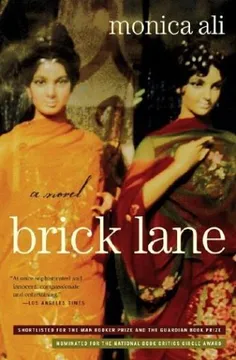


Plot Summary
The Girl Left to Fate
In 1967, Rupban gives birth to Nazneen, who appears lifeless and refuses to feed. While her sister Mumtaz urges a hospital visit, Rupban trusts that whatever happens is already decided; Nazneen eventually begins nursing and grows up believing hardship must be endured rather than resisted. Her sister Hasina, by contrast, elopes at sixteen, angering their father, Hamid.
Soon after, he arranges Nazneen’s marriage to Chanu, a much older Bengali man living in England. Nazneen does not inspect his photograph openly, but learns he looks unlike the husband she might have imagined. At eighteen, she leaves her family and village for London, carrying her mother’s lesson about fate into a life she has not chosen.
The opening does more than explain Nazneen’s passivity. Her survival is made into evidence that surrender works, so a family anecdote becomes an internal rule for interpreting every later crisis. Hasina’s elopement offers a living counterexample, but it frightens Nazneen as much as it attracts her. The sisters are not simply obedient and rebellious types; they embody competing strategies for living under unequal choices. By arranging Nazneen’s marriage without her consent, Hamid turns private family custom into the force that transports her to England, where the inherited rule will be tested against daily loneliness.
A Flat Full of Silence
In Tower Hamlets in 1985, Nazneen has spent six months inside the flat, cooking, cleaning, and watching the tattooed neighbour across the courtyard without daring to visit. Chanu fills the rooms with furniture and certificates, but his stories about degrees and promotion do not give Nazneen company or choice.
At dinner, Dr Azad punctures Chanu’s hopes of winning a promotion through personal connections, while Nazneen quietly says she would rather return to Bangladesh.
She begins to learn English by watching television and grows close to Razia, a neighbour who visits with stories and practical candour. When Nazneen discovers she is pregnant, Chanu celebrates the expected son and resumes planning a future in Dhaka. Nazneen remains unsure whether she is loved or merely useful.
The flat’s abundance sharpens rather than relieves Nazneen’s confinement. Objects testify to Chanu’s imagined rise, while she has no language or independent route into the city. His dinner with Dr Azad exposes the distance between credentials and recognition: Chanu can explain his ambitions, but cannot make an employer see them. Nazneen’s brief wish to return home is a rare statement of preference, and the pregnancy redirects the household’s future toward a hoped-for boy. Razia’s visits matter because they offer something Chanu’s lectures cannot: a reciprocal social world in which Nazneen can listen, respond, and begin to form judgments of her own.
A Walk Without Permission
A letter from Hasina reveals that she has fled her husband and reached Dhaka, leaving Nazneen frightened for her safety and furious that Chanu will not help. Pregnant and still largely unable to speak English, Nazneen leaves the flat alone.
She crosses busy streets, loses her way among office blocks, and eventually asks for directions in English before finding her route home. The walk does not locate Hasina, but it shows Nazneen that she can move through London and be understood by a stranger.
Back home, Chanu again urges her to wait for events to settle. Instead, she quietly disrupts his routine by hiding his socks, mixing his files, and putting chillies in his sandwich. Her anger has become action, even if she cannot yet name it as freedom.
Nazneen’s walk is a modest, consequential experiment in agency. She does not rescue Hasina or master London, but she leaves without permission, navigates unfamiliar streets, and completes an exchange in English. Its value lies in what it disproves: she is not wholly incapable of acting simply because she is afraid. Her small domestic reprisals remain indirect, a form of protest calibrated to the limits of her marriage. The episode also unsettles the family’s inherited idea of fate. Hasina may be suffering, but her decision to flee forces Nazneen to confront the possibility that inaction can itself have consequences.
The Son She Keeps
Nazneen gives birth to Raqib, whom Chanu calls Ruku, and her attention narrows to the baby’s immediate needs. Mrs Islam arrives with a stream of inherited remedies and tries to take him away for an afternoon, but Nazneen refuses and keeps her son beside her. The refusal is small, yet it marks a change: she no longer treats an elder’s authority as automatically final.
Months later, Raqib develops a severe rash and becomes difficult to wake. Nazneen and Chanu rush him to hospital, where doctors place him under intensive care. His condition separates him from his parents behind glass and machinery. Nazneen’s fear is no longer an abstract dread of what fate might bring; she is watching a child she loves become dangerously ill.
Motherhood gives Nazneen a claim that she did not possess as a young bride: she can identify a need and insist that her judgment be taken seriously. Her conflict with Mrs Islam is not a rejection of community knowledge in general, but a refusal to let advice override her intimate knowledge of her child. The hospital crisis then gives that new authority its hardest test. Technology places Raqib beyond her touch, exposing the limits of maternal control even as her decision to seek help becomes essential. The movement from a domestic boundary to an emergency room dramatizes a distinction the novel keeps alive: accepting uncertainty is not the same as refusing responsibility.
The Hospital Changes Them
For days, Nazneen keeps vigil beside Raqib while Chanu brings food, questions doctors, and struggles to help. Their son recovers, but the hospital exposes a tenderness between the parents that their crowded home and mismatched ambitions have obscured.
Nazneen begins to understand Chanu’s endless projects as his attempt to secure the respect he has never received in England. In the same period, Chanu admits that he has exaggerated his success to relatives in Bangladesh, allowing them to believe he is wealthy.
He resigns from his council job, declaring that talking and waiting have failed him. Before Nazneen leaves the hospital, Razia arrives with news that her husband has died beneath seventeen frozen cows while working overnight at a meat depot.
The hospital temporarily strips away the roles that have kept the marriage at a distance. Chanu is no longer an audience-seeking lecturer, and Nazneen is not merely his silent listener; both are frightened parents working around the same cot. Her new understanding of his ambitions does not erase their failures, but it makes his self-invention legible as a defence against humiliation. Chanu’s resignation is another attempt to replace speech with action, though its practical consequences remain uncertain. Razia’s bereavement brings a different cost of labour into the room: her husband’s death is not symbolic but physical, the result of exhausting work and dangerous conditions.
Razia Starts Over
After her husband’s death, Razia begins clearing the clutter from her flat and gradually replaces the makeshift household with carpets and new furniture. Nazneen watches her friend make a home rather than simply endure one. At her own flat, Nazneen tries on Chanu’s trousers and raises one leg as if skating, testing a private image of a self not defined by sari, chores, or pregnancy.
She begins writing more honestly to Hasina, though she still edits away much of what she feels. The sisters’ correspondence carries Nazneen into the life she cannot see: Hasina finds work in Dhaka’s garment factories, makes friends, and seeks to earn her own living. Their different forms of movement now run beside each other across two cities.
Razia’s rebuilding gives Nazneen a concrete model of change that does not depend on a dramatic escape. The new furniture matters because it records decisions made over time, the slow conversion of a temporary refuge into a chosen home. Nazneen’s private imitation of skating similarly lets her rehearse freedom before she can claim it publicly. Hasina’s letters complicate the sisters’ contrast: her independence brings paid work and friendship, but not security. The women are not moving along a simple ladder from oppression to liberation. Each gains room to act while facing distinct vulnerabilities, and each sister’s story becomes a lens through which the other tests her own limits.
Hasina's Letters From Dhaka
Hasina’s letters trace a difficult life after she leaves her first husband. She becomes a machinist in a garment factory, where women build friendships and earn wages despite gossip and religious protests against women working beside men.
Her landlord, Mr Chowdhury, presents himself as a protector, then forces himself on her. A factory manager later dismisses her after a colleague accuses her of sexual misconduct. She survives through sewing and odd jobs, then accepts marriage to Ahmed, an albino shoe-factory supervisor whose devotion becomes controlling.
When that marriage falters, Hasina works as a maid in the wealthy household of Lovely and James. She cares deeply for their children and grows close to the household’s cook, while continuing to write to Nazneen about work, poverty, and the people around her.
Hasina’s letters refuse the comforting equation between independence and safety. Waged work gives her competence, friendship, and a way to support herself, but it also exposes her to public judgment, employer power, and male violence. Her own explanations often turn harm into proof of personal fault, a habit that mirrors Nazneen’s learned deference in a different form. The letters also prevent London from becoming the only meaningful setting: Dhaka contains its own class hierarchies, labour struggles, and intimate forms of coercion. Their imperfect grammar carries urgency rather than deficiency, making Hasina’s account a record of experience that Nazneen’s more disciplined, cautious letters cannot quite match.
The Family's Return Project
By 2001, Chanu has left his council job and spends much of his time teaching his daughters about Bengali history and insisting they prepare for a move to Dhaka. Shahana resists most fiercely, rejecting the language and customs he wants to preserve; Bibi tries to please both parents. Nazneen wants to return partly to find Hasina, but understands that the girls may feel exiled from the only home they know.
To raise money, she takes a loan from Mrs Islam for a sewing machine and computer, then learns garment work with help from Razia. Chanu becomes a taxi driver and organizes piecework, turning himself into a middleman. Karim, a young man who brings clothes from a factory, enters their home and begins to draw Nazneen’s attention.
The planned return is less a shared family decision than a collision of different meanings of home. For Chanu, Bangladesh promises recognition and a setting where his education and status might finally count. For Nazneen, it offers reunion with Hasina, but also threatens to uproot her daughters. Shahana’s refusal is not simply adolescent defiance; she is defending a sense of belonging formed in London. The sewing machine gives Nazneen a new economic role, while Chanu’s coordination lets him recover a familiar position of authority. Karim’s arrival introduces another possible future, one that will make the choice between inherited duty and personal desire more immediate.
The Bengal Tigers Gather
Karim tells Nazneen that racist activists known as the Lion Hearts are circulating inflammatory leaflets around the estate. He brings her Bengali and English publications about Muslim communities abroad, and his fluency and confidence impress her.
When he invites her to a meeting, she goes despite having decided she would not. The group becomes the Bengal Tigers, a local organization arguing over its purpose, leadership, and response to racism. Karim is elected chairman, defeating a more militant member known as the Questioner.
At the meetings, women propose concerns of their own, while the Questioner pushes for stronger action and displays photographs of children harmed by war. Nazneen watches Karim command the room and begins to imagine him as a man with a place in the world.
The meetings translate diffuse fear into organized language, but they also reveal how easily collective identity can narrow into rivalry. Karim offers Nazneen access to a public conversation she has largely observed from a window; his attention makes her feel included in a world of political knowledge. Yet the factional tension between Karim and the Questioner is already visible. One prioritizes local organization and disciplined messaging, the other invokes distant suffering to demand action. Nazneen’s attraction grows inside this political theatre, where charisma can look like moral certainty. The Bengal Tigers give her a new vantage point, but they do not resolve the question of what kind of belonging Karim is offering.
An Affair Takes Shape
After Karim’s political visits become familiar, Nazneen begins an affair with him. The relationship brings an intensity she has not known, but it also makes her conscious of the lies and risks surrounding their meetings.
She becomes more attentive to her daughters, finds satisfaction in her sewing, and sees Chanu’s kindness more clearly, even as she continues to conceal the affair. Karim’s confidence and religious commitment attract her, though their conversations show that he is still shaping his own identity.
He speaks of racism, global Muslim suffering, and the Bengal Tigers’ declining membership; she listens and feels newly connected to events beyond the estate. Their private desire and public politics begin to reinforce each other, until neither can be separated from the other’s expectations.
The affair does not simply free Nazneen from an unhappy marriage. It heightens her perception of the life she already inhabits, making work, motherhood, and even domestic order feel newly vivid. That expansion is real, but it is purchased through secrecy and moral conflict. Karim supplies attention and a political vocabulary, yet Nazneen is also projecting onto him the certainty she longs to possess. His public role and private tenderness seem to promise a unified self, although the novel shows him still assembling one. The relationship therefore becomes both an awakening and a distortion: it helps Nazneen feel present while encouraging her to mistake another person’s emerging identity for a secure destination.
Hasina's Life Comes Clear
As Chanu presses the family’s return plans, a newspaper ranking Bangladesh as the world’s happiest country provokes Nazneen to correct him. She reveals the truth she has hidden for years: Hasina’s landlord assaulted her, her factory dismissed her, and her later relationships have not brought lasting safety.
Chanu is shaken and promises to make a plan. His wish to go home now includes the hope of helping Hasina, while Nazneen’s savings and sewing take on a practical purpose.
The daughters continue resisting the move, especially Shahana, who treats Bangladesh as a place where she would lose control of her own life. At the same time, Nazneen’s increasingly divided loyalties deepen her anxiety, and the unfinished future begins to feel like a trap rather than a plan.
The disclosure changes the family’s idea of return. Chanu’s homeland has been an abstraction of dignity and unrealized success; Nazneen’s account makes it a place where Hasina has faced exploitation without reliable protection. His promise to help is meaningful, but it also risks becoming another project through which he imagines himself effective. For Nazneen, telling him is a break with the secrecy that had protected her sister’s privacy and shielded Chanu from distress. The daughters’ resistance prevents adult nostalgia from standing in for their own needs. The decision is now ethically crowded: migration could reunite sisters, but it could also impose another generation’s sacrifice.
The City Turns Hostile
After the September 11 attacks, anti-Muslim hostility reaches the Dogwood Estate. The Lion Hearts and the Bengal Tigers trade leaflets, each accusing the other of threatening local life, and plans form for a march against the Muslim organizers.
Karim urges resistance; Chanu reads the arguments through race and colonial history, while privately preparing to leave England. The crisis unsettles Nazneen, who is already hiding the affair and worrying about her daughters. Meanwhile, Razia discovers that her son Tariq has been selling drugs to support his own addiction.
He has taken furniture from her flat after local dealers demanded money, leaving Razia ashamed and frightened. She asks Dr Azad for help, and he warns that Tariq must want treatment. The two families now face different forms of danger on the same estate.
The political conflict makes private identity publicly legible and vulnerable. Leaflets reduce complex histories to accusations, while the prospect of a march turns the estate into a stage on which residents may be judged as representatives of Islam, race, or class. Chanu and Karim respond through competing narratives, one historical and defensive, the other activist and assertive. Razia’s crisis brings a more intimate violence into view: addiction and drug dealing are not abstractions but forces that empty her home and threaten her son. By placing these pressures side by side, the novel resists a single explanation for community distress. Racism, poverty, family control, and local criminal economies overlap without becoming interchangeable.
Nazneen Falls Silent
Pulled between her daughters, Chanu, Hasina, Karim, the march, and the loan from Mrs Islam, Nazneen collapses on the kitchen floor. Chanu finds her and carries her to bed. Dr Azad treats her for nervous exhaustion, while Chanu cooks and cares for her with an attention that surprises even him.
During recovery, Nazneen recognizes how often she has used prayer and patience to quiet her own wishes rather than understand them. She returns to sewing without waiting for permission, and Chanu, despite his concern, cannot make her obey his instructions to rest.
The collapse does not solve her choices, but it interrupts the exhausting routine of accommodating everyone else and leaves her with a clearer sense that she can act without first becoming fearless.
The breakdown is not a sudden revelation so much as the body’s refusal to continue carrying incompatible demands in silence. Nazneen’s appetite, sleep, and ability to respond have been pressed into service for others until her own agency becomes difficult to locate. Chanu’s care makes the marriage more complex: his tenderness is genuine, even when his habits remain controlling. Recovery does not convert Nazneen into a confident rebel. Its importance is smaller and more credible: she begins sewing and deciding before her fear has disappeared. The episode revises her inherited idea of patience, showing that endurance can preserve life but can also become a means of postponing it.
The Debt Has No End
As the departure date approaches, Nazneen realizes that repeated payments have not reduced the debt Mrs Islam claims she owes. Mrs Islam arrives with her two sons and demands another two hundred pounds, while they threaten Nazneen and smash the glass showcase with a cricket bat.
Nazneen refuses to pay more interest and asks Mrs Islam to swear on the Qur’an that no interest was charged. The lender cannot do it. Instead, she admits that her sons have failed to manage the business she built and leaves with them after striking one with her medicine bag.
Nazneen sweeps up the broken glass and understands that the debt has been sustained by intimidation as well as money. For the first time, she confronts an elder’s authority without softening her refusal.
The confrontation makes economic dependence visible as a relationship of power rather than a neutral transaction. Mrs Islam has presented lending as help, but the accumulating payments and threats reveal how generosity can become a means of control. Nazneen’s appeal to the Qur’an matters because it uses the moral authority Mrs Islam herself invokes, turning religious language against exploitation. The broken showcase is a material record of what the intimidation has cost, but the lender’s retreat marks a limit to her power. Nazneen does not win by becoming more forceful than the sons; she names the contradiction they cannot publicly defend and refuses to keep paying for silence.
The Wedding She Refuses
With the flight to Dhaka booked, Nazneen meets Karim in Covent Garden before the planned march. She tells him she and the girls will not leave, then makes clear that she will not marry him either. Karim first treats the decision as temporary, but her insistence forces him to accept that their affair cannot become the future he imagined.
As they sit together afterward, Nazneen recognizes that she and Karim have been making versions of each other to fill their own needs: he wanted an emblem of home, while she saw certainty in a young man still searching for his place. The refusal hurts them both, but it separates desire from destiny. Nazneen returns to the estate knowing that staying will require more than ending the affair.
Nazneen’s refusal is the clearest break from her earlier habit of waiting for circumstances to choose on her behalf. It is not a declaration that she feels nothing; she has to acknowledge the pain precisely because the attachment matters. Her insight about projection is also reciprocal. Karim has turned her into an idea of Bengali domesticity, while she has treated his political confidence as evidence of settled identity. Naming this mutual invention does not make the affair unreal, but it makes it insufficient as a basis for marriage. The choice to stay is therefore not simply a choice between two men. It begins to define Nazneen as someone who can interpret her own desires.
A March Without Unity
Before the march, Chanu attends a Bengal Tigers meeting in his old suit with a prepared thesis on race and class, hoping to answer the community’s divisions with scholarship. The Questioner challenges Karim with photographs of children harmed by war, while a young woman questions why distant suffering receives attention only when it concerns Muslims.
Karim directs the meeting back toward local organizing, and Chanu never delivers his speech. On march day, crowds assemble in the estate courtyard, including Muslim families and a handful of outsiders calling for workers’ solidarity.
Karim speaks from the makeshift stage as Chanu watches from home. The scene offers no easy unity: people arrive with different grievances and histories, while Chanu continues preparing for departure and Nazneen knows she must soon tell him she will remain.
The meeting tests each man’s preferred answer to uncertainty. Chanu arrives with an essay, hoping knowledge will give him standing; Karim relies on organization and charisma; the Questioner insists that distant casualties cannot be subordinated to local strategy. None can fully absorb the others’ claims. The march crowd broadens the political field but does not dissolve its divisions. For Nazneen, the gathering is also personal: she is watching the public future Karim has built while concealing the private decision that will end their relationship. The juxtaposition reveals how political collectives can offer belonging without guaranteeing mutual understanding, just as family can offer care without granting each member the same freedom.
Brick Lane Burns
As the planned march gives way to clashes between local boys, police, and restaurant workers, Nazneen learns that Shahana has run away with a friend who hopes to escape an arranged marriage. Nazneen searches the Shalimar Cafe and pushes past a police cordon into Brick Lane. She finds Karim in the turmoil, and he helps her reach the restaurant, where Shahana and her friend are sheltering behind waiters.
Nazneen brings her daughter home. Afterward, she tells Chanu that she cannot accompany him to Bangladesh. He leaves alone, still hoping to build a business, while Nazneen and the girls remain in London. The separation hurts them both, but Chanu accepts that the girls’ future cannot be secured by carrying them away against their will.
The riot converts political abstraction into immediate bodily risk, but Nazneen’s urgent purpose is unmistakably domestic: find her daughter. Her crossing of the police line repeats the earlier walk through London in a changed register. She now moves with a clear aim and refuses to be redirected by official authority. Karim’s assistance is real, but it does not restore their romance or alter her decision. The final separation from Chanu preserves affection without pretending that love erases disagreement. By allowing him to leave and the girls to stay, the family gives up a single, authoritative definition of home. Their future remains uncertain, but it is no longer imposed by one person’s plan.
A Different Kind of Home
After the riot, Nazneen earns through sewing alongside Razia and other women, while Razia helps her turn piecework into a small business. Tariq works toward recovery, and the former Bengal Tigers chairman leaves for Bangladesh.
Chanu later locates Hasina, who has left Lovely’s household with the young cook; he reports that she is safe, though still moving through uncertain circumstances. Nazneen continues supporting her sister and raising the girls in London. In March 2002, Razia and the daughters take Nazneen to an ice rink.
She hesitates because she is wearing a sari, then accepts the skates and steps onto the ice. The girl who once watched skating on television now enters the rink herself, not as an imagined character but as a woman choosing what her body can try.
The ending does not replace one secure home with another. Chanu’s life in Bangladesh remains partly unknown, Hasina’s safety is provisional, and Nazneen’s income depends on work shared with other women. What changes is the range of action available to her. Sewing turns domestic skill into paid labour and reciprocal cooperation; skating transforms a private fantasy into a public bodily experience. The final image does not claim that cultural inheritance has vanished. Nazneen arrives in a sari, carrying the life she has lived, and still takes a step onto the ice. Her freedom is neither a clean break from the past nor a triumph over every constraint. It is the ability to make a choice within them.
Analysis
Brick Lane follows Nazneen’s movement from inherited endurance toward deliberate, imperfect choice. The novel makes that change legible through ordinary actions: she crosses a street alone, refuses to surrender her baby, earns money at a sewing machine, confronts a lender, and decides where her daughters will live. None of these acts abolishes constraint. Language, race, class, gender, and money continue to shape what is possible, and the riot demonstrates how quickly public identity can become physical danger. Agency is therefore not portrayed as a triumphant escape from circumstance, but as the capacity to judge among limited paths and accept responsibility for choosing one.
The novel’s paired women keep that argument from becoming a simple lesson. Hasina’s mobility and Nazneen’s caution lead to different forms of exposure; neither guarantees safety. Razia’s practical independence offers a model of change built through work, friendship, and persistence, while her struggles with Tariq show that mothers cannot author their children’s lives. Chanu’s longing for Bangladesh is likewise neither dismissed as foolish nor allowed to determine the whole family’s future. His ambitions answer real racial humiliation, even as his imagined return risks repeating the coercion he wants to escape.
The story’s most important distinction is between accepting uncertainty and surrendering choice. Nazneen cannot command outcomes for her son, sister, lover, or daughters. She can, however, refuse to let uncertainty excuse permanent inaction. The final skating scene completes this shift with deliberate modesty. She does not become someone else or leave her history behind; she tests the ice in the body, clothing, and relationships she already has. Freedom appears not as a country reached at last, but as permission to begin.
Review Summary
Brick Lane received mixed reviews. Some praised its portrayal of immigrant experiences and character development, particularly of Nazneen and Chanu. Others found it slow-paced and stereotypical. The novel explores themes of cultural identity, assimilation, and women's empowerment. Many readers appreciated Ali's writing style and attention to detail, while some criticized the pacing and found certain characters underdeveloped. The book's depiction of Bangladeshi immigrant life in London resonated with many readers, though some questioned its authenticity.
People Also Read









Characters
Nazneen
A watchful new LondonerBorn in a Bangladeshi village and married into an unfamiliar life in London, Nazneen begins with a deep belief that whatever cannot be changed must be endured. She is observant, cautious, and often more perceptive than her silence suggests. Domestic work and motherhood give her competence, but her early dependence on Chanu and her limited English make the world beyond the flat difficult to reach. Her relationships with Hasina and Razia expose other ways of living, while her own desires challenge the habits of submission she inherited. Nazneen’s growth is not a transformation into someone fearless; it is the gradual discovery that she can act while afraid and make choices without waiting for permission.
Chanu
The thwarted intellectualNazneen’s older husband is talkative, educated, and hungry for recognition. He collects qualifications, plans businesses, studies history, and imagines a return to Bangladesh where he can recover the status he believes England has denied him. His ambitions are often impractical, but they grow from real experiences of racial exclusion and from a fierce wish to protect his family. Chanu can be loving and generous, especially in moments of danger, yet he frequently mistakes his own plans for the family’s shared desires. His humour, self-deception, tenderness, and wounded pride coexist, making him more complicated than either a foolish dreamer or a simple patriarch.
Hasina
Nazneen's restless sisterNazneen’s younger sister is beautiful, impulsive, and unwilling to accept a life chosen entirely by others. Her elopement and later letters from Dhaka reveal a woman who seeks love, paid work, and a measure of independence, even when those choices expose her to danger. Hasina writes freely and emotionally, often naming experiences that Nazneen would soften or hide. She is not simply the daring opposite of her sister: she can blame herself for harms done to her and sometimes mistakes attention for protection. Her correspondence keeps the sisters emotionally connected across distance and gives Nazneen a view of how resilience can coexist with vulnerability.
Razia
Nazneen's candid neighbourRazia is Nazneen’s closest friend in London, a sharp observer with a comic voice and little patience for pretence. She refuses to let community gossip dictate every decision and is willing to work, study English, and challenge expectations around women’s roles. Her practicality contrasts with Chanu’s grand plans, but she is not untouched by grief, money worries, or fear for her children. Razia gives Nazneen companionship without demanding obedience, and their friendship lets each woman speak more honestly than she can in her own household. Her bluntness can wound, but it also cuts through the evasions that keep Nazneen isolated.
Karim
The confident young organizerKarim brings garments to Nazneen’s flat and becomes a leading figure in the Bengal Tigers, a local Muslim group responding to racist agitation. He is fluent and assured in English, though less at ease in Bengali, and he draws confidence from religious politics and collective action. His attention offers Nazneen a new kind of recognition, while his certainty about identity can mask his own unsettled sense of belonging. Karim is energetic, ambitious, and capable of tenderness, but he can also turn people into symbols of the world he wants to defend. His relationship with Nazneen grows within these competing needs for intimacy, identity, and control.
Shahana
The defiant elder daughterNazneen and Chanu’s elder daughter was born and raised in London, and she resists her father’s plan to take the family to Bangladesh. Shahana is quick-witted, sharp-tongued, and increasingly protective of her own choices, especially as adolescence makes her body and identity feel like her own. Her clashes with Chanu are partly about language and culture, but also about who gets to decide where she belongs. Her defiance can be reckless, yet it forces her parents to confront the fact that their children are not extensions of their nostalgia.
Bibi
The anxious younger daughterBibi is Nazneen and Chanu’s younger daughter, quieter and more eager to please than Shahana. She watches her parents closely and tries to anticipate what each wants, sometimes making herself a messenger between them. Her sensitivity makes her vulnerable to family tension, but it also gives her a careful, observant presence. Bibi wants reassurance and connection, and her questions often reveal what the adults are avoiding.
Raqib
Nazneen's beloved sonRaqib, whom Chanu calls Ruku, is Nazneen and Chanu’s first child. His dependence gives Nazneen a form of purpose grounded in immediate, practical care, while Chanu sees in him the promise of a future shaped by education and opportunity. The parents’ different hopes for their son reveal how each tries to answer uncertainty: Nazneen through close attention, Chanu through plans.
Dr Azad
The measured family friendDr Azad is a reserved physician and a long-standing friend of Chanu. His professional success contrasts with his private unhappiness, and his precise manner makes him a foil to Chanu’s expansive talk. He observes the pressures facing Bengali families in Tower Hamlets, including addiction and the difficulty of returning to Bangladesh. His advice is often practical, though he recognizes that help cannot substitute for a person’s own decision to change.
Mrs Islam
The estate's elder powerA formidable older woman, Mrs Islam is known across the Bengali community for her knowledge of people’s affairs and her ability to intervene in their problems. She presents herself as a respected elder and offers practical assistance, including financial help. Her authority rests on a mixture of social standing, experience, and the influence of her sons. Nazneen is both intimidated by her and aware that older women can wield forms of power unavailable to them in public life.
Tariq
Razia's troubled sonRazia’s son grows up amid the estate’s pressures, his mother’s worries, and a widening distance between generations. He is difficult for Razia to read and increasingly drawn toward life beyond her control. His choices place stress on the family and expose how young people can be pulled between the need for money, peer status, and the expectations of their parents.
Mumtaz
Nazneen's outspoken auntMumtaz is Nazneen’s aunt, a practical and outspoken presence in the village. Unlike Nazneen’s mother, she questions easy explanations and is willing to speak plainly about women’s circumstances. Her affection for the girls and her independence of mind make her an early counterweight to the village’s rules.
Rupban
Nazneen's stoic motherRupban teaches Nazneen to meet hardship with quiet acceptance and religious trust. Her composure is treated by others as saintliness, but her life also reveals the narrow choices available to women in the village. Her way of coping becomes one of Nazneen’s deepest inheritances, both a source of endurance and a rule her daughter must eventually question.
Hamid
Nazneen's village fatherHamid is Nazneen and Hasina’s father, a prosperous village landowner who makes decisions for his daughters within the customs of his community. His authority shapes their marriages and the different paths they take.
Ahmed
Hasina's second husbandAhmed is a quiet albino man who supervises a night shift at a shoe factory. He approaches Hasina with unusual patience and devotion, but his idea of marital security is closely tied to order and control. His life has been shaped by the attention his appearance draws from strangers.
Lovely
Hasina's wealthy employerLovely is a beautiful, sociable woman married to James, and she cares about charity, fashion, and her public standing. She treats Hasina with warmth, yet she inhabits a world of wealth and status far removed from the worker she employs. Her concerns reveal how compassion can coexist with blindness to the labour supporting one’s comfortable household.
Zaid
The household's restless cookZaid is a skilled cook employed in Lovely and James’s household. Small, energetic, and difficult to pin down, he practices kung fu and keeps his political loyalties flexible. His humour and resourcefulness make him a vivid presence in Hasina’s account of domestic work in Dhaka.
The Questioner
Karim's political rivalA young member of the Bengal Tigers, the Questioner challenges Karim’s leadership and pushes the group toward a more confrontational response to injustice. He uses photographs and reports to draw attention to Muslims harmed in conflicts abroad. His intensity gives the meetings a moral urgency, though his priorities often clash with Karim’s focus on local organization.
Plot Devices
The story of fate
A rule under pressureNazneen repeatedly recalls how her mother chose not to take her to hospital after she was born seemingly lifeless. The story becomes an inherited explanation for why suffering should be accepted rather than resisted. As Nazneen faces danger to her children, her sister’s flight, and choices about marriage and migration, the story’s meaning shifts. It first steadies her, then becomes a measure of what passivity costs. By returning to the same family memory at moments of decision, the novel tracks a change in belief through concrete acts rather than a sudden change of personality.
Letters between sisters
A life across distanceHasina’s letters bring Dhaka into Nazneen’s London flat and make the sisters’ separate lives part of one narrative. Their contrasting writing styles reveal character: Nazneen revises and limits herself, while Hasina writes with urgency and little concern for polished English. The letters carry changes in Hasina’s work, relationships, and living conditions, but their gaps and delays also leave Nazneen uncertain. They function as a bond, a record, and a reminder that correspondence cannot guarantee protection or intimacy.
Sewing and piecework
Skill becomes leverageThe sewing machine first arrives through a loan and the prospect of work, then becomes Nazneen’s route toward income and a wider sense of competence. Chanu organizes garments and collections, while Razia later helps connect Nazneen to a women-run business. Sewing gives practical shape to financial independence: each hem or buttonhole is paid work, not merely another domestic chore. The machine also ties the London story to Hasina’s factory life in Dhaka, where women’s work offers both solidarity and exposure to exploitation.
The leaflet conflict
Politics enters the courtyardLeaflets from the Lion Hearts and the Bengal Tigers turn the estate into a battleground of slogans, accusations, and competing claims about culture and religion. Their simple, provocative language compresses complex fears into messages that residents can pass through doors and argue over in public. The campaign brings Karim into Nazneen’s life and leads to meetings, political organizing, and the march. It also shows how public hostility can sharpen divisions within the community rather than unite everyone against a common threat.
Ice skating
A private wish made physicalNazneen first watches ice skating on television, captivated by movement that appears to defy weight and constraint. She later imagines herself skating, practices a pose alone, and connects the image to possibilities she cannot yet voice. The motif is not a simple symbol of escape: at first it allows her to dream without acting. When her daughters and Razia eventually take her to an ice rink, she must decide whether to step onto the ice in the life and clothes she actually has. The image becomes a small, embodied choice rather than an unreachable fantasy.
Download PDF
Download EPUB
.epub digital book format is ideal for reading ebooks on phones, tablets, and e-readers.








