

Key Takeaways
Recover women's sacred past to challenge who gets to define civilization

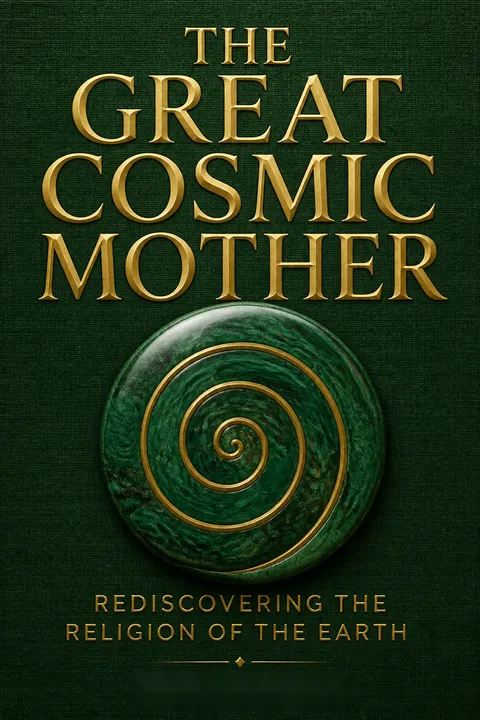
A counter-history with a purpose. The book’s central argument is that human culture began in communities centered on mothers, the earth, and shared life, long before the patriarchal religions and states that dominate recorded history. It reads female figures in ancient art, burial practices, and myths as traces of a Great Mother religion, and treats recovering that history as a way to contest the assumption that men alone built civilization. The Great Mother is both a religious figure and a symbol of the earth as a living source of life, death, and renewal.
A claim, not a settled verdict. The book’s proposed timeline and account of early matriarchies are its interpretation of scattered evidence, not an uncontested historical consensus. Its lasting challenge is to ask whose work and beliefs disappear when history begins with written records and states.
What's valuable here is the insistence that historical narratives have politics: what counts as an invention, a religion, or a civilization can reflect the interests of those who leave records. Feminist historians have likewise shown how unpaid care and informal expertise vanish from archives. The caution is that correcting an omission does not require reversing the old hierarchy. A female figurine or mother-centered myth can prompt new questions, but cannot by itself establish who governed a society or how its members lived.
Count care, food, and craft as engines of human history

Survival work is invention. The book challenges accounts of human evolution that cast men as hunters and toolmakers while treating women as background caregivers. It points to food gathering, medicinal plant knowledge, cooking, fire tending, pottery, weaving, and child care as forms of experimentation and cultural production. It cites estimates that women supplied 75 to 85 percent of daily nourishment in some contemporary foraging communities, and argues that such work could have shaped early tools, agriculture, and systems of knowledge.
Look beyond monuments. A notched bone used to track lunar phases, a stored seed, or a well-made vessel can embody observation and planning as surely as a weapon or a building. The book’s point is not that every innovation was female, but that everyday work deserves a place in the history of invention.
This reframing fits a wider historical effort to treat maintenance as productive labor. Food preparation, child care, and healing preserve the conditions that make specialized work possible, yet they are rarely credited as innovation. The book’s specific attribution of particular inventions to women is often difficult to verify from prehistoric evidence. That uncertainty does not weaken the broader question: historians should not mistake the poor survival of domestic artifacts for proof that domestic knowledge was unimportant.
Treat goddess images as clues, not proof of female rule

Read artifacts in context. The book interprets Paleolithic female figurines, the shrine art of Çatalhöyük, and Neolithic symbols of birds, snakes, moons, and spirals as evidence of a widespread Goddess religion. At Çatalhöyük, for example, it highlights female figures and shrines, burials beneath homes, and the absence of obvious signs of warfare in excavated layers. The authors read these details as signs of a peaceful, mother-centered culture.
Separate evidence from inference. Archaeological remains can support claims about what people made and where they placed it. They are less direct evidence about what people believed, who held authority, or whether a society was egalitarian. The book’s interpretive approach makes symbols vivid, but its strongest conclusions require more than resemblance between artifacts from distant places.
The book models an imaginative way to connect objects, landscapes, and stories, and it usefully challenges the habit of treating religious imagery as decorative. Archaeology also depends on disciplined uncertainty: similar symbols can have different meanings, and the meaning of a burial is not self-evident. A productive reading keeps both moves in view. The Goddess interpretation can generate research questions without being mistaken for a direct transcript of prehistoric life.
Keep body, spirit, work, and ecology in the same frame
Religion as lived relationship. In the book’s account, early religion was not a separate institution reserved for priests. It was woven into the activities that sustained life: childbirth, tending fire, planting seeds, making pots, burying the dead, and dancing together. The authors call this organic religion, meaning a sacred outlook in which practical work, bodily experience, community, and the natural world belong to one continuous process.
The body is not an obstacle. A cave understood as womb and tomb, or a pot treated as a vessel of transformation, links ordinary materials to larger cycles of life and death. The book presents this way of seeing as an alternative to later systems that separate spirit from matter and human beings from nature. It asks readers to notice how much meaning is lost when work and the living world are treated as merely functional.
This holistic lens has clear affinities with environmental thought and embodied approaches to cognition, which stress that people understand the world through action, sensation, and relationships, not abstract reasoning alone. It can also make daily care feel culturally visible rather than spiritually trivial. The nuance is that no single worldview should be treated as the natural expression of all women. Embodied experience matters, but cultures interpret it in different ways, and individuals do not share one universal relationship to their bodies.
Trace patriarchy to institutions and incentives, not male biology
A historical system, not a male instinct. The book rejects the idea that men are naturally violent or destined to dominate. It instead links patriarchy’s rise to changes in property, inheritance, social organization, and military power. In its account, agricultural surplus and stored wealth created new incentives to guard and seize resources; metal weapons and organized warfare strengthened male elites, while control of women’s sexuality and children helped secure inheritance.
Power changes the story. Myths that cast a male hero as a slayer of a female serpent or dragon are read as symbolic retellings of older religious and political changes. This is a compelling way to ask how institutions reshape beliefs. The book sometimes presents a sweeping transition from peaceful matrifocal life to violent patriarchy, but its core distinction remains useful: social systems can reward domination without domination being biologically inevitable.
The argument’s strongest contribution is to treat gender hierarchy as something built and maintained through institutions, rather than as an unavoidable consequence of biology. That opens room for change and aligns with research showing substantial variation in gender roles across societies. The book’s single-cause account, especially its emphasis on warfare and metal technology, is less persuasive as a complete explanation. Property, ecology, politics, and kinship are likely to interact in ways that differ across regions and periods.
Defend reproductive autonomy as a labor and power issue
Control of bodies sustains systems. The book connects patriarchal religion to control over women’s sexuality, childbirth, and work. It argues that laws and doctrines restricting contraception and abortion do more than regulate private behavior: they shape family inheritance, labor supply, and women’s economic dependence. Its account of medieval witch hunts emphasizes the persecution of healers and midwives, whose practical knowledge helped women manage pregnancy and childbirth outside male institutions.
The witch as a political figure. The authors read the witch stereotype as a way to discredit women’s knowledge and independent authority. They point to the 1486 publication of the Malleus Maleficarum, a manual that encouraged the prosecution of alleged witches, and to the later exclusion of women from professional medicine. The book’s historical claims are polemical, but its central question remains concrete: who controls reproductive knowledge, and who gains power when that knowledge is restricted?
The link between reproductive freedom and economic independence is stronger than a narrow account of the issue as personal choice. Access to contraception, safe childbirth, and medical knowledge affects education, employment, and a person’s ability to plan a life. The witch-hunt history is more complex than a campaign against midwives alone; accusations also reflected religious, local, and economic conflicts. That complexity sharpens rather than erases the question of how gendered expertise is regulated.
Question systems that turn living beings into controllable material
The machine is a political metaphor. The book uses “the machine” to describe systems that turn bodies, work, and nature into resources to be measured, managed, and exploited. It criticizes the split between mind and matter, spirit and body, and argues that such divisions make it easier to treat land and people as instruments. The authors extend the critique beyond private capitalism to state-controlled economies, arguing that both can subordinate human needs to production, bureaucracy, and power.
Notice who benefits. The book invokes Foucault’s account of surveillance and discipline to show how institutions organize daily life through observation, schedules, and rules. Its warning is not that every technology is harmful, but that tools and expertise serve particular interests. A machine can solve a problem, yet the system that owns and directs it can also narrow whose needs count.
This critique anticipates current debates about algorithmic management, workplace monitoring, and the conversion of personal data into commercial assets. Technology is not neutral in use, even when its design appears technical: ownership, incentives, and governance shape its effects. The book’s tendency to group very different political economies under one label risks obscuring real differences in rights and outcomes. Its more durable lesson is to ask who controls a system, what it measures, and who bears its costs.
Judge every revolution by whether it protects bodies, livelihoods, and ecosystems
Politics must include material life. The book connects spiritual ideals to practical conditions, rejecting a “return to the Goddess” that ignores poverty, war, reproductive control, or ecological damage. Its 1980s examples include women workers in export-processing zones, coercive sterilization programs, and the diversion of public resources toward military spending. These examples support its broader argument that control over women’s reproduction and exploitation of workers are linked parts of political economy.
Make the test concrete. A movement should be judged by what happens to people after its slogans: who has food, safety, health care, bodily autonomy, and a livable environment? The authors call for a cooperative politics that treats human beings as ends rather than inputs to profit or state power. Their spiritual vocabulary gives that politics a moral center, but it cannot replace specific policies or accountability.
This ending makes the book’s spiritual argument answerable to daily life. A politics that celebrates the earth while ignoring workers’ conditions, or praises women while restricting their choices, fails its own test. The 1980s cases should be read in their historical setting rather than assumed to describe every present-day workplace or program. More broadly, claims of ecological interdependence become politically useful when translated into measurable protections, fair access to resources, and decision-making power for affected communities.
Analysis
The Great Cosmic Mother is best read as a feminist spiritual polemic and counter-history, not as a conventional survey of settled archaeological findings. Its narrative moves from prehistoric female imagery and subsistence work, through Neolithic sites and lunar symbolism, into patriarchal religions, witch hunts, industrial capitalism, and reproductive technology. The organizing claim is that societies become more exploitative when they sever bodily life from spiritual meaning and treat women, workers, and nature as resources. This synthesis gives the book unusual force: it insists that mythology, political economy, ecology, and sexuality belong in the same conversation.
Its most durable contribution is methodological and political. It asks readers to notice how historical accounts privilege written records, rulers, warfare, and formal inventions while neglecting care, healing, food gathering, and craft. It also frames reproductive autonomy as infrastructure for economic and civic freedom, rather than as a private concern. Those ideas remain significant even if the book’s account of ancient history is not accepted wholesale.
The central historical difficulty is that suggestive evidence is often treated as confirmation. Female figurines, goddess myths, or peaceful settlement remains may support interpretations of religious life, but they do not by themselves prove women’s political authority, universal matriarchy, or an uninterrupted global Goddess religion. The book also compresses diverse societies into a broad contrast between egalitarian matrifocal cultures and violent patriarchy. That contrast is powerful as a moral framework but too tidy as a complete account of social change. Its biological claims about sex and evolution require particular caution, since some are speculative or presented in dated terms. The most responsible use of the book is therefore double: take its recovery project and its questions seriously, while distinguishing archaeological observation from symbolic interpretation and political argument. Its value lies less in proving a single lost world than in making invisible labor visible, exposing the interests behind dominant narratives, and urging readers to measure spirituality by its effects on bodies, communities, and the living earth.
Review Summary
The Great Cosmic Mother receives polarized reviews averaging 4.07/5 stars. Supporters praise it as transformative, life-changing, and essential reading on goddess spirituality and pre-patriarchal societies, with Alice Walker calling it one of the most important books she's read. Critics cite issues including Eurocentrism, male-bashing, outdated anthropological research from the 1980s, weak sourcing, and repetitive anger toward patriarchy. Many appreciate its examination of feminine spirituality and reclaiming women's historical contributions, though some find the anti-male tone excessive. Readers recommend approaching it chapter-by-chapter given its density and emotionally challenging content.
People Also Read

Glossary
Matrifocal
Mother-centered social organizationThe book uses this term for communities organized around mothers, maternal kinship, and women’s collective work. It distinguishes this arrangement from a simple reversal of patriarchy, in which women would rule through the same hierarchy. The authors associate matrifocal life with shared responsibility, maternal lines of identity, and a close integration of social, economic, and religious life.
Great Mother
Earth as living sourceA religious and symbolic figure representing the earth and the generative cycles of life, death, and renewal. In the book, the Great Mother is not only a deity but a way to understand humans as part of a living cosmos. The authors trace related images across myths and archaeological sites, while treating them as evidence of an ancient earth-centered religion.
Dream-body language
Integrated symbolic perceptionThe book’s term for a mode of thought that joins bodily sensation, emotion, imagery, social experience, and the surrounding world. It contrasts this holistic, symbolic way of knowing with abstract reasoning that separates observer from object or spirit from matter. The authors connect it to ritual, poetry, dreams, and early forms of communication.
Moon time
Lunar cycle-based timekeepingA way of organizing time through observation of the moon’s phases and their relation to menstruation, planting, harvest, and other recurring events. The book argues that lunar observation helped develop calendars and early scientific measurement. It treats the moon as both a practical clock and a symbol connecting bodily cycles with wider natural rhythms.
the machine
System for controlling lifeThe book’s metaphor for political and economic systems that convert human labor, reproductive capacity, and natural resources into managed inputs for power or profit. The machine is not simply a physical device. It includes institutions, technologies, and beliefs that separate people from their work and environments, then organize them through measurement, surveillance, and control.
sexual fascism
Control through sexual repressionThe book’s term for social and religious arrangements that restrict sexual autonomy and reproductive choice, especially for women, while using shame, dependence, and compulsory roles to maintain authority. It links control over sexuality to the exploitation of labor, arguing that institutions can redirect intimate and bodily energy toward systems that benefit those in power.
Download PDF
Download EPUB
.epub digital book format is ideal for reading ebooks on phones, tablets, and e-readers.








