

Key Takeaways
The modern left and right began as rival answers inside liberalism
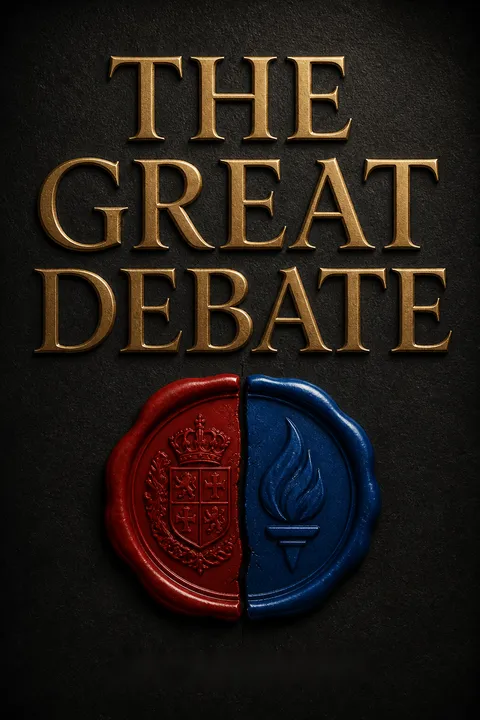
A dinner before the rupture. In 1788, Edmund Burke and Thomas Paine shared a pleasant meal. Burke was an Irish-born British politician; Paine, an English-born immigrant to America, had become a celebrated revolutionary writer. Their cordial acquaintance soon gave way to a public clash over the French Revolution. Burke feared that radical change would destroy the social order; Paine believed it could replace unjust government with one founded on equal rights.
Two liberal destinations. Yuval Levin presents them not as liberty against authority, but as competing visions of a free society. Paine treats liberty and equality as principles to enact. Burke sees freedom as a hard-won achievement embedded in institutions and customs. Levin calls Burke's approach conservative liberalism: improving a liberal order by preserving its accumulated strengths.
The book's most useful reframing is that both sides claim to defend freedom, but disagree about where it comes from. That distinction helps explain why policy fights often connect issues that seem unrelated: each side carries assumptions about rights, institutions, and change from one debate to another. The contrast is illuminating, though it works best as a map of recurring instincts, not a perfect description of today's parties. Political coalitions shift, and people often mix Paine's principles with Burkean caution.
Judge governments by equal natural rights, not inherited pedigrees
Paine starts before society. In Common Sense, Paine asks readers to imagine people meeting before any government exists. They are naturally equal individuals who form society to meet needs and enjoy companionship. This natural society, meaning human cooperation before formal government, is not the same as the state. Government is a human creation, meant to protect rights, and can be replaced when it becomes oppressive.
Revolution as a reset. Paine argues that political legitimacy comes from the consent of living people, not from a ruler's ancestry or a regime's age. A revolution can therefore clear away a corrupt government and establish a more just one. His famous pamphlet helped persuade colonists to support independence, and he later saw the French Revolution as a chance to apply the same principles beyond America.
Paine's distinction between society and government remains a powerful check on the assumption that dismantling a regime must dissolve human cooperation. It also makes clear why political power needs justification, rather than merely a long history. Yet a clean reset is easier to imagine than to carry out: laws, public services, and trust are interdependent, and disruption can injure the people a revolution aims to help. Paine identifies the moral case for change with unusual clarity, but the practical burden of rebuilding deserves equal attention.
Treat society as inherited human ecology, not a machine to rebuild
Burke begins with people as found. For Burke, human beings are social from the start, shaped by family, community, habits, and institutions. These arrangements are human-made, but that does not make them unnatural. His term moral imagination describes the sentiments and images through which people interpret experience and develop attachments. Reason matters, but it does not operate alone; rituals, loyalties, and shared habits can help restrain destructive impulses and sustain social trust.
Feelings have political work. Burke saw this in the French Revolution's assault on established forms, including the attack on the royal family at Versailles. He feared that stripping away public symbols and customs would not leave calm, rational citizens behind, but weaken restraints that had helped people live together. For him, reform must account for how social life actually works, not just how a theory says it should.
Burke's account anticipates a central finding of social science: norms and institutions shape behavior in ways no single person fully designs or understands. Shared rituals can create belonging and make cooperation easier. But attachment is not proof of fairness. The same customs that stabilize a community can exclude people or protect privilege. Burke's insight is strongest when tradition is treated as valuable evidence about social needs, while remaining open to scrutiny when its costs fall unevenly.
Demand justice, but ask whether upheaval can preserve the conditions for liberty
Each man saw the other's blind spot. Paine accused Burke of being moved more by the suffering of a queen than by the hardship of ordinary people under an unjust regime. Burke, in turn, feared that Paine's abstract rights could make people indifferent to violence and the destruction of social restraints. Their dispute was not simply compassion versus caution. Paine put justice in the foreground; Burke worried that order was a condition for justice to endure.
Burke still judged abuses. He opposed British mistreatment in India and supported rights for Irish Catholics, appealing beyond the law to standards of human dignity. He did not believe that whatever was established was therefore right. But he doubted that abstract principles alone could tell politicians how to act in complex societies. The challenge is to protect people from injustice without mistaking destruction for repair.
This tension is useful because political movements often notice one kind of harm while discounting another. A movement focused on injustice can underestimate the disruption its remedies create; a movement focused on stability can treat avoidable suffering as the price of order. Research on institutional change likewise highlights both risks: sudden reforms can produce unintended consequences, while gradualism can leave entrenched harms untouched. The test is not whether change feels orderly or principled, but whether it reduces injustice without creating a greater vulnerability.
Build freedom around real obligations, not choice alone
Paine makes choice foundational. People join together to secure rights they cannot protect alone. Their duties to one another, in Paine's account, are chiefly to respect equal rights. Burke starts from a different fact: no one chooses their birth, family, or original community. Those relationships bring obligations that cannot be reduced to a voluntary agreement. He calls the freedom protected by just laws and institutions social freedom, a liberty shaped and secured by shared restraints.
Liberty needs limits. Burke feared that rule by an unchecked majority could oppress minorities, just as a king could. He also argued that a representative should use judgment, not merely echo constituents' immediate preferences. Paine saw this as denying people political choice. Their disagreement asks whether government primarily protects each person's freedom to choose, or serves people whose needs and responsibilities arise within a wider social fabric.
Paine's view supplies a clear test for coercion: does power violate a person's equal rights? Burke adds a different question: what relationships and dependencies make meaningful freedom possible? Both matter. Care work, families, and local communities illustrate obligations that are real even when no contract created them. But appeals to duty can also silence people with less power. A sound account of social freedom needs both durable relationships and ways to contest the burdens they impose.
Use inherited knowledge as evidence, not as an unquestionable command
Reason has limits, Burke argues. Political decisions involve particular people and circumstances, so they cannot be solved like clean equations. Burke's prescription is a method of change that gives weight to practices and institutions tested over time, while allowing careful improvements. It does not mean preserving everything old. A society's accumulated experience can contain useful knowledge that no individual planner possesses in full.
Paine trusts public reasoning. He argues that citizens can assess political principles for themselves and that inherited customs should not escape examination. The American Revolution embodied this belief for him; Burke read the crisis differently, as a defense of colonial practices disrupted by imprudent British policy. Burke also defended political parties as principled groups that organize competing judgments. Paine hoped reason would make such divisions unnecessary.
The contrast resembles a modern debate about explicit and tacit knowledge. Written rules and expert analysis can expose injustice and coordinate action; evolved practices can encode local knowledge that plans overlook. Neither source is reliable by itself. Traditions can preserve the residue of past coercion, while rational designs can misread human behavior. Burke's case is a warning against assuming that a model captures everything; Paine's is a warning against letting complexity become an excuse for unaccountable power.
Reform the failing part before declaring the whole society beyond repair
Burke was a reformer before he opposed France. In Parliament, he pursued changes to public finances, criminal penalties, trade, and restrictions on religious minorities. During the American crisis, he argued that Britain's new taxes needlessly violated colonial habits and attachments. He eventually supported separation, not because he endorsed Paine's theory of revolution, but because the government had made reconciliation imprudent.
Paine saw deeper failure. For him, a regime founded on hereditary rule and unequal rights could not be fixed through isolated adjustments. Revolution should replace it with a government based on representation and consent. Burke feared that France's attempt to rebuild from first principles would remove restraints and intensify violence. His alternative was reform through prescription: preserve useful institutions, repair specific failures, and avoid treating society as blank paper.
The two approaches resemble different strategies for treating systemic failure. Targeted repair limits collateral damage, but can leave root causes intact; replacement can address structural flaws, but can destroy capacities that were not visible until they disappeared. Burke's record of reform complicates the caricature of a defender of stasis. Paine's emphasis on foundations complicates the caricature of a reckless agitator. The practical question is whether existing institutions can correct the harm, and whether proposed replacements have credible ways to govern.
Treat each generation as both heir and trustee, not a fresh start
Paine's politics centers the living. He calls time an eternal now: each generation has equal rights and should not be ruled by decisions made before it existed. He even proposed that laws should expire after roughly a generation unless renewed. Inheritance, especially hereditary political power, lets the dead govern the living.
Burke sees a continuing partnership. A society joins people who are alive with those who came before and those yet to be born. The present inherits institutions and knowledge, then has a responsibility to pass them on in improved condition. This view constrains present ambition, but it also gives inherited arrangements substantial authority. Their deepest disagreement is not simply past against future. It is whether generations are separate political owners or connected participants in a continuing commonwealth.
Paine's challenge is a sharp reminder that inherited rules can impose costs on people who had no voice in making them. Burke's response highlights that future generations also inherit capacities, not just constraints: functioning institutions, knowledge, and social trust. Intergenerational ethics must take both seriously. A past decision should not be immune from revision, but present convenience should not automatically justify passing risks or institutional damage forward. The hard problem is distinguishing stewardship from paternalism.
Paine made poverty a public right; Burke assigned relief to social duty
Paine extended rights to material need. In Rights of Man and Agrarian Justice, he proposed public support for education, parents, older people, and people in poverty. He argued that landowners owed society compensation because private ownership excluded others from the earth's original common inheritance. His proposed fund would pay everyone, not only the poor, to avoid marking recipients as a separate class.
Burke drew a different boundary. He supported commerce and worried that government interference in wages or prices could disrupt livelihoods, especially for vulnerable workers. He regarded aid to the poor as a serious duty, but one that should be met through private charity rather than state programs. Their disagreement shows how different premises produce different policy instincts: Paine treats deprivation as a public barrier to freedom; Burke treats relief as a social obligation whose method must avoid wider damage.
This contrast resists easy ideological sorting. Paine defended markets while supporting a broad public safety net; Burke defended social obligation while opposing state management of subsistence. Modern policy debates still turn on both questions: what material conditions make liberty real, and what unintended effects can public intervention create? Paine offers a durable argument for treating basic support as justice rather than generosity. Burke contributes a caution about implementation, though private charity alone may be inadequate when hardship is widespread.
Analysis
Levin's central achievement is to show that the modern left-right divide is not merely a quarrel over how much government to have. It is a conflict about political knowledge and time. Paine trusts reason to identify universal rights and authorizes each generation to redesign its institutions. Burke trusts accumulated social experience, treats people as embedded in inherited relationships, and sees prudent repair as more reliable than theoretical reconstruction. Their competing accounts explain why the same policy can appear to one side as overdue justice and to the other as reckless damage.
The framework is strongest when treated as a pair of ideal types rather than a strict genealogy of today's parties. Paine's actual program includes public pensions, education, and redistribution, complicating any simple equation of rights with a minimal state. Burke's real career includes reform and resistance to imperial abuse, complicating the image of tradition as automatic defense of power. Levin makes these complications visible, though the book's own conservative standpoint sometimes gives Burke's prudential judgment more interpretive charity than Paine's revolutionary confidence.
A contemporary reader can use the debate as a two-part test. First, identify the injustice a proposed reform addresses and ask whether existing institutions can genuinely correct it. Then ask what knowledge, trust, and capacities the reform might disrupt, and who bears the risk if its assumptions fail. Neither side can answer both questions alone. Rights without institutional competence can remain promises on paper; continuity without mechanisms for correction can naturalize inherited injustice. The enduring value of Burke and Paine is not that one wins, but that each exposes what the other is tempted to overlook.
Review Summary
The Great Debate receives mostly positive reviews, with readers praising its clear analysis of Burke and Paine's political philosophies. Many find it enlightening and relevant to modern politics, though some wish for more connections to contemporary issues. Reviewers appreciate Levin's balanced approach, despite his conservative leanings. The book is praised for its accessibility but criticized for occasional density. Some readers find themselves agreeing with both Burke and Paine on different issues, highlighting the complexity of political thought.
People Also Read

Glossary
Natural society
Cooperation before governmentPaine's term for the human cooperation that arises before formal government. People gather to meet needs and enjoy companionship, so society does not depend on the state for its existence. Government is a separate human creation, justified by its ability to protect rights and subject to replacement when it fails.
Prescription
Tradition-guided political changeBurke's term for giving weight to institutions and practices that have developed and endured over time. Their longevity does not make every feature just, but their survival may reflect accumulated experience unavailable to any single reformer. Prescription favors improving inherited arrangements rather than discarding them wholesale.
Moral imagination
Sentiments shaping moral judgmentBurke's account of how feelings, habits, and shared images help people interpret the world and guide their conduct. Reason does not act in isolation; it is mediated by this imaginative and emotional life. Burke believed that institutions and customs can cultivate attachments that support social restraint and political order.
Social freedom
Liberty secured by shared restraintBurke's conception of liberty as freedom within an ordered society, protected by laws and institutions rather than by unrestricted individual choice. It depends on restraints applying across society and on people governing their own passions. The proper balance varies with a community's circumstances and cannot be specified by one abstract formula.
Eternal now
Each generation's equal presentPaine's view that political principles do not gain authority simply through age. Each generation has the same basic rights as those before it and should not be bound indefinitely by their decisions. The living should govern their own political arrangements, while future generations must retain the same freedom.
Conservative liberalism
Freedom preserved through reformLevin's label for Burke's view that liberal freedom is not merely an abstract discovery to impose on society. It is also a practical achievement embodied in a society's institutions, customs, and political experience. The task is to preserve what enables freedom while carefully reforming what fails.
FAQ
What's The Great Debate about?
- Exploration of Ideologies: The Great Debate by Yuval Levin examines the ideological conflict between Edmund Burke and Thomas Paine, focusing on their views on government, society, and human nature.
- Historical Context: The book situates their ideas within the late 18th century, particularly during the American and French Revolutions, to highlight the origins of modern political ideologies.
- Philosophical Underpinnings: Levin delves into philosophical questions like justice, order, and individual rights, showing how these continue to shape political discourse today.
Why should I read The Great Debate?
- Understanding Political Divisions: The book provides insight into the historical roots of current political divisions, offering a framework for analyzing contemporary issues.
- Engaging Narrative: Levin combines biography with political philosophy, making complex ideas accessible and engaging for a broad audience.
- Relevance to Modern Politics: The themes are highly relevant to today's political climate, helping readers understand the ideological battles shaping our world.
What are the key takeaways of The Great Debate?
- Contrasting Ideologies: The book highlights the differences between Burke's conservatism, valuing tradition, and Paine's progressivism, championing individual rights and reform.
- Role of History: Levin emphasizes history's importance in shaping political philosophy, contrasting Burke's focus on historical context with Paine's emphasis on abstract principles.
- Nature of Rights: Burke and Paine conceptualize rights differently, with Paine advocating for natural rights and Burke emphasizing rights as products of social and historical contexts.
What are the best quotes from The Great Debate and what do they mean?
- “The age of chivalry is gone.”: Reflects Burke's lament for the loss of noble values and social cohesion, underscoring his belief in the importance of order and tradition.
- “We have it in our power to begin the world over again.”: Paine's assertion of the potential for revolutionary change and the creation of a just society, emphasizing individual empowerment.
- “Society is indeed a contract.”: Burke's view that society is built on complex relationships and obligations, suggesting political life is tied to historical and social fabric.
How do Burke and Paine differ in their views on government?
- Burke's Conservatism: Advocates for a government respecting tradition and gradual reform, emphasizing historical context and past wisdom.
- Paine's Progressivism: Argues for a government based on individual rights and popular sovereignty, accountable to the people.
- Nature of Authority: Burke sees authority as rooted in historical legitimacy, while Paine views it as derived from the consent of the governed.
How do Burke and Paine view the concept of rights?
- Paine's Natural Rights: Argues that rights are inherent and must be protected by government, emphasizing freedom and equality.
- Burke's Social Rights: Contends that rights are shaped by social and historical contexts, emphasizing societal obligations.
- Implications for Governance: Paine advocates for reform to protect individual rights, while Burke emphasizes preserving social order.
What role does history play in Burke's and Paine's philosophies?
- Burke's Historical Perspective: Believes history is essential for understanding political institutions and shaping governance.
- Paine's Rejection of History: Views history as a series of failures, advocating for guidance from nature and abstract principles.
- Consequences for Political Change: Burke supports gradual reform based on history, while Paine calls for revolutionary change.
How do Burke and Paine define justice in their political philosophies?
- Burke's Concept of Justice: Justice is understood within social relations and obligations, achieved through social order and gradual improvement.
- Paine's Vision of Justice: Rooted in protecting individual rights and freedoms, with unjust governments needing reform or overthrow.
- Impact on Governance: Burke emphasizes stability and order, while Paine prioritizes individual liberty and equality.
How do Burke and Paine view the relationship between government and society?
- Burke's View of Government: Sees government as an extension of society, reflecting community values and evolving gradually.
- Paine's Perspective on Government: Views government as necessary to protect individual rights, accountable to the people.
- Implications for Governance: Burke advocates for respecting tradition, while Paine calls for prioritizing individual rights and popular sovereignty.
How does Paine define natural rights in The Great Debate?
- Foundation of Philosophy: Paine argues natural rights are inherent and must be recognized and protected by governments.
- Equality and Liberty: Encompasses principles of equality and liberty, advocating for democratic governance and individual freedoms.
- Rejection of Hereditary Authority: Rejects systems violating fundamental rights, emphasizing government based on consent of the governed.
What is Burke’s concept of prescription?
- Definition of Prescription: Refers to preserving long-standing practices and institutions that have proven their worth over time.
- Importance of Tradition: Essential for effective governance, drawing on accumulated wisdom of past generations.
- Contrast with Radical Change: Emphasizes gradual improvement over complete overhaul, highlighting tension between tradition and progress.
What is the significance of the generational debate in The Great Debate?
- Burke’s Intergenerational Responsibility: Emphasizes preserving past wisdom for future generations, maintaining political order.
- Paine’s Focus on the Present: Argues each generation should govern itself without inherited constraints.
- Implications for Political Change: Highlights tension between continuity and change, questioning legitimacy of inherited institutions.
Download PDF
Download EPUB
.epub digital book format is ideal for reading ebooks on phones, tablets, and e-readers.








