

Key Takeaways
Make thrift and sustainability the same household decision
Begin with what you own. Nancy Birtwhistle’s guide is built on a simple premise: greener choices need not require buying expensive products or gadgets. She learned to sew, cook, bake, and manage bills when money was tight, and still finds satisfaction in making things last rather than replacing them. Her approach joins household savings to reduced waste, instead of treating them as competing goals.
Small skills add up. The book ranges from stain removal and repairs to recipes and energy use, but its central habit is to pause before discarding, purchasing, or switching on an appliance. Birtwhistle says she has gone three years without buying bottled laundry detergent, making her own from soap remnants and washing soda. The point is not that every homemade solution suits every home. It is that useful knowledge can turn limited resources into more options.
What's distinctive is the book's refusal to make sustainability a luxury identity. It begins with the economics of an ordinary household, where replacing a pan, buying a specialty cleaner, or wasting dinner has immediate consequences. That framing resembles the practical side of circular-economy thinking: value is preserved by extending use, repairing, and redirecting materials. It also avoids a common moral trap, in which people are blamed for not making choices their budgets cannot support. The limit is that time is a resource too. Homemade methods may save cash while requiring labor, so the best swap is the one a household can realistically repeat.
Batch the heat you pay for, and learn your own appliances
Use energy on purpose. Birtwhistle recommends learning what household appliances actually consume rather than assuming every popular tip applies everywhere. In her home, a long 20°C eco wash uses about one third of the energy of a 40°C eco cycle. She estimates her 1,000-watt microwave costs less than a penny per minute to run. Those figures describe her appliances and energy costs, not a universal price list.
Make one heating session count. Instead of heating an oven for a couple of potatoes, she bakes twenty, then freezes portions for later. When the oven is on, she looks for other food to cook or water to warm. She also uses the microwave for quick tasks and avoids running the washing machine for a partial load. Appliance handbooks and local energy information help turn these choices into informed comparisons.
This is a practical form of demand management: reduce energy use by changing timing and scale, not only by buying more efficient equipment. Batching works especially well when a task has a substantial setup cost, as oven heating does. The book also gets an important point right by grounding its advice in a particular home. Appliance age, tariff, load size, and cooking duration all affect the calculation. A penny-per-minute estimate can become outdated, and a microwave is not automatically cheaper for every quantity of food. Measuring local use is more reliable than turning any single appliance rule into doctrine.
Fix the moisture source before cleaning the mould
Find the cause first. A mould patch behind Birtwhistle’s chest of drawers traced back to an outdoor drain blocked by leaves. Rainwater overflowed, soaked the exterior wall, and dampened the wallpaper inside. Cleaning the marks without clearing the drain would have treated the symptom, not the reason it kept returning. She also describes a persistent patch linked to an exterior path that crossed the home’s damp-proof course.
Reduce moisture where possible. She recommends ventilation after showers and while cooking, and describes wiping small mould marks with a lightly damp cloth dipped in bicarbonate of soda. For condensation-prone spots, she places bicarbonate in a bowl as a simple moisture absorber. The book offers different treatments for fabrics, wood, and walls, but materials matter: acidic cleaners can damage stone, and a persistent or extensive damp problem may need more than surface cleaning.
The useful shift here is from cleaning as a cosmetic task to diagnosis as a systems task. Moisture moves through buildings, so the visible mark may be far from the leak, blocked drain, or ventilation problem that sustains it. This is a strong model for many household repairs: trace the conditions that reproduce the failure before spending effort on its appearance. At the same time, a household cleaning tip should not be mistaken for a health assessment or a building repair. Serious, widespread, or recurring mould can require expert investigation, especially when the underlying moisture source is not obvious.
Match stain treatment to the stain, not your panic
Start gently and specifically. Birtwhistle sorts stains by likely cause rather than reaching for one universal remover. For greasy marks, she uses bicarbonate of soda with washing-up liquid. For sticky residues such as glue or tree sap, she suggests dabbing with surgical spirit. Fresh blood gets cold salt water, while a milk spill is first blotted, then dabbed with tepid water, vinegar, and a little washing-up liquid. She warns against rubbing, which can spread a mark or push it deeper.
Keep water away from some messes. Soot, brick dust, and dried mud are treated dry, with bicarbonate rubbed in gently before vacuuming. Her homemade citric-acid spray, called Pure Magic, is used for selected stains, limescale, and mould, but not natural stone. A hidden-area test matters, particularly on dyed fabrics and carpets. The book’s most helpful rule is procedural: identify the likely stain, use the least aggressive suitable method, and reassess before escalating.
Stain treatment is a useful example of applied chemistry without requiring a chemistry degree. Grease responds to a detergent, mineral deposits to acid, and some inks to alcohol, so the category guides the choice of solvent. The advice to blot rather than scrub also reflects a general principle of damage control: contain the problem before trying to remove it. However, household stains are mixtures, and finishes, dyes, and fibers vary. A method that works on one garment can harm another. The safest version of this framework includes label checks, a discreet test, and stopping when treatment risks more damage than the stain.
Repair useful things before paying to replace them
Give durable objects another life. Birtwhistle’s examples range from darning a favorite sock to restoring a rusted cast-iron pan. She explains that seasoning cast iron means coating it with a thin layer of oil and heating it so the surface gains protection and becomes less prone to sticking. A well-used pan can therefore be renewed rather than discarded. She also re-waxes an old waterproof jacket with candle wax, then uses a hairdryer to melt the wax into the fabric.
Match the repair to the object. A burnt pan may soften after a washing-soda soak, while a neglected wooden stool can be cleaned and polished. These are not all permanent fixes, nor will every damaged item be worth saving. The broader lesson is to inspect the problem and consider a modest repair before assuming replacement is inevitable. Repair skills also preserve the familiarity and usefulness of objects that already fit a household’s needs.
Repair has economic value beyond the price of a new object: it preserves the time spent finding, transporting, and adapting a replacement. It can also rebuild practical confidence, because a damaged item becomes a solvable problem rather than an automatic purchase. The author’s examples are strongest with sturdy goods, such as cast iron and waxed outerwear, that are designed to be maintained. A useful qualification is that repair should not override safety or function. A damaged coating, unreliable electrical item, or failed protective layer may call for professional advice or replacement rather than a do-it-yourself rescue.
Freeze food in useful portions, then label it before you forget
Prevent freezer clumps. Open-freezing means laying separate pieces of food on a tray until firm, then transferring them to a bag or box. Birtwhistle uses the method for berries, sliced peppers, and other produce so that portions remain separable instead of freezing into a solid mass. She also freezes egg whites individually and marks containers of yolks with the number stored inside.
Make future food recognizable. A meal without a name or date can become waste even when it is perfectly edible. Birtwhistle once thawed what she expected to be vegetable chilli and discovered it was chocolate buttercream. Labels reduce that sort of surprise. Her freezer guidance also covers wrapping food well to limit freezer burn and freezing bread in portions. The freezer is not merely long-term storage: used thoughtfully, it lets households buy seasonal or discounted food and retrieve only what they need.
A freezer is a small household inventory system. Portioning lowers the effort required to use stored food, while labels preserve information that memory tends to lose over time. That is a behavioral-design insight as much as a cooking tip: make the next useful action obvious. The method is most valuable when storage is organized and food is rotated, not when freezing simply postpones decisions indefinitely. Packaging, freezer space, and electricity all have costs, so the aim is not to freeze everything. It is to preserve food that has a realistic path back to a meal.
Turn scraps and leftovers into ingredients with a second job
Recover value from food. Birtwhistle gives bread several second lives: stale bread can become breadcrumbs, a crisp topping, or the base of a savory breadcrumb pizza. Vegetable peelings and stalks can be simmered with water to make a quick stock. She cites a Love Food Hate Waste figure of about twenty million slices of bread wasted each day in the UK, using it to show how ordinary leftovers contribute to a large problem.
Use surplus before it spoils. Extra double cream can be shaken into butter, leaving buttermilk for bread or scones. Carrots can become soup or jam, and fresh ginger can be frozen for grating later. These ideas do more than stretch a shopping budget: they turn ingredients into planned components for later meals. The approach depends on checking food condition and storing it properly; avoiding waste does not mean eating food that has spoiled.
This is the household version of cascading use: a material is directed toward its next useful function before it becomes waste. The strongest examples are not exotic. They rely on familiar ingredients, such as bread, cream, and vegetable trimmings, and make reuse convenient enough to repeat. The cited bread figure gives the daily habit a collective scale, though a national total can obscure differences between households and food systems. Individual reuse is valuable, but it cannot substitute for better production and distribution. Its immediate power is more modest and concrete: fewer edible ingredients leave the kitchen unused.
Choose recipes for the appliances you already have
Let the method adapt. Birtwhistle calls recipes that work across available kitchen appliances Flexi recipes. Her mushroom risotto, for example, includes oven, stovetop, slow-cooker, and microwave instructions. A vegetable stew can also be made with different appliances, while the liquid from its canned chickpeas becomes the base for a chocolate mousse. The approach avoids making a new gadget seem necessary before a recipe is possible.
Use the tool that fits today. A microwave can handle tasks such as lemon curd, custard, pasta, and shortbread, while an oven may be more useful when already on for another dish. The book offers detailed timings, but microwave power and appliance behavior vary. Birtwhistle’s own 1,000-watt microwave is not everyone’s. Readers are encouraged to check food as it cooks and adjust rather than assume identical equipment produces identical results.
The flexibility here is a form of technological restraint: the recipe is treated as a goal, while the appliance is a variable. That reverses the consumer logic in which every new cooking task seems to justify another specialized machine. It also makes a household less dependent on one ideal kitchen setup. The tradeoff is that appliance substitution changes timing, texture, and sometimes energy use, so a recipe cannot always be transferred mechanically. The book’s insistence on checking and adapting is therefore essential. Flexibility is not identical results by different means; it is a practical route to a meal with the tools at hand.
Give homemade gifts in containers people can use again
Make the container part of the gift. Birtwhistle’s homemade hampers replace disposable presentation with useful vessels, such as a cool box, a glazed mixing bowl, or a sturdy cardboard box. Inside, she includes items made at home, including preserves and simple sewn gifts. The container is chosen for what it can do after the celebration, not only for how it looks when opened.
Personal effort can beat excess packaging. Her marmalade won silver at the Seville Full Fruit World Marmalade Awards in 2021, and she presents homemade preserves as both affordable gifts and a way to use seasonal fruit. Other suggestions include rice-filled hand warmers and decorated sweets. The point is not that handmade is always cheaper or preferable. It is that a thoughtful, edible, or reusable gift can avoid the bulky packaging and unwanted novelty items that often accompany ready-made gift sets.
The hamper idea treats gifting as a design problem: how can presentation, usefulness, and reduced waste reinforce one another? Choosing a container with a continuing purpose is more meaningful than merely removing wrapping, because it gives the recipient a reason to keep and use the object. Homemade gifts also communicate time and attention, qualities that packaging cannot manufacture. Still, handmade does not automatically mean lower-impact; ingredients, travel, and unused gifts matter too. The most persuasive version is recipient-centered: make something the person will genuinely enjoy, and avoid turning sustainability into a demand that they appreciate an unwanted craft project.
Analysis
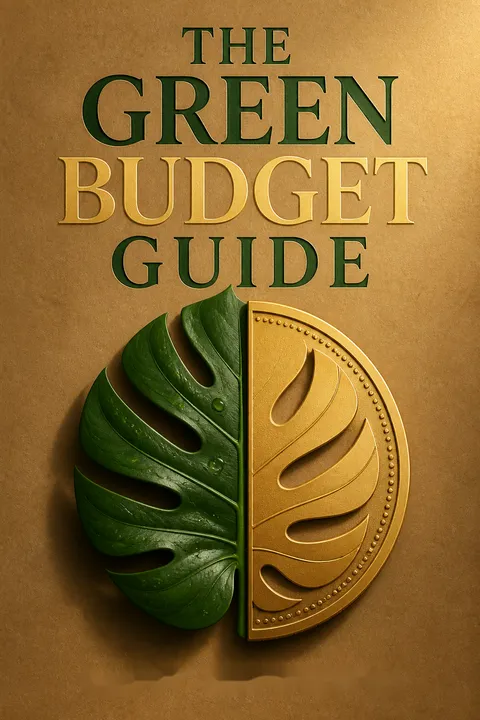
The Green Budget Guide is a practical reference book with the voice of a memoir and the structure of a household problem-solving manual. Its 63,000-word source moves from accidents and cleaning to laundry, cooking, energy, food storage, repairs, and gifts. That breadth makes a conventional chapter-by-chapter summary less useful than extracting the operating principle that connects the material: preserve value by using what is already available, and make the lower-waste choice work for the actual household.
Birtwhistle’s credibility comes chiefly from practiced domestic experience. Stories about a milk spill in a car, a mouldy heirloom stool, or a stained sweater make the advice feel tested in real conditions rather than delivered as abstract virtue. The book is unusually attentive to resource constraints: it does not assume a modern, insulated home, a large kitchen, specialist equipment, or abundant spare cash. Its strongest recurring methods are diagnosing causes before treating symptoms, adapting recipes to existing appliances, and giving food and objects another use.
The same practical authority needs careful framing. Personal success stories do not establish that every homemade cleaner is safer, more effective, or suitable for every surface. The guide itself often recommends testing inconspicuous areas, distinguishing acidic from non-acidic cleaners, and adjusting for fabric or appliance differences. Those cautions should remain central when readers try its methods. Cleaning, stain removal, and disinfection are not interchangeable goals, and a cosmetic fix cannot resolve a serious building defect.
The adaptation therefore emphasizes principles and representative examples rather than reproducing the book’s many recipes. Its value lies less in memorizing a formula than in learning how to ask better household questions: What caused the problem? Can the item be repaired? Can food be portioned before it spoils? Which appliance is already available? This is sustainability at domestic scale, measured not by purity but by repeatable choices that save money, energy, food, and usable things.
Review Summary
The Green Budget Guide receives mixed reviews, with an overall positive reception. Many readers appreciate the eco-friendly and cost-effective tips, praising Nancy Birtwhistle's conversational style and practical advice. Some find the book repetitive if they've read her previous works or follow her on social media. Highlights include homemade cleaning products, stain removal techniques, and cooking hacks. Critics note that some tips may not be universally applicable or may rely on microwave use. Despite these concerns, many readers find the book a valuable reference for greener living.
People Also Read




Glossary
Pure Magic
Citric-acid household cleanerThe author’s name for a homemade spray made from citric acid dissolved in hot water, then mixed with washing-up liquid. She uses it for selected laundry stains, limescale, soap scum, and other cleaning tasks. Because it is acidic, the book warns against using it on natural stone, slate, granite, or marble, and says residue should be rinsed from surfaces where it can dry sticky.
Green bleach
Oxygen-based stain removerThe author’s informal name for sodium percarbonate, an oxygen bleach used to whiten laundry and treat stains, mould marks, and certain household items. When activated in water, it releases oxygen and eventually breaks down into water and soda ash. The book distinguishes it from chlorine bleach and advises dissolving it fully, using prepared solutions promptly, and treating delicate or coloured materials cautiously.
Flexi recipes
Appliance-adaptable recipesRecipes presented with more than one cooking method so a reader can use appliances already available at home. Depending on the dish, options include an oven, stovetop, microwave, slow cooker, or pressure cooker. The idea is to make the recipe fit the household’s equipment and energy choices, rather than requiring a new gadget. Timings may need adjustment for different appliances.
Open-freezing
Freeze pieces separately firstA method for freezing foods such as berries or sliced vegetables without letting them freeze together in one lump. Spread the pieces in a single layer on a tray and freeze until firm, then transfer them to a freezer bag or container. This makes it easier to remove individual portions. The book recommends using a timer to avoid leaving food exposed too long.
Download PDF
Download EPUB
.epub digital book format is ideal for reading ebooks on phones, tablets, and e-readers.








